
Union Budget 2026 for UPSC: Key Highlights, Constitutional Provisions & Analysis
Blogs Home
- 31 Jan 2026
As the Finance Minister presents the Union Budget 2026-27 on February 1, 2026, the focus for Civil Services aspirants must go beyond the tax slabs. For UPSC Prelims and Mains, the budget acts as the primary source for government policy direction.
Backed by the Economic Survey 2026, which projects a GDP growth of 6.8%–7.2%, this year's budget is expected to lay the blueprint for "Viksit Bharat" (Developed India). This blog covers the static constitutional provisions and dynamic economic trends you need to ace prelims & mains exam.
1. Constitutional Provisions of the Budget
Before analyzing the new schemes, every aspirant must revise the static polity connected to the budget. Remember, the term "Budget" is not mentioned in the Constitution; it is referred to as the Annual Financial Statement.
|
Article |
Provision |
Key Description |
|
Article 110 |
Definition of "Money Bill" |
Defines what constitutes a Money Bill (e.g., imposition of taxes, regulation of borrowing, custody of the Consolidated Fund). The Budget usually includes a Finance Bill which is a Money Bill. |
|
Article 112 |
Annual Financial Statement |
This is the core provision for the "Budget." It mandates the President to lay before both Houses of Parliament a statement of estimated receipts and expenditure for that financial year. |
|
Article 113 |
Procedure w.r.t. Estimates |
Operationalizes the distinction made in Art 112; mandates that charged expenditure is non-votable. |
|
Article 114 |
Appropriation Bills |
States that no money can be withdrawn from the Consolidated Fund of India without the passing of an Appropriation Act. This gives legal authority to the government to spend money. |
|
Article 115 |
Supplementary Grants |
Allows for additional grants if the amount authorized for a specific service is found to be insufficient during the year, or for new services not contemplated in the Annual Financial Statement. |
|
Article 116 |
Vote on Account |
Allows the Lok Sabha to make a grant in advance for a part of the financial year (usually 2 months) pending the completion of the procedure for the full Budget (to keep the government running). |
|
Article 117 |
Financial Bills |
Deals with Financial Bills. Category I Financial Bills contain Money Bill elements but are not Money Bills; they can involve the Rajya Sabha but require Presidential recommendation. |
|
Article 265 |
Taxes by Authority of Law |
A fundamental principle: "No tax shall be levied or collected except by authority of law." (Executive order alone cannot impose a tax). |
|
Article 266 |
Consolidated Fund & Public Accounts |
Establishes the Consolidated Fund of India (all revenues received) and Public Accounts of India (other public money like PF deposits). |
|
Article 267 |
Contingency Fund |
Establishes the Contingency Fund of India, placed at the disposal of the President to meet unforeseen expenditure pending authorization by Parliament. |
UPSC Prelims Tip: The Revenue Budget does not create assets (e.g., salaries), while the Capital Budget deals with asset creation and liabilities (e.g., infrastructure, loans).
2. Economic Survey 2026: The Precursor to the Budget
The Economic Survey 2026 sets the context for the budget. Here are the major themes for your Mains answers:
- Productivity-Led Growth: A shift from demand-driven growth to supply-side efficiency.
- Strategic Autonomy ("Swadeshi"): Building domestic capacity in critical sectors like defense and semiconductors to insulate India from global geopolitical shocks.
- Urbanization Focus: Cities generate 60% of India's GDP. The Survey emphasizes the need for an Urban Challenge Fund (expected ₹1 Lakh Crore) to modernize city infrastructure.
Read Summary of Economic Survey 2025-26
3. Key Expectations: What to Watch in Budget 2026
When analyzing the speech for UPSC Mains, look for these structural reforms:
A. Tax Code Simplification (Ease of Doing Business)
The government is expected to overhaul the Income Tax Act, reducing sections from ~800 to ~500.
- Why it matters: Simplification reduces litigation and "Tax Terrorism," improving India's rank in Ease of Doing Business.
B. Infrastructure & Investment (Capex)
The budget is likely to continue the heavy lifting on Capital Expenditure (Capex).
- Key Focus: Look for the "Crowding-in" effect, where government spending encourages private sector investment.
- New Funds: Watch for the Maritime Development Fund (approx. ₹25,000 Cr) for the Blue Economy (Sagarmala 2.0).
C. Green Transition (Panchamrit)
- Nuclear Energy Mission: Funding for Small Modular Reactors.
- Green Hydrogen: Incentives to meet Net Zero 2070 targets.
4. Why Budget 2026 Matters for Aspirants
1. Conceptual Clarity for Prelims
The Budget is a primary source for understanding core economic concepts and government finance terms that frequently appear in the Preliminary exam.
- Understanding Deficits: A significant portion of Budget preparation involves mastering the concept of deficits. You must understand the nuances of Fiscal Deficit, Revenue Deficit, Primary Deficit, and Effective Revenue Deficit,. For instance, understanding that a zero primary deficit indicates the government is borrowing solely to finance interest payments on past debt is a conceptual point derived from budget analysis.
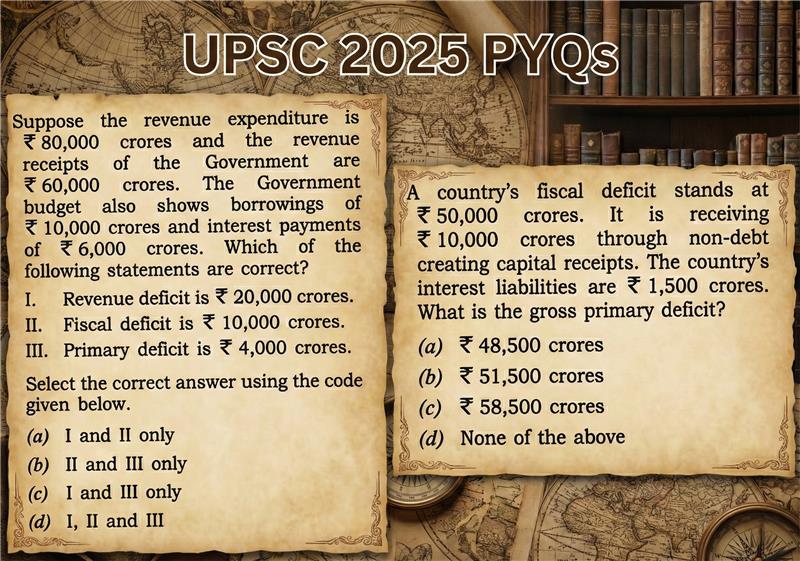
- Fiscal Responsibility: The Budget helps aspirants understand statutory frameworks like the FRBM (Fiscal Responsibility and Budget Management) Act. You need to know targets such as the aim to eliminate revenue deficit or limit fiscal deficit to specific percentages (e.g., 3%).
- Terminologies: It introduces and clarifies specific economic terms, such as "transfer payments" (payments like interest or welfare where no good or service is received in return) or the distinction between revenue and capital receipts.
2. Identifying Government Priorities (The "Prescription")
While the Economic Survey acts as a "diagnostic" of the past year's performance, the Budget acts as a "prescription" for the upcoming financial year.
- Sectoral Allocations: By analyzing the Budget, you can identify which sectors are receiving higher allocations. This reveals the government's priorities—whether the focus is shifting toward agriculture, the service sector, or infrastructure.
- Schemes and Proposals: The Budget outlines proposals to be implemented in the next financial year. For example, recognizing new initiatives like the Kisan scheme or specific funding for horticulture allows you to answer questions related to agriculture and infrastructure in both Prelims and Mains.
3. "Fodder Material" for Mains Answer Writing
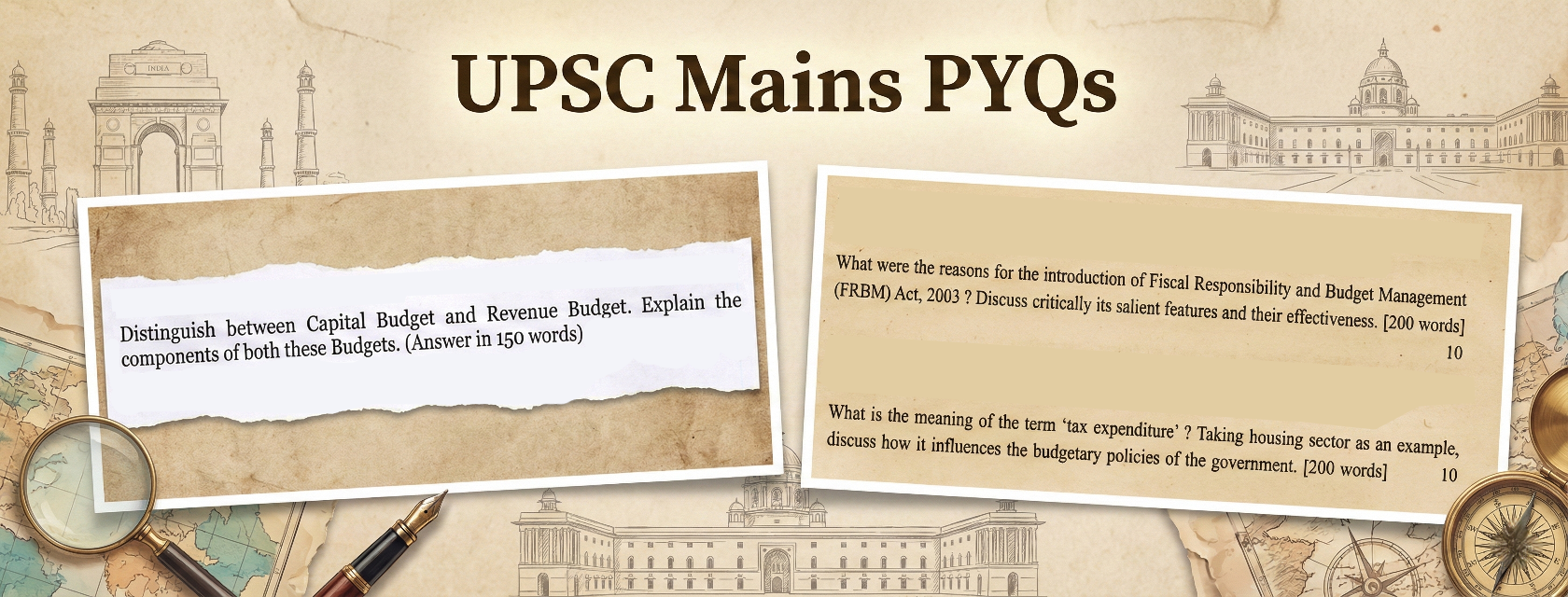
For the Mains examination, the Budget is not just about memorizing numbers; it provides authoritative content to substantiate your arguments.
- Validating Arguments: Using Budget data prevents your answers from sounding like "general things in air." Citing specific allocations (e.g., "Budget 2025-26 allocated funds for...") shows the examiner that you are specific and abreast of current news,.
- Cross-Paper Utility: Budget information is useful across General Studies papers:
- GS-2 & GS-4: You can use recommendations found in budget-related documents to discuss accountability or legislative changes, such as amendments to the Prevention of Corruption Act.
- GS-3: It is crucial for topics like agriculture, infrastructure (roads, railways, airways), and investment models.
- Concluding Answers: Integrating specific Budget points or schemes into the conclusion of your answers is an effective strategy to demonstrate current relevance.
4. Constitutional Awareness
Preparing the Budget also pushes you to understand its constitutional basis. You should investigate where the term "Budget" is mentioned (or not mentioned) in the Constitution and which Articles govern its presentation.
Strategic Advice for Studying the Budget
- Use Summaries: The budget document is too bulky and contains lots of information which is not useful for UPSC at all. Hence, we recommend reading summary from the official sources such as the PIB (Press Information Bureau) budget summary or authentic sources.
- Follow Editorials: In the week following the Budget, newspapers flood with editorials explaining the nuances. Saving and reading these helps clarify complex points.
- Focus on Trends: Rather than just memorizing absolute numbers, focus on the trends—such as how sector performance is changing and what reforms the government is suggesting.
Stay Tuned: We will upload a summary of the actual Budget 2026 soon, mapping key announcements directly to the UPSC Syllabus.



