
85 Solved Questions with Answers
-
2025
(a) In the present digital age, social media has revolutionised our way of communication and interaction. However, it has raised several ethical issues and challenges. Describe the key ethical dilemmas in this regard. (Answer in 150 words)
(b) “Constitutional morality is not a natural sentiment but a product of civil education and maturity of sense of rule of law.” Examine this statement in the light of the role of civil servants in upholding constitutional morality, promoting good governance and ensuring accountability in public administration. (Answer in 150 words)
(a):
Approach:
- Introduce the revolutionary impact of social media and its ethical significance
- Highlight the major ethical dilemmas such as privacy, misinformation, cyberbullying with real life examples.
- Discuss regulatory and institutional responses
- Conclude with the need for a multi-stakeholder ethical framework
Answer: Social media has revolutionized communication in India, with over 800 million users actively engaging on platforms like WhatsApp, Facebook, Instagram, and X. It has become a powerful tool for democratic participation, activism, and information-sharing. However, its rapid expansion has also created serious ethical challenges raising urgent concerns for governance and society.
Key Ethical Dilemmas in Present Digital Age
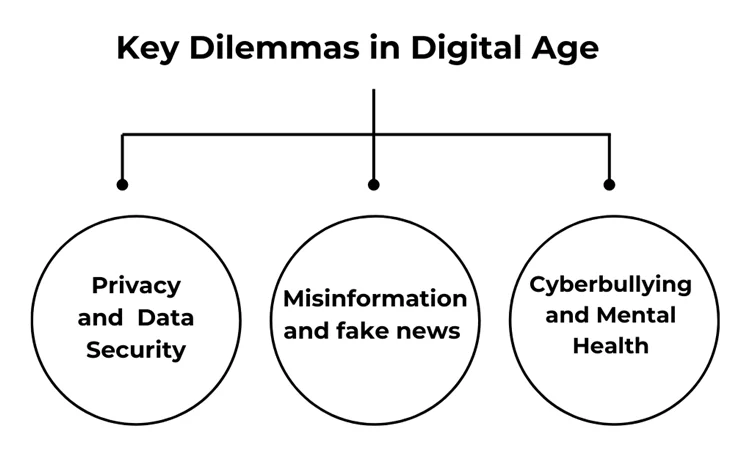
- Privacy and Data Security: Social media platforms collect vast personal data, often without user comprehension.
- For example, social media apps often upload a user's entire contact list to build a network map. This data collection happens without the consent or knowledge of the individuals as the user tap ‘allow’ without reading terms and conditions properly.
- Misinformation and Fake News: India was ranked highest for the risk of misinformation and disinformation according to the World Economic Forum's 2024 Global Risk Report.
- For example, during the Covid-19 pandemic, WhatsApp forwards about fake cures caused public health crises.
- According to the National Crime Records Bureau (NCRB) report, there is a 214% rise in cases related to the circulation of fake news.
- Cyberbullying and Mental Health: Digital harassment particularly affects vulnerable groups. The suicide cases linked to social media trolling among Indian youth exemplify this growing concern.
- Priyanshu (content creator), a 16-year-old from Ujjain, MP died by suicide in 2023 facing relentless cyberbullying.
- Political Manipulation: During elections, bot networks and coordinated campaigns manipulate public opinion, threatening democratic integrity.
- The Cambridge Analytica scandal (2018) highlighted how Indian users' data was harvested for political manipulation (targeted political ads and messages) during in 2016 Presidential elections, raising serious privacy concerns.
Social media is a double-edged sword i.e. a tool of empowerment but also of manipulation and harm. Ethical dilemmas emerge because technology is advancing faster than our moral and regulatory frameworks.
Resolving these requires a multi-stakeholder approach involving users, corporations, and the State, guided by values of truth, dignity, justice, and responsibility. The IT Rules 2021 mandate social media platforms to ensure grievance redressal, content moderation, and compliance, balancing free speech with accountability.
(b):
Approach:
- Explain the meaning of constitutional morality as envisioned by Ambedkar and its judicial evolution.
- Analyse the role of civil servants in upholding it through education, governance, accountability, and protection of rights.
- Conclude by emphasizing its importance in transforming governance into citizen-centric democracy
Answer: Constitutional morality, as conceptualized by George Grote transcends natural instincts and requires deliberate cultivation. Dr. B.R. Ambedkar observed that constitutional morality is not a natural sentiment but cultivated through education and adherence to the rule of law. It implies fidelity to the values enshrined in the Constitution i.e. justice, liberty, equality, and fraternity - beyond mere compliance with legal provisions.
Role of Civil Servants in Upholding Constitutional Morality
- Civil Education and Institutional Training: Civil Service Officers in a federal polity are accountable primarily to the democratically elected Government and Ministers, forming the backbone of collective responsibility.
- The civil service training institutions like LBSNAA incorporate constitutional values, transforming bureaucrats into guardians of constitutional principles rather than mere administrators.
- Promoting Good Governance: The Right to Information Act (RTI) empowers citizens, promotes transparency and accountability in government working, and contains corruption, making democracy work for the people in real sense.
- Civil servants serve as crucial intermediaries in RTI implementation, with over 7.5 lakh RTI applications filed annually demonstrating public demand for accountability.
- The Adarsh Housing Society case exemplifies how RTI exposed corruption, with civil servants playing pivotal roles in both revelation and rectification.
- Ensuring Accountability: Civil servants are trustees of public power. Mechanisms such as social audits under MGNREGA and proactive disclosure under RTI empower citizens to hold administration accountable, reflecting respect for democratic ethos.
- Protecting Rights of Marginalised: Constitutional morality demands empathy and fairness toward weaker sections. Civil servants implementing welfare schemes like PM Poshan or reservations uphold social justice.
Thus, constitutional morality is not instinctive but cultivated through civil service training, ethical leadership, and continuous commitment to public service values. Constitutional morality, when embedded in public administration, transforms governance from a power-centric process into a citizen-centric service, thereby strengthening democracy. In Navtej Singh Johar v. Union of India (2018) case, the Supreme Court also emphasized adherence to constitutional principles.
-
2025
(a) Carl von Clausewitz states that “war is the continuation of politics by other means.” Critically examine the relevance of this statement in present context of contemporary geo-political conflicts. (Answer in 150 words)
(b) Considering the national security in mind, examine the ethical dilemmas related to controversial issues of compensation in case of development projects in ecologically sensitive border areas in the country. (Answer in 150 words)
(a):
Approach:
- Introduce Clausewitz’s dictum on war as an extension of politics and explain its core idea.
- Examine its relevance in the contemporary context with examples of conventional, proxy, cyber, and hybrid wars.
- Conclude by assessing its partial validity in today’s interconnected world where diplomacy, economy, and technology redefine “politics by other means.”
Answer: Prussian strategist Carl von Clausewitz argued that “war is the continuation of politics by other means,” emphasizing that wars are not isolated acts of violence but political tools employed when diplomacy fails. In the 21st century, although the nature of warfare has evolved, the underlying political objectives remain central.
Relevance of the Statement in Present Context
- Conventional Relevance
- Russia–Ukraine conflict (2022–present): Russia’s military action reflects political aims of securing strategic depth and resisting NATO expansion.
- India–Pakistan conflicts: Kargil War (1999) demonstrated how political objectives—challenging the LoC status quo—shaped military aggression.
- Non-Traditional Wars
- Proxy Wars: West Asian conflicts (Syria, Yemen) illustrate how states pursue geopolitical goals through proxies.
- Cyber Warfare: The Indian government’s National Cyber Security Policy notes rising state-sponsored cyberattacks as new “political wars.”
- Hybrid Warfare: China’s “Three Warfare Strategy” (psychological, legal, media warfare) is used in South China Sea disputes.
- Changing Nature of Politics in War
- Humanitarian Concerns: UN reports state that 90% of war casualties today are civilians, unlike earlier centuries. This complicates the idea of war as mere “political continuation.”
- Global Governance: Institutions like the UN, ICJ, and International Humanitarian Law (Geneva Conventions) restrict the political utility of war.
- Economic Interdependence: According to WTO data, global trade wars and sanctions have become political alternatives to direct war.
Clausewitz’s dictum retains partial relevance i.e. wars still serve political ends, as seen in Ukraine or Middle East conflicts. Yet, in an interconnected world with nuclear deterrence, cyber tools, and multilateral diplomacy, war is increasingly constrained. Today, “politics by other means” is pursued not only through military conflict but also through economic sanctions, cyber operations, and information warfare, reflecting a transformed global order.
(b):
Approach:
- Introduce the context of national security projects in border areas and the ethical dilemmas they create.
- Discuss key dilemmas such as compensation vs security, livelihood vs strategic needs, ecology vs development, and accountability issues with relevant examples.
- Conclude by stressing the need for ethical governance
- Answer: National security often demands infrastructure projects such as roads, dams, and military installations in ecologically sensitive border areas like the Himalayas, Northeast, and coastal belts. These projects enhance defence preparedness but simultaneously raise ethical dilemmas regarding compensation, displacement, and environmental sustainability.
Ethical Dilemmas Involved:
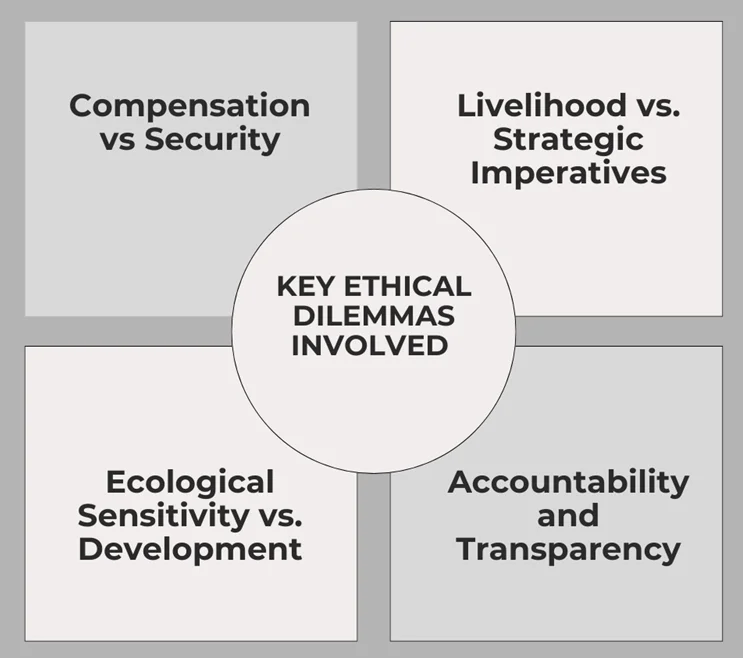
- Compensation vs. Security
- When land is acquired for defence or infrastructure, compensation may be delayed, inadequate, or poorly distributed. This raises the ethical question of whether the collective good of national security justifies compromising individual justice.
- While national interest demands quick execution, affected tribal communities often receive delayed or inadequate compensation.
- Ethical tension arises between utilitarian ethics (greatest good for national security) and distributive justice (fair treatment of displaced families).
- In Arunachal Pradesh, land for Border Roads Organisation (BRO) projects was acquired, but tribal communities reported long delays in compensation.
- When land is acquired for defence or infrastructure, compensation may be delayed, inadequate, or poorly distributed. This raises the ethical question of whether the collective good of national security justifies compromising individual justice.
- Livelihood vs. Strategic Imperatives
- Indigenous and border communities depend on forests, rivers, and land for survival. Projects may displace them, threatening their culture and livelihoods, creating tension between security-driven development and cultural rights.
- Example: Hydropower projects along the Siang River in Arunachal Pradesh displaced Adi and Galo tribes, disrupting traditional livelihoods.
- Ecological Sensitivity vs. Development
- Infrastructure in fragile ecosystems accelerates landslides, floods, and biodiversity loss. Ethical dilemma arises when short-term security imperatives compromise long-term ecological security.
- Example: The Char Dham highway project in Uttarakhand, meant for faster troop movement to the China border, led to deforestation and frequent landslides.
- Accountability and Transparency
- Lack of proper rehabilitation, inflated land valuation for contractors, or sidelining community voices undermines procedural justice.
- In parts of Nagaland, local groups alleged that compensation for defence projects was diverted, eroding public trust.
In ecologically fragile border areas, development projects are vital for national security but must be guided by ethical governance—fair compensation, community participation, ecological safeguards, and long-term sustainability. Balancing raison d’état (reason of state) with constitutional values of justice and dignity ensures that national security is not achieved at the cost of marginalised citizens and fragile ecosystems.
-
2025
Given below are three quotations of great thinkers. What do each of these quotations convey to you in the present context? (Answer in 150 words each)
(a) “Those who in trouble untroubled are, Will trouble trouble itself?” — Thiruvalluvar
(b) “The greatest discovery of my generation is that a human being can alter his life by altering his attitudes of mind.” — William James
(c) “The strength of a society lies not in its laudable ideals, but in the morality of its people.” — Swami Vivekananda
(a):
Approach:
- Begin by explaining the meaning of Thiruvalluvar’s couplet and its focus on equanimity in adversity.
- Discuss its practical relevance through dimensions like resilience, emotional intelligence, ethical decision-making, and spiritual wisdom with examples.
- Conclude by highlighting its timeless value in today’s world
Answer: The Tamil saint-poet Thiruvalluvar in the Tirukkural wrote: “Those who in trouble untroubled are, Will trouble trouble itself.” This couplet emphasizes the virtue of equanimity i.e. the ability to remain calm, composed, and resilient in adversity. It suggests that challenges lose their sting when faced with inner strength and balance.
- Resilience and Mental Strength: Adversity is inevitable, but one who remains unshaken can overcome it with clarity of thought.
- Example: During the Covid-19 pandemic, frontline health workers who stayed calm amidst uncertainty inspired hope and ensured effective service delivery.
- Emotional Intelligence in Leadership: Leaders who manage stress and respond with composure prevent panic and motivate others.
- Example: Former RBI Governor Raghuram Rajan calmly navigated India through the 2013 currency crisis, restoring investor confidence without alarmist decisions.
- Ethical Decision-Making: A disturbed mind leads to rash decisions, while equanimity enables fair and ethical judgment.
- Example: In disaster management operations like the 2018 Kerala floods, officers who stayed composed could coordinate relief despite pressure, ensuring accountability and transparency.
- Spiritual and Ethical Dimension: The quotation also reflects the stoic principle and idea of Sthitaprajna (steady wisdom) of Bhagavad Gita. Remaining unperturbed neutralises the very “trouble” of suffering.
Thiruvalluvar’s wisdom is timeless. In today’s fast-changing world which is marked by pandemics, conflicts, and personal stresses, the ability to remain calm in crisis is an ethical and practical necessity. By cultivating resilience, emotional balance, and moral clarity, individuals can “trouble the trouble” and transform adversity into an opportunity for growth and service.
(b):
Approach:
- Begin by explaining William James’s idea that attitude and mindset shape human destiny.
- Analyse the concept through individual, social, and philosophical dimensions with relevant examples.
- Conclude by stressing the timeless relevance of cultivating positive attitudes.
Answer: The American philosopher and psychologist William James emphasised the transformative power of the human mind. His statement highlights that by altering one’s attitudes, perceptions, and thought patterns, individuals can reshape their life trajectory.
Conceptual Understanding
James, regarded as the “Father of American Psychology,” argued in his work Principles of Psychology (1890) that thought patterns influence behavior and well-being. This aligns with modern cognitive-behavioral psychology, where altering negative attitudes leads to positive life outcomes.
Transformative Power of Human Mind:
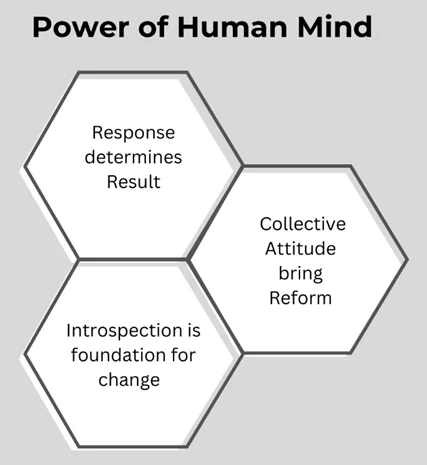
- Personal Transformation through Attitude: A person’s circumstances may be fixed, but their response determines growth or stagnation.
- Example: IAS officer Anil Swarup (1979 batch) transformed repeated UPSC failures into stepping stones through a resilient attitude, eventually rising to become Coal and Education Secretary, proving how attitude shapes destiny.
- Social and Ethical Dimension: At the societal level, collective attitudes can bring reform.
- Example: The success of the Swachh Bharat Mission demonstrates how changing public attitudes towards sanitation created visible transformation in Indian villages and cities.
- Philosophical Echoes: James’s idea resonates with Gandhiji’s emphasis on self-purification and the Bhagavad Gita’s doctrine of sthitaprajna, both stressing inner change as the foundation for outer transformation.
William James’s insight remains timeless: life is not merely determined by external conditions but by the attitudes with which we face them. Academic research in psychology and real-world social movements confirm that altering mindsets is the first step toward altering destiny—both individually and collectively.
(c):
Approach:
- Begin by explaining Swami Vivekananda’s idea
- Analyse dimensions like citizen integrity, ethical leadership, and civic responsibility with examples.
- Conclude by emphasising that while ideals inspire, morality in action sustains social strength and resilience.
Answer: Swami Vivekananda emphasised that lofty principles alone cannot sustain a society unless they are translated into lived morality by its people. Ideals provide direction, but their strength depends on how honestly and ethically citizens, leaders, and institutions embody them in practice.
- Morality as the Foundation of Social Strength: A society may profess equality and justice, but unless citizens act with integrity, these remain empty slogans.
- Example: The success of the Right to Information (RTI) movement was possible because ordinary citizens demonstrated moral courage to demand transparency in governance.
- Leadership Rooted in Moral Action: Ethical leaders inspire confidence by living values rather than merely preaching them. Their morality becomes society’s real strength.
- E. Sreedharan (the “Metro Man”): As head of Delhi Metro, he upheld personal integrity, resisted corruption, and completed projects on time—showing how moral leadership inspires public trust.
- Dr. Verghese Kurien (“Father of the White Revolution”): His moral commitment to empower farmers through cooperatives transformed India’s dairy sector, turning ideals of self-reliance into reality.
- Public Morality and Civic Duty: Ideals of self-reliance or equality gain meaning when leaders morally dedicate themselves to social causes.
- Example: During the COVID-19 crisis, doctors, nurses, and civil servants who served selflessly, often at personal risk, proved that societal strength lay not just in government directives but in the moral responsibility exercised by individuals.
Swami Vivekananda’s words remind us that society’s resilience rests on lived morality i.e. the honesty of administrators, the compassion of leaders, and the ethical conduct of citizens. Ideals inspire, but only morality sustains.
-
2025
(a) “For any kind of social re-engineering by successful implementation of a welfare scheme, a civil servant must rise above personal biases and prejudices to maintain objectivity.” Justify this statement with suitable examples. (Answer in 150 words)
(b) What are the major teachings of Mahavira? Explain their relevance in the contemporary world. (Answer in 150 words)
(a):
Approach:
- Begin by explaining the role of civil servants as neutral implementers of welfare schemes.
- Analyse the importance of objectivity through different dimensions
- Mention Sevottam Model
- Conclude by citing scholars and stressing that impartial, unbiased administration is essential for realising constitutional ideals of equality and justice.
Answer: Civil servants act as the bridge between policy design and its delivery on the ground. For welfare schemes to achieve social re-engineering i.e. upliftment of weaker sections and reduction of inequalities, officers must be objective, impartial, and unbiased. Any prejudice rooted in caste, class, gender, or region undermines constitutional ideals of equality and justice.
Importance of Objectivity for Civil Servant
- Ensuring Equity in Welfare Delivery: Social engineering requires benefits to reach the real beneficiaries rather than the influential. Objectivity safeguards distributive justice.
- Example: IAS officer Smita Sabharwal, the “People’s Officer”, introduced citizen-centric initiatives like Fund Your City and health camps, ensuring transparent and equitable welfare delivery.
- Overcoming Social Prejudices: Civil servants must rise above societal stereotypes to empower marginalised groups.
- Example: IAS officer Prasanth Nair, known as “Collector Bro”, launched Compassionate Kozhikode to mobilise resources via social media for housing and education, serving people beyond caste or religion.
- Maintaining Impartiality in Sensitive Zones: In conflict-affected or backward areas, neutrality fosters trust and enhances state legitimacy.
- Example: The Aspirational Districts Programme (NITI Aayog, 2021) improved health and education indicators in Left-Wing Extremism (LWE)-affected areas like Dantewada by objective targeting, rather than political or elite capture.
- Transparency and Integrity: Transparency ensures that government decisions and welfare delivery are open to scrutiny, reducing chances of corruption. Integrity complements transparency by demanding honesty, consistency, and ethical courage from civil servants in resisting undue influence. Together, they strengthen public trust.
- Example: IAS officer Durga Shakti Nagpal upheld transparency and integrity in 2013 by impartially acting against the illegal sand mining mafia despite political pressure, safeguarding people and the environment.
Scholars like Paul H. Appleby emphasise that impartiality is the cornerstone of effective administration. Similarly, Riggs’ Prismatic Society model warns that bias-ridden bureaucracies fail to deliver true social change. So, successful social re-engineering requires civil servants to function as neutral implementers rather than subjective gatekeepers.
(b):
Approach:
- Begin with Mahavira’s role as the 24th Tirthankara and his core teachings based on the five great vows (Pancha Vratas).
- Explain each vow Ahimsa, Satya, Asteya, Brahmacharya, and Aparigraha with their philosophical meaning.
- Conclude by highlighting how these values provide ethical solutions for modern challenges
Answer: Mahavira, the 24th Tirthankara of Jainism, taught a path of ethical discipline and self-purification. IGNOU notes that his moral philosophy rests on the five great vows (Pancha Vratas)—Ahimsa, Satya, Asteya, Brahmacharya, and Aparigraha. These are timeless values that remain deeply relevant today.
Major Teachings & Contemporary Relevance:
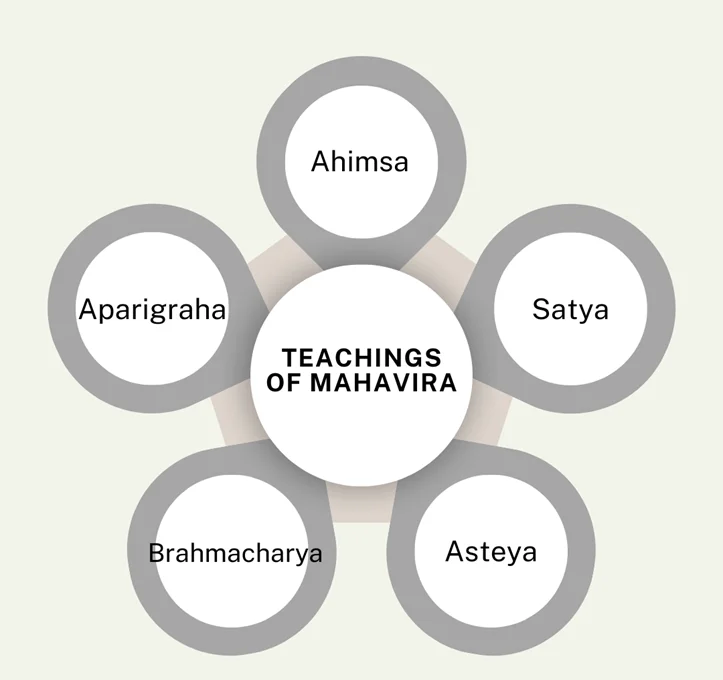
- Ahimsa (Non-violence): Mahavira considered non-violence the highest virtue, extending it to thoughts, words, and deeds. It promotes compassion not only towards humans but also animals and the environment.
- Relevance: India’s global advocacy of peace at the UN and rising vegan/plant-based movements reflect this principle.
- Satya (Truthfulness): Truth for Mahavira meant speaking what is true, but also good and beneficial. It requires courage to overcome fear, anger, and greed that lead to lies.
- Relevance: Initiatives like the Right to Information (RTI) Act uphold truthfulness in governance by empowering citizens to access accurate information, thereby promoting transparency and accountability.
- Asteya (Non-stealing): Mahavira stressed respecting others’ property and abstaining from exploitation or corruption. It is rooted in fairness and justice in social conduct.
- Relevance: India’s Direct Benefit Transfer (DBT) ensures objective delivery of subsidies, saving Rs.2.2 lakh crore (Economic Survey 2023) by curbing theft and leakages.
- Brahmacharya (Self-restraint): It implies discipline over desires and passions, promoting purity of body and mind. For ascetics, it meant celibacy; for laypersons, moderation.
- Relevance: In an age of consumerism and digital addiction, government campaigns on de-addiction and responsible internet use highlight its need.
- Aparigraha (Non-possessiveness): Mahavira advised limiting possessions and detachment from material greed, which bind individuals to suffering.
- Relevance: India’s Mission LiFE (Lifestyle for Environment), promoted at COP27, calls for sustainable living and reduced consumption, echoing this vow.
Mahavira’s teachings transcend time. By emphasising compassion, honesty, restraint, and sustainability, they offer ethical solutions to modern challenges like violence, corruption, misinformation, and climate change.
Mahavira's teachings remain remarkably relevant, offering ethical frameworks for sustainable development, peaceful coexistence, and spiritual well-being in our interconnected modern world.
-
2025
(a) “One who is devoted to one’s duty attains highest perfection in life.” Analyse this statement with reference to sense of responsibility and personal fulfilment as a civil servant. (Answer in 150 words)
(b) To achieve holistic development goal, a civil servant acts as an enabler and active facilitator of growth rather than a regulator. What specific measures will you suggest to achieve this goal? (Answer in 150 words)
(a):
Approach:
- Introduce the idea that devotion to duty leads to both social transformation and personal fulfilment, especially for civil servants.
- Analyse dimensions of responsibility and fulfilment, illustrating with examples of upright officers.
- Conclude with philosophical support (Bhagavad Gita, Kant) and highlight that true perfection in public life lies in integrity and selfless service.
Answer: The statement highlights the principle that dedication to duty brings both societal transformation and personal fulfilment. For a civil servant, this means discharging responsibilities with fairness, efficiency, and compassion, embodying constitutional morality.
Sense of Responsibility
- Social Dimension: Civil servants are trustees of public resources; devotion to duty ensures justice, equity, and inclusion. IAS Ritu Maheshwari (UP Cadre) digitised land records and grievance redressal in Noida, reducing corruption and empowering citizens.
- Institutional Dimension: Objectivity and accountability in service uphold institutional trust. IAS U. Sagayam (TN Cadre), known as the “people’s collector,” exposed the granite mining scam and returned bribes offered to him, demonstrating loyalty to institutional integrity.
Personal Fulfilment
- Psychological Dimension: Devotion to duty provides inner satisfaction, resilience, and a sense of purpose. IAS Vinod Rai as CAG ensured accountability in public finance by exposing irregularities like the 2G spectrum case. His devotion reinforced democratic oversight and gave him moral satisfaction.
- Ethical Dimension: True fulfilment arises from aligning actions with moral conscience, not material gain. Ashok Khemka (Haryana) cancelled controversial land deals despite repeated transfers, showing ethical courage and personal conviction.
Philosophical Perspective
- This aligns with the Bhagavad Gita’s doctrine of Nishkama Karma—selfless duty without attachment to rewards—and resonates with Kant’s deontological ethics that duty is an end in itself.
For a civil servant, devotion to duty bridges responsibility with fulfilment. It nurtures public trust, strengthens institutions, and leaves a legacy of integrity—true “perfection” in public life.
(b):
Answer: The traditional role of a civil servant as a mere regulator, focused on enforcing rules and maintaining a status quo, is a relic of the colonial past. To achieve holistic development in a democratic and dynamic society like India, the civil servant must evolve into an enabler and active facilitator of growth. This paradigm shift requires a proactive, citizen-centric approach that fosters innovation, collaboration, and trust. This is a move from a "rule-based" to a "role-based" management system.
A Civil Servant should adopt Several Key Measures:
- Promote Citizen-Centric Governance and Transparency: Leverage technology to simplify administrative processes and increase transparency.
- Direct Benefit Transfer (DBT) system, linked with Aadhaar, has significantly reduced leakages in welfare schemes, ensuring that benefits reach the intended beneficiaries directly.
- This data-driven approach allows civil servants to monitor outcomes rather than just outlays, making them more accountable and effective.
- Facilitate Public-Private-Community Partnerships: Civil servants should actively engage with civil society organizations, the private sector, and local communities.
- For instance, the success of the Kudumbashree Mission in Kerala is a testament to the power of civil servants acting as facilitators, empowering women through self-help groups and creating a sustainable model for micro-enterprises.
- This approach recognizes that the government cannot achieve holistic development alone and must act as a catalyst for collective action.
- Embrace a Solution-Oriented Mindset: Instead of simply citing rules, an enabler civil servant focuses on finding creative solutions to public problems. This requires a shift from a reactive to a proactive and agile bureaucracy.
- This is also a key tenet of Mission Karmayogi, which aims to develop a "future-ready" civil service that is more creative, innovative, and progressive.
The Sevottam Model can be followed by the civil servants which is a framework developed by the Department of Administrative Reforms and Public Grievances (DARPG) to improve the quality of public service delivery.
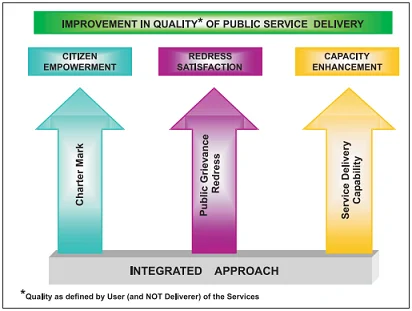
The transformation of the civil servant from a regulator to an enabler is crucial for India to achieve its development goals. By focusing on citizen empowerment, leveraging technology for transparency and efficiency, and building collaborative partnerships, civil servants can become the architects of a new, developed India. Committees like the 2nd ARC, Hota Committee (2004), and Surinder Nath Committee (2003) emphasized that civil servants should act as facilitators of development rather than mere regulators.
-
2025
(a) It is said that for an ethical work culture, there must be code of ethics in place in every organisation. To ensure values-based work culture, what suitable measures would you adopt in your workplace? (Answer in 150 words)
(b) India is an emerging economic power of the world as evident from recent trends in GDP growth rate, foreign exchange reserves and IMF projection. However, it is still a developing country. In this context, how will you justify the need of an ethical framework for sustainable economic growth of the country? Discuss in 150 words.
(a):
Approach:
- Contrast the colonial rule-based regulator role with the need for a citizen-centric, role-based enabler in democracy.
- Highlight measures like use of technology for transparency, fostering partnerships and adopting solution-oriented mindset
- Conclude that transforming into enablers is vital for inclusive, sustainable development and a future-ready India.
Answer: An ethical work culture is the backbone of efficient, transparent, and citizen-centric governance. As highlighted by the Second Administrative Reforms Commission (2007), a Code of Ethics provides a moral compass for public servants, ensuring accountability, fairness, and service orientation. To institutionalise values in any workplace, suitable measures must be adopted beyond mere compliance.
Measures to Ensure Values-Based Work Culture
- Formulation and Implementation of Code of Ethics: Clearly articulated principles like integrity, impartiality, accountability, and compassion must guide employees.
- Example: The Central Civil Services (Conduct) Rules, 1964 already provide ethical norms for civil servants.
- Leadership by Example: Senior officers must demonstrate ethical conduct, since culture flows top-down. Ethical role-modelling reinforces credibility and inspires subordinates.
- Training and Capacity Building: Regular ethics and integrity training sessions, including case studies and dilemmas, develop moral reasoning.
- Example: LBSNAA’s ethics modules for IAS probationers focus on values-driven governance.
- Institutional Mechanisms for Accountability: Whistle-blower protection, grievance redressal systems, and transparent decision-making promote ethical practices.
- Example: The Right to Information Act, 2005 enhances transparency and citizen trust.
- Performance Appraisal Linked to Ethics: Evaluations should not only assess efficiency but also integrity, empathy, and fairness. For instance, recognising ethical officers fosters a values-driven workplace.
- Participatory and Inclusive Decision-Making: Encouraging open dialogue, teamwork, and consultation reduces bias and promotes fairness in organisational decisions.
- Reward and Recognition of Ethical Conduct: Officers who show extraordinary integrity (e.g., resisting corruption) must be publicly acknowledged, motivating others.
A values-based work culture is achieved not merely through rules but through internalisation of ethics. A Code of Ethics, coupled with training, leadership, accountability mechanisms, and recognition, ensures that governance is aligned with constitutional morality. Ultimately, such a workplace nurtures trust, transparency, and service orientation, which are the hallmarks of ethical public administration.
(b):
Approach:
- Start by noting India’s strong economic growth alongside persistent developmental challenges.
- Highlight the need for an ethical framework across key dimensions like curbing corruption, environmental responsibility, equity and corporate integrity.
- Conclude by stressing on the essentiality of ethical values to transform economic growth into sustainable and just development.
Answer: India today stands as an emerging economic power. With GDP growth of 7.6% in 2023–24 (MoSPI), foreign exchange reserves above USD 600 billion (RBI, 2024), and the IMF projecting India as the fastest-growing major economy, the country is a driver of global growth. Yet, persistent poverty, inequality, corruption, and ecological stress remind us that India is still a developing country. Hence, an ethical framework is essential to convert growth into sustainable and inclusive development.
Need for Ethical Framework:
- Curbing Corruption and Ensuring Fairness: Growth without ethics risks leakages and misuse of resources. Ethical governance ensures fairness in distribution.
- Example: Direct Benefit Transfer (DBT) saved Rs. 2.2 lakh crore by eliminating fake beneficiaries (Economic Survey 2023).
- Environmental Responsibility: Rapid industrialisation without ethical restraint causes ecological degradation.
- Example: India’s Mission LiFE, launched at COP27, emphasises ethical consumption and responsible lifestyles.
- Equity and Inclusivity: Ethical frameworks ensure weaker sections benefit from growth, preventing widening inequality.
- Example: Aspirational Districts Programme promotes health, education, and infrastructure in lagging regions.
- Corporate and Market Integrity: Investor confidence requires ethical corporate governance and transparency.
- Example: SEBI’s reforms after corporate frauds highlight the value of business ethics.
India’s economic rise must be anchored in ethics, transparency, sustainability, and inclusivity. Only then can growth translate into long-term prosperity and justice. Thus, an ethical framework is not optional but the very foundation of India’s aspiration to become a developed and responsible global power.
-
2024
(a) The application of Artificial Intelligence as a dependable source of input for administrative rational decision-making is a debatable issue. Critically examine the statement from the ethical point of view. (Answer in 150 words)
(b) “Ethics encompasses several key dimensions that are crucial in guiding individuals and organizations towards morally responsible behavior.” Explain the key dimensions of ethics that influence human actions. Discuss how these dimensions shape ethical decision-making in the professional context. (Answer in 150 words)
(a):
Approach
- In the introduction, mention AI's role in administrative decision-making.
- Highlight key ethical concerns: bias, accountability, transparency, privacy
- Also highlight advantages of AI, including efficiency, accuracy, and objectivity.
- Conclude suitably on a positive note.
Introduction:
The integration of Artificial Intelligence (AI) into administrative decision-making has sparked considerable debate. While AI can enhance efficiency and objectivity, it raises profound ethical questions.
Body:
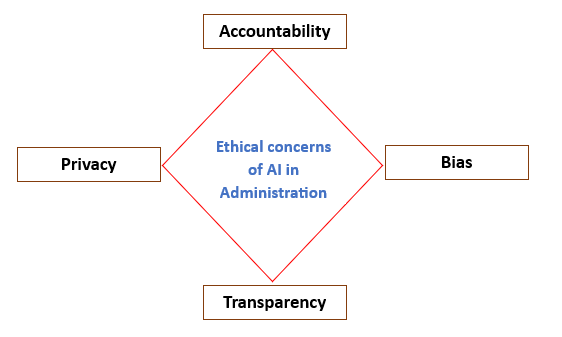
- AI's reliance on data-driven algorithms diminishes the role of human intuition and ethical reasoning, resulting in decisions that lack contextual understanding.
- Determining responsibility becomes problematic when AI decisions cause harm, making it unclear whether the fault lies with developers, operators, or the AI itself.
- AI systems can inadvertently reinforce biases present in training data, leading to discriminatory outcomes that disproportionately affect marginalized communities.
- Many AI algorithms function as "black boxes," making it difficult for stakeholders to grasp the decision-making process, thereby undermining trust and transparancy.
- AI systems often require large amounts of data, raising concerns about data privacy, consent, and potential misuse of personal information.
However, AI significantly enhances efficiency and accuracy in administrative tasks, streamlining processes and boosting citizen satisfaction. Additionally, AI if used properly can improve administration by bringing in objectivity.
Conclusion:
To harness AI responsibly in administration, it is imperative to address ethical challenges, ensuring that human values, accountability, and social justice are prioritized in decision-making processes.
(b):
Approach:
- Introduce by highlighting the importance of ethics influencing human actions.
- Mention dimensions of ethics like deontology, teleology and virtue ethics etc and evaluate.
- Conclude suitably.
Introduction:
Ethics is a framework of principles that guide moral behavior in individuals and organizations. Key dimensions of ethics influence human actions, shaping values and standards that inform decision-making processes, particularly in professional settings where consequences can be significant.
Body:
The key dimensions of ethics and their role in shaping ethical decision-making are:-
- Normative Ethics establishes moral standards that guide individuals and organizations in evaluating right and wrong actions.
- By providing frameworks for navigating moral dilemmas, it significantly shapes decision-making processes.
- Virtue Ethics emphasizes the importance of moral character and the cultivation of virtues such as honesty and courage.
- This focus encourages professionals to develop good habits, fostering ethical behavior and creating a collaborative, trustworthy organizational culture.
- Deontological Ethics asserts that certain actions are inherently right or wrong, highlighting the importance of duties and obligations.
- It guides professionals to uphold rights and ethical standards, ensuring integrity even under pressure.
- Teleological Ethics evaluates actions based on their outcomes, motivating professionals to consider the broader impact of their decisions.
- This perspective promotes practices that benefit both business interests and society.
Conclusion:
Gandhi's "Seven Sins" highlight key ethical dimensions: wealth without work emphasises normative ethics, pleasure without conscience reflects virtue ethics, and knowledge without character underscores integrity. These principles guide individuals and organisations toward responsible behaviour in personal and professional contexts.
-
2024
(a) "It is not enough to talk about peace, one must believe in it; and it is not enough to believe in it, one must act upon it ". In the present context, the major weapon industries of the developed nations are adversely Influencing continuation of a number of wars for their own self-interest, all around the world. What are the ethical considerations of the powerful nations in today’s international arena to stop continuation of ongoing conflicts? (Answer in 150 words)
(b) Global warming and climate change are the outcomes of human greed in the name of development, indicating the direction in which extinction of organisms including human beings is heading towards loss of life on Earth. How do you put an end to this to protect life and bring equilibrium between the society and the environment? (Answer in 150 words)
(a):
Approach:
- Introduce with the mentioning the meaning of the quote in brief
- Outline the ethical considerations of the powerful nations with examples
- Conclude suitably
Introduction:
The quote stresses that peace is not achieved through words or belief alone; it requires concrete actions and commitment to bring it into reality.
- This highlights the ethical responsibility of nations to act on their commitment to peace, rather than allowing self-interest to fuel ongoing conflicts worldwide.
Body
Ethical Considerations of the Powerful Nations:
- Responsibility for Global Peace: Powerful nations must prioritise peace over profit, avoiding actions that fuel conflicts, such as arms sales to war-torn regions.
- Example: India supports a UN ceasefire for Gaza, advocates for a two-state solution, and condemns civilian casualties.
- Promoting Human Rights: They must ensure that their foreign policies uphold human rights, avoiding support for oppressive regimes.
- Example: Operation Dost in Turkey and Syria is a prime example of India's rapid humanitarian assistance
- Diplomatic Solutions: They should pursue peaceful resolutions through diplomacy rather than military intervention.
- Example: The US and EU's role in the 2015 Iran nuclear deal.
- Supporting Disarmament and Reducing Proliferation: Major powers must adhere to international treaties, such as the Arms Trade Treaty (ATT), to curb the spread of weapons of mass destruction and prevent escalating global violence.
- Regulate Weapon Industries: Nations must enforce strict arms regulations, including licensing, oversight of arms production, and mandatory sales reporting to ensure accountability and global stability.
- Countries should collaborate internationally to prevent weapon proliferation and promote responsible practices among arms manufacturers.
Conclusion
In an interconnected world, powerful nations have a critical role in shaping a more peaceful future. As the global landscape evolves, the effectiveness of these nations in fostering peace will ultimately determine the success of collective efforts to prevent future conflicts.
(b):
Approach:
- Provide a brief introduction outlining the concerns and the necessary steps moving forward
- Outline the strategies to address global warming and restore environmental equilibrium
- Conclude suitably
Introduction:
The crisis of global warming and climate change, driven by human greed disguised as development, leads to severe environmental degradation and threatens the survival of many species, including humankind.
- This necessitates a reassessment of humanity's relationship with the planet.
Body:
Addressing Global Warming and Restoring Environmental Balance:
- Boosting Solar Energy Capacity: Promoting clean energy and reducing carbon emissions through large-scale solar power initiatives.
- Example: India’s National Solar Mission.
- Sustainable Agriculture: Encouraging efficient water use and eco-friendly farming methods to minimise agriculture’s environmental footprint.
- Example: Pradhan Mantri Krishi Sinchai Yojana.
- Environmental Policies and Global Cooperation: Promoting stricter emission targets and enhancing international collaboration for effective climate action.
- Example: Countries declaring their net zero emissions.
- Fostering a Circular Economy: Promoting recycling, upcycling, and sustainable production and consumption to reduce waste.
- Example: Swachh Bharat Mission.
- Implementing Carbon Pricing and Green Technologies: Using cap-and-trade systems and investing in innovations like Carbon Capture and Storage (CSS) to reduce emissions and promote sustainability.
- Personal Responsibility and Lifestyle Changes: Encouraging individuals to reduce energy use, use public transport, and adopt sustainable practices to lower carbon footprints.
- Example: Shifting towards Electric Vehicles (EVs).
- Climate Literacy and Awareness: Promoting education and awareness on climate change to foster informed and proactive environmental choices.
Conclusion:
"Earth provides enough to satisfy every man's need, but not every man's greed."
-Mahatma Gandhi
The pathway to protecting life and restoring equilibrium between society and the environment lies in a comprehensive shift toward sustainable development, responsible energy use, ecosystem restoration, and global cooperation.
-
2024
Given below are three quotations of great thinkers. What do each of these quotations convey to you in the present context ? (Answer in 150 words)
(a) "Learn everything that is good from others, but bring it in, and in your own way absorb it, do not become others." — Swami Vivekananda (Answer in 150 words)
(b) "Faith is of no avail in the absence of strength. Faith and strength, both are essential to accomplish any great work." — Sardar Patel (Answer in 150 words)
(c) "In law, a man is guilty when he violates the rights of others. In ethics, he is guilty if he only thinks of doing so." — Immanuel Rant (Answer in 150 words)
(a):
Approach:
- Introduction: Introduce Swami Vivekananda's quote and its focus on learning and self-identity.
- Body: Explore the relevance of the quote providing examples for each context.
- Conclusion: Highlight the importance of balancing external wisdom with personal authenticity for growth and progress.
Introduction
Swami Vivekananda's quote, “Learn everything that is good from others, but absorb it in your own way,” emphasizes embracing wisdom from diverse sources and integrating it into one's unique identity, rather than just imitating them.
Body
Relevance in Present Context:
- Personal Growth: On an individual level, the quote encourages self-discovery. By learning from others and filtering that knowledge through our own experiences, we cultivate authenticity and resilience.
- E.g, Mahatma Gandhi drew on teachings from Jesus and Leo Tolstoy to develop his philosophy of Satyagraha.
- Societal level: The quote emphasises that cultures evolve by selectively adopting beneficial elements from others, enriching society while preserving local identity and harmonizing external influences with traditional customs.
- Example: The Indian music industry harmonizes Western influences with traditional regional sounds, creating a unique fusion that reflects the diverse cultural heritage of India. Global brands like McDonald's adapt to local tastes with items like the McAloo Tikki Burger, and the internationalization of yoga illustrates this harmonious blend.
- National level: The quote emphasizes that countries should learn from global innovations and adapt them to their unique contexts.
- E.g, The Digital India initiative exemplifies globalisation tailored to Indian needs by using global technologies to improve digital literacy and internet access in rural areas.
Conclusion
Swami Vivekananda’s quote advocates for a harmonious balance between learning from others and celebrating one’s own heritage, leading to a more enriched and authentic life.
(b):
Approach:
- Introduction: Highlight the importance of the interplay between faith and strength.
- Body: Discuss the relevance of faith and strength in various contexts.
- Conclusion: Emphasize synergy between faith and strength for achieving meaningful goals.
Introduction
Sardar Patel’s quote highlights the interplay between faith and strength in achieving goals: faith offers vision, while strength provides the resilience to pursue it. Without strength, faith is just aspiration; without faith, strength lacks purpose.
Body
Relevance of Faith and Strength's Interplay in the Present Context:
- For a Public Servant, faith provides a vision for a better society, while strength ensures dedication to implement reforms without corruption. Both are essential for effective progress.
- E.g., Sardar Patel's vision of a unified India emerged through diplomatic strength, while Nelson Mandela's faith and activists' strength ended apartheid, leading to a free South Africa.
- Social Movements like Black Lives Matter and environmental activism demonstrate how a strong belief in justice (faith) must be matched by the organizational strength to drive change.
- Successful entrepreneurs embody this interplay, as their vision (faith) must be matched with resilience and strategic execution (strength) to overcome setbacks in competitive markets.
- E,g., Elon Musk's faith in electric vehicles and reusable rockets highlights how belief and strength help him overcome challenges and achieve his ambitious vision.
- Nations advance through shared faith and effective reforms. The Vasudhaiva Kutumbakam philosophy promotes global harmony, as seen in India's Vaccine Maitri initiative and programs like Swachh Bharat Abhiyan and the SDGs.
Conclusion
By developing both qualities, we can overcome challenges and reach our goals and to achieve greatness, we must recognize faith and strength as essential foundations for success.
(c):
Approach:
- Introduction: Emphasize the distinction between legal and ethical culpability.
- Body: Highlight the relevance of conscience in ethical consideration in present context citing examples.
- Conclusion: Emphasize the importance of personal responsibility and ethical intentions.
Introduction
Immanuel Kant's quote highlights the distinction between legal and ethical culpability. The law focuses on actions that violate others' rights, while ethics consider intentions and thoughts. An action may be legal but still morally wrong if it has malicious intent.
Body
Relevance in Present Context:
- Role of Conscience: Conscience is the inner sense of right and wrong that guides moral decisions. It is essential for upholding ethical standards by prompting individuals to prioritise others' welfare over personal gain, even when legal obligations allow otherwise. A strong conscience fosters accountability and ensures actions align with moral principles.
- E.g, a whistleblower reports unethical practices, prioritizing public good over job security due to their strong conscience.
- Corporate Responsibility: Corporates might legally avoid taxes through loopholes, but ethically, this could be seen as wrong if the intent is to evade fair contribution to society.
- Digital Era: Hate speech and online trolling often evade legal punishment but carry serious ethical consequences, highlighting the need for urgent attention to their impact.
- Workplace Ethics: An employer might legally follow all labour laws, but ethically, they could be at fault if they exploit workers or create a toxic work environment.
However, Kant's view is challenged by evolving ethics; for instance, adultery is now decriminalized in India but remains widely regarded as unethical.
Thus, Kant's insight encourages us to cultivate a sense of moral responsibility that transcends legal obligations, urging individuals to consider the implications of their thoughts.
-
2024
(a) “The concept of Just and Unjust is contextual. What was just a year back, may turn out to be unjust in today’s context. Changing context should be constantly under scrutiny to prevent miscarriage of justice.” Examine the above statement with suitable examples. (Answer in 150 words)
(b) “Mindless addiction to Form, ignoring the Substance of the matter, results in rendering of injustice. A perceptive civil servant is one who ignores such literalness and carries out true intent.” Examine the above statement with suitable illustrations. (Answer in 150 words)
(a):
Approach:
- Introduce by mentioning that just and unjust are context-dependent.
- Use examples like Sati abolition, women's roles, caste discrimination, and legal reforms.
- Ongoing scrutiny ensures evolving justice.
- Conclude Positively.
Introduction:
The concepts of just and unjust are shaped by societal values, cultural norms, modernization, economic shifts, and political changes can redefine these notions. What was deemed just in one era can shift with changing contexts, necessitating ongoing scrutiny to ensure fair and equitable outcomes in society.
Body:
The concepts of just and unjust require constant scrutiny to prevent injustice -
- The 19th-century abolition of the Sati system marked a shift, recognizing harmful practices as unjust.
- Historically seen as just, the role of women as housewives is now challenged by contemporary views advocating for gender equality and career opportunities.
- Once accepted, caste-based discrimination is increasingly viewed as unjust and various provisions have been inflicted to mitigate the impact of this injustice.
- The 2018 decriminalization of homosexuality reflects changing societal values, affirming LGBTQ+ rights previously marginalized.
- The 2019 ban on triple talaq represented a step toward justice for Muslim women, challenging outdated and unjust practices.
Constant scrutiny of changing contexts is essential to ensure that our understanding of justice evolves with societal values. This vigilance helps prevent outdated practices from perpetuating injustice and promotes equitable treatment for all individuals, fostering a fair and just society.
Conclusion:
The shifting nature of justice requires continuous examination of societal contexts. For example, capital punishment, once deemed just in ancient times, is viewed as unjust today. Similarly, the varying marriage ages 18 for girls and 21 for boys reflect current norms.
(b):
Introduction:
- Approach:
- Introduce the answer by highlighting the difference between form and substance.
- Explain negative consequences of strict adherence to form, with a brief example.
- Highlight importance of substance in decision-making, illustrating a relevant case.
- Describe qualities of a perceptive civil servant (discernment, empathy, moral courage).
- Conclude suitably.
Introduction
The tension between form and substance is critical in administrative processes. Strict adherence to procedures can cause injustices, while an insightful civil servant prioritizes substance over form, ensuring fair outcomes that reflect the law's true intent.
Body:
- Overemphasis on Rules: Strict adherence to bureaucratic procedures can overshadow the actual needs of citizens, as seen in cases where applications are rejected due to minor technicalities rather than substantive issues.
- Judicial Discretion: Judges who focus solely on legal formalities may deliver unjust verdicts, while those who consider the broader context can achieve equitable outcomes, such as leniency in sentencing based on mitigating circumstances.
- Social Welfare Programs: Implementation of welfare schemes often suffers when officials prioritize paperwork over community needs, resulting in essential services being delayed or denied.
- Discretionary Powers: Civil servants using discretion wisely can adapt policies to suit specific situations, promoting justice, as illustrated by interventions in cases of domestic violence where standard procedures might fail to protect victims.
A rigid Code of Conduct is essential for civil servants, defining expected behaviors. In contrast, the Code of Ethics provides moral principles that ensure just outcomes by aligning actions with the law's true intent.
Conclusion:
Instilling the Nolan Principles in civil servants, we can shift their focus from the letter to the spirit of the law. This approach fosters empathy and compassion, ensuring justice aligns with the true intent of regulations.
-
2024
(a) The ‘Code of Conduct’ and ‘Code of Ethics’ are the sources of guidance in public administration. There is code of conduct already in operation, whereas code of ethics is not yet put in place. Suggest a suitable model for code of ethics to maintain integrity, probity and transparency in governance. (Answer in 150 words)
(b) The soul of the new law, Bhartiya Nyaya Sanhita (BNS) is Justice, Equality and Impariality based on Indian culture and ethos. Discuss this in the light of major shift from a doctrine of punishment to justice in the present judicial system. (Answer in 150 words)
(a):
Approach:
- Write a short introduction about the Code of Ethics and Code of Conduct
- Outline how both provide guidance in public administration and propose a model Code of Ethics to uphold ethical values in governance
- Conclude Suitably
Introduction:
The 'Code of Conduct' provides guidelines for public officials, covering duties, acceptable behavior, and conflict of interest. In contrast, a 'Code of Ethics' focuses on broader principles like integrity, transparency, and accountability, shaping ethical decision-making. Both together promote trust and integrity in public service.
Body:
The Code of Conduct for civil servants in India was established through the Central Civil Services (Conduct) Rules, 1964, is prescriptive and enforceable and code of ethics is needed to be there in civil services.
The Proposed Model for Code of Ethics Should Include:
- Integrity: A commitment to honesty and moral principles ensures that civil servants act ethically.
- (Satyendra Dubey (IES officer) - one of the first whistleblowers- exposed corruption in the Golden Quadrilateral Highway Construction Project)
- Accountability: Including accountability encourages public servants to operate with a sense of duty, leading to improved governance and public trust.
- Transparency: Incorporating transparency ensures civil servants operate clearly and accessibly, fostering public confidence.
- Example: Incorporate community feedback in policy-making.
- Probity: This principle reinforces the expectation that civil servants will conduct themselves honestly and ethically.
- Neutrality: Ensures that public officials remain objective and focused on their responsibilities rather than political affiliations.
- Example: Avoid political campaigning during service.
Conclusion:
The Hota Committee (2004) suggested implementing a Code of Ethics to complement code of conduct that encompasses core values such as integrity, merit, and excellence to promote these ideals in civil services.
(b):
Approach:
- Start by explaining the basic context of Bhartiya Nyaya Sanhita (BNS) 2023.
- Outline the principles of justice, equality, and impartiality in the BNS, and highlight the shift from a punitive approach to a more justice-oriented judicial system
- Conclude suitably
Introduction:
The Bharatiya Nyaya Sanhita (BNS) 2023 aims to replace the Indian Penal Code (IPC), marking a significant shift in India's criminal justice system. Rooted in Indian cultural values, it focuses on justice, equality, and impartiality, prioritising fairness, rehabilitation, and restorative justice over punitive measures.
Body:
Justice, Equality, and Impartiality in the BNS
- The BNS encourages mediation and conciliation for certain offenses, aligning with the Indian tradition of resolving disputes through dialogue.
- For instance, in petty theft cases, the parties involved might agree to return the stolen item and provide compensation to the victim.
- The BNS guarantees uniform application of laws for all citizens, regardless of caste, creed, or gender, upholding the equality principle enshrined in the Indian Constitution.
- For example, it includes measures to eradicate discriminatory practices and ensure equal representation in legal proceedings.
- BNS decriminalises adultery, in line with SC rulings (Joseph Shine and Navtej Singh Johar cases), shifting towards modern, rights-based justice.
Shift from Punishment to a Justice-Oriented Judicial System
- BNS introduces reformative approach for minor offenses like defamation, and focusing on rehabilitation over imprisonment to encourage societal reintegration.
- BNS mandates faster legal processes aiming to reduce judicial delays and ensure timely justice.
- While retaining the exception for marital rape, BNS modernizes its approach to sexual offenses, acknowledging consent and individual rights within marriage.
Conclusion:
The BNS represents a progressive shift from punitive to justice-oriented governance, ensuring fairness and integrity.
-
2024
(a). "In Indian culture and value system, an equal opportunity has been provided irrespective of gender identity. The number of women in public service has been steadily increasing over the years." Examine the gender-specific challenges faced by female public servants and suggest suitable measures to increase their efficiency in discharging their duties and maintaining high standards of probity. (Answer in 150 words)
(b) Mission Karmayogi is aiming for maintaining a very high standard of conduct and behaviour to ensure efficiency for serving citizens and in turn developing oneself. How will this scheme empower the civil servants in enhancing productive efficiency and delivering the services at the grassroots level? (Answer in 150 words)
(a):
Approach:
- Introduction: Highlight the increasing representation of women in public service within the context of Indian culture, which emphasizes equal opportunity.
- Body: Discuss Gender-Specific Challenges and Suggest initiatives to Enhance Efficiency.
- Conclusion: Reinforce the importance of addressing these challenges to ensure high standards of probity.
Introduction
Indian culture, with its reverence for feminine deities and reform movements like the Brahmo Samaj, has long championed gender equality. India's Constitution also guarantees equal opportunities, leading to a growing number of women in public service. However, they still face gender-specific challenges in their professional roles.
Body
Challenges for Women in Public Service:
- Personal Factors: Family care responsibilities often take precedence over career advancement.
- Structural Factors: Barriers such as Male-dominated cultures and biassed selection processes favour male candidates for promotions.
- Socio-Cultural Factors: Public patriarchy and stereotypes of women as less competent leaders, and physically weaker create a glass ceiling that hinders their advancement.
- Institutional Factors: Gender discrimination restricts women's career progression, confining them to lower-level roles and traditionally female sectors.
Measures to Enhance Efficiency and Probity:
- Develop gender-sensitive training programs and initiatives like Mission Karmayogi that equip women with leadership skills and ethical decision-making, enhancing both efficiency and integrity.
- The Lal Bahadur Shastri National Academy's gender-sensitive training can be adopted by other public sector organizations.
- Set quotas for women in leadership roles and establish mentorship programs through seniors to enhance visibility and accountability in decision-making.
- Offer subsidised childcare and support for career breaks to help women manage professional responsibilities, improving efficiency and job satisfaction.
Conclusion
Addressing gender challenges in public service needs reforms and supportive policies, while empowering women through training improves governance efficiency and probity in governance.
(b):
Approach:
- Introduction: Introduce the concept of Mission Karmayogi highlighting its purpose.
- Body: Discuss how it empowers Civil Servants and enhances service delivery at the grassroots level
- Conclusion: Summarise the scheme’s broader impact on effective governance.
Introduction
Mission Karmayogi, launched in 2020 is a National Programme for Civil Services Capacity Building, enhances civil servants' skills through a mix of on-site and online learning, emphasizing creativity, innovation, and competency development.
Body
Empowering Civil Servants:
- The iGOT-Karmayogi platform of the mission provides civil servants with access to tailored training resources, enabling on-demand learning that enhances adaptability and productivity.
- The program transitions to roles-based Human resource management, allowing work allocations that match officials' competencies to their position requirements.
- Civil servants are trained based on the specific skills and knowledge required for their roles, moving away from a one-size-fits-all approach.
- The program focuses on developing critical skills and ethical standards through a competency framework that aligns training with career goals, ensuring civil servants are both effective and accountable.
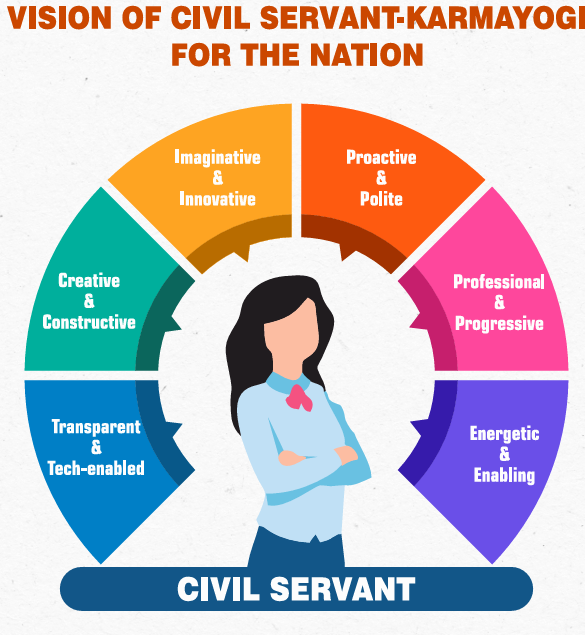
Enhancing Service Delivery at the Grassroots Level:
- Mission Karmayogi equips civil servants to address the needs of marginalized communities and women, promoting inclusive governance.
- It fosters collaboration between departments, streamlining service delivery, and use of technology for better monitoring. This ensures cohesive efforts at the grassroots level, aligned with the national goal of equitable socio-economic development.
Conclusion
Mission Karmayogi fosters innovation and inclusivity, streamlining service delivery for effective grassroots governance.
-
2023
(a).What do you understand by “moral integrity” and “professional efficiency" in the context of corporate governance in India ? Illustrate with suitable examples.
(b) International aid is an accepted form of helping ‘resource- challenged’ nations. Comment on ‘ethics in contemporary international aid’. Support your answer with suitable examples.
(a): Corporate governance refers to the system of rules, practices, and processes by which a company is directed and controlled to prevent corporate greed and to ensure that businesses are operated in a responsible and transparent manner.
- In the context of corporate governance in India, "moral integrity" and "professional efficiency" are two key principles that guide ethical conduct and responsible management within organizations.
- Moral Integrity: In corporate governance, moral integrity refers to the adherence to strong ethical values and principles in business practices. It involves acting with honesty, transparency, fairness, and responsibility, not just to comply with laws and regulations but to do what is morally right.
- Example: If a company reports its financial results honestly, even if it means acknowledging a decline in profits or financial challenges, it demonstrates moral integrity.
- Professional Efficiency: Professional efficiency, in the context of corporate governance, involves the effective and responsible management of a company's resources and operations.
- It entails optimizing processes, managing risks, and making decisions that maximize value for shareholders while considering the interests of all stakeholders.
- Example: Embracing the latest technologies and digital tools can significantly enhance professional efficiency
Companies that demonstrate moral integrity and professional efficiency are more likely to maintain their reputation, attract investment, and contribute positively to the overall economic and social development of India.
(b): International aid is essential in helping resource-challenged nations because it provides vital resources, expertise, and support that can lead to improved living conditions, economic development, and long-term sustainability.
Ethical considerations in contemporary international aid are essential to ensure that aid is effective, respectful, and sustainable:-
- Respect for Recipient Nations' Autonomy:
- Example: UNDP partners with countries to create their own development plans respecting the autonomy of nations.
- Transparency and Accountability:.
- Example: Charity organizations like Oxfam regularly publish detailed reports on their funding sources, expenditures, and project outcomes.
- Avoiding Harm and Dependency:
- Example: Microfinance programs, such as those by Grameen Bank in Bangladesh, provide small loans to individuals to start businesses..
- Long-Term Sustainability:
- Example: The Green Climate Fund supports climate adaptation and mitigation projects.
- Humanitarian Principles:
- Example: Doctors Without Borders operates in conflict zones worldwide.
However, there are few challenges in contemporary International Aid:
- Weaponization of Investment Aid:
- Example-China has been weaponizing investment on foreign soil as a part of its 'debt-trap diplomacy’
- Corruption and Mismanagement
- Example- Corruption and mismanagement of foreign aid led to the Sri Lankan economic crisis.
Thus,ethical international aid practices not only enhance the effectiveness of aid but also uphold the dignity, autonomy, and rights of the people and countries receiving support.
-
2023
(a). “Corruption is the manifestation of the failure of core values in the society.’’ In your opinion what measures can be adopted to uplift the core values in the society?
(b) In the context of the work environment, differentiate between ‘coercion’ and ‘undue influence’ with suitable examples.
(a): Corruption shows a society’s loss of core values, such as integrity, honesty, and accountability. When people choose personal gain over ethical principles, it damages good governance, economic development, and social justice.
Measures can be adopted to uplift the core values in the society to fight corruption:
- Moral and Ethical Education: Including values like honesty, integrity, and empathy in school curricula.
- Transparency and Accountability: Ensuring transparency and accountability in government actions.
- Example: The Right to Information Act, 2005 in India.
- Adherence to Legal Principles: Strengthening enforcement of anti-corruption laws with zero tolerance.
- Example: Singapore’s anti-corruption agency, the Corrupt Practices Investigation Bureau known for its zero tolerance.
- Civic Engagement: Encouraging citizen participation in decision-making processes.
- Example: Participatory budgeting in Porto Alegre, Brazil.
- Media Freedom and Investigative Journalism: A free and vigilant media that exposes corruption and holds power accountable.
- Example: The Panama Papers leak.
- Whistleblower Protection: Protecting whistleblowers who report corruption.
- Example: The Whistleblower Protection Act, 2014 of India.
It is a collective responsibility that involves individuals, institutions, and civil society working together to build a more just and ethical society. It is also supported by international agreements like the United Nations Convention against Corruption (UNCAC).
(b): In the work environment, "coercion" refers to the use of force or threats to compel someone to act against their will, while "undue influence" involves exploiting one's authority or power to manipulate others' decisions.
- These distinct concepts play critical roles in shaping ethical conduct and legal compliance within professional settings.
Aspect Coercion Undue Influence Nature of Influence Explicit, often involving threats (e.g., threatening termination). Subtle and manipulative, exploiting trust (e.g., manipulating an employee's loyalty). Legal Status Typically illegal due to explicit threats or force (e.g., blackmail). May not always be illegal but can be challenged (e.g., persuading an employee to take on additional tasks).
Psychological Impact Immediate fear, stress, and emotional distress (e.g., causing anxiety). Long-term psychological impact, erosion of confidence (e.g., undermining an employee's self-esteem). Reporting Behavior More likely to be reported promptly by victims (e.g., employees reporting threats to HR). May go unnoticed or unreported for a longer period (e.g., employees feeling pressured to stay silent). Workplace Implications Clear violation of legal and ethical standards (e.g., violating labor laws). Can lead to unethical practices, potential legal issues (e.g., favoritism in promotions). -
2023
Given below are three quotations of great thinkers. What do each of these quotations convey to you in the present context?
(a) ‘‘The simplest acts of kindness are by far more powerful than a thousand heads bowing in prayer’’. –Mahatma Gandhi
(b) ‘‘To awaken the people, it is the women who must be awakened. Once she is on the move, the family moves, the village moves, the nation moves.’’ –Jawaharlal Nehru
(c) ‘‘Do not hate anybody, because that hatred that comes out from you must, in the long run, come back to you. If you love, that love will come back to you, completing the circle.’’ Swami Vivekananda
(a): Mahatma Gandhi's above quote, emphasises the significance of compassionate actions over mere rituals or gestures. In the present context, this quote resonates with the importance of practical kindness and societal impact.
- Tangible Impact of Philanthropy: Azim Premji, the founder of Wipro, has donated a significant portion of his wealth to education through the Azim Premji Foundation, positively impacting the lives of millions of underprivileged children.
- Community-Based Initiatives: The Self Employed Women's Association (SEWA) in India empowers women from low-income backgrounds through various economic and social initiatives.
- Empowerment Through Microfinance: Nobel laureate Muhammad Yunus's pioneering work in microfinance through Grameen Bank has provided microloans to impoverished individuals, helping them escape poverty and build sustainable livelihoods.
- Social Entrepreneurs' Impact: Social entrepreneurs like Arunachalam Muruganantham, known as the "Padman" of India, have made substantial contributions by addressing critical social issues.
- His low-cost sanitary pad-making machines have improved menstrual hygiene and women's health in rural areas.
- Kindness in Education: Institutions like the Akshaya Patra Foundation exemplify the transformative potential of kindness by providing mid-day meals to school children, they not only address hunger but also incentivize education.
(b): Jawaharlal Nehru's above statement underscores the pivotal role of women in driving societal progress and transformation. In the contemporary context, this quote emphasises the significance of women's empowerment and their contribution to broader societal development.
Women's Multifaceted Impact on Society:
- Contribution of Women in Shaping Values: Indian mothers, through their teachings of respect for elders and kindness towards others, play a key role in shaping values that emphasize family bonds and social harmony.
- Empowerment for Economic Growth: India's Self-Help Group (SHG) movement, particularly in states like Kerala and Tamil Nadu, has empowered women economically enabling them to start and manage businesses effectively.
- Women's Education as a Catalyst: The "Beti Bachao, Beti Padhao" (Save the Girl Child, Educate the Girl Child) campaign in India seeks to address gender bias and promote female education, fostering a more enlightened society.
- Women in Political Leadership: Indira Gandhi, as India's first female Prime Minister, demonstrated the potential of women in political leadership and made significant policy contributions during her tenure.
- Women's Role in Sustainable Development: Vandana Shiva, an environmental activist, has championed sustainable agriculture and the preservation of biodiversity, emphasizing the interconnectedness of women, environment, and development.
(c): The above quote of Swami Vivekanand throws light on the boomerang effect of human behavior. Hatred can lead to retaliation, while acts of love can trigger a chain of kindness and reciprocity.
Hatred's Boomerang Effect:
- Cyberbullying on Social Media: Perpetrators of online hate speech may become targets of similar behavior, experiencing online harassment as a consequence of their actions.
- Divisive Political Rhetoric: Politicians employing divisive language may face public backlash and protests from citizens who oppose their rhetoric.
- Religious Extremism and Global Response: Extremist groups promoting hatred based on religion may provoke international intervention and efforts to counter their ideologies.
Love's Boomerang Effect:
- Chain of Kindness: Small acts of love and kindness can inspire a ripple effect, encouraging others to perform similar acts of goodwill.
- Community Support and Cohesion: Communities fostering love and support among members tend to experience increased safety and cooperation during crises.
- International Aid and Reciprocity: Countries providing foreign aid and humanitarian assistance often receive support in return during their own times of need, highlighting the reciprocal nature of compassion in international relations.
-
2023
(a). ‘‘What really matters for success, character, happiness and lifelong achievements is a definite set of emotional skills – your EQ – not just purely cognitive abilities that are measured by conventional IQ tests.’’ Do you agree with this view? Give reasons in support of your answer.
(b). Differentiate ‘moral intuition’ from ‘moral reasoning’ with suitable examples
(a): EQ stands for Emotional Intelligence, which refers to a person's ability to recognize, understand, manage, and effectively use their own emotions and those of others.
- IQ stands for Intelligence Quotient, which is a measure of a person's cognitive abilities, including problem-solving, logical reasoning, and learning capacity.
EQ holds greater significance than IQ in the realms of achievement, character development, happiness, and lifelong accomplishments.
Reasons:
- Resilience in the Face of Adversity: High EQ individuals maintain composure during crises, akin to the resilience displayed by Steve Jobs in overcoming challenges at Apple.
- Effective Leadership and Conflict Resolution: Nelson Mandela's EQ-driven leadership facilitated peaceful conflict resolution during South Africa's transition to democracy.
- Empathy and Enhanced Communication: Healthcare professionals with strong EQ connect with patients on a deeper level.
- Personal Well-being and Fulfillment: Effective emotion management contributes to healthier relationships and a sense of purpose, as seen in the pursuit of happiness in positive psychology.
- Conflict Resolution: Mediators use EQ to find common ground. This is especially evident in international diplomacy, where EQ-driven negotiations lead to peaceful resolutions.
(b):
Moral Intuition Moral Reasoning Involves immediate, gut-level responses to ethical dilemmas without conscious deliberation. Involves a conscious and rational evaluation of ethical choices. Relies on deeply ingrained moral values and emotions. Utilizes logical arguments and principles to arrive at a moral decision. Examples Feeling empathy and helping a homeless person on the street without thinking. Deciding to donate to a charity after researching its impact and effectiveness. Automatically feeling a sense of responsibility to protect the environment. Engaging in a structured debate to discuss the pros and cons of a proposed environmental policy. Experiencing a sense of guilt after breaking a promise to a friend. Analyzing the consequences and ethical implications of breaking a promise in a specific situation. Instinctively respecting the dignity of elders. Engaging in a philosophical discussion to justify the principles of dignity. Reacting with anger when witnessing an act of discrimination. Formulating an argument against discriminatory practices using legal and ethical reasoning. Automatically feeling discomfort or aversion towards LGBTQIA+ individuals without thinking. Individuals may consciously assess their attitudes toward LGBTQIA+ individuals, with or without experiencing immediate emotional discomfort. -
2023
(a). Is conscience a more reliable guide when compared to laws, rules and regulations in the context of ethical decision-making? Discuss. (Answer in 150 words)
(b). Probity is essential for an effective system of government and socio-economic development. Discuss. (Answer in 150 words)
(a): Law prescribes actions through due process for the common good and imposes obligations, while conscience is our innate ability to distinguish right from wrong. Each has strengths and limitations, with superiority context-dependent.
- Conscience:
- Strengths:
- Personal Morality: An internal moral compass that can guide ethical decision-making based on one's personal sense of right and wrong.
- Flexibility: Conscience values complexity and uniqueness, allowing for thoughtful consideration of individual situations beyond established laws.
- Limitations:
- Influence of Bias: Conscience influenced by biases, culture, upbringing can lead to questionable ethics.
- Inconsistent Application: Conscience can evolve, leading to inconsistency in ethical choices.
- Strengths:
- Laws, Rules, and Regulations:
- Strengths:
- Clarity: They establish ethical guidelines for society and organizations.
- Accountability: They impose consequences for wrongdoing, discouraging unethical actions.
- Protection of Rights: Laws and regulations can protect the rights and well-being of individuals and society as a whole.
- Limitations:
- Rigidity: Laws often struggle to keep pace with changing social norms and evolving ethics.
- Moral Blind Spots: Legal systems may not fully address all ethical dilemmas.
- Enforcement: Enforcing laws is tough, and unethical behavior can persist through loopholes.
- Strengths:
Conscience and laws/rules/regulations play crucial roles in ethical decisions. Conscience relies on universal ethics and bias control, while laws offer structure but need regular updates to stay fair.
(b): Probity means adherence to the highest principles and ideals. It is the foundation of moral principles like honesty and integrity. It's crucial for good governance and socio-economic progress, as it ensures officials prioritize the public, adhere to the law, and uphold transparency and accountability.
Probity in governance affects various aspects of socio-economic development:
- Resource allocation: Probity in governance means efficient and corruption-free resource allocation.
- Promotes competition: Probity fosters innovation and fair competition, eliminating cronyism, nepotism, and favoritism for an equitable economy.
- Equity: It ensures fair, impartial policies, respecting all citizens, especially the marginalized.
- Reduces inequalities: Probity reduces inequality by preventing public officials from using their power for personal gain.
- Inclusion: It ensures that public services and facilities are accessible and affordable to all citizens, without any discrimination or exclusion.
- Sustainability: Probity in governance means making decisions that consider environmental, social, and economic sustainability for both current and future generations.
- Enhances resilience: It boosts society's resilience by preparing officials to handle natural disasters, climate change, and pandemics effectively.
Probity in governance is vital for effective government, trust, transparency, and societal progress. All stakeholders, including officials, civil society, media, and citizens, should promote and protect it.
- Conscience:
-
2023
(a). What were the major teachings of Guru Nanak? Explain their relevance in the contemporary world. (Answer in 150 words)
(b). Explain the term social capital. How does it enhance good governance? (Answer in 150 words)
(a): Guru Nanak, the founder of Sikhism, imparted a profound set of teachings that continue to hold immense relevance in the contemporary world.
His major teachings are as follows:
- Oneness of God (Ik Onkar): Guru Nanak emphasized the belief in one universal God, rejecting the notion of multiple deities. This monotheistic doctrine promotes religious tolerance and unity, which is crucial in a world marked by religious diversity and conflicts.
- Equality and Social Justice: Guru Nanak championed equality, inspiring Sikhism's values of justice, gender parity, and service. His teachings remain a beacon of hope in our modern struggle against discrimination and inequality.
- Selfless Service (Seva): Guru Nanak promoted 'Seva,' selfless service to humanity, fostering compassion, altruism, and a sense of responsibility, still relevant today.
- Interfaith Dialogue: Guru Nanak fostered interfaith harmony through dialogues, stressing unity in diversity. His teachings remain vital for global peace and coexistence.
- Rejecting Rituals and Superstitions: Guru Nanak rejected empty rituals and superstitions, emphasizing a personal connection with God, which appeals to those seeking a deeper, more meaningful faith.
In the contemporary world, Guru Nanak's teachings inspire inclusive, compassionate, and harmonious societies, addressing modern issues like religious intolerance and social inequality, guiding us toward a more enlightened and equitable future.
(b): Social capital is the network of connections, trust, and shared values within a community that fosters effective collaboration and the pursuit of common objectives. Social capital plays a crucial role in enhancing good governance in several ways:
- It can foster civic engagement and participation, which can increase the accountability and responsiveness of governance institutions.
- It can facilitate collective action and problem-solving, which can improve the delivery of public goods and services.
- It can promote social cohesion and inclusion, which can reduce conflicts and violence and enhance social justice.
- It can reduce transaction costs and information asymmetries, and increase coordination and cooperation among different actors.
- It can stimulate innovation and learning, which can enhance the adaptability and effectiveness of governance systems.
Social capital is crucial for good governance, fostering trust, cooperation, civic engagement, and collective action. Recognizing its value, governments should actively nurture and safeguard social capital to enhance democratic institutions and societal well-being.
-
2022
(a): Wisdom lies in knowing what to reckon with and what to overlook. An officer being engrossed with the periphery, ignoring the core issues before him, is not rare in the bureaucracy. Do you agree that such preoccupation of an administrator leads to travesty of justice to the cause of effective service delivery and good governance? Critically evaluate.
(b): Apart from intellectual competency and moral qualities, empathy and compassion are some of the other vital attributes that facilitate the civil servants to be more competent in tackling the crucial issues or taking critical decisions. Explain with suitable illustrations.(a): The ability to make sensible decisions based on knowledge and experience is known as wisdom. In any particular situation, a person’s decision is based on his experience and knowledge to overlook or reckon with something.
However, a bureaucrat engrossed with the periphery and ignoring the core issues should not become a preoccupation. A bureaucrat has various responsibilities, it is no doubt that he/she may miss or ignore something. But this should not be accepted in the legal framework. At a moral level, it can be accepted for few times but when it comes to law these mistakes could make pay heavy price. Because such mistakes lead us towards injustice and poor governance.
Some examples in the above context:
- Any negligence in passing a construction site could cause a heavy loss of life which will be a huge injustice.
- If a bureaucrat is trying to know only whether the school is opening or not and neglecting whether the children are coming or not will lead towards poor governance.
(b): A civil servant needs various qualities to tackle different crucial issues or take critical decisions. For this, he/she needs intellectual competency and moral qualities but this is not enough. Qualities such as compassion and empathy are equally important.
Let’s understand it with some examples:
- An accident happened at some construction site and three people got seriously injured. The accident happened by mistake because a worker among them forgot to switch off some machines. Now, the officer present there has lots of pressure to punish the culprit. But the officer knows it was not intended by the worker. Here, the officer needs compassion and empathy to deal with this situation and should try to not give some stringent punishment to the worker.
- Filling false dowry cases needs traits of compassion and empathy, otherwise, innocent people will get punished under the law.
- In the covid-19 situation, many officers have worked tirelessly, they worked and helped beyond their working time limit. In such situations, traits like empathy and compassion are most needed in the civil servants especially for vulnerable sections of the society.
Hence, with intellectual competency and moral qualities, a person can take rational decisions but it is not necessary, that decision includes empathy and compassion.
-
2022
(a): The Rules and Regulations provided to all the civil servants are same, yet there is differnce in the performance. Positive minded officers are able to interpret the Rules and Regulations in favour of the case and achieve success, whereas negative minded officers are unable to achieve goals by interpreting the same Rules and Regulations against the case. Discuss with illustrations.
(b): It is believed that adherence to ethics in human actions would ensure in smooth functioning of an organization/ system. If so, what does ethics seek to promote in human life? How do ethical values assist in the resolution of conflicts faced by him in his day-to-day functioning?
(a): Rules and Regulation act as a source of ethical guidance which clarify the values to be used and the procedure to be followed. These rules and regulations are the same for all and need to be implemented in a situation as per the task and the ground situation.
According to United Nation Development Programme (UNDP), the ethical public officer promotes socio-economic development and unethical behaviours threaten development and loss of trust in public institutions.
Difference in Approach
Positive minded officers
- They interpret the rules and regulations to provide justice in efficient manner and use their discretion to help the people.
- They provide the best solution that can meet halfway with the beneficiaries.
- They ensure the proper implementation of the scheme and carry out successfully in the proper way ensuring legal and moral protocols.
- They ensure that scheme is carried out for the purpose it was created rather than worrying about administrative aspect of implementation of the scheme.
- Example: When an officer at bank sends an official at the home of senior citizen for the banking services instead of refusing for the service.
Negative minded officers
- They find loopholes in the rules and exploit them for personal benefits and delay the process. They use their discretion to harass the people.
- They focus on implementation of the scheme and being insensitive to the issues arise during implementation of the scheme.
- Example: Denying food grains at ration shop to a person because his biometrics details were not updated in the database due to connectivity issues.
(b): Ethics is also known as moral philosophy which represents the values and customs of the society. It educates the society to know right or wrong form the perspective of society.
Ethical society ensures peace, love, and compassion because the personal values of a person are aligned with the social values.
The trust of the people in the government is maintained through public administration. If there is a void of ethics in public administration, then a society and nation will fail. The ethical society is devoid of social crimes such as theft, rape, harassment, etc.
Ethics and Values in Human Life
- Person makes decision and implements in a transparent manner as it brings openness to that group of people which are affected by the decision.
- Ethics ensures the malpractices like corruption is curbed in day-to-day life. Misconduct, abuse of power, and self-persecution has to be avoided.
- Work commitment requires time, punctuality, and respect to fulfil the promises. Swami Vivekanand said, “Every duty is sacred and devotion to duty is the supreme form of worship”.
- Responsibility and accountability come with transparency.
- A person must show sympathy in their actions towards the poor and disadvantaged section of society without breaking the law.
Role of Ethical Values in Resolution Conflict
- An ethical person resolves the conflict in accordance with law, justice, and compassion in the best interest of concerned societies while an unethical person resolves the conflict based on what is beneficial to him rather than society.
- Empathy and compassion ensure that conflict resolution creates win-win situation for all.
- The value of persistence helps an individual to follow ‘never give attitude’. The ethics also helps in anger management.
- Ethics teaches us to forgive rather than holding grudges against each other. Hence, the decision of ethical person is acceptable due to impartiality and trust.
-
2022
What does each of the following quotations mean to you?
(a): "Ethics is knowing the difference between what you have the right to do and what is right to do."
(b): "If a country is to be corruption free and become a nation of beautiful minds, I strongly feel that there are three key societal members who can make a difference. They are father, mother and teacher." – A.P.J. Abdul Kalam
(c) 'Judge your success by what you had to give up in order to get it." – Dalai Lama
(a): Ethics is the study of what is right or wrong in human conduct. It is a branch of philosophy that involves systematizing, defending and recommending concepts of right and wrong behavior. Ethics seeks to resolve questions of human morality by defining concepts such as good and evil, right and wrong, virtue and vice, justice and crime.
What You have the Right to Do and What is Right to Do
Article 19 of the Indian Constitution provides for Right to freedom of speech and expression. It gives rights to every citizen to hold public meetings, demonstrations and take out processions. However, it doesn’t mean that citizens can block the road, railway and other transportation. Hence, holding strike and creating hurdles for others is not the right thing to do.
Similarly, under the Article 25, every citizen has freedom to profess, practice and propagate the religion. But, promoting religious conversion through bribery, coercion, violence is wrong and illegal action.
Under the PM Arogya Yojana, the Government offers a sum insured of Rs. 5 lakh per family for secondary care as well as tertiary care. But around 23,000 fraud transactions have been recorded in hospitals in Chhattisgarh, Punjab and Jharkhand. Here, beneficiaries have the right to utilise services, but its misuse defeats the purpose.
To conclude, it is ethics which help us in differentiating what we have the right to do and what is right to do. Rights are provided to live a better life, which help in capacity building of an individual, but its misuse defeat the very purpose.
(b): Corruption is a form of dishonesty or a criminal offense which is undertaken by a person or an organisation which is entrusted in a position of authority, in order to acquire illicit benefits or abuse power for one's personal gain.
A newborn child is like a blank slate. It is the parents and teachers, who give a shape to the child like a clay pot is given shape by its maker. In our childhood, our parents and teachers used to tell us moral stories. Through this, they inculcate values to make an asset and valuable citizen for our nation.
IAS Armstrong Pame is the first member of Nagaland’s Zeme tribe to become an IAS officer, earning the nickname “Miracle Man” for creating a 100-kilometre road connecting Manipur to Nagaland and Assam without any government assistance.
But, in August 2022, IAS officer K Rajesh was arrested for taking bribes for issuing arms licenses, allotment of government land to ineligible beneficiaries and grant of other illegal favours.
These two examples show the big difference in values of an individual. It is the failure of parents as they failed to inculcate the moral values to their child.
In the Corruption Perception Index 2021, India ranked 85 among 180 countries. Hence, India has a long way to go to become corruption-free. Dr. APJ Abdul Kalam has rightly said that it is role of parents and teachers to shape the future of India.
(c):
Success is something that you must define for yourself and no one can do it for you. Success could mean a sense of giving back to the world and making a difference. It could mean a sense of accomplishment and career progression.
Success is the result of making right priorities and giving up less important things in your life. The Phogat sisters, Gita and Babita, sacrificed their childhood just to fulfill their father’s dream of gold medal in wrestling. They had suffered a lot of pain to make India proud on them.
The aspirants who prepared for IIT and NEET, also do sacrifices their desires, just to clear the exam and live a better life. They have the responsibility of their families, to uplift them from poverty and give them better lifestyle.
To gain something big, we must pay the opportunity cost of some short-term pleasure. Mahatma Gandhi gave up his western clothing and adopted khadi dhoti. He went to jail to make India free. He knew that Indians would get independence by giving up western lifestyle and hegemony.
Hence, Dalai Lama has rightly said that one’s success must be judged by the sacrifices he has to made to achieve his goals. By setting the priorities, we can achieve all our goals. Because failing individuals have given priorities to short term pleasure.
-
2022
(a): What do you understand by the term 'good governance'? How far recent initiatives in terms of e-Governance steps taken by the State have helped the beneficiaries? Discuss with suitable examples.
(b): Online methodology is being used for day-to-day meetings, institutional approvals in the administration and for teaching and learning in education sector to the extent telemedicine in the health sector is getting popular with the approvals of the competent authority. No doubt, it has advantages and disadvantages for both the beneficiaries and the system at large. Describe and discuss the ethical issues involved in the use of online method particularly to the vulnerable section of the society.
(a): When the government of a country performs its functions efficiently, effectively, and for the good of citizen then the carried-out governance is known as good governance. It has 8 major characteristics.
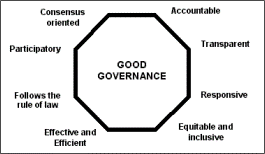
Electronic-Governance (e-Governance) uses information and communication technologies (ICTs) such as the internet, the wide area network and mobile computing at various levels of the government and the public sector for enhancing governance. There are four pillars of e-governance:
- People
- Process
- Technology
- Resources
Recent Initiatives of e-Governance
- Direct Benefit Transfer (DBT): The DBT in public distribution scheme (PDS) has deleted approximately 4 crore duplicate and non-existing ration cards leading to the proper targeting of the scheme.
- Aarogya Setu: This application was launched for providing information about the potential risk of Covid-19 infection. It had helped successfully in identifying the potential hotspots.
- National Scholarships Portal (NSP): It provides a centralized platform for application and disbursement of scholarship to students under any scholarship scheme.
- Bhoomi Project: It is a self-sustainable e-Governance initiative for the computerised delivery of rural land records to farmers of Karnataka.
- e-Courts: It is the mission mode project which aims at utilizing technology for improved provisioning of judicial services to the citizens.
- Digi Locker: It aims at digital empowerment of citizens by providing access to authentic digital documents.
- PAYGOV India: It will offer end-to-end transaction experience for a citizen which includes accessing various services through the internet with payment gateway interface for online payments.
- Pragati: It is a unique integrated and interactive platform through which the Prime Minister oversees the implementation of various government schemes, grievances, state and central related projects & programmes by directly interacting with all stake holders through Videoconferencing on a single platform.
(b): The advent of pandemic has led all activities, businesses, education, trade, health, and social interactions to an online mode. The traditional learning and medical check-ups have shifted to completely digital experience such as NISTHA app for teacher’s training and Mission Karmayogi for the training of civil servants.
Benefits of Online Methodology
- Less investment in infrastructure.
- Efficient, economical, and cost-effective.
- Provides flexibility.
- Universal Access.
- Online methodology has led to wider acceptance for ‘Work from Home’, which has provided a boost to encourage careers and managing work-life balance.
- Teleconsultation has made it easy for patients and doctors to connect at ease, especially during the time of pandemic.
Disadvantages of Online Methodology
- Frequent network issues and technical problems particularly in underdeveloped regions.
- Increase in unemployment due to online education and other services.
- Lack of accountability, empathy, and teamwork spirit.
- Digital divide presents a challenge for universal usage of online mediums.
Ethical Issues Involved in Use of Online Methodology
- More benefits accrue to the English speaking, urban, rich people who have access to computer, internet, and electricity.
- Most of the villages are still not connected with the fibre-net and most of the poor people could not afford the computers and smartphones.
- The children which use internet more frequently are linked to security issues and cyberbullying, which hinders their moral development.
- The ability of children to learn critically is restricted when they use ready-made material form the internet, which has an impact on their cognitive development.
-
2022
(a): Russia and Ukraine war has been going on for the last seven months. Different countries have taken independent stands and actions keeping in view their own national interests. We are all aware that war has its own impact on the different aspects of society, including human tragedy. What are those ethical issues that are crucial to be considered while launching the war and its continuation so far? lllustrate with justification the ethical issues involved in the given state of affair.
(b): Write short notes on the following in 30 words each:
(i) Constitutional morality
(ii) Conflict of interest
(iii) Probity in public life
(iv) Challanges of digitalization
(v) Devotion to duty
(a): In the history of humankind, war is one of the catastrophic instruments created by mankind itself. All around impact of war is not just limited to this generation but its hazardous impacts extend to next generations.
We are witnessing that how Russia – Ukraine war seriously impacting the all-possible corners of society by the way of gross human rights violation, disruptions in global demand supply chain, wastage of precious resources, widespread painful migration.
To avoid this type of episodes, nations should take collective stands and action keeping in view their own collective global interest rather than independent stands and individual national interest.
Possible ethical issues while launching the war and its continuation
- Ethical Issues of Human rights- In war time there is gross violation of human right. Women, children and other vulnerable section faces unprecedented hardships. For example, Human genocide, heinous massacre and brutality against women and children comes under the worsen form of human right violation.
- Ethical dimensions of rights of future generation and present generation- Cost of present generation war is paid by next generation. For ex- Hiroshima -Nagasaki bombing in second world war. The ethical concern here is why the cost of present generation should be paid by coming future generation?
- Issues of accountability and answerability- In war time, who is accountable and answerable to whom, there is no fix criteria.
- National interest vs Global interest – There is grave ethical concern is that nations put their own individual national interest over collective global interest.
- Individual Aspiration vs Collective Aspiration- Individual aspirations of political peers override the collective aspirations of millions of masses.
- Means vs Ends– For gaining territorial and expansion ends nation use wrong means of war, border conflict etc. It led to dangerous consequences which impacts all corners of society and even next generations.
- Issues of proportionate vs disproportionate dimension of war- Ethics of war should be entitled to its proportionate response but the activity of nuclear attack, mass massacre and gross violation of war ethics changes war into disproportionate dimensions. For example, attack on Ukraine nuclear reactor by Russia can amount to grave consequences to the world.
About war, Nobel Laureat John Steinbeck famously quoted that “all war is symptom of man's failure as a thinking animal. Humankind should understand the fact that war can never fix the problem. Aim of prosperous and peaceful society can be achieve through dialogue, diplomacy, decency.
(b):
(i) Constitutional Morality- In an important case, NCT of Delhi vs Union of India, Hon'ble justice of supreme court Shri Deepak Mishra wrote that “constitutional morality in its strictest sense implies a strict and complete adherence to constitutional principles as enshrined in the various segments of the document. It is required that all constitutional functionaries to ‘cultivate and develop a spirit of constitutionalism’. where every action taken by them is governed by and is in strict conformity with the basic tenets of the constitution”. For example, judgement of supreme court on Sabarimala and Hadiya case, abolition of sec377 etc.
(ii) Conflict of Interest- This situation arise when public duty interest conflicts with personal interest. This is the case where conscience being caught up in between the personal and professional ends. For example, former ICICI chairman Chanda Kochhar’s resignation, former NSE CEO Chitra Ramkrishna case.
(iii) Probity in public life - Probity is one of the virtues in public life. Person with higher probity quotient has higher grade of inegrity,honesty, decency and morality. Impartiality and non-partisanship are key instruments of aptitude of probity in public life. For example, life example of Abdul kalam and former PM Lal Bahadur Shastri.
(iv)Challenges of digitalization- Digitalization is the process of transformation of possible information into digital data format. Challenges-
- Digital illiteracy and issue of digital divide among people.
- Cyber frauds and digital economic fraud.
- Cyber warfare.
- Mass surveillance and digital phishing attacks.
- Issues of poor network and connectivity.
- High energy consuming devices.
(V) Devotion to duty- It express the strong emotion, integrity, loyalty, determination and admiration towards duty. Swami Vivekananda famously quoted that "Devotion to duty is the highest form of worship of God”. For example, Nishkama karma concept of Bhagwat Geeta, way of life of Mother Teresa.
-
2022
(a): Whistle-blower, who reports corruption and illegal activities, wrongdoing and misconduct to the concerned authorities, runs the risk of being exposed to grave danger, physical harm and victimization by the vested interests, accused persons and his team. What Policy measures would you suggest to strengthen protection mechanism to safeguard the whistle-blower?
(b): In contemporary world, corporate sector's contribution in generating wealth and employment is increasing. In doing so, they are bringing in unprecedented onslaught on the climate, environmental sustainability and
living conditions of human beings. In this background, do you find that Corporate Social Responsibility (CSR) is efficient and sufficient enough to fulfill the social roles and responsibilities needed in the corporate world for which the CSR is mandated? Critically examine.(a): A whistleblower is a person who informs about a person or organization engaged in illicit activity. There are many commissions who recommended that a specific law needs to be enacted to protect whistleblowers like Law Commission of India 2001, 2007 report of Second Administrative Reforms Commission. In India, whistleblowers are protected by the Whistleblowers Protection Act, 2014.
Policy measures to strengthen protection mechanisms to safeguard the whistle blower
- There are various policy measures regarding protection of whistle-blowers but their implementation is very poor. It is important that policies should be implemented properly for their safety.
- Submitting the issue as an anonymous person will protect the life of the Whistle blower.
- Specific training to teach workers their rights and about available internal and external protection programs, and for managers to learn these along with related skills, behaviours and obligations to act.
- Suitable legislation must be enacted to provide protection to innocent whistleblowers and the dilution of the act that is proposed by the 2015 Amendment Bill must be abandoned.
Hence, strengthening of the whistleblower protection mechanism will help in ensuring that the integrity of democracy is protected, cherished and upheld.
(b): The term "Corporate Social Responsibility" in general can be referred to as a corporate initiative to assess and take responsibility for the company's effects on the environment and impact on social welfare. The activities include eradicating extreme hunger and poverty, ensuring environmental sustainability, etc.
Some of the Features of the CSR are:
- Self-Regulating Model: Corporate social responsibility (CSR) is a self-regulating business model that helps a company be socially accountable—to itself, its stakeholders, and the public.
- Improved Work Culture: CSR activities can help forge a stronger bond between employees and corporations, boost morale and help both employees and employers feel more connected with the world around them.
- Corporate Citizenship: By practicing corporate social responsibility, also called corporate citizenship, companies can be conscious of the kind of impact they are having on all aspects of society, including economic, social, and environmental.
Although the corporate sector is generating wealth no doubt there is a huge gap in the wealth division, rich are getting richer day by day and the poor are becoming more poor which is against social welfare. Even though the Companies Act encourages companies to invest almost 2% of their average net profit in CSR activities but that will not be enough to counter environmental and climatic problems.
-
2021
Identify five ethical traits on which one can plot the performance of a civil servant. Justify their inclusion in the matrix.
Ethics can be defined as a set of “moral principles that govern a person’s behaviour or the conduct of an activity”. Ethics relates primarily to the nature of ultimate values and standards by which human actions can be judged. Ethics are subjective standard of rights and wrong.
For a civil servant, acting ethically is of utmost importance. A civil servant is supposed to possess the virtues of objectivity and impartiality. The five ethical traits – Integrity, Compassion, Accountability, Objectivity, and Selflessness – form the ethical foundation of a civil servant and other values like non-partisanship, tolerance, responsiveness can emanate from them. A matrix of ethical traits is discussed below, which is beneficial in performance evaluation of civil servants.
Ethical Trait
Reason for Inclusion
Integrity
- Important for elimination of corruption.
- Leadership quality to act as a role model for others.
- Best utilisation of public resources and pursuit of professional excellence.
Compassion
- An element of Emotional Intelligence
- Self-motivation to work for the weak and brings empathy towards them.
- Outcome and effectiveness orientation.
Accountability
- Makes administration transparent and public oriented.
- Builds public trust and deters unethical conduct.
- Makes civil servants answerable for their conduct and decisions.
Objectivity
- Decisions based on merit without personal bias.
- Makes a civil servant impartial and non-partisanship.
- Fairness in action and tolerance towards opposing views.
- Efficiency orientation.
Selflessness
- Prevents misuse of entrusted public resources and authority.
- Helps in resolving conflicts of interest, countering nepotism and cronyism.
These traits ensure that a civil servant fulfills his professional obligation even in adverse situations. The ideal training programme for a civil servant should be a mix of ethical traits, procedural rules and practical situations.
-
2021
Impact of digital technology as a reliable source of input for rational decision making is a debatable issue. Critically evaluate with suitable example.
A decision maker is characterised by two binary relations. The first reflects decisions that are rational in an “objective” sense: the decision maker can convince others that she is right in making them. The second relation models decisions that are rational in a “subjective” sense: the decision maker cannot be convinced that she is wrong in making them. Objectivity or rationality in decision making depends upon availability, quantity and quality of data.
Digital technology has almost become ubiquitous in all phases of the decision-making process. At the data collection stage, people use technology to access information, and this information influences the decision maker in the following decision steps. Technology helps people filter, analyse, and process information as well as formulate alternatives and evaluate them, whether consciously or unconsciously.
Digital technologies can act as a reliable source of input for rational decision, as:
- Big data analysis can predict future progression of an event like climate change, COVID-19 outbreak etc., which helps in rational decisions and course corrections.
- It enables data sharing and monitoring in real time, helping in identifying bottlenecks and undertaking necessary reforms.
- Digital technologies have also made it easier to collect and collate data and convert it using various algorithms, which can help in surveys like census, NFHS etc.
- It also helps in integrating data and information spread across different departments, ministries and geographies, which provides a holistic picture.
- Through correct measures and ways, it can act as a reliable source to spread information and make people aware.
As a coin has two sides, every situation too has its pros and cons too. Digital technologies can be a reliable source, but at times, this perception changes. It can be concluded so by:
- Digital technologies are devoid of human emotions and decisions based on such information can violate basic principles of compassion and fairness.
- Digital technologies have resulted in targeted messages changing the attitude of recipients and manipulating them, as seen during elections.
- Digital technology impacts decisions and leads to bounded rationality.
- During the COVID-19 pandemic, digital media was the hub of unverified information creating confusions and cognitive dissonance.
Thus, digital technology provides information but objectivity of decisions is also based on human values, attitudes and conscience.
-
2021
What does each of the following quotations mean to you?
(a): “Every work has got to pass through hundreds of difficulties before succeeding. Those that persevere will see the light, sooner or later.”- Swami VivekanandPerseverance is the ability to sustain one’s efforts in face of immense difficulties. Perseverance is the key to success. Integrity in adulthood is built on years of value inculcation and winning over temptations of dishonesty.
Gautam Buddha faced several austerities in his life, and through his intellectual queries and debates, he later achieved enlightenment. Swami Vivekananda was an inquisitive man. His open and inquisitive mind led him to his Guru Shree Ramkrishna Paramhans. Through his Guru, he found his mission in life. Mahatma Gandhi, in his book, ‘My Experiments with Truth’ highlighted how he was indulged in lying and stealing at a young change. But, during the freedom struggle, his approach evolved in contrasting ways.
Vijay Vardhan who secured 104th rank in UPSC Civil Services Exam in 2018 had failed more than 35 exams before hitting the bull’s eye. The list of failures may crack any person and force them to give up on their dreams. But Vijay epitomised the adage, “What does not break you, makes you stronger.” He continued to strive for his dreams and his perseverance paid off.
Difficulties, trial and tribulations, and failure are part of the way to success. Those who persevere see the light but those who quit, cannot. -
2021
Attitude is an important component that goes as input in the development of human being. How to build a suitable attitude needed for a public servant?
Attitude is generally defined as the way a person responds to his or her environment, either positively or negatively. Work environment can affect a person’s attitude. An attitude is a relatively stable predisposition. It goes a long way in shaping the development of a human being.
Attitudes provide meaning (knowledge) for life. The knowledge function refers to our need for a world which is consistent and relatively stable. This allows us to predict what is likely to happen, and so gives us a sense of control. Attitudes can help us organise and structure our experience.
Public servants are the representatives of the government. A positive attitude is considered to be an indispensable characteristic of a public servant. Ways to build suitable attitude for a public servant:
- Organisation and Negotiating Skills: In any role in the public sector, one will be required to juggle different projects with varying degrees of priority along with multiple stakeholders and personalities. A person may need to influence others as part of his/her role or negotiate with other departments.
- Creativity and Flexible Thinking: The ability to adapt to change and think creatively around problems is a necessity in this field.
- Leadership: In both the civil service and public affairs, one would be keen to learn how to become a great leader - influencing and inspiring those to act around him/her.
- Decision-Making Ability: One would be required to make tough decisions under pressure. He/she would be someone who won’t shy away from coming up with solutions, however, difficult.
- Teamworking Skills: One would be working with a myriad of different people with varying skills and qualities. He/she would need to know how to motivate them and work alongside them.
- Ability to Work Alone: Part of one’s work will require independent thought and the ability to come up with solutions on his/her own. He/she would be someone who can remain focused during these times.
-
2021
“Refugees should not be turned back to the country where they would face persecution or human right violation”. Examine the statement with reference to ethical dimension being violated by the nation claiming to be democratic with open society.
The United Nations defines ‘refugee’ as a person who owing to well-founded fear of being persecuted for reasons of race, religion, nationality, membership of a particular social group or political opinion, is outside the country of his nationality and is unable or unwilling to avail himself of the protection of that country.
Under international human rights law, the principle of non-refoulement guarantees that no one should be returned to a country where he/she would face torture, cruel, inhuman or degrading treatment or punishment and other irreparable harm. This principle applies to all migrants at all times, irrespective of migration status.
Human rights are undeniable rights to life, liberty and opportunity to realise one’s potential. Turning back the refugees violates their basic human rights. Most refugees suffer without any fault of their own. It goes against all ethical principles to deny them opportunity to escape violence and persecution.
Countries often do not provide refuge for reasons of limited resources, security threats and primary responsibility towards their citizens. However, with this, they violate their responsibility as members of the global community. Besides, many refugee crises are the products of the western world. They should take historical responsibility for their actions.
It sets wrong example for future in dehumanising refugees and refusal to recognise their suffering. Subsequently, this leads to decline in values like care, empathy and compassion in the society. -
2021
An independent and empowered social audit mechanism is an absolute must in every sphere of public service, including judiciary, to ensure performance, accountability and ethical conduct. Elaborate.
Social Audit is the audit of a scheme jointly by the Government and the people. A social audit helps to narrow gaps between vision/goal and reality, between efficiency and effectiveness. MGNREGA was the first Act to mandate a Social Audit by the Gram Sabha.
Social Audit informs and educates people about their rights and entitlements. It provides a collective platform for people to ask queries, express their needs and grievances (jansunwai). It promotes people’s participation in all stages of implementation of programmes. People’s involvement makes things credible and inclusive and as a result the ethical conduct of the schemes/authorities/organisations also increase. It also brings about transparency and objectivity in government schemes and authorities become accountable to the public at large.
In judiciary also Social Audit plays an important role:
- Social auditing uses participatory techniques to involve all stakeholders in measuring, understanding, reporting and improving the social performance of an organisation. This way people will understand and become aware about the judicial structure and proceedings. This will also help in making judiciary more interactive and understandable to common people, thereby improving its performance and accountability.
- Social Audit can help make judiciary reach the masses and spread awareness about it. It can help judiciary proactively take up cases of disadvantaged/vulnerable/marginalised sections of society which need help and attention.
Even though social audit has been of great importance, it still needs awareness to increase its reach among the masses. Administrative and political cooperation is required for the better functioning of SA. A legal backing or a national law should also be considered.
-
2020
Discuss the role of ethics and values in enhancing the following three major components of Comprehensive National Power (CNP) viz. human capital, soft power (culture and policies), and social harmony.
Comprehensive National Power (CNP) is the comprehensive capability of a country to pursue its strategic objectives by taking the necessary actions internationally. It can also be defined as the degree of ability to mobilize and utilize strategic resources of a country to realize national objectives.
Role of ethics and values in enhancing human capital
- Ethics is all about the choices that an individual makes. People always face many dilemmas and choices that affect the quality of their lives.
- Ethics and values make an individual aware that their choices have consequences, both for themselves and others.
- Thus, ethics and values build credibility, improve decision making, and provide long term gains.
Role of ethics and values in enhancing social harmony
- Ethics and values are about character; the sum of qualities that defines a person. The same principle applies to society.
- Ethics and values develop norms of behaviour that everyone should follow in society. If every person acts with a selfish motive, society might fall into chaos and anarchy.
- There is nothing wrong with pursuing one’s interests. However, an ethical person must be willing – at least sometimes – to place collective interests ahead of self-interest.
Role of ethics and values in enhancing soft power
- International relations are largely driven by the ideology of realism, which propagates national interest precedes global interest.
- However, pursuance of national interest must not always be fulfilled with hard power (military power, economic power). The soft power (a country’s image due to its culture and values) also secures national interest without compromising others’ interest.
- In this regard, ethics and the country’s ancient values (for example, the idea of Vasudhaiva Kutumbakam in India) revive national pride and project a country’s rightful image.
Each country wants to have a respectful place in the global community. CNP is about pursuing it with the right course and action. Each citizen is a nation-builder, and their ethical righteousness help a country achieve wider acceptibility.
-
2020
Hatred is destructive of a person’s wisdom and conscience that can poison a nation’s spirit. Do you agree with this view? Justify your answer.
Hatred is a strong negative emotion or extreme emotional dislike that can drive oneself to extreme behaviors such as violence, murder, and war. It is corrosive of a person’s wisdom and a nation’s spirit. In the contemporary world, religious violence, communal polarization and intolerance have increased and it is a continuous obstacle in the progress and growth of a country.
One of the characteristics of hatred is the need to devalue the victim more and more. At the end, the object of the hatred loses all moral or human consideration in the eyes of the hater. Hatred severely destructs person’s wisdom and conscience as:
- Hatred produces energy for destructive power and the fission that ignites the explosion, which is driven by the intense hostility, fear, anger or sense of injury one feels.
- Hatred reduces an individual’s quality of making good judgements or having good experience and knowledge.
- It further reduces an individual’s quality of being wise.
Hatred may also lead to:
- Deprivation of Amenities: Victims of intolerance are found to be deprived of facilities and opportunities, thus excluding them from contributing to the overall development of the society and subsequently lose out on self-development too.
- Curbing of Individual Freedom: Any form of illogical intolerance often leads to taking away individual freedom and rights. Constructive criticism and debates over various aspects are absent and dominance of one ideology takes over. Any society plagued by this halts the overall growth and progress of the collective.
- Destruction of Social Harmony: Due to the communal intimidation and hatred being spread, the very fabric of a society is being diminished in the larger sense, rendering a weak and divided social strength. For example: Assimilation with accommodation, stable patterns of pluralism, inequality and integration etc. constitute the basic fabric of Indian society, which when tainted with communal intolerance get divided and internally threatened.
- Economy: Disturbances caused due to communal intolerance largely impact the local economy due to the disruptive activities like strikes, riots, destruction of public property, etc. against each other, and also disturb the macro-economic outlook of countries on the global sphere as a result of the apprehensions of investors or economic giants of a good work environment.
- Political Instability: At times massive such clashes result in political blame game, interference, and unnecessary measures, projecting an unstable political atmosphere. Welfare of the nation is mainly side-lined, and the representatives are caught in inconsequential issues.
Hatred is a negative emotion and that is irrational and subjective. When hatred becomes all-pervasive in a society it can destroy a nation’s spirit and could further hurt social capital and cooperation among citizens. This can be explained as to how the hatred of Hitler for Jews led to the corruption of many German citizens which had devastating effects on the German nation and its conscience. Therefore, hatred is indeed a serious threat to a person’s wisdom, wellbeing, and national prosperity.
-
2020
What teachings of Buddha are most relevant today and why? Discuss.
The societies across the globe are facing serious issues ranging from moral and cultural degradation to religious conflicts, corruption, lack of food and water security, lack of economic opportunity and employment, environmental degradations etc. It is in these times that the values like compassion, solidarity and peace become even more relevant.
Teachings of Buddha most relevant today:
- The Buddha stressed in his teachings that the way to extinguish desire, which causes suffering, is to liberate oneself from attachments like greed, desire, ignorance, delusion, hatred and destructive urges.
- Buddha prescribed an eightfold path, the middle way for liberation. The eightfold path revolves around Wisdom (right understanding and intention), Ethical Conduct (right speech, action and livelihood) and Meditation (right effort, mindfulness and concentration).
- Right action and livelihood can liberate society from corruption, it can ensure food and water security and will enhance economic opportunity and employment, giving way to prosperity for all.
- Loving-kindness brings about positive attitudinal changes as it systematically develops the quality of ‘loving-acceptance’.
- Right understanding and intention can open the path for knowledge and can liberate the people from ignorance and delusion.
The Buddhist teachings inculcate compassion, calmness & composure, joy among humans and they can help maintain a sustainable balance between man and nature.
-
2020
Distinguish between laws and rules. Discuss the role of ethics in formulating them.
Any society is governed by certain sets of laws and rules. Although in common language, these are synonyms yet there is substantial difference between them.
- Laws: These have the backing of legislative bodies. These are enforced by the government and every citizen has to obey them. A person can be punished for violation of laws. For example: Water (Prevention and Control of Pollution) Act, when enforced by the Parliament became a law.
- Rules: These are the set of instructions which are concerned with do’s and don’ts. These are flexible in nature and these can be made by any organisation and people. Rules are broader in scope when compared to laws. For example: schools’ instructions can be considered as rules.
Role of ethics in formulating Laws and Rules
- For effective governance of the country, laws are made by the parliamentarians. These laws should be guided by ethical standards which the society and nation opt for. Ethics and laws work simultaneously to ensure that citizens act in a certain manner and also make sure that these coordinate efforts protect the health, safety and welfare of the public.
- Ethics is the guiding light that defines sound moral conduct and practices that ought to be followed by the individuals. This calls for framing of rules and regulations on the lines of ethics. For example, several institutions, business establishments etc. start their day by paying reverence to the almighty, a sort of ethical conduct. Several corporate houses, go beyond the legalised limit of Corporate Social Responsibility (CSR) and work for the disadvantaged sections of society just because their rules have a sound ethical backing.
Ethics helps in framing the code of conduct in a society which is essential to its functioning, for example: the Indian Constitution.
-
2020
What are the main factors responsible for gender inequality in India? Discuss the contribution of Savitribai Phule in this regard.
Gender inequality refers to the unequal treatment or perceptions of individuals based on their gender. It arises from differences in socially constructed gender roles. It is women who have always been at the receiving end.
Gender inequality in contemporary India is the result of multiple factors which can be broadly classified as Cultural, Historical, Social, and Economic.
- Cultural: India has a long evil tradition of favouring boy child over a girl. Several ancient scriptures like Manusmriti justified the preference of boys over girls. It led to a rise in evil practices like femicide which is still prevalent.
- Historical: Frequent invasion of India from the ancient times pushed women downward in the social rank. During the medieval times, “veil” culture came in vogue confining women to walls of the house.
- Social: The culmination of cultural and historical factors has a long term effect on the mindset of the society. In Indian society, females are being considered as a secondary gender. It stigmatised women and they were regarded as mentally and physically weak.
- Women were not allowed to study and get an education.
- Speaking of women in public is still considered a taboo.
- The chastity and purity of women are considered as a matter of dignity and honour.
- Economic: The inadequate economic growth and widespread poverty has always prevented women from breaking social barriers. They were not allowed to work and left dependent on their male counterpart and nothing empowers a woman more than her financial independence.
Savitri Bai Phule was the social reformer of the 19th century who worked in the field of women empowerment. To understand the gravity of her contribution, It is important to know the milieu in which the young Savitri grew up. Public education was yet to emerge and there were only a few missionary schools which were “open to all”. Brahmins were the only caste group that received an education and could take a lead in setting up schools.
- In 1848, she with her husband Jyotirao Phule started their school at Bhide Wada (Maharashtra). It was India’s first girls’ school.
- She also initiated two educational trusts – The Native Female School, Pune and The Society for Promoting the Education of Mahars, Mangs and Etceteras – which came to have many schools under them.
- In 1852, Savitribai started the Mahila Seva Mandal to raise awareness about women’s rights.
- She published Kavya Phule (1854) and Bavan Kashi Subodh Ratnakar in 1892. In her poem, Go, Get Education, she urges the oppressed communities to get an education and break free from the chains of oppression.
- The Phule couple started a home for the prevention of infanticide in their own house, for the safety of pregnant, exploited Brahman widows and to nurture their children.
- In 1890 when Jyaotirao passed away. Defying all social norms, she lit his funeral pyre.
- She initiated the first Satyashodhak marriage – a marriage without a dowry, Brahmin priests or Brahmanical rituals in 1873.
Savitribai was always at the vanguard of women social reforms. Her achievements were diverse and numerous, but they had a singular effect – posing a brave and pioneering challenge to the caste system and patriarchy.
-
2020
What do each of the following quotations mean to you?
“Condemn none: if you can stretch out a helping hand, do so. If not, fold your hands, bless your brothers, and let them go their own way.” – Swami VivekanandThe idea in this quote relates to the humanitarian aspect where one shall help people and not create hurdles for them. Whenever someone is in need one ought to help him/her if the capabilities of providing the support permit. If one cannot stretch the helping hand at the time of need, its better to stay away rather than interfering by means of wrong advice and acting under the influence of anger, jealousy or revenge to make the life worse.
The statement holds significance not only in day to day personal life but also in professional duties of, say, civil servants. A clerk at a pension sanctioning office can either help an old widowed lady get her rightful monthly pension or he can refuse her application for want of proper documents and worse off talk to her rudely and make her run from pillar to post for some forms and documents.
Thus, in the truest sense, the society can be more tolerant and flourishing if the actions of people are directed by humanity and acceptance.
-
2019
(a). What are the basic principles of public life? Illustrate any three of these with suitable examples.
The fundamental principle in a democracy is that all persons holding authority derive it from the people; in other words, all public functionaries are trustees of the people. With the expansion of the role of government, public functionaries exercise considerable influence over the lives of people. The trusteeship relationship between the public and the officials requires that the authority entrusted to the officials be exercised in the best interest of the people or in ‘public interest’.
One of the most comprehensive statements of what constitutes principles of public life came from the Nolan Committee, which outlined the following seven principles of public life Selflessness, Integrity, Objectivity, Accountability, Openness, Honesty, Leadership.
- Leadership: Holders of public office should promote and support the principles of public life by leadership and example.
- For eg. Lal Bahadur Shastri used to fast every Monday to save grains for poor people of the country and he gave a call for the nation to follow it. Thus exhibiting a true example of how leaders should lead from the front.
- Selflessness: Holders of public office should act solely in terms of public interest. They should not do so in order to gain financial or other benefits for themselves, their family or their friends.
- For eg. Tukaram Omble of Maharashtra police tackled Kasab one of the terrorists of Mumbai attack so that he couldn’t attack his fellow servicemen. Thus showing exemplary courage and the highest degree of selflessness by giving away his life for the cause of his nation.
- Gita also in one of its shloka- karmanye vadhikaraste ma phaleshu kadachana reiterates the principle of selflessness which means one should only focus on our actions and should not worry about the result.
- Accountability: Holders of public office are accountable for their decisions and actions to the public and must submit themselves to whatever scrutiny is appropriate to their office.
- For eg. Vikram Sarabhai accepted the failure of ISRO first mission without actually putting it on the mission head (APJ Abdul Kalam). Thus taking full accountability for the failure of his team.
- Thus it can be established that principles of public life are important for every democracy. Guidelines of public behaviour arising from such principles can play a crucial role in creating trust between the public functionaries and common public. Therefore any person who is privileged to guide the destiny of the people must not only be ethical but must be seen to practice these principles of public life.
-
2019
(b). What do you understand by the term ‘public servant’? Reflect on the expected role of the public servant.
A public servant is generally a person who is employed directly or indirectly by the government, either through appointment or election. A public servant values public good over his/her personal interests. Taxpayers and public funds partially or fully fund their wages, which is why they are known as servants of the public. The duties of public servants are as diverse as the duties and responsibilities of the government.
There are many elements which a public servant can imbibe to bring about a more humane and ethical governance structure. A few of these are:
- Public Servants have an obligation to protect and promote our constitutional ideals enshrined in the preamble, to uphold the rule of law, dispense administrative justice and ensure administrative facilitation.
- As an elite segment of society, public servants have an important role in informing and even formulating public opinion and perception on various issues.
- The public servant should be emphatic as also advised by Mahatma Gandhi’s that if anyone was in doubt if an action was good or not was to put oneself in the situation of the poorest of the poor in the country and see how a particular policy and programme will impact him or her.
- S/He should also be ‘efficient’ as administrators occupying positions of power and authority, it is their responsibility to translate policies into programmes, to implement schemes on the ground.
- They need to be agile in their thoughts and actions. For eg. they should be able to access the latest information and knowledge and use them for improving service delivery.
- They should be impartial and incorruptible as also observed by Sardar Patel and should work for an inclusive national development as mandated by the Constitution.
- They should behave in a dignified manner and have the ability to patiently listen and take a balanced view. They must eschew arrogance and authoritarianism and be able to approach even the most intractable issues and irritants with a calm demeanour.
Kautilya in his Arthashastra emphasised on the importance of the common citizens: “It is the people who constitute a kingdom; like a barren cow, a kingdom without people yields nothing”. Thus the success of the administration depends upon the involvement, commitment, dedication and sacrifice with which the public servants put their efforts for the welfare of the teeming millions in the country.
-
2019
(a). Effective utilization of public funds is crucial to meet development goals. Critically examine the reasons for under-utilization and mis-utilization of public funds and their implications.
Effective utilization of funds for welfare services is one of the key tenets to ensure social and economic justice and meet developmental goals. However, as former Prime Minister Rajeev Gandhi had remarked, “only 15 paise for every 1 rupee spent on public welfare actually reaches to the masses”, thereby highlighting the gravity of ineffective utilization of funds in our country.
Public servants are the trustees of the hard earned public funds, therefore it becomes their moral and legal responsibility for their effective utilization. The various reasons due to which these funds are under-utilized and mis-utilized are given below:
- Under-Utilization:
- High administrative cost and procedural delays in government offices which keeps the funds tied in administrative tangles and bureaucratic loopholes.
- Inappropriate budgetary allocation, for example: use of guillotine voting
- Lack of sufficient staff in government offices
- Improper technological penetration at grassroot level
- Ineffective decentralization of financial power
- Mis-Utilization:
- Corruption leading to diversion of funds to unauthorised sources.
- Poor accountability mechanism preventing their effective monitoring and utilization.
- Lack of coherence in planning.
- Ineffective decentralization of power
- Populist politics in the country.
- Corporate impact on policy makers i.e crony capitalism
- Favouritism and misuse of office i.e favouring someone over others while allocation of government projects.
- Expenditure rush during the month of March, popularly known as ‘March Rush’, which leads to unplanned and improper fund expenditure, to prevent lapsing of funds that have remained unutilized.
- Diversion of funds to other purposes.
Implications
- Social: Violation of the rights and entitlements of the masses. It leads to social problems like inequality, illiteracy, poor health and sanitation, increased animosity among different communities etc.
- Political: Misallocation and underutilization has led to unequal development in the country, increased corruption and inequality within different states. This has created the problems of regionalism, naxalism, and separatism.
- Economic: India’s continuous struggle with poverty and inability to build on its demographic dividend has been the major impact. Inspite of having a potential of double digit growth, our growth story still revolves around 7%, along with inadequate improvement in infrastructure, human indices, employment etc.
- Ethical: Breach of ‘Doctrine of Public Trust’ which lays responsibility on public servant for judicious use for the benefits of the masses.
No matter how good the policy we frame, its impact drastically depends on the allocation and effective utilization of funds. Therefore, to realize the ethical and moral duty incorporated in Directive Principles of States Policy to maximize welfare measures and prevent concentration of wealth in few hands, it is important to take appropriate policy measures to realize the goals of national development.
- Under-Utilization:
-
2019
(b). “Non-performance of duty by a public servant is a form of corruption”. Do you agree with this view? Justify your answer.
Transparency International regards corruption as abuse of power which erodes the fabric of society. It undermines people’s trust in the political system, in its institutions and its leadership. A distrustful or apathetic public can then become yet another hurdle to challenging corruption.
All civil servants are entrusted with public duty for the welfare of the masses. Negligence to the public duty cost masses by loss of their freedom, health, education, rights and even life sometimes, and hence, nonperformance of duty by a public servant is also a form of corruption. For example: A doctor not reaching hospital on time threatens the life of the patients, a teacher not performing his duty not only endangers the future of children but of society as a whole and a police officers not doing what is mandated in riotous situation leads to loss of life.
Corruption amounts to breach of faith reposed by the public in civil servant and violation of the rights of individuals. It presents a roadblock to effective administration, law and order, failure to achievement of objectives of welfare policies and eventually guarantee of realisation of constitutional goals like social, economic and political justice.
Non-performance of duty by public servants for which they are morally, legally and constitutionally mandated to do, is a form of corruption as the Prevention to the Corruption Act considers non-performance of public duty as an offence.
Therefore, it is essential for every civil servant to perform their duty as mandated in order to uphold the constitutional values and become a vehicle for change in the life of masses, so that common public can enjoy what they are entitled to.
-
2019
(a). What is meant by the term ‘constitutional morality’ ? How does one uphold constitutional morality?
Constitutional morality means adherence to the core principles of the constitutional democracy. In classicist George Grote’s perspective, it means “paramount reverence for the forms of the constitution, enforcing obedience to authority and acting under and within these forms, yet combined with the habit of open speech, of action subject only to definite legal control, and unrestrained censure of those very authorities.”
Constitutional Morality
- In India, the term was first used by Dr. B.R. Ambedkar during his parliamentary debates. In his perspective, it would mean an effective coordination between conflicting interests of different people and the administrative cooperation to resolve it amicably without any confrontation amongst the various groups working for the realisation of their ends at any cost.
- In contemporary usage, it refers to the substantive content of a constitution. To be governed by a constitutional morality is to be governed by the substantive moral entailment any constitution carries. In this sense, constitutional morality is the morality of a constitution itself.
- Its scope is not limited only to following the constitutional provisions literally but vast enough to ensure the ultimate aim of the Constitution, a socio-juridical scenario providing an opportunity to unfold the full personhood of every citizen, for whom and by whom the Constitution exists.
- The sources of constitutional morality are the text of the Constitution, the Constituent Assembly debates and the events which took place at that period.
- Constitutional morality is important for constitutional laws to be effective. Without it, the operation of a constitution tends to become arbitrary, erratic, and capricious.
- An important case which employed this concept in an innovative manner was the Naz Foundation Case which used the concept of constitutional morality to strike down Section 377 of the Indian Penal Code and decriminalise homosexuality.
How does one uphold constitutional morality?
- By letting constitutional morality guide the Court’s decision instead of popular morality, while interpreting the constitution.
- By locating the content and contours of constitutional morality so that it is not being ignorantly and dangerously used in courts.
- By making a commitment to the values like constitutional supremacy, rule of law, liberty, equality, parliamentary form of government, self restraint and intolerance for corruption etc.
- By using it as an aid in making choices because it can give another set of clues while searching for constitutional meaning in cases wherein the words of the constitutional clause can be read in different ways.
- By having paramount reverence for the forms of the constitution, enforcing obedience to authority and acting under and within these forms.
Even the constitution itself mentions this concept only four times (twice in Article 19 and twice in Right to religious Freedom under Article 25 and 26), and it has been understudied and ignored for a long while by people in general as well. It needs to be changed in order to understand the constitution with a new perspective
exploring further possibilities of this concept.Public conscience, moral order and constitutional morality- ethics of politicians, that constitute the core of policy making, must be very sound and strong if democracy is to survive for the long period of progress and prosperity of the people.
-
2019
(b). What is meant by ‘crisis of conscience’ ? How does it manifest itself in the public domain?
There is a higher court than courts of justice and that is the court of conscience. It supersedes all other courts. — Mahatma Gandhi
Crisis of Conscience
- It is the dilemma of being ethically unfair or wrong in the decision making process.
- Sometimes in complex and emotional situations, it is very hard to decide what is the right thing to do. The situation might need a different solution practically which might be immoral but our conscience strongly suggests us a completely different approach.
- It is ethically proper to violate an ethical principle only when it is clearly necessary to advance another true ethical principle which will create the greatest amount of good and the least amount of harm to the greatest number of people, which is the utilitarian approach.
How does it manifest in public domain?
- It manifests in the decision making process by civil servants where the decision can impact a huge number of people. The problem arises when they are pressurised under some ministerial influence to take immoral decisions or implement unethical policies.
- It manifests in the tussle between ethics and the law. For example, restricting public movement in Kashmir for upholding law and order raised the situation of crisis of conscience. Similarly, despite having a legal status as a third gender, transgenders continue to face oppression, marginalisation, lack of employment opportunities which forces them to resort to beggary, and this failure to ascertain to them life of dignity is a manifestation of the crisis of conscience in public domain.
It is common to come across such crises of conscience in public domain where lives and decisions overlap and come face to face almost every time. The key to overcome such crisis of conscience for public servant is through keeping all dimensions in mind, freeing himself from desires or pressures and staying calm & true to public service ethical code and legal framework.
-
2019
(a). Explain the basic principles of citizens charter movement and bring out its importance.
Citizen’s Charter is a document of voluntary commitments made by a government organization to the citizens/client groups in respect of the services/schemes being provided to them or to be provided to them.
The main objective of Citizen’s Charter is to improve the quality of public services. The aim of the exercise is to build bridges between citizens and administration and to streamline administration in tune with the needs of citizens. This is done by letting people know the mandate of the concerned Ministry/ Department/Organisation, how one can get in touch with its officials, what to expect by way of services and how to seek a remedy if something goes wrong.
Principles of Citizen Charter
- Quality: improving the quality of services
- Choice: for the users wherever possible
- Standards: specifying what to expect within a time frame
- Value: for taxpayers money
- Accountability: of the service provider (individual as well as organisation)
- Transparency: in rules, procedures, schemes and grievance redressal
- Participative: consult and involve
Importance
- It is helpful in making administration more transparent and accountable.
- It is citizen-centric in nature and makes the administration more citizen friendly.
- It promotes good governance
- It improves service delivery to the citizens.
- It provides a pathway for grievance redressal.
A Citizen Charter cannot be an end in itself, it is rather a means to an end- a tool to ensure that citizens always remain at the heart of any service delivery model.
-
2019
(b). There is a view that the Officials Secrets Act is an obstacle to the implementation of RTI Act. Do you agree with the view? Discuss.
Right to Information (RTI), 2005 is a path breaking legislation that brought in an era of transparency in Indian governance system. It empowered the masses in the following ways:
- Making information accessible to the masses
- Increased accountability of government for their decisions
- A tool to ensure curb on corruption
- It enhanced public trust on the government
- Efficient working of Government employees.
- Ensured Impartiality
However, The Officials Secret Act (OSA) enacted by the British Government in 1923, to curb down its Enemy States, acts contrary to provisions of RTI. Not only is it anachronistic and lacks usage in a liberal, modern day democracy , it creates obstacles in the implementation of RTI, in the following ways:
- Colonial era act.
- Majorly used by government to withhold information from citizens by citing security concerns.
- also used to cover up government impropriety.
- Used as a draconian weapon of threat against Journalists and activists to unearth governmental shortcomings.
- Used to silence specific investigations undertaken by citizens or civil society.
- May lead to wrongful suspicion of spying on citizens eg: S Nambi Narayan,an eminent ISRO scientist, was investigated in the ISRO spy case. He faced a criminal trial under OSA and acquitted now after 24 long years.
Moreover,
- Liberal and modern democracy runs on complete participation of citizens in each and every Government decision.
- There would be no espionage if every information is already available in public domain.
- Why should government be afraid/concerned, if there is nothing to hide?
- Why only government get to decide what needs to be kept secret, in a democracy?
However, Complete transparency is neither possible nor desirable due to security concerns, especially when India is faced with multifaceted threats on account of being placed in a hostile neighbourhood.
- Classified and sensitive documents on national security issues like Nuclear Installations, Movement of Troops etc. is of little use to the public and also jeopardise the safety of the nation.
- Espionage concerns cannot be ruled out. Recent theft of design plan of Scorpene Class Submarine is one such example.
Despite, Section 22 of the Right to Information (RTI) Act explicitly stating that it overrides the OSA by forbidding the Government to deny access to a document demanded through an RTI question just on the sole ground that it has been marked secret under the OSA, there needs to be a firmer system in place to differentiate between the use and misuse of OSA. Now, that we have systems like Lokpal at place, so giving an Independent committee the responsibility to curb government’s autonomy on deciding what qualifies as “secret” will be a welcome change.
Hence, there is a need to balance secrecy and transparency. As, the Second Administrative Reforms Commission (SARC) Report, 2006, suggested that a culture of secrecy breeds confidentiality, making disclosure a rarity.
-
2019
(a). What do you understand by probity in governance? Based on your understanding of the term, suggest measures for ensuring probity in government. (150 words)
Probity in Governance is a vital need for executing the governance system and socio-economic development. It is defined as adherence to ethical and moral values like honesty. Integrity, rectitude, uprightness etc. It is the presence of procedural integrity with high standards of ethical behaviour.
Probity in Governance additionally elucidates that rather than the conventional civil service values of performance, integrity and patriotism, it’s vital for civil officials to adopt as well as undertake ethical and integrity values, which includes respect for human rights, morality in public life and compassion for the downtrodden and dedication to their welfare.
Probity in Governance seeks to fulfil the following purposes:
- It preserves public confidence in Government processes
- It maintains integrity in public services
- It ensures accountability in governance
- It ensures compliance with processes
- It seeks to avoid the potential for misconduct, fraud and corruption
Measures to Ensure Probity in Government
Lack of probity in governance has become one of the biggest menaces of society. To inculcate probity & adherence to ethical practices among them certain strides could be taken:
- A dedicated unit to oversee violation of Code of ethics & Code of conduct by government officials be set up both at state and centre level.
- Information must be made accessible to common public through websites.
- Mandatory declaration of assets and liabilities of government employees, accompanied by proper auditing.
- Establishment of Independent Anti-Corruption Agency
- Citizens Advisory Boards to incorporate ideas of common public in improving governance.
- Mandatory Social Audit of all government programs, for example: Meghalaya has passed a law for social audit of government programs.
Apart from laws and policies, the government should also focus on bringing behavioural change in government employees so that they can easily empathize with the problem of common mass so as to fulfil the democratic goal of “government by the people, for the people and to the people”.
-
2019
(b). “Emotional Intelligence is the ability to make your emotions work for you instead of against you.” Do you agree with this view? Discuss.
Emotional Intelligence (EI) refers to the ability to understand one’s own emotions and those of others to regulate and manage them and utilize them to execute tasks. It is the basis of the social skills of administrators that contribute to organizational effectiveness.
These set of skills are imperative to deal with the challenges of administration such as political interference, communication with people and conflict management.
E.I. works in your favour in the following manner:
- It helps in maintaining objectivity while dispensing work
- It leads to efficient and desired outcomes.
- Increases trust among colleagues.
- Reduces stress and any extreme outburst.
- Helps in understanding the state of mind of others.
- Prepares you to deal with unexpected circumstances.
- Emotional Intelligence could help an officer to be motivated and to inspire her/his subordinates to execute the given tasks efficiently.
- In Decision making, Emotional Intelligence helps civil servant in restricting the overflowing of their emotions and keeping their temperament under control in case of any unwarranted influences.
- Moreover, EI helps the civil servant to have an empathetic attitude towards the common people, especially poor and vulnerable ones.
Eg1: If you had a fight at home just before coming to office, then there is a strong possibility of a spillover of the bad mood at workplace in the form of shouting at the colleagues or being rude and excessively defensive. But, if you are good at E.I., then you’ll calm yourself down, managing your extreme emotions. This will assist you in better discharging your duties to the best of your capabilities.
So, this way , you moulded your emotions to work for you, rather than letting them create a hindrance for you.
Eg2: Suppose, you are supervising a very important project in the public domain with a strict deadline. As the deadline approaches, if you have low E.I. you will get easily agitated, anxious, frustrated, discouraged and pessimistic. This will create further obstacles for your projects.
But, if you have high E.I. then you will excel, motivate your team members to expedite the work, will calmly think of other innovative ways to hasten the work through a positive outlook and happy disposition.
Thus, E.I. helps in curbing the randomness and extremity of emotions. This further leads to a positive perspective and stable performance rather than creating any hindrance which may go against us.
-
2019
What do each of the following quotations mean to you?
(a) "An unexamined life is not worth living" — Socrates
An unexamined human life, is deprived of the meaning and purpose of existence. The ability to introspect removes the individualistic absurdity by invoking a commitment to moral integrity and social solidarity.
Just like a seed needs soil, sunlight and water for its germination, human life needs introspection and examination for its growth. An understanding of the experiences gained in the life at any particular time, enriches one’s engagement with self and the universe.
Mahatma Gandhi’s examination of self through his autobiography ‘My experiments with truth’ highlights the significance of reflection on life. Mahatma Gandhi was not only able to map his weaknesses and vulnerabilities through the examination, but was also able to question his prejudices and understand his strength as a human being.
This very ability to reflect on life adds more depth to the character of ‘Arjun’ in Mahabharat than most of the other characters like Bheeshm, Yudhishthir or the Kauravs. Instead of following the norms and fighting with his clan, Arjun questions the meaninglessness of the war and the purpose of his life.
The fast changing societies and consumerist culture in the contemporary world leave less time for human beings to examine and think about the changes. Adaptation to changes have become automatic and unquestionable.
The quotation has strong relevance in the present times where human beings are burdened with the histories of war, colonisation, nationalisation, erosion of morality in the scientific and technological advancements and the sense of spiritual uprootedness.
It is in these times that one needs to delve deeper into the conscience to find the purpose of existence and engage in a more meaningful manner with the society.
-
2019
(b). “A man is but the product of his thoughts. What he thinks he becomes.” — M.K. Gandhi
Actions of a person are largely determined by her thought process. One’s thoughts are the first engagement points with the society. Thoughts impact behaviour as well as the attitude, while moulding the actions. It therefore, becomes very important for the thoughts to be fixated to a compass of morality and conscience. Ethical behaviour and regulation of actions emerge from ethical thought process.
Thoughts or reflections on experiences open up possibilities for the choices of action to be taken. An understanding and awareness of one’s thoughts and feelings, or emotional intelligence can help in regulating her actions accordingly. For example, while thoughts of kindness and compassion can create more empathetic individuals, thoughts of violence and anger can contribute to the making of criminals in society.
Technological advancements like Artificial Intelligence and Big data invoke new questions around ethics in the present day society. Individuals’ thinking has become more self centred under the impact of increasing individualism and consumerism, this has further led to the individuals’ detachment from the community and society. There has also been an increased desire from the market and the state for the control over people’s thoughts, behaviours and actions. This is not only in violation of a person’s right to speech and expression but also reduces the individual’s tendency to question and to think critically.
It is in these times that people’s ability to think freely in a society should be nurtured. Societies need to emphasise more on the education as inculcation of critical ethical thinking can produce individuals who act ethically, thereby impacting society, nation and the world at large.
-
2019
(c). “Where there is righteousness in the heart, there is beauty in the character. When there is beauty in the character, there is harmony in the home. When there is harmony in the home, there is order in the nation. When there is order in the nation, there is peace in the world.” — A. P. J. Abdul Kalam
A.P.J Abdul Kalam had highlighted the importance of quality of righteousness through this quote and had given a beautiful connectivity between heart, character, nation and the world.
- Righteousness is the quality of being morally right and justifiable which forms the basis for any peaceful and prosperous society. Every religion focuses on the quality of righteousness as a means to an end.
- For example: In Hindu mythologies and texts, the path of righteousness i.e dharma is regarded as the ideal path or ultimate duty of every human being.
- By the above quote, he lays down the path for enabling peace in a society. By focusing on individual rejuvenation as the locus of all activity, he aims to reform and integrate the whole society.
- For example: In the 3rd century BC, Ashoka promoted the code of Dhamma in his empire, which was the set ideal social behaviour for promoting peace and enabling prosperity in the kingdom.
- The contemporary society has been seen digressing from the path of righteous behaviour and has shown more inclination toward the materialistic way of life, which has led to the eruption of several social and societal problems.
- If individuals follow the righteous path, they are more likely to spread happiness to others and succeed in their personal endeavours and will contribute to the upliftment of their household status, which indirectly will contribute to the happiness and upliftment of whole society, and then many social problems like crime, corruption, mob lynching etc can be eliminated from the society.
- Similarly, the more prosperous society will contribute to a more prosperous nation.
- For example: Terrorism has beacame a severe menace in many West Asian countries and threatening the safety and security of whole world. Focus on enabling the order of righteous path in these nations will contribute to maintaining peace in the whole world.
Righteousness in multiple dimensions in the society with the indomitable spirit is essential for realizing the vision of "Vasudhaiva Kutumbakam".
- Righteousness is the quality of being morally right and justifiable which forms the basis for any peaceful and prosperous society. Every religion focuses on the quality of righteousness as a means to an end.
-
2018
(a) State the three basic values, universal in nature, in the context of civil services and bring out their importance. (2018)
Values are essential components of organisational culture and are instrumental in determining, guiding and informing behaviour. For bureaucracies, adherence to high-level public service values can generate substantial public trust and confidence. Some basic, universal values include:
Integrity and Honesty: Integrity is putting the obligations of public service above your own personal interests. Civil servants should be guided solely by public interest in their official decision making and not by any financial or other consideration either in respect of themselves, their families or their friends.
Objectivity, Impartiality and Political Neutrality: Civil servants in carrying out their official work, including functions like procurement, recruitment, delivery of services etc. should take decisions based on merit and free from any partisan/political consideration.
Commitment to Public Service: Civil servants should deliver services in a fair, effective, impartial and courteous manner to serve the larger public interest. The dedication to the public welfare cause is crucial.
Integrity, dedication to public service, impartiality, political neutrality, anonymity, accountability, devotion to duty, exemplary behaviour etc. are said to be the hallmarks of an efficient civil service.
-
2018
(b) Distinguish between “Code of ethics” and “Code of conduct” with suitable examples. (2018)
Code of conduct
A legally enforceable code of conduct sets out the standards of behaviour expected of those working in the public service. The Civil Service code outlines the Civil Service's core values, and the standards of behaviour expected of all civil servants in upholding these values. In India, the current set of ethical norms are the Conduct Rules, contained in the Central Services (Conduct) Rules, 1964 and analogous rules applicable to members of the All India Services or employees of various State Governments. The code of behaviour as enunciated in the Conduct Rules, while containing some general norms like ‘maintaining integrity and absolute devotion to duty’ and not indulging in ‘conduct unbecoming of a government servant is generally directed towards cataloguing specific activities deemed undesirable for government servants. These conduct rules do not constitute a code of ethics.
Code of Ethics
Such a code contains a declaration of values for the civil services, reflecting public expectations of the relationship between the civil service and the government, the legislature, and the members of the public, with specific reference to political impartiality, maintenance of the highest ethical standards, accountability for actions and responsibilities to the government of the day. There is no Code of Ethics prescribed for civil servants in India although such codes exist in other countries. There is need for more generic norms to be laid down by way of accepted conduct for the civil servants as recommended by the Hota committee.
Examples
Code of conduct include guidelines on acceptance of gifts by government servants and specific behaviour regulating codes (class I officer shall not permit son or daughter to take employment with a company with which she has official dealings’ or ‘acquiring immovable property with previous knowledge of prescribed authority’ and so on).
Code of ethics would include the principles of integrity, impartiality, commitment to public service, accountability, devotion to duty, exemplary behaviour etc.
-
2018
(a) What is meant by public interest? What are the principles and procedures to be followed by civil servants in public interest? (2018)
Public interest
The term ‘public interest’ means matters concerning welfare of the people. Civil service or public service is for the welfare of the people. As such policies and their implementation should be guided by public interest or public welfare. All government works have the overriding motive of public interest. Civil servants should be guided solely by public interest in their official decision making.
Principles and procedures
Any financial or other consideration either in respect of themselves, families or friends is to be avoided; public interest should be the sole principle consideration of decision making.
Violation of code of conduct or wrongdoings results in penalties including suspension and termination from service or prosecution of the civil servant under the relevant laws such as the CrPC and Prevention of Corruption Act.
If a policy that is being formulated is perceived by the civil servant to be against public interest, his/her responsibility is to convince the political executive about the adverse implications of such a policy. However, if the political executive does not agree with such an advice, there is little that the civil servant can do other than putting his/her views clearly on record.
Institutional mechanisms such as the Parliament, the CAG, Judiciary and ultimately the electorate hold the political executive to account for bad policy which ignores public interest.
-
2018
(b) “The Right to Information Act is not all about citizens’ empowerment alone, it essentially redefines the concept of accountability.” Discuss (2018)
The RTI Act is powerful tool that strengthens democracy and promotes good governance by promote transparency and accountability in administration. It empowers Indian citizens to seek information from a public authority, thus making the Government and its functionaries more accountable and responsible enhancing the citizen’s ability to participate in the process.
In recent times, RTI has redefined the concept of accountability in following ways:
- Administrators are not only accountable for their routine work but they are accountable to provide information sought by citizens in time bound manner. The Act provides for penalty on the Public Information Officer, in case he fails to provide information.
- Further, RTI law provides for proactive disclosures for information by government agencies in public interest.
These strict provisions for ensuring dissemination of information have clearly enhanced and redefined accountability of government agencies. Until this Act, the Official Secrets Act, a legacy of the British colonial rule, led to secrecy and opaqueness in administration and was designed to deny information about government activities to the people. The RTI Act on the contrary laid the responsibility of information dissemination on bureaucracy itself.
In doing so, the Right to Information Act not only empowers citizens but also redefines the concept of accountability of public administration.
-
2018
(a) What is meant by conflict of interest? Illustrate with examples, the difference between the actual and potential conflicts of interest. (2018)
It is a situation that has the potential to undermine the impartiality of a person because of the possibility of a clash between the person's self-interest and professional interest or public interest. A civil servant is expected to be free of such a conflict to discharge his or her duties responsibly. Conflict of interest impairs one’s judgement of a situation and affects decision making. Personal or private interests should not improperly influence the performance of official duties or responsibilities.
A conflict of interest involves a direct conflict between one’s official duties and responsibilities and a competing interest or obligation, whether personal or involving a third-party. It refers to situations where a conflict is inevitably established such as acceptance of gifts or hospitality from a company which one may be dealing with one’s official capacity.
A potential conflict of interest arises where an interest or obligation, whether personal or involving a third-party, could conflict with official duties and responsibilities in the future. It refers to situations where a possible anomaly might arise (such as the conflicts with the immediate family interests unless disclosures are made) with respect to friendship, investment, gift or treats.
-
2018
(b) “In looking for people to hire, you look for three qualities: integrity, intelligence and energy. And if they do not have the first, the other two will kill you.” —Warren Buffet
What do you understand by this statement in the present-day scenario? Explain. (2018)
People without integrity could be dangerous; just intelligence and energy are not enough even though those two are great qualities of achievers. Without integrity, the other two qualities are problematic.
In the present-day scenario, it means that intelligence and energy without the sobering touch of integrity are dangerous. It could create dangerous leaders, policy makers or civil servants. Integrity or moral soundness is a greater virtue than intelligence and energy. Integrity keeps energy and intelligence in control and puts the latter to good use. People without integrity (but loaded with intelligence) are not be hired or trusted.
A reliable person would be one with integrity. A person without integrity but intelligence could be a potential thief or a fraud. In the present-day context, many financial frauds are often committed by people who are low on integrity but very high on energy and intelligence.
In today’s political, economic and administrative field, policy makers and leaders without integrity would create chaos and danger for society. A person with low integrity would compromise on values and subvert social progress while furthering his or her own progress with his/her intelligence.
-
2018
(a) “In doing a good thing, everything is permitted which is not prohibited expressly or by clear implication.” Examine the statement with suitable examples in the context of a public servant discharging his/her duties. (2018)
Things that are not expressly forbidden by law or by clear implication are allowed in public administration. If the action promotes good and is not proscribed by any law or is not covered potentially by possible implication of conflict of interest, then it is permitted.
For public servants discharging their duties, the above statement provides a code of conduct for carrying out their responsibilities. ‘Everything which is not forbidden is allowed’ is also a constitutional principle of English law defining the essential freedom of citizens.
The conduct of a civil servant should be free of bias and prejudice. The overriding motive should be ‘public interest’ and conflict of interest should be avoided. As such, doing a good thing is allowed if there is no law against it and if there is no potential or perceived conflict of interest
For example, a public servant such as a District Magistrate endowed with the spirit of service may arrange for refreshment of senior citizens visiting the office for various services. Such a good gesture is not forbidden by law and does not appear to be influenced by any prejudice. Similarly, treating flood-affected victims with more kindness, empathy and understanding and going out of one’s way to help them as long as it does not violate any law is another case of an act within the ambit of the spirit of the statement.
-
2018
(b) With regard to morality of actions, one view is that means are of paramount importance and the other view is that the ends justify the means. Which view do you think is more appropriate? Justify your answer. (2018)
The means-ends debate is a paramount ethical dilemma. ‘Ends justify the means’ (Machiavelli) refers to a situation in which the final aim is considered so important that any way of achieving it is acceptable. Whereas, people like Gandhi firmly rejected the rigid dichotomy between ends and means to the extent that they believed that means and not the ends provide the standard of reference. Gandhi wrote, “The means may be likened to a seed, the end to a tree; and there is just the same inviolable connection between the means and the end as there is between the seed and the tree.”
The answer to the question depends on what the ends or goals are and what means are being used to achieve them. If the goals are good and noble, and the means we use to achieve them are also good and noble, then yes, the ends do justify the means. But that is not what most people often mean when they use the expression. Most use it as an excuse to achieve their goals through any means necessary, no matter how immoral, illegal or unpleasant the means may be. Even Hitler believed that his means (holocaust) were justified for the ends of racial purity in Germany. The ‘ends justifying the means’ usually involves doing something wrong to achieve a positive end and justifying the wrong doing by pointing to a good outcome. There are certain things to consider in such a situation: the morality of the action, the morality of the outcome, and the morality of the person performing the action.
If someone is looking for a justification to their acts, it is often because they are doing something unethical. The ‘means are of paramount importance’, view is clearly more appropriate, ethical and desirable.
-
2018
(a) Suppose the Government of India is thinking of constructing a dam in a mountain valley bound by forests and inhabited by ethnic communities. What rational policy should it resort to in dealing with unforeseen contingencies? (2018)
Constructing a dam in a mountain valley entails many challenges. A comprehensive rehabilitation policy would ensure that unforeseen contingencies which bug many development projects are avoided. The following points of action should constitute the rational policy in dealing with contingencies.
Transparent Rehabilitation, Resettlement: Government must implement resettlement packages making the ethnic communities/tribals materially better off to counter the narrative that development and modernization is disastrous for tribals, who cannot cope with the change. Land distribution, compensation for loss of houses, forest produce and grazing land and other such resettlement measures should be implemented thoroughly without prejudice.
Maintain transparency, ensure economic welfare: The oustees must be provided complete information regarding the dam, submergence and subsequent displacement due to them. Project authorities and state government must rehabilitate the oustees with sustainable non-land based livelihoods where needed. The various problems associated with displacement are compounded several times over for oustees who are also otherwise specially vulnerable, variously by class, caste, gender or age. Such vulnerabilities should factor in rehabilitation packages.
Public Hearing: From the inception of planning of dam, through various stages of displacement and resettlement, it is to be expected that those likely to be negatively affected by the projects would be consulted and kept informed in such a way (public hearing, social audit) as to enable them to best rebuild their lives. Bureaucratic lassitude and insensitivity should not be tolerated.
Ensure Tribal welfare: The Forest department must proactively involve the people in the forest villages about possible submergence and displacement. Tribal people share the problems of other rural people but they are even more dependent on forests and common property resources, their documented legal rights on cultivable lands are even more tenuous, their skills for diversified livelihood not based on forests or land are even more rudimentary, and their ability to negotiate with state officials and courts even more weaker.
-
2018
(b) Explain the process of resolving ethical dilemmas in Public Administration. (2018)
Some of the most common ethical dilemmas with which public servants are confronted revolve around aspects such as administrative discretion, corruption, nepotism, administrative secrecy, information leaks, public accountability and policy dilemmas.
Dilemmas could be overcome through an ethical decision–making process. It is characterized as the course of the action of choosing from alternatives which are based on civil services values, moral responsibility and personal accountability of public administrators towards the society. The decisions have to reflect the respect for professional values, principles and norms.
A bureaucrat should answer the following questions: Which are the main factors influencing the decision? What are its consequences? Who does the action benefit? Would the action embarrass the department or the society at large? Is the problem really what it appears to be? Is the action fully legal and ethical? These guidelines help to clarify whether the action is socially responsible. Though sometimes there is no clear answer to all questions.
All ethical and moral issues along with the public policies, laws, rules and regulations are to be kept in mind while resolving a dilemma.
Final decision and action after evaluation should be in consonance with laws and ethics.
Anthony Makrydemetres sets out the ALIR model of imperatives of ethical reasoning - a set of basic principles that integrate and rearrange the process of dealing with ethical dilemmas. The four functionally related imperatives are: (a) the principle of democratic legitimacy and accountability of public bureaucracy and administration; (b) the rule of law and the principle of legality whereby law and only law should govern the administration; (c) the principle of meritocracy, professional integrity, autonomy and capacity of the administrative apparatus of the state; and (d) the principle of responsiveness and responsibility of administration to civil society.
-
2018
What do each of the following quotations means to you in the present context?
(a) “The true rule, in determining to embrace, or reject any thing, is not whether it has any evil in it; but whether it has more evil than good. There are few things wholly evil or wholly good. Almost every thing, especially of government policy, is an inseparable compound of the two; so that our best judgment of the preponderance between them is continually demanded.” – Abraham Lincoln. (2018)
Lincoln’s statement (1848) is relevant for present-day world. The world is not just black and white; there are shades of grey, thus public policies and decision-making have to be accordingly adjusted. Nothing is completely evil or totally good. One has to apply mind and find out if something has more bad (evil) in it or good in it. Most things have both bad and good in them and a good administrator must continuously examine them.
Government policy is neither wholly good nor wholly bad. In that it could be good for many and bad for some and so on. Policy makers must analyze it, to find out what dominates. If the evil content is more than the good then such a policy course should be rejected; but if the good dominates, then it could be adopted or embraced.
Lincoln’s statement could be seen in the light of dams and hydro-electric power projects in India. On one hand, they displace the tribals and uproot forests but on the other hand they bring electricity, infrastructure, employment and development. If the damages are more and cannot be offset by the possible good development then it is likely a bad course of action. Most public policy decisions could be analyzed in this light.
-
2018
(b) “Anger and intolerance are the enemies of correct understanding.” – Mahatma Gandhi. (2018)
Anger and intolerance are antithetical to reasons and correct understanding. They cloud our judgment and affect peace of mind. It is not possible to think clearly and make the right decisions if one is angry or intolerant.
Anger makes a person lose calmness and forces them to take hasty decisions which may not be correct. Anger makes a person to lose patience which drives him towards intolerance. Angry person is a constantly stressed person; such a person cannot think with clarity.
Balanced decision making, social progress and development is made possible through leaders who have a cool head on their shoulders and not by people who are easily irritated or who are not tolerant of others, conflicting viewpoints, ways of living and thinking or world views.
Today, it is common to find people and leaders losing steadiness of mind when faced with stress. Angry and intolerant people are often bad decision makers. The World Wars and other wars in history were often fomented by people who easily grew angry and intolerant (such as Hitler who is responsible for millions of murders).
Correct understanding of a situation requires mental composure and equanimity. Angry and intolerant people cannot differentiate between correct and incorrect understanding.
-
2018
(c) “Falsehood takes the place of truth when it results in unblemished common good.” – Tirukkural (2018)
Tirukkural, the classic Tamil text deals with everyday virtues of an individual. This couplet implies that lie could be classed with truth if it blesses someone with good.
Even falsehood has the nature of truth, if it confers a benefit that is free from fault. In other words, a falsehood such as a lie, has the same respect as a truth if it has benign goals resulting in unblemished common good.
In the present context, it could mean that some actions may appear bad manifestly but they could be latently good if they are fully beneficial for the public.
It could be analyzed in the light of heroes in films or everyday life breaking some rule to get the right done for some social good. Such a falsehood or illegality is equal to truth because it brings flawless (unblemished) common good. A help given to exploited labourers may appear illegal given that they are legally tied to the zamindar or the money lender but such an action is actually truthful because it brings untarnished common good.
A ‘free from fault’ or ‘free from blemish’ action gives even a falsehood the nature of truth because it actually results in blessings. The overriding goal is the common good.
-
2017
Conflict of interest in the public sector arises when
(a) official duties, (b) public interest, and (c) personal interest
are taking priority one above the other.
sHow can this conflict in administration be resolved? Describe with an example. (2017)For an administrator, a conflict of interest situation arises when there is
actual or apparent conflict between public duty and private interest of a public official. In such a situation official's private interest could improperly influence the performance of official duties.In recent past a beedi manufacturer from Uttar Pradesh was on a Parliamentary Committee, Instead of recusing himself from the proceedings of the committee because of direct conflict of interest, he made a forceful plea against the warming and influenced the panel to take a decision which
favoured the tobacco industry.Clearly such conflict of interest interferes with unbiased public policy making and will not be based on objectivity.Conflict of interest reduces public trust and confidence in
integrity and impartiality of public functionaries. To deal with such a scenario the person who is found involved in such a conflict first need to identify the situation. All financial and potentially relevant non-financial relationships thus identifiedneed to be disclosed toappropriate authority. Forexample it iswell accepted norm for judges to opt out hearing of a case where his/her family members are involved.Various oversight bodies, judicial institutions and commissions of
enquiry could also be constituted for identification of any conflict of interest involved. We also need to move beyond treating conflict of interest asmere moral issue and should also take into perspective the legal angle. The priority must be to frame a modern law relating to conflict of interest,along the lines of what exists in the statute of the other countries like the United States. -
2017
Examine the relevance of the following in the context of civil service:
(a) Transparency (b) Accountability (c) Fairness and Justice (d) Courage of Conviction (e) Spirit of service. (2017)(a) Transparency means sharing information and acting in an open manner. Transparency is essential for controlling corruption in public life, to uphold accountability and deliver information to stakeholders about the activities, procedures and policies of the Government. It also allows stakeholders to collect information that may be critical to uncovering abuses and defending their interests.
(b) Accountability is the process whereby public sector organisations, and the individuals within them, are responsible for their decisions and actions and submit themselves to appropriate external scrutiny. Accountability is the fundamental requirement for preventing the abuse of power and for ensuring that power is directed towards the achievement of efficiency, effectiveness, responsiveness and transparency in civil services. It is needed to prevent covert unethical behaviour which would affect public service and due entitlements of stakeholders.
(c) Justice means giving each person what he or she deserves while fairness is associated with an ability to judge without reference to one's feelings or interests. The principles of justice and fairness can be thought of as rules of "fair play" for issues of social justice. These principles of justice and fairness are needed in civil service to ensure that the common man receives his due without
biasness , inefficiencies or greed of the civil servant affecting his entitlements.(d) Courage of conviction: In public service, while facing different situations one may be buoyed by the circumstances, fear, passions, greed since the decisions at the helm would be affecting many interests, vested or non-vested. It is during these trying moments that courage of conviction helps a civil servant to stay on the best course of action despite various temptations and risks, staying firm in his beliefs, values and duty. Hence, this quality assumes importance in public service.
(e) Spirit of Service: Quality of being committed to public service without any self motives. The domain of civil service calls for duty in the spirit of service for country, society and its people and sacrifices by putting aside greed, personal entitlements and engagements. This is the single most important value that marks civil services apart from other service and keeps the civil servant motivated to keep working for the betterment of society.
-
2017
Young people with ethical conduct are not willing to come forward to join active politics. Suggest steps to motivate them to come forward. (2017)
In India, the word politics over time has come to be associated with corruption, political manipulation, opportunism, nepotism, along with weak moral integrity and character of political leaders. The flexing of muscle and money power in politics has made young people with ethical conduct wary of joining politics these days because
- They fear that their ethical power cannot compete with the money and muscle power of
modern day politician as they cannot be as ruthless asunethical politician in the pursuance of power. - They are also worried as their clean reputation may be spoiled in the dirty game of politics.
In such a scenario, it has become pertinent to motivate youngsters towards politics, through
following ways:- Instilling in them a sense of duty and responsibility towards the country and people and by virtue of which, in politics. They can’t change it for better by not entering the system itself.
- Encourage participation in political debates and school and university elections to raise political awareness and check the indifference creeping
in the youth towards politics. - Perception management by bringing upright leaders to limelight in public discourse, highlighting their work and showcasing the cases of punishment of corrupt leaders,
- Persuasion and incentives by having a platform dedicated to youth in political parties where they can share their ideas, voice their grievances, experiment with politics, like youth wings, so that they feel their part in political matters.
- The government and political parties should work together to define and implement career pathways in politics for qualified people, and provide career guidance to young people who want to enter politics in the future.
- They fear that their ethical power cannot compete with the money and muscle power of
-
2017
(a) One of the tests of integrity is complete refusal to be compromised. Explain with reference to a real life example. (2017)
Integrity means adopting similar standards or moral principles in similar situations across time and interested parties. In other
words it means to be honest and consistent in thoughts, speechand action. A man of integrity is never influenced by temptations and pressures from outside and would only respond to his conscience.Integrity is a four-step process: keeping in mind the aim/ purpose of one’s action or inaction and acting consistently with that choice—even when it is inconvenient or unprofitable to do so; choosing the right course of conduct in conformity with moral principles; openly declaring one’s intentions or where one stands; and results of one’s actions.
In 1964, Mandela was sentenced to 27 years in prison at Robben Island. He accepted it with dignity. He knew that overthrowing apartheid called for struggle and sacrifice, and was prepared for the long walk to freedom.
Ten thousand days in prison failed to break Mandela and he refused to compromise on his beliefs or leave the struggle midway.
-
2017
(b) Corporate social responsibility makes companies more profitable and sustainable. Analyse. (2017)
Corporate social responsibility is based on the premise that a business can only thrive if it operates
within a thriving society. In that way, the business depends on the community it operates within, and as such, has an ethical and moral responsibility towards that community. A business is perceived as legitimate when its activities are congruent with the goals and values of the society in which the business operates.Consumers and other companies are likely to shun firms that develop unethical reputations. And arguably, companies that don’t pay attention to their social and ethical responsibilities are more likely to stumble into legal troubles, such as mass corruption or accounting fraud scandals – threatening the sustainability of the business itself.
By promoting respect for the company in the marketplace, CSR can result in higher sales, enhance employee loyalty and attract better personnel to the firm. It is also a way to connect to the personal well-being of customers. In this way, the CSR can contribute towards higher profits for the company.
Therefore, by ensuring brand loyalty and consumer patronage, CSR can ensure that the business remains sustainable in the long-term and it stays profitable.
-
2017
(a) “Great ambition is the passion of a great character. Those endowed with it may perform very good or very bad acts. All depends on the principles which direct them.” – Napoleon Bonaparte.
Stating examples mention the rulers (i) who have harmed society and country, (ii) who worked for the development of society and country.
(b) “If a country is to be corruption free and become a nation of beautiful minds, I strongly feel there are three key societal members who can make a difference. They are the father, the mother and the teacher.” – A.P.J. Abdul Kalam. Analyse. (2017)
Great ambition has been a
double edged sword since the time immemorial. There are many examples around the world where it changed the course of history and mankind in both negative and positive manner.Hitler’s great ambition led by greed, thirst for power and supremacy - to make Germany the most powerful nation resulted in World War-II, the deadliest conflict in the history of mankind. It eventually brought the horrors of
holocaust and massive destruction not only for the Germany and Europe but for the whole world.On the contrary, Ashoka, the great Mauryan ruler, was responsible for one of the earliest welfare state - guided by the principle of Dhamma comprising compassion, charity, purity, self-control
and truthfulness. Despite, the territorial vastness of the empire, the state was dedicated to harmony andwellbeing of not only its subjects but even animals.The above two examples bring out the contradiction in actions when guided by differing principles – one wherein, ambition based on weak principles resulted in harm to society (Hitler) and one
where ambition based on ethical and moral principles led todevelopment of society.The role of parents and teachers in ensuring that the citizens of a country grow up as - ethical, moral,
law abiding citizens with a strong knowledge base – cannot be overstated enough.Role of Parents
Parents, especially the mother, are called a child’s first teachers. A child’s first lesson on right and wrong comes from his/her parents – when he/she is taught not to steal, never lie and not to intentionally harm others. Lessons
learnt at this age are reinforced over the lifetime of an individual and form their basic character. Example- Gandhi through his close contact with his mother during childhoodlearnt and imbibed the moral values of truthfulness, non-violence through the stories of Ramayana and Mahabharata. These values instilled in Gandhi’s thoughts, feelings and actions as a child, functioned as ideals and standards that governed his actions in the course of Indian freedom struggle.Role of Teachers
Teachers have a very important responsibility of laying the foundation of an individual’s future. They are the most important nation builders as they are not only responsible for the intellectual nourishment of young minds but also for
moulding the overall personality of children. At young impressionable ages, teaching them about discipline, being responsible for their actions; inculcating values like team spirit, sharing, fair play, cooperation – a teacher sets the stage for a responsible citizen of the country.Therefore, the nurturing done by parents and teachers
determines the course of a nation – whether it will be made of upright, moral and argumentative Indians or dull-minds ready to compromise on their ethics. -
2017
(a) How will you apply emotional intelligence in administrative practices? (2017)
Emotional Intelligence can be defined as an ability to comprehend and manage one’s emotions and also of others. It is important for making sound and objective decisions thus making it crucial for success as an administrator.
EI can be applied to administrative practices in the following manner -
- Being self-aware as an administrator helps us in having a clear picture of our strengths and weaknesses. If people are self-aware, they always know their feelings and how emotions affect the people around them.
- Administrators must self-regulate themselves effectively. A
self regulated administrator would not verbally attack others, make rushed or emotional decisions and/or stereotype people or compromise values - Administrators should constantly motivate themselves and their team members thus consistently working towards their goals. This also helps in maintaining an extremely high standard for the quality of their work.
- Applying empathy in administrative practices is critical to managing a successful team or organization. Administrators with empathy have the ability to put themselves in someone else’s situation.
- By developing social skills administrators would also become great communicators thereby getting their team support and will also be good at managing change and resolving conflicts diplomatically.
To summarize emotional skills have gained
foothold in the public administration sector and are essential for good administrative practices and customer service. -
2017
(b) Strength, peace and security are considered to be the pillars of international relations. Elucidate. (2017)
Peace is one of the foremost reasons why we engage in and maintain international relations. This is because, after the two World Wars, the appetite for war and violence decreased dramatically across the world. War became unethical
behaviour , unfit forcivilisation , hazardous for humanity. We needed to establish peace world over and in order to establish peace we need security. A secure and peaceful world allows us to preserve, protect and create newer solutions to our problems. Peace builds communities, expands trade, aids development, helps sustain the environment, and most importantly, helps us claim our socio-political rights.Security is derived from having strength. Strength in international relations is the ability to successfully negotiate in one’s
favour . Strength can be sourced from military power, economic strength, a ‘soft-power’ status etc. An ethical use of strength to negotiate for peace and security is ideally what is required in international relations, but such is not always the case. For example, China has been using its strength to claim territories of other countries in the South China Sea, which is nothing but an unethical use of strength, and as such may not lead to peace and security in the region. -
2017
(a) The crisis of ethical values in modern times is traced to a narrow perception of the good life. Discuss (2017)
A good life is the realization of all the values - material, social, psychological, aesthetical, moral, ethical and human. The classical Indian tradition follows the realization of the four
purusharthas (pillars) – Dharma, Artha, Kama, and Moksha (religion, wealth, sensual pleasures, salvation).The crisis of ethical values in modern life can be traced to the narrow perception in terms of material values i.e., Artha and Kama (wealth and sensuous pleasure) alone. The sole aim of all life has become attainment of personal success - defined in terms as
acquisition of money, powerand prestige. Its guiding slogan is, ‘higher the quantity of consumption, better the quality of life’.Therefore, the modern value crisis is mainly due to the narrow perception of a good life which overplays of the importance of material values of life and downplays other life values like the moral and ethical. Life values like happiness, peace, contentment, etc which give meaning, worth and fullness to human existence are seen as roadblocks and unnecessary diversions from the high road to material success.
Since a narrow way of good life cannot sustain in the long-run, there is
need for the societyin general to focus more on the broader aspects of values to lead a better quality life. -
2017
(b) Increased national wealth did not result in equitable distribution of its benefits. It has created only some “enclaves of modernity and prosperity for a small minority at the cost of the majority.” Justify. (2017)
According to a recent research paper by Thomas Piketty, the eminent French economist, top 0.1% of earners in India captured a higher share of the total growth than the bottom 50%. This shows that there has been no ‘inclusive growth’ in India.
The skewed income distribution patterns depict that the
policy making in India has neitherfavoured the ‘utilitarian approach’ nor the ‘common goods; approach. The nexus between the politicians and corporate (‘crony capitalism’) and the resulting corruption has led toconcentration of wealth and power in the hands of a small minority.Rather than assuming the role of trustees of wealth, as Gandhi prescribed, there is an absolute lack of empathy and values like altruism and philanthropy. Due to the general degradation in the moral
fibre of the society, there is unwillingness among the ‘haves’ to part with the wealth and power for the benefit of the majority.Consequently, India is witnessing the phenomena of ‘enclaves of modernity and prosperity for a small minority at the cost of the majority’.
-
2017
(a) Discipline generally implies following the order and subordination. However, it may be counter-productive for the organisation. Discuss.
(b) Without commonly shared and widely entrenched moral values and obligations, neither the law, nor democratic government, nor even the market economy will function properly.
What do you understand by this statement? Explain with illustration in the contemporary times. (2017)
(a) Discipline in an organization ensures productivity and efficiency. It encourages harmony and co-operation among employees and also act as a morale booster for the employees. Discipline is very essential for a healthy industrial atmosphere and for the achievement of organizational goals. However, the management of workplace discipline remains a key problem in employee relations, and is one of the most discernible sources of conflict at work.
It may also be counterproductive in an organization because it may create a culture of fear and apprehension, which lowers worker morale and inhibits employee growth. Using negative discipline to punish employees for poor performance is not as effective as helping them to identify their weaknesses and explore how to improve upon their strengths.
Therefore while discipline is important in ensuring order and subordination, a fine balance needs to be followed so that it does not become counterproductive to the organisational interests. Positive discipline approach, which uses constructive criticism, can be followed to instill correct behaviour. For example explaining to an under performing employee how his/her failure to follow proper protocol is hurting her performance and then offer helpful suggestions for increasing productivity.
(b) Law, democratic government and market economy can be considered as three pillars of modern civilization. This argument can be tested on touchstone of Gandhian belief that moral values and obligations provide spiritual foundation of any civilization.
Moral Values and Law – Usually laws are public expression of morality which codifies the basic principle of conduct which a society accepts. Modern society has gradually replaced all those laws which were not in consonance with moral principles of recent times, for example slavery, which was once legal has been outlawed across the globe, respecting human dignity.
Moral values and Democratic Government – Democracy represents a set of decision-making institutions that embody respect for the equal worth of all citizens. This ensures that even powerless people get the right to express their preferences through democratic means. Values like equality, fraternity, liberty and justice are indispensible for proper functioning of a vibrant democracy.
It has been seen that whenever moral values and obligations were bypassed by democratic regimes, tyrannical leaders have emerged. This trend could be seen in many African democratic nations that compromise on moral principles in disguise of democracy.
Moral Values and Market Economy – Market economy is based upon efficient market functioning and self corrective mechanisms but there are instances when it has been observed that in absence of moral values the market economy created havoc. The global financial crisis (2008-09) was a result of keeping moral principles at an arm’s length. Immoral principles like excessive greed and irrational exuberance where the unsustainable investment behaviour was observed raised a big question mark on basic principle of market economy.
These observations can be aptly summed up in the words of Gandhi where he contented that commerce without morality and politics without principles are sins.
-
2016
(a) Explain how ethics contributes to social and human well-being. (2016)
Ethics in general can be described as those beliefs or standards that incline one to act or choose in one way rather than another.
Acts and choices that one bases on ethical values serve social and human well being. Human well-being talks about different aspects of one’s lives such as happiness, health, freedom, autonomy etc. Ethical choices promote social and human well-being by being impartial, i.e., no one person’s well-being is regarded as more worthy than any other’s. This can be in the case of business - not keeping profit as the sole objective, technology-making use of innovations and advancements that are constructive and non-threatening to humanity etc. Instead of being hedonist and materialistic, we care about the consequences of our actions on the lives of others. By living a virtuous life, not only does a person live a morally satisfactory life but also ensures that other people are not adversely impacted by his/her actions. Therefore, ethics have an instrumental role in the social and human well-being by contributing to social harmony.
-
2016
(b) Why should impartiality and non-partisanship be considered as foundational values in public services, especially in the present day socio-political context? Illustrate your answer with examples. (2016)
Impartiality and non-partisanship imply acting solely according to the merits of the case and serving equally well the governments of different political persuasions. An impartial and politically neutral civil service is a defence against the spoils system which has the propensity to degenerate into a system of patronage, nepotism and corruption. An impartial civil service is more likely to assess the long-term social payoffs of any policy whereas the politically motivated may have a tendency to look for short term political gain. It takes decision on merit and is free from any partisan consideration. Further, a non-partisan civil service is also responsible to the Constitution of the land to which they have taken an oath of loyalty.
However, political neutrality is no longer regarded as the accepted norm with many civil servants getting identified with particular party dispensation. Officers cultivate and seek patronage from politicians for obtaining suitable positions post-retirement. Further, civil services is being seen as increasingly politicized with wholesale transfer of civil servants seen with changes in governments particularly at state level. Therefore, political neutrality and impartiality of civil services needs to be preserved for a heterogeneous society like India to function smoothly. Example: Das Commission’s Report 1964 on illegal acts by highly placed officials to curry favour with political heads in Punjab.
-
2016
(a) What do you understand by the terms ‘governance’, ‘good governance’ and ‘ethical governance’? (2016)
Governance can be described as the process of decision making and the process by which decisions are implemented. Government is one of the actors in governance apart from interest groups, NGOs and civil society organizations etc. Governance is government in action.
Good governance is a form of governance which is:
- Participatory
- Consensus oriented
- Transparent
- Accountable
- Responsive
- Effective and efficient
- Follows rule of law
- Inclusive and equitable
It helps in holistic and integrated human development.
Ethical governance implies absence of corruption in governance. Ethical governance is driven by values such as honesty, integrity, public welfare, fairness, selflessness etc.
For governance to be good in the long-run, it is critical that it be ethical governance.
-
2016
(b) Discuss Mahatma Gandhi’s Concept of seven sin. (2016)
Seven Social Sins is a list that Mohandas Karamchand Gandhi published in his weekly newspaper Young India in 1925.
Politics without Principles: Gandhi said when politicians (or anyone else, for that matter) give up the pursuit of Truth they, or in the case of parties, would be doomed. Partisan politics, lobbying, bribing, and other forms of malpractice that are so rampant in politics today is also unprincipled. Politics has earned the reputation of being dirty. It is so because we made it dirty. We create power groups to lobby for our cause and are willing to do anything to achieve our goal.
Wealth Without Work: Gandhiji's idea originates from the ancient Indian practice of Tenant Farmers (Zamindari). The poor were made to slog on the farms while the rich raked in the profits. With capitalism and materialism spreading so rampantly around the world the grey area between an honest day's hard work and sitting back and profiting from other people's labour is growing wider.
Pleasure Without Conscience: This is connected to wealth without work. People find imaginative and dangerous ways of bringing excitement to their otherwise dull lives. Their search for pleasure and excitement often ends up costing society very heavily. Taking drugs and playing dangerous games cause avoidable health problems that cost the world hundreds of billions of dollars in direct and indirect health care facilities. Gandhi believed pleasure must come from within the soul and excitement from serving the needy, from caring for the family, the children, and relatives. Building sound human relationships can be an exciting and adventurous activity.
Knowledge Without Character: Our obsession with materialism tends to make us more concerned about acquiring knowledge so that we can get a better job and make more money. A lucrative career is preferred to an illustrious character. Our educational centers emphasize career-building and not characterbuilding. Gandhi believed if one is not able to understand one's self, how can one understand the philosophy of life. An education that ignores character- building is an incomplete education.
Commerce Without Morality: As in wealth without work we indulge in commerce without morality to make more money by any means possible. Price gouging, palming off inferior products, cheating and making false claims are a few of the obvious ways in which we indulge in commerce without morality.
Science Without Humanity: This is science used to discover increasingly more gruesome weapons of destruction that threaten to eventually wipe out humanity. The NRA says guns don't kill people, people kill people.
Worship Without Sacrifice: True religion is based on spirituality, love, compassion, understanding, and appreciation of each other whatever our beliefs may be — Christians, Jews, Hindus, Muslims, Buddhists, Atheists, Agnostics etc. Gandhi believed whatever labels we put on our faith, ultimately all of us worship Truth because Truth is God.
-
2016
(a) Analyse John Rawls’s concept of social justice in the Indian context. (2016)
John Rawls in his theory of social justice attempts to solve the problem of distributive justice. Rawls derives two principles of Justice: the liberty principle and the difference principle.
In his concept of the liberty principle, Rawls explains that each person is to have an equal right to the most extensive basic liberty compatible with a similar liberty for others. In his concept of the difference principle, social and economic inequalities are to be arranged so that:
- They are to be of the greatest benefit to the least advantaged members of society, consistent with the just saving principle.
- Offices and positions must be open to everyone under conditions to fair equality of opportunity.
A important aspect of Rawls’s theory of justice is that decisions on the distribution of resources should be from the perspective of “not knowing” what your own position in life is.If you decide to deprive others because you do not have a particular need, you are not operating in a just way for all of society. If your choices are all about you and your needs, first this is unjust to everyone, and second, you may find yourself at the mercy of others someday.
-
2016
(b) Discuss the Public Services Code as recommended by the 2nd Administrative Reforms Commission. (2016)
The 2nd ARC recommends the preparation of Public Service Code for guiding public service employees and manages their conduct.
Through the code, the government should promote public service values and a high standard of ethics in Public Service operations, requiring and facilitating every Public Service employee to discharge official duties with:
- Competence and loyalty
- Care and diligence
- Responsibility
- Integrity
- Honesty
- Objectivity and impartiality
- Without discrimination
- In accordance with the law
A ‘Public Service Authority’ is also envisaged to oversee the implementation of the code, violation of the code would invite punishments and penalties.
This code assumes significance since there is no Code of Ethics prescribed for civil servants in India at present, although such codes exist in other countries. The code aims to prevent misuse of official position or information. At the same time, it provides for public servants to serve as instruments of good governance and use public moneys with utmost care.
-
2016
(a) “Corruption causes misuse of government treasury, administrative inefficiency and obstruction in the path of national development.” Discuss Kautilya’s views. (2016)
Corruption is not an exclusive feature of modern times alone. In his Arthashastra, Kautilya provided a graphic illustration of corruption by saying that, ‘just as it is impossible not to taste the honey (or the poison) that finds itself at the tip of the tongue, so it is impossible for a government servant not to eat up, atleast, a bit of the king’s revenue’.
For Kautilya, corruption and administration were integrally linked. He provides a comprehensive list of 40 kinds of embezzlements. Arthashastra states that an increase in expenditure and lower revenue collection was an indication of embezzlement of funds by corrupt officials. He defined self enjoyment by government functionaries as making use of or causing others to enjoy what belongs to the king. This is similar to the current practice of misusing government offices for selfish motives such as unduly benefitting the self, family members, friends and relatives either in monetary or non-monetary form which harms the larger public good.
To check this, he prescribed a strict vigil over the superintendents of government. He suggested professionalism at work to curb the decline in output and corruption. He advocated hefty fines to be imposed apart from the confiscation of ill-earned hordes. Kautilya also proposed that several positions in each department should be made temporary. He favoured the periodic transfer of government servants from one place to another. This was done with the intention of not giving them enough time to pick holes in the system and manipulate it to their advantage. Even today, his thoughts hold merit if corruption as a menace is to be removed from governance.
-
2016
(b) How could social influence and persuasion contribute to the success of Swachh Bharat Abhiyan? (2016)
Through persuasion and social influence an audience is intentionally encouraged to adopt an idea, attitude, or course of action by symbolic means utilizing words, images, sounds, etc. This is because the thoughts, behavior and action of people are influenced by other people in their environment.
The role of persuasion and social influence in the success of the Swachh Bharat Abhiyaan (SBA) is particularly important. The SBA was launched to accelerate the efforts to achieve universal sanitation coverage and to put an end to open defecation. Ending open defecation while on one-hand requires construction of toilets at mega speed, on the other hand it also requires persuading the households to actually use them. Sanitation in India is a behavioural issue which would require a change in mindset of people to adopt safe practices. For this, people need to be educated about the hazards of open defecation.
Persuasive messages via television, radio, Internet or face-to-face communication featuring filmstars, sportspersons and other celebrities exhorting people to change their habits by explaining the damage of poor personal hygiene, littering and open defecation to health of all citizens can go a long way in causing a behaviuoral change.
-
2016
Law and Ethics are considered to be the two tools for controlling human conduct so as to make it conducive to civilized social existence. (2016)
(a) Discuss how they achieve this objective.
(b) Discuss how they achieve this objective.
(a) Laws are rules of conduct that government creates and requires people to obey. Whereas ethics are guidelines for proper behavior that come from sources other than the government, like personal morals, values or code of conduct established by professional organizations etc. Both law and ethics shape our behavior but ethics often shapes our behavior before laws do.
(b) While both law and ethics shape human conduct, each follows a different approach in doing so. Whereas as laws are more objective, ethics are subjective. Legal standards are mostly negative ie., they usually prescribe not to do something. Ethics on the other hand are more positive and tell what is the right thing to do. For example— Law forbids to harm other people, ethics tell us to help other people.
-
2016
Our attitudes towards life, work, other people and society are generally shaped unconsciously by the family and the social surroundings in which we grow up. Some of these unconsciously acquired attitudes and values are often undesirable in the citizens of a modern democratic and egalitarian society. (2016)
(a) Discuss such undesirable values prevalent in today's educated Indians.
(b) How can such undesirable attitudes be changed and socio-ethical values considered necessary in public services be cultivated in the aspiring and serving civil servants?
(a) There are presence of various social practices and human actions in modern educated society because of unconsciously acquired undesirable attitudes and values. Patriarchal mindset widely present in the Indian society subjugates the status of women in society. Caste based discrimination is also an undesirable attitude that gets influence by the social surroundings.
Corruption, dowry system are some of the undesirable values and practices that are influenced by social surroundings.(b) The role of family, teachers can play a great role in changing the undesirable attitude in the young generation because young generation learn by observing their family members and teachers. Parents, family member should always behave in ethical manner, discourage the unethical practice such as dowry, corruption, discriminations based on caste system.
Ethical and moral education should be given with the elementary education to children in schools.
As per the recommendations of 2nd ARC report, code of ethics should be implemented with the code of conduct to impart the socio-ethical values in serving civil servants. For the aspiring civil servants, the moral education should be taught as compulsory subject in school and college education.
-
2016
Anger is a harmful negative emotion. It is injurious to both personal life and work life. (2016)
(a) Discuss how it leads to negative emotions and undesirable behaviours.
(b) How can it be managed and controlled?
(a) Anger is an emotion characterized by antagonism toward someone or something you feel has deliberately done you wrong. For many people anger results in negative emotions like irritability, rage, wrath, stress, resentment, hate, loss of confidence, depression etc. Further, anger prevents logical thinking. Usually decisions made in anger are made in haste, and don't hold up well to the light of day. One almost always regrets things said or done in anger.
(b) Uncontrolled anger can lead to several problems—problems at work, in one’s personal relationships, and in the overall quality of one’s life. It is therefore important to manage anger before it leads to other serious problems.
For this, it is essential to understand one’s anger and why it happens. It is about learning and practicing better ways of expressing anger, and knowing how to prevent it from occurring in the first place. Specifically, anger management is about knowing the triggers and early warning signs of anger, and learning techniques to calm down and manage the situation before it gets out of control. A common strategy for managing anger is to distract one's mind from the situation. Try taking long deep breaths, counting to ten, playing soothing music, talking to a good friend etc.
-
2016
“Max Weber said that it is not wise to apply to public administration the sort of moral and ethical norms we apply to matters of personal conscience. It is important to realize that the state bureaucracy might possess its own independent bureaucratic morality.” Critically analyse this statement. (2016)
According to Weber, there is a popular perception that public experiences a sense of personal frustrations in its dealing with state bureaucracy. However, such frustration is a by-product of the achievement of other objectives that the public also values highly such as desire to ensure fairness, justice and equality in treatment of citizens – a crucial qualitative feature of modern government that is largely taken for granted. For example, sometimes the detailed information that offends or irritates the individual from whom it is requested is exactly the requirement of efficient and effective administration. This implies that an office-ridden, form ridden, regulation ridden existence is largely in evitable as long as one wants a modern and democratic government.
However, this idea that bureaucracy might be a substantive ethical domain in its own right has been criticised as being inherently unethical. This one sided rationality sustains itself through repressing and marginalising of values. This results in the bureaucracy developing into an elite class at the cost of other sections of the society.



