





.jpg)

.png)

.jpg)

 PCS Parikshan
Madhya Pradesh Switch to Hindi
Inauguration of FDTL in Indore
Why in News?
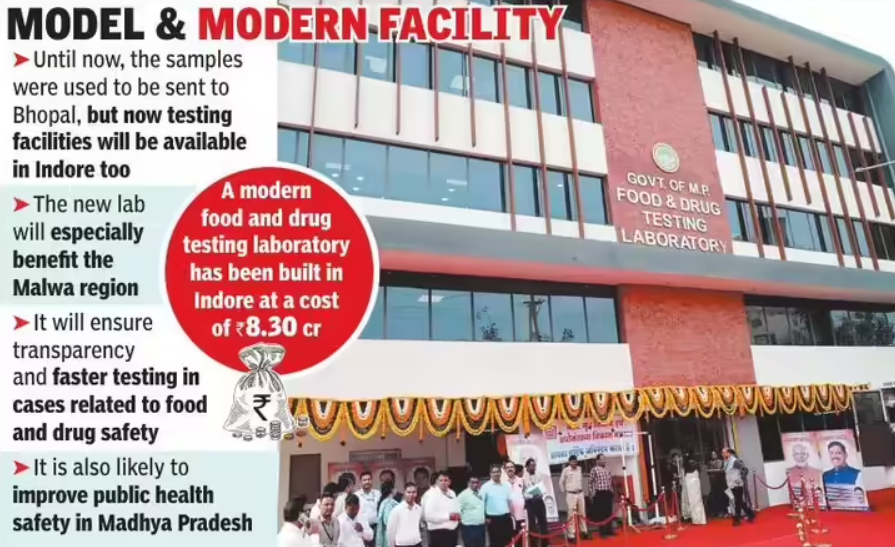
Chief Minister Dr Mohan Yadav inaugurated the newly constructed, state-of-the-art Food and Drug Testing Laboratory (FDTL) at Talawali Chanda, Indore.
Key Points
- For the first time since the state’s formation in 1956, a divisional-level FDTL has been established outside Bhopal.
- It is the second such laboratory in Madhya Pradesh after Bhopal, built at a cost of ₹8.30 crore.
- It will act as a model laboratory for other districts, ensuring faster, transparent, and efficient testing of food and drug samples.
- The third FDTL will open in Jabalpur within three months, the fourth in Gwalior four months later, followed by the fifth in Ujjain.
-
The Chief Minister asserted a zero-tolerance policy towards adulteration in food and drug manufacturing or sale.
- The initiative strengthens Madhya Pradesh’s food and drug safety infrastructure by promoting transparent and efficient testing, ensuring the availability of pure and certified products, encouraging ethical industrial practices, and enhancing the institutional capacity of the state’s regulatory framework to better protect public health.
Rajasthan Switch to Hindi
Mandatory Singing of National Anthem and Song in Rajasthan
Why in News?
The Rajasthan government has announced that singing the national anthem and national song daily will now be mandatory in all government schools and offices under the Education, Sanskrit Education, and Panchayati Raj Departments.
Key Points
- About: Cabinet Minister Madan Dilawar announced the decision as part of a plan to promote discipline, patriotism, and national unity in Rajasthan.
- Daily National Anthem and Song: All government schools and offices will begin with the national anthem and end with the national song; attendance will be linked to participation.
- Monitoring and Compliance: Institutions must submit daily geo-tagged photos to verify participation; a formal order will define implementation and penalties for non-compliance.
- Uniform Policy: A common uniform will be introduced for all schools and teachers from the next academic session; ties will be removed, and local officials will monitor compliance.
- Additional Reforms: ID cards will be mandatory for all students and teachers, and an SMS system will notify parents about student attendance.
- Significance: The move promotes national unity, discipline, accountability, and equality, ensuring transparency and uniformity in schools and offices.
National Anthem & National Song
- The song Jana-gana-mana (national anthem) composed originally in Bangla by Rabindranath Tagore (in 1911). It was adopted in its Hindi version as the national anthem of India.
- It was first sung on 27th December 1911 at the Calcutta Session of the Indian National Congress (INC).
- The National Song of India is “Vande Mataram", written by Bankim Chandra Chatterjee.
- The song was first written in 1870 and later included in his novel "Ananda" in 1882. It was first sung at the 1896 INC session.
- It is a patriotic hymn that represents reverence for Mother India and was a source of inspiration during India's struggle for freedom.
- Both National Song and National Anthem of India were adopted by the Constituent Assembly on 24th January 1950.
Uttar Pradesh Switch to Hindi
SIR 2.0 to Begin in 12 States and UTs
Why in News?
The Election Commission of India(ECI) has announced a nationwide intensive revision of electoral rolls across 12 states and Union Territories, covering 51 crore voters, to be conducted from 4th November 2025, with the final rolls published on 7th February 2026, and 1st January 2026, set as the qualifying date.
Key Points
- Objective: The ECI aims to prepare an error-free electoral roll, ensuring that no eligible voter is left out and no ineligible voter is included.
-
SIR Implementation: The SIR will covers Uttar Pradesh, Chhattisgarh, Goa, Gujarat, Madhya Pradesh, Rajasthan, Andaman & Nicobar Islands, and Lakshadweep.
- These states/UTs were selected due to their high percentage of mapped electors and adequate administrative preparedness — including trained BLOs, District Magistrates, and EROs.
- Maharashtra is excluded as per the SC’s order to conduct local polls by 31st January 2026.
- Kerala is also excluded as local polls discussions are still underway and not yet notified.
- Process and Verification Norms: The pan-India SIR will not require residents to submit documents during enumeration.
- Enrolment forms now include a new field to record parental or relative details from the last SIR (2002–2004).
- Unlinked voters will be issued notices to prove eligibility using accepted documents, with Aadhaar valid only as identity proof.
- About 70–80% of voters are expected to have a traceable link to the earlier rolls through digitisation, and each elector will submit only one signed form.
Special Intensive Revision(SIR)
- About: SIR is a focused, time-bound house-to-house voters’ verification process conducted by Booth Level Officers (BLOs) to update and correct the electoral rolls before major elections.
- It ensures that the voter list is accurate, inclusive, and free from discrepancies by allowing new registrations, deletions, and modifications.
- Section 21 of the RP Act, 1950 empowers the ECI to prepare and revise electoral rolls, including conducting a special revision at any time with recorded reasons.
- Constitutional Basis of SIR: Article 324 vests the ECI with the power to supervise and control the preparation of electoral rolls and conduct of elections.
- Article 326 guarantees universal adult suffrage, allowing citizens aged 18 and above to vote, unless disqualified by law due to criminal conviction, unsound mind, or corruption.
- Previous Electoral Roll Revision: SIRs were conducted in 1952–56, 1957, 1961, 1965, 1966, 1983–84, 1987–89, 1992, 1993, 1995, 2002, 2003, and 2004 in various parts of the country. In Bihar, the last SIR was held in 2003.
Rajasthan Switch to Hindi
Rajasthan Approves Two Key Labour Reforms
Why in News?
In a significant move to boost economic growth and enhance worker welfare, Chief Minister Bhajan Lal Sharma approved two major labour reforms aimed at fostering a safe, dignified, and progressive work environment in Rajasthan.
Key Provisions
- Rajasthan Shops and Commercial Establishments (Amendment) Ordinance, 2025:
- Prohibition of Child Labour: Children below 14 years of age are banned from working in shops or commercial establishments.
- Minimum Age for Apprentices: Increased from 12 to 14 years.
- Protection for Adolescents (14–18 years): Prohibited from working during night hours to safeguard their education, health, and nutrition.
- Revised Work Standards: The daily work limit has been increased from 9 to 10 hours, and the quarterly overtime cap raised from 126 to 144 hours.
- Rajasthan Factory (Amendment) Rules, 2025:
- Women’s Employment Provisions: Allows women workers, except pregnant and nursing mothers, to work in approved factory environments if safety protocols are followed.
- Mandatory Safety Measures: Employers must provide protective gear (masks, gloves, respirators), maintain safe air quality, and conduct regular safety training for all employees.
Madhya Pradesh Switch to Hindi
Cyclone Montha
Why in News?
The cyclonic storm "Montha", forming over the Bay of Bengal, is intensifying as it approaches the eastern coast of India, prompting Andhra Pradesh, Odisha, and Tamil Nadu to issue high-alert warnings.
Key Points
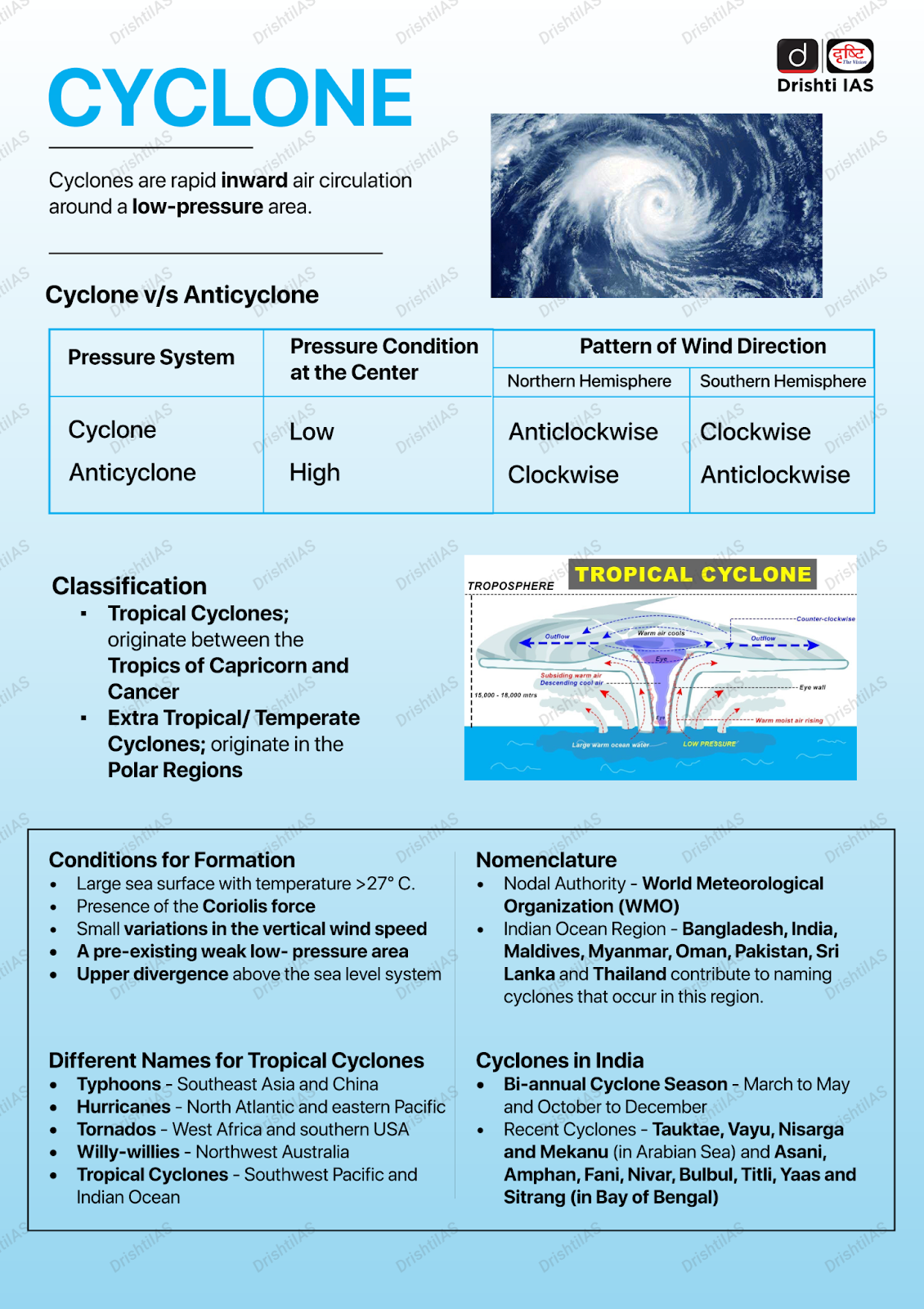
- Definition: Cyclones are fast air circulations around low-pressure areas, rotating anticlockwise in the Northern Hemisphere and clockwise in the Southern, often causing storms and severe weather.
- Classification of Cyclones: IMD classifies low-pressure systems in the Bay of Bengal and Arabian Sea by damage potential, following World Meteorological Organisation (WMO) guidelines.
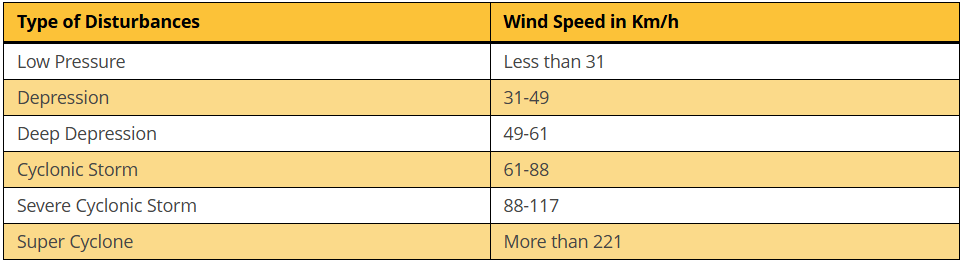
- Naming of Cyclones: The WMO/ESCAP (United Nations Economic and Social Commission for Asia and the Pacific) Panel on Tropical Cyclones, which includes 13 North Indian Ocean countries, manages cyclone naming for the Arabian Sea and Bay of Bengal.
- The panel has a pre-set list of names submitted by 13 countries to be used sequentially.
- Names are chosen in order, column by column, regardless of where the cyclone forms.
- Recent Cyclones:
- The name ‘Montha’, meaning beautiful or fragrant flower, was contributed by Thailand.
- The first cyclonic storm of the season was named 'Shakhti', as suggested by Sri Lanka. Other recent cyclones include Shakhti (Sri Lanka), Fengal (Saudi Arabia), Dana (Qatar), Asna (Pakistan), and Remal (Oman).
- According to the naming list, the next cyclone will be Senyar (UAE), followed by Ditwah (Yemen), Arnab (Bangladesh), and Murasu (India).