


Rapid Fire
Thwaites Glacier
- 11 Feb 2026
- 2 min read
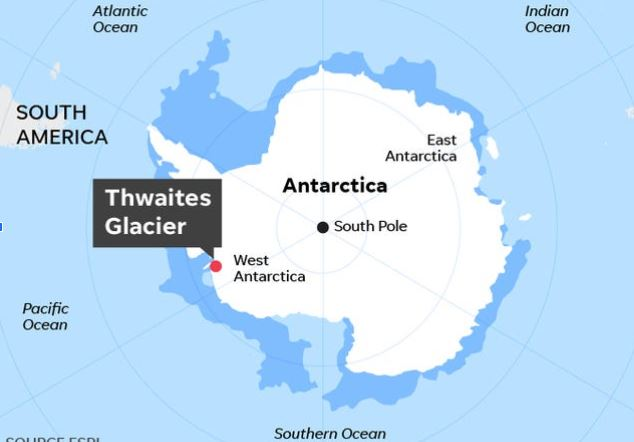
Recent studies highlight the rapid thinning and retreat of Thwaites Glacier in West Antarctica, raising concerns about long-term global sea-level rise.
Thwaites Glacier
- Location & Size: It is popularly known as the “Doomsday Glacier” and is a fast-moving ice mass about 120 km wide, spanning nearly 1.9 lakh sq. km, making it one of Antarctica’s largest and most significant glaciers.
- Sea-Level Risk: It contains enough ice to raise global sea levels by over 0.5 metres if it were to collapse completely, and its ongoing melting already contributes nearly 4% to annual global sea-level rise.
- The glacier’s ice discharge has nearly doubled over the past three decades, with scientific assessments suggesting a possible large-scale collapse within 200–900 years.
- Geographical Vulnerability: The glacier rests on bedrock that slopes downward inland below sea level, enabling warm ocean water to flow beneath its floating ice shelf and melt it from below, weakening its structural stability.
- Role of Ice Shelf: The ice shelf acts like a brace that slows the glacier’s flow into the ocean; as it thins or fractures, the glacier accelerates and loses more ice.
- Global Impact: Its destabilisation could intensify coastal flooding, erosion, and storm surges, threatening low-lying cities, islands, and ports worldwide.
| Read more: Melting of Thwaites Glacier |



