


Rapid Fire
PFBR at Kalpakkam Attains Criticality
- 08 Apr 2026
- 4 min read
Recently, the indigenously developed Prototype Fast Breeder Reactor (PFBR) at Kalpakkam, Tamil Nadu, attained criticality, marking progress in India’s nuclear energy programme.
- Criticality is the stage when a nuclear reactor achieves a self-sustaining chain reaction, indicating that the reactor core is functioning as designed and can proceed toward power generation.
India’s 3-Stage Nuclear Programme
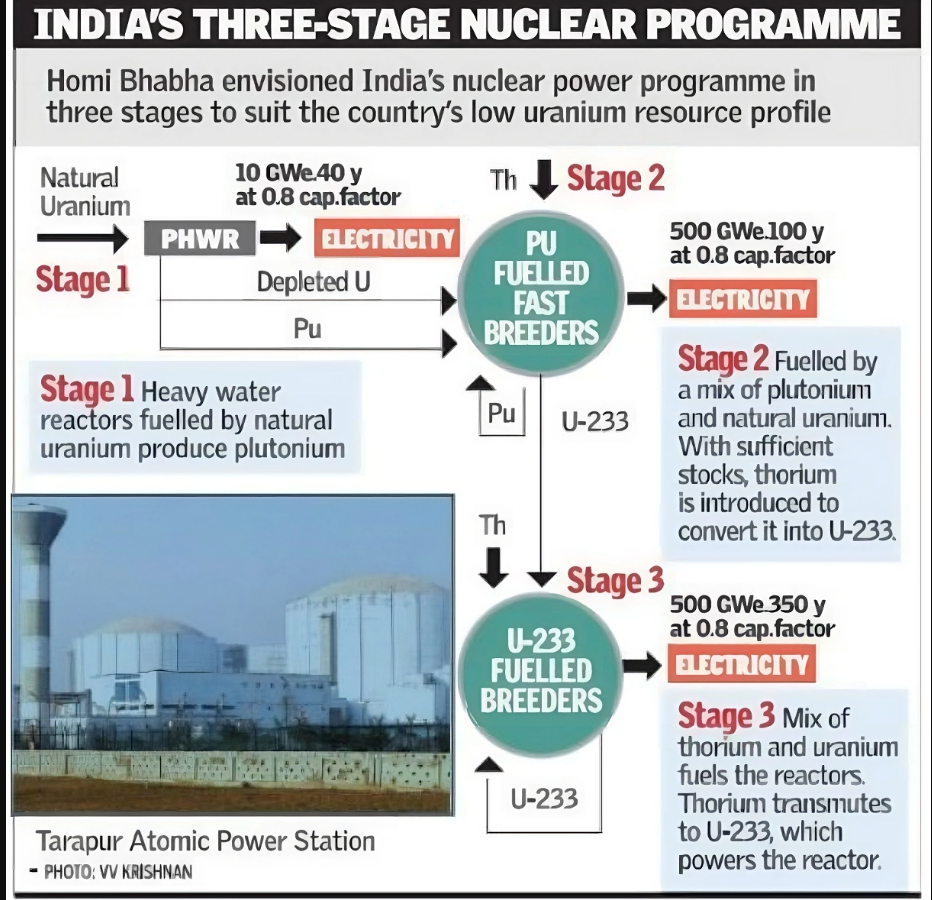
- About: India’s nuclear programme is designed to utilise its limited uranium and abundant thorium resources through a sequential three-stage approach: PHWRs → Fast Breeder Reactors → Thorium-based reactors.
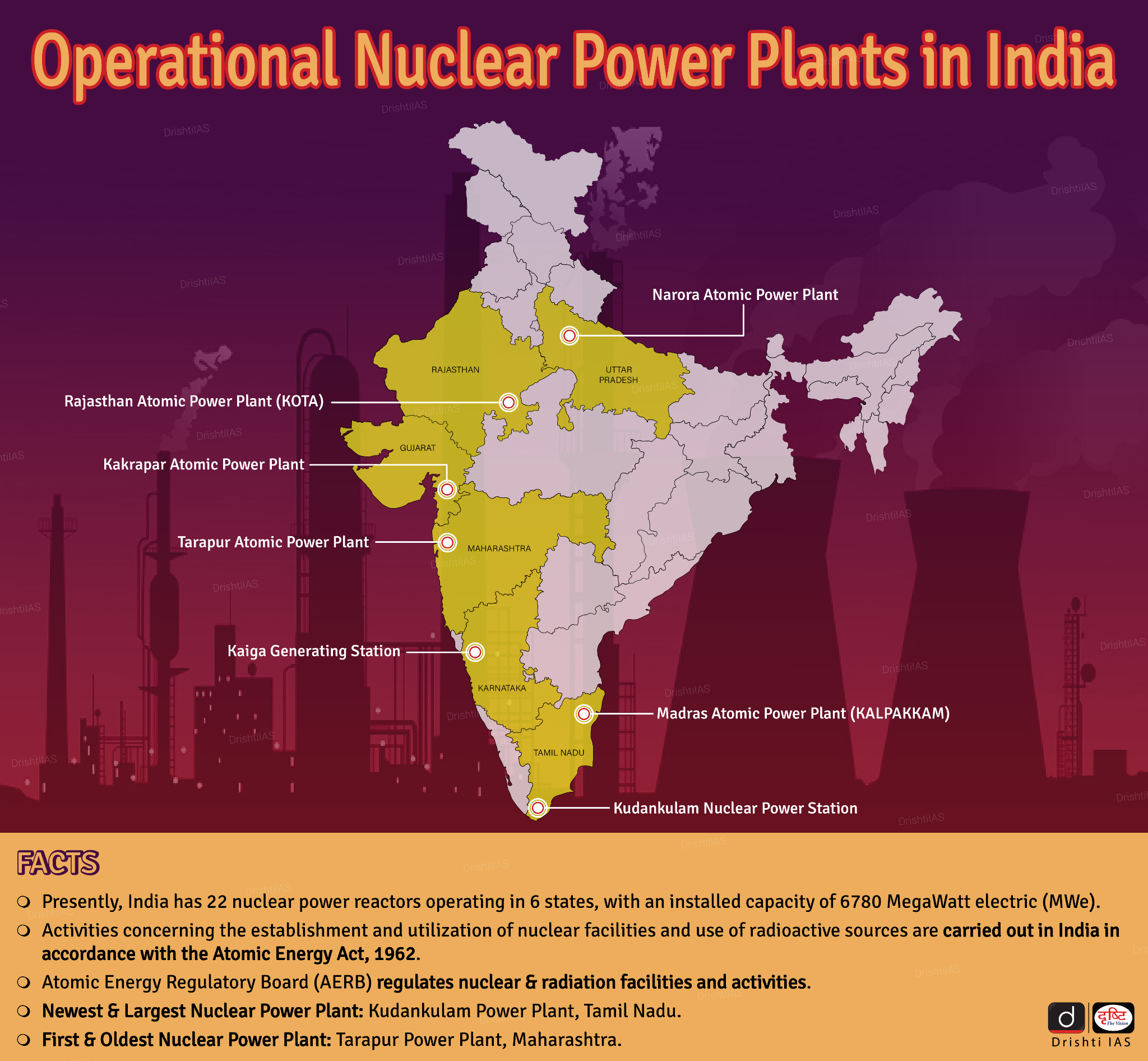
- Pressurised Heavy Water Reactors (PHWRs): They use natural uranium as fuel and heavy water as coolant and moderator. They form the backbone of India’s current nuclear power capacity (8,180 MWe) and represent the first stage of the programme.
- India aims to produce 22,400 MWe of nuclear power by 2032 and expand PHWR capacity through fleet-mode construction.
- Fast Breeder Reactor (FBR): A Fast Breeder Reactor produces more fuel than it consumes by converting fertile material (like U-238) into fissile material (like plutonium). It uses MOX fuel and plays a critical role in expanding nuclear fuel availability.
- FBRs act as a bridge between uranium-based reactors and thorium-based reactors by generating plutonium and enabling the production of U-233, which is essential for the third stage.
- India’s prototype 500 MWe FBR at Kalpakkam is in advanced commissioning. Plans include six more FBRs of 600 MWe each, along with a dedicated fuel cycle facility.
- Once operational, India will be only the second country after Russia to run a commercial FBR, while many countries have discontinued such programmes due to safety concerns.
- Thorium: Thorium (Th-232), a fertile material, is converted into fissile U-233 through irradiation in reactors. This enables long-term energy generation using India’s vast thorium reserves.
- India has one of the largest thorium reserves globally, found in coastal and inland sands. Harnessing thorium is key to achieving long-term energy security and reducing dependence on imported fuel.
- Strategic Significance: PFBR advancement strengthens the second stage of India’s nuclear programme and enables future utilisation of vast thorium reserves, while use of PHWRs with imported uranium and advanced fuels like HALEU allows earlier thorium utilisation without waiting for full FBR deployment.
- Future plans include thorium-based reactors, molten salt reactors (MSRs), and expanded fuel recycling, aiming for energy independence and sustainable nuclear growth.
| Read more: Criticality of Prototype Fast Breeder Reactor |



