


Place In News
India-China Border Trade via Lipulekh Pass
- 24 Mar 2026
- 3 min read
Border trade between India and China through the Lipulekh Pass in Uttarakhand's Pithoragarh district is set to resume in June 2026 after a six-year hiatus. The trade, which was halted in 2019-2020 due to the Covid-19 pandemic and subsequent border tensions.
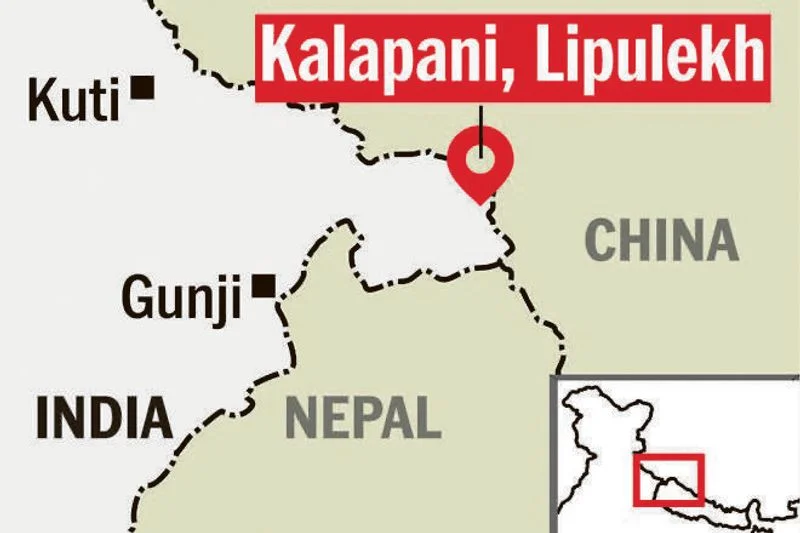
- However, this resumption has reignited diplomatic friction, with Nepal strongly opposing the move and reiterating its claim that the Kalapani-Lipulekh-Limpiyadhura region is sovereign Nepali territory.
- Bilateral Agreement: The decision follows the August 2025 diplomatic agreement between India and China to reopen three designated Himalayan trade routes (Lipulekh, Shipki La, and Nathu La).
- Improved Infrastructure: Unlike pre-2020 trade that relied on mules and sheep, the upcoming trade will benefit from a motorable road to Lipulekh (completed in 2020), which drastically cuts down logistics costs and travel time.
- Lipulekh Pass: It is a high-altitude mountain pass in the Kumaon region of Uttarakhand, near the trijunction of India, Nepal, and China, linking Uttarakhand with Tibet.
- It serves as a gateway to the higher Himalayas and is historically significant as an ancient trade route connecting the Indian subcontinent with the Tibetan plateau.
- Lipulekh was the first Indian border post opened for trade with China in 1992, followed by Shipki La in Himachal Pradesh (1994) and Nathu La in Sikkim (2006).
- Old Lipulekh Pass: Situated in the Vyas Valley of Pithoragarh district, Uttarakhand holds immense religious importance as part of the Kailash Mansarovar Yatra.
- Territorial Dispute with Nepal:
- The Treaty of Sugauli (1816): Following the Anglo-Nepalese War, the Kingdom of Nepal and British India signed the Treaty of Sugauli. The treaty established the Kali River (also known as the Mahakali or Sharda river) as the western boundary of Nepal.
- Dispute over the River’s Origin:
- Nepal's Claim: Kathmandu argues that the river originates at Limpiyadhura, northwest of Lipulekh. By this the entire triangular landmass east of this point comprising Limpiyadhura, Lipulekh, and Kalapani belongs to Nepal.
- India's Stand: Maintains that the river originates from springs near Kalapani village, placing the disputed territory firmly within the Pithoragarh district of Uttarakhand.
| Read more: Lipulekh Pass |



