


Rapid Fire
Hectocotylus in Octopus Reproduction
- 07 Apr 2026
- 2 min read
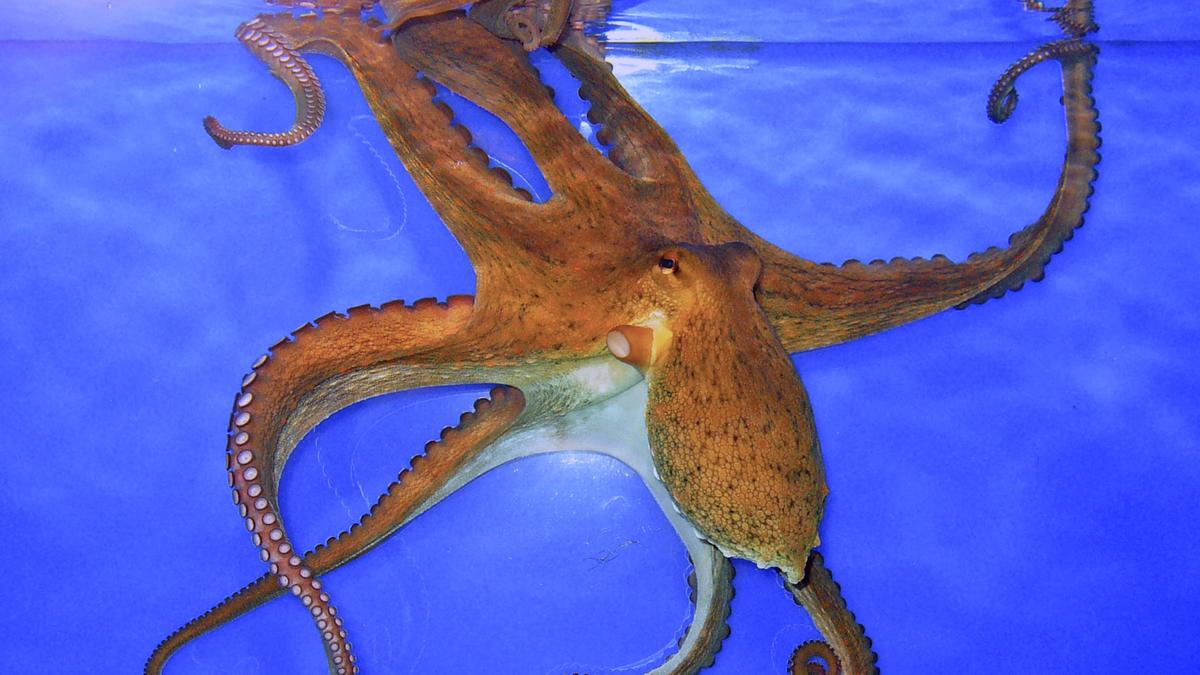
Recently, researchers found that male octopuses use a specialised arm, the hectocotylus, not only for sperm transfer but also as a sensory organ that ‘tastes’ females through touch. This adaptation is crucial because octopuses are largely solitary and rarely encounter mates.
- It enables males to identify females by detecting progesterone in their reproductive tract and skin and locate the oviduct for insemination even in complete darkness.
- The process is mediated by the receptor CRT1, which evolved from ancient neurotransmitter receptors and now performs dual functions of prey detection and mate recognition.
- This adaptation is widespread across cephalopods like octopuses and squids, integrating sensory detection and sperm delivery into a single appendage.
- Cephalopods are a class of molluscs characterised by soft bodies, prominent heads, large eyes and a ring of arms or tentacles used for movement, grasping and sensing.
- The findings highlight how molecular changes in proteins can drive complex behaviours and contribute to marine biodiversity.
| Read more: Conservation of Cephalopods |



