


State GK
Odisha State GK
- 12 Dec 2025
- 27 min read
Welcome to your ultimate resource for Odisha General Knowledge. Whether you are preparing for the OPSC (OAS/ASO), OSSC, or other state-level competitive exams, mastering the specific geography, economy, and history of the state is crucial.
Odisha (ancient Kalinga/Utkala) combines rich biodiversity and substantial mineral resources. The state is home to a large tribal population (≈22.8% of the state’s population) and contains notable gemstone occurrences (including ruby), making it a high-priority region for General Studies preparation.
- This guide breaks down complex data into easy-to-read sections, covering:
- Demography: Analysis of the 2011 Census, including literacy rates and urbanization.
- Geography: The "Hexadeltaic region", major river systems like the Mahanadi, and the Eastern Ghats.
- Wildlife: Notes on Similipal (India's largest wildlife sanctuary) and the nesting sites of Olive Ridley turtles.
- Economy: A deep dive into Odisha's mineral belts, accounting for 96% of India's Chromite and 54% of its Iron Ore.
Explore the sections below to build a solid foundation for your exam preparation.
|
Quick Facts |
|
|
State |
Odisha (Previously Orissa) |
|
Capital |
Bhubaneswar |
|
Formation |
1st April, 1936 |
|
Area |
1,55,707 Sq Km |
|
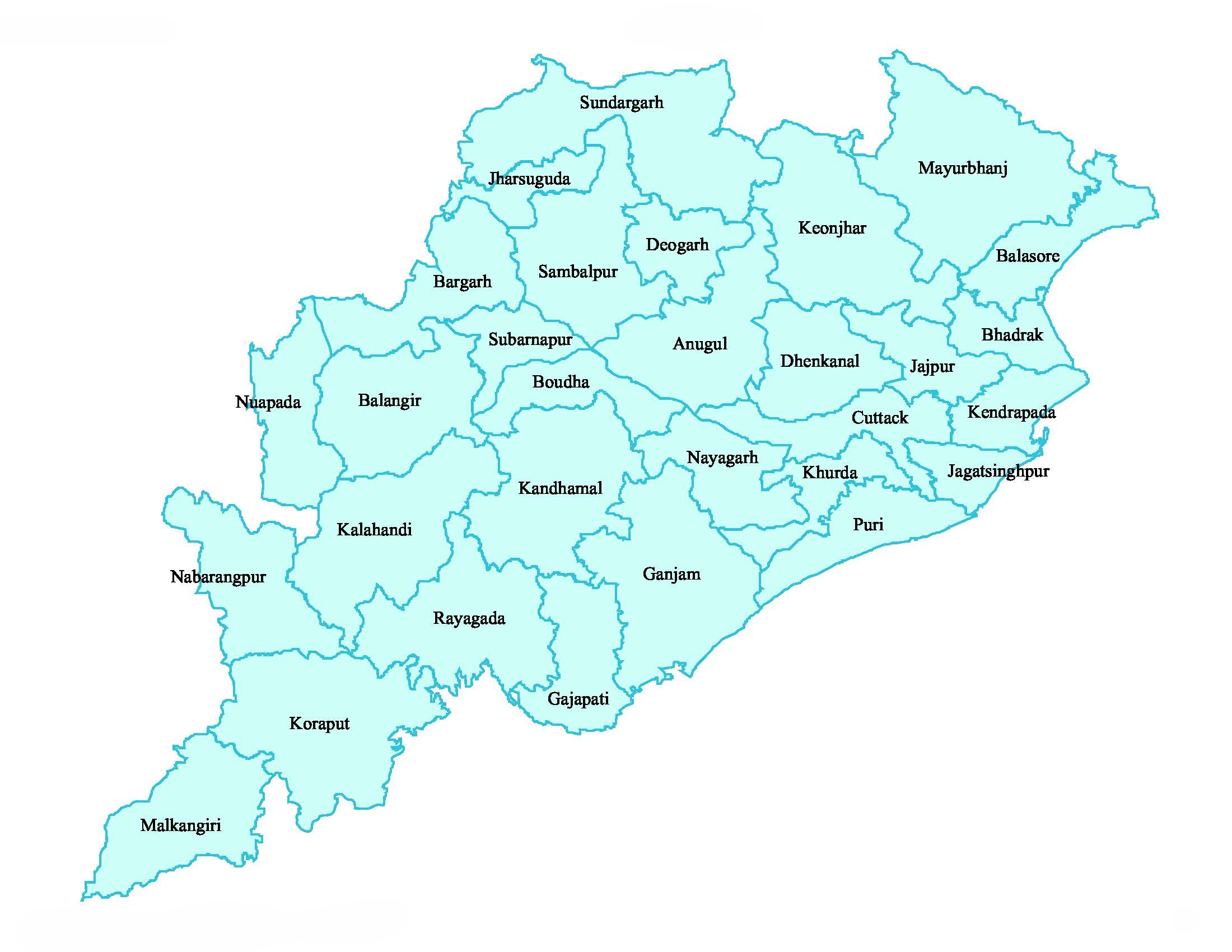
District |
30 |
|
Administrative Division |
3 |
|
Population |
41,974,218 |
|
State Animal |
Sambar |
|
State Bird |
Blue Jay (Indian Roller) |
|
State Flower |
Ashoka |
|
State Tree |
Peepal Tree |
|
State Emblem |
Konark Horse symbolizing discipline, strength and progress |
|
State Anthem Laxmikant Mohapatra |
'Bande Utkala Janani written by Kantakabi Laxmikant Mohapatra |
|
State Bird |
Blue Jay (Indian Roller) |
Demography (As Per 2011 Census)
|
Demographic Label |
Value |
|
Area |
155,707 Sq. Km |
|
Actual Population |
41,974,218 (Urban – 7.00 million (16.68 %) and Rural – 34.97 million (83.32 %)) |
|
Average Population Density |
270 per km2 |
|
Population (Male) |
21,212,136 |
|
Population (Female) |
20,762,082 |
|
Total Child Population (0-6 Age) |
5,273,194 |
|
Male Population (0-6 Age) |
2,716,497 |
|
Female Population (0-6 Age) |
2,556,697 |
|
Tribal Population |
95,90,756 (22.85% of state’s total Population - 3rd largest tribal population following MP & MH) |
|
Scheduled Caste (SC) Population & Percentage |
71,88,463; 17.13% |
|
Number of Tribes |
62, including 13 PVTGs |
|
Literacy Rate |
72.5 % (Female: 64.4% & Male:82.40%) |
|
Districts |
30 |
|
Number of Tribal Districts |
12 |
|
Blocks |
314 |
|
Tahasils |
317 |
|
Villages |
51,313 |
State Profile
- Formation: Odisha (formerly Orissa) came into existence on 1st April, 1936 (celebrated as Utkala Dibasa or Odisha Day)
- Capital: Bhubaneswar
- Ancient Name of the State: Kalinga and Utkala
- Number of Administrative Divisions and Sub-Divisions: 3 Divisions and 58 Sub-Divisions.
- High Court: Cuttack
- Famous Art: Pattachitra Paintings, Bomkai Cotton (Handlooms), Pipili applique work (Chandua), Saura Painting (Tibal painting)
- Famous Dance: Odissi, Sambalpuri, Mayurbhanj Chhau, Gotipua, Paika Dance
- Famous Festivals: Rath Yatra, Chandan Yatra, International Sand Art Festival, Chhau Festival, Kalinga Mahotsav, Konark Dance Festival, Bali Yatra
- Geographical Location of the State: 17.49'N and 22.34'N latitudes and meridians of 81.27'E and 87.29'E longitudes
- Bounded By: Bay of Bengal (East), Chhattisgarh (West), Andhra Pradesh (South), West Bengal (North East)
- Coastline: Revised Odisha's coastline is 574.7 km from the earlier 476.4 km (as per the Ministry of Home Affairs). The coastal plain of Odisha is called the "Hexadeltaic region" or the "Gift of Six Rivers".
- State Legislature: Unicameral (assembly)
- No. of Vidhan Sabha Seats: I47
- First Speaker of Odisha Legislative Assembly: Shri Mukunda Prasad Das
- First Deputy Speaker of Odisha Legislative Assembly: Shri Nanda Kishore Das
- First Leader of Opposition of Oisha Legislative Assembly: Shri Shradhakar Supakar
- President's Rule (For the First Time in the State): 25th Feb 1961; No. of times the President’s rule was imposed in Odisha– 6 (after independence)
- First Chief Minister of Odisha (Pre-1947): Captain Krishna Chandra Gajapati Narayan Deo
- Captain Krishna Chandra Gajapati Narayan Deo served as Prime Minister (Pre Independence, Odisha had the post of PM which was later on changed to CM) from 1941-1944, and earlier from 01-04-1937 to 19-07-1937.
- First Chief Minister of Odisha (Post-1947): Harekrishna Mahatab (15/11/1949-12/05/1950)
- Harekrishna Mahatab was the first to hold the position of Chief Minister CM, a post that was previously known as the Prime Minister before the commencement of the Constitution.
- First Woman CM of Odisha: Srimati Nandini Satapathy
- Major Rivers: There are four groups of rivers which flow through Odisha into the Bay of Bengal:
- Rivers that have a source outside the State (the Subarnarekha, the Brahmani and the Mahanadi).
- Rivers having a source inside the State (the Budhabalanga, the Baitarini, the Salandi, and the Rushikulya).
- Rivers having a source inside Odisha, but flow through other states (the Bahudu, the Vansadhara, and the Nagavali).
- Rivers having a source inside Odisha, but tributary to rivers which flow through other states (the Machkund, the Sileru, the Kolab, and the Indravati).
Note: River Mahanadi (also known as the “Sorrow of Odisha”) is the major river of Odisha and the 6th largest river in India. It originates from Sihawa mountain in Chhattisgarh's Dhamtari district.
- Lakes:
- Chillika Lake: Brackish water lagoon (Asia’s largest brackish water lake) located in the southern part of the Odisha coastal plain.
- Sweet Water Lake: Ansupa (Banki, Cuttack), Sara (Puri) and Kanjia (Nandankanan, Cuttack).
- 4 Geographical Regions: Northern Plateau, Central River Basins, Eastern Hills and Coastal Plains.
- Mineral Belts: The rich mineral belts lie in the western and north-western parts of the state
- Highest Peak in Odisha: Deomali, located at an elevation of 1,672 metres above sea level.
- Broad Plateaus: Panposh - Keonjhar -Pallahara plateau comprises the Upper Baitarani catchment basin
- Nabrangpur - Jeypore plateau comprises the Sabari basin.
- Kashmir of Odisha: Daringbadi is one of the beautiful hill stations in the Eastern Ghats.
- Little Tibet of Odisha: Jirang Monastery (Chandragiri), established in 2010, located at Jeerango, Gajapati district of Odisha.
- Steel City of Odisha: Rourkela, the 2nd Smart City of the State after Bhubaneswar.
- Powerhouse of Odisha: Jharsuguda
- Major Port: Paradip Port
- Hirakund Dam: The longest earthen dam of the world stands in its lone majesty across the great river Mahanadi, which drains an area of 1,33,090 Sq.Kms., more than twice the area of Sri Lanka.
- From horizon to horizon the reservoir forms the largest artificial lake in Asia with an area of 746 Sq. Kms. and a shore line over 640 Kms.
- District with Highest Literacy Rate: Khordha (87.51%)
- PVTGs of Odisha: Bonda, Birhor, Chuktia Bhunjia, Didayi, Dongria Kondh, Juang, Hill Kharia, Kutia Kandha, Lanjia Soura, Lodha, Mankirdia, Paudi Bhuyan and Soura.
- Highest Waterfall in Odisha: Barehipani waterfall (2nd highest waterfall in India after Kunchikal waterfall)
- Tara Tarini (Ganjam, Odisha): Among the four major Shakti Peethas
- Hot Springs: The state is home to eight distinct locations with hot springs– Attri, Tarabalo, Deulajhari, Magarmuhan, Bankhol, Badaberena, Taptapani, and Boden.
- Ramsar Sites: Chilika (1981, the first in India), Bhitarakanika (2002), Satakosia gorge (2021), Hirakund reservoir (2021), Tampara lake (2021), Ansupa lake (2021)
- Fisheries Production: Odisha is the 4th largest fish-producing state in India with 8.73 lakh metric tons of fish produced during 2020-21.
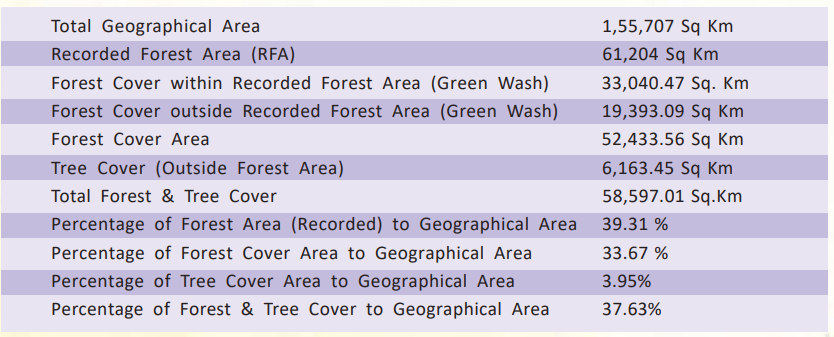
Green Cover Profile of the State
As per the Highlights of Odisha Forestry Sector-2025
Protected Areas in the State
|
Protected Areas |
Features |
|
Balukhand-Konark Wildlife Sanctuary (Puri) |
It is home to herds of Herbivores (Spotted Deer), Monkeys, Jungle Cat, Hyena, Monitor Lizard, Snakes etc. Olive Ridley sea turtles have been seen nesting on the beach. |
|
Debrigarh Wildlife Sanctuary (Sambalpur) |
Situated near Hirakud Dam. Debrigarh Wildlife Sanctuary is an important site for in situ conservation of wildlife and its habitat in the state of Odisha. |
|
Sunabeda Wildlife Sanctuary (Nuapada) |
Major wildlife species are tiger, leopard, hyena, barking deer, chital, gaur, sambar, sloth bear, varieties of birds such as hill myna, pea fowl, partridge and a number of reptilian species. This sanctuary is considered an ideal habitat for Barasingha (locally extinct). |
|
Kotagarh Wildlife Sanctuary |
One of the most important wildlife reserves of Odisha with five reserve forests, three proposed reserve forests and two deemed protected forests within its fold. |
|
Khalasuni Wildlife Sanctuary |
Popular for housing a rare variety of birds like peafowl, jungle fowl and hornbills, this wildlife sanctuary is a part of Sambalpur Elephant Reserve. The Khalasuni-Satkosia corridor is an important elephant corridor in the state. |
|
Badarma Wildlife Sanctuary |
Also known as Ushakothi Sanctuary. It comprises parts of Badrama Reserve Forests, Ushakothi Reserve Forests, Binjipali Reserve Forests and Additional Kansar Reserve Forests. |
|
The Sanctuary is characterized by the presence of Moist Sal Forests, Sal dominated mixed deciduous Forests and bamboo forests. The Sanctuary forms a significant part of the Sambalpur Elephant Reserve. |
|
|
Karlapat Wildlife Sanctuary |
The sanctuary is rich in wildlife such as Leopard, Gaur, Sambar, Nilgai, Barking Deer, Mouse Deer, Soft claws Ottawa, a wide variety of Birds and Reptiles. |
|
Baisipalli Wildlife Sanctuary |
The sanctuary's pride rests in the Tigers, Elephants, Mouse Deer, the state animal Sambar, as well as a plethora of other wild species that inhabit the sanctuary. |
|
Satkosia Tiger Reserve |
Here Mahanadi has cut across the Eastern Ghats and is known for the Gharials, Mugger crocodile and rare freshwater Turtles like Chitra indica and Trionyx (Aspideretes) gangeticus. The composite Satkosia-Baisipalli sanctuary, having an area of 963.87 Sq. kms. is declared as “Satkosia Tiger Reserve” during 2007. |
|
Chandaka Wildlife Sanctuary |
The park is known for the successful conservation of elephants which is the principal species here. It is also home to a number of threatened wild animals and birds. |
|
Nandakanan Zoologica Park |
A unique zoo set inside a forest, Nandankanan Zoological Park was established in 1960. It is the first zoo in the world to have successfully bred Melanistic and White Tigers. |
|
Amidst the natural beauty and adorable Flora and Fauna, Nandankanan Zoo in Bhubaneshwar is known as the Garden of Pleasure. |
|
|
Similipal National Park |
Simlipal is the largest wildlife sanctuary in India and is also considered as one of the principal tiger projects in India. Also known as Simlipal Elephant Reserve, it is a complete ecosystem with forest vegetation along with the adjoining Santhal tribal settlements. |
|
Lakhari Wildlife Sanctuary |
Located in the district of Gajapati is rich with tropical mixed deciduous forest, hills, perennial water sources and a variety of wildlife such as tiger, hyena, elephant, deer, sambar and a variety of birds and reptiles. |
|
Kapilash Wildlife Sanctuary |
Kapilash Deer Park, situated near the famous Kapilash Temple in the Dhenkanal district. Established to protect and conserve the local deer population, the park is home to various species of deer and a myriad of other fauna. |
|
Hadgarh Wildlife Sanctuary |
The wide range of fauna that can be seen here includes Leopard, Tiger, Fishing Cat, Jungle Cat, Langur, Pangolin and Hyena. Hadgarh Wildlife Sanctuary is also the abode of several species of birds and reptiles. |
|
Chilika (Nalaban) Bird Sanctuary |
Chilika, the largest brackish water wetland (1000 sq. km approx.) in the country is situated on the east coast of the state in the district of Puri, Ganjam and Khurda. A vast and picturesque lagoon/lake is famous for rich biodiversity, including the migratory birds and has been acknowledged as a “Ramsar site”. |
|
Bhitarkanika National Park |
Nesting site of a million olive Ridley turtles. home to the endangered and mysterious King Cobras. Bhitarkanika is the second largest contiguous mangrove forest in India after the Sundarbans. |
|
Gahirmatha Marine Sanctuary |
The only marine sanctuary of Odisha. It has been created to protect the endangered olive ridley sea turtles, dolphins and other marine fauna. Gahirmatha is known in the world often as a unique mass-nesting site (rookery) of the olive ridley on the calm sandy shores of the Bay of Bengal. |
|
Kuldhia Wildlife Sanctuary |
The Sanctuary includes Kuldiha, Devgiri and Tenda Reserved Forests and other Protected Forests. Kuldiha sanctuary area, adjoining Nilgiri forest in the North and Mayurbhanj Forest in West, is a typical representative of a mixture of peninsular (coastal) Sal forest and moist mixed deciduous forest. |
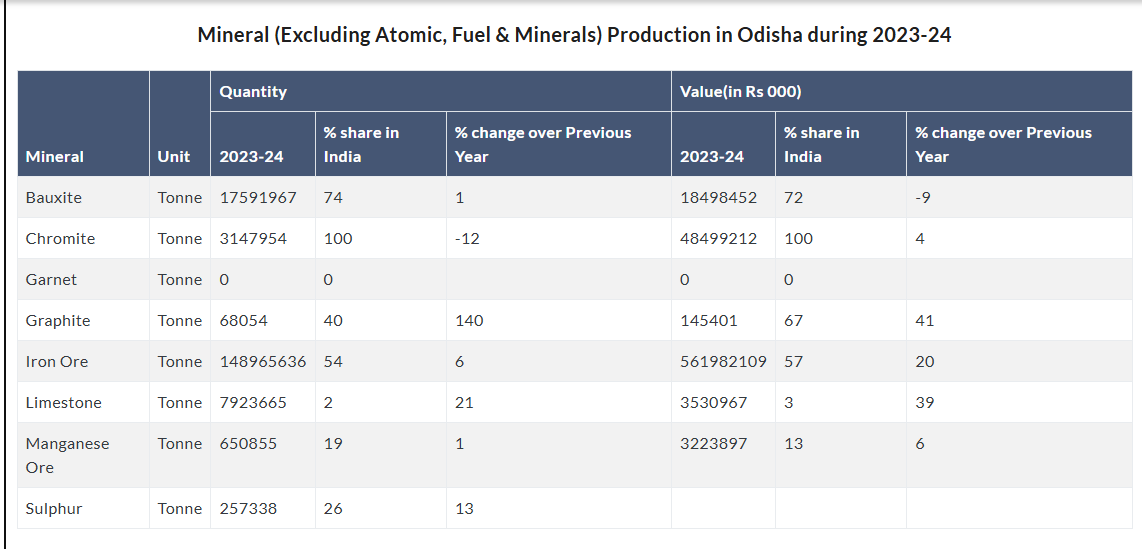
Mineral Profile of the State
- As per the National Mineral Inventory as on 01.04.2020, the State hosts the country's sole resources of ruby.
- It accounts for the country's 96% chromite, 93% nickel ore, 68% PGM metal, 69% cobalt ore, 41% bauxite, 34% manganese, 39% iron ore (haematite), 24% sillimanite, 20% vanadium ore, 37% zircon, 17% garnet, 15% titanium, 9% graphite and 6% REE.
|
Mineral |
Districts |
|
Chromite |
Balasore, Dhenkanal, Jajpur & Kendujhar |
|
Bauxite |
Bargarh, Balangir, Kalahandi, Kandhamal, Kendujhar, Koraput, Malkangiri, Rayagada & Sundargarh |
|
Garnet |
Ganjam, Kalahandi, Sambalpur |
|
Graphite |
Bargarh, Boudh, Balangir, Kalahandi, Kandhamal, Koraput, Nuapada, Rayagada |
|
Iron Ore (Haematite) |
Dhenkanal, Jajpur, Kendujhar, Mayurbhanj, Sambalpur, Sundargarh |
|
Iron Ore (Magnetite) |
Kendujhar, Mayurbhanj |
|
Limestone |
Bargarh, Koraput, Malkangiri, Nuapada, Sambalpur, Sundargarh |
|
Manganese Ore |
Balangir, Kendujhar, Koraput, Rayagada, Sambalpur, Sundargarh |
|
Sillimanite |
Ganjam, Deogarh |
|
Titanium Minerals |
Dhenkanal, Ganjam, Jajpur, Mayurbhanj, Puri |
|
Zircon |
Ganjam, Puri |
|
Asbestos |
Kendujhar |
|
Cobalt |
Jajpur |
|
Copper |
Mayurbhanj, Sambalpur |
|
Lead |
Sargipalli area, Sundargarh |
|
Nickel |
Jajpur, Kendujhar, Mayurbhanj |
|
Ruby |
Balangir |
|
Emerald |
Kalahandi |
|
Platinum Group of Metals (PGM) |
Kendujhar |
|
Silver |
Sundargarh |
|
Tin |
Malkangiri |
|
Vanadiferous Magnetite |
Balasore, Mayurbhanj |
Success in the OPSC and OSSC examinations often comes down to your command over static General Knowledge. From the mineral-rich belts of the western districts to the unique biodiversity of sanctuaries like Similipal and Gahirmatha, these facts form the backbone of the General Studies paper.
We hope this concise guide helps you streamline your revision. Bookmark this page for quick access before your exam, and share it with fellow aspirants to help them succeed too.
All the best for your preparation!
|
Related Resources |
|
|
OPSC Exam Pattern |
|
|
OPSC Exam Syllabus |
|
|
OPSC Previous Year Papers |
|
|
OPSC Exam Strategy |
|
|
Odisha State GK |
|
|
Monthly CA Consolidations |
|



