
India’s Groundwater Crisis
For Prelims: Groundwater, Sustainable Development Goals, UNESCO, Minimum Support Price (MSP), Southwest Monsoon, Heavy Metals, Jal Jeevan Mission, Central Ground Water Board (CGWB), PMKSY, Atal Bhujal Yojana, Direct Benefit Transfer (DBT), VB-G RAM G.
For Mains: Key facts regarding groundwater and reasons for its exploitation, Steps taken by the government for groundwater conservation and further steps needed.
Why in News?
Groundwater is central to India’s water security, supporting agriculture and drinking water needs, but escalating extraction and quality deterioration demand urgent and sustainable management.
Summary
- Groundwater supplies 62% irrigation, 85% rural and 50% urban water needs, yet faces depletion and contamination.
- Drivers include free electricity, water-intensive cropping, urbanization, climate change, and weak legal framework.
- Government measures include the Model Groundwater Bill, JSA: CTR, JSJB, NAQUIM 2.0, Atal Bhujal Yojana, and Mission Amrit Sarovar.
What are Key Facts Regarding Groundwater?
- About: Groundwater is freshwater stored in underground layers called aquifers, making up nearly 99% of Earth's liquid freshwater. It can seep into the ground, be extracted through wells, and emerge naturally.
- Groundwater Dependency: In India, groundwater serves as the primary foundation of agricultural activity and drinking water supply, meeting nearly 62% of irrigation needs, 85% of rural consumption, and 50% of urban demand.
- Status of India's Groundwater Usage: Annual groundwater extraction is 245.64 BCM (Billion Cubic Meters), representing a national extraction rate of 60.47% and indicating aggregate use remains within the annual replenishment capacity.
- Total annual recharge is 446.90 BCM and has shown a consistent upward trend since 2017 due to conservation efforts.
- Governance & Management: Water governance primarily rests with State Governments, while the Central Government provides facilitative support through technical and financial schemes.
- This cooperation is essential for advancing Sustainable Development Goals, 6 (Clean Water and Sanitation), 11 (Sustainable Cities and Communities), and 12 (Responsible Consumption and Production).
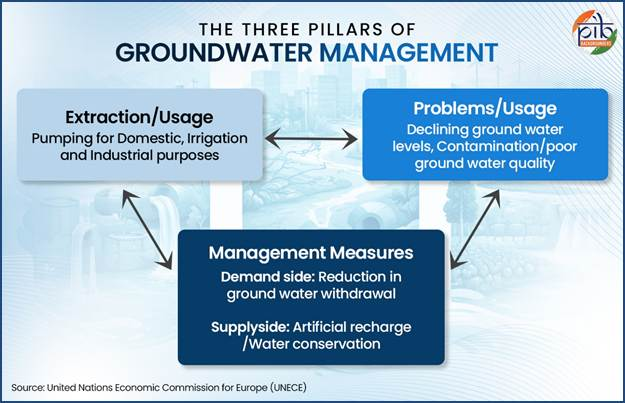
- Core foundations of groundwater management are the functions and uses of groundwater (aquifers), the problems and pressures (threats), and the impact of management measures.
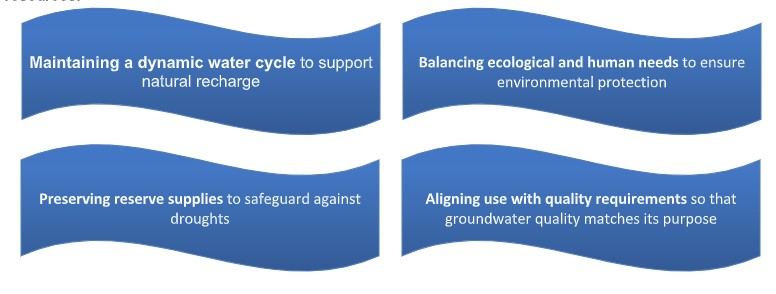
- As per UNESCO, effective groundwater management needs 4 key priorities, which are:
What are the Key Factors Driving Groundwater Depletion in India?
- Distorted Economic and Policy Incentives: Free electricity for agriculture incentivizes unregulated groundwater pumping, while the Minimum Support Price (MSP) system favors water-intensive crops like paddy and sugarcane. This creates a policy-driven incentive to deplete aquifers for farming.
- Demographic and Urban Pressures: Rapid urbanization and population growth (from 1.29 to 1.45 billion between 2016–2023) convert natural recharge zones into impermeable surfaces. This "concrete sealing" drastically reduces rainwater infiltration while concentrated urban and industrial pumping creates severe cones of depression, leading to land subsidence in cities like Chennai and Delhi.
- Climate Change and Hydrological Disruption: Climate change is altering the Southwest Monsoon, which provides ~60% of India's recharge, by increasing rainfall variability and reducing aquifer replenishment. Simultaneously, rising temperatures increase evaporation and crop water demand, creating a vicious cycle where climate adaptation accelerates groundwater depletion.
- Pervasive Contamination: Fertilizer runoff and industrial effluents, such as those from Kanpur's tanneries, contaminate aquifers with nitrates, heavy metals (like chromium, uranium, and lead), and fluoride, making water unsafe in many areas. In coastal Gujarat, over-pumping combined with rising sea levels causes saline intrusion, contaminating freshwater aquifers in 28 out of 33 districts.
- Archaic Legal Framework: The core of the governance failure stems from the Indian Easements Act, 1882, which treats groundwater as a private property right of the landowner, not a common-pool resource. This prevents effective collective management.
- Institutional Fragmentation: Agencies such as the CGWB, CPCB, SPCBs, and Ministry of Jal Shakti operate in silos, resulting in a fragmented and uncoordinated approach to groundwater management.
- It is worsened by the Water (Prevention and Control of Pollution) Act, 1974, which has insufficient groundwater provisions, lax enforcement, and regulatory loopholes that encourage pollution.
What are the Key Government Initiatives for Groundwater Management and their Achievements?
- Regulatory Framework: The Model Groundwater Bill, 2017 provides a framework for States to regulate extraction. 21 States/UTs, including Bihar, Punjab, Haryana, and Himachal Pradesh, have adopted it. Coordination is facilitated through the National Interdepartmental Steering Committee (NISC).
- Nationwide Conservation Campaigns:
- Jal Shakti Abhiyan- Catch the Rain (JSA: CTR): It focuses on water conservation, geo-tagging water bodies, setting up Jal Shakti Kendras, and revitalising abandoned borewells.
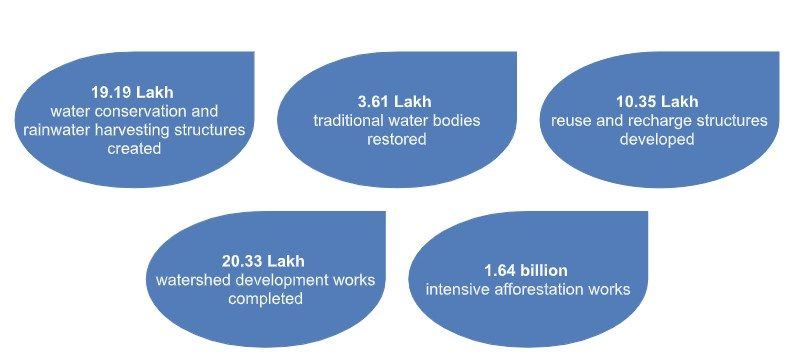
- Jal Sanchay Jan Bhagidari (JSJB): It has completed 39,60,333 artificial recharge works as of January 2026, using scalable models for local groundwater recharge.
- Jal Shakti Abhiyan- Catch the Rain (JSA: CTR): It focuses on water conservation, geo-tagging water bodies, setting up Jal Shakti Kendras, and revitalising abandoned borewells.
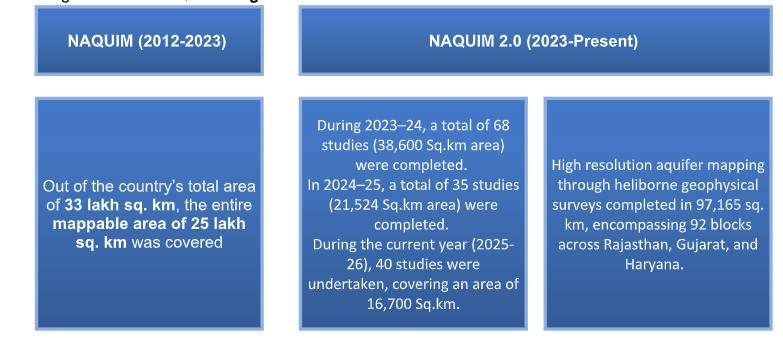
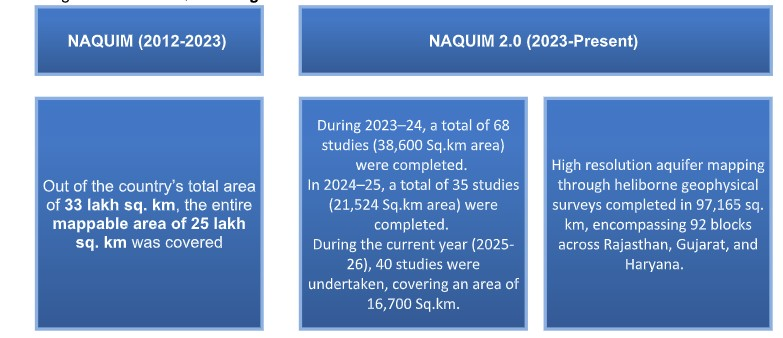
- Scientific Assessment & Planning: National Aquifer Mapping and Management Programme (NAQUIM & NAQUIM 2.0): It aims to characterise aquifers, assess availability/quality, and prepare aquifer maps for management plans, now delivering Panchayat-level data.
- Master Plan for Artificial Recharge to Groundwater-2020: It envisions 1.42 crore structures to channel 185 BCM of additional recharge using terrain-specific techniques.
- Community-Led & Targeted Schemes:
- Atal Bhujal Yojana (Atal Jal): It promotes community-led groundwater management in 7 water-stressed, linking incentives to outcomes to support Jal Jeevan Mission and doubling farmers’ income.
- Mission Amrit Sarovar: It aims to create ponds (minimum 1 acre, 10,000 cubic metre capacity) to enhance water conservation and groundwater recharge across all districts.
- Monitoring Infrastructure: India maintains a network of 43,228 groundwater monitoring stations operated by the Central Ground Water Board (CGWB) for nationwide surveillance.
What are the Key Strategies for Achieving Effective Groundwater Management in India?
- Water-Smart Agricultural Practices: Promoting drip irrigation, micro-irrigation, zero tillage, and precision farming can substantially reduce agricultural groundwater extraction. Accelerating adoption in stressed areas can be achieved by converging PMKSY with the Atal Bhujal Yojana.
- Institutional Re-engineering: Effective groundwater management must shift from political to hydrogeological boundaries, adopting a public trust doctrine where the state is the custodian. Decentralized Aquifer Management Committees (AMCs) should be empowered with legal authority to use NAQUIM 2.0 data for setting and enforcing local extraction limits.
- Digital Water Command System: Establish a national IoT sensor network for real-time monitoring of groundwater levels, quality, and extraction, linked to a central AI platform like 'Bhu-Neer'. This would enable predictive analytics on aquifer stress and illegal extraction, shifting governance from static to proactive.
- Financial Restructuring to Incentivise Conservation: Decouple power subsidies from groundwater extraction by switching to a Direct Benefit Transfer (DBT) model for electricity subsidies with smart metering for agriculture. Implement a Groundwater Security Cess on industrial users to fund an Aquifer Recharge Fund, which provides incentives for community-led water conservation.
- Scaling Nature-Based and Advanced Recharge Solutions: Deploy Managed Aquifer Recharge (MAR) tailored to specific terrains, such as combining MAR with solar desalination in coastal areas and using biochar filtration for agricultural runoff. Mandate treated wastewater recycling and enforce Rainwater Harvesting (RWH) bylaws in urban areas to create a multi-pronged recharge ecosystem.
- Fostering Climate Resilience: Empower communities by investing in hydrogeology literacy and providing simplified Water Budgeting Tool. Integrate climate-resilient crops (e.g., millets, pulses) into procurement policies and link VB-G RAM G works with aquifer recharge to build local stewardship.
Conclusion
- Achieving groundwater sustainability in India requires an integrated approach combining policy reforms (subsidy rationalization, legal overhaul), technological adoption (AI, IoT for management), and community-led action (recharge, conservation), all underpinned by robust aquifer-level governance and climate-resilient strategies.
|
Drishti Mains Question: Discuss the key drivers of groundwater depletion in India and suggest adaptive groundwater management strategies for India. |
Frequently Asked Questions (FAQs)
1. What is the current status of groundwater extraction in India?
India’s annual groundwater extraction is 245.64 BCM, with a national extraction rate of 60.47%, indicating overall extraction remains within annual replenishment capacity.
2. Why is groundwater management critical for Sustainable Development Goals?
Groundwater management supports SDG 6, SDG 11, and SDG 12, ensuring clean water access, sustainable urbanization, and responsible resource use.
3. How does NAQUIM 2.0 support groundwater sustainability?
NAQUIM 2.0 provides high-granularity aquifer data, enabling Panchayat-level planning, and targets water-stressed, coastal, urban, and industrial regions for effective management.
UPSC Civil Services Examination, Previous Year Question:
Prelims
Q. Which one of the following ancient towns is well known for its elaborate system of water harvesting and management by building a series of dams and channelizing water into connected reservoirs? (2021)
(a) Dholavira
(b) Kalibangan
(c) Rakhigarhi
(d) Ropar
Ans: (a)
Q. With reference to ‘Water Credit’, consider the following statements: (2021)
- It puts microfinance tools to work in the water and sanitation sector.
- It is a global initiative launched under the aegis of the World Health Organization and the World Bank.
- It aims to enable the poor people to meet their water needs without depending on subsidies.
Which of the statements given above are correct?
(a) 1 and 2 only
(b) 2 and 3 only
(c) 1 and 3 only
(d) 1, 2 and 3
Ans: (c)
Q. Which of the following can be found as pollutants in the drinking water in some parts of India? (2013)
- Arsenic
- Sorbitol
- Fluoride
- Formaldehyde
- Uranium
Select the correct answer using the codes given below.
(a) 1 and 3 only
(b) 2, 4 and 5 only
(c) 1, 3 and 5 only
(d) 1, 2, 3, 4 and 5
Ans: (c)
Mains
Q.1 What are the salient features of the Jal Shakti Abhiyan launched by the Government of India for water conservation and water security? (2020)
Q.2 Suggest measures to improve water storage and irrigation system to make its judicious use under the depleting scenario. (2020)
Citizen-Centred Universal Health Coverage
Why in News?
The Lancet report titled “A Citizen-Centred Health System for India” outlines a roadmap for achieving citizen-centred Universal Health Coverage (UHC), aligned with the vision of Viksit Bharat @2047.
- It argues that as the World Health Organization (WHO) faces financial stress and the US retreats from global health leadership, India has an opportunity to reform its healthcare delivery while emerging as a strong voice for the Global South.
What are the Key Findings of the Lancet Report on the Health System of India?
- Public Spending Stagnation: Despite policy commitments, public health expenditure remains under 2% of GDP (falling short of the National Health Policy 2017 target of 2.5%).
- Fragmented Care: The current system operates in silos (e.g., separate programs for TB, malaria, maternal health), leading to a lack of continuity in care. Patients often have to navigate multiple providers for a single condition.
- Input-Based Governance: The health administration relies on rigid "line-item budgets" (allocating funds strictly for specific items like salaries or bricks), which stifles local innovation and responsiveness to local disease burdens.
- Out-of-Pocket Expenditure (OOPE): OOPE accounts for nearly 50% of total health spending in India, which is among the highest globally.
- Primary Care Gap: The report notes that insurance schemes are "hospital-centric," leaving outpatient care (where most poor families spend money) largely unprotected.
- Paradigm Shift in Barriers: The report notes that the barriers to UHC in India are no longer a lack of political will, funding, or infrastructure (which have all seen expansion). Instead, the core obstacles are uneven quality, fragmentation, and poor governance.
- The "Missing Middle": While the poor have government schemes and the rich have private insurance, the middle class often faces catastrophic health expenditure with little support.
- Human Resource Valuation: The current HR policy focuses excessively on counting "qualifications" (degrees) rather than valuing "competencies, motivations, and values," leading to the underutilization of frontline workers like ASHAs.
Recommendations
- Primary Vehicle for UHC: Recommends that the health system must be publicly financed and publicly provided.
- The private sector should be "shaped" to play a complementary role, specifically filling gaps in tertiary care where public infrastructure is lacking, but under strict state regulation to prevent profit-maximization at the cost of patient welfare.
- Shift to Global Budgets and Decentralization: Move from rigid line-item budgets to "Global Budgets" for districts. This would grant local authorities financial autonomy to allocate funds based on specific health outcomes and local needs rather than central dictates.
- Empower Panchayati Raj Institutions (PRIs) and Urban Local Bodies (ULBs) to manage local health centers. The report cites the Kerala model, where local governments have control over health functioning, leading to better accountability.
- Empower Frontline Workers: Accredited Social Health Activists (ASHAs) should be treated as core health staff, not just "volunteers."
- Expand the cadre of Community Health Officers (CHOs) to handle basic outpatient care, reducing the load on specialist doctors.
- Technology as an Enabler ("Capital-Efficient" Tech): Instead of a centralized database that risks privacy, the report recommends a Federated Data Structure (aligned with the Digital Personal Data Protection (DPDP) Act, 2023).
- Under this, patient data resides locally (at the hospital/clinic) and is shared only with the patient's explicit consent via "Consent Managers."
- By effectively implementing the Ayushman Bharat Digital Mission (ABDM) and deploying AI and genomics for point-of-need care, the system can deliver advanced diagnostics closer to communities, reducing the need for rural patients to travel to cities.
- Citizen Engagement: Create formal mechanisms for public participation, such as Jan Sunwais (Public Hearings) and Rogi Kalyan Samitis that have real power to audit health centers.
- Establish independent, district-level grievance redressal bodies where citizens can report denial of service or corruption without fear of retribution.
Conclusion
By leveraging "global budgets" and digital public goods to bridge the "missing middle," India can transform healthcare from a costly privilege into an accessible right. This structural overhaul is a prerequisite for securing the healthy human capital essential for realizing Viksit Bharat @2047.
|
Drishti Mains Question: The barriers to Universal Health Coverage in India are now more about governance than resources.Discuss |
Frequently Asked Questions (FAQs)
1. What is India’s current public health expenditure as per the report?
Public health expenditure in India remains below 2% of GDP, against the National Health Policy (2017) target of 2.5%.
2. What proportion of health spending in India is out-of-pocket expenditure (OOPE)?
Out-of-pocket expenditure accounts for nearly 50% of total health spending, among the highest globally.
3. What structural problem does the report identify in India’s health governance?
The system relies on line-item budgeting, which limits financial flexibility, local innovation, and outcome-based accountability.
4. Which digital mission is highlighted for health system integration?
The Ayushman Bharat Digital Mission (ABDM) is highlighted for enabling interoperable digital health infrastructure.
UPSC Civil Services Examination, Previous Year Questions (PYQs)
Prelims
Q. Which of the following are the objectives of ‘National Nutrition Mission’? (2017)
- To create awareness relating to malnutrition among pregnant women and lactating mothers.
- To reduce the incidence of anaemia among young children, adolescent girls and women.
- To promote the consumption of millets, coarse cereals and unpolished rice.
- To promote the consumption of poultry eggs.
Select the correct answer using the code given below:
(a) 1 and 2 only
(b) 1, 2 and 3 only
(c) 1, 2 and 4 only
(d) 3 and 4 only
Ans: (a)
Mains
Q. “Besides being a moral imperative of a Welfare State, primary health structure is a necessary precondition for sustainable development.” Analyse. (2021)
Supreme Court Verdict on DTAA
Why in News?
The Supreme Court (SC) has ruled that Tiger Global’s USD 1.6-billion stake sale in Flipkart to Walmart (2018) is taxable in India, denying the benefits of the India–Mauritius Double Taxation Avoidance Agreement (DTAA) and enforcing the General Anti-Avoidance Rule (GAAR).
What are the Key Facts of the Tiger Global Case?
- Key Legal Dispute: Tiger Global, a prominent venture capital investor, sold its Flipkart stake for USD 1.6 billion to Walmart in 2018, leading to a legal tussle with Indian tax authorities over capital gains tax liability.
- India's SC overturned the August 2024 Delhi High Court (HC) judgment, which had quashed an Authority for Advance Rulings (AAR) order denying DTAA benefits.
- AAR is a quasi-judicial body that provides binding rulings on specific tax questions, offering taxpayers clarity before transactions to reduce uncertainty and potential litigation.
- India's SC overturned the August 2024 Delhi High Court (HC) judgment, which had quashed an Authority for Advance Rulings (AAR) order denying DTAA benefits.
- Supreme Court’s Legal Reasoning: The SC held that DTAA benefits cannot be claimed mechanically and rejected reliance on Tax Residency Certificates (TRCs) alone, as the India-Mauritius DTAA applies only where assets are directly owned by a Mauritian entity. It emphasized economic substance, control, and management, concluding the entities’ “head and brain” lay outside Mauritius, particularly in the USA.
- A TRC is issued by a country’s tax authority to confirm an entity’s tax residency for a specific period. It is essential for claiming DTAA benefits, such as avoiding double taxation.
- Role of AAR and High Court: The AAR’s 2020 order denied DTAA grandfathering benefits, ruling the investment structure was prima facie for tax avoidance, a finding later struck down by the Delhi HC as arbitrary. The SC reversed the Delhi HC, restoring the AAR’s substance-over-form approach.
- Grandfathering in tax is a legal provision that protects existing investments from new tax laws by allowing them to be taxed under older, more favorable rules. Under the India–Mauritius DTAA, it protected capital gains from investments made before 1st April, 2017, which were taxed only in Mauritius—that is, 0% tax in India—even after the treaty was amended.
- Implications: The ruling signals a major shift, ending automatic DTAA claims based solely on residency certificates. Investors must demonstrate genuine economic substance, autonomous decision-making, and commercial rationale for DTAA benefits.
- Investors face elevated tax litigation risk, with tools like tax insurance expected to become scarcer and costlier.
- The decision arrives amid a broader slowdown in Indian startup funding, which fell to USD 10.5 billion in 2025, a 17% decline from 2024, with notable drops in seed-stage (down 30%) and late-stage funding (down 26%).
Double Taxation Avoidance Agreement (DTAA)
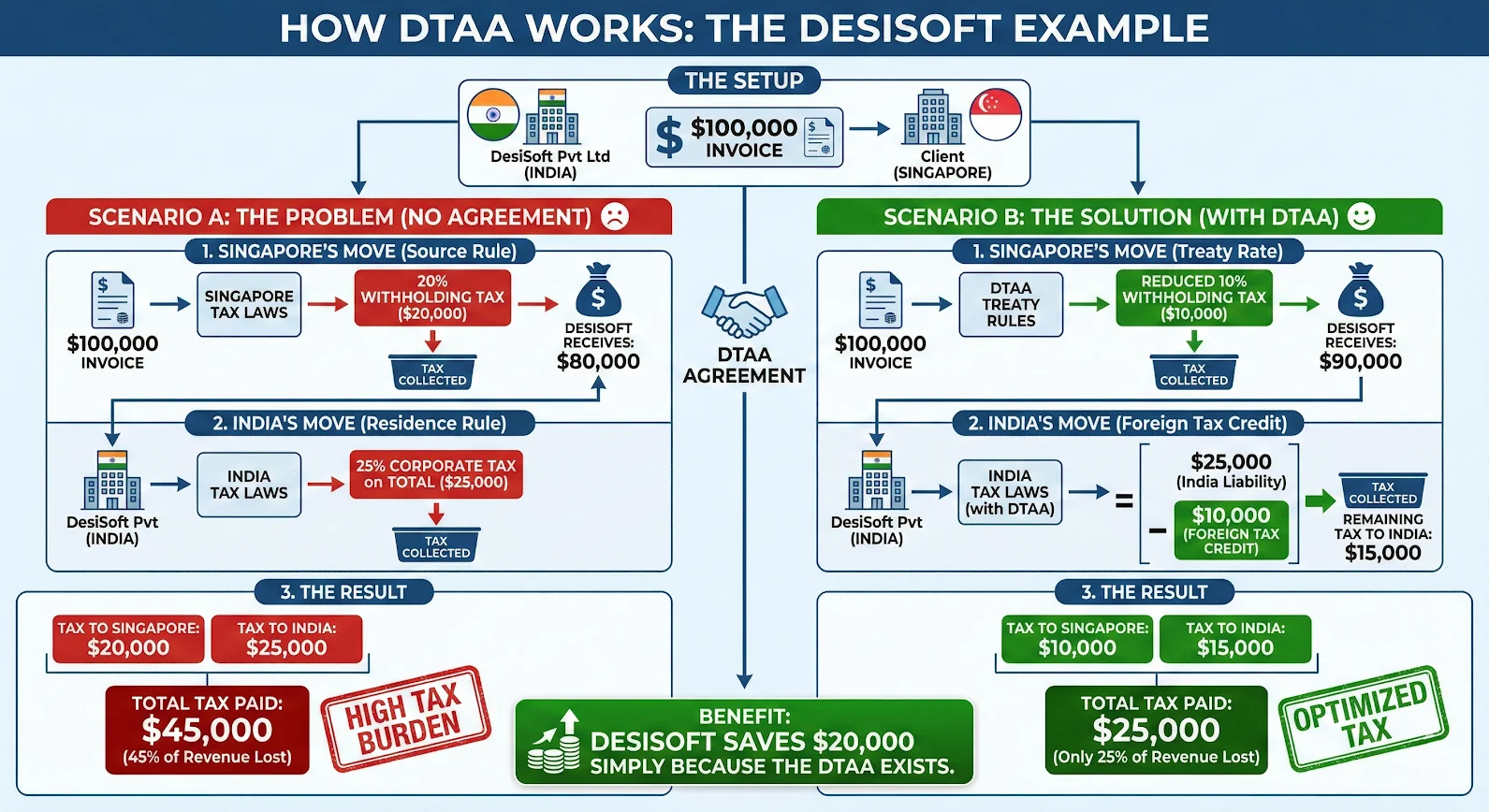
- About: A DTAA is a bilateral (or occasionally multilateral) agreement entered into between two sovereign countries to prevent or mitigate double taxation on income or capital gains arising from cross-border activities, where an individual or entity could be taxed both in their country of residence and the country where the income is sourced.
- Key Relief Mechanisms: DTAAs provide relief primarily through two methods: the Exemption Method (income taxed in only one country) and the Credit Method (resident country grants a credit for taxes paid in the source country).
- Indian Context & Procedure: India has an extensive network of over 90 DTAAs. To claim benefits, a taxpayer must furnish a TRC from their country of residence, along with other required declarations.
- DTAA Misuse and Redressal: India has faced DTAA misuse through treaty shopping, round-tripping, and shell companies in jurisdictions like Mauritius, Singapore, and Cyprus.
- To counter this, the government amended key DTAA treaties, introducing source-based taxation and Limitation of Benefits (LOB) clauses to require substantive economic presence.
- Domestically, the GAAR was implemented in 2017 to deny treaty benefits for arrangements primarily aimed at tax avoidance.
General Anti-Avoidance Rule (GAAR)
- About: GAAR is an anti-tax evasion measure that empowers Indian authorities to deny tax benefits for arrangements whose primary purpose is tax avoidance, prioritizing the economic substance of transactions over their legal form.
- Objective: India's GAAR came into effect on 1st April 2017, with the objective of curbing aggressive tax planning and treaty shopping.
- Triggering Conditions: GAAR applies where the main purpose is to obtain a tax benefit and meets any one test:
- Commercial Substance Test: Absence of real operations, personnel, or decision-making authority
- Rights and Obligations Test: Artificial creation of rights or obligations to secure tax benefits
- Misuse or Abuse of Law: Exploitation of loopholes in treaties or domestic law
- Non-arm’s-length test: Deviation from normal commercial practices.
- Consequences of Invocation: If applied, authorities can deny treaty benefits (like capital gains exemptions), disregard intermediary entities, recharacterize transactions, reallocate income to India, and levy tax, interest, and penalties.
- Supremacy over Treaties: A critical feature is that under Indian law, GAAR overrides tax treaties, meaning treaty benefits can be denied if GAAR is triggered—a position now firmly upheld by the Supreme Court.
Frequently Asked Questions (FAQs)
1. What did the Supreme Court decide in the Tiger Global–Flipkart case?
The SC held that Tiger Global’s USD 1.6-billion Flipkart stake sale (2018) is taxable in India, denying India–Mauritius DTAA benefits.
2. What is ‘grandfathering’ under the India–Mauritius DTAA?
It protected capital gains from investments made before April 1, 2017, taxing them only in Mauritius (0% in India), subject to anti-abuse scrutiny.
3. How does GAAR affect tax treaties in India?
GAAR overrides tax treaties, allowing authorities to deny DTAA benefits if an arrangement’s primary purpose is tax avoidance.
UPSC Civil Services Examination, Previous Year Questions (PYQs)
Q. Which one of the following effects of creation of black money in India has been the main cause of worry to the Government of India? (2021)
(a) Diversion of resources to the purchase of real estate and investment in luxury housing.
(b) Investment in unproductive activities and purchase of precious stones, jewellery, gold, etc.
(c) Large donations to political parties and growth of regionalism.
(d) Loss of revenue to the State Exchequer due to tax evasion.
Ans: (d)
Q. With reference to India’s decision to levy an equalization tax of 6% on online advertisement services offered by non-resident entities, which of the following statements is/are correct? (2018)
- It is introduced as a part of the Income Tax Act.
- Non-resident entities that offer advertisement services in India can claim a tax credit in their home country under the “Double Taxation Avoidance Agreements”.
Select the correct answer using the code given below:
(a) 1 only
(b) 2 only
(c) Both 1 and 2
(d) Neither 1 nor 2
Ans: (d)
Subhash Chandra Bose
Why in News?
Recently, Parakram Diwas was observed to commemorate the birth anniversary of Subhash Chandra Bose.
What is Parakram Diwas?
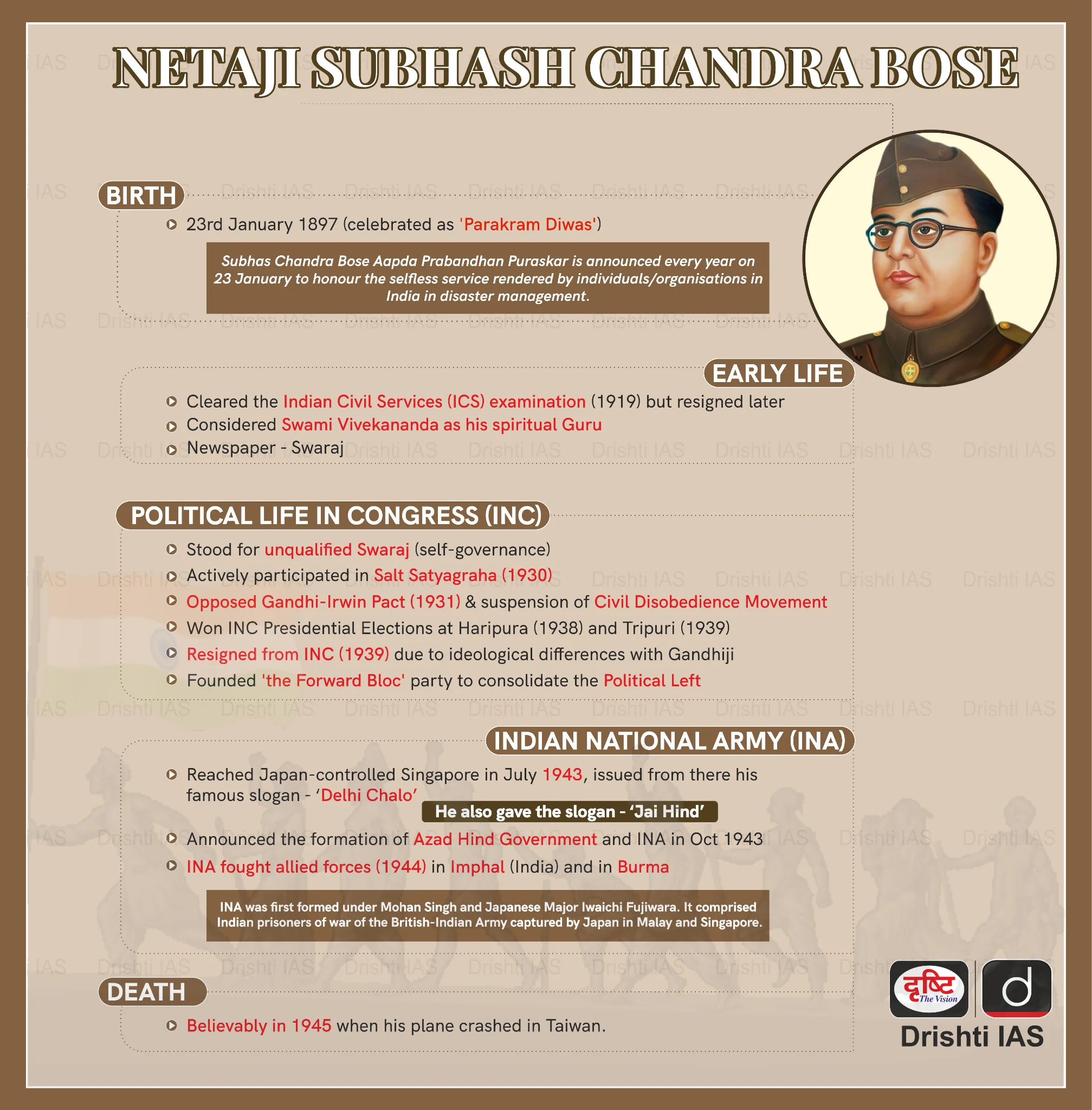
- About: Parakram Diwas (Day of Valor) is celebrated annually on 23rd January to honor the birth anniversary of Netaji Subhash Chandra Bose, one of India’s greatest freedom fighters.
- Parakram Diwas 2026 is being celebrated on the 129th birth anniversary of Subhash Chandra Bose (SC Bose).
- Past Celebrations:
- 2021: The first Parakram Diwas was held at Kolkata's Victoria Memorial.
- 2022: A hologram statue of Netaji was unveiled at India Gate, New Delhi.
- 2023: 21 islands in Andaman and Nicobar were named after Param Vir Chakra awardees like Major Somnath Sharma, Nayak Jadunath Singh etc.
- 2024: The event was inaugurated at Red Fort, Delhi, marking the site of the INA trials.
- 2025: The event was held at Barabati Fort, Cuttack, marking his birthplace with a national-level cultural event.
- Significance: The day symbolizes the courage, valor, and patriotism of Netaji Subhas Chandra Bose, who led the Indian National Army (INA) and advocated for complete independence.
- It also serves as a reminder of Netaji’s famous slogan, "Give me blood, and I will give you freedom," which inspired millions in the fight for India's independence.
What are Key Facts About SC Bose?
- Early Life: Born in 1897 in Cuttack (now in Odisha, then in Bengal), to Janakinath and Prabhavati Bose, Netaji was raised in a family that valued English education and Hindu customs.
- He attended Ravenshaw Collegiate School and later studied at Presidency College, Calcutta, where he became involved in anti-British activism.
- Ideological Foundations: He was inspired by the teachings of Ramakrishna Paramhansa and Swami Vivekananda, as well as the themes of Bankim Chandra Chatterjee's Ananda Math.
- He developed a unique synthesis of Western and Indian cultures, focused on India's freedom and revival.
- Early Political Involvement: SC Bose passed the Indian Civil Service exam in 1920 but resigned in 1921 to join the Indian freedom struggle.
- In 1921, Netaji met Mahatma Gandhi in Bombay but disagreed with his approach to independence, particularly his patience and commitment to non-violence.
- Disagreements with Congress: In 1938, Netaji was elected Congress president at the Haripura session, and advocated for swaraj and opposed an Indian federation under the Government of India Act, 1935.
- In 1939, Netaji was re-elected as Congress president in the Tripuri session, defeating Gandhi-backed Dr Pattabhi Sitaramayya. Gandhi saw this as a personal defeat, leading to the resignation of 12 out of 15 Working Committee members, including JL Nehru, Patel, and Rajendra Prasad.
- Bose attempted to form a new working committee but failed, leading to his resignation and replacement by Rajendra Prasad.
- Bose resigned from the chairmanship of the party on 29th April, 1939 and proposed the Forward Bloc to unite the radical-left Congress members, offering an alternative leadership based on anti-imperialism and socialism after independence.
- In 1939, Netaji was re-elected as Congress president in the Tripuri session, defeating Gandhi-backed Dr Pattabhi Sitaramayya. Gandhi saw this as a personal defeat, leading to the resignation of 12 out of 15 Working Committee members, including JL Nehru, Patel, and Rajendra Prasad.
- Death: After the atomic bombing of Hiroshima and Nagasaki during WW II, the Japanese surrendered on 16th August 1945, Bose left South East Asia on a Japanese plane and headed toward China. However, the plane allegedly crashed, leaving SC Bose badly burned, but still alive, according to some accounts.
- Legacy: Bose’s leadership, ideology, and call for complete independence made him one of the most influential figures in India’s freedom struggle.
Frequently Asked Questions (FAQs)
1. Why is Parakram Diwas observed?
Parakram Diwas is observed on 23rd January to commemorate the birth anniversary of Subhash Chandra Bose and honour his courage, sacrifice, and leadership in India’s freedom struggle.
2. When was Subhash Chandra Bose Congress President?
He was elected Congress President twice, in 1938 (Haripura Session) and 1939 (Tripuri Session).
3. Why did he resign from the Congress presidency?
He resigned in 1939 due to ideological differences with the Congress leadership, especially over methods to achieve independence.
UPSC Civil Services Examination, Previous Year Questions (PYQs)
Prelims
Q. The Ghadr (Ghadar) was a (2014)
(a) revolutionary association of Indians with headquarters at San Francisco
(b) nationalist organization operating from Singapore
(c) militant organization with headquarters at Berlin
(d) communist movement for India’s freedom with headquarters at Tashkent
Ans: (a)
Q. During the Indian Freedom Struggle, who of the following raised an army called ‘Free Indian Legion’?(2008)
(a) Lala Hardayal
(b) Rashbehari Bose
(c) Subhash Chandra Bose
(d) V.D. Savarkar
Ans: (c)
SC to Examine Whether ED is a ‘Juristic Person’
The Supreme Court (SC) of India has agreed to examine petitions filed by Tamil Nadu and Kerala seeking clarity on whether the Directorate of Enforcement (ED) is a ‘juristic person’ entitled to approach High Courts under Article 226 of the Constitution.
- A ‘juristic person’ is a non-human legal entity (such as a corporation) recognised by law as having rights and duties, including the capacity to sue or be sued.
- Kerala’s Contentions: The State argued that the ED filed a writ petition in the High Court challenging a State-appointed Commission of Inquiry (related to the gold smuggling case) without having the locus standi (legal standing) to do so.
- Tamil Nadu’s Stand: Supporting Kerala, Tamil Nadu accused the ED of abusing the process of law by seeking a mandamus from the Madras High Court regarding illegal mining cases, arguing such writs are "misconceived and unmaintainable."
- Statutory Body vs. Body Corporate: Both States contend that statutory bodies can exercise only powers expressly granted by statute, and ED is not vested with the power to sue under either FEMA , 1999 or the PMLA, 2002.
- Unlike a body corporate, the ED lacks the specific statutory power to claim legal status as a juristic person.
- Judicial Precedent: Both States relied on the Supreme Court judgment in Chief Conservator of Forests, Govt of AP vs. Collector (2003), which established that the ability of a legal entity to sue or be sued is a matter of substantive law, not just procedure.
Role of Article 226 of the Indian Constitution
- Article 226 empowers High Courts to issue writs( Habeas Corpus, Mandamus, Prohibition, Certiorari, and Quo Warranto) for the enforcement of Fundamental Rights.
- Unlike Article 32, Article 226 has a wider scope, as High Courts can issue writs not only for Fundamental Rights but also for “any other purpose”, including legal and statutory rights.
- It acts as a constitutional check on executive and administrative action, ensuring legality, fairness, and accountability of government authorities.
- Both individuals and legal entities can approach High Courts under Article 226, provided they have locus standi and a legally enforceable right.
- It plays a crucial role in Centre–State relations, allowing States or authorities to challenge actions of central agencies and vice versa.
| Read more: Writ Jurisdiction and the State |
India's LFPR Hits Record 56.1% in 2025
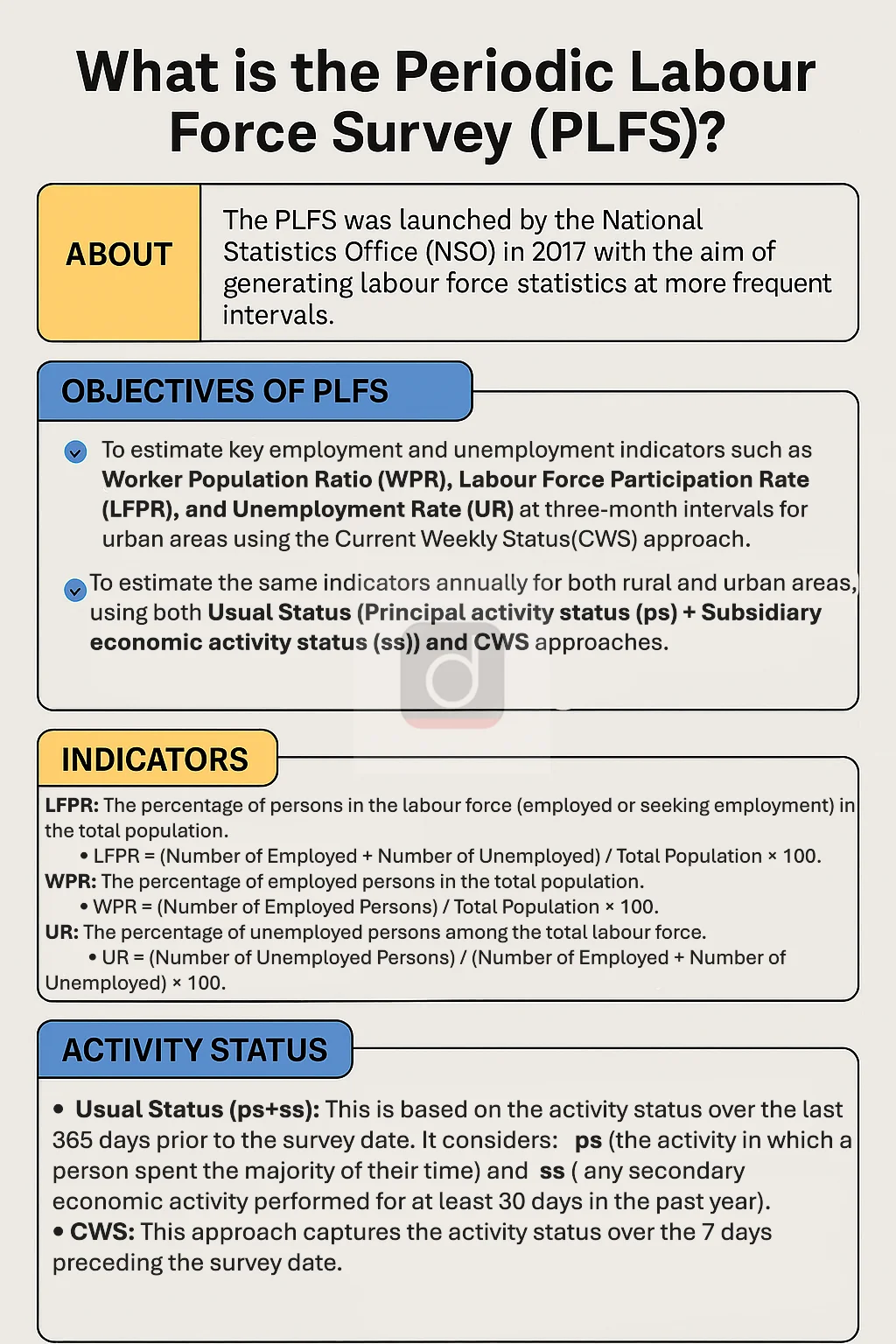
The Periodic Labour Force Survey (PLFS) – December 2025 shows a consistent recovery with workforce participation reaching yearly highs while unemployment rates remain broadly stable.
- The monthly data is based on the Current Weekly Status (CWS) approach, assessing a person’s activity status (employed, unemployed, or out of the labour force) over the 7 days preceding the survey.
Key Highlights
- Labour Force Participation Rate (LFPR): LFPR for persons aged 15+ continued its upward trend since June 2025, reaching 56.1% in December 2025.
- LFPR is the percentage of the working-age population (15–59 years) that is either employed or actively seeking employment.
- Worker Population Ratio (WPR): WPR reached its yearly peak at 53.4%. Rural male WPR showed strong performance at 76.0%, and women at 38.6% indicating robust rural employment.
- WPR is the percentage of the working-age population that is actually employed.
- Unemployment Scenario: Overall Unemployment Rate (UR) remained stable at 4.8%. Rural UR was steady at 3.9% while urban UR increased slightly to 6.7%.
- Urban female UR showed a significant decline to 9.1% from its yearly peak of 9.7% in October 2025.
- Rural-Urban Divide: A clear disparity persists with rural LFPR (59.0%) substantially higher than urban LFPR (50.2%), and urban unemployment consistently exceeding rural levels.
| Read More: Periodic Labour Force Survey 2024 |
India–Spain: Counter-Terrorism Cooperation
President Droupadi Murmu emphasized the need for India and Spain to unite their resources and capabilities to combat global terrorism during a meeting with the Spanish Foreign Minister.
- The year 2026 marks 70 years of diplomatic relations between India and Spain, to be celebrated as the India-Spain Dual Year of Culture, Tourism, and Artificial Intelligence.
- Counter-Terrorism Cooperation: Both nations share a firm stance against terrorism, viewing it as a critical threat to global peace.
- The President called for pooling resources to fight terrorism in "all its forms and manifestations."
- As strong proponents of multilateralism, India and Spain should collaborate on platforms like the United Nations and G-20 to promote global stability and prosperity.
- India–Spain Economic Relations: Spain is India’s 6th largest trade partner in the European Union(EU). Bilateral trade reached USD 9.32 billion in 2024, while Spain is the 16th largest investor in India with cumulative FDI of USD 4.29 billion.
- Institutional mechanisms like the India–Spain Joint Commission on Economic Cooperation (JCEC), fast-track investment mechanism underpin this expanding economic engagement.
- The signing of the India-EU FTA is expected to significantly boost bilateral trade. The EU is currently India's largest trading partner, with goods trade reaching USD 135 billion in FY 2023-24.
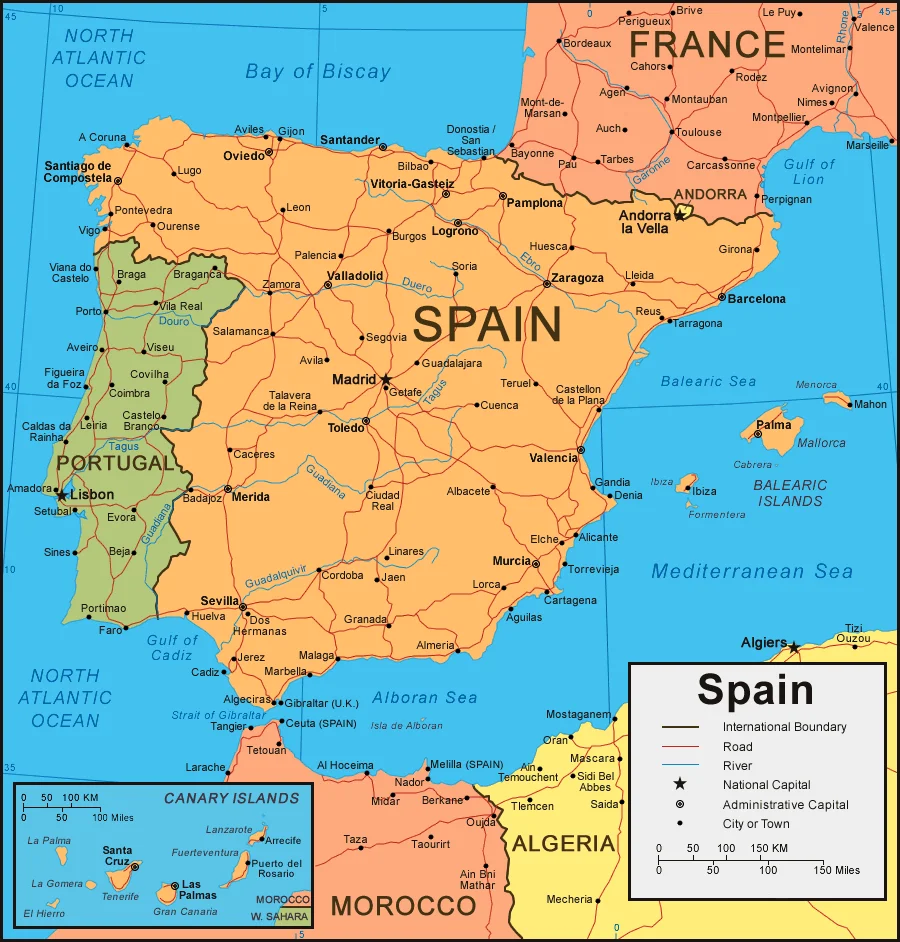
- Spain: It shares land borders with Portugal (west), France and Andorra (northeast), and Gibraltar (south).
- Its maritime boundaries are defined by the Bay of Biscay (north), the Atlantic Ocean (northwest/southwest), and the Mediterranean Sea (southeast/east).
- The country features diverse topography, including the Pyrenees Mountains, the Meseta Central plateau, and the Tabernas Desert, while also encompassing the strategic Balearic and Canary Islands.
| Read more: Perspective: Strengthening India-Spain Relations |
Shadow Fleet
The United States has intensified its military-led crackdown on the global 'shadow fleet' of oil tankers for transporting sanctioned crude from countries like Iran, Venezuela, and Russia.
- Shadow Fleet
- About: It refers to a vast network of over 3,000 vessels using deceptive shipping practices like disabling AIS (Automatic Identification System) transponders, GNSS (Global Navigation Satellite System) spoofing, and opaque ownership structures to evade Western sanctions and transport oil from sanctioned nations.
- Dark vs. Grey Fleets: Dark fleets are the highest-risk vessels; deliberately hide activity through AIS-off behaviour, GNSS spoofing, false flags, and covert ship-to-ship transfers.
- Grey fleet is not necessarily sanctioned but shows risk indicators like irregular routes, rapid ownership changes, and structural ambiguity designed to appear compliant. Emerged after the Russia-Ukraine war.
- Regulatory Weaknesses: Many shadow vessels are registered in jurisdictions with lax maritime oversight, including Gabon, Marshall Islands, Cook Islands, Liberia, Panama, and Mongolia (landlocked).
- Strategic and Environmental Risks: The fleet, often comprising old, poorly insured vessels, not only undermines sanctions but also poses significant environmental and safety risks due to substandard operations.
- Indian Link: In 2022–2023, Mumbai-based Gatik Ship Management (shadow fleet operator) emerged as a major transporter of Russian crude, managing a fleet worth USD 1.5 billion at its peak before transferring all tankers to related companies by August 2023 amid scrutiny.
| Read More: India's Maritime Strategy |
Indira Gandhi Peace Prize
Recently, the Indira Gandhi Prize for Peace, Disarmament and Development for 2025 has been awarded to Mozambican rights activist, Graca Machel, for her outstanding contributions to peace, humanitarian action and social development.
- About: It is also known as the Indira Gandhi Peace Prize and has been awarded annually since 1986 by the Indira Gandhi Memorial Trust in memory of former Prime Minister Indira Gandhi.
- It honours individuals or organisations for outstanding contributions to international peace, disarmament and development.
- Key Features: The prize carries a cash prize of Rs 1 crore, a citation and a trophy, and is regarded as one of India’s prestigious international peace awards.
- Categories: It is awarded across the three core domains of peace, disarmament and development.
- Selection Criteria: The award recognises sustained and exceptional efforts addressing global challenges related to peace, disarmament and development, with a positive humanitarian impact and contributions to the welfare of humanity.
| Read more: Indira Gandhi Peace Prize |