
India–Canada Strategic Reset
For Prelims: Comprehensive Economic Partnership Agreement, Uranium, G7 Critical Minerals Action Plan, International Solar Alliance (ISA), Global Biofuels Alliance (GBA).
For Mains: India–Canada relations: opportunities and constraints, Energy diplomacy and critical minerals in India’s foreign policy, Diaspora politics and its impact on bilateral relations
Why in News?
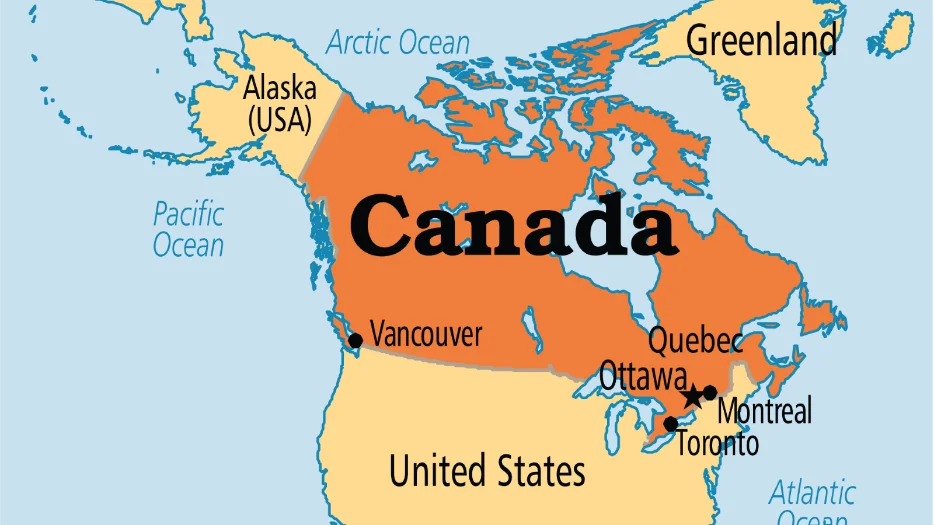
The Prime Minister of Canada, Mark Carney, paid an official visit to India, marking what is widely viewed as a strategic reset in bilateral relations after the diplomatic tensions of 2023–24.
- The visit signals an effort by both countries to refocus on economic cooperation, defence dialogue, and strengthening the overall partnership.
Summary
- The Prime Minister of Canada's visit to India marked a reset in India–Canada relations after the 2023–24 diplomatic tensions. Major outcomes included restarting CEPA trade negotiations, a USD 2.6 billion uranium supply deal with Cameco, cooperation on critical minerals and clean energy, the launch of the first India–Canada Defence Dialogue, and initiatives in innovation, research internships, and food technology.
- India and Canada share strong economic and diaspora ties (1.8 million Indians in Canada) and aim to double trade to $50 billion by 2030. However, issues like Khalistani extremism, trade barriers, and visa delays remain challenges. Stronger security cooperation, early trade agreements, and Indo-Pacific collaboration can help rebuild trust and deepen the partnership.
What are the Key Outcomes of the Visit of the PM of Canada to India?
- Relaunch of CEPA Negotiations: India and Canada signed the Terms of Reference (ToR) to resume talks on the Comprehensive Economic Partnership Agreement (CEPA).
- Both nations have set an ambitious target to double bilateral trade to USD 50 billion by 2030.
- Landmark Civil Nuclear Deal: The Department of Atomic Energy (India) signed a USD 2.6 billion long-term commercial contract with Canada's Cameco for the supply of Uranium Ore Concentrates.
- This is a major boost for India's Viksit Bharat vision to achieve 100 GW of nuclear power capacity by 2047.
- Critical Minerals & Clean Energy: A Memorandum of Understanding (MoU) was signed to develop secure and resilient critical mineral supply chains, aligning with the G7 Critical Minerals Action Plan.
- Canada announced it will officially join both the International Solar Alliance (ISA) and the Global Biofuels Alliance (GBA).
- An MoU was established to share best practices and build capacity in energy storage, solar, wind, and biomass/bio-energy.
- Defense and Security: The two nations announced the establishment of the first-ever India-Canada Defence Dialogue to foster strategic security discussions.
- Political and Diplomatic Ties: The India-Canada Parliament Friendship Group was established to enhance political networking.
- Additionally, India formally announced its support for Canada to join the Indian Ocean Rim Association (IORA) as a Dialogue Partner.
- Private Sector Engagement: The India-Canada CEO Forum has been reconstituted to serve as a key platform for deepening private-sector collaboration across priority industries.
- Innovation and Talent: The India-Canada-Australia Trilateral MoU was signed to advance cooperation in emerging technologies and innovation under the Australia–Canada–India Technology and Innovation (ACITI) Partnership
- An MoU between All India Council for Technical Education (AICTE) and Canada's Mitacs was signed to provide 300 fully-funded research internships for Indian students.
- A Declaration of Intent was signed to establish a joint Joint Pulse Protein Centre of Excellence at National Institute of Food Technology, Entrepreneurship, and Management Kundli (NIFTEM-K).
- This center will focus on advanced protein extraction and fortified food products to address micronutrient deficiencies.
Importance of Uranium for India’s Nuclear Energy Programme
- Primary Nuclear Fuel: Uranium is the main fuel used in nuclear reactors for electricity generation.
- India plans to increase nuclear power capacity from about 9 GW currently to 100 GW by 2047.
- Nuclear energy provides a reliable, low-carbon power source that supports India’s clean energy transition. Long-term uranium contracts ensure a stable supply for upcoming nuclear reactors.
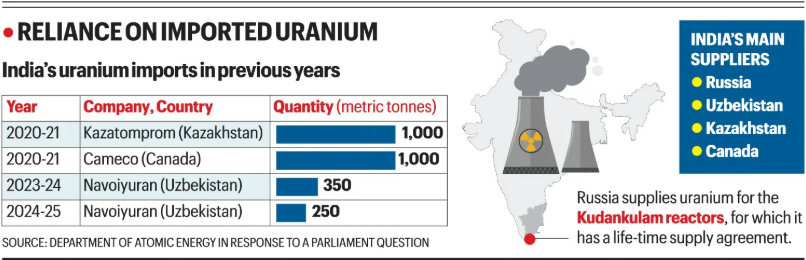
- Need for Uranium Imports: Indian uranium ore contains 0.02%–0.45% uranium, much lower than the global average of 1–2%. India consumes 1,500–2,000 tonnes of uranium per year.
- Annual demand may rise to about 5,400 tonnes with the expansion of nuclear power capacity.
- Some Canadian mines have ore grades as high as 15%, making them far more efficient.
- Due to lower ore quality, domestic uranium extraction is more expensive than imports.
- Over 70% of India’s uranium requirements are currently met through imports.
- Diversification of Uranium Imports:
- International Suppliers: India is importing uranium from several countries to ensure fuel security, including Uzbekistan, Kazakhstan, Canada, and Russia.
- Reactor-Linked Supply Arrangements: Russia provides a lifetime uranium fuel supply for reactors at the Kudankulam Nuclear Power Plant in Tamil Nadu.
- Exploring New Suppliers: India is also considering future supply agreements with countries such as Australia and the United States.
- The Sustainable Harnessing and Advancement of Nuclear Energy for Transforming India Act, 2025 enables greater private sector participation in India’s nuclear sector, facilitating collaboration with global partners including the US.
- Overseas Mining Opportunities: Indian companies like Nuclear Power Corporation of India Limited (NPCIL) are exploring the possibility of investing in or mining uranium deposits abroad to secure long-term fuel supplies.
What is the Significance of India-Canada Relations?
- Strategic Partnership: The two nations share over 75 years of diplomatic relations, which were formally upgraded to a "Strategic Partnership" in 2018.
- Economic Complementarity: Canada aims to reduce dependence on the US market. India provides a vast, fast-growing market and a massive skilled talent pool, while Canada offers advanced technology, natural resources (potash, uranium, critical minerals), and capital.
- Canadian Pension Funds have cumulatively invested over USD 75 billion in India and are increasingly viewing India as a favourable destination for investments.
- In 2024, India was Canada’s 7th largest trading partner, with two-way trade worth USD 30.9 billion, and India maintaining a trade surplus in goods.
- Top Canadian exports to India: Vegetables, mineral fuels and oils, wood pulp, fertilisers, paper and paperboard
- Top Indian exports to Canada: Pharmaceuticals, machinery, electronics, precious stones and metals, iron and steel products.
- Geopolitical Alignment: As two vibrant democracies, both nations share converging interests in maintaining a rules-based, free, and open Indo-Pacific.
- Canada’s Indo-Pacific Strategy specifically identifies India as a critical partner.
- Diaspora and Soft Power: The Indian diaspora in Canada is over 1.8 million strong (around 4% of the population), acting as a vital bridge for people-to-people and economic ties.
- Furthermore, India remains the top source country for international students in Canada.
- Multilateral Alignment: Both nations work closely together to address global challenges in major international forums, including the United Nations (UN), World Trade Organization (WTO), and the International Civil Aviation Organization (ICAO).
- Security Cooperation: It is anchored in the Joint Working Group on Counter Terrorism (1997) and the Framework for Cooperation on Countering Terrorism (2018), while legal collaboration is strengthened through the Extradition Treaty (1987) and the Mutual Legal Assistance Treaty (1994).
What are the Key Challenges and the Way Forward in India–Canada Relations?
|
Challenges |
Measures to Strengthen India–Canada Relations |
|
Khalistani Extremism: India remains concerned about anti-India separatist activities operating from Canadian soil and attacks on Indian consulates and diaspora members. |
Strict Security Cooperation: Implement the action plan between the National Security Advisors (NSAs) to tackle violent extremism and organised crime and rebuild trust. |
|
Trade Barriers: Differences over India’s agricultural tariffs, Canada’s stringent sanitary standards, and disputes regarding intellectual property rights and mobility of professionals. |
Early Harvest Trade Agreement: Pursue an interim trade deal to expand trade in less contentious sectors while negotiations for the Comprehensive Economic Partnership Agreement (CEPA) continue. |
|
Visa and Consular Delays: Diplomatic tensions in 2023–24 led to reduced diplomatic staff, causing visa backlogs affecting students, tourists, and business professionals. |
Cultural and Educational Cooperation: Strengthen cultural and educational cooperation to rebuild trust and facilitate smoother mobility of students, professionals, and tourists. Expand joint cultural and academic programmes between institutions to improve engagement and help streamline visa and consular processes. |
Conclusion
India–Canada engagements signal a shift from tensions to pragmatic cooperation. By advancing economic ties, clean energy collaboration, and security coordination, both countries can rebuild trust. A stable partnership will support economic growth and strengthen a free and resilient Indo-Pacific.
|
Drishti Mains Question: Q. Examine the strategic significance of the recent India–Canada diplomatic reset in the context of Indo-Pacific geopolitics |
Frequently Asked Questions (FAQs)
1. What is the significance of the India–Canada CEPA negotiations?
CEPA aims to expand trade in goods and services, investment, digital trade, and mobility, with a target of reaching USD 50 billion in bilateral trade by 2030.
2. What is the importance of the India–Canada civil nuclear agreement?
The USD 2.6 billion uranium supply deal with Cameco supports India’s target of achieving 100 GW nuclear capacity by 2047 under its Viksit Bharat vision.
3. Why are critical minerals central to India–Canada relations?
Canada’s resource base complements India’s clean energy and manufacturing ambitions, aligning with supply chain resilience and the G7 Critical Minerals Action Plan.
4. What remains the core security concern in India–Canada relations?
India’s primary concern is the presence of separatist elements and extremist activities on Canadian soil affecting diplomatic and diaspora security.
5. How does the Indian diaspora influence bilateral ties?
With over 1.8 million people of Indian origin in Canada, the diaspora strengthens economic, educational, and cultural linkages between the two countries.
UPSC Civil Services Examination, Previous Year Question (PYQ)
Prelims
Q. In which one of the following groups are all the four countries members of G20? (2020)
(a) Argentina, Mexico, South Africa and Turkey
(b) Australia, Canada, Malaysia and New Zealand
(c) Brazil, Iran, Saudi Arabia and Vietnam
(d) Indonesia, Japan, Singapore and South Korea
Ans: (a)
India's Export Surge
For Prelims: Economic Survey 2025-26, Free Trade Agreements (FTAs), Active Pharmaceutical Ingredients (APIs), Union Budget 2026-27, Semiconductor, PM E-DRIVE Scheme, Defence Acquisition Procedure (DAP) 2020, Defence Procurement Manual (DPM) 2025, Global Capability Centres (GCCs), SEZ, Rules of Origin, Carbon Border Adjustment Mechanism (CBAM), Critical Minerals, Export Promotion Mission.
For Mains: Key facts regarding India's export performance, steps taken to boost India's exports, main challenges facing India's export sector and ways to strengthen them.
Why in News?
India's rising exports define its post-pandemic economic emergence, with the Economic Survey 2025-26 calling its growth "the envy of the world"—backed by strong banking, foreign reserves, and a stable current account.
- This export momentum, strengthened by targeted import substitution, ensures India's competitive integration into global value chains.
Summary
- India's total exports hit USD 720.76 billion (April 2025–January 2026), growing 6.15% despite global headwinds.
- Electronics emerged as the third-largest export, while defence exports reached a record Rs 23,622 crore.
- Challenges like US tariffs and the EU's CBAM necessitate strategic interventions through the Rs 25,060 crore Export Promotion Mission
What are Key Facts Regarding India's Export Performance?
- Overall Export Performance: India's total exports (goods and services combined) reached an estimated USD 720.76 billion between April 2025 and January 2026. This marks a growth of 6.15% compared to the same period the previous year, achieved despite global uncertainties.
- Export Diversification: India ranks among the top 5 globally for export product diversity and top 3 for trade partner diversity, helping it better withstand global demand fluctuations and supply chain disruptions.
- Sectoral Performance:
- Petroleum Products: India is the 7th-largest exporter of refined petroleum products globally and ranks among the top 5 refining nations globally.
- Electronic Goods: Electronics exports rose from the 7th-largest export category in FY22 to the 3rd-largest and fastest-growing in FY25. It is on track to become India's 2nd-largest export item. Smartphone exports in the first five months of 2025-26 touched Rs 1 lakh crore, a 55% rise over the same period last year.
- Pharmaceuticals & Chemicals: India ranks 11th globally in pharmaceutical exports by value with a 3% global market share. Medical devices exports grew significantly from USD 2.5 billion in FY21 to USD 4.1 billion in FY25.
- Textiles Exports: India is the 6th-largest global exporter of textiles and apparel with a 4% global market share. Textiles and apparel exports (including Handicrafts) increased from USD 35.87 billion in FY24 to USD 37.75 billion in FY25.
- Automobile Exports: Overall automobile exports increased from 4,131 thousand units in FY21 to 5,357 thousand units in FY25, reflecting stronger global demand for India-made vehicles.
- Defence Exports: Defence exports reached a record Rs 23,622 crore in FY 2024-25 (from less than Rs 1,000 crore in 2014), with Indian defence products now exported to over 100 countries including the United States, France, and Armenia. The government targets Rs 50,000 crore in defence exports by 2029.
- Services Exports: India's services exports hit a record USD 387.5 billion in FY25, with a trade surplus of USD 188.8 billion.
- Trading Partners and Trade Agreements: In the last 3 years, India signed 9 free trade agreements (FTAs) covering 38 countries, granting it zero-duty access to markets representing ~70% of global GDP. This strategy aims to diversify trade ties and reduce dependence on any single market.
What Steps have been Taken to Boost India's Exports?
- Production-Linked Incentives (PLI) Schemes:
- PLI Scheme for Automobile & Auto Components Industry: It promotes high-value Advanced Automotive Technology (AAT) vehicles and products, attracting cumulative investments of Rs 35,657 crore as of September 2025.
- PLI for Bulk Drugs: Mitigates reliance on imported Active Pharmaceutical Ingredients (APIs), Key Starting Materials (KSMs), and Drug Intermediates and created an annual manufacturing capacity of 55,000 metric ton (MT) for 26 critical products.
- Export Promotion Mission (EPM): It was approved with a total outlay of Rs 25,060 crore for FY 2025-26 to FY 2030-31 to strengthen the export ecosystem, improve access to affordable trade finance, and enhance global market readiness. The scheme operates through two sub-schemes i.e., Niryat Protsahan and Niryat Disha. Key EPM Interventions for export boost include:
- E-Commerce Credit Assistance: Direct facility up to Rs 50 lakh with 90% guarantee; Overseas facility up to Rs 5 crore with 75% guarantee.
- TRACE (Trade Regulations, Accreditation & Compliance Enablement): Reimburses 60-75% of compliance costs, capped at Rs 25 lakh per IEC annually.
- FLOW (Facilitating Logistics, Overseas Warehousing & Fulfilment): Up to 30% of approved project cost for overseas warehousing.
- LIFT (Logistics Interventions for Freight & Transport): Reimburses up to 30% of freight costs in low export-intensity districts, capped at Rs 20 lakh per IEC annually.
- INSIGHT (Integrated Support for Trade Intelligence & Facilitation): Up to 50-100% of project cost for capacity-building and trade intelligence.
- Semiconductor and Electronics Manufacturing Initiatives:
- Electronics Component Manufacturing Scheme (ECMS): The scheme, notified in 2025 with an outlay of Rs 40,000 crores, aims to integrate India's electronics industry with Global Value Chains.
- India Semiconductor Mission (ISM) 2.0: Launched in Union Budget 2026-27, focusing on industry-led research, technology development, and skilled workforce creation in semiconductor fabrication, assembly, testing, and chip design.
- Customs and Taxation Measures: Union Budget 2026-27 reduced customs duty on aviation parts, lithium-ion cell manufacturing, and defence and civil aviation components to lower manufacturing costs for aerospace, electronics engineering, and energy storage hardware.
- Sector-Specific Export Promotion: The PM E-DRIVE Scheme provides demand incentives for electric two-wheelers and three-wheelers, extends support to e-trucks and e-ambulances, and funds charging infrastructure.
- Scheme to Promote Manufacturing of Electric Passenger Cars in India (SMEC) promotes electric car manufacturing for domestic and export markets.
- Defence Export Promotion: Defence Acquisition Procedure (DAP) 2020 and Defence Procurement Manual (DPM) 2025 ensure speed, transparency, innovation, and self-reliance.
- Uttar Pradesh Defence Industrial Corridor (UPDIC) and Tamil Nadu Defence Industrial Corridor (TNDIC) attracted investments exceeding Rs 9,145 crore as of October 2025.
- Infrastructure and Ecosystem Development: To strengthen infrastructure and ecosystem development for capital goods and container manufacturing, the Union Budget 2026-27 announced initiatives such as Rare Earth Corridors, Chemical Parks, and Biopharma SHAKTI.
- Services Export Promotion: Services exports are being propelled by rapid Global Capability Centres (GCCs) expansion supported by SEZ tax incentives, and India's 2nd-place global ranking in AI skill penetration.
What are the Main Challenges Facing India's Export Sector?
- High Tariffs and Protectionism: The US administration's imposition of up to 50% tariffs on Indian goods in 2025 triggered a 22% decline in overall exports to the US. Affected sectors include shrimp (15% volume fall due to anti-dumping duties), textiles (10% contraction), and steel.
-
Although an interim US-India trade deal reduced reciprocal tariffs from 50% to 18% on most goods starting February 2026, lingering protectionism persists.
-
- Non-Tariff Barriers and Climate-Related Hurdles: Exporters, particularly SMEs, grapple with complex non-tariff barriers under FTAs, including stringent Rules of Origin requirements, high documentation costs, audit risks, and inconsistent customs interpretations.
- Compounding these challenges, the EU's Carbon Border Adjustment Mechanism (CBAM), effective from 2026, will impose carbon taxes on Indian exports of steel, aluminium, and cement, potentially increasing costs and reducing competitiveness in the European market.
- Diversification Challenges: India's export portfolio remains skewed toward the US, which accounts for approximately 18% of total exports, making it vulnerable to disruptions. Global demand slowdowns in advanced economies and currency volatility continue to hinder diversification.
- Supply Chain Vulnerabilities: Geopolitical tensions, particularly in the Middle East which supplies about 55% of India's crude oil imports, pose significant risks to India's energy security and export costs. Broader geopolitical alignments are shifting trade away from efficiency toward security considerations, increasing exposure to shocks.
- India-Gulf Cooperation Council (GCC) bilateral trade reached USD 178.56 billion in FY 2024-25, accounting for 15.42% of India’s global trade. With about 20% of global oil and gas flowing through the Strait of Hormuz, its blockade by Iran may cause oil and gas prices to surge in India.
- Intensifying Sectoral Pressures: Intensifying competition from countries like Vietnam and Bangladesh is hurting India's labor-intensive export sectors, which are already facing crises and employment challenges. Complex trade negotiations with the US, including disputes over reciprocal tariffs such as India's 11% duty on American cotton, further complicate the outlook for these industries.
What Steps are Needed to Strengthen India's Export Sector?
- Bolster Policy Frameworks: Operationalize AI-driven "Single Window 2.0" integrating customs and certifications to streamline operations. India should swiftly conclude FTAs renegotiations to fix asymmetric structures, where imports rose 82% against export growth of 31% (2017-2022).
- Upgrade Logistics Infrastructure: Integrate Dedicated Freight Corridors with mega ports to reduce landed export costs by 20-30%. Invest in export processing zones, multi-modal parks, and cold chain facilities for agricultural exports.
- Ensure Sustainability Compliance: Develop national "Green Export Credit" facility to counter EU's CBAM on steel, aluminum, and cement. Establish indigenous carbon accounting frameworks for "carbon-neutral" branding.
- Scale Manufacturing: Expand PLI schemes including PLI 3.0 for rare earth and semiconductors through Sovereign Industrial Corridors. Initiatives like the Mahatma Gandhi Gram Swaraj Initiative (announced Union Budget 2026-27) will link traditional sectors such as handlooms to global markets via branding and training.
- Leverage Digital Growth: Remove Rs 10 lakh cap on e-commerce consignments to empower MSMEs. Implement blockchain-based trade platforms for rules of origin verification. Promote digital services exports through dedicated councils.
- Mitigating Supply Chain Risks: Establishing proactive buffer stocks for high-risk commodities like crude oil, rare earth elements, lithium, cobalt, and other critical minerals helps insulate the export sector from sudden shortages or price volatility.
Conclusion
India's export sector demonstrates resilient growth at 6.15% despite global headwinds, driven by diversification, PLI schemes, and the Rs 25,060 crore Export Promotion Mission. However, challenges like US tariffs, EU's CBAM, and geopolitical vulnerabilities require strategic interventions including infrastructure upgrades, sustainability compliance, and diversified trade agreements to achieve global competitiveness.
|
Drishti Mains Question: Q. "India's export sector has shown remarkable resilience post-pandemic." Analyze the key factors contributing to this growth and the major challenges that threaten its sustainability |
Frequently Asked Questions (FAQs)
1. What is India's total export performance in 2025-26?
India's total exports (goods and services) reached USD 720.76 billion between April 2025-January 2026, registering 6.15% growth despite global uncertainties.
2.What is the Export Promotion Mission (EPM)?
EPM is a flagship scheme approved with Rs 25,060 crore outlay (FY 2025-26 to 2030-31) comprising sub-schemes Niryat Protsahan and Niryat Disha to strengthen export ecosystem and support MSMEs.
3. Which sectors are driving India's export growth?
Key sectors include electronics (fastest-growing, third-largest export), petroleum products (7th largest globally), pharmaceuticals (11th globally), defence exports (record Rs 23,622 crore in FY25), and services exports (USD 387.5 billion in FY25).
UPSC Civil Services Examination, Previous Year Questions (PYQs)
Prelims
Q. The SEZ Act, 2005 which came into effect in February 2006 has certain objectives. In this context, consider the following: (2010)
- Development of infrastructure facilities.
- Promotion of investment from foreign sources.
- Promotion of exports of services only.
Which of the above are the objectives of this Act?
(a) 1 and 2 only
(b) 3 only
(c) 2 and 3 only
(d) 1, 2 and 3
Ans: (a)
Q. A “closed economy” is an economy in which (2011)
(a) the money supply is fully controlled
(b) deficit financing takes place
(c) only exports take place
(d) neither exports or imports take place
Ans: (d)
Mains
Q. “Industrial growth rate has lagged behind in the overall growth of Gross-Domestic-Product(GDP) in the post-reform period” Give reasons. How far are the recent changes in Industrial Policy capable of increasing the industrial growth rate? (2017)
Q. Account for the failure of manufacturing sector in achieving the goal of labour-intensive exports. Suggest measures for more labour-intensive rather than capital-intensive exports. (2017)
US Torpedo Sinks Iranian Warship in Indian Ocean
Why in News?
A US submarine torpedoed and sank the Iranian frigate IRIS Dena about 40 nautical miles off Sri Lanka’s southern coast near Galle in the Indian Ocean, bringing the US-Israel-Iran Conflict closer to the Indian Ocean Region (IOR) and marking the first US torpedo sinking of an enemy ship since World War II.
- Following the incident, Sri Lanka deployed naval vessels to rescue the sailors in line with its obligations under the International Convention on Maritime Search and Rescue (SAR Convention).
What is the International Convention on Maritime Search and Rescue (SAR)?
- About: The SAR Convention is an international agreement adopted in 1979 under the International Maritime Organization (IMO) to ensure that people in distress at sea receive prompt rescue assistance.
- Key Features:
-
Global Search and Rescue System: Divides the world’s oceans into Search and Rescue (SAR) regions, with each coastal state responsible for coordinating rescue operations in its area.
-
Obligation to Rescue: Requires ships and coastal states to assist persons in distress at sea, regardless of nationality or status.
-
Coordination Mechanism: Establishes Rescue Coordination Centres (RCCs) to organise and manage search and rescue operations.
-
International Cooperation: Encourages cooperation between neighbouring countries for swift rescue and evacuation.
-
- India and SAR:
- India is a signatory to the SAR, 1979, ratified in 2001. In India, the Indian Coast Guard (ICG) coordinates rescue operations in the Indian Search and Rescue Region (ISRR), with the Director General ICG serving as the National Maritime Search and Rescue Coordinating Authority (NMSARCA).
- The ICG also operates INDSAR, a voluntary ship reporting system that helps track vessels and respond quickly to maritime distress situations.
- Significance: SAR ensures humanitarian assistance at sea. It strengthens maritime safety and international cooperation.
-
SAR forms a key pillar of global maritime law alongside conventions like International Convention for the Safety of Life at Sea (SOLAS), 1974, and United Nations Convention on the Law of the Sea (UNCLOS), 1982.
-
Note: The IRIS Dena was attacked while returning from the International Fleet Review (IFR) 2026 in Visakhapatnam.
- The IFR is hosted by the Indian Navy to build trust, interoperability, and "Bridges of Friendship" among global navies.
- An attack on a participating vessel shortly after leaving Indian waters places New Delhi in a delicate diplomatic position, requiring a tightrope walk between its strategic partnership with the US and its civilizational and energy ties with Iran.
What is a Torpedo?
- About: A torpedo is a self-propelled underwater missile designed to destroy ships or submarines. Unlike naval mines, torpedoes actively travel through water, track targets, and detonate at the most destructive point, often beneath a ship’s hull.
- Evolution of Torpedoes:
-
Early Origins: The term “torpedo” originally referred to underwater explosive devices and naval mines.
-
During the Napoleonic Wars (1803–1815), inventor Robert Fulton experimented with underwater explosive charges inspired by the electric ray fish.
-
-
Spar Torpedoes: Early naval forces used spar torpedoes, where an explosive was mounted on a pole and rammed into enemy ships.
-
These weapons were effective but extremely dangerous for attacking crews.
-
-
Modern Torpedo Invention: In 1866, engineer Robert Whitehead developed the first self-propelled torpedo. Powered by compressed air and equipped with automatic depth control, it could travel underwater independently and strike enemy ships from a distance.
-
This invention transformed torpedoes into true underwater guided weapons.
-
-
-
Working: Modern torpedoes use electric batteries or thermal propulsion systems and can travel at speeds above 50 knots for distances exceeding 50 km. They use sophisticated guidance systems, onboard sensors, and computers to track targets and maintain optimal attack depth.
- Modern torpedoes rely primarily on acoustic homing technology as a guiding mechanism.
- Active acoustic torpedoes emit sonar signals and track echoes from targets, while passive acoustic torpedoes silently follow the noise generated by engines or propellers.
- Modern torpedoes rely primarily on acoustic homing technology as a guiding mechanism.
- Torpedoes in World Wars: Submarines became the most effective platforms for torpedo attacks during the world wars.
- In World War II, the German U-boat Fleet sank thousands of Allied ships, forcing the development of convoy systems, sonar detection, and anti-submarine warfare tactics.
- Types of Modern Torpedoes: Modern torpedoes are classified as heavyweight torpedoes, mainly deployed by submarines to destroy large warships, and lightweight torpedoes, launched from ships, aircraft, or helicopters to target submarines.
- Some systems combine missile and torpedo technology, extending strike range.
- Strategic Importance: Torpedoes remain central to modern naval warfare because they are stealthy, precise, and highly destructive.
- Since they are hard to detect underwater, submarines can launch torpedo attacks while remaining hidden, making them one of the most effective weapons in maritime conflicts.
- Torpedo Technology in India:
- Varunastra: India's first indigenous advanced heavyweight anti-submarine torpedo, designed to be launched from both surface ships and submarines.
- Shyena / Torpedo Advanced Light (TAL): This is India's first indigenous advanced lightweight anti-submarine torpedo. It is highly versatile and can be launched from ships, submarines, and helicopters
- Maareech (Defensive System): While not an offensive torpedo, Maareech is a crucial Advanced Torpedo Defence System (ATDS). It detects, diverts, and physically destroys incoming enemy torpedoes using towed decoys.
Frequently Asked Questions (FAQs)
1. What is the International Convention on Maritime Search and Rescue (SAR)?
The International Convention on Maritime Search and Rescue (1979) is an International Maritime Organization treaty that establishes a global system for coordinating search and rescue operations for persons in distress at sea.
2. Which agency coordinates maritime search and rescue in India?
The Indian Coast Guard coordinates SAR operations in the Indian Search and Rescue Region (ISRR), with the Director General ICG acting as the National Maritime Search and Rescue Coordinating Authority (NMSARCA).
3. What is the significance of the SAR Convention?
It ensures humanitarian assistance at sea, strengthens global maritime safety, and promotes international cooperation in search and rescue operations.
4. What is the International Fleet Review (IFR)?
The International Fleet Review 2026 is a naval event hosted by the Indian Navy to enhance naval cooperation, interoperability, and maritime diplomacy among global navies.
5. What is a torpedo?
A torpedo is a self-propelled underwater missile designed to destroy ships or submarines using propulsion systems, acoustic guidance, and explosive warheads.
UPSC Civil Services Examination, Previous Year Questions (PYQs)
Prelims
Q. With reference to the United Nations Convention on the Law of Sea, consider the following statements: (2022)
1. A coastal state has the right to establish the breadth of its territorial sea up to a limit not exceeding 12 nautical miles, measured from baseline determined in accordance with the convention.
2. Ships of all states, whether coastal or land-locked, enjoy the right of innocent passage through the territorial sea.
3. The Exclusive Economic Zone shall not extend beyond 200 nautical miles from the baseline from which the breadth of the territorial sea is measured.
Which of the statements given above are correct?
a) 1 and 2 only
b) 2 and 3 only
c) 1 and 3 only
d) 1, 2 and 3
Ans: d
World Obesity Atlas 2026
Why in News?
The World Obesity Atlas 2026, released by the World Obesity Federation on World Obesity Day (4th March), reveals alarming statistics for India, highlighting a growing public health emergency.
What are the Key Findings of the World Obesity Atlas 2026?
About
- The World Health Organization (WHO) defines Obesity as abnormal or excessive fat accumulation that poses health risks, with a Body Mass Index (BMI) of 25 or above classified as overweight and 30 or above as obese.
Key Findings
- Obesity Prevalence:
- Global: China, India, and the United States each have over 10 million children living with obesity, with China leading (62 million high Body Mass Index (BMI), 33 million obesity), followed by India, and the US (27 million high BMI, 13 million obesity cases). Among women (15-49 years), 13.4% have high BMI and 4.2% live with Type 2 diabetes.
- Over 200 million school-age children aged 5 to 19 living with overweight and obesity are concentrated in just 10 countries across the world.
- India: Nearly 15 million children aged five to nine years and more than 26 million children aged 10 to 19 years in India were overweight or obese in 2025. It positions India as having the 2nd-highest number of children with high BMI (41 million).
- The number of Indian children aged 5 to 19 with disease indicators linked to high BMI is projected to rise substantially from 2025 to 2040.
- Global: China, India, and the United States each have over 10 million children living with obesity, with China leading (62 million high Body Mass Index (BMI), 33 million obesity), followed by India, and the US (27 million high BMI, 13 million obesity cases). Among women (15-49 years), 13.4% have high BMI and 4.2% live with Type 2 diabetes.
- Health Consequences (2025-2040): Cases of BMI-related hypertension are expected to increase from 2.99 million to 4.21 million, hyperglycaemia (high blood sugar) from 1.39 million to 1.91 million, high triglycerides from 4.39 million to 6.07 million, and metabolic dysfunction-associated steatotic liver disease (MASLD) from 8.39 million to 11.88 million.
- Preventable Risk Factors: Key contributors include 74% of adolescents (11-17 years) failing to meet physical activity recommendations, only 35.5% receiving school meals, 32.6% of infants (1-5 months) experiencing sub-optimal breastfeeding, and children aged 6-10 consuming up to 50 ml of sugary drinks daily..
- Global Trends and Warnings: The world is set to miss the 2025 target to halve childhood obesity rise (now extended to 2030). Currently, 20.7% of children aged 5-19 worldwide are overweight/obese (up from 14.6% in 2010), with projections of 507 million affected children by 2040 and over 57 million showing early cardiovascular disease signs.
Policy Recommendations
- The report has called for urgent government intervention including taxes on sugar-sweetened beverages, restrictions on marketing to children (including digital platforms), implementation of global physical activity recommendations, protection of breastfeeding, healthier school food standards, and integration of prevention and care into primary health systems.
Body Mass Index
- About: Body Mass Index (BMI) is a screening tool used to estimate body fat based on height and weight, helping categorize individuals into weight status categories.
- Calculation Method: BMI is calculated using the formula weight in kilograms divided by the square of height in meters (BMI = weight (kg) ÷ [height (m)]²).
- BMI Classifications (WHO Standards):
- Adult BMI: The standard categories for adults (20+ years) are Underweight (<18.5), Healthy/Normal (18.5-24.9), Overweight (25.0-29.9), and Obesity (≥30.0). Obesity is subdivided into Class I (30.0-34.9), Class II (35.0-39.9), and Class III (≥40.0) indicating very high risk.
- Children and Adolescents: For those under 20 years, BMI is interpreted using age- and sex-specific percentiles. It is Underweight (<5th percentile), Healthy weight (5th to <85th percentile), Overweight (85th to <95th percentile), Obesity (≥95th percentile), and Severe obesity (≥120% of 95th percentile or BMI ≥35).
- Health Implications and Usage: BMI categories correlate with health risks — higher BMI increases risk for cardiovascular disease, type 2 diabetes, hypertension, and other metabolic disorders.
- However, health professionals recommend using waist circumference, body composition analysis, and other clinical assessments alongside BMI for comprehensive health evaluation.
Frequently Asked Questions (FAQs)
1. What is Body Mass Index (BMI)?
BMI is a screening tool calculated as weight (kg) ÷ height (m)², used to classify underweight, normal, overweight, and obesity categories based on WHO standards.
2. What are the projected health risks of high BMI ?
Rising cases of hypertension, hyperglycaemia, high triglycerides, and MASLD, increasing future cardiovascular and metabolic disease burden.
3. What is India's ranking in childhood obesity according to the World Obesity Atlas 2026?
India ranks second globally after China, with 41 million children having high BMI and 14 million classified as obese in 2025, surpassing the United States and other Western nations
UPSC Civil Services Examination, Previous Year Question (PYQ)
Q. Which of the following is/are the indicators/ indicators used by IFPRI to compute the Global Hunger Index Report? (2016)
- Undernourishment
- Child stunting
- Child mortality
Select the correct answer using the code given below:
(a) 1 only
(b) 2 and 3 only
(c) 1, 2 and 3
(d) 1 and 3 only
Ans: (c)
World Wildlife Day 2026
World Wildlife Day 2026 was observed on 3rd March with the theme "Medicinal and Aromatic Plants: Conserving Health, Heritage and Livelihoods", commemorating the adoption of Convention on International Trade in Endangered Species of Wild Fauna and Flora (CITES).
- The day was officially designated by the United Nations General Assembly (UNGA) on 20th December 2013 during its 68th session, declaring 3rd March as World Wildlife Day.
Conservation of Medicinal Plants in India
- Plant Diversity in India: India, a mega-biodiverse nation, possesses 7% of global biodiversity with 45,000 plant species, of which 15,000 are medicinal plants and about 8,000 species are used in Indian systems of medicine (Ayurveda, Siddha, Unani) and folk medicines.
- Nearly 70% of India's medicinal plants are found in the Western Ghats, Eastern Ghats, Himalayas, and Aravalli range.
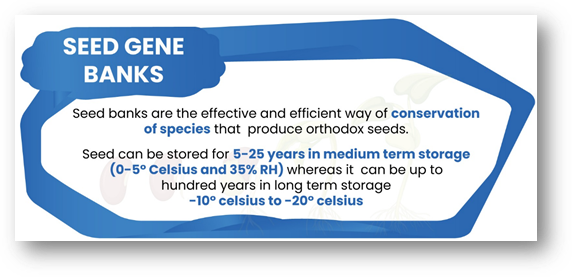
- Conservation Approaches: India employs in-situ conservation through 115 Medicinal Plants Conservation Areas (MPCAs) in natural habitats, and ex-situ conservation at the National Seed Gene Bank, New Delhi.
- National Medicinal Plants Board (NMPB): The nodal agency under Ministry of Ayush implements the Central Sector Scheme for Conservation, Development and Sustainable Management of Medicinal Plants, supporting conservation, cultivation, research, and marketing infrastructure.
- Key Government Initiatives:
- National Ayush Mission (NAM) 2014 and Mission for Integrated Development of Horticulture (MIDH) promote medicinal plant cultivation integrated with farming systems.
- e-CHARAK platform facilitates market access with fortnightly price updates of 100 medicinal plants from 25 herbal markets in multiple local languages.
- Aushadhi Vanaspati Mitra Program (AVMP) recognizes outstanding contributions to medicinal plant conservation.
- Medicinal Plants Business Centre (MPBC) component supports post-harvest management, scientific storage, and quality testing infrastructure.
- GI Tagged Medicinal Plants: India has protected its medicinal plant heritage through Geographical Indication (GI) tags including Navara Rice (Kerala) for Panchakarma therapy, Green Cardamom (Kerala & Karnataka), Ganjam Kewda Flower (Odisha), Saffron (Jammu & Kashmir), and most recently "Nagauri Ashwagandha" (Rajasthan) registered in November 2025.
| Read More: Biodiversity Hotspots in India |
IAEA–Iran Dispute Over Alleged Natanz Strike
The UN nuclear watchdog International Atomic Energy Agency (IAEA) held an emergency meeting in Vienna at the request of Russia and Iran following the military engagement between the US-Israel bloc and Iran.
- IAEA’s Assessment: The IAEA stated there is no current indication of damage to Iran’s nuclear installations (including Bushehr and the Tehran research reactor) and confirmed that radiation levels in the region remain normal.
-
Iran’s Contradictory Claim: Iran alleged that US and Israeli airstrikes targeted the Natanz uranium enrichment facility.
-
However, Iran has not provided public or technical evidence confirming damage.
-
-
Possible Strategic Motive: Iran has previously used foreign attacks as justification to suspend cooperation with the IAEA.
-
After strikes in mid-2025, Iran passed a law suspending all cooperation with IAEA inspections, citing national security.
-
Claims of attacks could help Tehran rally support from allies such as Russia and China.
-
Iran could justify enriching uranium to higher levels in “self-defense” if its nuclear infrastructure is threatened.
-
It may also limit transparency and restrict information sharing with international inspectors.
-
-
Iran–IAEA Tensions: Iran has long accused the IAEA of political bias, claiming Western countries use it to issue “politically motivated” reports.
- Some Iranian leaders even labelled the IAEA as “Israel’s spy” and alleged that the agency leaked coordinates of nuclear sites and scientists’ identities.
International Atomic Energy Agency (IAEA)
- The IAEA was established in 1957 within the United Nations system, following US President Dwight D. Eisenhower’s “Atoms for Peace” speech (1953) at the UN General Assembly.
- The IAEA Statute was approved by 81 countries in 1956, with India as a founding member. As of December 2025, the agency has 181 member states.
- The organization operates as the world’s “Atoms for Peace” agency, tasked with promoting peaceful uses of nuclear energy while preventing its diversion for military purposes.
- Headquartered in Vienna, Austria, IAEA functions as the global nuclear watchdog, conducting nuclear safeguards, inspections, and promoting nuclear safety and peaceful applications in energy, medicine, and agriculture.
|
Read more: International Atomic Energy Agency (IAEA), US-Israel Attack on Iran |
Hexagon of Alliances
Amidst intense geopolitical competition in the Middle East and the Horn of Africa, Israel has announced the "Hexagon of Alliances," a proposed strategic framework designed to unite moderate powers across the Indo-Pacific, Eastern Mediterranean, Gulf, and Africa that share similar views on security challenges.
- Objective: The framework envisions a six-sided network of like-minded nations to counter:
- The Axis of Resistance led by Iran (including Hezbollah, Hamas, Houthis, and Iraqi militias)
- The emerging radical Sunni axis (comprising ISIS remnants and Muslim Brotherhood (founded in Egypt in 1928)-affiliated groups).
- Key Partners: India has been positioned as a central pillar in the proposed "Hexagon of Alliances" framework, with Israel, Greece, and Cyprus identified as the other core members. Additional Arab, African, and Asian nations (e.g., Ethiopia, UAE) are expected to join.
- Focus Areas: The proposed alliance structure could focus on strategic cooperation in defence, intelligence sharing, technology, diplomacy and security coordination among participating countries.
- Strategic Significance: The alliance represents a natural evolution of existing groupings, including the Abraham Accords, India-Israel strategic ties, and the I2U2 (India-Israel-UAE-US) framework, potentially creating a continuous arc of moderate nations linking the Indo-Pacific to the Mediterranean.
- Geopolitical Implications: Supporters view it as a strategic counterweight to radicalism, while critics question its feasibility given diverse national interests.
- Regional players like Turkey and Pakistan perceive it as potentially anti-Turkey or anti-Muslim Ummah in orientation. The Pakistani Senate has unanimously passed a resolution condemning Israel’s plan to ally with India and other countries.
| Read More: Strengthening India-West Asia Ties |
ALH Mk-III and Shtil Missiles
The Ministry of Defence signed contracts worth Rs 5,083 crore to procure six Advanced Light Helicopter (ALH) Mk-III for the Indian Coast Guard from Hindustan Aeronautics Limited, and Shtil Surface-to-Air Missile System along with missile holding frames for the Indian Navy from JSC Rosoboronexport, Russia.
- Acquisition of ALH Mk-III: This contract falls under the Buy (Indian–Indigenously Designed, Developed and Manufactured) category.
- The ALH Mk-III are twin-engine vehicles that strengthen maritime security operations such as protection of offshore installations, fishermen, and the marine environment, while supporting Make in India and Aatmanirbhar Bharat through participation of over 200 MSMEs and generating about 65 lakh man-hours of employment.
- Shtil Surface-to-Air Missile System: It is a ship-based medium-range air defence system designed to intercept aircraft, helicopters, UAVs, and anti-ship missiles targeting naval vessels.
- Developed by Russian defence industries, it is derived from the Buk Missile System family.
- The system uses a Vertical Launch System (VLS), enabling rapid, all-weather interception of multiple aerial threats and integration with naval radar and fire-control systems.
- For the Indian Navy, it strengthens layered maritime air defence and enhances the survivability of frontline warships in the Indian Ocean Region.
| Read more: Advanced Light Helicopter (ALH) MK-III Squadron |