
International Women's Day 2026
For Prelims: International Women's Day, Lakhpati Didi Initiative, Namo Drone Didi, Nari Shakti Vandan Adhiniyam, National Commission for Women , Maternal Mortality Ratio
For Mains: Women-Led Development as a pillar of Viksit Bharat 2047, Constitutional and legal safeguards for women in India
Why in News?
India observed International Women's Day (IWD) on 8th March 2026, aligned with the United Nations theme “Rights. Justice. Action. For ALL Women and Girls.”
- The occasion highlighted Nari Shakti as the foundation of India’s shift from “development for women” to “women-led development,” positioning women as key drivers of socio-economic progress toward Viksit Bharat 2047.
Summary
- On International Women’s Day 2026, India highlighted its shift toward women-led development, supported by initiatives in economic empowerment, education, defence, health, governance, and sports, along with constitutional safeguards and schemes promoting women’s participation in nation-building.
- Despite progress, issues such as limited land ownership, unpaid care burden, political underrepresentation, digital divide, violence against women, and institutional gaps remain.
- Addressing these through economic inclusion, governance reforms, digital empowerment, health systems strengthening, and safer public spaces is essential to achieve Viksit Bharat 2047.
What is International Women's Day?
- About: IWD is a global observance celebrated annually on 8th March to honor the cultural, political, and socio-economic achievements of women.
- Historical Origins: The day grew out of the labor and suffrage movements in North America and Europe during the early 20th century.
- The first National Women's Day was observed in the US by the Socialist Party of America in 1909.
- The specific date commemorates a massive strike by women in Petrograd, Russia, on 8th March 1917 (according to the Gregorian calendar).
- Their strike for "bread and peace" played a significant role in the Russian Revolution of 1917 and eventually led to women gaining the right to vote there.
- The United Nations first officially observed it on 8th March 1975 during International Women’s Year, and the United Nations General Assembly formally recognised the day in 1977, reinforcing gender equality as a fundamental human right.
- Themes for 2026:
- UN Theme: "Rights. Justice. Action. For ALL Women and Girls," focusing on removing systemic barriers and strengthening global access to justice.
- Campaign Theme: "Give to Gain," which emphasizes that when communities generously invest resources, time, and mentorship into women, society as a whole experiences reciprocal economic and social growth.
How India is Advancing Nari Shakti Across Sectors?
- Grassroots Economic Empowerment: The economic strategy focuses on transforming rural women from unpaid labourers into formal micro-entrepreneurs and technology operators.
- Under the Deendayal Antyodaya Yojana – National Rural Livelihoods Mission, over 10.05 crore rural women have been mobilized into more than 90 lakh Self Help Groups, creating one of the largest networks of community institutions in the world.
- The Lakhpati Didi Initiative targets to create 6 crore Lakhpati Didis, where women in Self Help Groups who are trained to earn a sustainable annual household income exceeding one lakh rupees.
- Namo Drone Didi Yojana provides an 80% subsidy to Self Help Groups to procure agricultural drones.
- It trains rural women to operate these highly technical devices for precision farming (like spraying liquid fertilizers), instantly transforming them into high-income rural tech-entrepreneurs.
- Women form the backbone of India's dairy sector. The proliferation of all-women dairy cooperatives ensures direct financial remuneration into their bank accounts, bypassing male intermediaries.
- Under the PM MUDRA Yojana, nearly 70% of collateral-free loans have gone to women-led micro-enterprises.
- Under Stand-Up India Scheme and the Startup India ecosystem, over 45% of recognized startups in India have at least one female director or partner.
- Expanding Frontiers in Defence: The Indian Armed Forces have dismantled historical glass ceilings, integrating women into prominent combat and command roles.
- The combined strength of women officers in the military has grown from approximately 3,000 in 2014 to over 11,000 in 2026.
- The systematic induction of women into the National Defence Academy ensures female cadets are trained for top military leadership right from the grassroots level.
- In Secretary, Ministry of Defence vs. Babita Puniya (2020), the Supreme Court of India granted Permanent Commission to women officers, ensuring parity in promotions and pensions.
- Women officers are now receiving Permanent Commissions across services, commanding naval warships, flying as frontline fighter pilots, and holding senior posts, including Director General of Medical Services (Army).
- Education and Leadership in STEM: The Female Gross Enrolment Ratio (GER) in higher education rose to 30.2 (2022-23) with aid from Schemes like Sukanya Samriddhi Yojana and Kasturba Gandhi Balika Vidyalayas.
- Women constituted over 53% of University Grants Commission NET-JRF scholars in STEM in FY 2024–25, indicating rising participation in research.
- Women currently constitute an impressive 43% of total graduates in Science, Technology, Engineering, and Mathematics in India, one of the highest ratios among major economies globally
- To sustain this momentum, the Union Budget for 2026-2027 explicitly provides for the establishment of dedicated women's hostels in every district, specifically designed to help female students seamlessly pursue advanced technical education.
- Women constituted over 53% of University Grants Commission NET-JRF scholars in STEM in FY 2024–25, indicating rising participation in research.
- Enhancing Dignity through Foundational Infrastructure: True empowerment requires removing the daily physical burdens that historically restricted women's time, health, and mobility.
- Under the Pradhan Mantri Ujjwala Yojana the provision of over 10.56 crore clean cooking gas connections has drastically reduced women's exposure to lethal indoor air pollution.
- Jal Jeevan Mission has helped in eliminating the grueling, time-consuming daily chore of fetching water, freeing up women's time for education and economic activities.
- Under the Swachh Bharat Mission, the construction of over 12 crore household toilets has fundamentally improved sanitation, maternal health outcomes, and the basic physical safety and dignity of rural women.
- Political Agency and Legal Safeguards: Nari Shakti Vandan Adhiniyam, the historic Constitution (106 Amendment) Act, 2023 guarantees a 33% reservation for women in the Lok Sabha and State Legislative Assemblies, ensuring that women have a direct, proportional voice in the highest law-making bodies of the nation.
- 73rd & 74th Amendments (1992) granted constitutional status to rural and urban local bodies with mandatory 33% reservation for women, leading to nearly 50% representation in many states.
- Unlike many Western nations, India granted equal voting rights to women from the very first day of the Republic.
- Mission Shakti strengthens support systems through One Stop Centres, Women Helpline, providing medical, legal, and counselling assistance to women in distress.
- The Sexual Harassment of Women at Workplace (Prevention, Prohibition and Redressal) Act, 2013 ensures safer workplaces by mandating Internal Committees and enabling online complaint redressal through the SHe-Box portal.
- In Shayara Bano v. Union of India(2017), the Supreme Court declared the practice of instant Triple Talaq unconstitutional, marking a major step toward gender justice.
- Subsequently, the Muslim Women (Protection of Rights on Marriage) Act, 2019, criminalised instant divorce, providing legal protection, dignity, and greater equality for Muslim women.
- Health: According to the Sample Registration System (SRS) Report, India’s Maternal Mortality Ratio (MMR) declined from 130 per lakh live births (2014–16) to 88 per lakh live births (2020–22).
- As per the United Nations, India’s MMR stands at 80 per lakh live births, marking an 86% decline since 1990, compared to the global reduction of 48%.
- Pradhan Mantri Surakshit Matritva Abhiyan and POSHAN Abhiyaan strengthen maternal care and nutrition services.
- Sports: The Board of Control for Cricket in India (BCCI) introduced equal match fees for its centrally contracted men and women cricketers, while the Women's Premier League has boosted financial security and visibility for women players.
- Under the ASMITA initiative, women’s sports participation is expanding nationwide, with nearly 3 lakh women participating across 2,600 leagues in 33 disciplines.
- The programme, supported by the Sports Authority of India and Khelo India, aims to identify grassroots talent and improve India’s medal prospects in global events like the Olympics.
- Under the ASMITA initiative, women’s sports participation is expanding nationwide, with nearly 3 lakh women participating across 2,600 leagues in 33 disciplines.
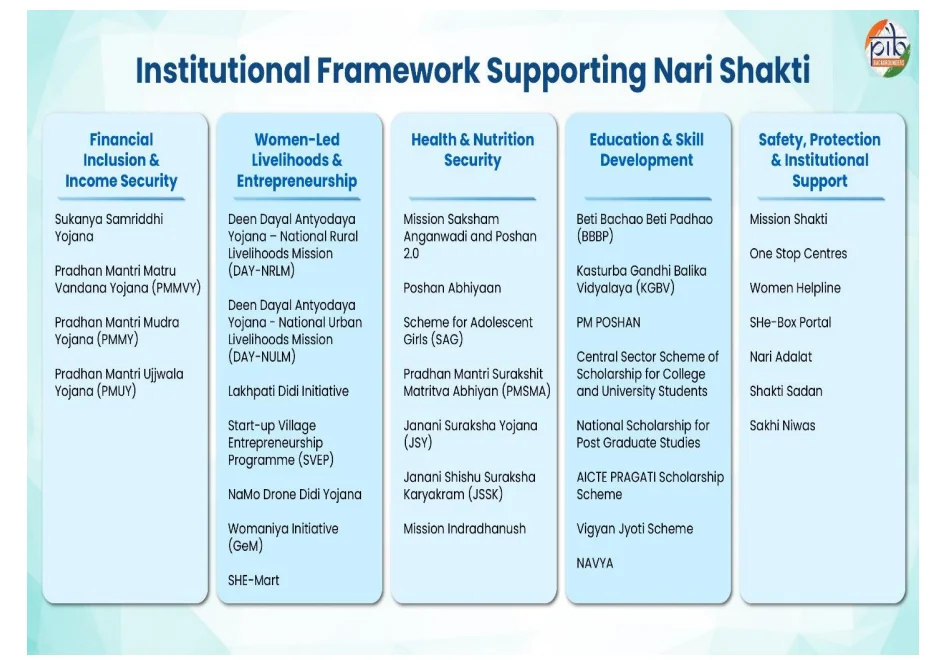
Note: India’s commitment to gender equality is embedded in its Constitution through provisions such as Article 15 (prohibiting discrimination and allowing special provisions for women), Article 16 (equal opportunity in public employment), Article 39 (equal livelihood opportunities), Article 42 (maternity relief and humane working conditions), and Article 243 (reservation for women in local governance).
- The National Commission for Women monitors legal safeguards, while universal adult franchise since Independence guarantees women equal participation in India’s democracy.
What are the Challenges in Advancing the Nari Shakti?
- Feminisation of Agriculture without Land Rights: Women constitute over 70% of the agricultural workforce, yet own only 13-14% of agricultural land.
- Without land titles in their name, they are not legally recognized as "farmers." Therefore, they are excluded from institutional credit, MSP procurement, and direct benefit transfers like PM-KISAN.
- "Time Poverty" Crisis: The NSO's Time Use Survey reveals a stark reality that Indian women spend roughly 7.2 hours a day on unpaid domestic/caregiving work, compared to just 2.8 hours for men.
- This "care burden" prevents women from skilling, upskilling, and entering the formal economy, trapping them in low-paying, informal, or gig work.
- Political & Governance Hurdles: While the 73rd and 74th Amendments reserved seats for women in Panchayati Raj Institutions (PRIs), grassroots reality often sees the male relatives (husbands/fathers) ("Sarpanch Pati" / "Pradhan Pati" Syndrome ) wielding the actual financial and administrative power, reducing the elected woman to a rubber stamp.
- The Nari Shakti Vandan Adhiniyam implementation is contingent upon the next Census and Delimitation exercise, delaying actual representation until at least 2029.
- Data from the Association for Democratic Reforms (ADR) often shows that political parties are highly reluctant to give electoral tickets to women for "winnable" or general seats, restricting them to reserved constituencies or women's wings.
- Health and Social Vulnerabilities: The National Family Health Survey-5 (NFHS-5) data presents a grim picture: 57% of women (15-49 years) in India are anemic.
- This leads to an intergenerational cycle of malnutrition, high Maternal Mortality Rates (MMR), low birth-weight infants, and severely impacts women's cognitive and physical productivity in the workforce.
- Son Meta-Preference, where the preference for sons leads to the notional category of “unwanted girls,” estimated at over 21 million.
- Technological & Emerging Challenges: According to the GSMA Mobile Gender Gap Report 2024, Indian women are significantly less likely to own a smartphone or use mobile internet compared to men.
- This curtails their access to digital education (EdTech), financial inclusion (FinTech), and modern job markets.
- Women account for about 43% of enrolments in STEM degrees, yet many drop out before entering the workforce. As a result, women make up only about 27% of India’s STEM workforce and around 14% of the scientific research workforce, highlighting a significant gender gap in STEM careers.
- Cyber-Violence and Deepfakes: The unchecked rise of Artificial Intelligence has led to the weaponization of technology.
- The proliferation of Non-Consensual Intimate Imagery (NCII) and deepfakes disproportionately targets women, acting as a severe deterrent to their participation in the public digital square.
- Institutional Failures: Data from the National Crime Records Bureau (NCRB) shows that the conviction rate for crimes against women remains around 25–26%, while judicial pendency exceeds 90%, reflecting serious delays in justice delivery.
- The most common offence is “cruelty by husband or relatives,” accounting for over 30% of cases, indicating the domestic sphere as a major site of violence.
- In addition, inadequate safe transport, working women’s hostels, and crèche facilities limit women’s mobility and workforce participation.
- At times, compliance costs under the Maternity Benefit (Amendment) Act, 2017 may also discourage some employers from hiring women.
What Measures can Strengthen Nari Shakti to Achieve the Vision of Viksit Bharat by 2047?
- Economic Empowerment: Adopt Kerala’s Kudumbashree land-leasing model to grant women farmer status and access to credit and Pradhan Mantri Kisan Samman Nidhi benefits.
- Bridge the “missing middle” finance gap by creating credit guarantee support for women-led MSMEs to scale beyond self-help groups.
- Recognize and support the care economy through parental leave policies and expanded CSR investments in childcare and eldercare infrastructure.
- Women in Emerging Green Economy: Train women for jobs in renewable energy, climate adaptation, and sustainable agriculture, enabling them to participate in India’s green transition.
- Governance & Political Participation: Encourage political parties to field more women by linking incentives with female representation in elections through the Election Commission of India framework.
- Establish leadership academies for elected women in Panchayats to strengthen administrative and financial decision-making capacity.
- Technology & Digital Inclusion: Support women in deep-tech entrepreneurship through incubation and innovation platforms like the Atal Innovation Mission.
- Health System Reforms: Expand services of Ayushman Arogya Mandir to include screening for women’s non-communicable diseases.
- Ensure gender-balanced clinical research through guidelines by the Indian Council of Medical Research.
- Safe Urban Spaces & Justice: Integrate Crime Prevention Through Environmental Design (CPTED) in city planning to improve women’s safety in public spaces.
- Establish specialized police investigative units for crimes against women to improve evidence collection and conviction rates.
- Strengthen Data for Gender Policy: Expand gender-disaggregated data collection in employment, digital access, land ownership, and health to enable evidence-based policymaking.
Conclusion
Achieving Viksit Bharat by 2047 relies on a definitive shift to women-led development. To truly harness Nari Shakti, India must urgently dismantle systemic barriers like the unpaid care burden, digital divide, and unequal land rights. By strictly enforcing legal safeguards and expanding grassroots economies, gender equity will transform from policy into a lived reality
|
Drishti Mains Question: Women-led development is central to India’s vision of Viksit Bharat 2047. Examine the progress made and the challenges that remain. |
Frequently Asked Questions (FAQs)
1. When is International Women’s Day observed?
International Women’s Day is observed annually on 8 March worldwide.
2. What was the United Nations theme for International Women’s Day 2026?
The United Nations theme for IWD 2026 was “Rights. Justice. Action. For ALL Women and Girls.”
3. When did the United Nations first officially observe International Women’s Day?
The United Nations first officially observed International Women’s Day on 8 March 1975 during International Women’s Year. The United Nations General Assembly formally recognised International Women’s Day in 1977.
4. What are the traditional colours associated with International Women’s Day?
The colours associated with International Women’s Day are purple (justice and dignity), green (hope), and white (purity).
UPSC Civil Services Examination, Previous Year Question (PYQ)
Mains
Q.1 “Empowering women is the key to control population growth”. Discuss. (2019)
Q.2 Discuss the positive and negative effects of globalization on women in India? (2015)
Q.3 Male membership needs to be encouraged in order to make women’s organizations free from gender bias. Comment. (2013)
State of the World's Migratory Species
For Prelims: World’s Migratory Species Report 2024, Convention on the Conservation of Migratory Species of Wild Animals (CMS), IUCN Red List Category, Highly Pathogenic Avian Influenza (HPAI) H5N1, Olive Ridley Turtle, Bonn Convention, Central Asian Flyway (CAF), Amur Falcon, Snow Leopard, Great Indian Bustard, United Nations Environment Programme (UNEP), National Biodiversity Strategy and Action Plan (NBSAP), Environmental Impact Assessment, BBNJ Treaty, Renewable Energy.
For Mains: Key Findings of the Interim Update to the UN State of the World’s Migratory Species Report 2024, Key facts regarding migratory species, steps needed for conservation of migratory species.
Why in News?
A concerning interim update to the UN State of the World’s Migratory Species report 2024 warns that 49% of global migratory species populations protected under the Convention on the Conservation of Migratory Species of Wild Animals (CMS) are declining.
Summary
- A concerning UN interim report reveals 49% of migratory species under the Convention on Migratory Species (CMS) are declining, up from 44% in two years.
- Key threats include habitat loss, avian flu, and overexploitation.
- Despite these trends, targeted conservation efforts have successfully recovered species like the Saiga Antelope and Scimitar-horned Oryx.
What are the Key Findings of the Interim Update to the UN State of the World’s Migratory Species Report 2024?
- Population Declines and Extinction Risk: The proportion of CMS-listed species with declining populations has increased from 44% to 49% in just 2 years.
- Consequently, the percentage of species with increasing or stable trends has dropped to 38%, while those facing extinction now comprise 24% of all listed species, up from 22%.
- Deteriorating Conservation Status: Of the 386 CMS-listed species reassessed since 2022, 34 (9%) were moved to a different IUCN Red List category, with the vast majority (26 species) shifting to a more threatened category (e.g., from Endangered to Critically Endangered).
- A significant 69% of these species are migratory shorebirds, whose decline is attributed to habitat loss and degradation at key stopover and non-breeding sites.
- Emergence of New and Existing Threats:
- Avian Flu as a Major Threat: Highly Pathogenic Avian Influenza (HPAI) H5N1 has emerged as a significant new threat, causing mass mortality in a range of species, including penguins, pelicans, cranes, and aquatic mammals like fur seals and sea lions.
- Habitat Loss and Fragmentation: The expansion of linear infrastructure (roads, railways, fences) continues to fragment habitats, as seen with the drastic decline in mobility for the Mongolian Gazelle.
- Land-use changes have also led to dramatic population crashes, such as the 75% decline in the Mara-Loita Blue Wildebeest since the late 1970s.
- Overexploitation and Bycatch: For sharks and rays, overfishing and bycatch remain primary threats. Raptor populations in Africa and Eurasia are heavily impacted by illegal taking, poisoning, and collisions with energy infrastructure.
- Regional Success Stories and Recoveries: Despite the negative trends, targeted conservation efforts have led to successful recoveries for a few species:
- Scimitar-horned Oryx was reclassified from Extinct in the Wild to Endangered after reintroduction efforts in Chad.
- Saiga Antelope rebounded spectacularly in Kazakhstan, moving from Endangered to Near Threatened.
- Mediterranean Monk Seal improved from Endangered to Vulnerable due to population growth.
What are Migratory Species?
- About: Migratory species are defined as wild animals—including aquatic, avian (birds), and terrestrial species—whose populations cyclically and predictably move from one geographical area to another.
- They rely on different sites for breeding, feeding, and resting (stopovers). The loss of even one critical site along their route can threaten the entire population.
- Taxonomic Scope: Migratory species include
- Birds: Bar-tailed Godwit, Arctic Tern
- Mammals: Terrestrial mammals include Wildebeest, Saiga Antelope, etc., while Marine mammals include Humpback Whale, Gray Whale, etc.
- Fish: Salmon, European Eel, etc
- Reptiles: Leatherback Turtle, Olive Ridley Turtle, etc.
- Insects: Monarch Butterfly, Globe Skimmer dragonfly.
- Protection of Migratory Species: Migratory species are protected under CMS (1979), also referred to as the Bonn Convention. India has been a party to the CMS since 1983.
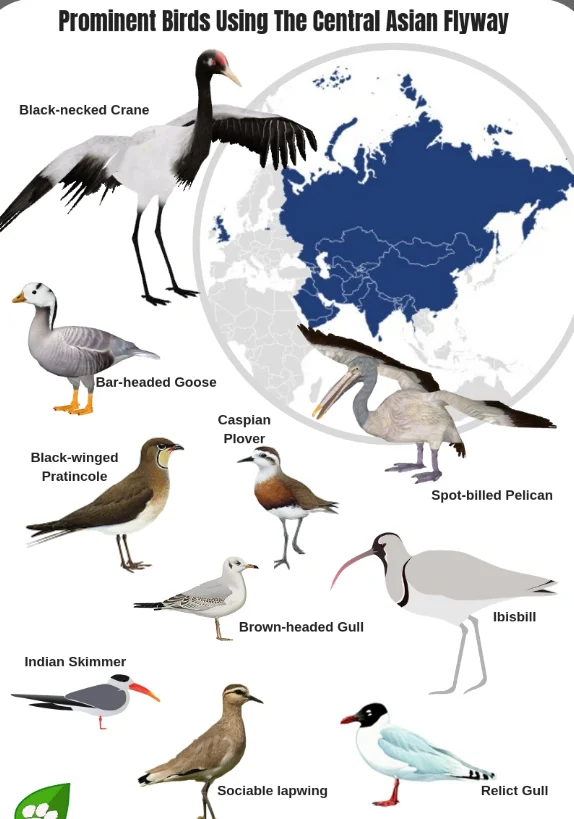
- India's Geographic Importance: India is prominent for migratory species due to its position along major global flyways, particularly the Central Asian Flyway (CAF), which supports hundreds of migratory bird populations. It also hosts important routes for marine turtles, mammals, and other taxa. Key migratory species in India are:
- Birds (Many using the CAF): Siberian Crane, Amur Falcon, Bar-headed Goose, Black-necked Crane, etc.
- Mammals: Asian Elephant, Snow Leopard, Great Indian Bustard, Pallas's Cat, etc.
- Marine species: Olive Ridley Turtle, Leatherback Sea Turtle, Hawksbill Sea Turtle, etc.
Convention on the Conservation of Migratory Species of Wild Animals (CMS)
- About: CMS, also called the Bonn Convention, is a legally binding international treaty administered by the United Nations Environment Programme (UNEP). It provides a global framework to protect migratory animals and conserve their habitats across countries.
- It was adopted in 1979 in Bonn, Germany, and entered into force on 1st November 1983.
- Objective: It addresses the unique challenges faced by migratory species which cyclically and predictably cross national boundaries during their life cycles (for breeding, feeding, or other purposes), necessitating coordinated international action beyond the scope of national measures alone.
- Two Appendices: It has two appendices:
- Appendix I: Encompasses migratory species that are endangered. Parties are required to provide strict protection, including prohibiting hunting, trapping, and poisoning, conserving or restoring habitats, mitigating migration obstacles (e.g., barriers) etc.
- There are 188 species in Appendix I. Key Indian Species in CMS Appendix I are Great Indian Bustard, Siberian Crane, Olive Ridley Turtle, Leatherback Sea Turtle etc.
- Appendix II: Covers migratory species with an unfavourable conservation status that would benefit significantly from international cooperation. This appendix supports the negotiation of targeted Agreements or MoUs among range states.
- Appendix I: Encompasses migratory species that are endangered. Parties are required to provide strict protection, including prohibiting hunting, trapping, and poisoning, conserving or restoring habitats, mitigating migration obstacles (e.g., barriers) etc.
- Governance Body: The Conference of the Parties (COP) serves as the primary decision-making body, convening periodically to review implementation, adopt resolutions, and amend appendices. CMS COP 15 will be held in March 2026 in Campo Grande, Brazil (CMS COP 14 was held in Samarkand, Uzbekistan).
What Steps are Needed for Conservation of Migratory Species?
To address escalating threats, the CMS has outlined priority actions focusing on habitat protection, combating overexploitation, reducing pollution, mitigating climate change, and strengthening its Appendices.
- Protect, Connect and Restore Habitats: Priority actions include expanding protected area coverage to key biodiversity sites while enhancing management effectiveness by integrating species priorities into National Biodiversity Strategy and Action Plan (NBSAP) and securing sufficient resources.
- Regular monitoring using standardized protocols, restoring 30% of degraded ecosystems by 2030 in line with KMGBF Target 2, and prioritizing ecological connectivity—currently below 10%—are essential.
- Additionally, infrastructure impacts must be minimized through Environmental Impact Assessment and Strategic Environmental Assessment compliance, following CMS guidance on renewable energy, linear infrastructure, and pollution.
- Tackle Overexploitation: International collaboration must be strengthened to reduce overfishing, bycatch, and illegal killing, including through fisheries monitoring, CMS engagement with fisheries bodies, and ratification of the BBNJ Treaty.
- Ensure national legislation fully protects CMS Appendix I-listed species from "take" (hunting, fishing, capturing), closely regulating exceptions.
- Reduce the Damaging Impacts of Environmental Pollution: To reduce pollution impacts on migratory species, priority actions include mitigating light pollution using CMS-endorsed guidelines, restricting underwater noise in sensitive areas with quieting technologies, and accelerating the phase-out of toxic lead ammunition.
- Additional measures involve lowering pesticide use near critical habitats, while tackling plastic pollution by eliminating problematic plastics and reducing unnecessary production.
- Address Impacts of Climate Change: Use targeted ecosystem restoration to enhance habitat quality and connectivity, lessening the impact of extreme weather events, while implementing dynamic management measures to address climate-induced shifts in migration pathways.
- At the same time, ensure that renewable energy infrastructure expansion avoids harm to migratory species by adhering to guidance from the CMS Energy Task Force.
Conclusion
Urgent, coordinated action is imperative to reverse migratory species declines. Protecting habitats, tackling overexploitation and pollution, and mitigating climate change impacts are critical priorities. The recoveries achieved demonstrate that with sustained international cooperation under CMS, safeguarding these transboundary species for future generations remains achievable.
|
Drishti Mains Question: Examine the role of the Convention on Migratory Species (CMS) in the conservation of migratory wildlife. |
Frequently Asked Questions (FAQs)
1. What is the Convention on Migratory Species (CMS)?
The CMS, or Bonn Convention, is a UNEP-administered treaty adopted in 1979 that provides a global legal framework for conserving migratory species and their habitats across national boundaries.
2. What are the two appendices under the CMS?
Appendix I lists endangered migratory species requiring strict protection. Appendix II lists species with unfavourable conservation status that benefit from international cooperation through Agreements or MoUs.
3. Which Indian species are listed in CMS Appendix I?
Key Indian species include the Great Indian Bustard, Asian Elephant, Bengal Florican, Siberian Crane, Olive Ridley Turtle, Leatherback Turtle, and Hawksbill Turtle.
UPSC Civil Services Examination, Previous Year Question (PYQ)
Prelims
Q. The most important strategy for the conservation of biodiversity together with traditional human life is the establishment of (2014)
(a) biosphere reserves
(b) botanical gardens
(c) national parks
(d) wildlife sanctuaries
Ans: (a)
Q. With reference to the International Union for Conservation of Nature and Natural Resources (IUCN) and the Convention on International Trade in Endangered Species of Wild Fauna and Flora (CITES), which of the following statements is/are correct? (2015)
- IUCN is an organ of the United Nations and CITES is an international agreement between governments.
- IUCN runs thousands of field projects around the world to better manage natural environments.
- CITES is legally binding on the States that have joined it, but this Convention does not take the place of national laws.
Select the correct answer using the code given below:
(a) 1 only
(b) 2 and 3 only
(c) 1 and 3 only
(d) 1, 2 and 3
Ans: (b)
Mains
Q. How does biodiversity vary in India? How is the Biological Diversity Act,2002 helpful in the conservation of flora and fauna? (2018)
Raisina Dialogue 2026
Why in News?
The 11th edition of the Raisina Dialogue 2026 concluded in New Delhi, marking the landmark launch of the Raisina Science Diplomacy Initiative (SDI) to integrate technological innovation with global foreign policy.
What are the Major Takeaways from Raisina Dialogue 2026?
- Raisina Science Diplomacy Initiative: A new framework was launched to integrate science and technology into foreign policy, focusing on AI governance, semiconductor supply chains, and India’s Digital Public Infrastructure for developing nations.
- Shift to a Multipolar World: The dialogue acknowledged the rise of a multipolar global order, with the Global South playing a major role in shaping the future international system.
- Emerging South-South partnerships and flexible plurilateral groupings are increasingly influencing global governance.
- India’s strategic engagement through BRICS, the India-Middle East-Europe Economic Corridor, and the India-France-UAE (UFI) Trilateral reflects this shift, positioning India as a builder of new partnerships and a key voice of the Global South.
- Reformed Multilateralism: Strong calls were made to reform the United Nations Security Council to reflect current geopolitical realities, with growing support for India’s permanent membership.
- Maritime Security Focus: Emphasis was placed on securing global supply chains, undersea communication cables, and maritime routes amid tensions in the Indian Ocean, Red Sea, and Indo-Pacific.
Raisina Dialogue
- Raisina Dialogue: Launched in 2016 by the Ministry of External Affairs (MEA), the Raisina Dialogue is named after Raisina Hills in New Delhi, it is organized annually by the MEA in collaboration with Observer Research Foundation (ORF).
- It is India’s premier geopolitics and geo-economics conference, comparable to the Munich Security Conference (Germany) and Singapore's Shangri-La Dialogue.
- The Raisina Dialogue brings together global leaders, policymakers, academics, industry experts, and journalists to address global challenges.
- Theme for 2026: "Samskara – Assertion, Accommodation, Advancement," reflecting how civilisations assert their identity, embrace diversity, and progress.
Frequently Asked Questions (FAQs)
1. What is the Raisina Dialogue?
The Raisina Dialogue is India’s premier geopolitics and geo-economics conference, organised annually by the Ministry of External Affairs, India in collaboration with the Observer Research Foundation.
2. What is the Raisina Science Diplomacy Initiative (SDI)?
It is a new framework aimed at integratingscience, technology, and innovation into foreign policy, focusing on AI governance, semiconductor supply chains, and digital infrastructure cooperation.
3. Why is Raisina Dialogue significant for India’s foreign policy?
It serves as a global platform for India to engage world leaders, shape global governance debates, and project its strategic vision in geopolitics and geo-economics.
4. What was the theme of Raisina Dialogue 2026?
The theme was“Samskara – Assertion, Accommodation, Advancement,” highlighting how civilizations assert identity, accommodate diversity, and advance collectively.
UPSC Civil Services Examination, Previous Year Question (PYQ)
Prelims
Q.1 Consider the following pairs: (2020)
International agreement/set-up : Subject
- Alma-Ata Declaration : Healthcare of the people
- Hague Convention : Biological and chemical weapons
- Talanoa Dialogue : Global climate change
- Under2 Coalition : Child rights
Which of the pairs given above is/are correctly matched?
(a) 1 and 2 only
(b) 4 only
(c) 1 and 3 only
(d) 2, 3 and 4 only
Ans: (c)
Jan Aushadhi Diwas 2026
Why in News?
On Jan Aushadhi Diwas 2026 (7th March), celebrated under the theme "Janaushadhi Sasti Bhi, Bharosemand Bhi, Sehat Ki Baat, Bachat Ke Saath," the Prime Minister highlighted the role of Pradhan Mantri Bhartiya Janaushadhi Pariyojana (PMBJP) in reducing medicine costs for millions of people.
What is Pradhan Mantri Bhartiya Janaushadhi Pariyojana?
- About: PMBJP is a flagship scheme administered by the Department of Pharmaceuticals under the Ministry of Chemicals and Fertilisers. It aims to make quality generic medicines and surgical items affordable (50–80% lower cost) for all, especially the economically disadvantaged, by significantly reducing out-of-pocket healthcare expenditure.
- It was originally launched in 2008 as the Jan Aushadhi Scheme, and was rebranded and expanded in 2016 as PMBJP.
- Product Portfolio: The scheme has a wide range, offering approximately 2,110 medicines and 315 surgical items/consumables across 29 therapeutic categories (including anti-cancer, cardiovascular, and anti-diabetic drugs).
- Quality Assurance: Medicines are procured only from World Health Organization’s Good Manufacturing Practices (WHO-GMP) certified manufacturers and are tested in National Accreditation Board for Testing and Calibration Laboratories (NABL)-accredited labs, ensuring quality is not compromised for affordability.
- Citizen-Centric Initiatives:
- Janaushadhi Suvidha Sanitary Napkins: Introduced in 2019, these oxo-biodegradable napkins are sold at a highly subsidized rate of Rs 1 per pad to promote menstrual hygiene.
- Jan Aushadhi Sugam App: A digital governance tool launched in 2019 that provides geo-location of Kendras, medicine availability, and a price comparison feature to show savings versus branded alternatives.
- Inclusive Entrepreneurship Model: The scheme uses a franchise-based model to expand its reach. A key feature is the provision of special one-time incentives up to Rs 2 lakh (for furniture, fixtures, and computer equipment) to encourage entrepreneurs from specific groups, including women, SC/ST, Divyangjan, and ex-servicemen.
- Strategic Expansion and Integration:
- Target: To increase the number of Kendras from over 18,000 (as of early 2026) to 25,000 by March 2027, with a focus on rural, remote, and underserved areas.
- Innovative Locations: Kendras are being set up in novel locations to enhance last-mile access, including 116 Kendras at railway stations (as of Jan 2026) and within government hospital premises.
- Cooperative Involvement: Primary Agricultural Credit Societies (PACS) are being leveraged to establish Kendras, utilizing their vast rural network and infrastructure to reach remote populations.
- Economic Impact: By June 2025, the scheme has led to estimated savings of approximately Rs 38,000 crore for citizens compared to branded alternatives.
Frequently Asked Questions (FAQs)
1. What is the objective of the Pradhan Mantri Bhartiya Janaushadhi Pariyojana (PMBJP)?
It aims to provide quality generic medicines and surgical items at 50–90% lower prices through Jan Aushadhi Kendras, reducing out-of-pocket healthcare expenditure.
2. Which ministry administers the PMBJP scheme?
It is implemented by the Department of Pharmaceuticals under the Ministry of Chemicals and Fertilizers, through the Pharmaceuticals and Medical Devices Bureau of India (PMBI).
3. How does PMBJP ensure the quality of generic medicines?
Medicines are procured from WHO-GMP certified manufacturers and tested in NABL-accredited laboratories before distribution.
4. What is the Janaushadhi Suvidha Sanitary Napkin initiative?
Introduced in 2019, it provides oxo-biodegradable sanitary napkins at Rs 1 per pad, promoting affordable menstrual hygiene.
5. What is the target expansion for Jan Aushadhi Kendras under PMBJP?
The government aims to increase the number of Kendras from 18,000+ (2026) to 25,000 by March 2027, especially in rural and underserved areas.
UPSC Civil Services Examination, Previous Year Questions (PYQs)
Q. Consider the following statements: (2023)
Statement-I: India's public sector health care system largely focuses on curative care with limited preventive, promotive and rehabilitative care.
Statement-II: Under India's decentralized approach to health care delivery, the States are primarily responsible for organizing health services.
Which one of the following is correct in respect of the above statements?
(a) Both Statement-I and Statement-II are correct and Statement-II is the correct explanation of Statement-I
(b) Both Statement-I and Statement-II are correct but Statement-II is not the correct explanation of Statement-I
(c) Statement-I is correct but Statement-II is incorrect
(d) Statement-I is incorrect but Statement-II is correct
Correct answer: (b)
India Wins the ICC Men’s T20 World Cup 2026
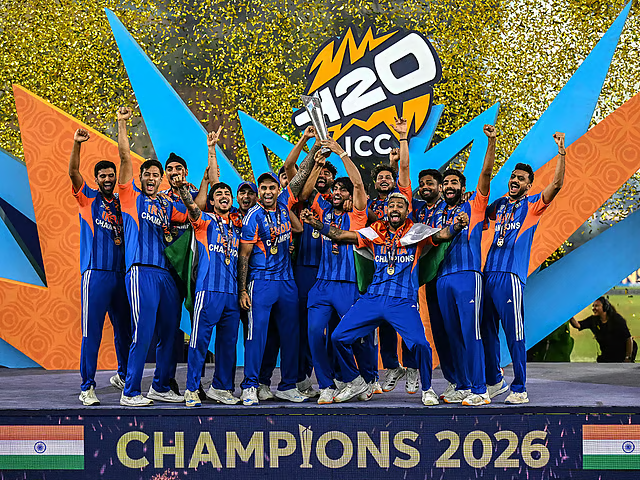
The India national cricket team won the International Cricket Council (ICC) Men’s Twenty20 World Cup 2026, defeating New Zealand national cricket team by 96 runs in the final at Narendra Modi Stadium, Ahmedabad. This is India’s largest victory margin in T20 World Cup history.
- Jasprit Bumrah was named Player of the Match, and Sanju Samson won Player of the Tournament.
- Historic Milestones: India's national cricket team became the first team to win three ICC Men's T20 World Cup titles (2007, 2024, 2026), the first to successfully defend the trophy, and the first to win the tournament on home soil.
- Men’s T20 World Cup: The Men’s T20 World Cup, organised by the ICC, is an international cricket championship first held in 2007 and generally conducted every two years.
- The prize pool for ICC T20 World Cup 2026 is USD 13.5 million, with the winners receiving USD 3 million dollars.
- India-ICC World Rankings: ICC Team Rankings rank men’s teams in Test, One-Day International (ODI), and Twenty20 International (T20I) formats, and women’s teams in ODI and T20I cricket, using a rating system developed by David Kendix.
- Ratings are calculated by dividing total points by matches/series played, and the rankings are updated annually around 1st May.
- As of March 2026, the Indian Men's Cricket Team holds the No. 1 rank in both T20Is and ODIs, and is ranked No. 4 in Test cricket.
- The Indian Women's Cricket Team currently ranks No. 3 globally in both the T20I and ODI formats.
- Regulation of Cricket:
- International Cricket Council (ICC): The global governing body of cricket, representing 108 member countries, headquartered in Dubai, United Arab Emirates, and responsible for regulating international cricket.
- The ICC Men's T20 World Cup 2028 will be co-hosted by Australia and New Zealand.
- Board of Control for Cricket in India (BCCI): Established in 1928 and headquartered in Mumbai, BCCI is the governing body for cricket in India. It also became a Full Member of the ICC in 1928, enabling India to play international cricket.
- International Cricket Council (ICC): The global governing body of cricket, representing 108 member countries, headquartered in Dubai, United Arab Emirates, and responsible for regulating international cricket.
| Read more: National Sports Policy 2025 |
Essential Commodities Act, 1955
Amid rising global energy uncertainty caused by the US-Israel–Iran conflict and disruptions in West Asian oil supply routes, India has directed refiners to increase Liquefied Petroleum Gas (LPG) production under the Essential Commodities (EC) Act, 1955.
- At the same time, the US has temporarily allowed India to purchase Russian crude oil for 30 days to stabilize global energy markets.
- Essential Commodities Act, 1955: Enacted by the Government of India to ensure the availability of essential goods to citizens at fair prices and prevent hoarding, black marketing, and artificial shortages.
- Historically, this legislation has been the primary tool used by the government to curb hoarding, offset retail inflation, and maintain national food security.
- Under Section 3, the Central Government can control the production, supply, and distribution of essential goods. It can impose stock limits, regulate trade, fix prices, and restrict hoarding.
- Under Section 5 of the Act, the Central Government may delegate its powers under Section 3 to State Governments or authorised officers, enabling swift and effective enforcement at the ground level.
- 2020 Amendment: The Parliament amended the Act in 2020 to restrict the Centre’s power to regulate specific commodities (cereals, pulses, potatoes, onions, edible oilseeds, and oils) strictly to extraordinary circumstances such as war, famine, extraordinary price rise, and natural calamity of grave nature.
- LPG under EC Act: Petroleum products, including LPG, are classified as “Essential Commodities” under the Essential Commodities Act, 1955.
- The Central Government has directed oil refineries to maximise production of LPG and ensure its distribution is prioritised for domestic households.
- Refineries have also been prohibited from diverting propane and butane streams to petrochemical production, ensuring these inputs are used primarily for LPG supply.
- The Central Government has directed oil refineries to maximise production of LPG and ensure its distribution is prioritised for domestic households.
| Read more: Essential Commodities Act of 1955 |
RBI's OMO Purchases
The Reserve Bank of India (RBI) has announced Open Market Operation (OMO) purchases worth Rs 1 lakh crore in two tranches to infuse liquidity into the banking system.
- The OMO purchases of Rs 50,000 crore each are scheduled just ahead of advance tax outflows, which typically see approximately Rs 2 lakh crore exiting the banking system in mid-March. This strategic timing aims to neutralize the liquidity crunch.
Open Market Operation (OMO)
- About: OMO is a quantitative instruments of monetary policy that involves the buying and selling of government securities (G-Secs), including dated securities and treasury bills.
- Purchase of securities injects liquidity into the banking system (expansionary effect), while sale of securities absorbs liquidity (contractionary effect), thereby influencing the money supply.
- Execution in India: RBI conducts OMOs through auctions or direct market operations involving primary dealers, commercial banks, and other eligible participants via the electronic platform, the E-Kuber system.
- Objectives: The primary objectives are to adjust liquidity for durable banking system conditions and stabilize short-term rates to support monetary policy transmission.
- Additionally, operations aim to manage inflation by absorbing excess liquidity or support growth by infusing liquidity during deficits.
- Types of OMOs:
- Outright OMOs: It is a permanent purchase or sale of securities leading to lasting changes in liquidity (e.g., the recent Rs 1 lakh crore purchase announcement).
- Temporary Operations: Short-term liquidity adjustments conducted through the Liquidity Adjustment Facility (LAF), including repo and reverse repo operations.
- Significance: They complement other quantitative instruments like the Cash Reserve Ratio (CRR) and Statutory Liquidity Ratio (SLR), allowing the RBI to fine-tune liquidity in response to seasonal factors (like advance tax outflows), external shocks, or capital inflows without directly altering policy rates.
| Read More: Quantitative Instruments of Monetary Policy |
Jal Mahotsav 2026
The Union Minister of Jal Shakti launched the nationwide Jal Mahotsav 2026 campaign from Gujarat on International Women's Day (8th March), also observed as "Sujalam Shakti Diwas".
Jal Mahotsav 2026
- About: It is a flagship campaign by the Department of Drinking Water and Sanitation, Ministry of Jal Shakti, observed annually from 8th to 22nd March. Its tagline is “Gaon ka Utsav, Desh ka Mahotsav” (Village's festival, nation's festival).
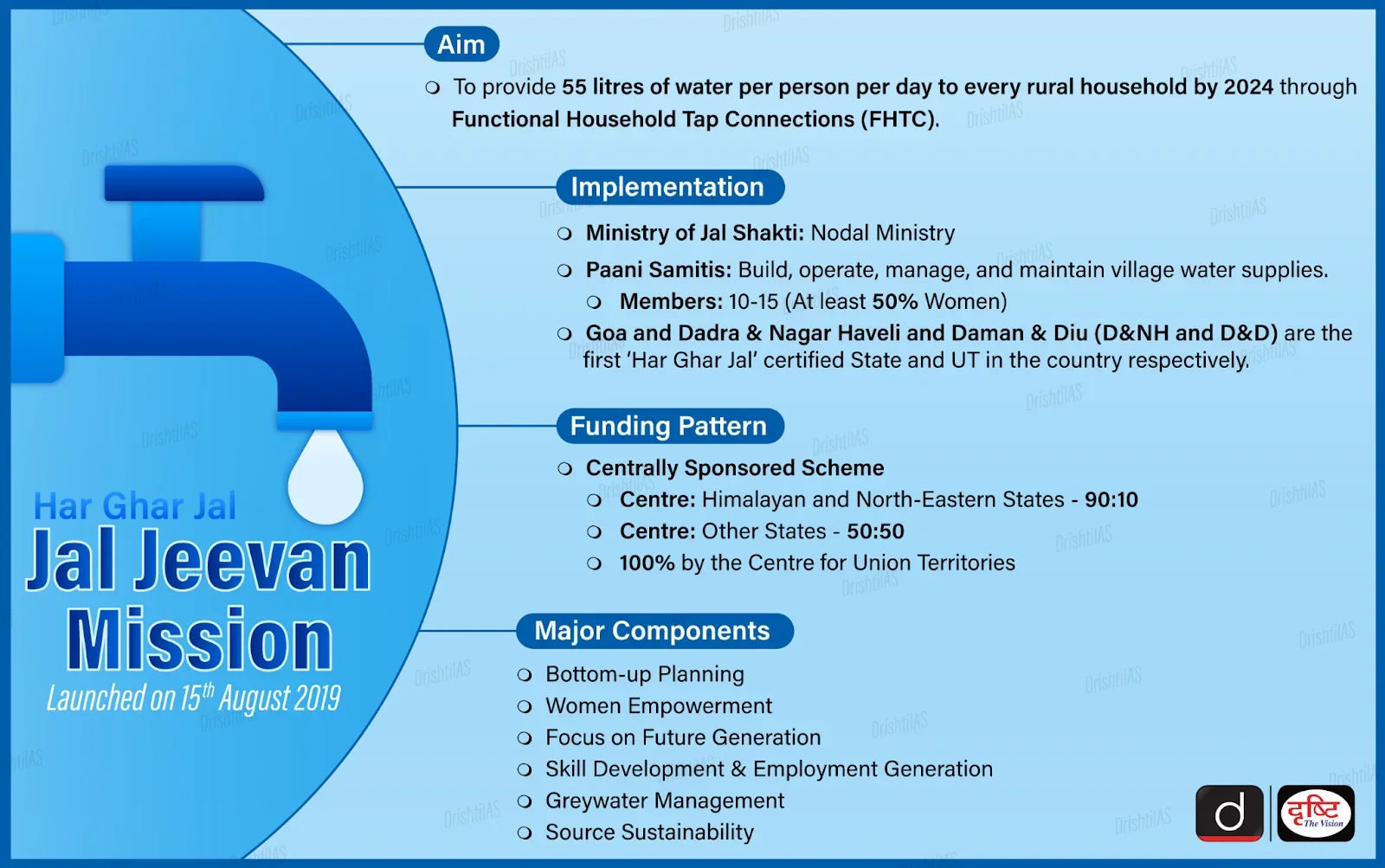
- It aims to strengthen community participation in rural drinking water management and promote water conservation under the Jal Jeevan Mission (JJM).
- Key Events:
- Jal Arpan Diwas: The commencement was marked by Jal Arpan Diwas, a ceremony involving the formal handing over of rural drinking water assets to Gram Panchayats (GPs) and Village Water and Sanitation Committees (VWSCs).
- Jal Bandhan and Jal Sankalp: Activities like Jal Bandhan (tying sacred threads at water infrastructure sites) and Jal Sankalp (a pledge for water conservation) were undertaken to reaffirm the community's collective commitment to protecting and maintaining village water systems.
- Multi-Level Implementation: Jal Mahotsav is structured at four levels—National, State, District, and Gram Panchayat—to ensure coordinated action.
- At Gram Panchayat level, activities include 'Har Ghar Jal' declarations, 'Jal Chaupal' dialogues, water quality testing demonstrations in schools, and the preparation of 'Lok Jal Utsav' calendars.
- Women at the Core (Sujalam Shakti): The campaign highlighted the transformative role of women in water governance. E.g., over 24 lakh women are actively engaged in water quality testing using Field Testing Kits (FTKs).
- The campaign also recognized the leadership of women pump operators, Self-Help Groups (SHGs) members, and VWSC members, acknowledging that access to tap water has reduced the burden of fetching water.
- Convergence and Vision: The campaign promotes inter-ministerial convergence and aims to build a nationwide movement towards 'Sujal Gram' (water-sufficient villages), directly contributing to the broader vision of a 'Viksit Bharat' (Developed India).
| Read More: Jal Jeevan Mission |
Protocol for the President during a State Visit
A political controversy has erupted after the President expressed displeasure over the absence of the Chief Minister and her ministers at her reception in West Bengal with allegations of protocol breaches and accusations of disrespect.
Protocol for Receiving the President in States
- Precedence and Protocol: The President of India holds the first rank in the national table of precedence. Consequently, all visits are governed by stringent security and logistical guidelines as enlisted in the Blue Book.
- The 'Blue Book': The 'Blue Book' is a confidential document prepared by the Union Ministry of Home Affairs that provides the detailed framework for managing visits of the President, Vice-President, and Prime Minister.
- It is kept by the District Magistrate and district police chief, outlining all procedures for security, logistics, and ceremonial arrangements.
- Established Convention: The protocol suggests that the Governor and the Chief Minister should welcome the President on arrival (typically at an airport, railway station, or other entry point) and be seen off at departure.
- However, the Chief Minister can designate a senior minister to receive the dignitary if she is personally unavailable.
- Advance Approval: To avoid any breach, a list of all individuals scheduled to receive and meet the visiting dignitary is approved in advance by the President's office. Any deviation from the approved list or the procedures in the Blue Book is considered a breach of protocol.
| Read More: Frictions in Centre-State Relations |