
Union Budget 2026–27
For Prelims: Union Budget, Biosimilars, Electronics Components Manufacturing Scheme, Rare Earth Permanent Magnets, Carbon Capture, Utilization, and Storage, Orange Economy, Securities Transaction Tax (STT)
For Mains: Role of Budget in Economic Growth and Fiscal Consolidation, Manufacturing-led Growth and Atmanirbhar Bharat, Capex-led Growth vs Employment Generation, Critical Minerals and Strategic Autonomy
Why in News?
The Union Minister of Finance and Corporate Affairs presented the Union Budget 2026–27 in Parliament, marking the first Budget prepared in the newly inaugurated Kartavya Bhawan.
- The budget framed as a Yuva Shakti-driven Budget, is anchored in the vision of Viksit Bharat and reflects the guiding principles of Action over Ambivalence, Reform over Rhetoric, and People over Populism.
- The Budget is guided by three Kartavyas (duties) aimed at accelerating economic growth, building people’s capacities, and ensuring inclusive development.
The Three Kartavyas
- Sustain Economic Growth: To enhance productivity, competitiveness, and build resilience against volatile global dynamics.
- Fulfill Aspirations: To build the capacity of the youth and citizens, making them strong partners in India’s prosperity.
- Sabka Saath, Sabka Vikas: To ensure every family, community, region, and sector has access to resources and opportunities, focusing on the "Last Mile."
What are the Key Highlights of the Union Budget 2026-27?
First Kartavya: Accelerate & Sustain Economic Growth
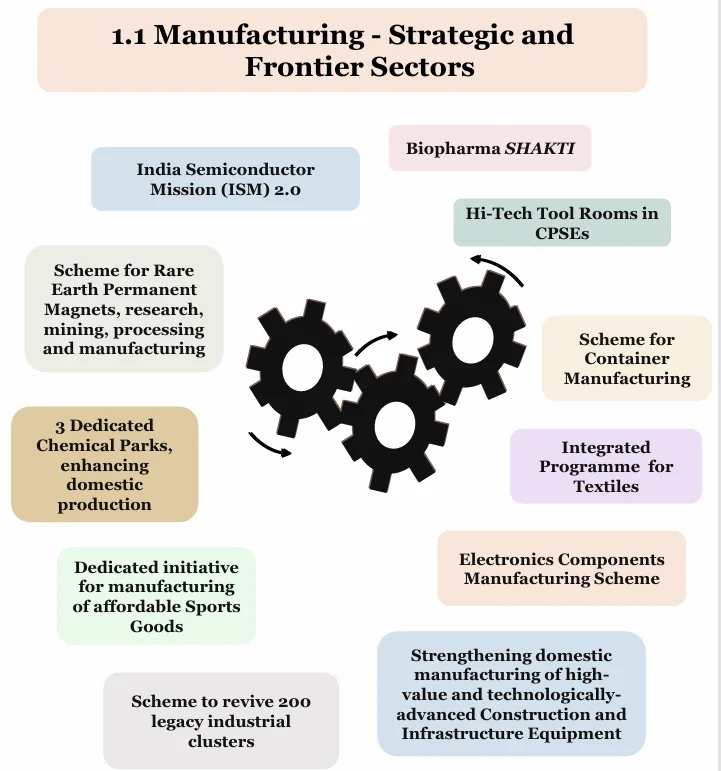
- Manufacturing & Industry (Strategic Sectors): To position India as a global manufacturing hub, the budget focuses on 7 Strategic and Frontier Sectors:
- Biopharma SHAKTI: To position India as a global hub, the Government proposed the "Biopharma SHAKTI" (Strategy for Healthcare Advancement through Knowledge, Technology and Innovation) mission with an outlay of Rs 10,000 crore over five years to develop India as a global biopharma manufacturing centre.
- It focuses on biologics and biosimilars, supported by 3 new National Institutes of Pharmaceutical Education and Research (NIPERs), upgradation of 7 existing institutes, and strengthening of CDSCO to global standards.
- India Semiconductor Mission 2.0: Building on ISM 1.0, the Union Budget 2026–27 announces India Semiconductor Mission (ISM) 2.0 to advance technological sovereignty.
- It focuses on manufacturing semiconductor equipment and materials and strengthening resilient supply chains, with industry-led R&D and training centres to create a skilled workforce critical for economic and national security.
- Electronics Components Manufacturing: The Electronics Components Manufacturing Scheme outlay is increased from Rs 22,919 crore to Rs 40,000 crore to deepen domestic value chains and boost electronics manufacturing.
- Rare Earth Corridors & Chemical Parks: The Budget proposes Rare Earth Corridors in Odisha, Kerala, Andhra Pradesh, and Tamil Nadu for mining, processing, and manufacturing of Rare Earth Permanent Magnets (REPM), along with three Chemical Parks under a cluster-based, plug-and-play model to reduce import dependence.
- Capital Goods & Container Manufacturing: The Budget announces Hi-Tech Tool Rooms by Central Public Sector Enterprises (CPSEs), a Construction and Infrastructure Equipment (CIE) Scheme, and a Rs 10,000 crore Container Manufacturing Scheme to strengthen domestic capital goods and logistics manufacturing.
- Textile Sector Push: An Integrated Textile Programme comprising the National Fibre Scheme, Samarth 2.0, Tex-Eco Initiative, and cluster modernisation is launched, along with Mega Textile Parks to promote technical textiles and value addition.
- Gram Swaraj & Sports Goods: The Mahatma Gandhi Gram Swaraj initiative aims to strengthen khadi, handloom, and handicrafts, while a sports goods manufacturing initiative seeks to position India as a global hub for affordable, high-quality sports equipment.
- Biopharma SHAKTI: To position India as a global hub, the Government proposed the "Biopharma SHAKTI" (Strategy for Healthcare Advancement through Knowledge, Technology and Innovation) mission with an outlay of Rs 10,000 crore over five years to develop India as a global biopharma manufacturing centre.
- Rejuvenating Legacy Industrial Sectors: A Scheme to revive 200 legacy industrial clusters announced, to improve their cost competitiveness and efficiency through infrastructure and technology upgradation.
- Champion MSMEs: A dedicated Rs 10,000 crore "SME Growth Fund" will be launched to incentivize high-potential firms and create "Champion MSMEs" that can compete globally.
- The Self-Reliant India Fund will get an additional Rs 2,000 crore to continue supporting micro enterprises and ensure steady access to risk capital, with ‘Corporate Mitras’ envisioned as key enablers to mentor, guide, and integrate these enterprises into larger value chains.
- Infrastructure as "Growth Connectors":
- High-Speed Rail: 7 High-Speed Rail corridors between cities - Mumbai-Pune, Pune-Hyderabad, Hyderabad-Bengaluru, Hyderabad-Chennai, Chennai-Bengaluru, Delhi-Varanasi, Varanasi- Siliguri will be developed as "Growth Connectors" to spur economic activity.
- Sustainable Movement of Cargo: To promote environmentally sustainable cargo movement, new Dedicated Freight Corridors will connect Dankuni to Surat, alongside the operationalisation of 20 National Waterways over the next five years.
- A Coastal Cargo Promotion Scheme will incentivise a shift from road and rail to waterways and coastal shipping to raise their share from 6% to 12% by 2047.
- The Seaplane VGF Scheme will support indigenised seaplane manufacturing and operations to improve last-mile connectivity and promote tourism.
- Infrastructure Risk Guarantee Fund: The Budget proposed an Infrastructure Risk Guarantee Fund to offer prudently calibrated partial credit guarantees to lenders during the infrastructure development and construction phase.
- City Economic Regions (CER): The Government proposed "City Economic Regions" (CERs), a new initiative to map cities based on specific growth drivers.
- An allocation of Rs 5,000 crore per CER over 5 years is proposed to be implemented via a "challenge mode."
- Carbon Capture (CCUS): A scheme for Carbon Capture, Utilization, and Storage launched to decarbonize hard-to-abate sectors (Steel, Cement).
Second Kartavya: Fulfill Aspirations & Build Capacity
- AVGC Content Creator Labs: Recognizing the potential of the "Orange Economy", the Government will support the Indian Institute of Creative Technologies, Mumbai, in setting up "Animation, Visual Effects, Gaming and Comics (AVGC) Content Creator Labs in 15,000 secondary schools and 500 colleges.
- National Institute of Hospitality: A proposal was made to set up this institute by upgrading the existing National Council for Hotel Management and Catering Technology, bridging the gap between academia and the tourism industry.
- Khelo India Mission: Building on the Khelo India programme, the Budget launches a Khelo India Mission to transform the sports sector through integrated talent development, coach capacity building, sports science integration, competitive leagues, and expanded sports infrastructure.
- Medical Value Tourism: The Government proposed establishing five Regional Medical Hubs in partnership with the private sector to boost India’s status as a wellness and medical tourism destination, with integrated facilities including AYUSH Centres, diagnostics, post-care, and rehabilitation services.
- Women in STEM: To support girl students in STEM, one girls’ hostel will be established in every district through Viability Gap Funding (VGF) or capital support.
Third Kartavya: Sabka Saath, Sabka Vikas
- Bharat-VISTAAR: To revolutionize agriculture, the "Bharat-VISTAAR" (Virtually Integrated System to Access Agricultural Resources) tool will be launched.
- SHE Marts: Building on the success of the "Lakhpati Didis", community-owned retail outlets named "SHE Marts" (Self-Help Entrepreneur Marts) will be set up within cluster federations.
- Mental Health Infrastructure: Reaffirming its commitment, the Government announced the setting up of "NIMHANS-2" and proposed upgrading institutes in Ranchi and Tezpur to "Regional Apex Institutions".
- Purvodaya & North-East:
- Buddhist Circuits: A specific scheme will be launched to develop "Buddhist Circuits" in the North East Region (e.g., Arunachal Pradesh, Sikkim, Assam, Manipur, Mizoram and Tripura).
- East Coast Industrial Corridor: Proposed the development of an East Coast Industrial Corridor with a well-connected node at Durgapur (West Bengal), creation of five tourism destinations in five Purvodaya States.
- Divyangjan Support: Targeted efforts will be made to empower the differently-abled through schemes like "Divyang Sahara Yojana" (implied in welfare focus).
What are the Key Highlights of the Tax Reforms under Union Budget 2026-27?
- New Income Tax Act, 2025: The government replaces the existing Income Tax Act, 1961 with a new, simplified Income Tax Act, 2025, effective from 1st April 2026.
- Tax Rates: No changes to the tax slabs for FY 2026-27; stability maintained.
- TCS Rationalization: Tax Collected at Source (TCS) on overseas tour packages and remittances for education/medical purposes under LRS is reduced to a uniform 2% (without any threshold).
- Rationalization of TDS: To remove ambiguity, Tax Deduction at Source (TDS) on the supply of manpower services is fixed at 1% (for Individuals/HUF) or 2% (for others).
- Non-production of books of accounts and failure to pay TDS (where payment is made in kind) will be decriminalized.
- Customs Duty Rationalization: The tariff rate on goods imported for personal use is reduced from 20% to 10%.
- Customs duty is fully exempted on 17 cancer drugs and medicines/foods for 7 rare diseases.
- Securities Transaction Tax (STT): Marginally increased (from 0.1% to 0.15% in certain segments) to curb excessive speculation in equity markets.
- Minimum Alternate Tax (MAT): The Union budget also proposes to provide exemption from Minimum Alternate Tax (MAT) to all non-residents who pay tax on presumptive basis.
- Tax Administration: The Budget proposes a Joint Committee of Ministry of Corporate Affairs and Central Board of Direct Taxes for incorporating the requirements of Income Computation and Disclosure Standards (ICDS) in the Indian Accounting Standards (IndAS), eliminating separate ICDS-based accounting from tax year 2027–28, and rationalising the definition of accountant under the Safe Harbour Rules to simplify compliance.
- Immunity from Prosecution: Non-disclosure of foreign assets worth less than Rs 20 lakh will be granted immunity from prosecution (retrospective effect from 1st October 2024).
- Buyback Tax Shift: Share buybacks will now be taxed as Capital Gains in the hands of the shareholder (shifting the burden from the company to the recipient).
- Strategic Incentives for Investment & Industry:
- Data Centers Tax Holiday: Foreign companies providing global cloud services via Indian data centers will receive a tax holiday until 2047.
- IFSC (GIFT City): Tax holiday extended from 10 to 20 years for Offshore Banking Units.
- Critical Minerals: Customs duty exemptions granted on capital goods required for the processing of critical minerals (Lithium, Cobalt, etc.) and manufacturing of Lithium-ion cells.
- IT Sector Safe Harbour: The threshold for availing "Safe Harbour" rules for IT services is enhanced to Rs 2,000 crore, with a unified category for software development and KPO services.
- Customs Modernization & Export Promotion
- Sectoral Relief: Duty-free import limits for inputs in Marine, Leather, and Textile sectors have been increased to boost export competitiveness.
- Aviation & Defence: Duty exemptions provided for parts/components used in the manufacture and MRO (Maintenance, Repair, Overhaul) of aircraft.
- Ease of Doing Business: The Budget streamlines trade through a single digital window for cargo clearance, instant customs clearance for non-compliant goods, rollout of the Customs Integrated System (CIS), and expanded AI-based container scanning.
- It makes Exclusive Economic Zone (EEZ) or on the High Seas fish catch duty-free, revises duty-free baggage allowances, and allows dispute settlement for honest taxpayers with a reduced penalty.
Macroeconomic Fundamentals Highlighted in Union Budget 2026-27
- Fiscal Deficit: The target for Budget Estimate (BE) 2026-27 is set at 4.3% of GDP, adhering to the glide path of reducing it below 4.5%. It has improved from 4.4% in the Revised Estimates (RE) of 2025-26.
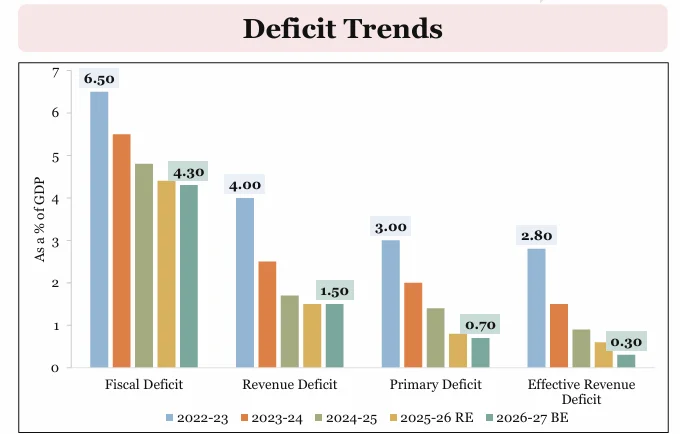
- Debt-to-GDP Ratio: Estimated to decline to 55.6% in BE 2026-27 (from 56.1% in RE 2025-26).
- The government aims to bring this ratio down to 50% by 2030-31 to free up resources for development.
- Capital Expenditure (Capex): The government continues to use public investment as the primary driver of economic growth.
- Capex Allocation has been increased to Rs 12.2 Lakh Crore for FY 2026-27 (approx. 3.1% of GDP) (up from Rs 11.2 Lakh Crore).
- When grants-in-aid to states for capital assets are included, the Effective Capital Expenditure stands at Rs 17.1 Lakh Crore (approx. 4.4% of GDP).
- GDP Growth: The Budget assumes a Nominal GDP growth of 10.5% for FY 2026-27, with Real GDP growth projected at around 7%.
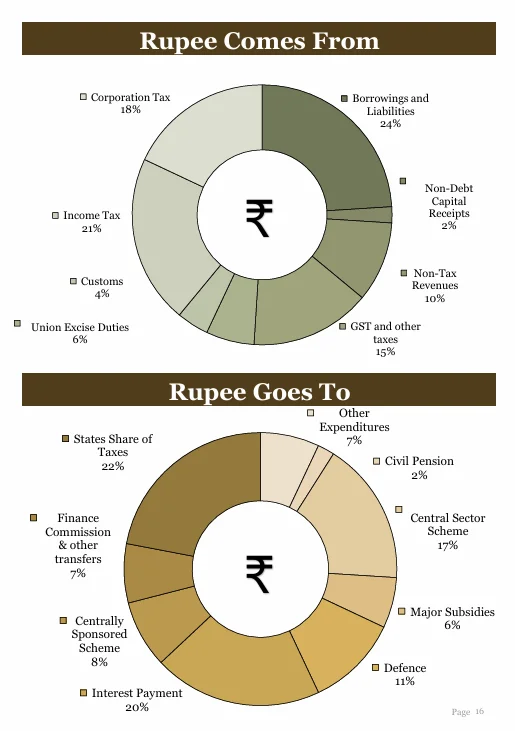
- Revised Estimates 2025–26: Non-debt receipts are estimated at Rs 34 lakh crore, while total expenditure is pegged at Rs 49.6 lakh crore, with capital expenditure of about Rs 11 lakh crore.
- Budget Estimates 2026–27: Non-debt receipts are estimated at Rs 36.5 lakh crore, with net tax receipts of Rs 28.7 lakh crore, while total expenditure is projected at Rs 53.5 lakh crore.
- To finance the fiscal deficit, net market borrowings are estimated at Rs 11.7 lakh crore, with gross borrowings of Rs 17.2 lakh crore, and the remainder to be met through small savings and other sources.
What are the Concerns Regarding the Union Budget 2026–27?
- Global Headwinds: The Budget assumes 10.0 % nominal GDP growth (First Advance Estimates of FY 2025-26), which may be tested by global economic slowdown, geopolitical conflicts, and trade disruptions.
- Revenue Buoyancy: Large shortfalls in income tax and GST collections sharply reduced fiscal space, triggering across-the-board expenditure cuts, including in capital spending and key social sectors.
- The Budget bets heavily on Supply-Side Economics (building roads, factories, and railways) to drive growth. However, Private Consumption (which forms ~60% of GDP) has been limited, especially in rural areas.
- Implementation Lag: High-technology schemes such as Bharat-VISTAAR and Biopharma SHAKTI require advanced institutional capacity and often face bureaucratic and execution bottlenecks, while other infrastructure projects also continue to struggle with land acquisition challenges.
- Job Creation Gap: A capex-heavy strategy focused on semiconductors and biopharma risks jobless or K-shaped growth, given limited labour absorption amid a widening education–employment skill mismatch.
- Green Transition and Resource Constraints: The shift to green technologies increases demand for water, energy, and critical minerals, raising import dependence and risks of greenflation that may elevate costs for MSMEs and manufacturing.
- Uncertain Capital Flows: Persistent Foreign Portfolio Investors (FPIs) outflows and an unclear Foreign Direct Investment (FDI) outlook raise concerns over external financing stability and investor confidence.
- External Aid Prioritisation Challenge: The Union Budget 2026–27 allocates grants-in-aid to foreign countries, with Bhutan as the largest beneficiary, while no funds for the strategically important Chabahar Port project in Iran raise concerns over India’s regional connectivity and strategic outreach.
What Measures can Strengthen India’s Economy Beyond Budget 2026–27?
- Reviving the Twin Engines of Demand: India’s growth needs both investment and consumption to fire together. Faster rollout of SHE Marts and Bharat-VISTAAR can raise rural incomes and boost demand due to higher marginal propensity to consume.
- Securing Strategic Autonomy in Critical Resources: As critical minerals become the “new oil” of the green economy, India must combine domestic initiatives like Rare Earth Corridors with overseas mineral security partnerships.
- Simultaneously, boosting R&D spending beyond the current low share of GDP is essential to support semiconductors and biopharma ecosystems.
- Skilling for New Sectors: The AVGC and Semiconductor push must be matched with aggressive skill development (Skill India 2.0) to prevent a talent crunch.
- Quality of Expenditure: Move from "Outlays" to "Outcomes." Every Rupee spent on schemes like Mahatma Gandhi Gram Swaraj must be audited for tangible asset creation and income generation, not just fund utilization.
- Correcting "Inverted Duty Structures": In sectors like textiles and electronics, inverted duty structures (where raw materials are taxed higher than finished imports) hurt domestic manufacturing.
- A sector-wise duty correction is needed to ensure “Made in India” is cheaper than imported goods at the tax level.
Conclusion
The Union Budget 2026-27 strategically balances fiscal prudence with an aggressive push for high-tech industrialization and inclusive welfare, laying a robust foundation for a "Viksit Bharat." However, its ultimate success will depend on the effective implementation of schemes to bridge the "Jobless Growth" gap and the revival of private consumption to ensure economic momentum reaches the "Last Mile."
|
Drishti Mains Question: The Union Budget 2026-27 attempts to balance the twin objectives of global competitiveness in frontier sectors and inclusive growth for the 'Last Mile'." Discuss this statement with reference to the 'Three Kartavyas' outlined in the Budget. |
Frequently Asked Questions (FAQs)
1. What are the Three Kartavyas outlined in Union Budget 2026–27?
They focus on sustaining economic growth, building people’s capacities, and ensuring Sabka Saath, Sabka Vikas through last-mile inclusion.
2. What is Biopharma SHAKTI and why is it important?
Biopharma SHAKTI is a ₹10,000 crore mission to make India a global hub for biologics and biosimilars, supported by NIPERs and regulatory strengthening.
3. What are City Economic Regions (CERs)?
CERs are city-cluster based growth regions with ₹5,000 crore funding per region to leverage agglomeration economies through challenge-mode implementation.
4. Why is the Budget criticised for jobless growth?
The focus on capital-intensive sectors like semiconductors and biopharma may limit mass employment amid a widening education–employment skill gap.
5. What are the key fiscal targets in Budget 2026–27?
The fiscal deficit is targeted at 4.3% of GDP, debt-to-GDP at 55.6%, and capex raised to ₹12.2 lakh crore to drive growth.
UPSC Civil Services Examination, Previous Year Question (PYQ)
Prelims:
Q1. What is the difference between “vote-on-account” and “Interim Budget”? (2011)
- The provision of a “vote-on-account” is used by a regular Government while an “interim budget” is a provision used by a caretaker Government.
- A “vote-on-account” only deals with the expenditure in Government’s budget, while an “interim budget” includes both expenditures and receipts.
Which of the statements given above is/are correct?
(a) 1 only
(b) 2 only
(c) Both 1 and 2
(d) Neither 1 nor 2
Ans: (b)
Q2. Along with the Budget, the Finance Minister also places other documents before the Parliament which include ‘The Macro Economic Framework Statement’. The aforesaid document is presented because this is mandated by (2020)
(a) Long standing parliamentary convention
(b) Article 112 and Article 110(1) of the Constitution of India
(c) Article 113 of the Constitution of India
(d) Provisions of the Fiscal Responsibility and Budget Management Act, 2003
Ans: (d)
Mains:
Q1. Distinguish between Capital Budget and Revenue Budget. Explain the components of both these Budgets. (2021)
Q2. The public expenditure management is a challenge to the Government of India in the context of budget-making during the post-liberalization period. (2019)
India-Canada Relations
For Prelims: Canada, Carbon capture, Muriate of Potash , ANTRIX , Advanced Chemistry Cell
For Mains: India–Canada relations: opportunities and constraints, Energy diplomacy and critical minerals in India’s foreign policy, Diaspora politics and its impact on bilateral relations
Why in News?
India and Canada have reset and revitalised their bilateral relations through high-level engagements in January 2026, marking a renewed phase of cooperation.
- The partnership now rests on four strategic pillars including nuclear energy, critical minerals, clean energy, and allied sectors aimed at aligning Canada’s resource strengths with India’s large industrial and agricultural scale.
What are the Key Highlights of India and Canada High-level Engagements?
- Energy: On the sidelines of India Energy Week (IEW) 2026, both nations re-launched the Canada–India Ministerial Energy Dialogue (CIMED), focusing on diversified energy supplies including LNG, LPG, and crude oil.
- Both nations agreed to collaborate on hydrogen production, carbon capture, and sustainable aviation fuels.
- Food Security: Canada, which already provides 25% of India’s Muriate of Potash (MOP), reaffirmed its commitment as a reliable supplier.
- In a significant policy move, Canada pledged to match any investment made by Indian partners in its natural resources sector.
- Critical Minerals & Clean Mobility: Both sides agreed to build coordination frameworks for Advanced Chemistry Cell (ACC) manufacturing and next-generation battery R&D.
- Canada reiterated its readiness to support India’s needs for Lithium, Cobalt, Graphite, and Rare Earth Elements (REEs), essential for India's EV missions (PM E-DRIVE).
- The first Canada–India Critical Minerals Annual Dialogue was announced for March 2026 in Toronto to secure transparent and resilient supply chains.
- Trade: Both nations agreed to accelerate negotiations for the Comprehensive Economic Partnership Agreement (CEPA), aiming to double trade to USD 50 billion by 2030.
- Canadian Prime Minister proposed India visit in March, 2026 is expected to finalise a 10-year uranium supply agreement worth 2.8 billion Canadian dollars.
What are the Key Highlights of India-Canada Bilateral Relations?
- Background: India and Canada share a long-standing relationship rooted in shared democratic values and multicultural societies, with Indian migration to Canada beginning during the freedom struggle, when institutions such as the Swadesh Sevak Home in Vancouver mobilised support against British rule.
- Diplomatic relations were established in 1947, and India’s Constitution drew inspiration from the Canadian federal model, including a strong Centre and residuary powers vested in the Centre.
- Ties expanded again in the post-1990s period with India’s economic liberalisation, culminating in the elevation of bilateral relations to a Strategic Partnership in 2015.
- Strategic Importance: India is a key partner under Canada’s Indo-Pacific Strategy, reflecting growing economic and geopolitical convergence.
- Trade: In 2024, India was Canada’s 7th largest trading partner, with two-way trade worth USD 30.9 billion, and India maintaining a trade surplus in goods.
- Top Canadian exports to India: Vegetables, mineral fuels and oils, wood pulp, fertilisers, paper and paperboard
- Top Indian exports to Canada: Pharmaceuticals, machinery, electronics, precious stones and metals, iron and steel products.
- Diaspora: Canada is home to one of the largest Indian diasporas in the world, with over 1.8 million individuals of Indian origin.
- Technology and Innovation Cooperation anchored in the Canada–India Science and Technology Cooperation Agreement (2005). Supported by the Joint Science and Technology Coordination Committee (JSTCC).
- ISRO and the Canadian Space Agency (CSA) have MoUs, and ISRO’s commercial arm, ANTRIX, has launched several Canadian nanosatellites.
- Security Cooperation: It is anchored in the Joint Working Group on Counter Terrorism (1997) and the Framework for Cooperation on Countering Terrorism (2018), while legal collaboration is strengthened through the Extradition Treaty (1987) and the Mutual Legal Assistance Treaty (1994).
What are the Major Challenges in India-Canada Relations?
- The Khalistan Issue: The gangster–terrorist nexus operating from Canadian soil, where Khalistani separatists are alleged to collaborate with organised crime syndicates to carry out extortion, intimidation, and targeted killings in India.
- New Delhi views Canada’s approach as “permissive vote-bank politics”, alleging that it provides a safe haven to extremists who exploit asylum loopholes, thereby posing a direct threat to India’s internal security, particularly in Punjab.
- Both nations struggle to align on the distinction between legitimate political activism and violent extremism, especially concerning gangs that operate across borders.
- Trade & Economic Obstacles: Progress towards a CEPA remains constrained by high tariffs on Canadian agricultural exports and Indian textiles and pharmaceuticals, as well as non-tariff barriers, including India’s complex sanitary and phytosanitary (SPS) norms and Canada’s stringent regulatory standards for Indian electronics and chemicals.
- Digital Trade & Privacy: Divergent models of data governance and data localization laws in India present challenges for Canadian tech and AI firms looking to integrate with the Indian market.
- Geopolitical Divergence: Though both nations are part of the "Indo-Pacific" vision, their strategic priorities often differ.
- Canada’s Indo-Pacific strategy is heavily focused on de-risking and human rights, whereas India's focus is more on maritime security and counter-balancing Chinese influence in the neighborhood.
- Both nations are currently pivoting toward each other partly to hedge against US trade volatility.
What Measures can Strengthen India-Canada Relations?
- Diplomatic Recalibration: Establish a Bilateral Security and Sovereignty Dialogue at the National Security Advisor level to address Khalistani extremism with protocols for intelligence sharing, and legal cooperation.
- Institute a 2+2 Dialogue Mechanism to bridge strategic misalignment on Indo-Pacific security, counter-terrorism, and maritime cooperation.
- Strengthening Human Capital: Both countries should actively engage the diaspora and strengthen Track-II diplomacy to deepen people-to-people ties, promote cultural exchanges, and support dialogue and conflict-resolution efforts.
- Expanding bilateral co-production in films and arts to celebrate the "Living Bridge" (diaspora) and counter negative political narratives.
- Intelligence Coordination: Revitalizing the Joint Working Group on Counter-Terrorism to create a shared database on organized crime and extremist funding.
- Enhancing the use of the existing Extradition Treaty (1987) and Mutual Legal Assistance Treaty (1994) to ensure that criminal elements cannot use either country as a "safe haven."
- Digital Public Infrastructure (DPI) Export: Canada can serve as a testing ground for India's DPI in a G7 economy, facilitating seamless cross-border payments.
- Professional Accreditation: Mutual recognition of professional qualifications (doctors, engineers, and nurses). This would turn the "student migration" issue into a "skilled talent partnership," reducing friction over visa caps.
- GIFT City Ecosystem: Encouraging Canadian "Research Clusters" to set up in India, focusing on cold-chain technology and sustainable mining, which are critical to India’s Viksit Bharat@2047 goals.
Canada
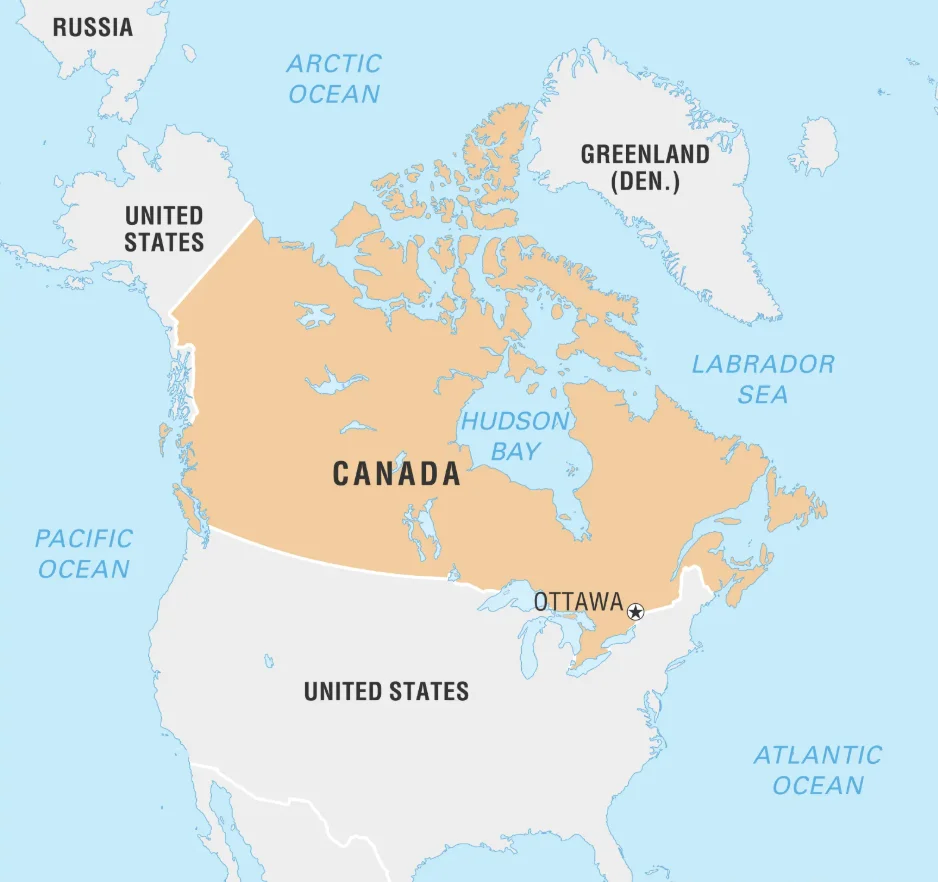
- It is located in the northern part of North America and is the second-largest country in the world by area, after Russia.
- It shares borders with Alaska to the northwest and US states to the south, with the Canada–US border being the longest bi-national land border globally. Canada is bounded by the Arctic Ocean to the north, the Atlantic Ocean to the east, and the Pacific Ocean to the west, and also shares maritime boundaries with Greenland and the French islands of Saint Pierre and Miquelon.
- Its capital is Ottawa, and the country spans seven climatic zones, including Arctic, Subarctic, Prairie, Great Lakes, Cordilleran, and the East and West Coasts.
- Major physical features include the Rocky, St. Elias, and Laurentian mountain ranges, rivers such as the Mackenzie, Yukon, and Saint Lawrence, and the Great Lakes, which form a natural boundary with the US.
- Canada is richly endowed with natural resources, including iron ore, nickel, copper, gold, uranium, rare earth elements, potash, and diamonds.
|
Drishti Mains Question: Discuss the prospects and challenges of concluding a Comprehensive Economic Partnership Agreement (CEPA) between India and Canada. |
Frequently Asked Questions (FAQs)
1. What security frameworks govern India–Canada cooperation?
Security cooperation is based on the Joint Working Group on Counter Terrorism (1997) and the Framework for Cooperation on Countering Terrorism (2018), supported by the Extradition Treaty (1987) and Mutual Legal Assistance Treaty (1994).
2. Why is the Khalistan issue significant in bilateral relations?
India views Canada’s handling of pro-Khalistan elements as a national security concern, which led to a major trust breakdown.
3. How important is trade between India and Canada?
In 2024, India was Canada’s 7th largest trading partner, with two-way trade of USD 30.9 billion, and India maintaining a trade surplus in goods.
4. Why is Canada strategically important for India?
Canada’s vast energy resources, critical minerals, advanced technology base, and position in the Indo-Pacific strategy make it a key long-term partner for India’s growth and energy security.
UPSC Civil Services Examination, Previous Year Question (PYQ)
Prelims
Q. In which one of the following groups are all the four countries members of G20? (2020)
(a) Argentina, Mexico, South Africa and Turkey
(b) Australia, Canada, Malaysia and New Zealand
(c) Brazil, Iran, Saudi Arabia and Vietnam
(d) Indonesia, Japan, Singapore and South Korea
Ans: (a)
India Expands Ramsar Network to 98 Sites
Why in News?
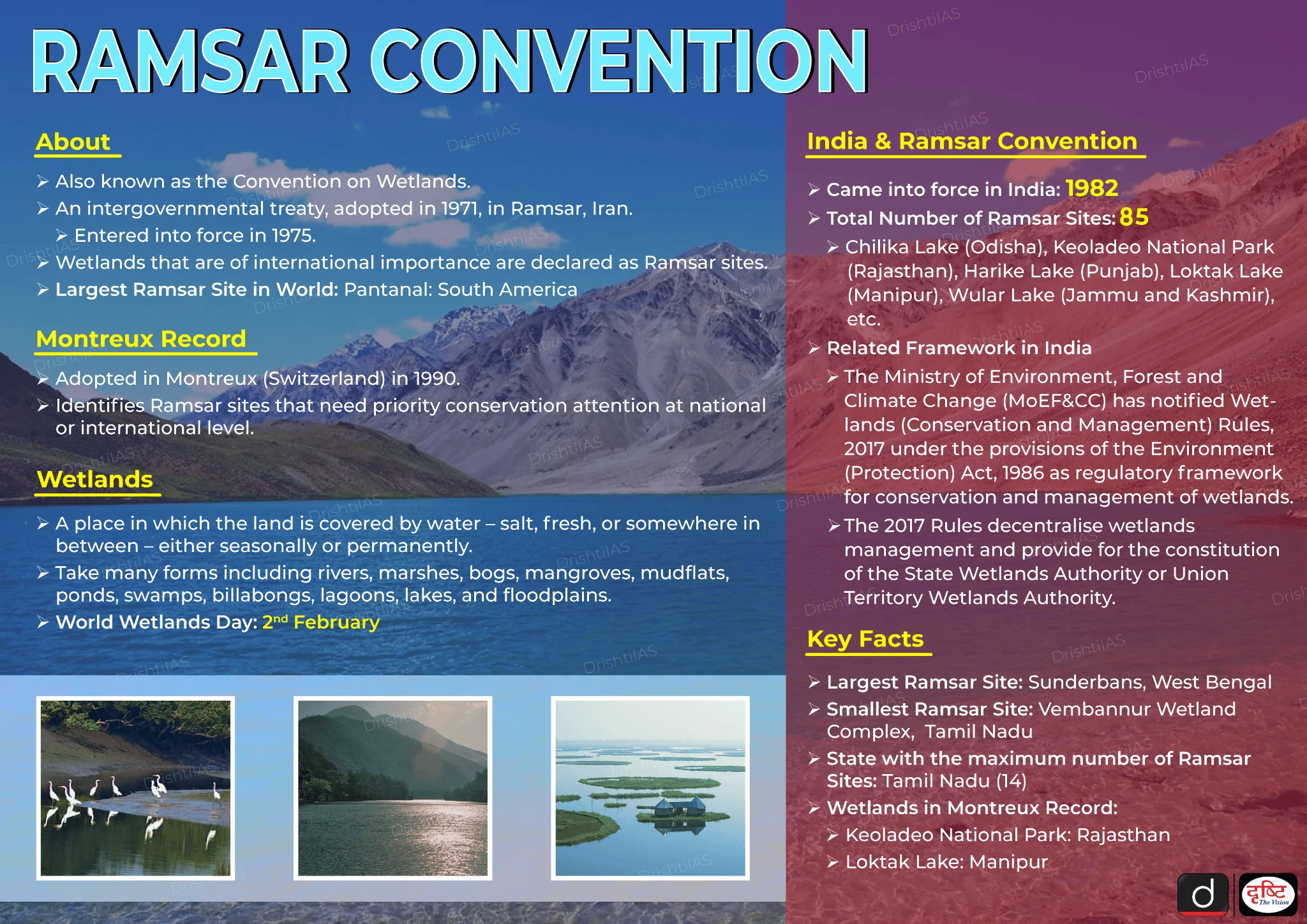
Ahead of World Wetlands Day 2026, the Prime Minister welcomed the addition of Patna Bird Sanctuary (Uttar Pradesh) and Chhari-Dhand (Gujarat) as Ramsar sites, raising the national total to 98.
- World Wetlands Day is observed every year on 2nd February to highlight the ecological importance of wetlands and to commemorate the signing of the Ramsar Convention on Wetlands in 1971 at Ramsar, Iran.
What are the Newly Added Ramsar Sites?
Chhari-Dhand (Gujarat)
- It is a seasonal saline wetland between the Banni grasslands and Kutch salt flats, expanding to nearly 80 sq km during the monsoon in the arid Kutch region.
- It is Gujarat’s only Conservation Reserve and a key stopover on the western migratory flyway, serving as an important wintering ground for waterfowl.
- It supports about 30,000 Common Cranes annually, large populations of Greater and Lesser Flamingos, and threatened species such as the critically endangered Sociable Lapwing and the vulnerable Common Pochard.
- Seasonal waters provide essential feeding and roosting habitats, surrounding drylands support chinkara, caracal, and desert fox, and the area is known for the “Chir Batti” phenomenon seen after sunset.
Patna Bird Sanctuary (Uttar Pradesh)
- Located in the Jalesar subdivision of Etah district, it spans just over 1 sq km, making it among Uttar Pradesh’s smallest wildlife sanctuaries.
- The sanctuary includes freshwater marshes, woodlands, and grasslands within an agricultural landscape, supporting diverse habitats.
- During winter, it hosts tens of thousands of migratory birds such as the Rosy Pelican, Eurasian Spoonbill, and Northern Pintail, underscoring its role on the Central Asian Flyway.
- It records 178 bird species and 252 plant species, sustains key waterbird populations, and is designated an Important Bird and Biodiversity Area by BirdLife International.
Frequently Asked Questions (FAQs)
1. What is a Ramsar Site?
A Ramsar Site is a wetland of international importance designated under the Ramsar Convention for conservation and wise use.
2. When did India become a party to the Ramsar Convention?
India became a Contracting Party to the Ramsar Convention on 1 February 1982
3. Where is Chhari-Dhand located?
Chhari-Dhand is located in the Kutch district, Gujarat, between the Banni grasslands and the salt flats of the Rann of Kutch.
UPSC Civil Services Examination, Previous Year Questions (PYQs)
Prelims:
Q. Consider the following statements: (2019)
- Under Ramsar Convention, it is mandatory on the part of the Government of India to protect and conserve all the wetlands in the territory of India.
- The Wetlands (Conservation and Management) Rules, 2010 were framed by the Government of India based on the recommendations of Ramsar Convention.
- The Wetlands (Conservation and Management) Rules, 2010 also encompass the drainage area or catchment regions of the wetlands as determined by the authority.
Which of the statements given above is/are correct?
(a) 1 and 2 only
(b) 2 and 3 only
(c) 3 only
(d) 1, 2 and 3
Ans: (c)
Q. With reference to a conservation organization called ‘Wetlands International’, which of the following statements is/are correct? (2014)
- It is an intergovernmental organization formed by the countries which are signatories to Ramsar Convention.
- It works at the field level to develop and mobilize knowledge, and use the practical experience to advocate for better policies.
Select the correct answer using the code given below:
(a) 1 only
(b) 2 only
(c) Both 1 and 2
(d) Neither 1 nor 2
Ans: (b)
Birth Anniversary of Shri Guru Ravidas Maharaj ji
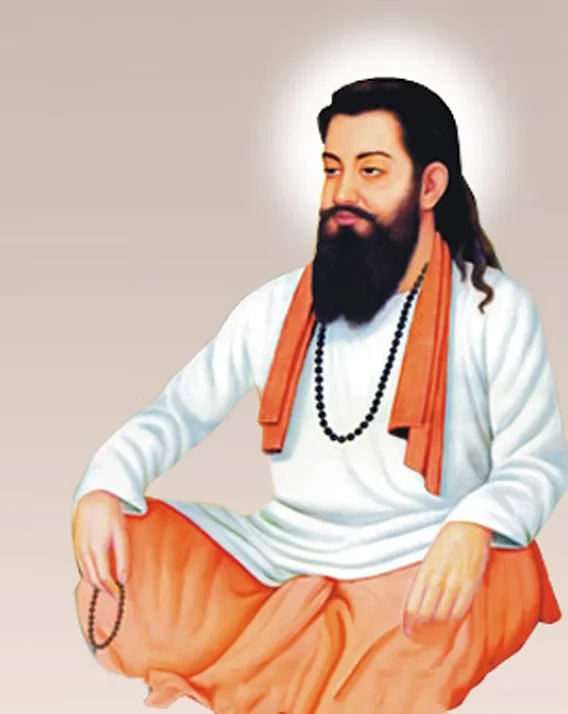
Prime Minister Narendra Modi paid tribute to Shri Guru Ravidas Maharaj ji on his 649th birth anniversary, which is celebrated on the Purnima Tithi of the Magha month (falling on 1st February 2026).
- Birth & Origin: Born in Seer Goverdhanpur (Varanasi) in the 15th century (c. 1450–1520), he belonged to a marginalized community.
- Despite his low social standing, his spiritual eminence attracted followers from all castes.
- Spiritual Lineage: He is traditionally considered a disciple of the bhakti poet Ramananda and a contemporary of Kabir. He is also believed to be the spiritual guru of Meera Bai.
- Philosophy (Nirguna Bhakti): He focused on the Nirguna (formless) aspect of the Supreme Being, rejecting ritualistic and saguna (with attributes) worship.
- He conceptualized 'Beghumpura' (a city without sorrow), an egalitarian society free from suffering, fear, and discrimination.
- He emphasized the state of Sahaj, a mystical union of the truth of the many and the one.
- His teachings focused on social dissent against the rigid Brahminical orthodoxy and caste discrimination.
- Literary Contributions: His hymns were composed in the language of the common people.
- His devotional songs are incorporated into the Adi Granth (Guru Granth Sahib), the holy scripture of Sikhism. His works are also preserved in the Panchvani of the Dadupanthi tradition.
- Legacy: His teachings form the foundation of the Ravidassia religion, which follows the holy book Amrit Bani Guru Ravidass.
| Read more: Birth Anniversary of Sant Guru Ravidas |
National Leprosy Day
On National Leprosy Day (last Sunday of January), the Ministry of Health and Family Welfare conducted an Information, Education and Communication (IEC) outreach programme to promote awareness, early detection, and stigma reduction related to leprosy.
Leprosy
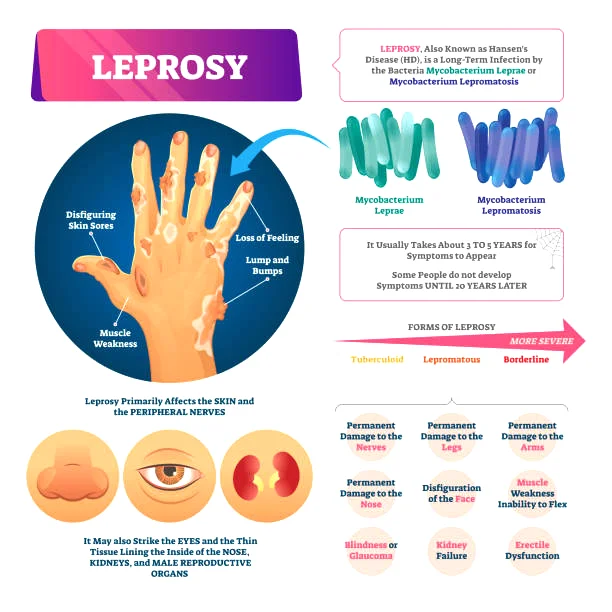
- About: It is a chronic infectious disease caused by Mycobacterium leprae (bacteria), affecting skin and peripheral nerves, transmitted via droplets from untreated cases, and is curable with Multidrug Therapy (MDT) provided free by WHO.
- India attained national leprosy elimination status (prevalence rate <1/10,000) in 2005 and sustained it. As of 2025, PR is 0.57 nationally.
- Key Symptoms: Reddish skin patches with sensory loss, thickened nerves, and resulting numbness that can lead to ulcers, muscle weakness, and paralysis (e.g., claw hand, foot drop).
- Advanced cases may present with facial nodules, nasal bleeding, and deformities such as loss of eyebrows.
- India's Leprosy Elimination Programme Evolution: India transitioned from the National Leprosy Control Programme (NLCP, 1954-55) to the National Leprosy Eradication Programme (NLEP) in 1983, which was pivotal in achieving national elimination in 2005.
- Current Strategy: The National Strategic Plan (NSP) 2023-2027 aligns with the Global Leprosy Strategy 2021-2030 and the WHO Neglected Tropical Diseases Roadmap.
- Its goal is to end leprosy transmission by 2030 and recover from the Covid-19 pandemic, outlining specific interventions and a roadmap to interrupt transmission by 2027.
| Read More: India's Fight Against Leprosy |
Coking Coal Declared a Critical Mineral
The Government of India has declared Coking Coal a Critical and Strategic Mineral under the Mines and Minerals (Development and Regulation) Act, 1957 (MMDR) to reduce import reliance and support the vision of Aatmanirbhar Bharat and Viksit Bharat 2047.
- Using Section 11C of the MMDR Act, 1957 the government amended its First Schedule to explicitly include "Coking Coal" within the definition of "Coal" in Part A and to list it separately as a Critical and Strategic Mineral in Part D.
Coking Coal
- About: Coking coal (metallurgical coal) is a specialized grade of bituminous coal that undergoes carbonization to produce coke, an irreplaceable material for reducing iron ore to pig iron in traditional blast furnace steelmaking.
- Properties: Its value lies in unique caking properties (softening and swelling when heated) and low impurities (low ash, sulfur, phosphorus).
- Steel Production Link: Approximately 780 kg of coking coal is needed to produce one tonne of steel, underscoring its direct strategic importance to the steel industry.
- Global Production: The largest producers of coking coal include China, Australia, Russia, USA and Canada.
- Indian Scenario: India, the world’s 2nd-largest crude steel producer, is heavily dependent on imported coking coal, with nearly 95% of the steel sector’s requirement met through imports, a significant share of which comes from Australia.
- Coking coal imports have increased steadily, reaching 57.58 million tonnes in 2024–25, highlighting India’s growing import dependence despite substantial domestic resources.
- India holds an estimated 37.37 billion tonnes of coking coal resources, primarily in Jharkhand, with reserves in Madhya Pradesh, West Bengal, and Chhattisgarh.
| Read More: Coking Coal as Critical Mineral |
ExoMiner++
- Recently, NASA announced the open-source release of ExoMiner++ advancing the search for planets beyond our solar system.
- About: ExoMiner++ is a deep-learning AI model developed by NASA to detect exoplanets from space-telescope data, serving as the advanced successor to the earlier ExoMiner system.
- Working Mechanism: It analyses stellar brightness over time, identifying characteristic dips caused when a planet transits in front of its host star.
- Key Feature: A key challenge it addresses is distinguishing real planetary signals from false positives, such as binary stars or background objects that can mimic planetary transits.
- Unlike black-box AI models, ExoMiner++ is explainable, providing astronomers with a confidence score and clear reasoning behind each classification.
- Data Sources Used: ExoMiner++ is trained on both Kepler Space Telescope and the Transiting Exoplanet Survey Satellite (TESS) datasets, allowing it to analyse many more stars simultaneously and significantly scale up detection capability.
- Significance: So far, it has identified around 7,000 potential exoplanet candidates in TESS data and has been released as open-source software, enabling global researchers to replicate results and refine the model for future missions such as the Nancy Grace Roman Space Telescope.
| Read more: Exoplanet |
RBI–ESMA Memorandum of Understanding
The Reserve Bank of India (RBI) signed a Memorandum of Understanding (MoU) with the European Securities and Markets Authority (ESMA) during the visit of the President of the European Council and the President of the European Commission to India.
- About: The MoU will enable formal recognition of the Clearing Corporation of India Ltd. (CCIL) and other RBI-regulated Central Counterparties (CCPs) by ESMA, allowing them to operate smoothly with European market participants.
- It will make it easier for European banks and investors to access India’s financial markets by lowering regulatory and operational hurdles.
- Provisions: Both authorities will consult, cooperate, and exchange information to monitor compliance of the covered CCPs with ESMA’s recognition conditions.
- ESMA will rely on RBI’s regulatory and supervisory framework, while RBI will remain responsible for the resilience of CCPs in India.
- Nature of the Agreement: The MoU is a non-binding statement of intent, creating no legal obligations, conferring no enforceable rights, and not superseding domestic laws.
- Significance: The agreement comes into effect from the date of signing and remains operative for an unlimited period, providing an enduring basis for India-EU financial market cooperation.
| Read more: India-EU FTA |
Personality Rights in India
Recently, the Delhi High Court issued notices in a case involving Salman Khan’s personality rights, after a foreign Artificial Intelligence(AI) voice-generation platform sought to vacate an interim injunction protecting his name, image and voice from unauthorised use.
Personality Rights
- About: Personality Rights protect an individual’s public persona, like name, voice, image, and mannerisms, as part of their broader right to privacy or property. It grants control over the commercial use of one’s name, image, or likeness.
- Types:
- Right of Publicity: Protecting an individual’s image and likeness from unauthorized commercial use, akin to trademark rights.
- Right to Privacy: Safeguarding against public representation of one’s personality without consent.
- Constitutional and Legal Basis:
- Article 21: Right to life and personal liberty, including privacy (K.S. Puttaswamy case, 2017).
- Copyright Act, 1957: It grants moral rights to authors and performers to prevent distortion or misuse of their work.
- Trademarks Act, 1999: Section 14 prohibits trademarks that falsely imply association with a living person or someone deceased within 20 years, without consent.
- Information Technology Act, 2000: Section 66C provides punishment for identity theft involving the misuse of another person’s electronic identity or credentials.
- Key Judgements: In the Aishwarya Rai Bachchan case (2025), the Delhi High Court restrained unauthorised impersonation, misuse of her name or image, and the circulation of AI-generated manipulated content.
- Courts balance personality rights with freedom of trade and expression, allowing artistic or commercial use only when it does not mislead the public or imply endorsement. Further, foreign entities cannot invoke Article 19 rights in India.
| Read more: Personality Rights |