
Snowfall Deficit in the Western Himalayas
For Prelims: Himalayas, Westerly Jet Stream, Western Disturbances, Mediterranean Sea, National Mission on Sustaining the Himalayan Ecosystem
For Mains: Western Disturbances and Indian Winter Climate, Impact of Climate Change on Himalayan Cryosphere, Snowfall Variability and Water Security in India
Why in News?
Large parts of the western Himalayas are experiencing an unusually dry and snowless winter, with Uttarakhand, Himachal Pradesh, and Jammu & Kashmir recording severe rainfall deficits in December–January, raising concerns over climate variability, water security, agriculture, and forest fires.
Summary
- Snowfall deficit in the western Himalayas is driven by weak and moisture-deficient Western Disturbances, altered jet stream patterns, and rising winter temperatures that reduce snow persistence and cause precipitation to fall as rain instead of snow.
- Delayed and reduced snowfall threatens water security, rabi agriculture, glacier health, forest stability, and Himalayan livelihoods, highlighting the need for climate-adaptive policies and region-specific interventions.
What are the Causes of Snowfall Deficit In The Western Himalayas?
- Weak and Moisture-Deficient WDs: Western Disturbances(WDs) are the primary source of winter snowfall in the Western Himalayas.
- In recent winters, including 2025–26, most disturbances have been weak, carrying limited moisture. Shallow low-pressure systems have reduced vertical uplift, resulting in short-lived precipitation events and poor snow accumulation.
- Weak circulation in WDs reduced their residence time, limiting cloud formation and condensation, and thereby lowering snowfall and rainfall over the western Himalayas.
- Altered Trajectory of WDs: Several WDs have followed a northward path at higher latitudes.
- This diversion has resulted in limited snowfall over parts of Kashmir while Himachal Pradesh and Uttarakhand remained largely dry, reducing the overall spread of winter precipitation.
- Weakened Interaction With Moisture-Bearing Winds: Normally, WDs interact with moisture-laden winds from the Bay of Bengal and the Arabian Sea.
- In recent years, this wind confluence has weakened, reducing cloud formation and snowfall over the Himalayan region.
- Changes In the Subtropical Westerly Jet Stream: The Subtropical Westerly Jet Stream guides WDs toward the Indian subcontinent.
- Its recent weakening and positional shifts have pushed weather systems away from India or caused them to lose strength before landfall, resulting in delayed and reduced snowfall.
- Long-Term Climatic Variability: Global warming has increased winter temperatures in mountain regions, raising the snowline altitude.
- Consequently, precipitation that would earlier fall as snow increasingly occurs as rain, especially at lower and mid-elevations.
- Repeated dry winters over the past decade indicate a broader climatic shift. Studies suggest a marginal but consistent decline in winter precipitation across parts of North India, reflecting increasing climate variability rather than a one-time anomaly.
Western Disturbances (WDs)
- WDs are large eastward-moving rain-bearing wind systems or extra-tropical weather systems that originate over the Mediterranean Sea, Black Sea, and Caspian Sea.
- They are low-pressure systems embedded in the Westerly Jet Stream. During winter, the jet stream steers these disturbances eastward toward the Indian subcontinent. While travelling across West Asia, Iran, Afghanistan, and Pakistan, they accumulate moisture.
- When they finally encounter the Himalayan barrier, the air is forced to rise, cool, and condense, producing rainfall over the plains and snowfall at higher altitudes.
- Due to this west-to-east progression, Kashmir typically receives snowfall first, followed by Himachal Pradesh and Uttarakhand, and occasionally Nepal and parts of Northeast India.
What are the Implications of Delayed or Snowless Himalayan Winters?
- Threats to Water Security: Snowfall in the Himalayas acts as a natural water reservoir, releasing water gradually through snowmelt.
- Reduced snowfall adversely affects glacier mass balance and accelerates glacial retreat, threatening the long-term sustainability of Himalayan rivers such as the Ganga, Yamuna, and Indus, with serious implications for water availability downstream during the summer months, affecting both mountain regions and downstream plains.
- Adverse Impact on Agriculture: Winter rainfall and early snowfall are crucial for rabi crops such as wheat and mustard.
- Early snow allows moisture to percolate slowly into the soil, supporting crop growth.
- Delayed snowfall melts rapidly due to higher daytime temperatures, providing limited agricultural benefit.
- Increased Forest Fire Risk: The absence of snowfall reduces moisture in forest floors, making them highly vulnerable to fires.
- Dry winters have increased forest fire vulnerability in the Himalayas, already evident in regions such as the Valley of Flowers range and Nanda Devi National Park, leading to ecological damage and added pressure on disaster management systems.
- Ecological and Biodiversity Stress: Himalayan ecosystems depend on predictable snow cycles for plant dormancy and wildlife survival.
- Snowless winters disrupt these cycles, threatening alpine biodiversity and destabilising fragile mountain ecosystems.
- Socio-economic Consequences: Snowfall deficit affects winter tourism, horticulture, and livelihoods in Himalayan states.
- Reduced snow cover impacts apple cultivation and tourism-based income, increasing economic uncertainty for local communities.
What Steps can India Take to Address Snowfall Deficit in the Himalayas?
- Strengthen Snow And Weather Monitoring: Expand high-altitude automatic weather stations under the India Meteorological Department in Uttarakhand, Himachal Pradesh, and Ladakh.
- Integrate satellite-based snow monitoring (INSAT, Cartosat) to improve Western Disturbance forecasting and snowfall prediction.
- Artificial Glaciers and Snow Storage: Scale up artificial glacier and ice-stupa projects pioneered in Ladakh under the 2025 International Year of Glaciers’ Preservation to store winter water and release it during spring, offsetting reduced natural snowfall.
- Catchment and Spring Rejuvenation: Strengthen spring-shed management under programmes supported by NITI Aayog in Himalayan states to recharge groundwater, especially where reduced snowmelt is affecting drinking water sources.
- "Dhara Vikas" model (successfully used in Sikkim) can be used as a precedent for spring rejuvenation in Uttarakhand/HP.
- Strengthen glacier monitoring under the National Mission on Sustaining the Himalayan Ecosystem (NMSHE) and integrate findings into basin-level planning for rivers like the Ganga and Yamuna.
- Climate-Resilient Rabi Agriculture: Promote short-duration and drought-tolerant wheat and mustard varieties through Indian Council of Agricultural Research, and expand micro-irrigation to reduce dependence on uncertain winter rainfall.
- Forest Fire Prevention: Enhance early-warning systems, fire lines, and community fire brigades in vulnerable zones like Nanda Devi Biosphere Reserve under the guidelines of the National Disaster Management Authority.
- Sustainable Winter Tourism: States like Uttarakhand and Himachal Pradesh should diversify tourism beyond snow-based activities by promoting winter cultural tourism, wellness tourism, and regulated eco-treks to reduce economic shocks from delayed snowfall.
- Mainstream Snow Variability Into Policy: Explicitly factor delayed snowfall and reduced snow persistence into State Action Plans on Climate Change (SAPCCs) and disaster management plans of Himalayan states.
Conclusion
The snowfall deficit in the western Himalayas reflects structural changes in regional climate behaviour, particularly the weakening effectiveness of WDs. Its implications cut across water security, agriculture, disaster risk, and ecological stability, making it a critical governance and climate adaptation challenge for India.
|
Drishti Mains Question: “Snowfall deficit in the western Himalayas is no longer a short-term anomaly but a climate signal.” Analyse. |
Frequently Asked Questions (FAQs)
1. What are Western Disturbances and why are they important for India?
Western Disturbances are extra-tropical weather systems originating over the Mediterranean region that provide crucial winter rainfall and snowfall to north and northwest India.
2. Why is snowfall deficit increasing in the western Himalayas?
Weak and moisture-deficient Western Disturbances, altered jet stream patterns, rising temperatures, and reduced snow persistence due to climate change are key reasons.
3. How does reduced snowfall affect India’s water security?
Lower snowfall reduces glacier recharge and snowmelt, threatening long-term flows of rivers like the Ganga, Yamuna, and Indus.
4. Why is snowfall deficit linked to forest fires in the Himalayas?
Reduced snow lowers forest-floor moisture, increasing fire vulnerability, as seen in regions like the Valley of Flowers and Nanda Devi National Park.
UPSC Civil Services Examination, Previous Year Questions (PYQs)
Prelims:
Q. Consider the following pairs: (2020)
Peak Mountains
- Namcha Barwa - Garhwal Himalaya
- Nanda Devi - Kumaon Himalaya
- Nokrek - Sikkim Himalaya
Which of the pairs given above is/are correctly matched?
(a) 1 and 2
(b) 2 only
(c) 1 and 3
(d) 3 only
Ans: (b)
Q. If you travel through the Himalayas, you are likely to see which of the following plants are naturally growing there? (2014)
- Oak
- Rhododendron
- Sandalwood
Select the correct answer using the code given below:
(a) 1 and 2 only
(b) 3 only
(c) 1 and 3 only
(d) 1, 2 and 3
Ans: (a)
Q. When you travel in Himalayas, you will see the following: (2012)
- Deep gorges
- U-turn river courses
- Parallel mountain ranges
- Steep gradients causing landsliding
Which of the above can be said to be the evidence for Himalayas being young fold mountains?
(a) 1 and 2 only
(b) 1, 2 and 4 only
(c) 3 and 4 only
(d) 1, 2, 3 and 4
Ans: (d)
Mains:
Q1. Differentiate the causes of landslides in the Himalayan region and Western Ghats. (2021)
Q2. How will the melting of Himalayan glaciers have a far-reaching impact on the water resources of India? (2020)
Q3. “The Himalayas are highly prone to landslides.” Discuss the causes and suggest suitable measures of mitigation. (2016)
Achievements of Cooperatives in India
For Prelims: Cooperative Sector, United Nations, National Co-operative Exports Limited (NCEL), National Cooperative Organics Limited (NCOL), National Cooperative Development Corporation (NCDC), National Cooperation Policy (NCP) 2025, White Revolution 2.0, Farmer Producer Organization, Kisan Credit Card (KCC), MAT, Sahakar Taxi, GeM Portal, 97th Constitutional Amendment Act, 2011, Capital Adequacy, MUDRA, CGTMSE, NABARD, MSMEs.
For Mains: Current status of cooperatives in India and provisions regarding cooperatives. Key achievements of cooperatives, associated challenges and way forward.
Why in News?
India’s achievements in the cooperative sector gained global recognition when the United Nations proclaimed 2025 as the International Year of Cooperatives (IYC) under the theme “Cooperatives Build a Better World.”
- India’s cooperative movement is inspired by "Vasudhaiva Kutumbakam"—the world as one family—and is driven by the vision of "Sahkar Se Samriddhi" (Prosperity Through Cooperation), focusing on collective well-being and community-centric development.
Summary
- India's vast cooperative network is being modernized via digital PACS, new national co-ops (NCEL, NCOL), and a dedicated Ministry.
- It faces deep-rooted governance, regulatory, and financial challenges that hinder inclusive growth.
- Success hinges on technological integration, financial innovation, and resolving regulatory fragmentation to achieve "Sahkar Se Samriddhi."
What is the Current Status of Cooperatives in India?
- Massive Scale and Deep Penetration: India has over 8.5 lakh cooperatives that serve nearly 32 crore members across 30 sectors and cover about 98% of rural India.
- Nearly 10 crore women are linked to cooperatives through Self-Help Groups (SHGs), highlighting the sector’s role in women-led development.
- Strategic Expansion into New Areas: The registration of over 32,000 new multipurpose, dairy, and fisheries cooperatives demonstrates a significant push to expand the sector beyond traditional credit.
- This expansion is strategically reinforced by establishing national-level cooperatives—such as National Co-operative Exports Limited (NCEL), National Cooperative Organics Limited (NCOL), and Bharatiya Beej Sahakari Samiti Limited (BBSSL)—to integrate Indian cooperatives into high-value supply chains.
- Strong Financial and Institutional Support: National Cooperative Development Corporation (NCDC) disbursements are massive (over Rs 95,000 crore annually), providing the necessary capital for growth.
- Policy focus is further strengthened by the new Ministry of Cooperation and by leveraging cooperatives for large-scale national projects, such as the world's largest decentralized grain storage plan.
What are the Key Initiatives and Achievements in India's Cooperative Sector?
|
Strategic Area |
Key Initiative |
Major Achievement / Current Status |
|
Policy & Governance |
Launch of National Cooperation Policy (NCP) 2025 |
Provides a decadal strategic roadmap for revitalizing and modernizing cooperatives. |
|
Expansion & Diversification |
White Revolution 2.0 (Dairy Expansion) |
20,070 new Dairy Cooperative Societies registered across 31 States/UTs. |
|
Formation of Fish Farmer Producer Organization (FFPOs) |
NCDC has facilitated the formation of 1,070 Fish Farmer Producer Organization (FFPO). |
|
|
Financial Strengthening & Inclusion |
RuPay Kisan Credit Card (KCC) Pilot in Gujarat |
Over 22 lakh KCCs issued; Rs 10,000+ cr loans disbursed to farmers. |
|
Market Linkages & Exports |
National Cooperative Organics Ltd. (NCOL) |
Markets 28 products under "Bharat Organics". |
|
Bharatiya Beej Sahakari Samiti Ltd. (BBSSL) |
31,605 member coops; distributes "Bharat Beej" seeds. |
|
|
Infrastructure Development |
Decentralised Grain Storage Plan (World's Largest) |
Godowns built in 112 PACS; 68,702 Metric Tonne capacity created; expanded to all cooperative societies. |
|
Atmanirbharta in Agriculture |
Atmanirbharta Abhiyan for Pulses & Maize |
54.74 lakh farmers & 56,673 PACS/FPOs registered; 9.08 LMT pulses & 45,105 MT maize procured. |
|
Institutional Development |
India's first national cooperative university established; academic programs launched. |
|
|
Innovative Projects |
First cooperative-led mobility platform; 1.5 lakh drivers & 2 lakh customers registered in trial. |
|
|
Cooperatives on GeM Portal |
721 cooperatives onboarded as buyers; Rs 396.77 cr in transactions completed. |
Cooperatives
- About: A cooperative is a voluntary and democratic organization that fulfills the shared economic, social, and cultural needs of its members through a jointly-owned enterprise, operating on the principle of “one member, one vote.”
- Constitutional Recognition: The 97th Constitutional Amendment Act, 2011 gave cooperatives constitutional status by introducing key provisions:
- Article 19(1)(c): Grants citizens the right to form cooperative societies.
- Article 43B: Directs the State to promote cooperative societies as a part of the Directive Principles of State Policy (DPSPs).
- Part IXB (Articles 243ZH–243ZT): Establishes a governance framework for cooperatives.
- Legal Structure and Regulatory Oversight: India's cooperatives are regulated under a dual constitutional and administrative structure.
- State-level cooperatives fall under the State List and are governed by individual State laws under the supervision of State Registrars.
- Multi-state cooperatives fall under the Union List and are regulated by the central Multi-State Cooperative Societies (MSCS) Act, 2002 under the supervision of the Central Registrar.
- Geographic Distribution: It has a concentrated geographical spread. Maharashtra alone accounts for over a quarter of all cooperatives. Collectively, the top five states, Maharashtra, Gujarat, Telangana, Madhya Pradesh, and Karnataka, constitute 57% of the national total.
- National Cooperation Policy 2025: It replaces the 2002 policy and provides a long-term roadmap for cooperative growth from 2025 to 2045. Key objectives include:
- Establishing 2 lakh new multipurpose Primary Agricultural Credit Societies (M-PACS).
- Leveraging schemes like Dairy Infrastructure Development Fund (DIDF), PM Matsya Sampada Yojana (PMMSY), and the National Programme for Dairy Development (NPDD).
- Promoting cooperative education through Tribhuvan Sahkari University (Anand, Gujarat).
- Notable Cooperatives in India: AMUL (Anand Milk Union Limited), IFFCO (Indian Farmers Fertiliser Cooperative), Lijjat Papad (Shri Mahila Griha Udyog Lijjat Papad), etc.
What are the Primary Challenges Faced by the Cooperative Sector in India?
- Regulatory Fragmentation: A major conflict exists where the Registrar of Cooperatives (state authority) manages incorporation, administration, and liquidation, while the Reserve Bank of India (RBI) controls banking licenses and prudential norms like capital adequacy. This leads to jurisdictional disputes, inconsistent supervision, and regulatory gaps.
- Governance Deficits: A lack of transparency and genuine democratic practice in many cooperatives leads to elite control, poor accountability, and the marginalization of member voices. E.g., the Punjab and Maharashtra Cooperative (PMC) Bank collapse in 2019 was directly linked to financial irregularities and internal control failures.
- Financial Constraints and Underdeveloped Infrastructure: Many institutions fail to maintain sufficient capital buffers, impairing their ability to absorb losses, withstand economic stress, or fund expansion. A critical shortage of storage facilities, processing units, and market linkages hampers the growth and competitiveness of agricultural and rural cooperatives.
- Operational and Technological Hurdles: A significant digital divide exists, with many rural cooperatives lacking modern digital accounting, ERP systems, and e-commerce platforms. Poor physical connectivity and weak logistics in states like Uttar Pradesh and Bihar limit the efficiency and geographic expansion of cooperative networks.
- Socio-Cultural Barriers: Pre-existing social hierarchies, caste-based divisions, and structural inequalities create barriers to equitable participation and representation within cooperatives, contradicting their inclusive ethos.
- Intense Market Competition: Cooperatives struggle to retain customers against commercial banks, small finance banks, and fintech companies that offer more sophisticated products and services.
What Measures are Needed to Strengthen Cooperatives in India?
- Technological Integration: Implement mobile banking, online account opening, and digital payment systems to attract tech-savvy members and improve operational efficiency. Roll out common ERP software, digital financial reporting systems, and e-commerce integration (with platforms like ONDC and GeM) to streamline operations and expand market reach.
- Financial Deepening: Financial cooperatives should move beyond basic savings/credit to offer investment products, insurance, and financial literacy programs, helping members achieve comprehensive financial health.
- Institutional Strengthening: Implement structured training, skill-building workshops, and clear career pathways to build a cadre of professional managers for cooperatives.
- Value Chain Development: Prioritize public and cooperative investment in infrastructure like warehouses, cold storage, and Common Facility Centers to reduce waste and improve market access. Furthermore, establishing member-owned logistics cooperatives can reduce supply chain costs and enhance efficiency.
- Branding and Diversification: Develop and promote strong umbrella brands (e.g., "CoopMade" or "Bharat Organics") with certification to command premium prices and ensure quality. Actively promote cooperative models in eco-tourism, renewable energy, cutting-edge agriculture (like hydroponics), and digital services to reposition them as innovative hubs.
Conclusion
India's cooperative sector is undergoing a transformative digital and strategic expansion. To realize its full potential for inclusive prosperity, it must urgently address persistent challenges in governance, finance, and competition while leveraging policy, technology, and member participation.
|
Drishti Mains Question Examine the major challenges faced by the cooperative movement in India and suggest institutional reforms. |
Frequently Asked Questions (FAQs)
1. What is the International Year of Cooperatives 2025?
The UN designated 2025 as the International Year of Cooperatives to highlight cooperatives’ role in sustainable development under the theme “Cooperatives Build a Better World.”
3. What is the constitutional status of cooperatives in India?
The 97th Constitutional Amendment (2011) granted cooperatives constitutional recognition by adding Article 19(1)(c) and Article 43B, and introducing Part IXB (Articles 243ZH–243ZT) for governance.
3. What is the National Cooperation Policy 2025?
The National Cooperation Policy 2025 provides a roadmap for cooperative growth till 2045, aiming to establish 2 lakh new M-PACS and strengthen cooperative education and infrastructure.
UPSC Civil Services Examination, Previous Year Question (PYQ)
Prelims
Q. With reference to ‘Urban Cooperative Banks’ in India, consider the following statements: (2021)
- They are supervised and regulated by local boards established by State Governments.
- They can issue equity shares and preference shares.
- They were brought under the purview of the Banking Regulation Act, 1949, through a 1966 Amendment.
Which of the above statements are correct?
(a) 1 only
(b) 2 and 3 only
(c) 1 and 3 only
(d) 1, 2 and 3
Ans: (b)
Q. In India, which of the following have the highest share in the disbursement of credit to agriculture and allied activities? (2011)
(a) Commercial Banks
(b) Cooperative Banks
(c) Regional Rural Banks
(d) Microfinance Institutions
Ans: (a)
Mains
Q. “In the Indian governance system, the role of non-state actors has been only marginal.” Critically examine this statement. (2016)
Q. “In the villages itself no form of credit organisation will be suitable except the cooperative society.” – All India Rural Credit Survey. Discuss this statement in the background of agricultural finance in India. What constraints and challenges do financial institutions supplying agricultural finance face? How can technology be used to better reach and serve rural clients? (2014)
Employment and Social Trends 2026 Report
Why in News?
The International Labour Organization (ILO) has released the Employment and Social Trends 2026 report, estimating the global unemployment rate at 4.9% in 2025.
What are the Key Highlights of the Employment and Social Trends 2026 Report?
- Stalled Progress on Employment Quality: Improvement has slowed over two decades. Between 2015–2025, the decline in extreme working poverty was only 3.1 percentage points (to 7.9% or 284 million workers), far less than the previous decade's 15-point drop. In low-income countries, 68% of workers lived in extreme or moderate poverty in 2025.
- Extreme working poverty refers to the situation in which employed persons live in households with a per capita income or consumption level below the international extreme poverty line (less than USD 3 a day).
- Rising Informality: The global informality rate increased by 0.3 percentage points (2015–2025), with 2.1 billion workers projected to be informally employed by 2026.
- Slowed Structural Transformation: The pace of workers moving across economic sectors has halved globally over the last two decades. This slowing transition to formal, productive sectors is a major driver of weak job quality and productivity growth.
- Uneven Unemployment & Employment Growth: The global unemployment rate remained at 4.9% in 2025 (forecast 186 million unemployed in 2026), with a jobs gap of 408 million. Employment growth is uneven, i.e., declining in high-income countries (2026), slow in upper-middle-income countries (0.5%), but faster in low-income countries (3.1%).
- Persistent Gender and Youth Gaps: Women represent only two-fifths of global employment, with a 24.2 percentage point lower labour force participation than men. The global youth unemployment rate rose to 12.4% in 2025, with 257 million young people as NEET (Not in Employment, Education, or Training).
- Insufficient Productivity & Labour Income Growth: Labour productivity growth remains low, especially in low-income countries. The global labour income share (52.6% in 2025) is below its 2019 level, showing real wage growth lags productivity growth.
- Emerging Risks from AI and Trade: AI adoption poses a heightened risk to educated youth in high-skilled entry-level jobs. Trade policy uncertainty threatens real wages and job creation, particularly in regions like South-Eastern Asia and Europe.
- Uneven Benefits from Trade: While 465 million jobs depended on foreign demand in 2024, low-income countries are largely excluded from trade and investment flows, limiting their access to better-quality, trade-linked jobs.
What are the Findings Related to India?
- Economic Growth: India is expected to be among the highest growth economies in the Asia-Pacific region, sustaining elevated GDP growth for Southern Asia.
- Manufacturing Share: India's share of global manufacturing (in current US dollar terms) is reported at 3%, which is significantly lower than China's 27% and the United States' 17%.
- Renewable Energy Strategy & Employment: India has developed a large-scale renewable energy capacity. India is noted as making significant headway in increasing the number of renewable energy jobs, alongside Japan and the Republic of Korea.
- Green Talent Gap: In India and the wider Asia-Pacific region, the demand for green talent is far outstripping the available supply.
International Labour Organization (ILO)
- About: ILO is a specialized agency of the United Nations dedicated to advancing social and economic justice through the promotion of internationally recognized human and labour rights.
- Foundation & Mandate: Established in 1919 under the Treaty of Versailles post-World War I. It became the UN's first specialized agency in 1946 and won the Nobel Peace Prize in 1969.
- Objective: Formulation of international policies to promote fundamental human and labour rights, better working conditions, and employment opportunities.
- Unique Tripartite Structure: The ILO uniquely brings together representatives from 187 member states' governments, employers' organizations, and workers' organizations (trade unions), ensuring policies reflect all social partners.
- Principal Governance Bodies:
- International Labour Conference: The annual highest decision-making body.
- Governing Body: The executive council that sets policy and budget.
- International Labour Office: The permanent secretariat in Geneva, led by the Director-General.
- Key Reports: Employment and Social Trends, World Employment and Social Outlook, Global Wage Report, World Social Protection Report, and Social Dialogue Report.
Frequently Asked Questions (FAQs)
1. What is the global unemployment rate for 2025 according to ILO?
The ILO Employment and Social Trends 2026 report estimates the global unemployment rate at 4.9% in 2025.
2. According to the report, what are the major risks to future employment?
The major emerging risks are AI adoption, which threatens high-skilled entry-level jobs for youth, and trade policy uncertainty, which threatens real wages and job creation.
3. How does India's performance compare in the report's findings?
India is a high-growth economy but has a relatively low share (3%) in global manufacturing.
UPSC Civil Services Examination, Previous Year Questions (PYQs)
Q. International Labour Organization’s Conventions 138 and 182 are related to (2018)
(a) Child Labour
(b) Adaptation of agricultural practices to global climate change
(c) Regulation of food prices and food security
(d) Gender parity at the workplace
Ans: (a)
Q. Disguised unemployment generally means (2013)
(a) large number of people remain unemployed
(b) alternative employment is not available
(c) marginal productivity of labour is zero
(d) productivity of workers is low
Ans: (c)
Chips to Start-up (C2S) Programme
Why in News?
Recently, the Government has released performance outcomes of the Chips to Start-up (C2S) Programme, highlighting large enrolment, shared wafer runs, student-designed chips and patent generation.
What is the Chips to Start-up (C2S) Programme?
- About: The C2S Programme is an umbrella capacity-building initiative launched by the Ministry of Electronics and Information Technology (MeitY) in 2022, with a total outlay of ₹250 crore over five years, covering academic institutions across India.
- Target: The C2S Programme targets the development of 85,000 industry-ready professionals across undergraduate, postgraduate, and doctoral levels.
- Expansion: Beyond skill development, it seeks to incubate 25 start-ups, enable 10 technology transfers, provide access to SMART lab facilities, train one lakh students, generate 50 patents, and support at least 2,000 focused research publications.
- Impact: Through this integrated approach, the programme promotes innovation, enhances employability, strengthens the role of academic institutions in India’s semiconductor value chain, and lays a strong foundation for self-reliance and global competitiveness in the semiconductor sector.
- Programme Approach: The C2S Programme follows a comprehensive, hands-on model that integrates academic instruction with industry-led training, mentorship, and multi-year R&D projects.
- Through a coordinated institutional ecosystem involving academic institutions, the ChipIN Centre at C-DAC Bengaluru, and NIELIT SMART Labs, the programme provides shared infrastructure, centralized training, and end-to-end exposure to chip design, fabrication, and testing using advanced EDA tools and real-world semiconductor workflows, including ASICs, SoCs, and IP core development.
- Fabrication: Under the C2S Programme, the Centre aggregates student chip designs from participating institutions every quarter, verifies design compliance, and consolidates approved layouts onto shared wafers that are fabricated using 180 nm technology at the Semi-Conductor Laboratory (SCL), Mohali, followed by packaging and delivery of fabricated chips to students.
- Support: The ChipIN Centre also offers centralized technical support and handholding to participating institutions, resolving over 4,855 support requests, and enabling continuous design improvement and large-scale hands-on exposure to semiconductor fabrication and testing.

Frequently Asked Questions (FAQs)
1. What is the Chips to Start-up (C2S) Programme?
The C2S Programme is a MeitY initiative launched in 2022 to build semiconductor design capacity in Indian academic institutions and start-ups.
2. What are the main objectives of C2S?
The programme aims to train skilled semiconductor professionals, support start-ups and technology transfers, and promote patents and research in chip design.
3. What is the ChipIN Centre?
The ChipIN Centre at C-DAC Bengaluru is a national shared design facility providing tools, IP libraries, mentoring and fabrication aggregation.
UPSC Civil Services Examination, Previous Year Question (PYQ)
Prelims:
Q. Which one of the following laser types is used in a laser printer? (2008)
(a) Dye laser
(b) Gas laser
(c) Semiconductor laser
(d) Excimer laser
Ans: (c)
Q. With reference to solar power production in India, consider the following statements: (2018)
- India is the third largest in the world in the manufacture of silicon wafers used in photovoltaic units.
- The solar power tariffs are determined by the Solar Energy Corporation of India.
Which of the statements given above is/are correct?
(a) 1 only
(b) 2 only
(c) Both 1 and 2
(d) Neither 1 nor 2
Ans: (d)
BBNJ Agreement Enters Into Force
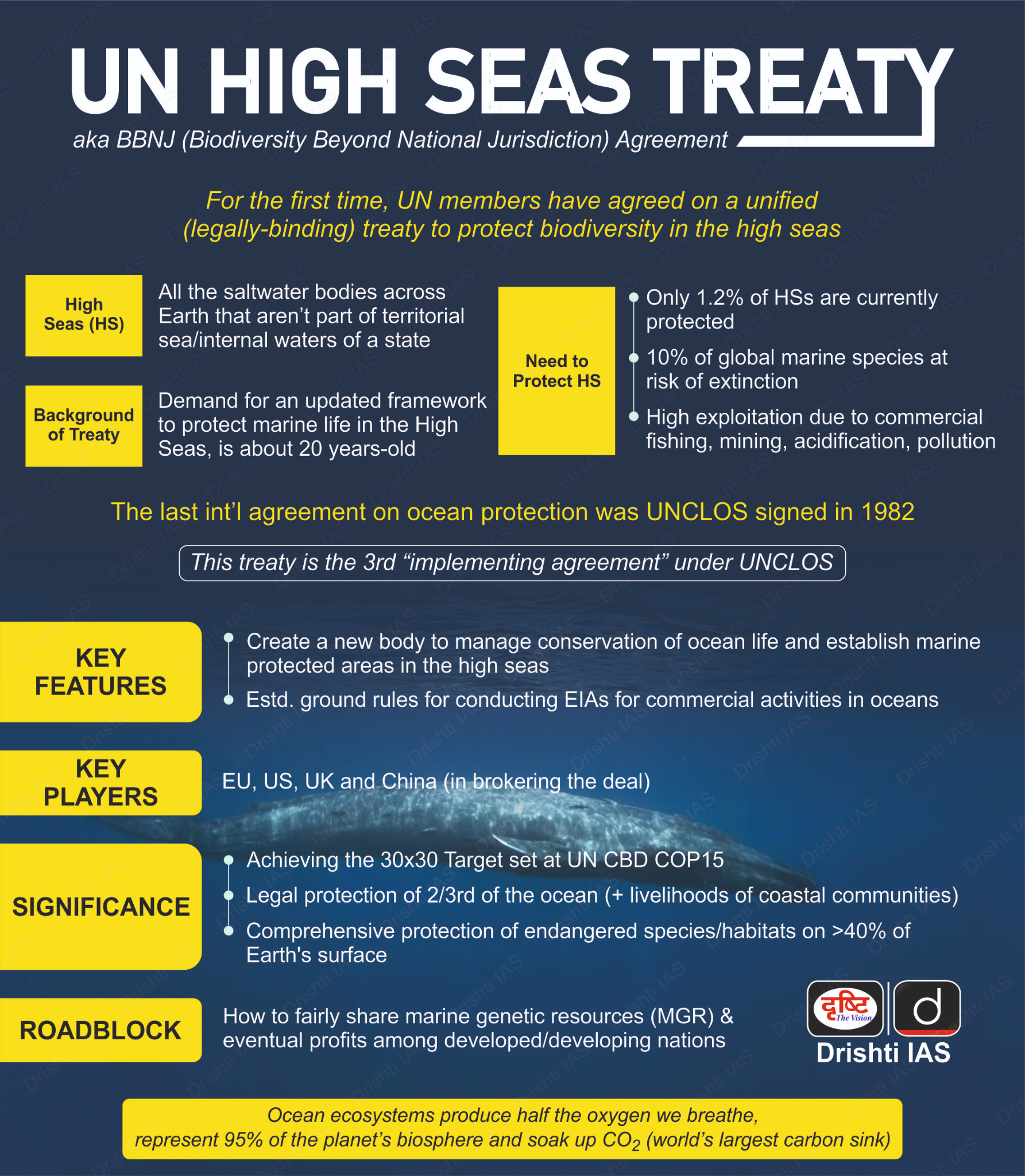
The Biodiversity Beyond National Jurisdiction (BBNJ) Agreement, the world’s first legally binding treaty to protect marine biodiversity in international waters, came into force on 17th January 2026 and is the first ocean treaty to ensure inclusive ocean governance, with provisions for Indigenous Peoples and local communities and gender balance.
- BBNJ Agreement: Agreement on Marine Biological Diversity of Areas Beyond National Jurisdiction (BBNJ Agreement), adopted under United Nations Convention on the Law of the Sea (UNCLOS), 1982.
- It applies to the high seas and the international seabed, i.e., ocean areas lying beyond national Exclusive Economic Zones (EEZs) and outside the control of any single country.
- The Agreement also establishes a funding mechanism and creates key institutional structures, including a Conference of the Parties (COP), subsidiary bodies, a Clearing-House Mechanism, and a secretariat.
- Adoption and Legal Status: The treaty was adopted in 2023 at the UN Headquarters in New York and entered into force 120 days after ratification by at least 60 countries, a threshold that has been crossed, with more than 80 countries having ratified it so far.
- Major economies such as China, Germany, Japan, France, and Brazil have ratified the treaty. However, like the US, India signed the agreement (in 2024), but its domestic ratification process remains pending.
- Four Pillars Of The BBNJ Agreement:
- Marine Genetic Resources (MGRs), including fair and equitable sharing of benefits.
- Area-Based Management Tools (ABMTs), such as Marine Protected Areas (MPAs).
- Environmental Impact Assessments (EIAs) for activities in the high seas
- Capacity-Building and Transfer of Marine Technology to developing countries.
- Significance: The BBNJ Agreement fills a long-standing governance gap by introducing legally binding rules for over two-thirds of the ocean’s surface, covering more than 90% of Earth’s living space by volume, and strengthening global ocean conservation under UNCLOS, often described as the constitution of the oceans.
- The agreement supports SDG 14 (Life Below Water) and contributes to addressing the triple planetary crisis of climate change, biodiversity loss, and pollution, by regulating human activities in ecologically sensitive international waters.
- The BBNJ Agreement is the third implementation agreement under UNCLOS, alongside the 1994 Part XI Implementation Agreement on international seabed mining and the 1995 UN Fish Stocks Agreement on straddling and highly migratory fish stocks.
| Read more: High Seas Treaty |
Board of Peace for Gaza
India has received an invitation from the United States to join the Board of Peace for Gaza, but it has not yet communicated its final decision on participation.
Board of Peace for Gaza
- About: It is a US-led intergovernmental body, established under UN Security Council (UNSC) Resolution 2803 (2025), to enact a comprehensive US peace plan for the reconstruction of Gaza.
- The initiative is not under UN command, but the "Comprehensive Plan to End the Gaza Conflict" it supports has UNSC endorsement, providing it international legitimacy.
- Leadership & Structure: It is proposed to be chaired by US President Donald J. Trump.
- Founding Executive Board: Comprising high-level figures with expertise in diplomacy, development, and economics, including former UK Prime Minister Tony Blair, US Secretary of State Marco Rubio, and others.
- Gaza Executive Board: A supporting operational body that coordinates on-the-ground activities.
- High Representative for Gaza: Bulgarian diplomat Nickolay Mladenov, serving as the primary on-the-ground liaison.
- National Committee for the Administration of Gaza (NCAG): A 15-member committee of politically independent Palestinian technocrats, chaired by Ali Shaath (a former Palestinian Authority deputy minister), responsible for day-to-day civil administration.
- Core Mandate: To provide strategic oversight and mobilize resources for Gaza’s demilitarization, reconstruction, economic recovery, and transitional governance until a stable administration is in place. Its initial authorization lasts until 31st December 2027.
- Membership and Funding Mechanism: Invitations have been extended to many countries, including Greece, Pakistan, and India. A unique funding model allows for non-contributing three-year memberships (can be renewed), while a USD 1 billion payment grants permanent status, with funds allocated for Gaza's reconstruction.
| Read More: USA's Comprehensive Plan to End Gaza Conflict |
Polar Silk Road
Recent US remarks on Greenland have revived debate on China’s Arctic ambitions, though expert assessments indicate China’s direct military presence in the region remains limited.
Polar Silk Road Initiative
- About: It is an extension of China’s Belt and Road Initiative (BRI) into the Arctic, aiming to develop shipping routes, access resources, and enhance its geopolitical influence by capitalizing on climate change-driven melting arctic ice.
- BRI is a global infrastructure and connectivity programme launched by China in 2013, aiming to build roads, railways, ports, energy pipelines, and digital links across Asia, Europe, and Africa to boost trade and investment.
- Origin & Objective: It was jointly announced by China and Russia in 2017. China's 2018 Arctic Policy labelled China a “near-Arctic state” and promoted cooperation on Arctic shipping, resources, and science.
- China's 2030 goal is to be a “polar great power”, recognizing the Arctic's rising strategic and economic value.
- Routes: The PSR primarily focuses on the Northern Sea Route along Russia’s Arctic coast, offering significantly shorter Asia–Europe distance (upto 40%), with the Northwest Passage (along Canada's coast) as a secondary option.
- Strategic Rationale: China aims to enhance energy security, reduce dependency on traditional chokepoints like the Suez Canal, and expand geopolitical influence through partnerships, notably with Russia.

| Read More: India and the Dynamism of Arctic Region |
India–Germany Joint Declaration of Intent(JDI)
Recently, India and Germany signed a Joint Declaration of Intent (JDI) on Telecommunications Cooperation during the visit of the German Chancellor to India, strengthening collaboration in digital technologies and IT sectors.
Joint Declaration on Telecommunications
- It establishes a structured framework for bilateral cooperation in telecommunications and Information & Communication Technologies (ICTs).
- The Declaration emphasises collaboration in emerging and future digital technologies, exchange of best practices on policy and regulatory frameworks, promotion of manufacturing and ease of doing business, and facilitation of innovation through engagement of government, industry, academia and research institutions.
- To ensure effective and outcome-oriented cooperation, the Declaration provides for regular consultations, annual high-level meetings, and the creation of dedicated working groups, supported by the development of a joint work plan to align shared priorities.
- The Indo-German Digital Dialogue Work Plan (2026–27) has been finalised, covering cooperation in AI, data governance, telecommunications and Industry 4.0.
- Both sides have also agreed to coordinate in relevant international fora to promote common understanding and advance shared perspectives on telecommunications governance and digital development, thereby strengthening multilateral cooperation.
| Read more: India–Germany Relations |
Valley of Flowers National Park
Uttarakhand has sought the Indian Air Force’s (IAF) help to douse a forest fire raging in the Valley of Flowers National Park.
Valley of Flowers National Park
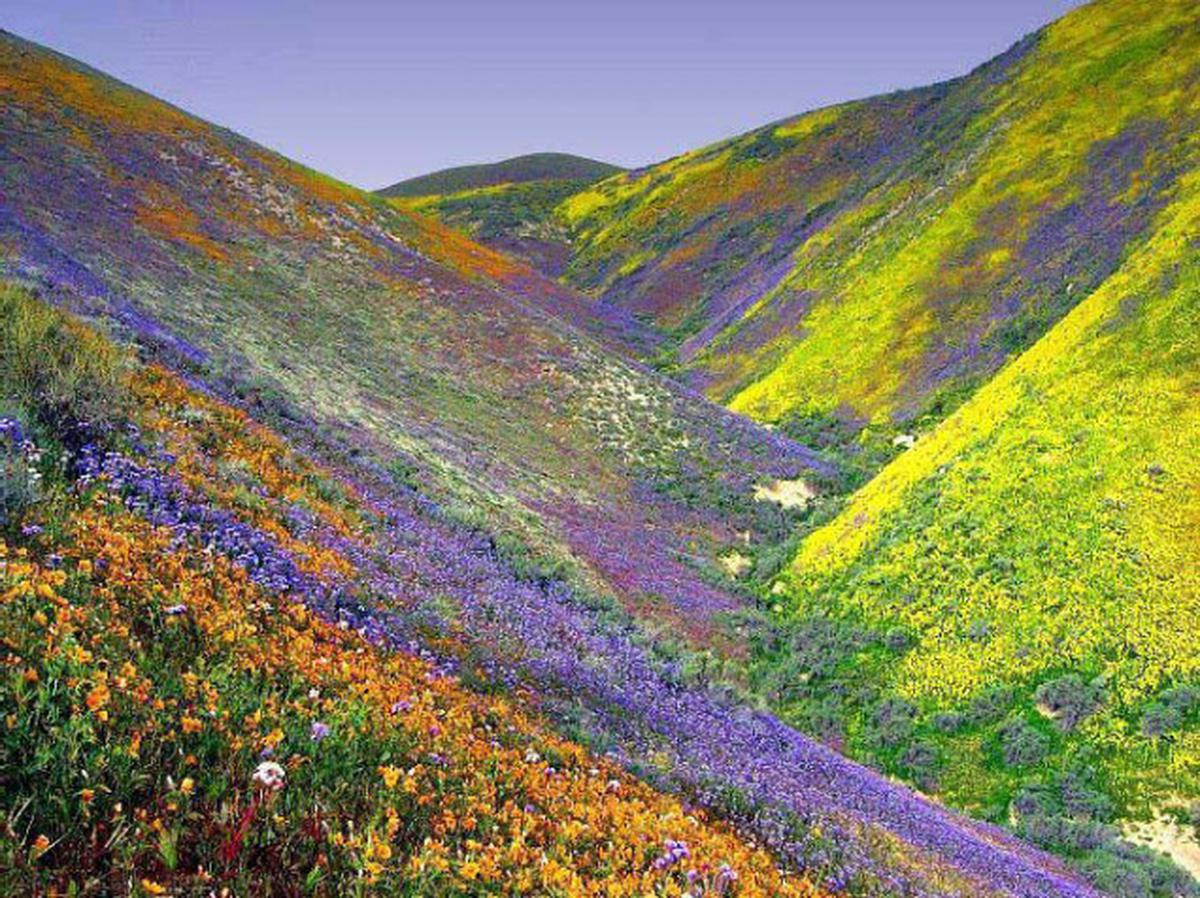
- About: Situated in the Western Himalayas in Chamoli, Uttarakhand, it is a National Park (declared in 1982) and a UNESCO World Heritage Site (inscribed in 2005). It forms one of the two core zones of the Nanda Devi Biosphere Reserve. Pushpawati River flows through it.
- Discovery & Recognition: Introduced globally after its 1931 discovery by British mountaineer Frank S. Smythe. Gained further fame through his 1938 book Valley of Flowers.
- Ecological Uniqueness: It features a pristine alpine ecosystem (3000 and 5000 m in the western Himalayas) preserved by natural glacial barriers. It lies in a transition zone between the Zanskar and Greater Himalayan ranges. It is renowned for its alpine meadows, rare flora, and diverse fauna.
- Biodiversity:
- Flora: It is famed for over 500 species of endemic and alpine flowers. Key species include the Brahma Kamal (state flower of Uttarakhand), blue Himalayan poppy, and numerous medicinal plants.
- Fauna: Hosts rare and endangered fauna such as the snow leopard, Asiatic black bear, musk deer, brown bear, and the Himalayan monal bird.
- Cultural Significance: It is associated with the Bhotia tribe. They practice transhumance, a form of seasonal migration between high-altitude summer pastures (known locally as Bugyals) and lower-altitude winter settlements.
| Read More: Biosphere Reserves in India |