
World Tuberculosis Day 2026
For Prelims: Tuberculosis (TB), World Health Organization, Pradhan Mantri TB Mukt Bharat Abhiyan, BPaLM Regimen, Ni-kshay Mitras, Ni-Kshay Poshan Yojana (NPY),
For Mains: India’s progress and challenges under the National TB Elimination Programme (NTEP), Drug-resistant TB
Why in News?
Every year, 24th March is observed globally as World Tuberculosis (TB) Day to raise public awareness about the devastating health, social, and economic consequences of TB.
Summary
- World Tuberculosis (TB) Day is observed on 24 March every year to raise awareness about the global impact of tuberculosis and efforts to eliminate it.
- India has made strong progress in TB control with better detection, higher treatment coverage, and reduced deaths, but still carries a very high global burden with many undiagnosed cases.
- TB in India is driven by poverty, malnutrition, drug resistance, and weak detection, so elimination requires better diagnostics, nutrition support, technology use, and community-level interventions.
What is the Significance of World Tuberculosis (TB) Day?
- Historical Context: 24th March commemorates the day in 1882 when Dr. Robert Koch announced his groundbreaking discovery of the Mycobacterium tuberculosis bacterium, the bacillus that causes TB.
- This discovery paved the way for diagnosing and curing the disease.
- Global Theme (2026): The World Health Organization (WHO) have announced the 2026 theme as “Yes! We can End TB!”
- This theme emphasizes a strategic shift from merely stating global ambitions to driving localized action, focusing on strong country-level leadership, rapid innovation uptake, and community mobilization.
- Ending TB is a strategic political and economic choice. Every USD 1 invested in TB can generate up to USD 43 in health and economic returns.
- India’s Initiatives Launched at TB Day 2026:
- TB Mukt Bharat Abhiyaan (100 Days): Mission-mode campaign for rapid TB case detection and improved treatment adherence.
- TB Mukt Bharat App: Digital tool for patient tracking, last-mile service delivery, and treatment compliance.
- TB Mukt Urban Ward Initiative: Micro-level urban strategy targeting high-transmission wards for TB elimination.
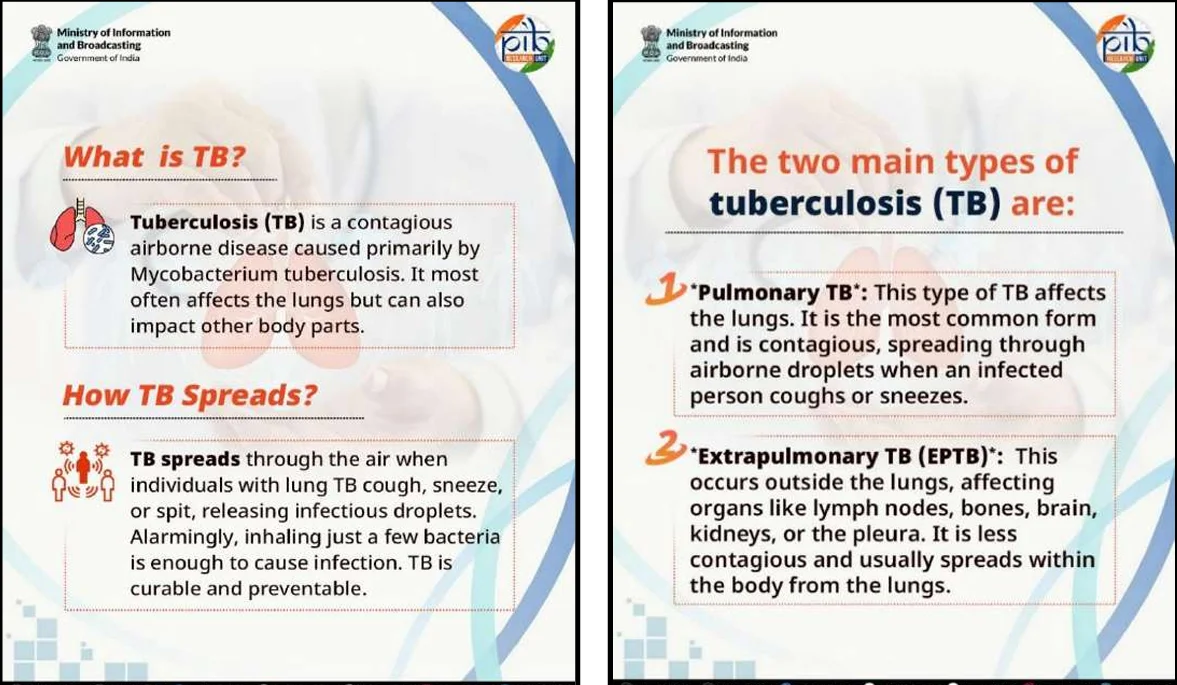
What is the Status of TB in India?
- TB in India: According to the WHO Global Tuberculosis Report 2025, India accounts for around 25% of global TB cases but has achieved a significant decline among high-burden countries, with treatment coverage rising from 53% (2015) to 92% (2024).
- The TB mortality rate reduced from 28 per lakh (2015) to 21 per lakh (2024), while the treatment success rate under the Pradhan Mantri TB Mukt Bharat Abhiyan reached 90% in 2024, exceeding the global average of 88%.
- However, India still accounts for about 28% of global TB deaths, and nearly one lakh cases remain “missing” (undiagnosed), contributing to 8.8% of the global detection gap, second only to Indonesia (10%).
- India’s TB Elimination Target: In 2020, India renamed the Revised National Tuberculosis Control Programme (RNTCP) as the National TB Elimination Programme (NTEP) to align with its ambitious goal of eliminating TB by 2025, five years ahead of the global target of 2030. (India did not achieve this target).
-
TB elimination is defined as less than one notified case per million population per year.
-
The programme is guided by the National Strategic Plan (2017–2025), which follows the Detect–Treat–Prevent–Build (DTPB) approach to comprehensively address TB control.
-
While the WHO End TB Strategy targets an 80% reduction in incidence and 90% reduction in deaths by 2030 (from 2015 levels), India has achieved a 21% decline in new cases and a 28% reduction in deaths between 2015 and 2024, indicating progress but also highlighting the gap to meet elimination targets.
-
- India’s Advancements in TB Elimination:
- Early Detection at Scale: India now has the world’s largest TB lab network, and 92% of patients receive upfront Rifampicin drug-resistance testing. This level of early detection helps cut transmission at the source.
- Shorter Treatment Regimens: Introduction of the BPaLM (bedaquiline, pretomanid, linezolid, moxifloxacin) regimen reduced DR-TB treatment duration from 18–24 months to just 6 months.
- All-oral MDR-TB therapies improved safety, reduced dropouts and increased successful treatment outcomes.
- Decentralised Care: 1.78 lakh Ayushman Arogya Mandirs & Ni-kshay Mitras improved access to testing and treatment.
- Nutrition Support: Under the Ni-Kshay Poshan Yojana (NPY), financial aid increased to Rs 1000/month, providing Rs 3,000 to Rs 6,000 per patient throughout treatment. for better treatment adherence and recovery.
What are the Major Challenges in Meeting the TB Elimination Target?
- Crisis of Drug-Resistant TB (MDR/XDR-TB): India accounts for a staggering 32% of the global multi-drug-resistant (MDR) and rifampicin-resistant TB cases.
-
The treatment for drug-resistant TB is complex, highly toxic, heavily expensive, and significantly longer. While the treatment success rate for new (drug-sensitive) TB cases is around 90%, it drops to roughly 77% for MDR-TB cases.
-
-
Co-morbidities: Medical intervention alone cannot cure TB if the host's immunity is compromised.
-
Malnutrition is the most critical driver of TB in India, linked to roughly 35% of all active cases.
-
High prevalence of anemia and stunting in high-burden states (like Bihar, Jharkhand, and Uttar Pradesh), coupled with rising rates of Diabetes (in 2024 around 3.2 lakh TB cases were linked to diabetes ) and HIV, creates a fertile ground for the TB bacillus to thrive.
-
-
Diagnostic Gaps: Fear of social exclusion, marital rejection (especially for young women), and loss of employment lead to massive under-reporting.
-
Many patients hide their symptoms or abandon treatment prematurely once they start feeling slightly better.
-
Over a lakh TB cases remain "missing" (undiagnosed or untreated in the informal private sector) every year, acting as active transmitters of the disease in communities.
-
While rapid molecular tests (like Truenat and CBNAAT) have expanded, upfront access to these tests in rural and remote areas remains uneven, leading to reliance on outdated, less sensitive sputum microscopy..
-
Supply Chain Disruptions: Frequent stockouts of critical first-line and second-line drugs in several states force patients to skip doses—a direct catalyst for developing deadly drug resistance.
-
-
Socio-Economic Determinants and Migration: TB is profoundly a disease of poverty. Overcrowded living conditions and poor indoor ventilation in urban slums provide ideal environments for airborne transmission.
-
Circular migration of informal labor makes it incredibly difficult for health workers to track patients and ensure uninterrupted Directly Observed Treatment (DOTS).
-
-
Funding and R&D Deficits: R&D funding for developing highly effective adult TB vaccines (the current BCG vaccine is only effective in severe childhood TB) and cheaper point-of-care diagnostics falls drastically short of required targets.
What Measures can Strengthen TB Elimination Efforts in India?
- Targeting Asymptomatic Carriers: The National TB Prevalence Survey revealed that nearly half of all TB cases in India are subclinical (asymptomatic).
- Relying solely on symptom-based screening is no longer viable. There must be a mass rollout of AI-enabled portable Chest X-rays (CXR) and non-invasive tongue/nasal swabs in communities to identify "silent" transmitters.
- Tackling Drug Resistance: Rapid testing reduces diagnostic delays, allowing immediate identification of rifampicin resistance so that patients with Multi-Drug Resistant TB (MDR-TB) are not kept on ineffective first-line drugs.
- Tribal-Focused Financing: TB prevalence among Scheduled Tribes is roughly 50% higher than the national average.
- Utilizing innovative local financing mechanisms such as tapping into District Mineral Foundation (DMF) funds in mining-affected tribal belts can upgrade local diagnostic and nutritional infrastructure.
- Digital Tracking: Upgraded digital tools like the newly launched TB Mukt Bharat App will help trace patients in real-time and prevent deadly treatment dropouts.
- Tackling Undernutrition: Financial aid under the Ni-kshay Poshan Yojana must be seamlessly linked with the Public Distribution System (PDS).
- Furthermore, the Ni-kshay Mitra initiative (where corporates and citizens adopt patients to provide food baskets) needs sustained expansion.
- TB Preventive Treatment (TPT): Proactively administering preventive therapy to the household contacts of active TB patients to break the chain of transmission before the disease develops.
Conclusion
- Achieving a TB-Mukt Bharat requires viewing Tuberculosis not just as a pathogen, but as a symptom of poverty and inequality. Integrating TB care with broader developmental goals such as improving housing ventilation, alleviating poverty, and ensuring universal health coverage through Ayushman Aarogya Mandirs is the ultimate key to sustainable elimination.
|
Drishti Mains Question: Q. Despite aggressive programmatic interventions, India has missed its ambitious target of eliminating Tuberculosis by 2025. Critically analyze the major clinical and socio-economic bottlenecks hindering India's TB elimination efforts. |
Frequently Asked Questions (FAQs)
- What is World Tuberculosis Day and why is it observed on 24 March?
It marks Dr. Robert Koch’s discovery (1882) of the TB-causing bacterium, raising awareness about TB’s global impact. - What is the theme of World TB Day 2026?
The theme is “Yes! We can End TB!”, focusing on localized action and innovation-driven strategies. - What is India’s TB elimination target under NTEP?
India aims to eliminate TB by 2025 (not achieved), ahead of the global target of 2030. - What are the major challenges in TB elimination in India?
Drug-resistant TB, malnutrition, diagnostic gaps, stigma, and migration remain key barriers. - What key initiatives were launched for TB control in 2026?
TB Mukt Bharat Abhiyaan (100 Days), TB Mukt Bharat App, and Urban Ward Initiative aim to improve detection, tracking, and localized intervention.
UPSC Civil Services Examination, Previous Year Questions (PYQs)
Mains
Q. Besides being a moral imperative of a Welfare State, primary health structure is a necessary precondition for sustainable development.” Analyse. (2021)
World Water Day 2026
For Prelims: World Water Day, Circular Water Economy, Minor Irrigation Census, Census of Water Bodies, FICCI, Glacial Lake Outburst Flood (GLOF), Bhuvan, 1992 Rio Earth Summit, Sustainable Development Goal, NITI Aayog, Water Credit, Indus River System, Eutrophication, Arsenic, Fluoride, Ramsar Sites, Millets.
For Mains: Key highlights of the World Water Day Conclave 2026, Key water-related concerns globally and in India and way forward.
Why in News?
The Ministry of Jal Shakti convened the World Water Day Conclave 2026, on the occasion of World Water Day 2026, under the theme “Industry for Water,” marking a strategic shift toward a circular water economy.
Summary
- The World Water Day Conclave 2026 marks India's transition to a data-driven, circular water economy by integrating industrial commitments with community participation.
- It prioritizes glacier monitoring and wastewater recycling to counter plummeting per-capita water availability.
- This holistic approach aligns economic growth with environmental sustainability and gender-inclusive water security.
What are the Key Highlights of the World Water Day Conclave 2026?
- Focus on Circular Water Economy: The conclave emphasised the importance of the circular water economy, which is a restorative model replacing the "take-use-discard" system.
- It treats wastewater as a precious, finite resource emphasizing Reduce, Reuse, and Recycle. It ensures water is decoupled from consumption, fostering long-term climate resilience.
- Launch of Landmark Data Resources: The conclave saw the release of the 7th Minor Irrigation Census, the 2nd Census of Water Bodies, and the 1st-ever Census of Springs and Major & Medium Irrigation Projects, alongside the National Water Data Policy 2026.
- Joint Industry Declaration: Leading industry associations (FICCI, ASSOCHAM, CII) committed to regular water audits by 2027, achieving Zero Liquid Discharge (ZLD) by 2030, and reducing the corporate water footprint by 50% by 2030.
- Cryosphere and Glacier Monitoring: In collaboration with National Remote Sensing Centre (NRSC)-ISRO, the event emphasized a Glacial Monitoring Framework and Glacial Lake Outburst Flood (GLOF) risk reduction using platforms like Bhuvan for Himalayan security.
- Technological Integration: Emphasis was placed on leveraging AI, and IoT to transition from traditional management to precision water governance.
World Water Day
- About: The United Nations observes World Water Day every year on 22nd March. It aims to highlight the critical importance of freshwater resources and to advocate for their sustainable management.
- It is coordinated by UN-Water, the UN's inter-agency coordination mechanism on water and sanitation.
- Theme for 2026: For 2026, the theme is "Water and Gender" (with the campaign slogan "Where water flows, equality grows").
- It emphasizes the links between water access, women, and gender equality, recognizing that the global water crisis disproportionately affects women and girls.
- Origin: It was proposed at the 1992 Rio Earth Summit (United Nations Conference on Environment and Development) and 1st observed on 22nd March, 1993.
- SDG Alignment: Directly supports Sustainable Development Goal 6 (SDG 6): Clean Water and Sanitation for all by 2030.
Initiatives for Water Conservation in India
- Legislative Framework: Water (Prevention and Control of Pollution) Act, 1974, Environment Protection Act, 1986.
- Policy Initiatives: National Water Policy (NWP) 2012.
- Government Schemes: Jal Jeevan Mission 2.0, Atal Bhujal Yojana, Pradhan Mantri Krishi Sinchayee Yojana (Per Drop More Crop).
- NGOs & Civil Society: Tarun Bharat Sangh (Led by Rajendra Singh ("Waterman of India"), famous for reviving the Arvari River in Rajasthan), Arghyam (support decentralized, community-managed water projects), Paanipanchayat (grassroots movement in Maharashtra for equitable water distribution).
What are the Key Water Related Challenges Globally and in India?
- Lack of Safe Access Water and Sanitation: According to the UN, nearly 2.2 billion people lack access to safely managed drinking water.
- This results in significant health burdens, including an estimated 1.4 million annual deaths from preventable water-related causes and recurring outbreaks such as cholera.
- Climate Change and Hydrological Volatility: Global warming is disrupting the water cycle, leading to more frequent and intense extreme weather events. This results in a "too much or too little" scenario—protracted droughts followed by catastrophic flooding.
- Annual economic costs from droughts alone exceed USD 300 billion in recent years.
- Transboundary Water Conflicts: Over 60% of global freshwater flow is through basins shared by two or more countries. Lack of cooperative treaties often leads to geopolitical tensions (e.g., the Indus River system dispute between India and Pakistan).
- E.g., the Gulf region (Middle East) has no major rivers and depends on desalination for water, making it highly vulnerable; recent Iran conflict threats highlight risks to critical water infrastructure.
- Water Quality and Pollution: Industrial discharge, untreated sewage, and agricultural runoff (pesticides/nitrates) are contaminating freshwater sources, leading to eutrophication and the spread of waterborne diseases.
- Groundwater Depletion and Ecosystem Decline: More than half of the world's large lakes have declined since the early 1990s, around 35% of natural wetlands have been lost since 1970, and about 70% of major aquifers show long-term declines. This has led to land subsidence affecting over 2 billion people and threatens food production, as more than half of global irrigated cropland faces high water stress.
- Gender and Social Inequalities: Women and girls bear a disproportionate burden, spending an estimated 250 million hours daily collecting water. This limits their education, econo+mic opportunities, and safety, while they remain underrepresented in water governance.
Specific Concerns in India
- Groundwater Depletion: India is the world’s largest consumer of groundwater. Over-extraction for agriculture (fueled by power subsidies) has led to critical declines in water tables, particularly in Punjab, Haryana, and Rajasthan.
- E.g., India’s per capita water availability plummeted from a water-abundant 5,200 cubic meters in 1950 to a water-stressed 1,400–1,500 cubic meters in 2024, with projections for 2050 (1,191 cubic meters) dangerously approaching the 1,000 cubic meters water scarcity threshold.
- Inter-State Disputes: Constitutional challenges arise from river water sharing. Long-standing disputes like the Cauvery (Karnataka-Tamil Nadu) and Krishna water sharing often stall developmental projects.
- Water Quality & Contamination:
- Geogenic Contamination: High levels of Arsenic and Fluoride in groundwater affect millions in the Indo-Gangetic plain and central India. E.g., Approximately 90 million individuals in India are exposed to high levels of arsenic.
- The Bathinda-Bikaner Express, dubbed the "Cancer Train," transports numerous cancer patients from Punjab’s Cotton Belt to Rajasthan for treatment. The cancer cases are parimarily driven by groundwater contamination with Uranium, Arsenic, Fluoride, and residues of banned pesticides like DDT (Dichloro-diphenyl-trichloroethane).
- Bacteriological Pollution: Nearly 70% of India's surface water is estimated to be contaminated by untreated urban sewage.
- Geogenic Contamination: High levels of Arsenic and Fluoride in groundwater affect millions in the Indo-Gangetic plain and central India. E.g., Approximately 90 million individuals in India are exposed to high levels of arsenic.
- The "Himalayan Crisis": As a "Third Pole," the melting of Himalayan glaciers threatens the perennial nature of the Ganga, Indus, and Brahmaputra rivers, which are the lifelines of Northern India.
- Urban Water Stress: Rapid, unplanned urbanization has led to the "Day Zero" threat in cities like Bengaluru and Chennai, where demand far outstrips supply and local water bodies (wetlands/lakes) have been encroached upon.
What Steps are Needed for Sustainable Water Conservation?
- Agricultural Transformation: Target agriculture (≈80% of water use) through drip/sprinkler irrigation, crop diversification (millets over rice-wheat in water stressed areas), and micro-irrigation. Adopt techniques that bypass the water-heavy transplanting phase of rice cultivation.
- Industrial and Urban Circularity: Use small-scale Sewerage Treatment Plant (STP) to treat sewage at the source rather than carrying it to massive, often failing, central plants.
- Implement dual-piping systems in urban apartments to use treated kitchen/bath water for flushing and gardening.
- Ecological and Heritage Restoration: Revive India’s ancient water wisdom, such as Ahar-Pynes (Bihar), Johads (Rajasthan), and Stepwells (Baolis), which are naturally suited to local topography. Designate more Ramsar Sites and protect "urban sponges" (floodplains and lakes) from encroachment to maintain natural groundwater recharge.
- Governance Reforms: Pro-actively implement “Jan Bhagidari se Jal Sanchay Sambhav hai” campaign to make water conservation a Jan Andolan (People's Movement). Gradually decouple free electricity from unlimited groundwater extraction to discourage over-pumping.
- Pricing and Economic Instruments: Implement a tiered water pricing model can discourage wastage while ensuring basic access for the vulnerable. Introduce Water Credits, similar to Carbon Credits, to incentivise industries and developers to exceed their conservation targets and trade their surplus "savings" with others.
Conclusion
The World Water Day Conclave 2026 shifts India's water strategy from simple extraction to a circular water economy. By integrating industrial accountability (ZLD/Water Audits) with advanced data governance and traditional wisdom (Ahar-Pynes), the initiative seeks to decouple economic growth from water depletion, ensuring long-term climate resilience and gender-inclusive water security.
|
Drishti Mains Question: Q. Examine the major water-related challenges facing India? What policy measures are needed to address these issues in the context of climate change? |
Frequently Asked Questions (FAQs)
1. What is the theme of World Water Day 2026?
The theme for World Water Day 2026 is “Water and Gender” with the campaign slogan “Where water flows, equality grows.”
2. What is the significance of the theme "Water and Gender" for SDG 6?
It recognizes that the water crisis disproportionately burdens women, and addressing gender inequality in access is vital for achieving universal sanitation and health.
3. How does India’s per capita water availability reflect its water stress status?
India’s per capita water availability declined from 5,200 cubic meters in 1950 to 1,400–1,500 cubic meters in 2024, dangerously approaching the water scarcity threshold of 1,000 cubic meters projected for 2050.
UPSC Civil Services Examination, Previous Year Question (PYQ)
Prelims
Q. With reference to ‘Water Credit’, consider the following statements: (2021)
- It puts microfinance tools to work in the water and sanitation sector.
- It is a global initiative launched under the aegis of the World Health Organisation and the World Bank.
- It aims to enable the poor people to meet their water needs without depending on subsidies.
Which of the statements given above are correct?
(a) 1 and 2 only
(b) 2 and 3 only
(c) 1 and 3 only
(d) 1, 2 and 3
Ans: (c)
Q. Which one of the following ancient towns is well known for its elaborate system of water harvesting and management by building a series of dams and channelizing water into connected reservoirs? (2021)
(a) Dholavira
(b) Kalibangan
(c) Rakhigarhi
(d) Ropar
Ans: (a)
Mains
Q. Examine the factors responsible for depleting groundwater in India. What are the steps taken by the government to mitigate such depletion of groundwater? (2025)
Q. Industrial pollution of river water is a significant environmental issue in India. Discuss the various mitigation measures to deal with this problem and also the government’s initiatives in this regard. (2024)
Q. What are the salient features of the Jal Shakti Abhiyan launched by the Government of India for water conservation and water security? (2020)
Q. Suggest measures to improve water storage and irrigation system to make its judicious use under the depleting scenario. (2020)
UN IGME 2025 Report on Child Mortality
Why in News?
The United Nations Inter-agency Group for Child Mortality Estimation (UN IGME) released its Report 2025 titled 'Levels and Trends in Child Mortality'. The report highlights a worrying slowdown in global progress regarding child survival since 2015, while simultaneously acknowledging India as a leading global "exemplar" for its sustained reduction in child mortality rates.
What are the Key Highlights of the UN IGME 2025 Report?
- Global Burden: An estimated 4.9 million children died before their fifth birthday in 2024, which includes 2.3 million newborns.
- An additional 2.1 million children and youth aged 5–24 years also died in 2024.
- Child deaths are heavily concentrated geographically. Sub-Saharan Africa accounted for 58% of global under-five deaths, followed by Southern Asia (25%).
- Deceleration in Progress: Although under-five mortality has fallen by more than half since 2000 globally, the pace of reduction has slowed by more than 60% since 2015.
- The slowdown in progress is linked to reduced funding for child health programs, unequal healthcare access, and persistent socio-economic disparities, which limit the reach of essential services like nutrition and vaccination.
- First-Time Data on Malnutrition: For the first time, the report directly integrated causes of death, revealing that Severe Acute Malnutrition (SAM) directly caused over 100,000 deaths (around 5%) among children aged 1–59 months.
- The indirect toll is much higher, as SAM weakens immunity against common infections.
- Primary Causes of Death:
- Newborns (0-28 days): Complications from preterm birth (36%) and complications during labour and delivery (21%).
- Post-neonatal (1-59 months): Infectious diseases such as pneumonia, diarrhoea, and malaria remain the biggest killers.
India’s Performance: A Global Exemplar
- Under-5 Mortality Rate (U5MR): India registered a massive 79% decline, dropping from 127 deaths per 1,000 live births in 1990 to 27 in 2024.
- Neonatal Mortality Rate (NMR): The NMR has witnessed a 70% decline, falling from 57 per 1,000 live births in 1990 to 17 in 2024.
- Infant Mortality Rate (IMR): In 2024, IMR reduced to roughly 23.3 per 1,000 live births.
Mortality Indicators
- Neonatal Mortality Rate (NMR):
- Definition: The number of infant deaths that occur within the first 28 days of life, per 1,000 live births in a given year.
- National NMR (NFHS-5): 24.9 per 1,000 live births. (down from 29.5 in NFHS-4).
- Infant Mortality Rate (IMR):
- Definition: The number of deaths of children under one year of age, per 1,000 live births in a given year.
- National IMR (NFHS-5): 35.2 per 1,000 live births. (down from 40.7 in NFHS-4).
- Under-Five Mortality Rate (U5MR):
- Definition: The probability of a child dying between birth and exactly 5 years of age, expressed per 1,000 live births.
- National U5MR (NFHS-5): 41.9 per 1,000 live births. (down from 49.7 in NFHS-4).
- Maternal Mortality Ratio (MMR):
- Definition: The number of maternal deaths (women dying from pregnancy-related complications or during childbirth) per 1,00,000 live births.
- National MMR: The Registrar General of India's Sample Registration System (SRS) recorded a decline to 97 per lakh live births (2018-20) from 130 per lakh live births (2014-16), bringing India well within the Sustainable Development Goal (SDG) target of reducing MMR to less than 70 by 2030.
What are the Key Drivers of India’s Success in Reducing Child Mortality?
- Promoting Institutional Deliveries: Schemes like Janani Suraksha Yojana (JSY) and Janani Shishu Suraksha Karyakram (JSSK) have drastically increased hospital births, ensuring skilled birth attendance and safer deliveries.
- Newborn Care Infrastructure: The expansion of Special Newborn Care Units (SNCUs) across districts, including digital innovations like Tele-SNCU, has saved millions of premature and sick newborns.
- Preventive Healthcare: The Universal Immunization Programme (UIP) (strengthened by Mission Indradhanush) has massively expanded vaccine coverage against preventable diseases like pneumonia, rotavirus, and measles.
- Integrated Management: The implementation of the Integrated Management of Neonatal and Childhood Illnesses (IMNCI) protocol at the grassroots level by ASHA and Anganwadi workers has enabled early diagnosis and treatment of childhood diseases.
- Focus on Nutrition and Breastfeeding: POSHAN Abhiyaan (National Nutrition Mission) aims to achieve a malnutrition-free India, while the Anemia Mukt Bharat Abhiyan (2018) focuses on reducing anemia levels.
- The National Food Security Act (NFSA), 2013 ensures food and nutrition as a legal right for vulnerable populations.
- Under Pradhan Mantri Matru Vandana Yojana (PMMVY), financial assistance is provided to pregnant women to support safe delivery and nutrition.
- The Integrated Child Development Services (ICDS) Scheme (1975) delivers nutrition, healthcare, immunisation, and preschool education to children under six.
- MAA (Mothers’ Absolute Affection) Programme nationwide campaign promotes optimal breastfeeding practices, particularly exclusive breastfeeding for the first six months, which is a powerful natural intervention to build an infant's immunity.
What are the Major Challenges Driving Child Mortality in India?
- Persistent Neonatal Mortality Burden: A major challenge is that most child deaths occur in the first month, driven by prematurity, birth asphyxia, and infections, making early-life survival a critical concern.
- Malnutrition as a Silent Multiplier: Widespread malnutrition and maternal anemia continue to weaken child immunity and lead to low-birth-weight babies, increasing vulnerability to preventable diseases.
- As per the National Family Health Survey-5 (2019–2021), anaemia among women in India remains significantly high, with 57% of women (15–49 years) affected, while 52.2% of pregnant women (15–49 years) are anaemic, highlighting serious concerns related to maternal health and nutrition.
- Deep Regional Inequalities: Social inequality within states and districts is a major challenge, not just inequality between states.
- For instance, states like Kerala and Tamil Nadu have achieved mortality rates comparable to developed nations due to better health infrastructure, while states like Uttar Pradesh, Bihar, and Madhya Pradesh still struggle with significantly higher burdens.
- Factors such as maternal education, poverty, caste disadvantage, and low social capital remain key drivers of mortality disparities in India.
- Lack of immediate access to fully equipped SNCUs and pediatric intensive care in remote, rural, and tribal belts leads to a "golden hour" delay in treating critical pediatric emergencies.
- Inadequate Healthcare Infrastructure: Limited availability of specialised neonatal care units (SNCUs) and delays in emergency care, especially in remote areas, remain a major bottleneck.
- Pneumonia and diarrhoeal diseases remain major causes of post-neonatal mortality in India, indicating that the challenge extends beyond safe births to ensuring child survival in the first five years, largely due to persistent Water, Sanitation, and Hygiene (WASH) deficits.
- Quality of Care Deficit: Despite high institutional deliveries, poor quality of intrapartum care and lack of skilled personnel hinder effective newborn survival.
- Pressure to Meet SDG Targets: India is under pressure to meet Sustainable Development Goal (SDG) 3.2, which aims to reduce the Under-5 Mortality Rate below 25 and the Neonatal Mortality Rate below 12 per 1,000 live births by 2030.
- While progress has been made, faster and more targeted interventions are required to meet these goals.
What Measures are Needed to Further Reduce Child Mortality in India?
- Targeting the First 28 Days: India must intensify its focus on intrapartum care (quality of care during labour) and immediate newborn screening to address asphyxia and prematurity.
- Strengthening Newborn Survival Systems: The biggest gains will come from fixing the neonatal stage.
- Institutionalising Kangaroo Mother Care (KMC) across all facilities, and strict implementation of Early Essential Newborn Care (EENC) like immediate breastfeeding, Breast Milk Banks and proper birth practices can prevent a large share of deaths at very low cost.
- Fixing the Quality Gap in Delivery Care: India has achieved high institutional deliveries, but survival depends on quality, not just access.
- Programs like LaQshya must be enforced to improve labour room standards, and frontline staff must be regularly trained in neonatal resuscitation, especially for the “golden minute” after birth.
- Breaking the Malnutrition Cycle (First 1,000 Days): Child mortality is closely tied to maternal and early-child nutrition.
- Strengthening POSHAN Abhiyaan 2.0 and Anaemia Mukt Bharat is critical to prevent low-birth-weight babies and weak immunity, shifting focus from just calorie intake to nutritional quality and micronutrients.
- Targeting High-Burden Regions: Resources must be focused on high-mortality states and Aspirational Districts, along with tribal health strategies like mobile units and local health workers to overcome access barriers.
- Using Data for Real-Time Action: Expanding U-WIN for immunisation tracking can help identify gaps quickly and ensure corrective action.
- Empowering Frontline Health Workers: ASHA and Anganwadi workers are key to early detection and referral.
- Providing them with better tools, training, and timely incentives will directly improve child survival at the grassroots level.
Conclusion
India’s demographic dividend depends on the health and survival of its children. Achieving this requires a converged approach across health, nutrition, and WASH sectors, enabling India to break the cycle of malnutrition and mortality and meet SDG 2030 targets.
|
Drishti Mains Question: Q. Despite significant progress, why does neonatal mortality remain a major challenge in India? Suggest measures |
Frequently Asked Questions (FAQs)
- What is the UN IGME Report 2025?
It is a UN report estimating global child mortality trends, highlighting slowdown in progress and country-level performance. - What is India’s Under-5 Mortality Rate (U5MR) as per the report?
India’s U5MR declined to 27 per 1,000 live births in 2024, showing a significant long-term reduction. - Which schemes have contributed to reducing child mortality in India?
Key schemes include JSY, JSSK, UIP, POSHAN Abhiyaan, ICDS, PMMVY, and Anemia Mukt Bharat. - What are the major causes of child mortality?
Neonatal causes (prematurity, birth complications) and infectious diseases (pneumonia, diarrhoea, malaria) are the leading causes. - What is SDG 3.2 related to child health?
It aims to reduce U5MR below 25 and NMR below 12 per 1,000 live births by 2030.
UPSC Civil Services Examination, Previous Year Questions (PYQs)
Prelims
Q. Which of the following are the objectives of ‘National Nutrition Mission’? (2017)
- To create awareness relating to malnutrition among pregnant women and lactating mothers.
- To reduce the incidence of anaemia among young children, adolescent girls and women.
- To promote the consumption of millets, coarse cereals and unpolished rice.
- To promote the consumption of poultry eggs.
Select the correct answer using the code given below:
(a) 1 and 2 only
(b) 1, 2 and 3 only
(c) 1, 2 and 4 only
(d) 3 and 4 only
Ans: (a)
Mains
Q. Can the vicious cycle of gender inequality, poverty and malnutrition be broken through microfinancing of women SHGs? Explain with examples. (2021)
Shaheed Diwas
Why in News?
Every year, 23rd March is observed as Shaheed Diwas (Martyrs' Day) across India to honor the supreme sacrifice made by three extraordinary young revolutionaries of the Indian freedom struggle: Bhagat Singh, Shivaram Rajguru, and Sukhdev Thapar.
- They were hanged to death by the British colonial government on this day in 1931 in the Lahore Central Jail.
Note: India also observes Martyrs' Day on 30th January to mark the assassination of Mahatma Gandhi.
What is the History behind Shaheed Diwas?
- Shaheed Diwas: In 1928, Lala Lajpat Rai led a protest against the Simon Commission, during which he was fatally injured in a brutal lathi charge by the police, sparking nationwide outrage.
- In response, revolutionaries of the Hindustan Socialist Republican Association (HSRA) including Bhagat Singh, Rajguru, and Sukhdev resolved to avenge his death and planned to assassinate James A. Scott, the police officer responsible.
- However, in a case of mistaken identity, they killed J.P. Saunders, an incident that came to be known as the Lahore Conspiracy Case (1929).
- The subsequent trial resulted in death sentences, and on 23 March 1931, Bhagat Singh, Rajguru, and Sukhdev were executed, after which they were cremated at Hussainiwala national martyrs memorial (Punjab), marking one of the most significant moments in India’s freedom struggle.
Bhagat Singh (1907-1931)
- Bhagat Singh born on 28th September 1907 in Banga, Punjab (now in Pakistan), came from a revolutionary Sikh family, with his father Kishan Singh and uncle Ajit Singh actively involved in the freedom struggle.
- Deeply influenced by the Jallianwala Bagh massacre, which he witnessed at a young age, and his education at National College, Lahore (founded by Lala Lajpat Rai), he developed strong nationalist and revolutionary ideals.
- He joined the Hindustan Republican Association (HRA) in 1924, later reorganized as the Hindustan Socialist Republican Association (HSRA) in 1928, and founded the Naujawan Bharat Sabha (1926) to mobilize youth.
- In 1929, along with Batukeshwar Dutt, he threw low-intensity bombs in the Central Legislative Assembly to protest the Public Safety Bill and Trade Dispute Bill, aiming to “make the deaf hear.”
- His writings, such as “Why I Am an Atheist”, reflect his belief in rationalism, equality, and social justice.
- Revered as “Shaheed-e-Azam”, he popularized the slogan “Inquilab Zindabad”.
- Writing under pseudonyms like Balwant, Ranjit, and Vidhrohi, he contributed to journals like Kirti.
- Deeply influenced by the Jallianwala Bagh massacre, which he witnessed at a young age, and his education at National College, Lahore (founded by Lala Lajpat Rai), he developed strong nationalist and revolutionary ideals.
Sukhdev Thapar (1907-1931)
- A core member of the HSRA, he was instrumental in organizing revolutionary networks and mobilizing youth in the Punjab region. He was a key strategist and participant in the Lahore Conspiracy Case.
Shivaram Rajguru (1908–1931)
- Hailing from Maharashtra, he was a staunch advocate of armed resistance and a prominent member of the HSRA. He was highly respected as a skilled gunman among revolutionaries and played a crucial role in the freedom struggle.
.webp)
.webp)
Frequently Asked Questions (FAQs)
- What is Shaheed Diwas?
It is observed on 23 March to commemorate the execution of Bhagat Singh, Rajguru, and Sukhdev (1931). - What was the Lahore Conspiracy Case?
It was a trial related to the killing of J.P. Saunders (1928) by HSRA revolutionaries to avenge Lala Lajpat Rai’s death. - What was the objective of the Central Legislative Assembly bombing (1929)?
To protest repressive laws (Public Safety Bill, Trade Dispute Bill) and symbolically “make the deaf hear.” - What was the HSRA?
The Hindustan Socialist Republican Association was a revolutionary organization aiming for armed struggle and socialist transformation. - What were Bhagat Singh’s key ideological influences?
He was influenced by Marxism, socialism, and rationalism, reflected in works like “Why I Am an Atheist.”
Bharat Electricity Summit 2026
Why in News?
The Bharat Electricity Summit 2026 was held in New Delhi under the theme “Electrifying Growth. Empowering Sustainability. Connecting Globally”.
- It showcases India’s transformation from power scarcity to a renewable-led energy surplus, while highlighting a projected investment potential of Rs 50 lakh crore by 2032.
Bharat Electricity Summit 2026
- About: It serves as a foundational global platform to catalyze India’s transition toward a resilient and low-carbon energy ecosystem.
- It convened over 25,000 attendees and representatives from 80+ countries, positioning India as a central hub for international energy cooperation.
- Innovation Ecosystem: Featured a dedicated technology showcase with over 100 startups among 500+ exhibitors, emphasizing R&D in the power sector and emerging electricity solutions.
What are the Key Facts Regarding India's Power Sector Transformation?
- Renewable Energy Surge: India's total installed power capacity reached 520 GW as of January 2026. In FY 2025–26, India added a record 52,537 MW of capacity, with renewables accounting for 75% (39,657 MW). Solar energy led this growth, jumping from 3 GW in 2014 to 140 GW in January 2026.
- According to the International Renewable Energy Agency (IRENA) Renewable Energy Statistics 2025, India ranks 4th globally in total installed renewable energy capacity.
- India achieved a landmark on 29th July, 2025, when renewable sources met 51.5% of the country's total electricity demand. The generation mix on that day included solar (44.5 GW), wind (29.89 GW), and hydro (30.29 GW).
- From Deficit to Stability: The national power shortage has drastically declined from 4.2% in FY 2013–14 to 0.03% in December 2025. India successfully met a peak demand of 242 GW in FY 2025-26.
- Universal Electrification Success: Under schemes like Saubhagya, Deen Dayal Upadhyaya Gram Jyoti Yojana (DDUGJY), and Integrated Power Development Scheme (IPDS), an investment of Rs 1.85 lakh crore enabled the electrification of 18,374 villages and provided connections to 2.86 crore households. Average daily power supply in rural areas improved from 12.5 hours in FY 2013–14 to 22.6 hours in FY 2024-25.
- National Grid Milestones: India now operates the world’s largest synchronous national grid, exceeding 5 lakh circuit kilometres (ckm). The National Electricity Plan (2023–2032) aims to expand this further to 6.48 lakh ckm with an investment of Rs 9.15 lakh crore.
- Financial Discipline: The Revamped Distribution Sector Scheme (RDSS), the Late Payment Surcharge (LPS) Rules, 2022, and the installation of 5.62 crore smart meters have been transformative, slashing outstanding dues from Rs 1.4 lakh crore (June 2022) to just Rs 4,109 crore (February 2026).
- DISCOM Turnaround: For the 1st time, distribution utilities recorded a profit of Rs 2,701 crore in FY 2024–25, a massive recovery from the Rs 67,962 crore loss in FY 2013-14.
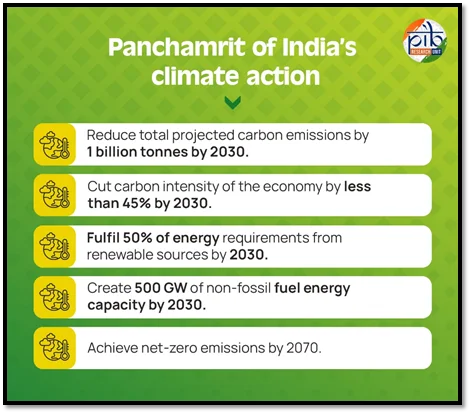
- Key Government Initiatives:
- PM Surya Ghar Yojana: Launched in 2024, this Rs 75,021 crore scheme has already reached 31.04 lakh households, aiming for 1 crore residential rooftop solar installations by FY 2026–27.
- Revamped Distribution Sector Scheme (RDSS): Under the Rs 3.03 lakh crore RDSS, over 5.62 crore smart meters have been installed nationwide to improve billing efficiency and consumer transparency.
- National Electricity Plan (2023-32): Plans to meet a projected peak demand of 458 GW by 2032 with an investment of Rs 9.15 lakh crore in transmission systems.
- Electricity (Amendment) Bill, 2026: Focuses on rationalising cross-subsidies, promoting cost-reflective tariffs, and allowing industrial consumers to procure power directly to boost manufacturing competitiveness.
- Enhanced Investment Delegation to POWERGRID: The government has increased POWERGRID’s (the country’s largest transmission utility) investment delegation, raising the equity limit per subsidiary from R5,000 crore to Rs 7,500 crore.
Frequently Asked Questions (FAQs)
1. What was India's total installed power capacity as of January 2026?
India's total installed power capacity reached 520.51 GW as of January 2026, with a record addition of 52,537 MW in FY 2025-26.
2. What is the significance of 29th July, 2025, for India's energy sector?
On this day, India met a record 51.5% of its total electricity demand exclusively through renewable sources, signaling a successful high-scale grid integration of green energy.
3. What is the primary objective of the PM Surya Ghar: Muft Bijli Yojana?
It is a ₹75,021 crore initiative aiming to install rooftop solar in 1 crore households by FY 2026–27 to promote prosumerism and reduce residential electricity costs.
4. What characterizes the National Electricity Plan (2023–2032)?
The plan targets a peak demand of 458 GW by 2032, requiring a ₹9.15 lakh crore investment to expand the transmission network to 6.48 lakh ckm.
UPSC Civil Services Examination, Previous Year Question (PYQ)
Q. With reference to the Indian Renewable Energy Development Agency Limited (IREDA), which of the following statements is/are correct? (2015)
- It is a Public Limited Government Company.
- It is a Non-Banking Financial Company.
Select the correct answer using the code given below:
(a) 1 only
(b) 2 only
(c) Both 1 and 2
(d) Neither 1 nor 2
Ans: (c)
</div.Shri Guru Hargobind Sahib Ji
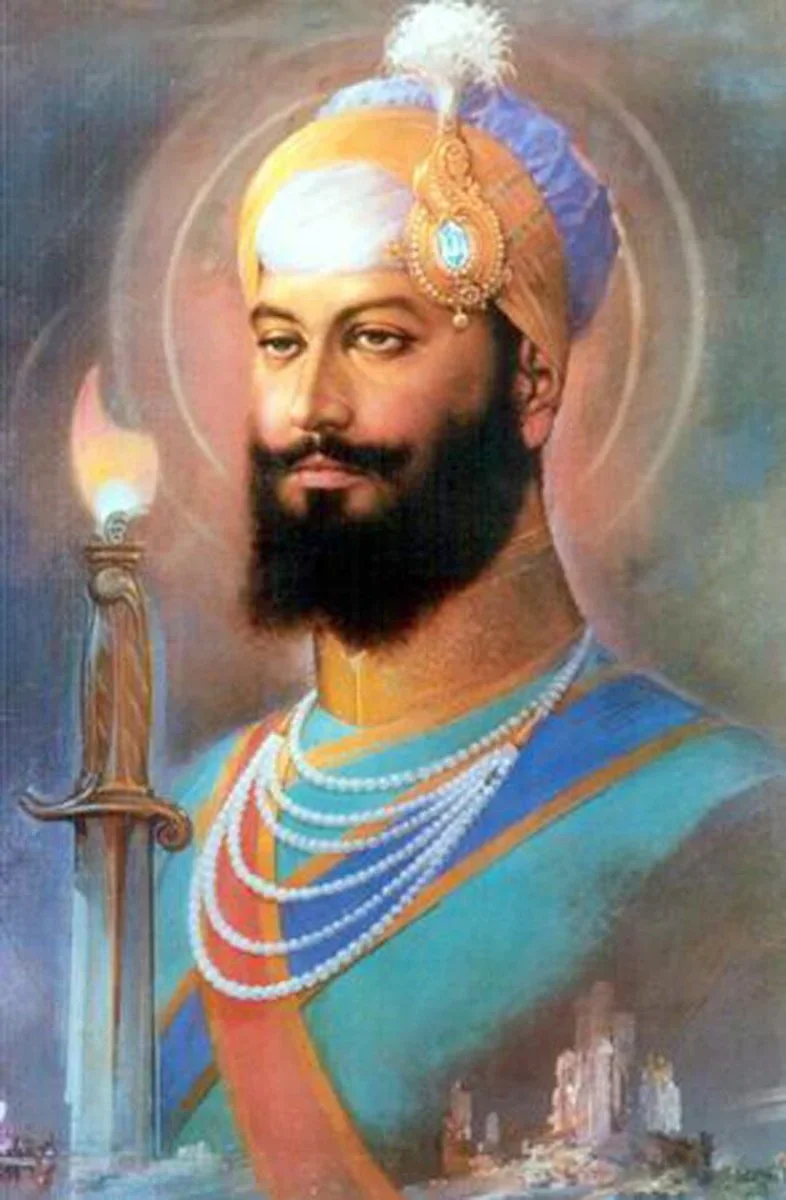
The Union Home Minister paid tribute to the 6th Sikh Guru, Guru Hargobind Sahib Ji, on his Jyoti-Jyot Diwas, observed on 22nd March 2026, marking the day he merged with the divine light, and highlighted his enduring legacy in establishing the Saint-Soldier tradition and protecting humanity.
- Guru Hargobind Sahib Ji: Born in 1595 in Amritsar district (Punjab) and assumed the Guruship in 1606 after the martyrdom of his father, Guru Arjan Dev Ji.
- Concept of Miri-Piri: He introduced the revolutionary doctrine of Miri (Temporal/Political Power) and Piri (Spiritual Authority), which he physically symbolized by wearing two distinct swords.
- The 'Saint-Soldier' Tradition: Recognizing the necessity to defend justice and faith against tyranny, he transformed the Sikh community into a martial and spiritual force, laying the foundation for the Sant-Sipahi (Saint-Soldier) ideal.
- Establishment of the Akal Takht: To administer secular and political affairs, he constructed the Akal Takht in 1609.
- Built directly opposite the Harmandir Sahib (Golden Temple) in Amritsar, it remains the highest seat of temporal authority in Sikhism.
- Bandi Chhor Divas: Guru Hargobind Sahib Ji was briefly imprisoned in the Gwalior Fort by Jahangir. When offered release, he famously refused to leave unless 52 captive princes were freed alongside him.
- This historic liberation is celebrated annually as Bandi Chhor Divas (Day of Liberation).
- Military Confrontations: He was the first Sikh Guru to maintain a standing army and engage in warfare to protect his people, successfully leading forces in four major battles against the armies of Mughal Emperor Shah Jahan.
- Urban Foundations: He founded the city of Kiratpur Sahib in the foothills of the Shivalik range, where he spent his final years and eventually attained Jyoti-Jyot in 1644.
|
Read more: Akal Takht |
India-China Border Trade via Lipulekh Pass
Border trade between India and China through the Lipulekh Pass in Uttarakhand's Pithoragarh district is set to resume in June 2026 after a six-year hiatus. The trade, which was halted in 2019-2020 due to the Covid-19 pandemic and subsequent border tensions.
- However, this resumption has reignited diplomatic friction, with Nepal strongly opposing the move and reiterating its claim that the Kalapani-Lipulekh-Limpiyadhura region is sovereign Nepali territory.
- Bilateral Agreement: The decision follows the August 2025 diplomatic agreement between India and China to reopen three designated Himalayan trade routes (Lipulekh, Shipki La, and Nathu La).
- Improved Infrastructure: Unlike pre-2020 trade that relied on mules and sheep, the upcoming trade will benefit from a motorable road to Lipulekh (completed in 2020), which drastically cuts down logistics costs and travel time.
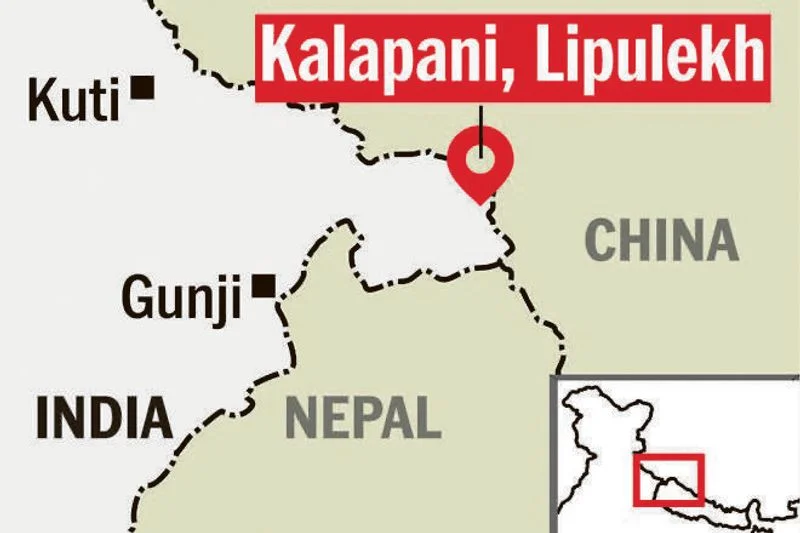
- Lipulekh Pass: It is a high-altitude mountain pass in the Kumaon region of Uttarakhand, near the trijunction of India, Nepal, and China, linking Uttarakhand with Tibet.
- It serves as a gateway to the higher Himalayas and is historically significant as an ancient trade route connecting the Indian subcontinent with the Tibetan plateau.
- Lipulekh was the first Indian border post opened for trade with China in 1992, followed by Shipki La in Himachal Pradesh (1994) and Nathu La in Sikkim (2006).
- Old Lipulekh Pass: Situated in the Vyas Valley of Pithoragarh district, Uttarakhand holds immense religious importance as part of the Kailash Mansarovar Yatra.
- Territorial Dispute with Nepal:
- The Treaty of Sugauli (1816): Following the Anglo-Nepalese War, the Kingdom of Nepal and British India signed the Treaty of Sugauli. The treaty established the Kali River (also known as the Mahakali or Sharda river) as the western boundary of Nepal.
- Dispute over the River’s Origin:
- Nepal's Claim: Kathmandu argues that the river originates at Limpiyadhura, northwest of Lipulekh. By this the entire triangular landmass east of this point comprising Limpiyadhura, Lipulekh, and Kalapani belongs to Nepal.
- India's Stand: Maintains that the river originates from springs near Kalapani village, placing the disputed territory firmly within the Pithoragarh district of Uttarakhand.
| Read more: Lipulekh Pass |
Indo-Myanmar Border
The arrest of seven foreign nationals crossing into Myanmar via Mizoram has highlighted the porous Indo-Myanmar border and renewed concerns over border security and delayed fencing.
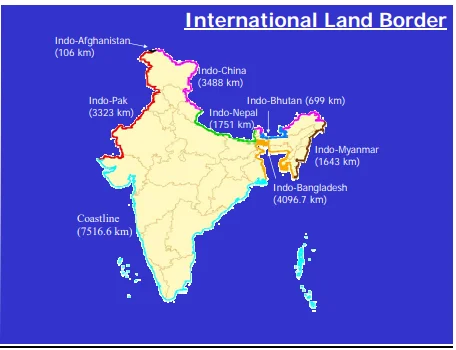
- Indo-Myanmar Border: India's 1,643-km border with Myanmar runs through Arunachal Pradesh (520 km), Nagaland (215 km), Manipur (398 km), and Mizoram (510 km).
- This frontier is guarded by the Assam Rifles (India’s oldest paramilitary force), which uniquely functions under the administrative control of the Ministry of Home Affairs (MHA) and the operational control of the Indian Army.
- Free Movement Regime (FMR): Due to deep ethnic and cultural ties, India and Myanmar share an FMR.
- In December 2024, this was regulated to restrict visa-free movement to 10 km (down from 16 km) across the four bordering states.
- Fencing Delays: In 2024, the Cabinet Committee on Security (CCS) approved a Rs 31,000 crore project to fence the Indo-Myanmar border and construct supporting infrastructure.
- However, out of the 1,643 km of approved fencing, only 390.39 km has been sanctioned, and a mere 43.75 km has been completed.
- The progress on border roads is equally alarming. Out of 3,194.8 km of approved road infrastructure, only 11.5 km has been completed.
- Additionally, efforts to regulate movement through biometric-enabled entry/exit gates have faced strong local resistance, leading to a decline from 43 planned gates to only 20 functional, with several shut due to non-usage.
- Security Challenges: The porous Indo-Myanmar border enables insurgent safe havens, smuggling of arms, narcotics (proximity to the 'Golden Triangle'), human trafficking and refugee influx after Myanmar’s 2021 coup, creating major security challenges.
- India must deploy a Comprehensive Integrated Border Management System (CIBMS) with advanced surveillance systems, resolve dual control of Assam Rifles for unified command, and ensure community engagement with border populations to balance security with local sensitivities.
| Read more: FMR Along the India-Myanmar Border |