
BRICS STI Cooperation
For Prelims: BRICS, BRICS+, iBRICS Network, Artificial Intelligence, New Development Bank
For Mains: Role of BRICS in global governance and multipolarity, Science, Technology and Innovation (STI) cooperation in international relations, Global South cooperation and technology diplomacy
Why in News?
India assumed the BRICS Presidency in 2026 under the theme “Building for Resilience, Innovation, Cooperation and Sustainability”, bringing Science, Technology, and Innovation (STI) to the forefront of the bloc’s agenda.
- The expansion into BRICS+ and the 2025 BRICS Rio de Janeiro Declaration further highlight a shift towards deep-tech collaboration, governance, and technology transfer.
Summary
- BRICS is emerging as a key platform for techno-multipolarity, promoting Global South cooperation in science, technology, and innovation, with a growing focus on AI, deep-tech, and development-oriented solutions.
- However, its effectiveness is constrained by R&D asymmetry, geopolitical tensions, weak institutional mechanisms, and limited funding, necessitating structural and financial reforms for deeper collaboration.
How has STI Cooperation Evolved within BRICS?
- Sanya Declaration: In 2011 during 3rd BRICS Summit at Sanya, China, the S&T cooperation was formally recognized and injected into the BRICS agenda, reflecting the need to explore joint research to address developmental challenges.
- MoU on STI Cooperation: BRICS Memorandum of Understanding (MoU) on Cooperation in the field of Science, Technology and Innovation was signed in 2015.
- Also, the BRICS Young Scientist Forum (YSF) was established in 2015 to promote collaboration and networking among young scientists.
- BRICS Action Plan for Innovation Cooperation (2017-2020): Marked an expansion from purely academic research to entrepreneurship and technology transfer.
- BRICS Technology Transfer Centre (TTC) was established to connect science parks, incubators, and startups, facilitating the cross-border commercialization of emerging technologies.
- BRICS Science & Technology Ministers meeting: Held annually to set priorities, with national agencies like Council of Scientific and Industrial Research (CSIR) and the Department of Biotechnology (DBT) (India) coordinating projects and proposals.
- BRICS Innovation Action Plan (2021-2024): India spearheaded the BRICS Innovation Action Plan (2021-2024).
- Crucially, a landmark intergovernmental agreement was signed to share data from a BRICS Remote Sensing Satellite Constellation, bypassing reliance on Western space agencies for earth observation data.
- Expansion Towards Deep-Tech Innovation: The Kazan and Rio Declarations marked a major shift towards frontier technologies.
- Artificial Intelligence (AI) was elevated from a sub-theme to a central governance pillar to ensure equitable, development-oriented AI standards.
- Simultaneously, the bloc expanded into BRICS+ bringing new capital and diverse technological capacities.
- India assumes the chair in 2026 with a strong mandate to leverage Digital Public Infrastructure (DPI) and scale tech collaboration across the expanded Global South.
Enlargement of BRICS - New Phase of Global Influence
- BRICS: The term BRIC was coined by economist Jim O’Neill in 2001 to represent emerging economies - Brazil, Russia, India, and China.
- BRIC emerged as a formal grouping after leaders of Russia, India, and China met on the sidelines of the G8 Outreach Summit in 2006. It was institutionalized during the first BRIC Foreign Ministers’ meeting at the UNGA the same year, and the inaugural BRIC Summit was held in Yekaterinburg, Russia, in 2009.
- BRICS+: BRICS has expanded into BRICS+, now comprising its five original members, Brazil, Russia, India, China, and South Africa, along with newly inducted members: Egypt, United Arab Emirates, Ethiopia, Indonesia, and Iran.
- The bloc represents about 49.5% of the global population, 40% of global GDP, and 26% of global trade.
- Objective: It aims to reform global governance and provide alternatives to Western-dominated institutions like the IMF and World Bank.
- Chairmanship: BRICS operates through a rotating annual chairmanship and is based on three pillars: political and security, economic and financial, and people-to-people cooperation.
- It does not have a permanent secretariat or a formal charter.
- New Development Bank (NDB): Headquartered in Shanghai, China, it was established in 2015 by the BRICS countries as a multilateral development bank aimed at mobilising resources for infrastructure and sustainable development projects.
How can India Emerge as a Key Driver of STI Cooperation within BRICS?
- Leverage Digital Public Infrastructure (DPI): India can showcase its success in Aadhaar, UPI, Digital India as scalable models for digital cooperation within BRICS.
- India should propose establishing an open-source digital repository within BRICS, allowing newer members (like Ethiopia and Egypt) to adopt and customize modular DPI architectures for digital identity, e-governance, and direct benefit transfers without massive R&D costs.
- Driving Mega-Science Projects: Historically, large-scale, capital-intensive mega-science facilities (such as CERN or ITER) have been concentrated in the West, which often necessitates that top-tier researchers from the Global South migrate to access them.
- Drawing on its experience with global projects like LIGO-India and the Square Kilometre Array (SKA), India should advocate for the establishment of a BRICS Mega-Science Consortium.
- Advancing Climate Tech Cooperation: India can leverage its foundational leadership in the International Solar Alliance (ISA) and the Global Biofuels Alliance (GBA) to establish a BRICS Clean Energy R&D Consortium.
- Instead of relying on expensive Western intellectual property, this consortium would focus on joint development and open-source sharing of critical Climate Tech, specifically green hydrogen electrolyzers, utility-scale battery storage, and climate-resilient agricultural biotechnology.
- Fostering "Paired Linkages": India can introduce a targeted mentorship or "paired collaboration" model, matching nations with advanced R&D in specific sectors (e.g., India in pharmaceuticals/IT, Brazil in biofuels) with newer members to rapidly build their domestic National Innovation Systems (NIS).
- Healthcare Innovation: India can leverage its dual strengths as the "pharmacy of the world" and a pioneer in population-scale digital health (via platforms like CoWIN and the Ayushman Bharat Digital Mission).
- India should propose a BRICS Digital Health Grid for interoperable health records and telemedicine.
- Coordinating AI and Emerging Tech Governance: As AI and quantum computing evolve, BRICS lacks a unified regulatory voice.
- Establishing a joint working group to draft ethical guidelines, data sovereignty norms, and cybersecurity standards will allow BRICS to act as a rule-maker rather than a rule-taker in global tech governance.
What Challenges Limit BRICS STI Cooperation?
- Asymmetry in Capacity: There is a massive disparity in Gross Domestic Expenditure on R&D (GERD) within the BRICS.
- China heavily dominates the innovation landscape, while several newer members lag significantly.
- This asymmetry often turns "collaboration" into a one-way technology transfer, raising concerns about technological dependence on Beijing rather than genuine multilateral co-creation.
- Heterogeneity of BRICS+: With the addition of new members with vastly different economic structures and strategic alignments, building consensus on mega-science projects has become highly complex.
- The Geopolitical Trust Deficit: Strategic divergence, particularly the bilateral friction between India and China, severely restricts cooperation in dual-use and frontier technologies.
- National security concerns make it highly improbable for these nations to collaborate deeply on critical infrastructure like 5G/6G, Artificial Intelligence, or semiconductor manufacturing, despite joint BRICS declarations.
- Institutional Voids: Unlike the European Union, which has robust, centralized institutions to manage its Horizon research programs, BRICS operates on an ad-hoc, rotating presidency model.
- The lack of a permanent, centralized STI Secretariat leads to a lack of continuity; projects initiated by one host country often lose momentum when the presidency shifts.
- Fragmented and Modest Funding: Financial commitments to BRICS STI initiatives remain modest and highly decentralized.
- While the New Development Bank (NDB) exists, it has traditionally focused on physical infrastructure (roads, water) rather than establishing dedicated, large-scale funding windows for cross-border mega-science projects or deep-tech innovation hubs.
- Weak Private Sector Integration: BRICS STI initiatives are heavily state-driven, relying mostly on government ministries and public research institutes (like CSIR in India).
- There is a distinct lack of deep engagement with private sector tech giants, venture capital, and grassroots startup ecosystems, which are the actual engines of modern technological innovation.
What Reforms are Needed to Strengthen BRICS STI Cooperation?
- Institutional Deepening and Centralization: BRICS needs a permanent STI Secretariat to ensure continuity beyond the rotating presidency and effectively manage projects.
- A BRICS Technological Alliance can further shift cooperation towards a more integrated, bottom-up innovation ecosystem.
- Mega-Science Joint Missions: Instead of fragmented projects, BRICS should invest in flagship mega-science initiatives such as shared satellite infrastructure and public health research networks, driving deeper and long-term collaboration.
- Proactive Tech Governance: BRICS must move towards common standards in AI, data governance, and emerging technologies, while strengthening intellectual property frameworks to promote seamless innovation and technology transfer.
- Private Sector Integration: Greater involvement of startups, venture capital, and industry players through platforms like iBRICS and B2B tech corridors is essential to translate research into scalable and commercially viable outcomes.
- Dedicated R&D Financial Architecture: While the New Development Bank (NDB) excels at funding physical infrastructure, it is not optimized for high-risk, early-stage scientific research.
- BRICS needs a dedicated STI Innovation Fund that pools resources specifically for cross-border R&D, deep-tech incubation, and commercialization of joint patents.
Conclusion
BRICS has emerged as a significant platform for scientific collaboration, but its long-term impact depends on stronger institutions, higher investment, and deeper integration. With India’s leadership in 2026, there is a crucial opportunity to transform BRICS STI cooperation into a robust and globally influential framework.
|
Drishti Mains Question: BRICS is emerging as a platform for techno-multipolarity. Discuss its significance and limitations. |
Frequently Asked Questions (FAQs)
1. What is BRICS?
BRICS is a grouping of 11 emerging economies aimed at promoting multipolarity, global governance reforms, and South-South cooperation.
2. What is the significance of the 2015 BRICS STI MoU?
It established STI as a core pillar, creating the BRICS STI Framework Programme for joint R&D collaboration.
3. What is the BRICS Young Scientist Forum (YSF)?
It is a platform launched in 2015 to promote networking and collaboration among young scientists, with the first meeting in 2016 (Bengaluru).
4. What are the key challenges in BRICS STI cooperation?
Major issues include R&D asymmetry, geopolitical tensions, lack of institutional framework, limited funding, and weak private sector involvement.
5. What reforms are needed to strengthen BRICS STI cooperation?
Key measures include establishing a permanent STI Secretariat, creating a deep-tech fund, promoting mega-science projects, and integrating private sector participation.
UPSC Civil Services Examination, Previous Year Questions (PYQs)
Prelims
1. Consider the following statements: (2016)
- New Development Bank has been set up by APEC.
- The headquarters of the New Development Bank is in Shanghai.
Which of the statements given above is/are correct?
(a) 1 only
(b) 2 only
(c) Both 1 and 2
(d) Neither 1 nor 2
Ans: (b)
2. The ‘Fortaleza Declaration’, recently in the news, is related to the affairs of (2015)
(a) ASEAN
(b) BRICS
(c) OECD
(d) WTO
Ans: (b)
3. With reference to a grouping of countries known as BRICS, consider the following statements: (2014)
- The First Summit of BRICS was held in Rio de Janeiro in 2009.
- South Africa was the last to join the BRICS grouping.
Which of the statements given above is/are correct?
(a) 1 only
(b) 2 only
(c) Both 1 and 2
(d) Neither 1 nor 2
Ans: (b)
Mains
Q. India has recently signed to become a founding member of New Development Bank (NDB) and also the Asian Infrastructure Bank (AIIB). How will the role of the two Banks be different? Discuss the strategic significance of these two Banks for India. (2014)
Variable Rate Repo for Liquidity Management
Why in News?
The Reserve Bank of India (RBI) infused over Rs 25,000 crore of liquidity in the banking system through a 3-day variable rate repo (VRR) auction.
- Prior to this, the RBI has infused Rs 3.50 lakh crore of liquidity into the banking system through open market purchase (OMO) of government securities since January 2026.
What is Variable Rate Repo?
- About: Variable Rate Repo (VRR) is a market-driven monetary policy tool used by the RBI to inject short-term liquidity into the banking system.
- Unlike the standard "Fixed Repo Rate," where the interest rate is pre-set by the RBI (currently 5.25%), the interest rate in a VRR is determined through an auction process.
- Auction Mechanism: VRR is a liquidity injection tool under the Liquidity Adjustment Facility (LAF). Banks bid competitively for funds, and the cut-off rate is determined by the highest accepted bid, reflecting real-time market demand.
- The RBI allots funds starting from the highest bids until the notified amount is exhausted.
- Tenor and Collateral: Auctions typically range from 1 to 14 days and require banks to provide eligible government securities as collateral for the borrowed funds.
- Significance of VRR: When the RBI observes a liquidity deficit in the banking system (e.g., due to advance tax outflows or festive season cash withdrawals), it announces a VRR auction. It helps in:
- Liquidity Management: It helps keep the Weighted Average Call Rate (WACR), the operating target of monetary policy, aligned with the Repo rate.
- Market Discovery: It prevents the RBI from "guessing" the right interest rate, allowing banks to signal the actual cost of funds based on their immediate needs.
- Difference Between the VRR vs. Fixed Repo Rate:
|
Feature |
Variable Rate Repo (VRR) |
Fixed Repo Rate |
|
Interest Rate |
Market-determined via auction. |
Fixed by the RBI (Policy Rate). |
|
Purpose |
Fine-tuning short-term liquidity. |
Signaling long-term policy stance. |
|
Flexibility |
Highly flexible, reflects real-time demand. |
Less flexible, one rate for all. |
Note: Just as VRR injects money, the Variable Rate Reverse Repo (VRRR) is used to absorb excess liquidity from the system when there is a surplus.
What is a Liquidity Adjustment Facility?
- About: LAF is a core monetary policy framework used by RBI to manage day-to-day liquidity mismatches in the banking system.
- Introduced in 2000 following the recommendations of the Narasimham Committee (1998), it allows banks to borrow money through repurchase agreements (repos) or park excess funds with the RBI.
- Core Components of LAF: The LAF primarily operates through two types of transactions:
- Repo (Repurchase) Rate: The interest rate at which the RBI lends short-term money to commercial banks against the collateral of Government Securities (G-Secs).
- This is the Policy Rate and acts as a tool to inject liquidity into the economy.
- Reverse Repo Rate: The interest rate at which the RBI borrows money from banks. This is a tool to absorb excess liquidity from the market.
- Since April 2022, the Standing Deposit Facility (SDF) has effectively replaced the Fixed Rate Reverse Repo as the primary tool for absorbing liquidity at the floor of the LAF corridor.
- Repo (Repurchase) Rate: The interest rate at which the RBI lends short-term money to commercial banks against the collateral of Government Securities (G-Secs).
- LAF Corridor: The RBI maintains a "corridor" to keep short-term interest rates stable. This corridor ensures that the Weighted Average Call Rate (WACR), the rate at which banks lend to each other overnight—remains close to the policy repo rate.
- Ceiling (Upper Bound): Marginal Standing Facility (MSF). This is a "penal rate" (usually 25 bps above repo) at which banks can borrow emergency funds by dipping into their Statutory Liquidity Ratio (SLR) quota.
- Center: The Policy Repo Rate.
- Floor (Lower Bound): Standing Deposit Facility (SDF). This allows banks to park surplus funds with the RBI without the need for collateral (usually 25 bps below repo).
Open Market Operation (OMO)
- About: OMO is a quantitative instrument of monetary policy that involves the buying and selling of government securities (G-Secs), including dated securities and treasury bills.
- Function: Purchase of securities injects liquidity into the banking system (expansionary effect), while the sale of securities absorbs liquidity (contractionary effect), thereby influencing the money supply.
- Execution in India: The RBI carries out Open Market Operations (OMOs) using either auctions or direct transactions with banks and primary dealers. These activities are managed electronically through the E-Kuber system, the RBI’s core banking platform.
Frequently Asked Questions (FAQs)
1. What is the primary difference between Fixed Rate Repo and Variable Rate Repo (VRR)?
Fixed Rate Repo uses a pre-set policy rate for signaling long-term stance, whereas VRR uses market-determined auction rates to fine-tune short-term liquidity.
2. How does the Standing Deposit Facility (SDF) function within the LAF corridor?
The SDF acts as the floor of the corridor, allowing banks to park excess funds with the RBI at a rate usually 25 bps below the repo rate without requiring collateral.
3. Why is the Weighted Average Call Rate (WACR) considered the operating target of monetary policy?
The WACR reflects the actual price of overnight funds in the interbank market; the RBI uses LAF tools to keep this rate as close to the Policy Repo Rate as possible.
4. What is the significance of the Marginal Standing Facility (MSF) for commercial banks?
It serves as the ceiling of the LAF corridor, providing a "safety valve" where banks can borrow emergency funds by dipping into their Statutory Liquidity Ratio (SLR).
UPSC Civil Services Examination, Previous Year Questions (PYQs)
Q. If the RBI decides to adopt an expansionist monetary policy, which of the following would it not do? (2020)
- Cut and optimize the Statutory Liquidity Ratio
- Increase the Marginal Standing Facility Rate
- Cut the Bank Rate and Repo Rate
Select the correct answer using the code given below:
(a) 1 and 2 only
(b) 2 only
(c) 1 and 3 only
(d) 1, 2 and 3
Ans: (b)
Q. Which of the following statements is/are correct regarding the Monetary Policy Committee (MPC)? (2017)
- It decides the RBI’s benchmark interest rates.
- It is a 12-member body including the Governor of RBI and is reconstituted every year.
- It functions under the chairmanship of the Union Finance Minister.
Select the correct answer using the code given below:
(a) 1 only
(b) 1 and 2 only
(c) 3 only
(d) 2 and 3 only
Ans: (a)
Anti-Dumping Probe into Ethyl Chloroformate
Why in News?
The Directorate General of Trade Remedies (DGTR), under the Ministry of Commerce and Industry, has launched an anti-dumping investigation into the alleged dumping of ethyl chloroformate from China to protect the domestic chemical industry.
- In a related development, the DGTR has also opened a separate anti-dumping investigation into imports of hexamine, another chemical intermediate, from China, Russia, and the United Arab Emirates.
What is Ethyl Chloroformate?
- About: Ethyl chloroformate is a highly reactive organic compound. It is the ethyl ester of chloroformic acid and is primarily used as a versatile reagent in organic synthesis, particularly in the pharmaceutical and agrochemical industries.
- When it reacts with water (hydrolysis), it decomposes into ethanol, carbon dioxide, and hydrochloric acid.
- Key Applications:
- Synthesis of Pharmaceuticals: It is a critical intermediate in the production of various drugs, including modified penicillins and ore flotation agents.
- Industrial Use: It serves as a stabilizer for PVC and is used in the synthesis of agricultural chemicals like herbicides and insecticides.
- Activation of Carboxylic Acids: It reacts with carboxylic acids to form mixed anhydrides, which are highly reactive intermediates used to create esters or amides.
- Hazards:
- Toxicity: It is highly toxic by inhalation and harmful if swallowed. Short-term exposure can cause pulmonary edema (fluid in the lungs).
- Corrosivity: It is a strong lachrymator (causes severe eye watering) and causes acid-type burns to the skin, eyes, and mucous membranes.
- Flammability: It is a highly flammable liquid and can form explosive mixtures with air.
Hexamine is a white crystalline, highly soluble heterocyclic organic compound. It is produced from formaldehyde and ammonia and is widely used in making resins, plastics, pharmaceuticals, and rubber additives.
- It also serves as a fuel tablet (clean-burning) and has applications in medicine and organic chemistry, though it can be toxic and irritating.
What is Anti-Dumping Duty?
- About: Anti-Dumping Duty (ADD) is a protectionist tariff imposed by a government on foreign imports that it believes are priced below fair market value (a practice known as "dumping").
- There are also countervailing duties, which are imposed to neutralize the impact of subsidies provided by exporting countries, together ensuring a level playing field in international trade.
- Legal Basis: It is governed by the WTO’s Anti-Dumping Agreement. In India, it is administered by the Directorate General of Trade Remedies (DGTR) under the Ministry of Commerce, though the final decision regarding the imposition of duty recommended by the DGTR is taken by the Ministry of Finance.
- Under the WTO Agreement, a de minimis (minimum level) dumping margin limit of 2% of export price has been prescribed and no anti-dumping duty can be imposed if the dumping margin is below this threshold limit.
- This de minimis limit is the same for exports from developing as well as from developed countries.
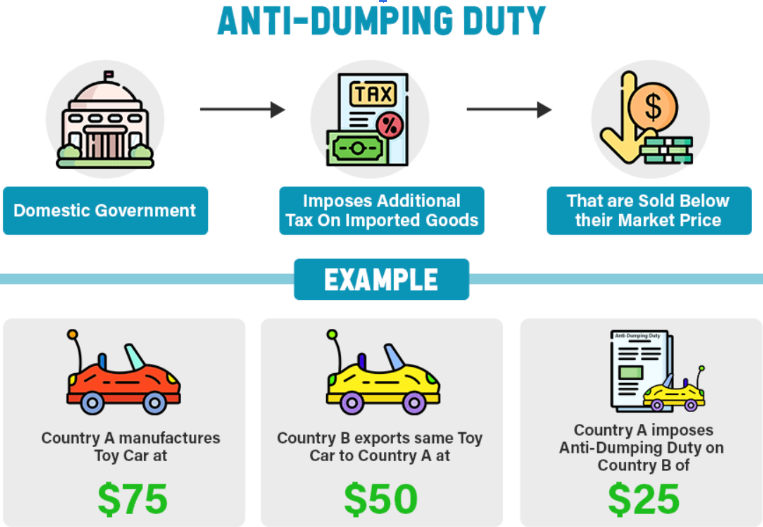
What is the Difference Between Anti-Dumping Duty and Countervailing Duty?
|
Feature |
Anti-Dumping Duty (ADD) |
Countervailing Duty (CVD) |
|
Target |
Unfair pricing by private companies. |
Unfair subsidies provided by foreign governments. |
|
Objective |
To offset the price differential and prevent "predatory pricing" that hurts local industry. |
To neutralize the unfair advantage gained through government financial assistance. |
|
WTO Agreement |
Governed by the Anti-Dumping Agreement. |
Governed by the Agreement on Subsidies and Countervailing Measures (SCM). |
|
Duty Calculation |
Equal to the margin of dumping (difference between normal value and export price, adjusted for comparability). The duty is capped at this margin. |
Equal to the amount of the subsidy attributable to the exported product (subsidy margin). The duty is capped at this amount. |
|
Investigation Requirements |
Requires demonstration of: (1) dumping, (2) material injury (or threat thereof) to the domestic industry, and (3) causal link between the two. |
Requires demonstration of: (1) existence of a specific subsidy, (2) material injury (or threat thereof), and (3) causal link. |
Frequently Asked Questions (FAQs)
1. What is the "de minimis" threshold in anti-dumping investigations?
It is a WTO-mandated 2% limit; if the dumping margin is below this percentage of the export price, no Anti-Dumping Duty can be legally imposed.
2. How does the primary cause of ADD differ from CVD?
ADD targets firm-level predatory pricing (selling below domestic cost), whereas CVD targets government-level subsidies that provide an unfair competitive advantage.
3. Which nodal agencies are involved in notifying trade remedial duties in India?
The DGTR (Ministry of Commerce) conducts the investigation and recommends the duty, but the Ministry of Finance is the final authority that imposes it.
4. Why is Ethyl Chloroformate significant for the Indian economy?
It serves as a vital organic intermediate for the pharmaceutical and agrochemical industries, making its pricing critical for drug and pesticide manufacturing costs.
UPSC Civil Services Examination, Previous Year Questions (PYQs)
Q. The terms ‘Agreement on Agriculture’, ‘Agreement on the Application of Sanitary and Phytosanitary Measures’ and ‘Peace Clause’ appear in the news frequently in the context of the affairs of the (2015)
(a) Food and Agriculture Organization
(b) United Nations Framework Conference on Climate Change
(c) World Trade Organization
(d) United Nations Environment Programme
Ans: C
Q. In the context of which of the following do you sometimes find the terms ‘amber box, blue box and green box’ in the news? (2016)
(a) WTO affairs
(b) SAARC affairs
(c) UNFCCC affairs
(d) India-EU negotiations on FTA
Ans: A
RELIEF Scheme and P&I Club
The Union Government has introduced the Rs 497 crore Resilience & Logistics Intervention for Export Facilitation (RELIEF) scheme to provide credit insurance cover at pre-conflict rates for Indian exporters, particularly MSMEs, whose goods are stranded or at risk due to the ongoing West Asia crisis.
- Apart from this, India is also exploring the creation of a domestic Protection & Indemnity (P&I) club to safeguard its shipping operations amid rising risks in the Strait of Hormuz.
RELIEF Scheme
- About: It has been launched by the Ministry of Commerce and Industry to provide financial surety and alleviate hardships for Indian exporters facing rising maritime risks due to geopolitical instability in the Gulf and wider West Asia maritime corridor.
- Three-Part Framework:
- Component 1: Supports exporters already holding ECGC Ltd. (Export Credit Guarantee Corporation) cover by maintaining pre-disruption premium rates for consignments issued between 14th February and 15th March, 2026. It will provide enhanced cover up to 100% of loss for war-related risks.
- Component 2: Encourages new exporters (excluding energy shipments) to opt for ECGC insurance for the next three months (16th March and 15th June 2026), providing up to 95% loss coverage.
- Component 3: Specifically targets MSME exporters who lacked prior insurance, offering a cap of Rs 50 lakh per exporter for affected shipments.
- Geographic Coverage: Applies to exports bound for UAE, Saudi Arabia, Kuwait, Qatar, Oman, Bahrain, Iraq, Iran, Israel, and Yemen.
P&I Club Initiative
- Protection & Indemnity (P&I) Clubs are mutual, non-profit associations formed by shipowners to insure against third-party maritime liabilities.
- Unlike standard marine insurance, they cover risks like personal injury to crew members, pollution, cargo damage, collisions, and legal liabilities.
- Most global shipping risks are covered by the International Group of P&I Clubs, which insure about 90% of the world’s ocean-going fleet.
| Read More: Geoeconomic Fallout of the US-Israel-Iran Conflict on India |
INS Taragiri
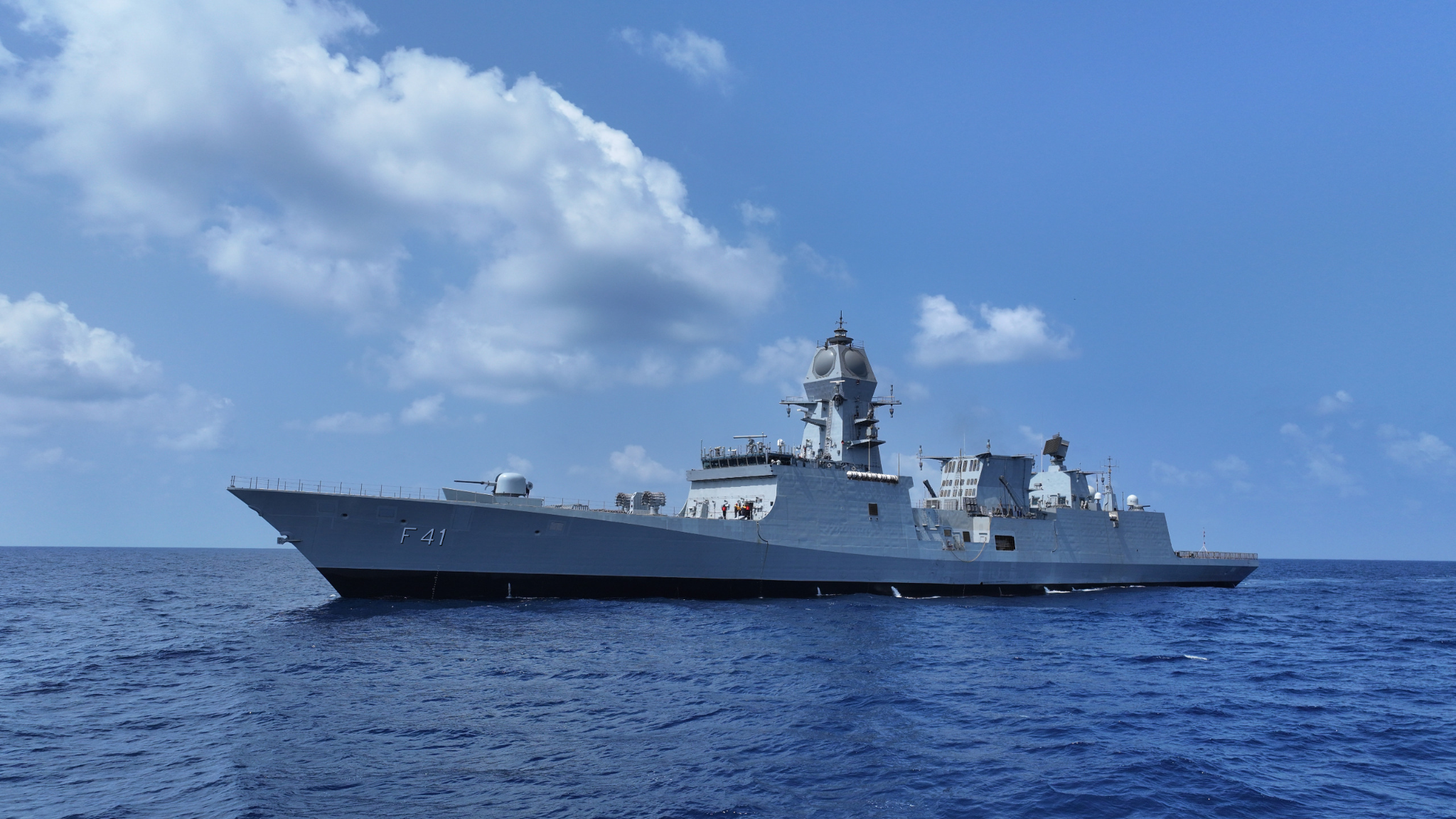
The Indian Navy is set to commission INS Taragiri, a Project 17A stealth frigate, boosting maritime deterrence and indigenous shipbuilding. It is the 4th stealth frigate under Project 17A with improved stealth features, weapons, and sensors.
INS Taragiri
- Indigenous Prowess: Boasting over 75% indigenous content, the ship is a product of Mazagon Dock Shipbuilders Ltd (MDL) and involves a supply chain of over 200 MSMEs, aligning with the Aatmanirbharta in Defence initiative.
- Stealth and Design: Features a reduced radar cross-section (RCS) and a sleeker hull form, offering "lethal stealth" to evade detection during multi-dimensional maritime operations.
- Weaponry & Combat: Equipped with supersonic surface-to-surface missiles, medium-range surface-to-air missiles, and a specialized anti-submarine warfare (ASW) suite, all integrated via a modern Combat Management System (CMS).
- Propulsion: Utilizes a Combined Diesel or Gas (CODOG) propulsion plant, designed for high-speed and high-endurance versatility.
- Strategic Role: Beyond combat, its flexible mission profile includes Humanitarian Assistance and Disaster Relief (HADR) and naval diplomacy, serving as a counter to the growing Chinese naval presence and regional instabilities.
Project 17A
- It is an Indian Navy initiative to construct seven advanced stealth guided-missile frigates.
- It comprises frigates, all named after prominent mountain ranges in India i.e., INS Nilgiri, INS Himgiri, INS Udaygiri, INS Taragiri, INS Dunagiri, INS Vindhyagiri, and INS Mahendragiri.
- A frigate is a versatile, medium-sized warship designed for high speed and maneuverability.
- It is primarily used for escorting larger vessels (like aircraft carriers or merchant convoys) and conducting operations in anti-submarine warfare (ASW), anti-air warfare (AAW), and anti-surface warfare (ASuW).
| Read More: Project 17A: INS Himgiri & INS Udaygiri |
Tughlakabad Fort
The Delhi High Court criticised the Archaeological Survey of India (ASI) for delays in conducting a court-ordered survey of encroachments at Tughlakabad Fort.
Tughlakabad Fort
- About: Situated in the southern part of New Delhi, the fort is built strategically along the rocky contours of the Aravalli Hills, which provided natural defensive elevations and abundant granite for construction.
- The fortress of Tughlaqabad was built by Ghiyasuddin Tughlaq, the founder of the Tughlaq Dynasty, in 1321.
- It is historically recognized as the third extant city of Delhi, following Lal Kot (built by the Anangpal- II of Tomar dynasty) and Siri (built by Alauddin Khalji).
- The primary objective behind this colossal military fortress was to consolidate imperial power and create an impenetrable defense against repeated Mongol invasions threatening the Delhi Sultanate.
- Key Architectural Features: The fort is a monumental example of early Indo-Islamic military architecture, prioritizing rugged strength and geometry over delicate ornamentation.
- A defining hallmark of Tughlaq architecture is the use of thick, rubble-filled, sloped (battered) walls.
- Three-Part Urban Layout: The roughly half-hexagonal city was systematically divided into:
- Citadel
- Palace Complex with underground chambers and escape routes
- Residential City Area with rainwater harvesting systems, tanks, and baolis
- Mausoleum of Ghiyasuddin Tughlaq: Located outside the fort, connected by a 600-foot causeway. The tomb is faced with red sandstone and white marble, topped with an elegant dome.
- Rapid Abandonment: Despite its grandeur, the fort's utility was extremely short-lived.
- It was largely abandoned shortly after Ghiyasuddin’s death (1325 CE) when his successor, Muhammad bin Tughlaq, shifted the capital south to Daulatabad (Devagiri) and later focused on building his own adjacent fortress, Adilabad.
- A popular legend is also associated with Nizamuddin Auliya, who is believed to have cursed the city with the famous words, “Ya rahe ujjar, ya base gujjar” (may it remain desolate or be inhabited by herdsmen), which many link to the fort’s rapid decline and abandonment.
| Read more: Indo-Islamic Architecture |
Smog-eating Photocatalytic Coating
In a step towards tackling Delhi’s worsening air pollution, the Delhi government has partnered with IIT Madras to test “smog-eating” photocatalytic coatings on urban surfaces to neutralize severe urban air pollutants across the city's infrastructure.
- Smog-eating Photocatalytic Coatings: The project focuses on deploying photocatalytic coatings powered by Titanium dioxide (TiO₂), a stable, relatively inexpensive, and commercially available material.
- When exposed to sunlight, TiO₂ acts as a catalyst, generating surface electrons that react with and dismantle critical air pollutants like Nitrogen dioxide (NO₂) and Volatile Organic Compounds (VOCs).
- Applied on surfaces like roads, buildings, and pavements, these coatings work continuously as a passive air-cleaning system.
- Impact on Secondary Pollutants: While this technology does not directly filter existing primary particulate matter (like PM2.5/PM10), it is crucial for preventing the formation of Secondary Particulate Matter and highly toxic Ground-Level Ozone by actively destroying their chemical precursors.
- Environmental Challenges: While they are cost-effective, stable, and scalable, the real-world efficacy of this technology faces hurdles such as reduced sunlight intensity during peak smog, shifting wind dynamics, and heavy dust accumulation, which can block sunlight and require periodic cleaning.
- Large-scale use of “smog-eating” coatings may lead to nitrate runoff into urban drainage systems, which can increase nutrient levels in water bodies like the Yamuna.
- This may trigger eutrophication (algal blooms), highlighting the need for environmental safeguards and careful implementation.
- Large-scale use of “smog-eating” coatings may lead to nitrate runoff into urban drainage systems, which can increase nutrient levels in water bodies like the Yamuna.
- Comparative Analysis: Unlike centralized, energy-intensive, and largely ineffective technological interventions like Smog Towers or weather-dependent Cloud Seeding, photocatalytic coatings represent a decentralized, zero-energy, passive mitigation strategy.
- The technology is not a standalone solution but works as a continuous background process, complementing measures like Graded Response Action Plan (GRAP).
| Read more: Curbing Air Pollution Crisis in India |