
India’s Heat Crisis and the Legislative Vacuum
Why in News?
India is witnessing an alarming rise in extreme heat events, with over 57% of districts now classified as heat-prone. Policy experts highlight how the absence of a robust legal and policy framework is worsening the vulnerability of informal workers, turning heatwaves into a systemic socio-economic and human rights crisis.
How does Extreme Heat Create "Thermal Injustice" in India?
- Stark Demographic Divide: A 2025 district-level assessment shows that 57% of districts, housing 76% of the population, face high to very high heat risk, indicating its widespread reach.
- In urban areas, the urban heat island effect further intensifies temperatures in densely built neighbourhoods, creating conditions of thermal injustice where the burden of heat falls disproportionately on vulnerable populations due to poverty, overcrowding, weak infrastructure, and inadequate public services, with its impacts sharply divided along class, caste, and gender lines.
- Right to Cooling: Access to cooling remains deeply unequal, with better-off households relying on air-conditioning, insulated housing, backup power, and private transport, while poorer households depend on limited options like fans, shade, and inadequate public cooling infrastructure.
- This underscores the emerging “right to cooling,” emphasizing that thermal safety should not depend on private purchasing power.
- Lack of Cooling Autonomy: Nearly 400 to 490 million informal workers (such as construction workers, delivery partners, and street vendors) possess zero "cooling autonomy."
- For informal workers, working in extreme heat is not just an inconvenience; it represents a systemic violation of the right to life.
- Construction workers face immense physical exertion, which is lethally compounded by the radiant heat generated from steel and concrete.
- Similarly, sanitation workers and waste pickers handle heated waste materials without protective gear, suffering severe physical burns.
- They operate in hazardous micro-climates created by extreme ambient heat and toxic fumes, where temperatures can be up to 5% higher than surrounding areas.
- Survival Dilemma: Studies demonstrate that even a marginal rise in temperature causes a significant drop in productivity and a corresponding loss of income, forcing workers to routinely choose between biological survival and economic survival.
- Street vendors face a dual crisis due to severe health deterioration and a sharp decline in daily income, as their goods perish quickly and customers retreat indoors during extreme heat.
- In 2024, India lost 247 billion labour hours and about USD194 billion in income due to extreme heat, turning it into an immediate income shock for workers without paid leave or social protection.
- Public Health Threat: Rising heatwave exposure increases illness and mortality risks, straining health systems, with the greatest impact on older adults, children, pregnant women, and those with pre-existing conditions.
- However, gaps between suspected heatstroke cases and confirmed deaths point to undercounting and weak surveillance, revealing an injustice not just in who suffers first, but in whose suffering goes unrecorded and unaddressed.
India Cooling Action Plan (ICAP)
- About: Launched in 2019 by the Ministry of Environment, Forest and Climate Change (MoEFCC), the India Cooling Action Plan (ICAP) makes India the first country in the world to develop a comprehensive national policy document addressing cooling requirements across all sectors.
- The demand for cooling is projected to increase eight-fold by 2037-38. ICAP provides a 20-year perspective (2017-18 to 2037-38) to transition toward sustainable cooling, addressing both the developmental need for thermal comfort and the environmental mandate to phase down planet-warming refrigerants.
- Aim: ICAP aims to reduce cooling demand across sectors, promote passive cooling in buildings through codes like the Energy Conservation Building Code (ECBC) and Eco-Niwas Samhita, and accelerate the transition to low Global Warming Potential (GWP) refrigerants in line with the Montreal Protocol and Kigali Amendment.
- Under the Kigali Amendment to the Montreal Protocol, India will phase down Hydrofluorocarbons (HFCs) in a four-step schedule starting from 2032, with cumulative reductions of 10% by 2032, 20% by 2037, 30% by 2042, and 85% by 2047.
- Core Targets of ICAP: ICAP outlines specific, measurable goals using 2017-18 as the baseline year:
- Reduce Cooling Demand: Cut overall cooling demand across sectors by 20% to 25%.
- Reduce Energy Requirement: Cut cooling energy requirements by 25% to 40%.
- Reduce Refrigerant Demand: Lower the demand for refrigerants by 25% to 30%.
What are the Legal and Policy Gaps in Addressing Heat Crisis?
- Exclusion from the Disaster Framework: Heatwaves are not recognised as a “notified disaster” under the Disaster Management Act, 2005, unlike floods or cyclones.
- This creates a fiscal constraint where states are limited by the “10% State Disaster Response Fund (SDRF) cap,” allowing only a small portion of funds for heat relief, while also blocking access to the National Disaster Response Fund (NDRF), thereby restricting large-scale mitigation efforts.
- Inadequate and Outdated Labour Laws: The Factories Act, 1948, provides protections only for indoor workers, completely ignoring millions working outdoors in sectors like agriculture and construction.
- The Occupational Safety, Health and Working Conditions (OSHWC) Code, 2020 further weakens the framework by not mandating heat safety standards, leaving it to the discretion of the government without establishing enforceable obligations for employers.
- Toothless Heat Action Plans (HAPs): Although many states have prepared Heat Action Plans, they remain largely advisory, focusing on warnings rather than enforceable action.
- These plans lack legal backing, dedicated funding, and implementation mechanisms, which limits their effectiveness in building infrastructure like cooling shelters or ensuring public water access.
- Absence of Wage Compensation: Informal workers lose income during heat alerts with no compensation mechanism, forcing a choice between health and livelihood.
- Gig Economy Blind Spot: Gig workers (especially delivery partners) face algorithm-driven pressure to meet delivery timelines even during extreme heat, with no legal safeguards such as penalty waivers, hazard pay, or mandated rest periods, increasing their vulnerability.
- Flawed Measurement Metrics: India’s current heatwave classification relies mainly on dry-bulb temperature, ignoring humidity.
- This creates a gap where regions with high humidity face severe heat stress without triggering official heatwave responses.
| Read Heatwaves in Detail Here: Heat Waves |
What Measures are Needed to Address the Extreme Heat Crisis?
- Notify Heatwaves as a National Disaster: The government must formally accept the 16th Finance Commission’s recommendation to include heatwaves and lightning in the Notified National Disaster list for 2026-31.
- This will unlock the NDRF and convert early warnings into binding mandates for district administrations.
- Transition to the Heat Index: The Ministry of Labour and the India Meteorological Department (IMD) must use the Heat Index (a metric combining temperature and relative humidity) as the primary legal trigger for declaring heatwaves, ensuring coastal areas are adequately protected.
- Enforce Binding Safety Rules: Under Section 23 of the OSHWC Code, the government must mandate protected work-rest cycles and make the provision of specialized Personal Protective Equipment (PPE), like insulated flasks, a non-negotiable employer obligation.
- Protect the Gig Economy: Digital platforms must be legally prohibited from imposing delivery time penalties on gig workers during heat alerts, ensuring a statutory thermal safety net regardless of their 'contractor' status.
- Recognize the 'Right to Cool': Based on the M.K. Ranjitsinh & Ors. v. Union of India & Ors (2024), the Supreme Court recognised that protection from the adverse effects of climate change is a fundamental right under Article 21.
- Building on this, the concept of a ‘Right to Cool’ can be derived, requiring Urban Local Bodies to ensure access to cooling shelters and free public water facilities as part of the right to life.
- Provide Financial Compensation: The government must launch provisions for financial compensation to cover lost income on extreme heat days.
- Innovative models, such as the parametric heat insurance scheme by the Self-Employed Women’s Association (SEWA), can serve as a blueprint for this transition.
Heat Index
- The heat index is the “feels-like” temperature, calculated by combining air temperature and relative humidity.
- High humidity reduces sweat evaporation, making the body feel hotter than the actual temperature, while low humidity allows faster cooling, making it feel cooler.
- As temperature and humidity increase, the heat index rises, increasing the risk of heat-related illnesses like heat exhaustion and heat stroke.
Conclusion
As climate change accelerates, India must transition its disaster management approach from merely focusing on mortality prevention to ensuring livelihood protection. Bridging the legislative vacuum requires treating heat as a labour rights and constitutional issue, where thermal safety becomes a non-negotiable component of the social contract.
|
Drishti Mains Question: “Heatwaves in India are no longer environmental events but socio-economic crises.” Discuss. |
Frequently Asked Questions (FAQs).
1. Why are heatwaves not effectively managed under current disaster laws?
Heatwaves are not classified as anotified disaster under the Disaster Management Act, 2005, limiting access to NDRF and restricting SDRF usage.
2. What is ‘thermal injustice’?
It refers to theunequal burden of heat stress on informal workers due to lack of cooling access, reflecting class, caste, and occupational inequalities.
3. What are the limitations of the OSHWC Code, 2020 regarding heat?
It lacksmandatory heat safety standards, leaving regulation discretionary and excluding outdoor workers from protection.
4. Why are Heat Action Plans (HAPs) considered ineffective?
They are mostlyadvisory, lacking legal enforceability, funding, and implementation mechanisms.
UPSC Civil Services Examination, Previous Year Question (PYQ)
Q. What are the possible limitations of India in mitigating global warming at present and in the immediate future? (2010)
- Appropriate alternate technologies are not sufficiently available.
- India cannot invest huge funds in research and development.
- Many developed countries have already set up their polluting industries in India.
Which of the statements given above is/are correct?
(a) 1 and 2 only
(b) 2 only
(c) 1 and 3 only
(d) 1, 2 and 3
Ans: (a)
Mains
Q: Bring out the causes for the formation of heat islands in the urban habitat of the world. (2013)
Sundarbans Under Microplastics Threat
Why in News?
A study by Indian Institute of Science Education and Research (IISER), Kolkata, highlights that microplastics are disrupting the food web and altering the carbon cycle in the Sundarbans, raising concerns over the stability of this crucial blue-carbon ecosystem.
What are the Key Findings of the Study on Sundarbans?
- Alarming Pollution Levels: The study uncovered high concentrations of microplastics in the Mooriganga estuary (near Sagar Island).
- Microplastic levels surged by roughly 40% during the monsoon season. Heavy rainfall washes inland urban waste, "colourless fragments," and older weathered plastics down the rivers and drains straight into the delta.
- Sources: Around half of the identified plastics were fibres (likely from textiles), followed by fragments.
- The most common materials were polypropylene (used in packaging) and polyethylene terephthalate (PET) (used in water bottles).
- Formation of 'Plastispheres': High-resolution imaging showed the plastics were weathering, cracking, and breaking down into nanoplastics.
- These cracks host complex communities of bacteria and microbes, collectively known as 'plastispheres.'
- Carbon Reservoir: Because these plastics are roughly 90% carbon, they are acting as artificial carbon sinks. As they degrade, they leach Dissolved Organic Carbon (DOC) into the water.
- The leached DOC acts as an artificial food source, enabling marine bacteria to grow and multiply rapidly beyond natural levels, leading to altered microbial dynamics and accelerated carbon cycling.
- While microbes on microplastics further contribute by producing biogenic carbon, intensifying disruptions in the natural carbon cycle.
- The leached DOC acts as an artificial food source, enabling marine bacteria to grow and multiply rapidly beyond natural levels, leading to altered microbial dynamics and accelerated carbon cycling.
- Threat to 'Blue Carbon' Efficiency: Mangroves are vital "blue-carbon" ecosystems, normally highly efficient at capturing and storing atmospheric CO₂.
- The researchers warn that the artificial introduction of carbon from plastics and the resulting microbial bloom could disrupt natural carbon cycles, rendering the Sundarbans less efficient as a carbon sink (effectively making them "less blue").
Microplastics and Nanoplastics
- Definitions and Scale: The primary difference between the two lies in their microscopic size:
- Microplastics: Defined as plastic fragments, fibres, or granules that are less than 5 millimetres (5 mm) in length. They are about the size of a sesame seed or smaller.
- Nanoplastics: These are the extremely minute breakdown products of microplastics, typically defined as measuring less than 1 micrometre (1 μm or 1,000 nanometres).
- Classification: Based on their origin, these tiny plastics are categorized into two groups:
- Primary Microplastics: These are intentionally manufactured to be tiny for commercial use.
- Examples include microbeads used in facial scrubs and toothpaste, and microfibers shed from synthetic clothing (like polyester and nylon) during washing.
- Secondary Microplastics: These are formed from the breakdown of larger plastic items (like water bottles, fishing nets, and plastic bags) due to environmental weathering.
- Exposure to UV radiation from the sun, ocean waves, and temperature fluctuations causes the plastic to become brittle and shatter.
- Primary Microplastics: These are intentionally manufactured to be tiny for commercial use.
- Environmental Impact:
- Bioaccumulation and Biomagnification: Microplastics are frequently mistaken for food by marine life, from tiny zooplankton to large whales.
- Once ingested, they block digestive tracts or alter feeding behaviour; these plastics accumulate and magnify up the food chain.
- The "Trojan Horse" Effect: Plastics act like chemical sponges. They absorb and concentrate toxic pollutants from the surrounding water, such as heavy metals and Persistent Organic Pollutants (POPs).
- When an animal eats the plastic, it also ingests a concentrated dose of these toxins.
- Bioaccumulation and Biomagnification: Microplastics are frequently mistaken for food by marine life, from tiny zooplankton to large whales.
What are the Key Facts About Sundarbans?
- Geographical Location: The Sundarbans hosts the largest contiguous mangrove forest in the world, located on the delta of the Ganges, Brahmaputra, and Meghna rivers flowing into the Bay of Bengal.
- It is a unique mangrove ecosystem that lies between land and sea, consisting of a mosaic of islands constantly shaped by tidal waters, and is spread across India (within the state of West Bengal) and Bangladesh in tropical and subtropical zones.
- Ecological Significance:
- 'Sundari' Tree: The forest gets its name from the Sundari tree (Heritiera fomes), a dominant mangrove species in the region known for its hard wood and pneumatophores (specialized breathing roots that grow upwards out of the mud).
- Blue Carbon Sink: Mangroves are highly efficient at sequestering atmospheric carbon dioxide, storing it in their biomass and underlying soil.
- This makes the Sundarbans a critical "blue carbon" ecosystem in the fight against climate change.
- Natural Shield: The dense mangrove network acts as a crucial natural bio-shield, protecting coastal communities in West Bengal and Bangladesh from the devastating impacts of storm surges, tsunamis, and cyclones that frequently originate in the Bay of Bengal.
- Biodiversity & Wildlife:
- The Royal Bengal Tiger: The Sundarbans is the only mangrove forest in the world inhabited by tigers.
- Rich Fauna: The ecosystem supports a vast array of wildlife, including the Estuarine (Saltwater) Crocodile, the critically endangered Northern River Terrapin (Batagur baska), and Gangetic dolphins.
- Conservation & Global Status: The Indian side of the Sundarbans holds multiple overlapping conservation tags:
- Tiger Reserve: Declared a Tiger Reserve in 1973 under Project Tiger.
- National Park: Upgraded to a National Park in 1984.
- UNESCO World Heritage Site: The Sundarbans National Park was designated a World Heritage Site in 1987 (the Bangladesh portion was added in 1997).
- Biosphere Reserve: Designated as a Biosphere Reserve by the Indian government in 1989 and recognized under UNESCO's Man and the Biosphere (MAB) program in 2001.
- Ramsar Site: The Indian Sundarbans was declared a Wetland of International Importance under the Ramsar Convention in 2019, making it the largest Ramsar Site in India.
Frequently Asked Questions (FAQs).
1. What are ‘blue-carbon ecosystems’?
Ecosystems like mangroves, seagrasses, and salt marshes that efficiently capture and store atmospheric CO₂.
2. What are plastispheres?
Microbial communities that form on microplastic surfaces, altering marine ecological processes.
3. Why are microplastics harmful to the Sundarbans?
They act as artificial carbon sources, disrupt food webs, and reduce carbon sequestration efficiency.
4. What is the significance of the Sundarbans?
It is the world’s largest mangrove forest, a UNESCO World Heritage Site, and a key climate buffer.
5. How do microplastics affect the carbon cycle?
They release Dissolved Organic Carbon (DOC) and promote biogenic carbon production, altering natural carbon dynamics.
UPSC Civil Services Examination, Previous Year Question (PYQ)
Prelims:
Q. Consider the following protected areas: (2012)
- Bandipur
- Bhitarkanika
- Manas
- Sundarbans
Which of the above are declared Tiger Reserves?
(a) 1 and 2 only
(b) 1, 3 and 4 only
(c) 2, 3 and 4 only
(d) 1, 2, 3 and 4
Ans: (b)
Mains:
Q. Discuss the causes of depletion of mangroves and explain their importance in maintaining coastal ecology. (2019)
Future of India's Forest Carbon Storage
A recent study published in Environmental Research: Climate reveals that India’s forests could nearly double their carbon storage by 2100, highlighting both climate mitigation potential and emerging ecological risks.
- Projected Carbon Biomass Growth: The study predicts that vegetation carbon biomass will rise by 35% under a low-emissions future, 62% under a medium-emissions pathway, and up to 97% under a high-emissions, fossil-fuel-intensive scenario by 2100.
- The steepest acceleration is expected to occur after 2050.
- Core Drivers of Increase: The growth is driven by two interacting forces: elevated atmospheric CO₂ (which enhances photosynthesis and water-use efficiency) and rising precipitation (which increases available moisture for tree growth.
- Unconventional Geographical Shifts: Counterintuitively, the highest relative increases in carbon storage are projected in desert and semi-arid zones across Rajasthan, Gujarat, and western Madhya Pradesh, rather than in established forest heartlands.
- India's most ecologically significant regions, including the Western Ghats and the Himalayas, will see comparatively smaller relative increases due to ecological saturation and specific regional climatic pressures.
- The "Masked Stress" Caveat: Researchers caution that the projected rise in forest vegetation and carbon storage is not necessarily a net positive, as current models fail to account for critical factors such as soil nutrient limitations and climate-driven disturbances like wildfires, droughts, pest outbreaks, and deforestation.
- As a result, the apparent increase in carbon stock may mask deeper ecological stress, raising concerns about forest instability, degradation, and the potential risk of large-scale carbon release in the future.
- Divergence from Official Estimates: The study's long-term modelling diverges from the official Forest Survey of India (FSI) data.
- The FSI documents a more modest, steady rise based on actual field and remote sensing data (from 6.94 billion tonnes in 2013 to 7.29 billion tonnes in 2023, with a projection of 8.65 billion tonnes by 2030).
- Significance for National Climate Goals: Understanding these carbon dynamics is crucial for achieving India’s updated Nationally Determined Contribution (NDC) for 2031–2035, which recently raised the country’s forest carbon sink target to 3.5–4 billion tonnes of CO₂ equivalent by 2035.
| Read more: Carbon Capture, Usage and Storage(CCUS) |
18th National Civil Services Day
On the occasion of 18th National Civil Services Day, the Prime Minister extended greetings to civil servants and emphasized the need to strengthen their commitment to good governance and nation-building, highlighting their vital role from grassroots implementation to policymaking in driving India’s progress with excellence, compassion, and innovation.
- Every year on this day, the Prime Minister confers the Prime Minister’s Awards for Excellence in Public Administration (PMAEPA) on districts and implementing units for achievements in priority programme implementation and innovation.
- National Civil Services Day: It is observed on 21st April each year to honor the dedication of civil servants. First celebrated in 2006, it commemorates Sardar Vallabhbhai Patel’s address to the probationers of Administrative Services Officers at Metcalf House in Delhi, where he referred to the civil servants as the “steel frame of India” on 21st April 1947.
- PMAEPA: To acknowledge, recognize, and reward the extraordinary and innovative work done by districts and organizations of the Central and State Governments, the Prime Minister’s Awards for Excellence in Public Administration(PMAEPA) are conferred.
- The selection process includes evaluation by a Screening Committee, Expert Committee, and final approval by the Cabinet Secretary and Prime Minister.
- The award includes a trophy, a scroll, and Rs 20 lakh to support public welfare initiatives.
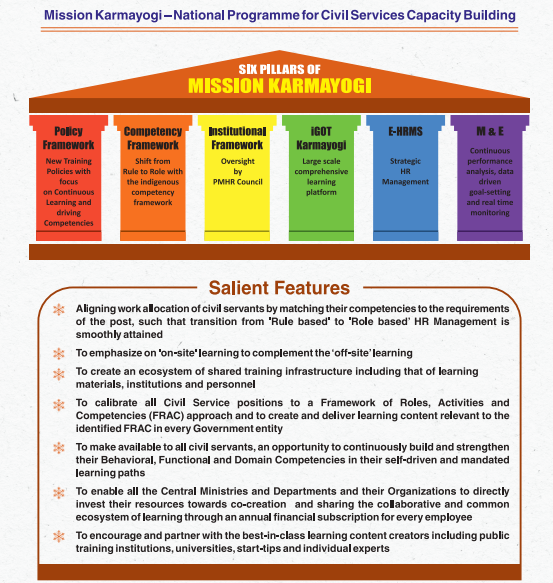
- Initiatives Related to Civil Services: Mission Karmayogi, Lateral Entry Scheme (LES), e-Samiksha, and Centralized Public Grievance Redress and Monitoring System (CPGRAMS).
| Read more: Civil Services Day |
Impact of Global Warming on Sea Breezes
Recently, a study reported that global warming is weakening sea-land breeze systems in coastal cities, reducing their cooling effect.
- Global warming refers to the long-term increase in Earth's average surface temperature due to human activities, primarily the emission of greenhouse gases (GHG) like carbon dioxide (CO2) and methane (CH4).
Sea Breeze
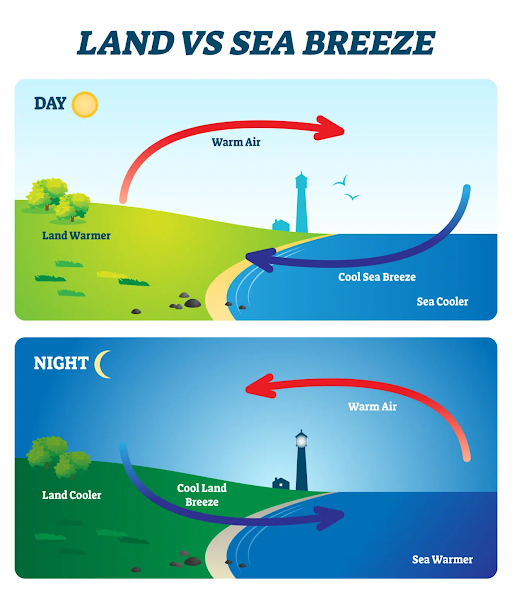
- About: A sea breeze is a local wind system caused by differential heating between land and sea, where the thermal contrast drives cool air from the sea to the land during the day and reverses at night.
- In contrast, land breeze is an offshore wind that occurs mainly at night or in cooler conditions, when land cools faster than the sea, creating higher pressure over land and causing winds to blow from land to sea.
- Key Finding: Rising ocean temperatures are reducing this land–sea thermal contrast, weakening the breeze mechanism and reducing both its frequency and intensity, with the number of sea-breeze days already declining by ~3% across 18 major coastal megacities, including Mumbai and Miami.
- Mid-latitude cities such as London, New York, Shanghai and Buenos Aires have seen sharper declines.
- Impacts: Weakening breezes can lead to increased urban heat, reduced natural cooling, and worsening air pollution, affecting health and habitability.
- By 2050, sea breezes may weaken up to 4.5 times faster if emissions remain high.
| Read more: Record Global Warming and its Effect on India |
Umiam Lake
Following intense protests by environmental and local groups, the Meghalaya government has decided to exclude the scenic Lumpongdeng Island situated in the manmade Umiam Lake from a proposed luxury resort project.
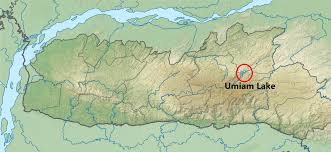
- Umiam Lake: Popularly known as Barapani, Umiam Lake (locally called Dam Sait) is a scenic reservoir about 15 km north of Shillong in Meghalaya, formed in the early 1960s by damming the Umiam River under the Umiam Umtru Hydroelectric Power Project.
- It was developed by the Assam State Electricity Board for hydroelectric power generation, with the Umiam Stage I powerhouse (4×9 MW) commissioned in 1965 (the first reservoir-based hydel project in Northeast India).
- Surrounded by East Khasi Hills along the Guwahati–Shillong route, the lake is now a major hub for water sports and tourism.
- Detailed Project Reports (DPRs) are being prepared to develop Inland Water Transport (IWT) infrastructure on Umiam Lake and the Umngot River (National Waterway-106), marking them as the state’s first National Waterways.
Incredible Lakes of Northeast India
|
Lake |
State |
Key Features |
Unique Highlights |
|
Sangetsar Lake (Madhuri Lake) |
Arunachal Pradesh |
High-altitude lake in Tawang. |
Surrounded by snow-clad mountains, exotic landscape. |
|
Palak Lake (Palak Dil) |
Mizoram |
Largest lake in Mizoram, inside Palak Wildlife Sanctuary. |
Part of Indo-Burma biodiversity hotspot, rich flora & fauna. |
|
Loktak Lake |
Manipur |
Largest freshwater lake in Northeast India. |
Famous for phumdis (floating islands), hosts Keibul Lamjao National Park (NP) (only floating NP in the world). |
|
Chandubi Lake |
Assam |
Located near Garo Hills. |
Attracts migratory birds, surrounded by forests & tea gardens. |
| Read more: Environmental Challenges in Northeast India |
Ashwagandha Regulation by FSSAI
Recently, the Food Safety and Standards Authority of India issued an advisory regarding the use of Ashwagandha in nutraceuticals and supplements.
- Regulatory Basis: As per the Food Safety and Standards Regulations 2016 (Schedule IV), only specified plant parts are permitted for use in health supplements and related products used.
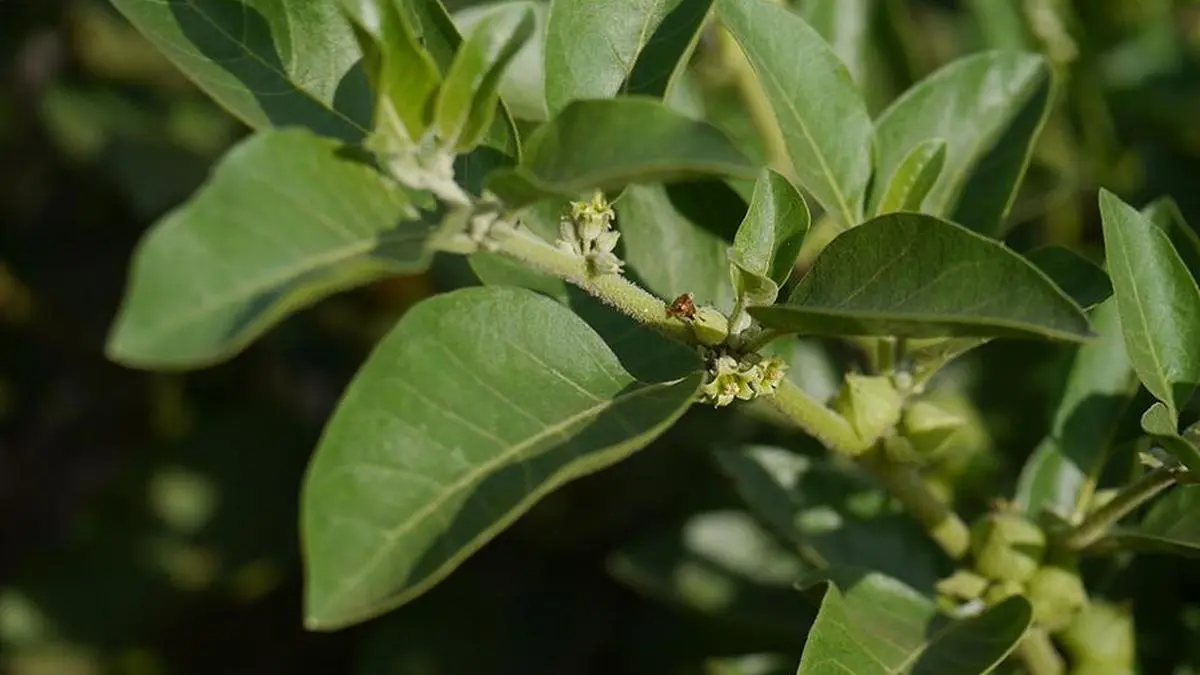
- About: Ashwagandha (Withania somnifera) is a medicinal herb known as an immunity enhancer, classified as an adaptogen (helps the body manage stress), also improves brain function, lowers blood sugar, and helps reduce anxiety and depression symptoms.
- It is also widely used in Ayurvedic medicines, nutraceuticals, herbal teas, protein blends and wellness products.
- Reason for Ban on Leaves: As per the directive, only roots and their extracts of Ashwagandha are permitted, while leaves and their extracts are prohibited due to higher levels of withanolides (e.g., Withaferin-A) that may pose safety concerns.
- The Ministry of AYUSH has also directed manufacturers to avoid leaf usage, and food business operators must adhere to prescribed limits and permitted plant parts.
Food Safety and Standards Authority of India (FSSAI)
- FSSAI is an autonomous statutory body established under the Food Safety and Standards Act, 2006, functions under the Ministry of Health & Family Welfare; Headquarters in Delhi.
| Read more: Food Safety and Standards Authority of India (FSSAI) |