
Bal Vivah Mukt Bharat Abhiyan
For Prelims: Bal Vivah Mukt Bharat Abhiyan, UN Sustainable Development Goal, Article 21, UNICEF
For Mains: Child marriage as a social and developmental challenge in India, Socio-economic determinants of child marriage
Why in News?
The Union government recently marked one year of the Bal Vivah Mukt Bharat Abhiyan (BVMB) by launching a nationwide 100-day awareness campaign, reaffirming India’s commitment to the United Nations target of ending child marriage by 2030.
Summary
- Bal Vivah Mukt Bharat Abhiyan represents India’s shift from a purely legal response to a preventive, community-driven, and technology-enabled strategy to eliminate child marriage by 2030, aligned with SDG 5.3.
- Despite significant decline in prevalence, deep-rooted socio-economic, educational, and gender inequalities continue to sustain child marriage, necessitating a holistic CHAINS–BREAK approach combining education, enforcement, economic security, awareness, and protection.
What is Bal Vivah Mukt Bharat Abhiyan?
- About: BVMB was launched in 2024 by the Ministry of Women and Child Development, to eliminate child marriage and make India child marriage-free by 2030.
- It reflects India’s commitment to the UN Sustainable Development Goal (SDG) 5.3 and marks a shift from a purely legal response to a prevention- and community-driven approach.
- Objectives: The campaign aims to reduce the prevalence of child marriage by 10% by 2026 and completely eradicate the practice by 2030.
- Its broader goal is to protect children’s rights, delay the age of marriage, promote girls’ education, and address the social norms and economic vulnerabilities that sustain early marriage.
- Legal and Constitutional Foundation of BVMB: It is grounded in Article 21 of the Constitution, which guarantees the right to life and dignity, and is supported by the Prohibition of Child Marriage Act (PCMA), 2006.
- It is further strengthened by the Supreme Court’s judgment in Society for Enlightenment and Voluntary Action & Anr v. Union of India & Ors (2024), which emphasised prevention, banned child betrothals, and directed States to create stronger institutional mechanisms against child marriage.
- Key Components of the BVM: The Abhiyan rests on dedicated Child Marriage Prohibition Officers (CMPOs) at district and sub-district levels, a technology-enabled BVMB portal for real-time reporting and monitoring, and large-scale community engagement involving schools, Anganwadis, Panchayats, NGOs, youth groups, and religious leaders.
- Progress under BVMB: The campaign has led to proactive prevention through awareness drives, counselling, injunctions, and rapid response systems.
- International organisations like UNICEF have provided technical support, while model successes such as Balod district of Chhattisgarh becoming India’s first child marriage-free district and Surajpur of Chhattisgarh declaring 75 child marriage-free panchayats highlight the impact of sustained local action.
What is Child Marriage?
- About: Child marriage refers to a marital union where one or both parties are below the legally prescribed age of marriage.
- In India, this means a girl below 18 years or a boy below 21 years, as defined under the PCMA, 2006.
- Under the Bharatiya Nyaya Sanhita, 2023, sexual relations with a wife below 18 years amount to rape, and the Supreme Court has clarified that penetrative sexual assault by the husband of a child bride constitutes aggravated penetrative sexual assault punishable under the Protection of Children from Sexual Offences (POCSO) Act, 2012, making child marriage not only a social evil but also a criminal offence.
- Global Prevelance of Child Marriages: Ending child marriage is a core target under the UN SDG 5, which seeks to achieve gender equality and empower all women and girls.
- Target 5.3 specifically calls for eliminating child, early, and forced marriage, along with other harmful practices.
- Progress is measured by the share of women aged 20–24 married before 18.
- Despite efforts, in 2023, UNICEF estimated that around 64 crore girls worldwide were married in childhood.
- The practice is most prevalent in Sub-Saharan Africa, South Asia, and parts of Latin America and the Middle East.
- Experts warn that without much faster progress (nearly 20 times the current pace), the world will miss the 2030 target and fall short on several other development goals related to health, education, poverty, and gender equality.
- India and Child Marriages: India has sharply reduced child marriage from 47.4% in 2005–06 to 23.3% in 2019–21, according to the National Family Health Survey (NFHS-5) (2019-2021), though progress slowed after 2015–16.
- However, India accounts for nearly one-third of the world’s child brides.
- Large regional disparities persist, with the highest rates in West Bengal, Bihar, and Tripura, and the lowest in Lakshadweep, Jammu & Kashmir, Ladakh, Himachal Pradesh, Goa, and Nagaland.
- Sharp disparities exist by education and income: 48% of girls with no education marry before 18 compared to 4% with higher education, while 40% from the poorest households marry early versus 8% from the richest.
What are the India’s Initiatives to Curb Child Marriage?
- Legal Framework:
- PCMA, 2006 Defines child as a male under 21 years or female under 18 years, makes child marriage a cognizable and non-bailable offence, and allows annulment of child marriages.
- It prescribes punishment for adult groom and those who abet or perform the marriage.
- POCSO Act, 2012: Criminalises sexual relations with a wife below 18 years of age, treating them as rape and other sexual offences under the Act.
- PCMA, 2006 Defines child as a male under 21 years or female under 18 years, makes child marriage a cognizable and non-bailable offence, and allows annulment of child marriages.
- Major Campaign:
- Beti Bachao Beti Padhao (BBBP): Promotes girls’ education and empowerment; indirectly delays age of marriage by improving school retention
- Socio-Economic Incentives:
- Sukanya Samriddhi Yojana: Encourages savings for girl child’s education and future, reducing economic pressure for early marriage
- Kanyashree Prakalpa (West Bengal): Annual scholarship (13–18 years) and one-time grant (18–19 years) if the girl remains unmarried and continues education
- Kalyana Lakshmi / Shaadi Mubarak (Telangana): Financial assistance for marriage only if the bride is 18+ years, discouraging child marriage.
- Institutional Mechanisms:
- Childline 1098: 24×7 emergency helpline to rescue children at risk of forced or early marriage
- Child Welfare Committees (CWCs): Quasi-judicial bodies deciding care, protection, rehabilitation, and best interest of rescued children.
What are the Key Challenges in Ending Child Marriage in India and Measures to Eliminate It?
Child marriage continues because children remain trapped in CHAIN of poverty, patriarchy, and weak institutions. Breaking these constraints requires a BREAK-based strategy focused on education, enforcement, economic security, awareness, and protection.
|
Challenges (CHAIN) |
Way Forward (BREAK) |
|
Cultural Norms & Traditions: Social acceptance of early marriage, driven by honour, caste norms, and child betrothals, remains a major challenge as it normalises the practice and weakens legal enforcement.
|
Boost Girls’ Education: Schemes like Samagra Shiksha and the National Scheme of Incentive to Girls for Secondary Education improve retention in secondary schooling, the strongest deterrent to early marriage (NFHS-5). |
|
Household Poverty: Economic insecurity push families to view early marriage as a survival strategy to reduce financial burden and dowry-related pressures |
Reform and Strengthen Enforcement: The proposal to raise the minimum age of marriage for women to 21 years seeks to promote higher education, skill development, labour force participation, and further discourage child marriages.
|
|
Access Gaps in Education: Limited access to quality secondary education and high dropout rates increase vulnerability to child marriage, especially among rural and marginalised girls.
|
Economic Support to Families: Livelihood and social security schemes such as DAY-NRLM and National Social Assistance Programme reduce poverty-driven early marriages by stabilising household incomes. |
|
Ineffective Implementation of Laws: Weak enforcement of child marriage laws, overburdened officials, and low conviction rates dilute deterrence and allow the practice to continue unchecked. |
Awareness and Community Ownership: Programmes like Poshan Abhiyaan and Rashtriya Kishor Swasthya Karyakram leverage Anganwadis and peer educators to change norms and delay marriage. |
|
Normative Gender Inequality: Deep-rooted gender inequality restricts girls’ autonomy and prioritises early marriage over education, reinforcing patriarchal control over female sexuality.
|
Keep girls Safe and Empowered: Initiatives such as Mission Shakti and the Scheme for Adolescent Girls strengthen safety, life skills, and health support, enabling girls to resist early marriage. |
Conclusion
India’s fight against child marriage has evolved from early social reform movements led by Raja Rammohan Roy, Ishwar Chandra Vidyasagar, and Mahatma Jyotirao Phule to a robust legal and institutional framework. Contemporary initiatives like BVMB build on this legacy through prevention, technology, and community action. With sustained collective effort, India can realise a child marriage–free future aligned with dignity, equality, and development.
|
Drishti Mains Question: Despite legal prohibition, child marriage persists in India. Examine the socio-economic and institutional factors responsible and suggest a way forward. |
Frequently Asked Questions (FAQs)
1. What is Bal Vivah Mukt Bharat Abhiyan?
A national campaign launched in 2024 to eliminate child marriage by 2030 through prevention, community engagement, and technology-enabled monitoring.
2. Which law primarily governs child marriage in India?
The Prohibition of Child Marriage Act, 2006, which defines legal age, provides penalties, and enables prevention mechanisms.
3. What did the Supreme Court rule in 2024 on child marriage?
It banned child betrothals, emphasised prevention over punishment, and directed States to strengthen institutional enforcement.
4. What does NFHS data reveal about child marriage in India?
Child marriage declined to 23.3% (2019–21) but remains high among poorer, less-educated, and certain regional populations.
UPSC Civil Services Examination Previous Year Question (PYQ)
Q. Examine the main provisions of the National Child Policy and throw light on the status of its implementation. (2016).
Q. Customs and traditions suppress reason leading to obscurantism. Do you agree? (2020)
Nanorobots in Healthcare
For Prelims: Nanorobots, Nanotechnology, Semiconductors, Quantum Dots, Solar Cells, Polymers, Stem Cells, mRNA Vaccines, T-cells, Bioaccumulation, Food Chain, Genetically Modified Organisms (GMOs), Environmental Impact Assessment.
For Mains: Key facts regarding magnetic nanorobots, applications of nanotechnology in healthcare, associated concerns and way forward.
Why in News?
A researcher from IISc Bangalore has received the prestigious New York Academy of Sciences 2025 and Tata Sons’ Transformation Prize for developing magnetic nanorobots, paving the way for precise, minimally invasive, and more effective therapies.
- His work aims to overcome a key limitation in current cancer treatment by enabling drugs to be delivered deep inside tumors without harming healthy tissue, thereby opening new avenues for the use of nanotechnology in healthcare.
Summary
- Magnetic nanorobots enable precise, minimally invasive drug delivery, hyperthermia, and potential imaging-guided therapy.
- Nanotechnology applications span diagnostics, regenerative medicine, antimicrobial therapies, and vaccines.
- Challenges include nanotoxicity, regulatory gaps, ethical concerns, and high costs, requiring clinical trials and policy support for mainstream adoption.
What are Magnetic Nanorobots?
- About: Magnetic nanorobots are microscopic, externally powered machines made from or coated with magnetic materials like iron oxide. Guided by magnetic fields from outside the body, they can be precisely steered to navigate blood vessels or tissues without an onboard power source.
- Functioning: They mimic the corkscrew motion of bacteria, using a tiny, helix-shaped tail that functions like a propeller.
- A magnet attached to this helix allows it to be controlled and propelled by external magnetic fields, enabling a drilling motion to navigate through complex biological environments.
- Their structure is biocompatible, made of silica and iron, and can be coated with cancer drugs, effectively turning them into targeted delivery trucks.
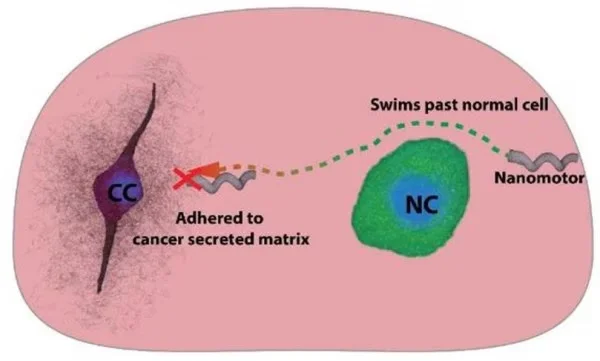
- Primary Applications: They hold significant promise for minimally invasive procedures, including:
- Maximizing Treatment Impact: Guiding therapeutic payloads directly to disease sites, such as tumors, to enhance efficacy and reduce systemic side effects.
- Diagnostic Tools: Biosensing, imaging enhancement, or biofilm removal.
- Medical Dentistry: They offer a promising, pain-free alternative for root canal treatments, effectively targeting antibiotic-resistant bacteria (E. faecalis) without damaging surrounding tissue.
Nanotechnology
- About: Nanotechnology involves designing and engineering structures at the nanoscale—where dimensions are 100 nanometres or smaller—by manipulating individual atoms and molecules.
- Molecular simulation is essential for this field, as it allows scientists to model the behavior of atoms, molecules, and nanostructures under different conditions using computer models.
- Properties:
- Mechanical Attributes: The small grain size of nanomaterials gives them high mechanical strength, making them ideal for strong, lightweight applications in the aerospace and automotive industries.
- Quantum Size Effect: As grain size decreases, quantum mechanical effects become dominant, a property vital for semiconductors, optoelectronics, and nonlinear optics. For example, quantum dots can be tuned to emit or absorb specific light wavelengths by adjusting their size, making them crucial for display technologies and solar cells.
- Catalytic Potential: Nanomaterials have enhanced catalytic properties due to their increased surface area, making them ideal for chemical reactions and environmental remediation.
- Magnetic Features: Nanoparticles often form a single magnetic domain, resulting in superparamagnetism, a property useful in magnetic recording and information storage.
- Applications:
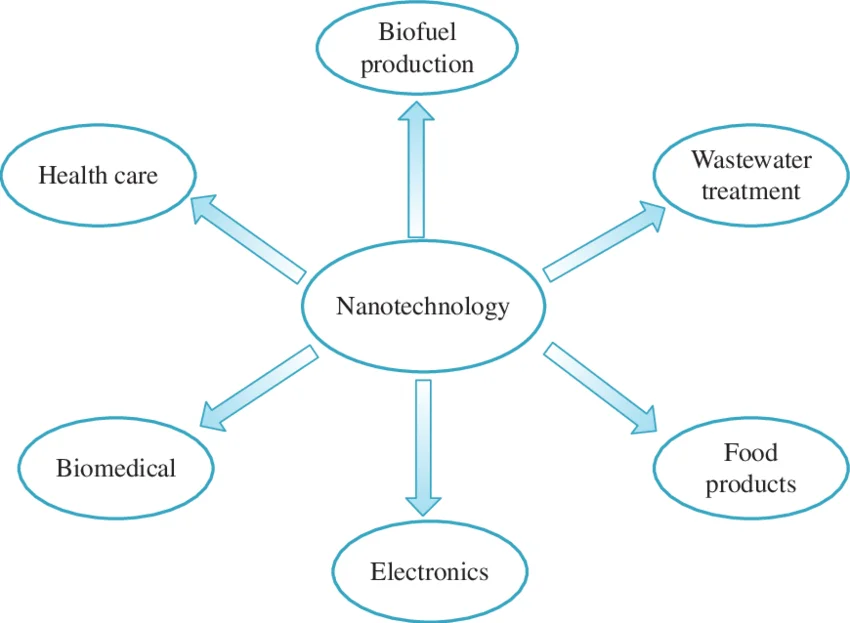
What are the Applications of Nanotechnology in Healthcare?
- Targeted Drug Delivery & Therapeutics: Nanoparticles, such as liposomes, polymers, and dendrimers, serve as targeted carriers or magic bullets to deliver drugs, genes, or diagnostics specifically to diseased cells like tumors, reducing systemic side effects and improving treatment efficacy.
- This targeted approach also enables drug delivery across difficult barriers, such as the Blood-Brain Barrier, for treating neurological disorders like Alzheimer's.
- Advanced Diagnostics & Imaging: Nanotechnology enables rapid, sensitive, and portable detection of pathogens, biomarkers, and glucose levels, which is crucial for early disease diagnosis and epidemic management. Furthermore, gold nanoparticles and quantum dots enhance the resolution and specificity of MRI, CT scan, and fluorescence imaging, allowing for more accurate disease detection.
- Regenerative Medicine & Tissue Engineering: Nanotechnology can provide the structural and biochemical cues needed to guide cell growth and tissue regeneration, aiding in the repair of bones, cartilage, nerves, and cardiac tissue. Additionally, nanoparticles can track, differentiate, and deliver therapeutic genes to stem cells, which enhances treatments for spinal cord injuries and degenerative diseases.
- Antimicrobial Applications: Coatings of silver, copper, or zinc oxide nanoparticles on medical devices (catheters, implants, surgical tools) and hospital surfaces prevent Healthcare-Associated Infections (HAIs).
- Vaccine Development & Immunotherapy: Nanoparticle-based vaccine platforms, such as those in mRNA vaccines, improve antigen stability, enable controlled release, and enhance the immune response. Additionally, nanoparticles can deliver immunomodulators to precisely activate T-cells against cancer cells, representing a key advancement in oncology.
What are the Main Obstacles for Adoption of Nanotechnology in Healthcare?
- Nanotoxicity: A major challenge is the unknown long-term effects due to insufficient data on nanoparticle bioaccumulation, biodegradability, and chronic toxicity in humans and ecosystems. Their environmental persistence risks creating lasting nanopollution in soil, water, and food chains.
- Regulatory and Standardization Challenges: Current regulations, such as those from the CDSCO, are ill-suited for the novel properties of nanomaterials, creating a regulatory gap. Additionally, the lack of universal standards for nomenclature, characterization, and safety testing results in inconsistency and hampers quality control.
- Ethical, Legal, and Social Implications (ELSI): Implantable nanosensors raise serious concerns about data privacy, security, and bodily autonomy, while also risking a nano-divide where advanced therapies are accessible only to the wealthy, worsening global health inequities.
- Furthermore, public trust is challenged by lack of awareness and fears, such as grey goo scenarios (uncontrolled self-replication), which can trigger resistance similar to that seen with Genetically Modified Organisms (GMOs).
- High Costs and Economic Viability: Nanotechnology research requires expensive, sophisticated instrumentation like electron microscopes, making fundamental work and prototyping costly. Scaling up nanomaterial production from the lab to industry while maintaining quality and cost is a major challenge, creating a persistent lab-to-market gap.
What Steps are Necessary to Ensure Sustainable and Safe Adoption of Nanotechnology in Healthcare?
- Research & Development: Establish mandatory, well-funded studies on nanomaterial bioaccumulation, degradation pathways, and chronic effects. Develop Green Nanotechnology for biodegradable, non-toxic nanomaterials using lipids and natural polymers with a safety by design principle.
- Ethical, Social & Economic Governance: Fund proactive ELSA research parallel to technical R&D to address privacy, autonomy, equity, and data ownership. Ensure equitable access via public-private partnerships to prevent a nano-divide and launch transparent public engagement to build trust.
- Clinical Translation & Commercialization: Bridge the Valley of Death with funding for translational research and develop scalable manufacturing for cost-effective, large-scale production. Foster interdisciplinary collaboration among material scientists, clinicians, and engineers to ensure clinically relevant and practical solutions.
- Environmental Stewardship: Mandate Environmental Impact Assessments for nanomaterial production and disposal, and develop specific safe disposal and recycling protocols. Establish environmental monitoring programs to track engineered nanoparticles in water, soil, and air.
Conclusion
Magnetic nanorobots mark a major advance in nanomedicine by enabling precise, minimally invasive therapies. However, clinical adoption depends on addressing nanotoxicity, regulatory, and ethical challenges through sustained R&D, ethical governance, equitable access, effective clinical translation, and strong environmental safeguards to ensure safe, affordable, and responsible healthcare deployment.
|
Drishti Mains Question: Nanotechnology holds immense promise for revolutionizing healthcare. Discuss its key applications and the major ethical and regulatory challenges hindering its widespread adoption in India. |
Frequently Asked Questions (FAQs)
Q. What are magnetic nanorobots?
Magnetic nanorobots are microscopic helix-shaped devices powered by external magnetic fields to deliver drugs precisely to target tissues like tumors.
Q. How do magnetic nanorobots navigate inside the human body?
They are propelled and steered by external magnetic fields, using a corkscrew-like helical structure that mimics bacterial motion to drill through tissues and fluids.
Q. What is meant by the 'nano-divide' in the context of healthcare?
It refers to the risk of inequitable access where advanced, expensive nanomedicine therapies are available only to wealthy individuals or nations, exacerbating global health disparities.
UPSC Civil Services Examination, Previous Year Question (PYQ)
Prelims
Q: Consider the following statements: (2022)
- Other than those made by humans, nanoparticles do not exist in nature.
- Nanoparticles of some metallic oxides are used in the manufacture of some cosmetics.
- Nanoparticles of some commercial products which enter the environment are unsafe for humans.
Which of the statements given above is/are correct?
(a) 1 only
(b) 3 only
(c) 1 and 2 only
(d) 2 and 3 only
Answer: (d)
Q: There is some concern regarding the nanoparticles of some chemical elements that are used by the industry in the manufacture of various products. Why? (2014)
- They can accumulate in the environment, and contaminate water and soil.
- They can enter the food chains.
- They can trigger the production of free radicals.
Select the correct answer using the code given below.
(a) 1 and 2 only
(b) 3 only
(c) 1 and 3 only
(d) 1, 2 and 3
Ans: (d)
Mains
Q. What do you understand by nanotechnology and how is it helping in the health sector? (2020)
Q. Why is nanotechnology one of the key technologies of the 21st century? Describe the salient features of Indian Government’s Mission on Nanoscience and Technology and the scope of its application in the development process of the country. (2016)
National Youth Day 2026
Why in News?
National Youth Day is observed annually on 12th January, commemorating the birth anniversary of Swami Vivekananda, whose ideals of character, courage, service, and nation-building continue to guide India’s youth-centric policies.
- With over 65% of India’s population below 35 years, youth empowerment is central to the vision of Viksit Bharat @2047.
What are the Key Initiatives Taken by the government for Youth Empowerment?
- Mera Yuva Bharat (MY Bharat): National digital youth platform linking volunteering, leadership and skilling with AI-enabled career services, mentorship and Fit India integration.
- National Service Scheme (NSS) & Viksit Bharat Young Leaders’ Dialogue (VBYLD): NSS promotes civic engagement and social responsibility through community service, while VBYLD provides a national ideation platform engaging nearly 3,000 young leaders, with a digital outreach of over 50.42 lakh youth via MY Bharat and MyGov.
- Agnipath Scheme: A four-year military service pathway for youth aged 17.5–21 years, fostering discipline, technical skills, and post-service employability through structured resettlement support.
- Pradhan Mantri Skilling and Employability Transformation through Upgraded(PM-SETU): A flagship initiative to upgrade 1,000 ITIs through a government-owned, industry-managed hub-and-spoke model, aligning vocational training with current and future labour-market demand.
- Skill India Mission: An umbrella skilling ecosystem integrating PMKVY 4.0, PM-NAPS, and Jan Shikshan Sansthans (JSS) to deliver future-ready vocational training, apprenticeships, and lifelong learning opportunities.
- PM Viksit Bharat Rozgar Yojana: A large-scale employment generation scheme aiming to support 3.5 crore jobs in two years, offering financial incentives to both newly employed youth and employers.
- Startup India & PM MUDRA Yojana: Strengthening youth entrepreneurship through recognition of 1.97 lakh+startups and provision of collateral-free loans up to ₹20 lakh, especially benefiting first-generation entrepreneurs, women, and MSMEs.
- Fit India Movement: A nationwide behavioural change campaign promoting daily fitness through initiatives such as Sundays on Cycle, Fit India School Certification, fitness pledges, and digital fitness tracking.
- Youth Spiritual Summit & Kashi Declaration: A youth-led national roadmap emphasising mental well-being, substance-free living, and value-based leadership, aligned with the vision of a Nasha Mukt Yuva for Viksit Bharat.
- Rashtriya Kishore Swasthya Karyakram (RKSK): A holistic adolescent health programme addressing nutrition, mental health, sexual and reproductive health, substance misuse, non-communicable diseases, and injury prevention through a preventive and community-based approach.
What are the Key Facts About Swami Vivekananda?
- About: Swami Vivekananda, born as Narendra Nath Datta on 12th January 1863, was a monk and the chief disciple of Ramakrishna Paramhansa.
- In 1893, upon the request of Maharaja Ajit Singh of the Khetri State, he took the name ‘Vivekananda’, changing from ‘Sachidananda’ that he used before.
- Enlightenment: In 1892, Swami Vivekananda was said to have swum to a rock (later named Vivekananda Rock Memorial) in the Indian Ocean from the shores of Kanyakumari for meditation.
- He spent three days and nights there, resulting in his enlightenment.
- Contributions:
- Philosophical: He introduced the world to the Indian philosophies of Vedanta and Yoga.
- He preached ‘neo-Vedanta’, an interpretation of Hinduism through a Western lens, and believed in combining spirituality with material progress.
- Spiritual: Vivekananda's message on human values draws from the Upanishads, the Gita, and the examples of Buddha and Jesus, emphasizing self-realization, compassion, and selfless service.
- He advocated the doctrine of service. Serving jiva (living beings) is considered worship of Shiva.
- He gave the four pathways of attaining moksha (liberation) from worldly pleasures and attachments in his books- Raja-yoga, Karma-yoga, Jnana-yoga and Bhakti-yoga.
- Revivalism: He laid emphasis on education for the regeneration of our motherland. He advocated a man-making, character-building education.
- Philosophical: He introduced the world to the Indian philosophies of Vedanta and Yoga.
- Associated Organisations: He founded the Ramakrishna Mission in 1897 to propagate the ideals of service, education, and spiritual upliftment.
- In 1899, he established the Belur Math, which became his permanent abode.
- International Address: He addressed the Parliament of Religions held in Chicago in 1893, at which he represented Hinduism.
- In July 1896, he addressed a conference of the London Hindu Association in London.
Frequently Asked Questions (FAQs)
1. What is National Youth Day?
National Youth Day is observed on 12 January to mark Swami Vivekananda’s birth anniversary and inspire India’s youth to contribute to nation-building and Viksit Bharat @2047.
2. What are the key government initiatives for youth empowerment?
Major initiatives include MY Bharat, NSS, VBYLD, Skill India, PM-SETU, Agnipath, Startup India, PM MUDRA, Fit India, RKSK, and the Kashi Declaration, covering leadership, skilling, jobs, entrepreneurship, and well-being.
3. Who was Swami Vivekananda?
Swami Vivekananda was a 19th-century spiritual leader and social reformer who propagated Vedanta and Yoga, championed character-building education, founded the Ramakrishna Mission, and inspired youth-driven national regeneration.
UPSC Civil Services Examination, Previous Year Questions (PYQs)
Prelims:
Q. Which of the following parties were established by Dr. B. R. Ambedkar? (2012)
- The Peasants and Workers Party of India
- All India Scheduled Castes Federation
- The Independent Labour Party
Select the correct answer using the codes given below:
(a) 1 and 2 only
(b) 2 and 3 only
(c) 1 and 3 only
(d) 1, 2 and 3
Ans: (b)
Census 2027
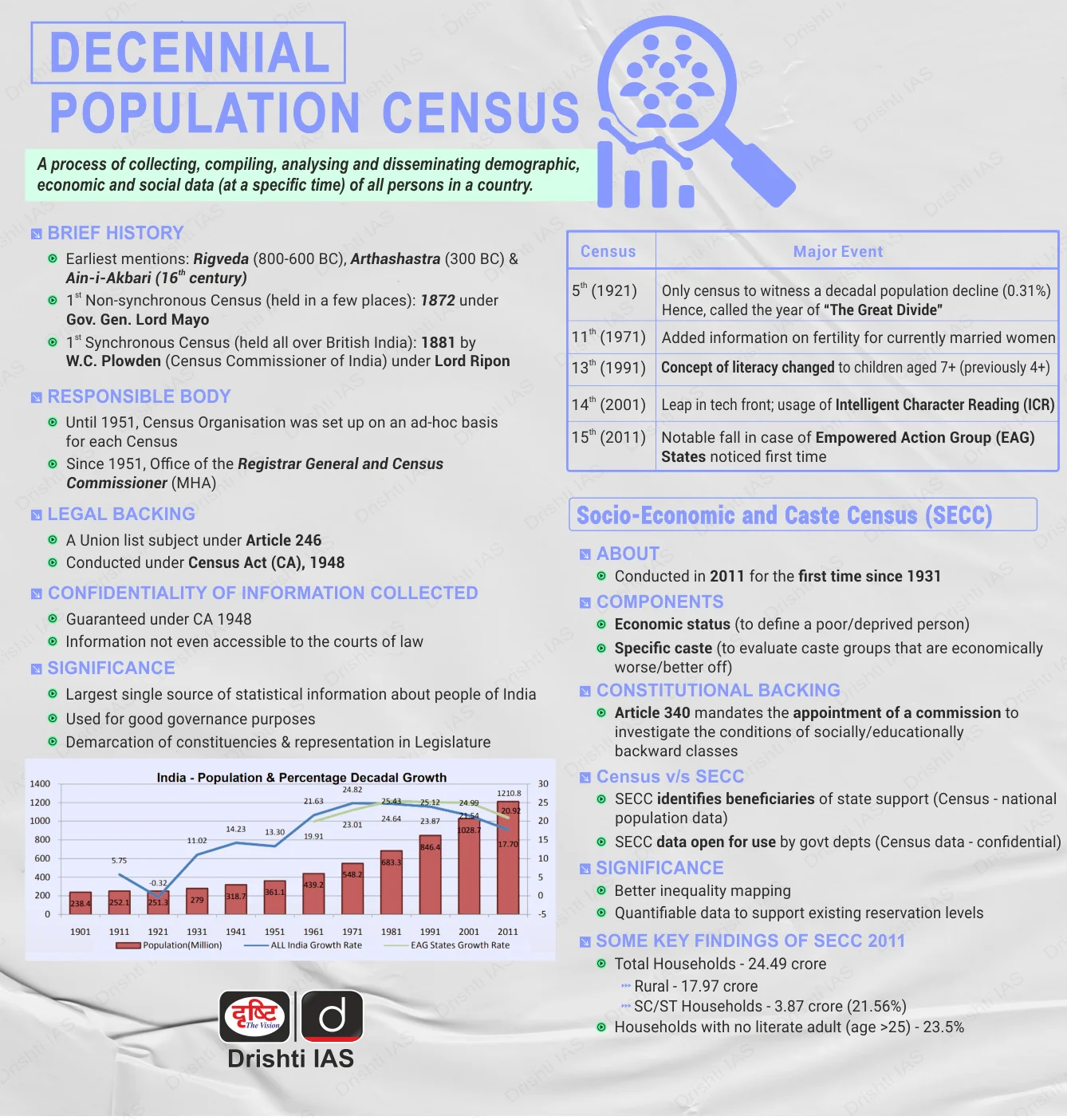
The Ministry of Home Affairs (MHA) has notified the commencement of house-listing operations for Census of India 2027, marking the start of preparations for the 16th Census, the first nationwide census exercise since 2011.
Key Highlights of Census 2027
- Phased Timeline: It follows a 2-phase structure, i.e., Phase I (2026) for House-listing and Housing Census, and Phase II (2027) for Population Enumeration.
- House-listing operations will occur from 1st April to 30th September, 2026, with each State and Union Territory completing them within a 30-day window.
- The population enumeration reference date will be 1st March, 2027 (for most of the country), or 1st October, 2026, for snow-bound and remote regions like Ladakh, Jammu & Kashmir, Himachal Pradesh, and Uttarakhand.
- Legal Basis: The Census is being conducted under Sections 3 and 17A of the Census Act, 1948 by the Office of the Registrar General of India (RGI), and supersedes the 2020 notification for the deferred 2021 Census.
- Digital and Self-Enumeration: It will be India's first digital census, with a formal provision for a 15-day self-enumeration window allowing households to submit data online before an enumerator's visit.
- It will involve digital tools including GPS tagging, offline data capture (for low-connectivity areas), cloud uploads, and and a Census Management and Monitoring System for near-real-time supervision.
- Expanded Data Points: House-listing includes 34 columns with new parameters: internet access, smartphone ownership, type of gas connection (PNG/LPG), vehicle categorization, drinking water source, and cereal consumption.
- Historic & Political Significance: It will include the first nationwide caste enumeration since 1931 (beyond SCs/STs) and will form the basis for future delimitation of electoral constituencies once the constitutional freeze is lifted.
| Read More: Caste Census in India: Need and Challenges |
Petrodollar System
The US capture of Venezuelan President Nicolás Maduro has renewed attention on the declining influence of the petrodollar amid changing global oil trade dynamics.
- Venezuela holds the world’s largest proven oil reserves (~300 billion barrels, ~17% of global stock) but produces only about 1 million barrels per day, leaving vast untapped potential.
- The Trump administration aims to revive Venezuela’s oil industry by involving US energy majors, potentially re-anchoring future oil production within the US economic orbit.
- Petrodollar System: The petrodollar system refers to the global arrangement under which international crude oil trade is predominantly priced and settled in US dollars, creating sustained global demand for the dollar and reinforcing US economic, financial, and geopolitical dominance.
- It emerged in the mid-1970s following the collapse of the Bretton Woods system.
- Peak of Petrodollar Influence: Between 2002 and 2008, high oil prices and US dependence on crude imports enabled oil-exporting countries to recycle large surpluses into US Treasury markets, which suppressed US bond yields and contributed to lower global interest rates.
- Post-shale Structural Shift: Following the shale oil revolution, the US became the world’s largest oil producer and a net oil exporter since 2021, significantly altering traditional petrodollar dynamics.
- Changing Oil Revenue Usage: Oil-producing countries like Saudi Arabia are increasingly using their oil revenues to finance domestic budget deficits rather than investing heavily in US financial assets, weakening earlier capital flow patterns.
- De-dollarisation Trend: An estimated around 20% of global crude trade is now priced in non-dollar currencies such as the euro and Chinese yuan, reflecting reduced dollar dominance in oil trade.
- The historical inverse relationship between the dollar and oil prices has weakened sharply, indicating declining financial leverage of the petrodollar system.
| Read more: US Intervention in Venezuela and the Revival of the Monroe Doctrine |
Catastrophe Bonds
Facing recurrent climate-induced disasters, Kerala has urged the Union government to introduce catastrophe (CAT) bonds as a financial safety net against disaster-related losses during pre-Budget consultations for Union Budget 2026–27.
- Kerala’s repeated disasters strain public finances, highlighting the need for climate-resilient financing tools like CAT bonds, recognised in its Risk-Informed Master Plan (2022), alongside demands for a Coastal Resilience Fund to address severe erosion along its 590-km coastline.
- CAT Bonds: These are insurance-linked securities that transfer the financial risk of major disasters, like hurricanes or earthquakes, from insurers or governments (sponsors) to investors.
- Under CAT bonds, Governments act as sponsors and pay premiums, while the investors’ principal serves as the insured sum; if a disaster occurs, this principal is transferred for recovery purposes, whereas if no catastrophe occurs, investors earn high interest.
- CAT bonds offer investors high yields and portfolio diversification since their returns are not directly linked to financial markets, while for governments and insurers they ensure quicker payouts, reduce reliance on budgetary allocations, and shift disaster risk to global capital markets.
- Currently, in India states and the centre bear the full fiscal burden of disaster relief.
- Global Usage: Countries like Mexico and the Philippines use CAT bonds to hedge against natural disasters.
- Significance for India: CAT bonds can provide a fiscally sustainable, predictable, and rapid financing tool for disaster-prone States. It reduces pressure on public budgets and emergency borrowing.
| Read more: Catastrophe Bonds for Natural Disasters |
India’s Tourism Infrastructure Initiatives
The Ministry of Tourism has reported significant progress in tourism infrastructure development, destination-based schemes, skill initiatives, and global promotion, reflecting mission-mode implementation flagship schemes like Swadesh Darshan 2.0, and Pilgrimage Rejuvenation and Spiritual Heritage Augmentation Drive (PRASHAD) Scheme.
- Tourism Performance (2024): India recorded over 20 million international tourist arrivals, generated nearly Rs 3 lakh crore in foreign exchange earnings, and witnessed close to 3 billion domestic tourist visits, underscoring tourism’s expanding contribution to economic growth and services exports.
- India also received about 0.64 million foreign medical tourists, with e-Medical and e-Ayush visas available for 171 countries, strengthening India’s position as a hub for affordable tertiary healthcare and AYUSH-based wellness services.
- Swadesh Darshan 2.0: The Swadesh Darshan Scheme (2014–15) was launched to develop thematic tourism circuits, significantly strengthening tourism infrastructure across States.
- Swadesh Darshan 2.0 (2023) is a revamped, destination-centric tourism mission focused on sustainable and responsible development, aligned with Vocal for Local and Aatmanirbhar Bharat, integrating infrastructure, services, skills, destination management, and policy reforms.
- Swadesh Darshan 2.0 also includes sub-schemes such as the Challenge Based Destination Development (CBDD) and PM–Janjatiya Unnat Gram Abhiyan (PM-JUGA).
- CBDD: It follows a competitive, outcome-based approach to improve the entire tourism value chain. The scheme covers themes such as Spiritual Tourism, Culture & Heritage, Vibrant Villages, and Ecotourism/Amrit Dharohar Sites.
- PM-JUGA: It aimed at improving tribal livelihoods through tourism, promoting tribal homestays, cultural tourism, and community participation.
- PRASHAD Scheme: Provides financial assistance to States and Union Territories for the integrated development of tourism infrastructure at identified pilgrimage destinations.
- MICE Tourism Push: India launched a National Strategy and Roadmap for MICE (Meetings, Incentives, Conferences, Exhibitions) along with the ‘Meet in India’ sub-brand to position India as a global conference and exhibition hub.
- A Digital MICE Catalogue covering 60+ cities, including G20 host cities. The Meet in India Conclave 2025 (Jaipur) further strengthened India’s global visibility in the MICE sector.
| Read more: Tourism as India's Growth Engine |
Pravasi Bharatiya Divas (PBD)
On the occasion of the Pravasi Bharatiya Diwas (PBD) on 9th January 2025, the Prime Minister extended warm greetings to the global Indian diaspora, highlighting its role as a vital bridge connecting India with the world.
- About: PBD is the flagship outreach programme of the Ministry of External Affairs, organised to engage the Indian diaspora and showcase India’s regional diversity and development.
- Since 2015, it has been conducted as a biennial, theme-based convention, enabling focused diaspora engagement, dialogue, and networking.
- Significance: It commemorates Mahatma Gandhi’s return to India in 1915 from South Africa, symbolising the historic role of the Indian diaspora in India’s freedom struggle and nation-building.
- Evolution: The PBD convention was instituted in 2003 under Prime Minister Atal Bihari Vajpayee to institutionalise structured and sustained engagement with the Indian diaspora.
- Objectives: The convention seeks to recognise diaspora contributions to India’s development, enhance India’s image abroad, support national causes and overseas Indian welfare, and provide a platform for dialogue between the diaspora and the Government of India.
- PBD 2025: The 18th PBD Convention (2025) was held in Bhubaneswar, Odisha. Key highlights included the launch of the Pravasi Bharatiya Express under the Pravasi Teertha Darshan Yojana, an exhibition on Mandvi–Muscat migration, and renewed emphasis on the legacy of Girmitiyas, including a proposal for a comprehensive Girmitiya database.
- Honour: The Pravasi Bharatiya Samman Award (PBSA) is the highest honour conferred on NRIs, OCIs, and diaspora organisations, recognising their outstanding contributions to India’s global image, national causes, and community welfare.
| Read more: Pravasi Bharatiya Divas (PBD) |