
India’s Transport System Under Stress
For Prelims: PM Gati Shakti – National Master Plan, National Infrastructure Pipeline (NIP), Fiscal Responsibility and Budget Management, Kavach 5.0
For Mains: Reasons for recurring transport disruptions in India and policy implications, Role of public investment vs. market-led models in urban and intercity mobility, Accessibility in urban transport.
Why in News?
In 2025, India witnessed significant disruptions in its transportation sector, from overcrowded trains during peak seasons to widespread flight cancellations; these events revealed the challenges of balancing demand with limited supply.
- These disruptions underscore the growing strain on India’s transport system amid neoliberal policies and underinvestment.
What are the Challenges Hindering India’s Transport System?
- Infrastructure Deficiencies: Major urban centers like Delhi, Mumbai, and Kolkata experience severe road congestion. The lack of efficient public transport systems exacerbates traffic bottlenecks.
- Railways in urban areas face severe overcrowding due to limited trains, delays and inadequate capacity during peak and festive periods.
- Much of India’s rail and road infrastructure is outdated, causing slow travel, frequent breakdowns and heightened safety risks.
- Neo-Liberal Constraints: India’s economic model limits the state’s ability to invest, while encouraging private-sector expansion with minimal oversight.
- This creates a dual problem:
- Public services remain cheap but under-funded, causing overcrowding, breakdowns, and chronic shortages.
- While privatization and deregulation were expected to foster efficiency, they often lead to monopolies or oligopolies, where a few dominant players, like IndiGo in aviation, have undue market control, limiting competition and inflating prices.
- The result is a system where neither public nor private transport reliably protects consumer welfare.
- This creates a dual problem:
- Safety and Security Concerns: India has one of the highest rates of road accidents globally.
- Vulnerable road users, such as pedestrians, and cyclists are particularly at risk due to a lack of safety features in infrastructure.
- In railways, despite improvements, accidents and derailments still occur, leading to loss of lives and significant public outcry.
- The 2025 Air India crash in Ahmedabad, which killed more than 200 people, has further amplified concerns about safety gaps across India’s transport systems.
- Environmental Sustainability: The transport sector is a major contributor to air pollution in India, it contributes 14% to India's energy-related CO₂ emissions.
- There is a slow shift toward sustainable options like electric vehicles (EVs).
- Extreme weather events, such as floods and storms, increasingly threaten transport infrastructure, highlighting the need for climate-resilient infrastructure.
- Lack of Data-Driven Decision Making: While there have been improvements in digitization, the transportation sector still lacks comprehensive data-driven strategies to manage traffic, reduce congestion, and optimize logistics.
- Innovations like smart traffic lights, GPS-enabled buses, and digital ticketing are still in their nascent stages in many parts of the country.
- Challenges in Logistics and Freight Movement: The logistics sector faces inefficient warehousing, outdated transport systems and customs delays, which raise costs, reduce competitiveness and increase carbon emissions.
- Corruption at various levels of administration often leads to poor execution of projects, delays, and budget overruns. For instance, tendering and contract-awarding processes sometimes lack transparency, leading to inefficient project implementation.
- Social Equity and Accessibility: While low fares for public transport ensure affordability, they often do not translate into better access to services.
- Public transport systems in many cities are overcrowded, unreliable, and difficult to access for vulnerable sections, including the elderly, women, and people with disabilities.
What is the Importance of India's Transport Sector?
- The Transport Sector serves as the backbone of national mobility, enabling large-scale movement of people and goods across India’s road, rail and aviation networks.
- It reduces logistics costs and enhances market efficiency, supporting India’s aim to become a global manufacturing and export hub.
- Strengthens national integration by connecting remote, rural, border and tribal regions with urban and economic centres.
- Supports key economic sectors such as agriculture, MSMEs, tourism, trade, and industry through dependable multi-modal connectivity.
- Enhances social inclusion by improving access to healthcare, education, public services and job opportunities for millions.
- Boosts disaster response and supply-chain resilience, ensuring essential movement during crises and emergencies.
What are India's Initiatives for Transport Sector Development?
|
Initiative |
Purpose |
|
Integrate infrastructure planning across road, rail, air, and ports to reduce logistics costs. |
|
|
Provide long-term funding for major transport and connectivity projects. |
|
|
Improve national highways, build economic corridors, and enhance freight movement. |
|
|
Modernise ports, expand coastal shipping, and boost port-led development. |
|
|
Guide metro expansion, PPP participation, and Transit-Oriented Development (TOD). |
|
|
Expand regional air connectivity and make air travel affordable. |
|
|
Deploy electric buses in cities to improve public transport and reduce emissions and promote adoption of electric vehicles and charging infrastructure. |
|
|
Enable smart traffic management and real-time mobility data systems. |
|
|
Amrit Bharat & Vande Bharat Initiatives: |
Modernise railway stations with upgraded facilities and infrastructure. |
|
Improve urban mobility through NMT, smart traffic systems, and integrated transit solutions. |
What Measures can Strengthen India’s Transport System?
- Modernise Public Transport: Use frameworks like the NIP and Gati Shakti National Master Plan to prioritise urban mobility, rail upgrades, and integrated logistics parks.
- The N.K. Singh Review Committee (2016) recommended a more flexible Fiscal Responsibility and Budget Management (FRBM) framework, allowing targeted relaxation of fiscal limits so the government can step up public investment in core infrastructure.
- This flexibility creates space to modernise India’s transport system
- The N.K. Singh Review Committee (2016) recommended a more flexible Fiscal Responsibility and Budget Management (FRBM) framework, allowing targeted relaxation of fiscal limits so the government can step up public investment in core infrastructure.
- Build Safer Transport Systems: Align urban transport with the National Road Safety Policy (2010) and the Safe System Approach recommended by the WHO Global Road Safety Report.
- Accelerate deployment of Kavach 5.0, India’s indigenous automatic train protection system, across all high-density routes.
- Make urban safety audits compulsory under MoHUA’s Urban Transport Policy (NUTP 2006).
- Promote Sustainable, Low-Carbon Mobility: Leverage the National Electric Mobility Mission Plan (NEMMP) to shift urban trips from private vehicles to EV-based public transport.
- Use the National Action Plan on Climate Change (NAPCC) and the National Mission on Sustainable Habitat to build climate-resilient infrastructure capable of withstanding floods, heatwaves, and storms.
- Expand (NMT through schemes like Streets for People Challenge, Cycles4Change, and smart-city pedestrianisation models.
- Accelerate Data-Driven Mobility Governance: Enhance the monitoring under the Intelligent Transport Systems (ITS) Policy (2022) for real-time data, predictive analytics, and digital traffic management.
- Strengthen Social Equity and Universal Accessibility: Enforce accessibility mandates under the Rights of Persons with Disabilities Act, 2016, ensuring ramps, tactile paths, low-floor buses, and accessible metros.
- Improve women’s safety through Nirbhaya Fund-supported CCTV networks, panic buttons, last-mile shuttles, and lit pedestrian paths.
Conclusion
India’s transport crises show a system struggling with rising demand and weak investment. Strengthening safety, capacity, and sustainable mobility is now urgent. A resilient transport network will depend on restoring public investment and ensuring fair, efficient services for all.
|
Drishti Mains Question: Examine the causes and consequences of the transport disruptions in India. How do these events reflect the strengths and limitations of a neo-liberal policy model? |
Frequently Asked Questions (FAQs)
Q. Why do Indian cities face chronic road congestion?
Rapid urbanisation, outdated road networks, weak public transport, and poor last-mile connectivity create persistent traffic bottlenecks in major metros.
Q. What is PM Gati Shakti and why is it important for transport?
PM Gati Shakti is a National Master Plan for multimodal infrastructure integration; it reduces logistics cost and synchronises road, rail, port and airport projects for faster, coordinated delivery.
Q. Which measures improve transport safety and accessibility for vulnerable users?
Enforcing the Motor Vehicles (Amendment) Act provisions, mandatory urban safety audits, KAVACH for trains, and Rights of Persons with Disabilities Act compliance ensure safer, accessible transport for all.
Summary
- India’s 2025 transport disruptions exposed deep structural issues including overcrowded railways, outdated infrastructure, and aviation monopolies.
- Neo-liberal fiscal limits have constrained public investment, while deregulation has enabled private dominance, weakening consumer welfare.
- Safety risks, high pollution, climate vulnerabilities, poor logistics efficiency, and limited data-driven governance continue to strain the system.
- Strengthening public investment, enforcing safety standards, promoting sustainable mobility, and improving accessibility are essential for a resilient and equitable transport network.
UPSC Civil Services Examination, Previous Year Question (PYQ)
Mains
Q. The Gati-Shakti Yojana needs meticulous coordination between the government and the private sector to achieve the goal of connectivity. Discuss. (2022)
Strengthening the National Commission for Minorities
For Prelims: National Commission for Minorities (NCM), Statutory Body, Quasi-judicial Powers, Minority, Census 2011, High Court, NCSC, NCST.
For Mains: National Commission for Minorities, Challenges Faced by it and steps needed to strengthen it.
Why in News?
The Ministry of Minority Affairs has not committed to any timeline for filling the long-pending vacancies in the National Commission for Minorities (NCM), even after the Delhi High Court sought a response from the government over the delay.
- The NCM has been headless since April 2025, with all posts of Chairperson, Vice-Chairperson, and Members remaining vacant.
What is the National Commission for Minorities (NCM)?
- About: The NCM is a statutory body set up under the National Commission for Minorities (NCM) Act, 1992 to safeguard the rights and interests of minorities and ensure their protection and development.
- The first Commission was constituted on 17th May 1993.
- Origin: The Minorities Commission (MC) was set up in 1978 by a Ministry of Home Affairs Resolution and moved to the Ministry of Welfare in 1984. In 1988, linguistic minorities were excluded from its jurisdiction.
- Composition: The NCM consists of a Chairperson, Vice-Chairperson, and 5 Members, all nominated by the Central Government from persons of eminence, ability, and integrity.
- At least five members, including the Chairperson, must belong to notified minority communities (Muslim, Christian, Sikh, Buddhist, Parsi, and Jain).
- Mandate and Duration: It has quasi-judicial powers, and each member serves a 3-year term from the date of joining.
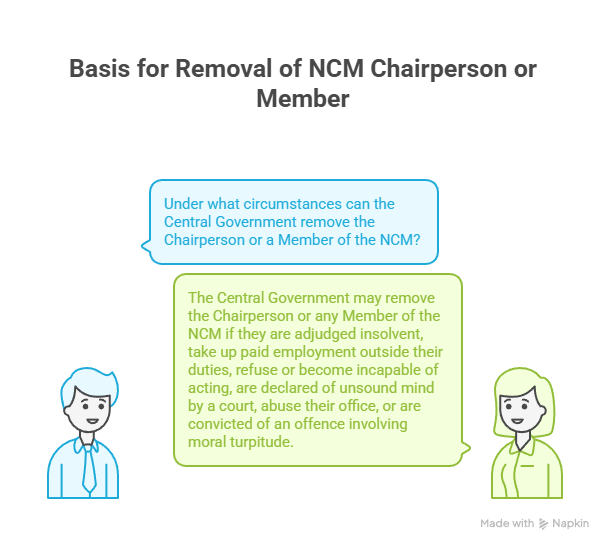
- Removal:
Who are Considered Minorities in India, and What Constitutional Safeguards are Provided to Them?
- About Minorities: The term 'Minority' is not explicitly defined in the Constitution of India; however, it recognizes the existence of religious and linguistic minorities.
- The NCM Act, 1992 provides a statutory definition, specifying a minority as a community officially notified as such by the Central Government
- Minority Communities: Under the NCM Act, 1992, the Ministry of Welfare, through a 1993 notification, officially designated five religious communities—Muslims, Christians, Sikhs, Buddhists, and Zoroastrians (Parsis)—as minority communities.
- This list was later expanded in 2014 to include Jains as the sixth notified minority community.
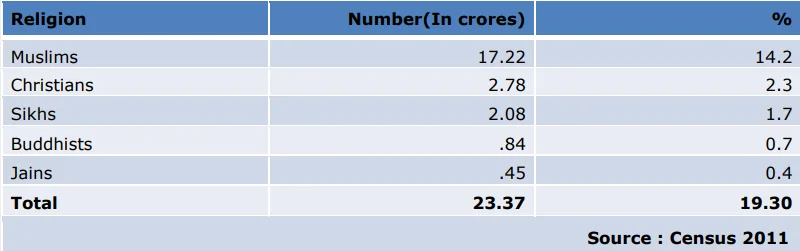
- Minorities Population:
- Constitutional Safeguards for Minorities:

What are the Major Challenges Faced by the National Commission for Minorities (NCM)?
- Chronic Vacancies: The NCM has been largely non-functional because all key positions—Chairperson, Vice-Chairperson, and Members—are vacant, despite Delhi High Court reminders to fill them.
- Limited Autonomy: Appointments are made at the Central Government’s discretion, raising concerns about the NCM’s independence and political neutrality, and undermining its role as an impartial watchdog.
- Ambiguity in "Minority" Definition: Minority status is based only on religion, excluding linguistic or ethnic minorities, raising debates on uniform recognition and state-level minorities.
- Advisory Nature and Lack of Enforcement Power: As a statutory body, the Commission can only recommend actions to the Government, but its decisions are not binding, and it cannot enforce or penalize, limiting its effectiveness.
- Erosion of Institutional Credibility: A defunct Commission increases judicial burden, as people bypass it for court intervention, and may draw international scrutiny over India’s minority protection commitments.
What Measures can Strengthen Functioning of the National Commission for Minorities?
- Legislative and Institutional Reforms: Upgrade NCM to a Constitutional body (like NCSC/NCST) or amend the NCM Act, 1992 to make its recommendations binding, and establish transparent appointment criteria to ensure independence.
- Functional Empowerment: Empower NCM to take suo motu action, impose penalties for non-compliance, and strengthen its investigation wing with a dedicated, trained team for independent probes.
- Judicial Oversight and Review: Enable courts to oversee NCM orders and use its reports in PILs, while promoting public engagement through hearings, consultations, and awareness campaigns.
- Integration with Broader Governance: Integrate NCM with monitoring of minority welfare schemes (e.g., scholarships, skill development) to assess ground-level implementation.
- Create a standing inter-ministerial committee with Home, Education, Social Justice, and Minority Affairs ministries for coordinated policy action.
- Learning from Global Best Practices: Adopt international models like South Africa’s Commission for Cultural, Religious, and Linguistic Communities or the UK Equality and Human Rights Commission for stronger enforcement mechanisms.
Conclusion
The chronic vacancies and structural weaknesses plaguing the NCM have crippled its constitutional mandate to protect minority rights. Urgent reforms, including timely appointments, legislative empowerment, and enhanced autonomy, are essential to restore its credibility as an effective watchdog and safeguard India's pluralistic fabric.
|
Drishti Mains Question: Q. "The protection of minority rights is a cornerstone of a vibrant democracy." In light of this statement, critically examine the constitutional safeguards for minorities in India and the efficacy of the National Commission for Minorities in enforcing them. |
Frequently Asked Questions (FAQs)
Q. What is the National Commission for Minorities (NCM)?
A statutory body under the NCM Act, 1992, to safeguard minority rights, with a Chairperson, Vice-Chairperson, and five Members nominated by the Central Government.
Q. Which communities are officially recognized as minorities under the NCM Act, 1992?
Six religious communities are notified: Muslims, Christians, Sikhs, Buddhists, Parsis (Zoroastrians), and Jains. Jains were added in 2014.
Q. What is the population share of minorities in India?
According to Census 2011, minorities constitute approximately 19.3% of India’s total population.
Summary
- The NCM, a key statutory watchdog for minority rights, is defunct as all posts have been vacant since April 2025, undermining its mandate.
- Its structural weaknesses include an advisory role, government-controlled appointments, and a religion-only minority definition.
- While constitutional safeguards (e.g., Article 30) exist, enforcement depends on a functional NCM; its paralysis increases judicial burden and erodes community trust.
- Urgent reforms—timely appointments, constitutional or binding statutory status, suo motu and penal powers, and transparent selection—are needed to restore its credibility and efficacy.
UPSC Civil Services Examination Previous Year Questions (PYQ)
Prelims
Q. In India, if a religious sect/community is given the status of a national minority, what special advantages is it entitled to? (2011)
- It can establish and administer exclusive educational institutions.
- The President of India automatically nominates a representative of the community to Lok Sabha.
- It can derive benefits from the Prime Minister’s 15-Point Programme.
Which of the statements given above is/are correct?
(a) 1 only
(b) 2 and 3 only
(c) 1 and 3 only
(d) 1, 2 and 3
Ans: (c)
Q. What was the exact constitutional status of India on 26th January, 1950? (2021)
(a) A Democratic Republic
(b) A Sovereign Democratic Republic
(c) A Sovereign Secular Democratic Republic
(d) A Sovereign Socialist Secular Democratic Republic
Ans: (b)
Q. The Preamble to the Constitution of India is (2020)
(a) a part of the Constitution but has no legal effect
(b) not a part of the Constitution and has no legal effect either
(c) a part of the Constitution and has the same legal effect as any other part
(d) a part of the Constitution but has no legal effect independently of other parts
Ans: (d)
Mains
Q. Whether the National Commission for Scheduled Castes (NCSC) can enforce the implementation of constitutional reservation for the Scheduled Castes in the religious minority institutions? Examine. (2018)
SC Addresses Delays in Providing Relief to Acid Attack Survivors
Why in News?
In the Shaheen Malik v. Union of India case 2025, the Supreme Court (SC) decided to examine why key directives on acid attack survivors (Laxmi v. Union of India case, 2015) have largely gone unimplemented, forcing survivors to struggle for both financial support and essential healthcare.
Summary
- The Shaheen Malik case, 2025 exposes the persistent non-implementation of the 2015 Laxmi verdict, leaving acid attack survivors struggling for the mandated ₹3 lakh compensation and free critical healthcare.
- Key unimplemented directives include a ban on over-the-counter acid sales, mandatory free treatment in all hospitals, and making acid-related offences cognizable and non-bailable.
- Survivors face legal delays, inadequate compensation, denial of medical care, psychological trauma, and social stigma, creating major barriers to rehabilitation.
- An effective ecosystem requires strict law enforcement, a national network of burn and rehabilitation centers, psychological and socio-economic support, and preventive measures like acid sale tracking and a manufacturer’s rehabilitation cess.
What were the Key Directives Issued by the SC in the Laxmi v. Union of India Case 2015?
- Victim Compensation: Acid attack survivors are entitled to a minimum compensation of Rs 3 lakh, with Rs 1 lakh payable within 15 days for immediate medical treatment and the remaining Rs 2 lakh within 2 months for aftercare and rehabilitation, including reconstructive surgeries.
- The SC also directed NALSA to gather data from State legal services authorities on compensation disbursed to acid attack victims.
- Regulation of Sale of Acid: Over-the-counter sale of acid is prohibited unless sellers maintain a log with buyer details, buyers provide a government-issued photo ID, and the purpose of purchase is specified.
- Sales to persons under 18 are banned, and violations can attract a fine of up to Rs 50,000.
- Implementation and Oversight: Chief Secretaries and Administrators must ensure all directives are followed and publicize rules regarding acid sale regulations and compensation schemes.
- Free Treatment and Rehabilitation: Private hospitals must provide free treatment to acid attack victims, including medicines, bed, food, and rehabilitative care, and can be held liable for refusing treatment.
- Legal Enforcement: Offences under the Poisons Act, 1919 to be made cognizable and non-bailable. SubDivisional Magistrate (SDM) is responsible for taking action against violations regarding acid sale and storage.
Judicial Pronouncement Related to Acid Attack Cases in India
- Parivartan Kendra v. Union of India Case, 2015: The SC awarded Rs 13 lakhs to two acid attack victims and ordered the State of Bihar to ensure their treatment and rehabilitation. It also directed all States and Union Territories to include acid attack victims in the disability list.
- Bengai Mandal alias Begai Mandal v. State of Bihar, 2010: Patna High Court upheld the decisions of the trial court, which had convicted the appellant and sentenced him to life imprisonment for throwing acid that led to her death.
What are the Key Barriers Faced by Acid Attack Survivors in Accessing Support and Justice?
- Legal & Judicial Hurdles: Despite the Supreme Court mandate of Rs 3 lakh compensation, survivors often get only Rs 1 lakh, with delays or non-payment, especially in Uttar Pradesh and Maharashtra, while acid sale bans remain weakly enforced.
- They also face delayed justice from prolonged trials, low convictions, and re-victimization through insensitive court questioning.
- Systemic & Institutional Failures: The absence of a centralized database for acid attack survivors hampers policy planning, while shelters, halfway homes, and dedicated crisis centers remain largely unavailable across India.
- Medical & Physical Trauma: Despite Supreme Court orders, survivors often face exorbitant medical costs as free treatment is denied, compounded by limited access to specialized burn care and plastic surgeons, especially in rural areas.
- Psychological & Social Stigma: Survivors often endure severe mental health issues like depression, anxiety, and suicidal thoughts. They also face social ostracization, isolation, and in many cases, abandonment by family, leaving them without support.
What Interventions are Needed to Build a Robust Rehabilitation Ecosystem for Acid Attack Survivors?
- Legal & Compensation Framework: Implement automated, time-bound compensation (indexed to inflation) alongside fast-track courts for acid attack cases with in-camera proceedings and witness protection.
- Medical Rehabilitation: Ensure swift enforcement of Supreme Court mandates for free medical care in all hospitals, along with establishment of a national network of specialized burn centers and lifetime coverage under Ayushman Bharat for survivors’ rehabilitation.
- Preventive Measures: Implement stringent acid sale controls—including decoy operations and GST-based tracking for industrial acid—while mandating a rehabilitation cess on manufacturers and sellers to finance survivor support services.
- Psychological Support: Support and fund survivor-led groups to reduce isolation and build resilience, and train mental health professionals on the unique trauma of acid attacks.
- Socio-Economic Rehabilitation: Ensure economic empowerment through tailored vocational training, job quotas, scholarships, and accessible education, backed by financial support such as interest-free loans, seed funding for small businesses, and priority access to schemes like PMEGP.
Conclusion
The plight of acid attack survivors highlights a critical implementation gap between judicial mandates and ground reality. Building a survivor-centric, multi-dimensional rehabilitation ecosystem is imperative for justice, dignity, and effective prevention.
|
Drishti Mains Question: The Supreme Court’s directives in the Laxmi vs. Union of India case form a robust framework for acid attack survivors. Critically examine the systemic and institutional failures that have hindered their effective implementation. |
Frequently Asked Questions (FAQs)
Q. What compensation is mandated for acid attack survivors in India?
The Supreme Court mandates Rs 3 lakh, with Rs 1 lakh within 15 days for immediate treatment and Rs 2 lakh within two months for rehabilitation.
Q. Are private hospitals obliged to treat acid attack victims for free?
Yes, hospitals must provide free treatment, medicines, bed, food, and rehabilitative care; refusal can attract legal liability.
Q. What are the key regulations ordered by the SC on the sale of acid?
The SC prohibited over-the-counter sale, mandated maintenance of a buyer log with photo ID, banned sales to minors (under 18), and prescribed penalties like fines up to Rs 50,000 for violations.
UPSC Civil Services Examination, Previous Year Questions (PYQs)
Mains
Q. We are witnessing increasing instances of sexual violence against women in the country. Despite existing legal provisions against it, the number of such incidences is on the rise. Suggest some innovative measures to tackle this menace. (2014)
Hybrid Mutual Funds
Why in News?
As equity markets touch new highs, hybrid mutual fund schemes are gaining popularity among investors. Wealth managers are increasingly recommending these funds, especially for investors who find it difficult to rebalance investments on their own.
What are the Hybrid Mutual Funds?
- About: Hybrid mutual funds are mutual fund schemes that invest in more than one asset class, mainly equity (stocks) and debt (bonds), and in some cases gold, REITs (Real Estate Investment Trusts) and InvITs (Infrastructure Investment Trusts).
- Their primary objective is to provide a balanced mix of growth and stability by distributing investments across different assets.
- They are also known as asset allocation funds because they follow a pre-decided investment pattern.
- Working Mechanism: Hybrid funds follow a fixed or flexible mix of investments. A part of the money is put into equity for growth, while the rest goes into debt or other assets for safety.
- The fund manager regularly rebalances the portfolio to keep this mix intact, so the risk stays under control without any effort from the investor.
- Significance: Hybrid funds are preferred because they spread risk across different assets, show lower ups and downs than pure equity funds, and give more stable returns.
- Tax Benefits: In traditional debt mutual funds or direct investments in bonds or deposits, the income earned is taxed according to the investor's tax slab. This can be as high as 30% for those in the higher tax brackets.
- Hybrid funds with over 65% in equity (or a mix of equity and arbitrage) are considered "equity funds" for tax purposes. The debt portion in such funds benefits from long-term capital gains (LTCG) tax rates.
- This means any profits from stocks (if held for more than a year) are taxed at a lower rate than profits from bonds or other investments.
- This makes hybrid funds tax-efficient compared to regular debt investments.
- Hybrid funds with over 65% in equity (or a mix of equity and arbitrage) are considered "equity funds" for tax purposes. The debt portion in such funds benefits from long-term capital gains (LTCG) tax rates.
Major Types of Hybrid Mutual Funds
|
Type of Fund |
Description |
|
Equity Savings Fund |
Invests a small portion in equity (10–25%) and the rest in debt and arbitrage for stable, low-risk returns |
|
Balanced Hybrid Fund |
Allocates 40–60% each to equity and debt to balance growth and stability |
|
Aggressive Hybrid Fund |
Invests 65–80% in equity and the rest in debt for higher growth with higher risk |
|
Dynamic Asset Allocation / Balanced Advantage Fund |
Shifts between equity and debt based on market conditions and valuations |
|
Multi-Asset Allocation Fund |
Invests in at least three asset classes such as equity, debt, and gold for wider diversification |
Frequently Asked Questions (FAQs)
Q. What are hybrid mutual funds?
Hybrid mutual funds invest in more than one asset class, mainly equity and debt, to provide a balanced risk-return profile.
Q. Why are hybrid funds considered tax-efficient?
Hybrid funds with over 65% equity exposure are taxed as equity funds, attracting lower LTCG tax (12.5%) compared to debt instruments.
Q. What is the working mechanism of hybrid mutual funds?
They follow a fixed or flexible asset mix and are regularly rebalanced by the fund manager to control risk automatically.
Summary
- Hybrid mutual funds are becoming popular as equity markets reach new highs, offering automatic asset allocation for investors who find it difficult to rebalance portfolios themselves.
- These funds invest across multiple asset classes—mainly equity and debt, and sometimes gold or REITs—to provide a balanced mix of growth and stability.
- Hybrid funds are considered tax-efficient, as schemes with over 65% equity exposure are taxed like equity funds, giving lower long-term capital gains tax compared to debt instruments.
- Fund managers regularly rebalance the portfolio to maintain the pre-set asset allocation, helping investors manage risk without active involvement.
UPSC Civil Services Examination, Previous Year Questions (PYQs)
Prelims
Q. In the context of finance, the term ‘beta’ refers to (2023)
a) the process of simultaneous buying and selling of an asset from different platforms.
b) an investment strategy of a portfolio manager to balance risk versus reward
c) a type of systemic risk that arises where perfect hedging is not possible
d) a numeric value that measures the fluctuations of a stock to changes in the overall stock market
Ans: d
INTERPOL Issues Blue Corner Notice
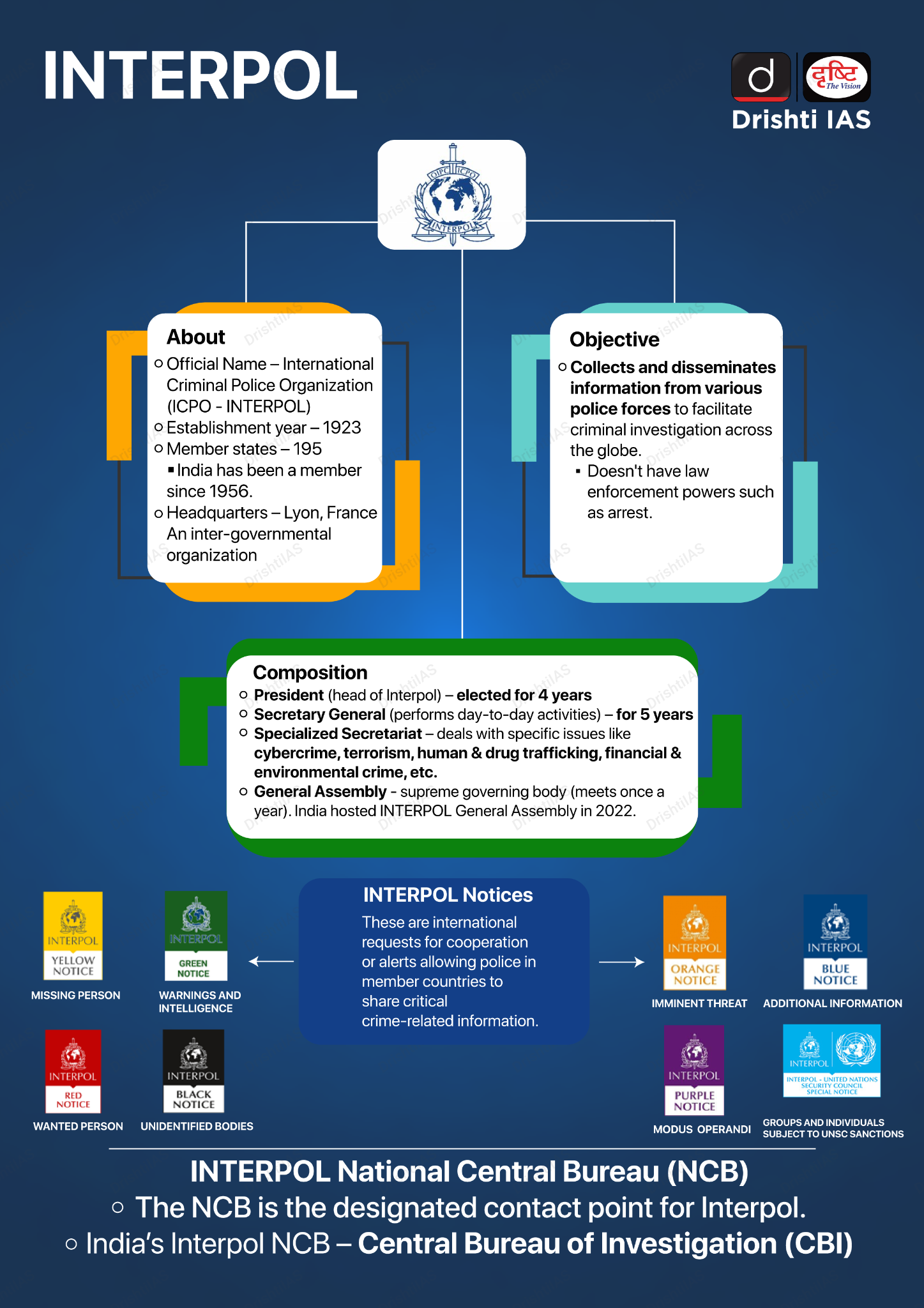
In the aftermath of the Goa nightclub fire that claimed 25 lives, INTERPOL has issued a Blue Corner Notice against the absconding owners of the nightclub to help trace their location across borders.
- INTERPOL notices are issued by the General Secretariat upon request from a country’s National Central Bureau (NCB).
- Interpol publishes a Notice only if it meets legal standards under its Constitution and data protection rules, ensuring information quality and privacy.
- Blue Corner Notice: It is issued to collect information about a person’s identity, location, or activities linked to a criminal investigation.
- It is not an arrest warrant, unlike a Red Notice, but it helps law enforcement agencies across countries track suspects internationally.
|
Type of Notice |
Purpose |
|
Red Notice |
To seek the location and arrest of persons wanted for prosecution or to serve a sentence |
|
Yellow Notice |
To locate missing persons, especially minors, or identify persons unable to identify themselves |
|
Black Notice |
To seek information on unidentified bodies |
|
Green Notice |
To warn about a person’s criminal activities who may pose a threat to public safety |
|
Orange Notice |
To warn of an event, person, object, or process posing a serious and imminent public safety threat |
|
Purple Notice |
To share information on modus operandi, tools, devices, and concealment methods used by criminals |
|
Silver Notice (Pilot) |
To identify and trace criminal assets |
|
INTERPOL–UNSC Special Notice |
Issued for individuals and entities under UN Security Council sanctions |
| Read more: Notices of Interpol |
India's PLI Scheme for Advanced Chemistry Cell (ACC) Battery Storage
Ola is currently the only beneficiary under the Production Linked Incentive (PLI) Scheme for Advanced Chemistry Cell (ACC) Battery Storage with an established manufacturing capacity of 1 GWh.
- PLI ACC: Government of India has approved the PLI-ACC scheme "National Programme on Advanced Chemistry Cell (ACC) Battery Storage" in May 2021, with an outlay of Rs 18,100 Crore for 50 GWh ACC capacity.
- The scheme is technology-agnostic, allowing firms to choose suitable advanced technologies and inputs.
- Objective of PLI ACC: It aims to boost domestic value addition, ensure globally competitive battery costs, strengthen the EV and stationary storage ecosystem, attract Foreign Direct Investment (FDI), and build a complete domestic supply chain.
- Along with Faster Adaption of Manufacturing of Electric Vehicles (FAME) and the Automobile PLI scheme, it supports India’s shift towards a clean, sustainable, and self-reliant Electric Vehicles (EV) ecosystem under Atmanirbhar Bharat.
- Advanced Chemistry Cells (ACCs): These are the energy storage technologies that store energy in electrochemical or chemical form and reconvert it into electricity when required.

| Read more: National Programme on Advanced Chemistry Cell Battery Storage |
Sujalam Bharat App
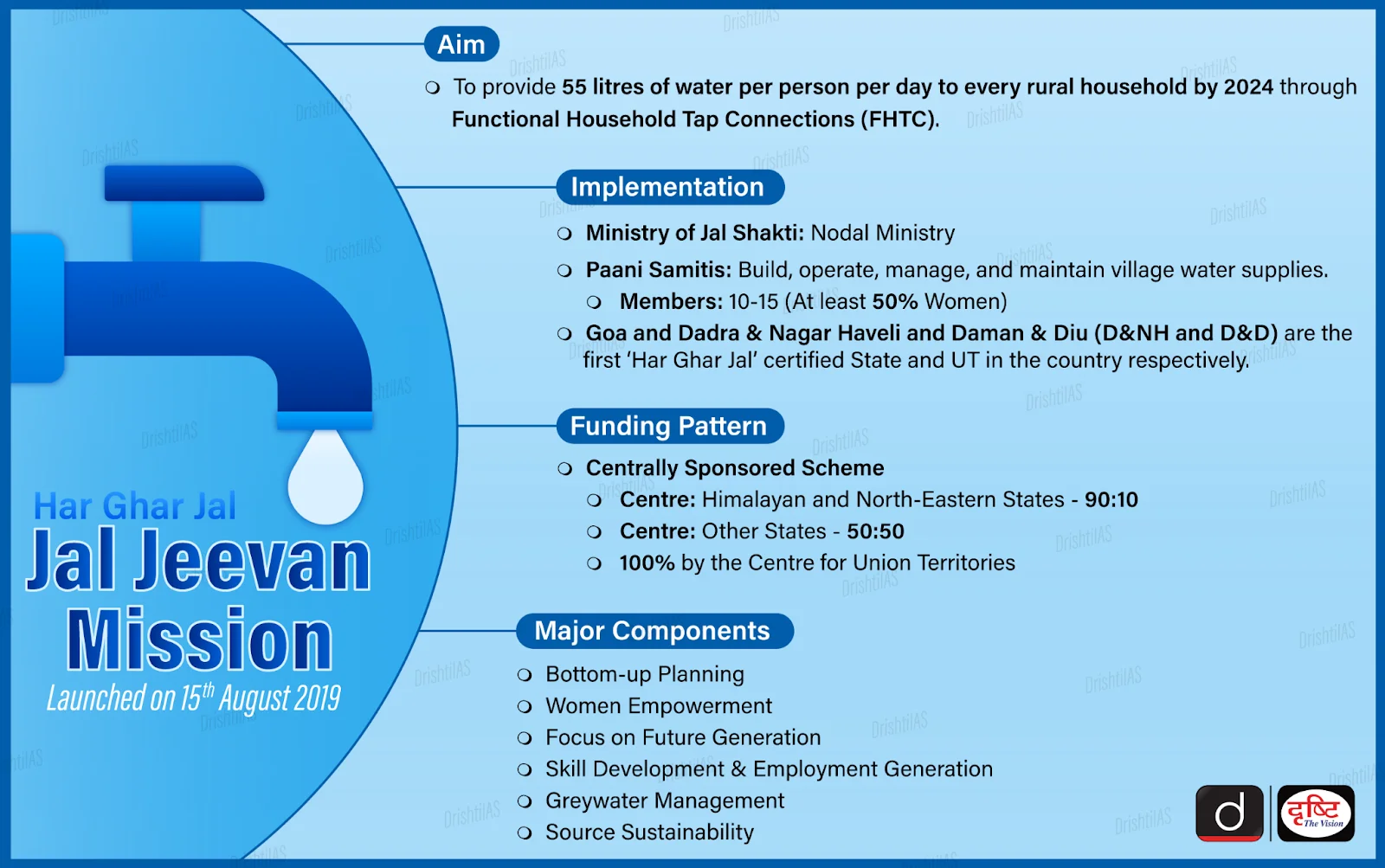
The Ministry of Jal Shakti has launched the Sujalam Bharat App, a key digital initiative under Jal Jeevan Mission (JJM), aimed at efficient management of rural drinking water supply systems.
Sujalam Bharat App
- Objective: To create a unified, digital identity (Sujal Gaon ID) for every rural water scheme, enabling real-time monitoring and management of infrastructure from source to household under JJM.
- Technological Backbone: It has been developed with the support of Bhaskaracharya National Institute for Space Applications and Geo-informatics (BISAG-N).
- It is integrated with PM Gati Shakti GIS for precise geospatial mapping of water networks, asset inventory, water quality data, and community feedback.
- Governance Transformation: Aims to shift governance by placing comprehensive information in the hands of citizens and Gram Panchayats, promoting community ownership and accountability of water service providers.
- Significance: The app is envisioned as the “Aadhaar for rural water systems,” forming the backbone of a transparent, accountable, and citizen-centric water delivery ecosystem.
| Read More: Jal Jeevan Mission |
PM Dhan-Dhaanya Krishi Yojana
The PM Dhan-Dhaanya Krishi Yojana (PM-DDKY) – FPO Sangam was successfully hosted by the Ministry of Agriculture & Farmers’ Welfare, with over 72 Farmers Producer Organisation (FPO)s from 15 states participating.
- FPO (Farmer Producer Organizations) Sangam is a platform connecting FPOs with buyers, processors, and retail chains for long-term sourcing partnerships and market expansion.
Prime Minister Dhan-Dhaanya Krishi Yojana
- About: PMDDKY (2025–26 to 2030–31) is a comprehensive farm programme designed to enhance productivity, promote sustainable practices, and improve livelihoods. It converges 36 existing schemes from 11 departments.
- The fund is allocated with 40% for subsidies, 30% for infrastructure, 20% for loans, and 10% for training and market support.
- Key Objectives: Boost agricultural productivity, promote crop diversification, enhance post-harvest storage and value addition, support women and youth in allied sectors, and achieve self-sufficiency in foodgrains, pulses, and oilseeds.
- District Selection Criteria: Districts are selected based on low crop productivity (below national averages), moderate cropping intensity (under 1.55 crop cycles per year), and low credit access (typically below 30% farmer coverage).
- Implementation Structure: Each selected district will establish a District DDKY Samiti, chaired by the District Collector, to implement the District Agriculture Development Plan (DADP), with oversight provided by 100 Central Nodal Officers (primarily Joint Secretaries).


| Read More: Prime Minister Dhan-Dhaanya Krishi Yojana (PMDDKY) |