
India-Malaysia Relations
For Prelims: India–Malaysia Comprehensive Strategic Partnership, United Nations Peacekeeping Operations, Employees' State Insurance Corporation, International Big Cat Alliance , International Solar Alliance, South China Sea
For Mains: Evolution of India–Malaysia relations from civilisational to strategic partnership, India’s Act East Policy and ASEAN centrality
Why in News?
The Prime Minister of India paid an official visit to Malaysia. The visit reaffirmed and operationalised the India–Malaysia Comprehensive Strategic Partnership (CSP), with wide-ranging agreements covering trade, digital economy, defence, energy, education, health, and regional cooperation, reflecting a clear intent to deepen ties amid shifting regional and global dynamics.
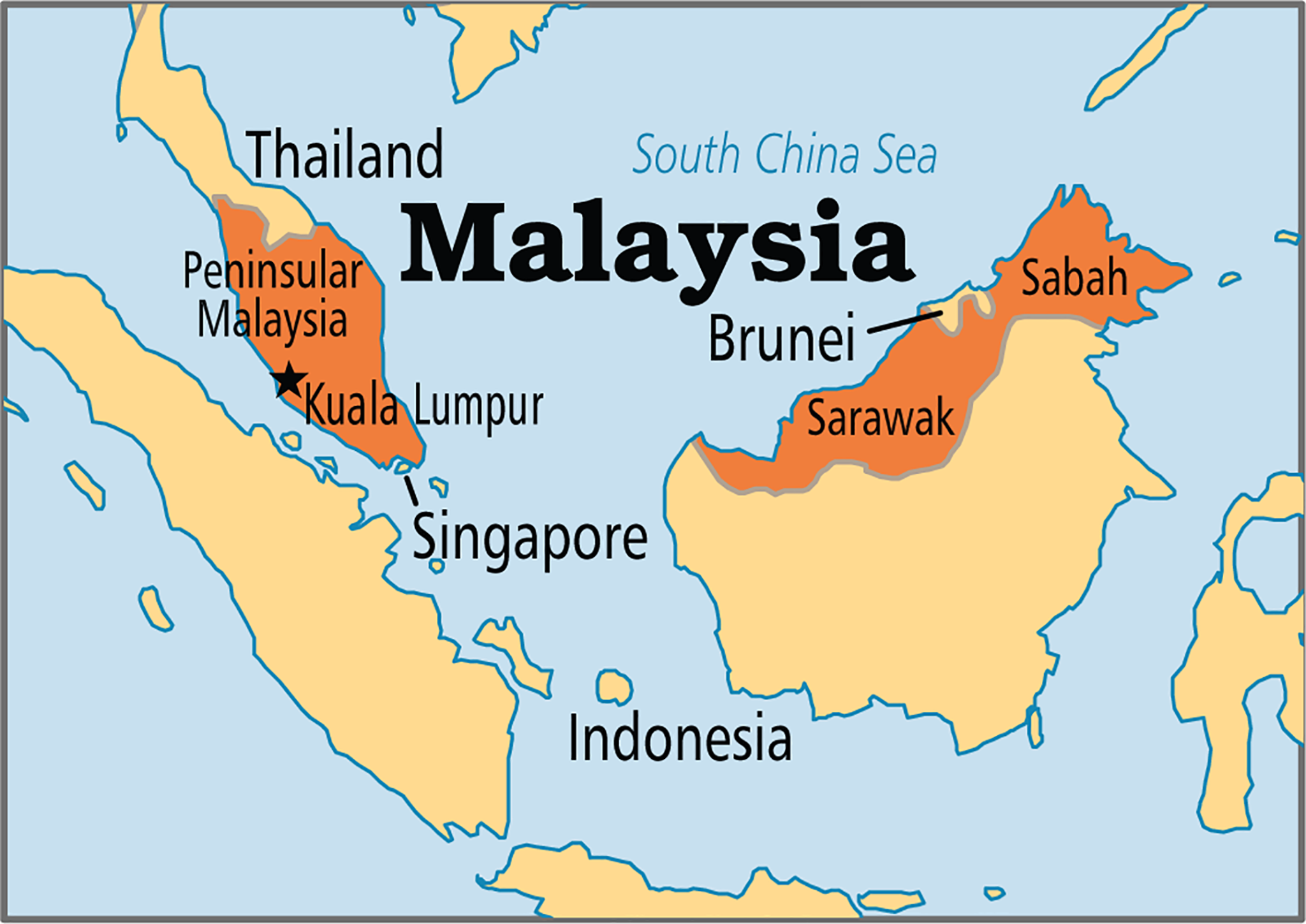
What are the Key Outcomes of the Prime Minister’s Visit to Malaysia?
- Digital & Fintech: The leaders formalised the Malaysia–India Digital Council (MIDC) to drive cooperation in fintech, AI, cybersecurity, e-governance, and Digital Public Infrastructure.
- They also welcomed the NPCI International Limited (NIPL) –PayNet partnership to enable low-cost cross-border digital payments, boosting ease of business and people-to-people ties.Signed an agreement between
- Trade & Finance: Agreed to advance local-currency trade settlement (INR–MYR) through cooperation between the Reserve Bank of India and Bank Negara Malaysia.
- Energy and Semiconductor Cooperation: Agreed to expand cooperation in renewable energy and green hydrogen and to strengthen semiconductor value-chain collaboration focusing on R&D, skills, and supply-chain resilience.
- Public Administration: Signed an MoU on Combating and Preventing Corruption between India’s Central Bureau of Investigation (CBI) and the Malaysian Anti-Corruption Commission (MACC).
- Disaster Management: MoU signed on Disaster Management Cooperation between the National Disaster Management Authorities of India and Malaysia.
- UN Peacekeeping: Renewed cooperation on United Nations Peacekeeping Operations.
- Education and Skill Development: India and Malaysia agreed to expand student and faculty exchanges under Malaysia Technical Cooperation Programme (MTCP) and Indian Technical and Economic Cooperation Programme (ITEC), with India inviting Malaysian students to the Study in India programme.
- They also committed to strengthening Technical and Vocational Education and Training (TVET) cooperation to build a skilled workforce and boost employability aligned with future economic needs.
- Healthcare: Reaffirmed cooperation in healthcare and traditional medicine, including plans to deploy Traditional Indian Medicine experts under the ITEC programme.
- Welcomed the Central Council for Research in Homeopathy, India and the University of Cyberjaya MoU to boost research and training in homeopathy.
- Social Security: Signed an MoU between India’s Employees' State Insurance Corporation (ESIC) and Malaysia’s Social Security Organisation to extend social security coverage to Indian workers in Malaysia.
- Cultural Connect: Welcomed the operationalisation of the Thiruvalluvar Chair and Centre at Universiti Malaya to promote Tamil studies.
- Launched Thiruvalluvar Scholarships for Malaysian nationals, strengthening cultural and academic ties. to promote Tamil studies.
- The leaders acknowledged the popularity of Tamil cinema in Malaysia, with special reference to the legacy of M.G. Ramachandran (MGR)
- Diplomatic Expansion: India announced the decision to open a new Consulate General in Malaysia to boost consular access and trade.
- Global Alliances: Malaysia formally acceded to the International Big Cat Alliance (IBCA), an India-led initiative.
- Malaysia welcomed India’s 2026 BRICS Chairmanship, while India supported Malaysia’s role as a BRICS Partner Country and its membership aspirations, viewing this cooperation as a step toward a more balanced and representative global order.
- Both leaders reaffirmed support for ASEAN unity and centrality, with India appreciating Malaysia’s ASEAN Chairmanship in 2025.
- They also committed to a free, open, and rules-based Indo-Pacific, advancing cooperation between the ASEAN Outlook on the Indo-Pacific (AOIP) and India’s Indo-Pacific Oceans Initiative (IPOI).
- Combating Terrorism: Both leaders reaffirmed zero tolerance for terrorism, including cross-border terrorism, and called for sustained international cooperation to combat it.
- They also welcomed India–Malaysia co-chairmanship of the ASEAN Defence Ministers’ Meeting (ADMM)-Plus Expert Working Group Meeting (EWG) for the 2024-2027 term.
How are India-Malaysia Bilateral Relations?
- Historical Ties: India–Malaysia ties date back over a millennium to the Chola period (9th–13th centuries), when extensive maritime trade linked South India with the Malay Peninsula.
- Under rulers like Rajaraja Chola I and Rajendra Chola I, Chola naval power extended into Southeast Asia, including parts of present-day Malaysia, laying early foundations of sustained India–Southeast Asia interaction.
- Economic Partnership: Malaysia is India’s 3rd largest trading partner in ASEAN. Bilateral trade reached USD 19.86 billion in 2024-25
- Both nations are actively promoting trade settlement in local currencies (INR and Ringgit) to reduce dependency on the US Dollar.
- Economic engagement is guided by the Malaysia-India Comprehensive Economic Cooperation Agreement (MICECA) and the ASEAN-India Trade in Goods Agreement (AITIGA).
- Defence & Security: Joint military exercises include Harimau Shakti (Army) and Samudra Lakshmana (Navy), and Udara Shakti (Air Force).
- Malaysia-India Security Dialogue is a platform to discuss cooperation and mutual assistance on security matters.
- Malaysia is a key potential market for Indian defense platforms, including the Tejas LCA and BrahMos missiles.
- Strategic Convergence: Malaysia is a pillar of India’s Act East Policy and a crucial partner in the Indo-Pacific architecture. Malaysia plays a pivotal role in steering ASEAN-India relations.
- Strengthening ties with key ASEAN nations like Malaysia is crucial for maintaining a Rules-Based Order in the South China Sea.
- Diaspora: Malaysia hosts the world’s second-largest Person of Indian Origin (PIO) community (about 2.7 million), after the US, predominantly originating from Tamil Nadu.
What are the Major Challenges in India-Malaysia Relations?
- Persistent Trade Deficit: In FY 2024-25, while bilateral trade stood at nearly USD 20 billion, it was heavily skewed in Malaysia's favor.
- India primarily imports high-value commodities like palm oil, electronics, and crude oil, while its exports (meat, aluminum, petroleum products) have not kept pace.
- The "Palm Oil" Diplomacy & Volatility: Malaysia is a top supplier of palm oil to India.
- This dependency has previously been weaponized, for instance in 2019-20, political friction led India to restrict Malaysian palm oil imports, impacting trade stability.
- Increasing global scrutiny on sustainable palm oil production (deforestation concerns) adds a layer of complexity to future trade, potentially raising costs for Indian importers.
- Political & Diplomatic Irritants: Past comments by former Malaysian leaders on Article 370 and the Citizenship Amendment Act strained bilateral ties and despite a more constructive stance by the current leadership, sensitivities persist.
- At the UN General Assembly in 2019, Malaysia accused India of "invading and occupying" Kashmir.
- The "China Factor" & Geopolitics: China is Malaysia's largest trading partner and a key investor in its infrastructure (Belt and Road Initiative (BRI) projects like the East Coast Rail Link).
- While both nations support freedom of navigation, Malaysia prefers a quiet, diplomatic approach to Chinese aggression in the South China Sea, whereas India (along with the Quad) advocates for a more assertive stance against Beijing's expansionism.
What Steps can Enhance India-Malaysia Relations?
- Defense as a Pillar: Deepening military-to-military cooperation and becoming a reliable defense exporter to Malaysia can act as a strategic counterweight to China's influence in the region.
- Cultural Soft Power: Leverage the "Shared Affection" for Tamil and the new Thiruvalluvar Centre to strengthen people-to-people connect beyond state-level diplomacy.
- Maritime Domain Awareness (MDA): Given Malaysia’s location along the critical Strait of Malacca (where 60% of India’s trade passes), India should integrate Malaysia into its IFC-IOR (Information Fusion Centre) grid to share real-time intelligence on hostile naval movements.
- Accelerate AITIGA Review: The current trade deficit is a structural irritant. India must push for the swift conclusion of the ASEAN-India Trade in Goods Agreement (AITIGA) review by 2026-27 to correct inverted duty structures that hurt Indian manufacturing.
- Long-term Contracts: Both sides should move towards long-term G2G import contracts for palm oil, ensuring price stability for India and demand security for Malaysia.
Conclusion
The future of India-Malaysia ties lies in moving from a transactional relationship (buying oil) to a strategic one (making chips and jets together), both nations can secure their autonomy in the volatile Indo-Pacific century.
|
Drishti Mains Question: Despite strong civilisational and strategic ties, India–Malaysia relations face structural challenges. Analyse. |
Frequently Asked Questions (FAQs)
1. What is the India–Malaysia Comprehensive Strategic Partnership (CSP)?
It is a high-level bilateral framework upgraded in 2024, covering defence, trade, digital economy, energy, education, and regional cooperation.
2. Why is Malaysia important for India’s Act East Policy?
Malaysia is a key ASEAN partner, strategically located near the Strait of Malacca, and plays a pivotal role in ASEAN–India engagement.
3. What is the significance of the Malaysia–India Digital Council (MIDC)?
MIDC institutionalises cooperation in fintech, AI, cybersecurity, and Digital Public Infrastructure, strengthening economic and people-to-people ties.
4. What are the major economic challenges in India–Malaysia relations?
Persistent trade deficit, over-dependence on palm oil imports, and non-tariff barriers faced by Indian exporters.
5. How does the China factor affect India–Malaysia relations?
Malaysia’s deep economic ties with China and cautious South China Sea posture create strategic divergence with India’s more assertive Indo-Pacific approach.
UPSC Civil Services Examination, Previous Year Questions (PYQs)
Mains
Q. Evaluate the economic and strategic dimensions of India’s Look East Policy in the context of the post-Cold War international scenario. (2016)
India’s Balancing Act Between the US and Russia
For Prelims: Tashkent Declaration, Initiative on Critical and Emerging Technology, Kudankulam Nuclear Power Plant, Strategic Petroleum Reserves
For Mains: Evolution of India–Russia relations from Cold War to present, Comparative significance of India–US and India–Russia trade, Strategic autonomy in an era of economic coercion and sanctions
Why in News?
The US claims that India has “agreed to stop buying Russian oil” under the 2026 India–US trade understanding. The statement has revived questions about how India balances its long-standing partnership with Russia amid mounting geopolitical and economic pressure from the US.
Summary
- The US claim on ending Russian oil imports has sharpened India’s strategic dilemma of balancing deep defence and energy ties with Russia against growing economic, trade, and geopolitical pressure from the US.
- India’s response reflects pragmatic multi-alignment: gradually diversifying energy and defence sources while leveraging US trade, technology, and Indo-Pacific partnerships, without formally abandoning Russia.
How have India and Russia Relations Evolved?
- Cold War Solidarity (1950-1991): The USSR publicly supported India’s sovereignty over Kashmir and Goa.
- The USSR remained neutral during the 1962 Sino-Indian war and successfully mediated the Tashkent Declaration after the 1965 India-Pakistan war.
- In 1971, facing a US-Pakistan-China axis during the Bangladesh Liberation War, India signed the historic Treaty of Peace, Friendship, and Cooperation with the USSR.
- This provided India with a de-facto security guarantee (nuclear umbrella) against US intervention.
- The USSR became India's largest defense supplier (providing ~70% of weaponry) and a key economic partner through the Rupee-Rouble trade arrangement.
- Post-Soviet Drift (1991–1999): The collapse of the USSR (1991) coincided with India’s economic crisis.
- Russia looked Westward for integration and stopped offering "friendship prices" on arms.
- India liberalized its economy (LPG reforms) and began improving ties with the US and Israel.
- Strategic Partnership (2000–2021): In 2000, the "Declaration on Strategic Partnership" was signed by India and Russia.
- In 2010, the relationship was upgraded to a "Special and Privileged Strategic Partnership."
- Cooperation expanded beyond buyer-seller defense ties to Joint Development (e.g., BrahMos Missile) and energy (investments in Sakhalin oil fields).
- The Kudankulam Nuclear Power Plant (Tamil Nadu) became a symbol of civil nuclear cooperation, making Russia the only country building nuclear reactors in India at the time.
- The Kudankulam Nuclear Power Plant (Tamil Nadu) became a symbol of civil nuclear cooperation, making Russia the only country building nuclear reactors in India at the time.
- Economic Cooperation: Bilateral trade touched USD 68.7 billion in FY 2024–25, driven mainly by India’s energy imports, but remained heavily skewed in Russia’s favour.
- Both countries aim for USD 100 billion in trade by 2030 and USD 50 billion in mutual investments by 2025.
- Indian exports: Pharmaceuticals, chemicals, iron and steel, marine products.
- Indian imports: Crude oil and petroleum products, sunflower oil, fertilisers, coking coal, precious stones and metals.
- Defence Cooperation: It is the cornerstone of the partnership, guided by the 2021–2031 military-technical cooperation agreement.
- Regular exercises like INDRA and Zapad-2025 reinforce interoperability.
- Ukraine War Impact: Western sanctions drove India to buy discounted Russian oil, sharply raising its share in India’s imports and pushing trade to record levels.
- The US argues this indirectly funds the Ukraine war and imposed punitive tariffs, recently rolling them back with a strict monitoring and snap-back clause.
- The US now seeks to replace Russia as India’s energy partner by pushing US crude, LNG, and alternatives like Venezuelan oil.
- The US argues this indirectly funds the Ukraine war and imposed punitive tariffs, recently rolling them back with a strict monitoring and snap-back clause.
What is the Significance of India-US Trade versus India-Russia Trade?
- Trade Volume Disparity:
- India-US Trade: The US is India’s largest market with a total trade volume of USD 128 billion.
- Unlike its deficit-heavy trade with Russia or China, India enjoys a substantial trade surplus with the US, driven by high-value goods exports and large-scale services exports. Additionally, as a top source of Foreign Direct Investment (FDI), the US directly fuels India’s startup ecosystem and infrastructure, creating a 'wealth multiplier' effect.
- Under the Initiative on Critical and Emerging Technology (iCET), trade is shifting from commodities to strategic tech and space cooperation is vital for India’s goal to become a developed nation (Viksit Bharat) by 2047.
- India-Russia Trade: Bilateral trade reached USD 68.72 billion in 2024-25, but it is heavily skewed. India imported USD 63.84 billion (mostly oil) while exports were a meager USD 4.88 billion.
- The Russia relationship is currently transactional, primarily focused on buying commodities (oil/fertilizer) and legacy defense spares, without deep integration into India’s civilian economy.
- India-US Trade: The US is India’s largest market with a total trade volume of USD 128 billion.
- Geopolitical Derivatives:
- The US Advantage: Deepening trade with the US aligns with the "Indo-Pacific" strategy.
- Economic integration acts as a "security guarantee," raising the stakes for the US to defend India’s stability against Chinese aggression.
- As global companies pursue a "China + 1" strategy, the US is indispensable for integrating India into global supply chains.
- The Russia Dilemma: Russia is increasingly economically subservient to China due to Western sanctions.
- Continued heavy reliance on Russia can risk indirectly exposing India’s supply chains to Chinese coercion.
- The US Advantage: Deepening trade with the US aligns with the "Indo-Pacific" strategy.
- Energy Security: The US- India tariff threat highlighted US’s readiness to weaponize market access, pushing India to hedge by shifting toward US and Venezuelan oil to reduce reliance on Russia and diversify its energy supply, even at a higher cost.
What are the Challenges for India in the Current India–US –Russia Dynamic?
- The "Russia-China" Nexus: A Russia that is economically subservient to China is less likely to support India’s interests in the UNSC or remain neutral during a Sino-Indian border crisis.
- Defense & Security Vulnerabilities: Around 60% of India's military inventory (Su-30 MKIs, T-90 tanks, S-400 systems) is Russian.
- Russia, amid increasing India- US trade, may deprioritize or delay critical spares and maintenance support.
- Russia has historically shared sensitive technologies (nuclear submarines, hypersonic missiles) that the West denies. Alienating Moscow could close this door permanently.
- Reducing reliance on Russian defence equipment is strategically necessary but operationally difficult, as Western systems are costlier, restrictive, and require new training and doctrine, risking short-term readiness in sensitive border situations.
- Economic & Energy Challenges: Russian oil was cheap; US and Venezuelan oil will likely come at market rates.
- Furthermore, the freight cost from the Americas is significantly higher than from Russia or the Middle East.
- Indian refineries are technically calibrated to process the specific medium-sour grade of Russian Urals crude. Switching to US light-sweet crude or Venezuelan heavy crude requires technical adjustments, downtime, and efficiency losses in the short term.
- Higher landed cost of crude could spike domestic petrol/diesel prices, fueling inflation and widening the Current Account Deficit (CAD).
- India’s Global South Leadership: India’s claim to leadership of the Global South rests on principles of sovereignty, autonomy, and development-centric diplomacy. Prolonged strategic ambiguity in great-power conflicts risks diluting India’s normative influence and moral authority on global platforms.
What Measures can India Adopt to Balance Ties in the Current India–US –Russia Dynamic?
- Accelerated Defense Indigenization: Under Atmanirbhar Bharat aggressively localize the production of critical spares and ammunition for Russian-origin platforms (Su-30s, T-90s) to inoculate the military from supply chain shocks.
- Continue purchasing high-tech platforms from the US (drones, jet engines), France (fighters, submarines), and Israel (sensors) to dilute Russia’s leverage.
- Reduce Russian dependency to <30% over the next decade, transforming Russia from a "sole supplier" to just "one of many vendors."
- Energy Security: The "Portfolio Approach": India should treat energy security like an investment portfolio (diversified to manage risk).
- Actively engage West Africa (Nigeria, Angola), and Iraq to maintain a balanced basket.
- Expand India's Strategic Petroleum Reserves (SPR) capacity to buffer against supply disruptions from distant sources like the Americas.
- Economic Insulation: Aggressively expand Free Trade Agreements (FTAs) like the India–EU FTA with major economies to reduce reliance on the US market as the sole engine of export growth.
- Strengthen the mechanism for Rupee-based trade to settle transactions without exposing Indian banks to the US financial system.
- Build domestic capacity in critical sectors (pharmaceutical APIs, green energy) to withstand global supply chain weaponization.
- Leveraging Multilateralism: India should use its leadership of the "Global South" to create diplomatic space.
Conclusion
- India needs the US to become a USD 5 Trillion economy, create jobs, and access 21st-century technology.
- India needs Russia to ensure that its energy bills remain manageable and its defense forces remain combat-ready during this transition phase.
Therefore, India’s policy is not about "taking sides" but about de-hyphenating these relationships - engaging with the US for economic prosperity while maintaining functional ties with Russia for strategic security.
|
Drishti Mains Question: Compare India–US and India–Russia trade relations and analyse their implications for India’s long-term strategic autonomy. |
Frequently Asked Questions (FAQs)
1. Why did India increase Russian oil imports after 2022?
Western sanctions forced Russia to offer discounted crude, which India bought to control inflation and ensure energy security.
2. Why is the U.S. opposing India’s purchase of Russian oil?
The U.S. argues it indirectly funds the Ukraine war and exploits a “refining loophole” through Indian fuel exports.
3. Why is India–US trade more significant than India–Russia trade?
India–US trade is larger, diversified, surplus-generating, and linked to jobs, technology, FDI, and supply chains.
4. What is the main challenge in India–Russia defence relations today?
Heavy dependence on Russian-origin platforms and spares amid sanctions and Russia’s China tilt.
UPSC Civil Services Examination Previous Year Question (PYQ)
Prelims
Q. Recently, India signed a deal known as ‘Action Plan for Prioritization and Implementation of Cooperation Areas in the Nuclear Field’ with which of the following countries? (2019)
(a) Japan
(b) Russia
(c) The United Kingdom
(d) The United States of America
Ans: B
Mains
Q. What is the significance of Indo-US defence deals over Indo-Russian defence deals? Discuss with reference to stability in the Indo-Pacific region. (2020)
RBI’s Credit and Consumer Protection Reforms
Why in News?
The Reserve Bank of India (RBI) has introduced a series of measures aimed at stimulating key sectors of the economy, like MSMEs, and bolstering consumer protection in the digital age.
What are the Measures Introduced by the RBI to Stimulate Key Sectors of the Economy?
- Doubling Collateral-Free Loans for MSMEs: The limit for collateral-free loans to Micro, Small and Medium Enterprises (MSMEs) has been proposed to be doubled from Rs 10 lakh to Rs 20 lakh. This aims to ease financing constraints for viable small businesses, reduce their dependence on informal credit, and support expansion.
- Permitting Bank Lending to REITs: Banks will now be allowed to extend finance to listed Real Estate Investment Trusts (REITs), a facility previously available for Infrastructure Investment Trusts (InvITs).
- It aligns with the market regulator SEBI’s move to treat REITs as equity, potentially attracting more institutional investment, e.g., mutual funds.
- Proposed Customer Protection Frameworks:
- Compensation for Small-Value Fraudulent Transactions: A new framework to compensate customers up to Rs 25,000 for losses incurred in small-value fraudulent digital transactions will be introduced, limiting customer liability in unauthorised electronic banking transactions.
- Guidelines to Curb Mis-selling: Draft instructions will be issued to ensure that all third-party financial products (e.g., insurance, mutual funds) sold at bank counters are suitable for customers’ needs and aligned with their risk appetite.
- Harmonised Rules for Loan Recovery Agents: The RBI will review and harmonise existing instructions on the engagement of recovery agents and conduct related to loan recovery across different regulated entities to ensure fair practices.
- 'Mission SAKSHAM' for Urban Cooperative Banks: Mission SAKSHAM (Sahakari Bank Kshamta Nirman) is a sector-wide capacity-building and certification framework for Primary (Urban) Co-operative Banks (UCBs). The mission plans to cover about 1.40 lakh participants through training programs in regional languages.
What are REITs and InvITs?
|
Aspect |
REITs |
InvITs |
|
About |
REITs are investment trusts that own, operate, and manage income-generating commercial real estate assets such as offices and malls, providing investors regular rental income and capital appreciation. |
InvITs are investment trusts that enable pooled investment in operational infrastructure projects such as highways, roads, power transmission lines, pipelines, renewable energy assets, telecom towers, data centers, providing stable, long-term income from essential infrastructure assets. |
|
Primary Revenue Source |
Rental income, lease payments from tenants, and occasional property sales. |
Tolls, user fees, tariffs, availability-based payments, or long-term contracts (often regulated or government-linked) |
|
Portfolio Requirements |
Minimum 80% in completed, revenue-generating properties; up to 20% in under-construction or other assets |
Minimum 80% in completed, revenue-generating infrastructure; limited exposure to under-construction assets allowed |
|
Leverage Limit |
Debt capped at ~49% of asset value (more conservative) |
Debt allowed up to ~70% of asset value (higher borrowing flexibility) |
|
Liquidity & Unit Price |
Higher liquidity with lower unit prices, more accessible to retail investors |
Liquidity varies; generally higher unit prices with potentially lower trading volumes |
|
Regulatory Framework |
Governed by SEBI (Real Estate Investment Trusts) Regulations, 2014 |
Governed by SEBI (Infrastructure Investment Trusts) Regulations, 2014. |
| Click Here to Read: MSMEs, Rising Cyber Frauds in India, Governance in Urban Cooperative Banks |
Frequently Asked Questions (FAQs)
1. What is the key change proposed by the RBI for MSME credit accessibility?
The RBI has proposed doubling the collateral-free loan limit for MSMEs from Rs 10 lakh to Rs 20 lakh to ease financing constraints and reduce their dependence on informal credit.
2. What is the purpose of the ₹25,000 compensation framework for banking customers?
It is a consumer protection measure designed to limit customer liability and provide compensation for losses in small-value fraudulent digital transactions.
3. What is the objective of Mission SAKSHAM announced by the RBI?
Mission SAKSHAM aims at sector-wide capacity building for Urban Cooperative Banks (UCBs) through training and certification.
UPSC Civil Services Examination, Previous Year Question:(PYQ)
Q. Consider the following statements with reference to India : (2023)
- According to the Micro, Small and Medium Enterprises Development (MSMED) Act, 2006, the ‘medium enterprises’ are those with investments in plant and machinery between 15 crore and 25 crore.
- All bank loans to the Micro, Small and Medium Enterprises qualify under the priority sector.
Which of the statements given above is/are correct?
(a) 1 only
(b) 2 only
(c) Both 1 and 2
(d) Neither 1 nor 2
Ans: (b)
Q With reference to ‘Urban Cooperative Banks’ in India, consider the following statements:
- They are supervised and regulated by local boards set up by the State Governments.
- They can issue equity shares and preference shares.
- They were brought under the purview of the Banking Regulation Act, 1949 through an Amendment in 1966.
Which of the statements given above is/are correct?
(a) 1 only
(b) 2 and 3 only
(c) 1 and 3 only
(d) 1, 2 and 3
Ans: (b)
Mission for Aatmanirbharta in Pulses
Why in the News?
The roadmap for the Self-Reliance (Aatmanirbharta) in Pulses Mission was finalised at the Food Legumes Research Centre (FLRP), Amlaha, Sehore district, Madhya Pradesh.
What is the Mission for Aatmanirbharta in Pulses?
- Mission for Aatmanirbharta in Pulses: Announced in the Union Budget 2025–26, the Mission for Aatmanirbharta in Pulses was launched in October 2025. It is a centrally sponsored scheme with an outlay of Rs 11,440 crore, aimed at achieving self-sufficiency in pulses over 2025–26 to 2030–31.
- Focus Crops: The mission places specific emphasis on Tur (Arhar), Urad, and Masoor, which are critical for daily consumption but currently face production gaps.
- Need:
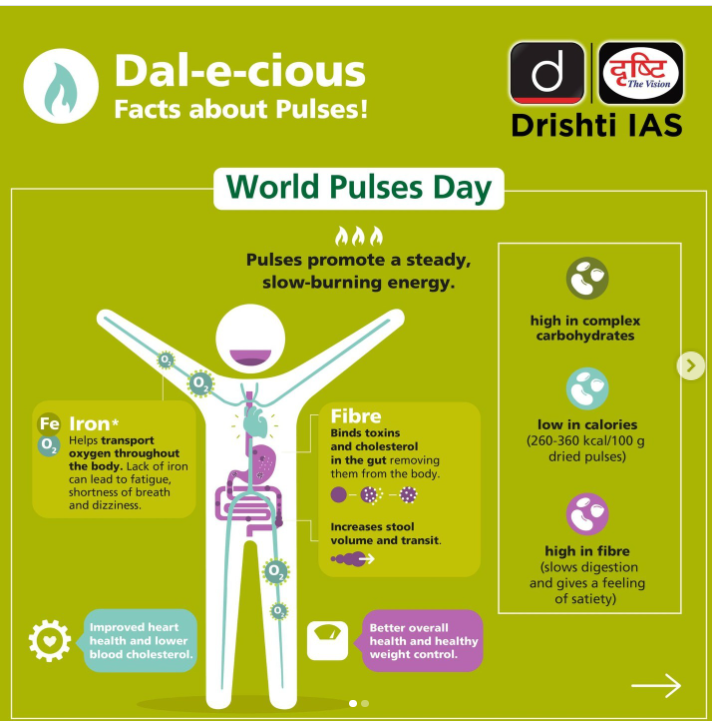
- Nutritional Security: Pulses are a "nutritional powerhouse," contributing 20-25% of the total protein intake in Indian diets.
- However, per capita consumption falls short of the recommended 85 grams per day, exacerbating protein-energy malnutrition.
- Import Dependence: While domestic production rose by 31% (from 192.6 lakh tonnes in 2013-14 to 252.38 lakh tonnes in 2024-25), India still imported 47.38 lakh tonnes in 2023-24 to meet demand.
- Reducing imports is vital to conserve foreign exchange and protect farmers from international price volatility.
- Nutritional Security: Pulses are a "nutritional powerhouse," contributing 20-25% of the total protein intake in Indian diets.
- Key Objectives and Targets: The Mission aims to expand pulses cultivation by additional 35 lakh hectares, raising total area to 310 lakh hectares, and boosting production to 350 lakh tonnes by 2030–31.
- It focuses on reducing imports, improving yields, promoting climate-resilient practices, enhancing farmers’ incomes, and ensuring long-term nutritional security.
- Operational Strategy:
- SATHI Portal (Seed Authentication, Traceability & Holistic Inventory): A centralized portal developed by the Ministry of Agriculture and NIC to automate the entire seed life cycle.
- SATHI Portal ensures traceability from seed production to certification, licensing, and sale, guaranteeing farmers access to quality seeds.
- Assured Procurement: 100% procurement of Tur, Urad, and Masoor will be ensured in participating states for the next four years.
- Agencies like National Agricultural Cooperative Marketing Federation of India (NAFED) and the National Cooperative Consumers’ Federation (NCCF) will lead this under the Pradhan Mantri Annadata Aay Sanrakshan Abhiyan (PM-AASHA) (PM-AASHA) to guarantee fair prices and reduce market uncertainty.
- Cluster-Based Approach: Interventions will follow a cluster model to promote geographic diversification and efficient resource use.
- SATHI Portal (Seed Authentication, Traceability & Holistic Inventory): A centralized portal developed by the Ministry of Agriculture and NIC to automate the entire seed life cycle.
Key Highlights of the Roadmap for Mission for Aatmanirbharta in Pulses
- It aims to establish 1,000 pulse mills across the country (including 55 in MP) under a cluster model, with a government subsidy of Rs 25 lakh per unit to promote local value addition.
- Under the “seed to market” approach, seeds will no longer be released from Delhi but distributed directly in states.
- Farmers joining clusters will receive seed kits and Rs 10,000 assistance per hectare for model farming.
NITI Aayog Recommendations for Aatmanirbharta in Pulses
- One Block–One Seed Village: Recommended strengthening pulses seed systems through cluster-based seed hubs and Farmer-Producer Organizations (FPOs).
- Rice Fallows: Recommended utilizing fallow lands after rice harvest for pulses cultivation.
- Dietary Integration: Integrating pulses into welfare programs like PDS and Mid-Day Meals to boost demand and address malnutrition.
- Technology: Recommended promoting climate-resilient, short-duration varieties and using the SATHI Portal for data-driven monitoring.
What are the Key Facts About the Pulses?
- About: Pulses are edible seeds of leguminous plants, harvested solely for their dry grains, and belong to the Leguminosae (Fabaceae) family.
- Pulses are high in protein, fiber, and nutrients, low in fat, act as nitrogen-fixing crops that improve soil fertility, and have a long shelf life when dried.
- Climatic Conditions: Pulses require 20–27°C temperature, 25–60 cm rainfall, and sandy-loamy soil, and are cultivated year-round.
- Kharif : Arhar (Tur), Urd (Blackgram), Moong (Greengram), Lobia (Cowpea), Kulthi (Horsegram) and Moth.
- Rabi : Gram, Lentil, Pea, Lathyrus and Rajmash.
- Summer: Greengram, Blackgram and Cowpea.
- Global and National Position: India is the largest producer and consumer of pulses globally, contributing about 25% of world production.
- However, the share of pulses in India’s total food grain output has declined from 16% in 1950 to around 8% in 2022–23, reflecting a long-term cereal-centric policy bias.
- The major regions of Pulse cultivation are Madhya Pradesh, Maharashtra, Rajasthan, Uttar Pradesh, Gujarat, Karnataka, Jharkhand, Andhra Pradesh, Chhattisgarh, West Bengal.
- Studies project India's pulse demand at about 39 million tonnes by 2050, requiring an annual production growth of around 2.2% to bridge the gap.
- Agronomic and Environmental Benefits: Pulses improve soil fertility through nitrogen fixation, enhance soil biodiversity, and support intercropping systems, making them environmentally sustainable.
- They are considered a low-carbon crop, aligning with climate-resilient agriculture and the growing shift toward vegetarian and plant-based diets.
India’s Initiatives to Boost Pulses Production
Frequently Asked Questions (FAQs)
1. What is the Mission for Aatmanirbharta in Pulses?
It is a centrally sponsored scheme launched in October 2025 with an outlay of ₹11,440 crore to achieve self-sufficiency in pulses during 2025–26 to 2030–31.
2. Which pulses are prioritised under the mission?
Tur (Arhar), Urad, and Masoor are the focus crops due to persistent production gaps and high consumption demand.
3. What are the production targets under the mission?
Expansion of pulses area to 310 lakh hectares and production to 350 lakh tonnes by 2030–31.
4. What is the role of assured procurement in the mission?
100% procurement of Tur, Urad, and Masoor will be undertaken by NAFED and NCCF under PM-AASHA to ensure price stability.
UPSC Civil Services Examination, Previous Year Question (PYQ)
Prelims
Q. With reference to pulse production in India, consider the following statements: (2020)
- Black gram can be cultivated as both kharif and rabi crop.
- Green gram alone accounts for nearly half of pulse production.
- In the last three decades, while the production of kharif pulses has increased, the production of rabi pulses has decreased.
Which of the statements given above is/are correct?
(a) 1 only
(b) 2 and 3 only
(c) 2 only
(d) 1, 2 and 3
Ans: (a)
Supreme Court Bars Stem Cell Therapy for Autism
Why in News?
Recently, the Supreme Court ruled that stem cell therapy cannot be offered as a clinical service for Autism Spectrum Disorder (ASD) outside approved clinical trials and directed the Union Government to create a dedicated regulatory authority for stem cell research.
- The Court held that such therapy lacks established evidence on safety and efficacy and therefore fails the reasonable standard of care owed by doctors to patients.
What are Stem Cells?
- About: Stem cells are unique cells that generate specialized cells like blood, bone, and muscle, playing a vital role in tissue repair and bodily functions.
- Types:
- Embryonic (Pluripotent) Stem Cells: Can become any cell type, sourced from embryos or cord blood.
- Tissue-Specific (Multipotent/Unipotent) Stem Cells: Generate cells only for their tissue, e.g., blood stem cells.
- Induced Pluripotent Stem Cells (iPSCs): Lab-made cells mimicking embryonic stem cells for research and drug testing.
- Stem Cell Therapy: It is also called regenerative medicine, aims to repair damaged or diseased tissues by using stem cells or their derivatives.
- In India, stem cell-based treatments are permitted only within approved clinical trials, as their safety, efficacy, and long-term effects are not yet fully established for many diseases.
- Regulations: In India stem cell therapy is governed by the National Guidelines for Stem Cell Research 2025, which were jointly drawn up by the Indian Council of Medical Research (ICMR) and the Department of Biotechnology (DBT).
Supreme Court Judgement
- Informed Consent: Valid informed consent requires clear scientific evidence on safety, effectiveness, risks, and alternatives, which is currently lacking for stem cell therapy in autism, making such clinical use ethically and legally impermissible.
- Ethical Limits on Patient Autonomy: The Court clarified that patient or parental consent cannot justify treatments that are scientifically unproven, ethically impermissible, or outside accepted medical practice.
- Violation of Legal Framework: Such practices contravene the New Drugs and Clinical Trial Rules, 2019 and the National Guidelines for Stem Cell Research, 2017 issued by the Indian Council of Medical Research (ICMR).
Autism (ASD)
- Autism Spectrum Disorder (ASD) is a complex neurodevelopmental condition affecting brain development, marked by difficulties in social interaction, communication, and behaviour, with wide variation in abilities.
- Around 1 in 100 children worldwide is estimated to have autism, though cases are often underreported in low- and middle-income countries.
- Autism arises from a combination of genetic and environmental risk factors during early development, and childhood vaccines do not increase the risk of autism.
- Individuals with autism may have co-occurring conditions such as epilepsy, depression, anxiety, sleep disturbances, or self-injurious behaviour, while intellectual abilities range from severe impairment to above-average levels.
Frequently Asked Questions (FAQs)
1. What are stem cells?
Stem cells are special cells that can develop into different types of cells in the body and have the ability to repair or replace damaged tissues.
2. What is stem cell therapy?
Stem cell therapy involves using stem cells to treat or manage diseases by regenerating damaged cells, but most such therapies are still experimental.
3. Why is stem cell therapy restricted for autism?
Because there is no proven scientific evidence on its safety or effectiveness for autism, and valid informed consent cannot be ensured.
UPSC Civil Services Examination, Previous Year Questions (PYQs)
Prelims
Q. In the context of hereditary diseases, consider the following statements: (2021)
- Passing on mitochondrial diseases from parent to child can be prevented by mitochondria replacement therapy either before or after in vitro fertilization of the egg.
- A child inherits mitochondrial diseases entirely from mother and not from father.
Which of the statements given above is/are correct?
(a) 1 only
(b) 2 only
(c) Both 1 and 2
(d) Neither 1 nor 2
Ans: (c)
Q. With reference to ‘stem cells’, frequently in the news, which of the following statements is/are correct? (2012)
- Stem cells can be derived from mammals only
- Stem cells can be used for screening new drugs
- Stem cells can be used for medical therapies
Select the correct answer using the codes given below:
(a) 1 and 2 only
(b) 2 and 3 only
(c) 3 only
(d) 1, 2 and 3
Ans: (b)
India–Seychelles
Recently, India and Seychelles discussed strengthening maritime trade and blue economy cooperation at a Business Roundtable in Mumbai, underscoring Seychelles’ strategic role in India’s Indian Ocean outreach under the MAHASAGAR vision.
- Identified areas of cooperation include the blue economy, tourism, healthcare, pharmaceuticals, education, skills development and financial services.
- The partnership is being advanced through India’s neighbourhood-first and ocean-based cooperation approach, with a shared vision of a peaceful and prosperous Indian Ocean region.
Seychelles
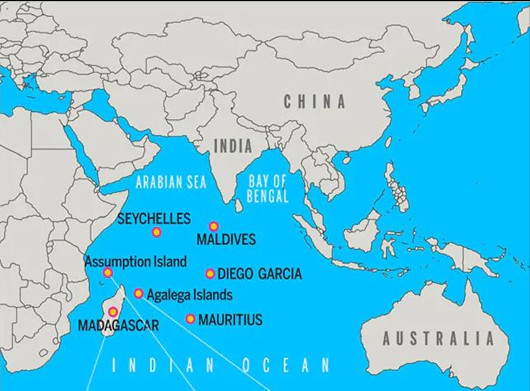
- Seychelles is a sovereign island nation and archipelagic state of 155 islands, located in the western Indian Ocean, northeast of Madagascar and off the east coast of mainland Africa.
- The islands of Seychelles are situated on the Mascarene Plateau, an extensive submarine plateau in the Indian Ocean.
- It is Africa’s smallest and least populated country.
- Capital: Victoria (on Mahé Island).
- Strategic Importance for India: It sits along crucial maritime trade routes in the Indian Ocean and plays a key role in anti-piracy operations, maritime security, and the Blue Economy.
- Seychelles is a vital partner in India’s SAGAR vision and Indian Ocean diplomacy.
| Read more: India-Seychelles |
PRIYA Trial on Vitamin B12
The follow-up findings of the Pune Rural Intervention in Young Adolescents (PRIYA) trial indicate that vitamin B12 supplementation during adolescence improves neonatal health through epigenetic mechanisms.
- Conducted between 2012 and 2020 within the Pune Maternal Nutrition Study (PMNS), the PRIYA trial assessed whether enhancing vitamin B12 status in adolescents could lower intergenerational metabolic risks in a population with widespread deficiency.
- The study found that adolescent vitamin B12 supplementation significantly improved neonatal ponderal index (weight relative to height), reflecting better foetal growth and early-life nutritional outcomes.
- These results reinforce policy recommendations to include physiological doses of vitamin B12 in iron–folic acid supplementation programmes for adolescents and women of reproductive age to strengthen long-term population health and human capital.
Vitamin B12
- Vitamin B12 (cyanocobalamin) is a water-soluble vitamin that the human body cannot synthesise; it is produced by microorganisms and obtained mainly from animal-based foods.
- It is essential for red blood cell formation, DNA synthesis, and the proper functioning of the brain and nervous system.
- Vitamin B12 deficiency is highly prevalent in India, particularly due to inadequate dietary intake.
- The deficiency can lead to anaemia and neurological disorders, caused mainly by poor nutrition and, in fewer cases, by impaired absorption due to intrinsic factor deficiency.
| Read More: Lancet Study on Micronutrient Inadequacies |
Birth Anniversary of Zakir Hussain
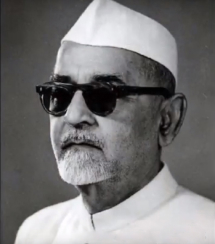
The President paid tributes to the former President of India, Dr Zakir Husain, on his birth anniversary on 8th February, honouring his contributions to education and democracy.
- About: Born on 8th February 1897, he completed his schooling in Hyderabad and went on to study at Aligarh Muslim University, earning a PhD in Economics and developing a lifelong commitment to education.
- Contributions: He co-founded the National Muslim University in Aligarh, which later shifted to Delhi and became Jamia Millia Islamia.
- He served as Vice-Chancellor of both Jamia Millia Islamia and Aligarh Muslim University, promoting inclusive and forward-looking learning.
- He actively participated in India’s freedom struggle and believed education was key to nation-building.
- On Mahatma Gandhi’s request, he became Chairman of the National Committee on Basic Education in 1937, which was set up to develop a Gandhian school curriculum.
- Between 1956 and 1958, he served as a member of the Executive Board of the United Nations Educational, Scientific and Cultural Organization (UNESCO).
- Public Offices Held: He served as Governor of Bihar (1957–1962) and Vice President of India (1962–1967) before becoming President.
- President of India: Dr Zakir Husain served as India’s 3rd President from 1967 to 1969, becoming the first Muslim President of India.
- Death: He passed away on 3rd May 1969, becoming the first Indian President to die in office, and was succeeded by V. V. Giri.
| Read more: Birth Anniversary of Dr. Zakir Hussain |
India’s First Lung Cancer Treatment Guidelines
The Union Health Minister released India’s first nationally developed, evidence-based Lung Cancer Treatment and Palliation Guidelines to standardise care and improve patient outcomes across the country.
Lung Cancer Treatment and Palliation Guidelines
- Objective: To provide a standardised, evidence-based framework for diagnosis, treatment and palliative care of lung cancer across India, reducing variations in clinical practice across public and private healthcare systems.
- Core Features: The guidelines contain 15 evidence-based recommendations, covering both treatment and palliation, developed through systematic evidence synthesis and adapted to Indian healthcare realities.
- Focus Areas: Emphasis on early diagnosis, strengthened screening for high-risk populations, standardised treatment pathways, and improved palliative care services.
- Institutional Support: Developed by the Department of Health Research (DHR) and the Directorate General of Health Services (DGHS) in collaboration with leading oncology experts and partner institutions.
| Read more: World Cancer Day |