
16th Finance Commission Report
For Prelims: Finance Commission, Tax Devolution, Cess, Surcharge, Total Fertility Rate, Fiscal deficit
For Mains: Recommendations of the 16th Finance Commission, Tax Devolution its significance and its Constitutional Mandates, Evolution and role of Finance Commissions in Indian federalism
Why in News?
The 16th Finance Commission (16th FC), chaired by Arvind Panagariya, has submitted its report for the award period 2026-31. The recommendations, tabled in Parliament alongside the Union Budget 2026-27, signal a significant shift from "entitlement-based" transfers to "compliance-driven" fiscal federalism.
Summary
- The 16th FC retains states’ tax share at 41% and shifts fiscal transfers toward performance- and compliance-based criteria, including a new weight for contribution to GDP.
- It emphasises fiscal discipline by capping state deficits at 3% of GSDP, ending off-budget borrowings, rationalising subsidies, and warning against unchecked unconditional cash transfers.
- While strengthening efficiency and transparency, the recommendations raise concerns over shrinking untied funds, equity in horizontal devolution, and state fiscal autonomy, especially for southern and poorer states.
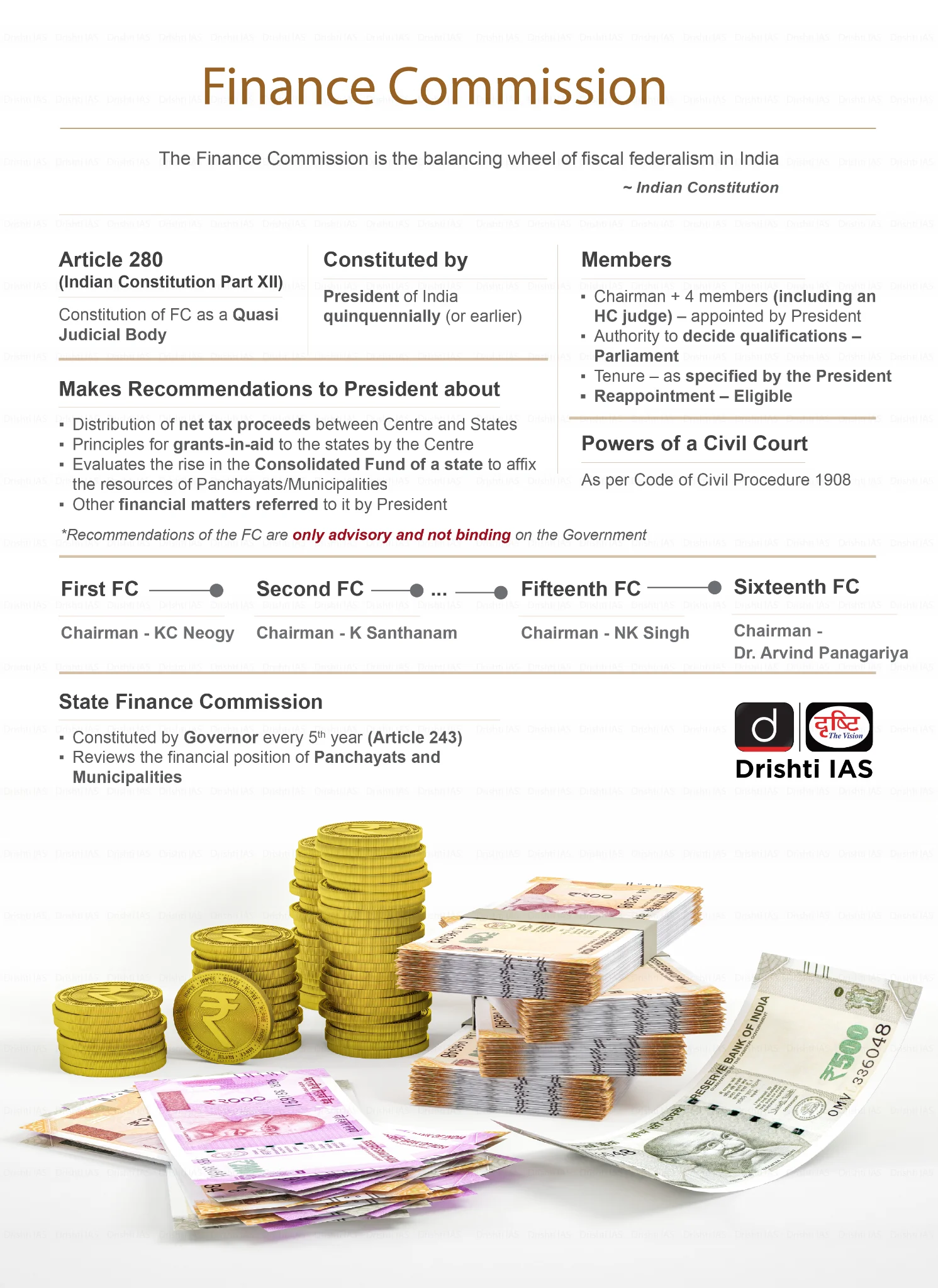
What are the Key Recommendations of the 16th Finance Commission (2026–31)?
Tax Devolution:
- Vertical Devolution: This is the percentage of the Central Government's Divisible Pool of taxes that is given to the States.
- Under 16th FC, states’ share in the divisible pool of central taxes was retained at 41%, unchanged from the 15th Finance Commission.
- The divisible pool excludes cesses, surcharges, and cost of collection from gross central tax revenue.
- Horizontal Devolution: This is the formula used to decide exactly how many rupees each state gets from that 41% pot.
- The 16th FC has introduced a major shift toward rewarding economic performance.
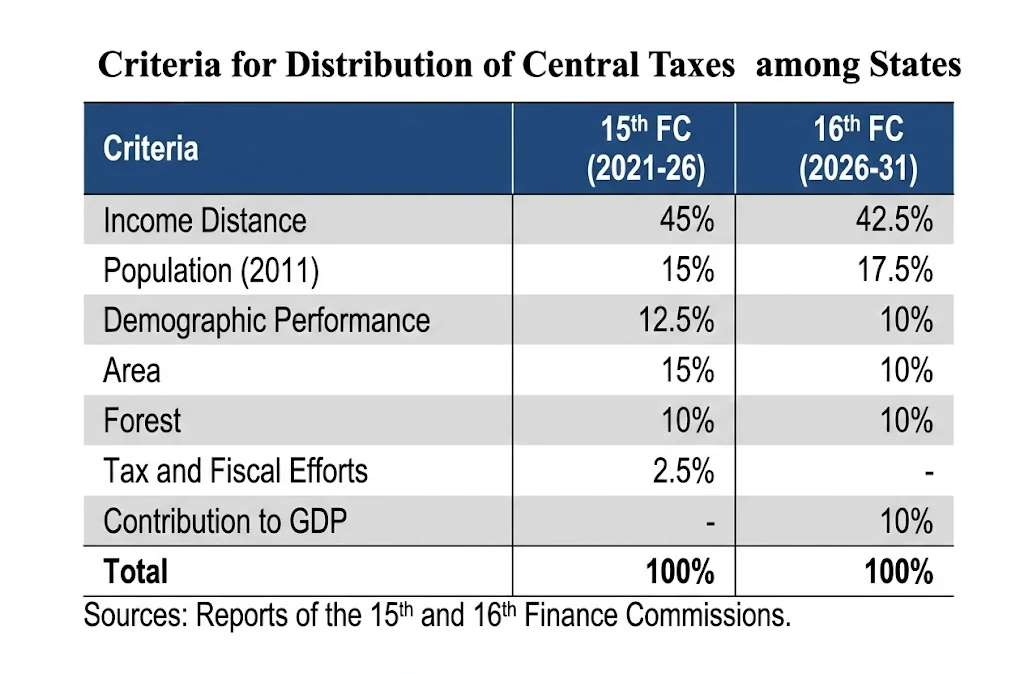
- Distribution among states is based on a revised devolution formula with weights for income distance (42.5%), population as per the 2011 Census (17.5%), demographic performance (10%), area (10%), forest & ecology (10%), and a new 10% weight for contribution to GDP, while excluding the tax and fiscal effort parameter used by the 15th FC.
16th FC Criteria for Devolution
- Per Capita GSDP Distance (Income Distance): Defined as the gap between a state’s per capita GSDP and the average per capita GSDP of the top three large states with the highest income levels.
- States with lower per capita GSDP receive a higher share, ensuring inter-state equity.
- Population (2011 Census): Devolution is based on each state’s share in India’s population as per the 2011 Census, reflecting expenditure needs arising from population size.
- Demographic Performance: Measures population growth between 1971 and 2011, instead of changes in Total Fertility Rate (TFR).
- States with lower population growth during this period receive a higher share, rewarding effective population control.
- Forest: Weightage is assigned based on a state’s share in total forest area and its contribution to the increase in forest cover between 2015 and 2023. Unlike the 15th FC, open forests are also included, not just dense and moderately dense forests.
- Contribution to GDP: A new criterion recognising a state’s economic contribution to national GDP, replacing the earlier tax and fiscal effort parameter.
- It rewards states contributing more to national economic output.
Grants-in-Aid
- The 16th FC has recommended grants worth Rs 9.47 lakh crore over the five-year period. These comprise grants for urban and rural local bodies, and disaster management.
- Revenue deficit grants, sector-specific grants, and state-specific grants recommended by the 15th Finance Commission have been discontinued.
- Grants for Local Bodies: Grants to local bodies amount to Rs 8 lakh crore, with Rs 4.4 lakh crore allocated to rural local bodies and Rs 3.6 lakh crore to urban local bodies.
- All local body grants are subject to three entry conditions: constitution of local bodies as per the Constitution, public disclosure of provisional and audited accounts, and timely constitution of State Finance Commissions.
- Local body grants are split into basic grants (80%) and performance-based grants (20%). This structure aims to ensure predictable transfers while incentivising fiscal and administrative performance.
- 50% of the basic grant will be untied and the rest 50% will be tied to sanitation and solid waste management, and/or water management.
- Performance grants will be further divided between local body-level outcomes and state-level reforms.
- Urbanisation premium grants of Rs 10,000 crore are proposed as one-time transfers to states. These are meant to support the merger of peri-urban villages into ULBs and the formulation of a Rural-to-Urban Transition Policy.
- Special infrastructure grants of Rs 56,100 crore have been recommended for developing comprehensive wastewater management systems in cities with populations between ten and forty lakh, as per the 2011 Census.
- Disaster Management Grants: Rs 2,04,401 crore for State Disaster Relief and Management Funds (SDRF and SDMF).
- Cost sharing is 90:10 for north-eastern and Himalayan states and 75:25 for other states. Centre’s share is Rs 1,55,916 crore.
Other Recommendations
- Fiscal roadmap: Recommended the centre to reduce fiscal deficit to 3.5% of GDP by 2030–31. It recommended the annual fiscal deficit limit for states to be 3% of GSDP.
- It recommended ending Off-budget borrowings and including all such liabilities in fiscal deficit and debt. Combined Centre–state debt is projected to decline from 77.3% of GDP in 2026–27 to 73.1% in 2030–31.
- Power Sector Reforms: States encouraged to privatise DISCOMs. Legacy debt to be parked in a special purpose vehicle, with repayment allowed through the Special Assistance Scheme for Capital Investment, usable only after privatisation.
- Subsidy Expenditure: It recommended states to rationalise subsidies, especially unconditional cash transfers, introduce clear exclusion criteria, stop off-budget financing, and adopt uniform accounting and disclosure of subsidies and transfers.
- Across 21 states, these schemes now account for 20.2% of total subsidy spending in 2025–26, up from just 3% in 2018–19.
- By 2025–26, large-group cash transfer schemes alone account for 47.4%, overtaking traditional social security spending. The Commission links this shift partly to the success of the JAM trinity, which has made mass cash transfers administratively easy and politically attractive.
- Public Sector Enterprise Reforms: Recommended closure of 308 inactive SPSEs recommended.
- Loss-making PSEs for 3 out of 4 consecutive years to be placed before the Cabinet for a decision on closure, privatisation, or continuation based on strategic importance.
- Data on Net Tax Proceeds :The Commission recommended that the Union government annually disclose Comptroller and Auditor General (CAG)-certified data on net tax proceeds under Article 279, to enhance transparency in the size of the divisible pool and ensure greater clarity on actual tax devolution to states.
What are the Concerns Regarding the 16th Finance Commission?
- Stagnation in Vertical Devolution: 16th FC has retained states’ share in central taxes at 41%, despite states demanding an increase to 50%.
- This is seen as inadequate given expanding state responsibilities in health, education, and welfare, especially after the Goods and Services Tax (GST) reduced their revenue autonomy.
- The continued heavy use of cesses and surcharges, which lie outside the divisible pool, further shrinks states’ untied fiscal space and worsens vertical fiscal imbalance.
- Changes in Horizontal Devolution Formula: Reduced weight for income distance weakens equity, while higher weight for population (2011) and a new 10% weight for contribution to GDP favours populous and industrialised states.
- Southern states contend that fiscal devolution now disadvantages them despite successful population control, while poorer states fear tighter transfers will hinder development.
- Tamil Nadu saw only a minimal rise in share from 4.079% to 4.097%, reflecting reduced weightage for area, demographic performance, and per-capita GSDP.
- Phasing Out of Demographic Performance Incentives: 16th FC flags the risk of “aging before becoming rich” and gradually reduces rewards for population control.
- This has raised concerns among southern states that early investments in fertility reduction are no longer adequately recognised, undermining the principle of cooperative federalism.
- Discontinuation of Revenue Deficit Grants: The complete scrapping of Revenue Deficit grants is controversial.
- Hill and special category states argue that their structural and geographical constraints make revenue deficits unavoidable, and removal of such support ignores asymmetric federal realities.
- Off-budget Borrowing Restrictions: The insistence on a 3% GSDP fiscal deficit cap for states and a complete end to off-budget borrowings is seen as fiscally prudent but potentially contractionary.
- States fear an investment squeeze in infrastructure and welfare, especially when combined with pressure to rationalise subsidies.
- Over-centralisation: An increasing share of tied grants limits states’ flexibility to address local priorities.
- This fuels concerns that states are being reduced to implementing agencies for centrally defined priorities, undermining fiscal autonomy.
What Measures can Strengthen fiscal federalism?
- Elasticity-Linked Transfers: A portion of the devolution could be linked to the "Revenue Buoyancy" of a state. This would reward states that are improving their tax systems even if their absolute GDP is currently low.
- Phased Implementation: The 16th FC has already signaled a "gradual" shift, but states recommend a "Floor Guarantee" - ensuring no state’s absolute share in nominal terms drops below their 15th FC levels during the transition.
- SFC Empowerment: The Union could provide a "Matching Grant" to states that successfully implement their own State Finance Commission (SFC) recommendations, turning a penalty-based system into a reward-based one.
- Capping Surcharges: Legislation could be introduced to cap cesses/surcharges at a specific percentage (e.g., 10%) of the Gross Tax Revenue (GTR), ensuring they remain "temporary" as originally intended by the Constitution.
- Inter-State Council Reactivation: Frequent meetings of the Inter-State Council (Article 263) specifically on fiscal matters would allow for "Real -time Federalism," where concerns about grant delays (the 10-day rule) can be resolved without litigation.
Conclusion
The 16th FC transitions India toward a compliance-driven fiscal model, prioritizing economic contribution and forest ecology. It enforces strict fiscal discipline at the expense of state-level autonomy. Ultimately, its success depends on balancing rewards for performing states with the essential support required for ecologically and structurally vulnerable regions.
|
Drishti Mains Question: The 16th Finance Commission marks a shift from entitlement-based to compliance-driven fiscal federalism. Critically examine the implications of this shift for Centre–state relations. |
Frequently Asked Questions (FAQs)
1. What is vertical devolution under the 16th Finance Commission?
It refers to sharing 41% of the divisible pool of central taxes with states for 2026–31, unchanged from the 15th Finance Commission.
2. What major change has been made in horizontal devolution?
A new 10% weight for contribution to GDP has been introduced, while the tax and fiscal effort criterion has been removed.
3. Why has the 16th FC warned against unconditional cash transfers?
Such schemes now form 20.2% of total subsidy spending, risk fiscal instability, and crowd out capital and social sector expenditure.
4. What are the key conditions attached to local body grants?
Constitution of local bodies, public disclosure of audited accounts, and timely State Finance Commission formation.
5. How does the 16th FC address fiscal discipline?
It caps state fiscal deficits at 3% of GSDP, ends off-budget borrowings, and targets a decline in combined debt to 73.1% of GDP by 2030–31.
UPSC Civil Services Examination, Previous Year Questions (PYQs)
Prelims
Q. Consider the following:
- Demographic performance
- Forest and ecology
- Governance reforms
- Stable government
- Tax and fiscal efforts
For the horizontal tax devolution, the Fifteenth Finance Commission used how many of the above as criteria other than population area and income distance (2023)
A. Only two
B. Only three
C. Only four
D. All five
Ans: B
Q. With reference to the Fourteenth Finance Commission, which of the following statements is/ are correct? (2015)
- It has increased the share of States in the central divisible pool from 32 percent to 42 percent.
- It has made recommendations concerning sector-specific grants.
Select the correct answer using the code given below.
(a) 1 only
(b) 2 only
(c) Both 1 and 2
(d) Neither 1 nor 2
Ans: (a)
Mains
Q. How have the recommendations of the 14thFinance Commission of India enabled the states to improve their fiscal position?(2021).
Q. How is the Finance Commission of India constituted? What do you about the terms of reference of the recently constituted Finance Commission? Discuss.(2018)
Q. Discuss the recommendations of the 13th Finance Commission which have been a departure from the previous commissions for strengthening the local government finances.(2013)
Menstrual Health as a Fundamental Right
For Prelims: Supreme Court of India, Menstruation, Article 21, Janaushadhi Kendras
For Mains: Expanding scope of Article 21: dignity, health, and bodily autonomy, Substantive equality under Article 14 and gender-responsive governance, Menstrual health as a public health, education, and human rights issue
Why in News?
The Supreme Court of India (SC) , in the case of Dr. Jaya Thakur v. Government of India & Ors. (2026), officially recognized Menstrual Health and Hygiene (MHH) as a fundamental right under Article 21 (Right to Life and Dignity).
- The court issued a continuing mandamus (a judicial order through which it keeps a matter pending to monitor compliance ) directing the Centre and states to ensure free sanitary napkins and functional toilets in all schools.
Summary
- The Supreme Court has declared Menstrual Health and Hygiene (MHH) an integral part of the right to life, dignity, bodily autonomy, equality, and education under Articles 21 and 14, transforming it from a welfare concern into a binding constitutional entitlement.
- The judgment mandates free sanitary products, functional gender-segregated toilets, safe waste disposal, sensitisation of students and teachers, and strict accountability, while exposing major implementation challenges in infrastructure, funding, and social attitudes.
What did the Supreme Court Rule on Menstrual Health?
- Article 21 (Dignity and Bodily Autonomy): The Court ruled that the inability to access MHH facilities subjects girls to "stigma, stereotyping, and humiliation", which directly violates their right to live with dignity.
- Forced absenteeism or dropouts due to biological realities are seen as violations of bodily autonomy.
- The SC held that MHH are inherent to a life lived with dignity, not mere survival. The right covers bodily autonomy, privacy, and reproductive health of menstruating girls.
- Substantive Equality (Article 14): The judgment moves beyond "formal equality" (treating everyone the same). It argues that ignoring the unique biological needs of women creates a "structural exclusion".
- SC noted that true equality requires the State to address these specific disadvantages to put girls on an equal footing with their male peers.
- Right to Education (RTE): Under RTE Act 2009, the Court ruled that "free" does not just mean waiving tuition fees. It requires removing any financial barrier (including the cost of sanitary products) that prevents a child from completing their education.
- Under RTE Act 2009, the requirement for separate toilets is no longer just an "infrastructural" guideline but a "substantive" one. Failure to provide these facilities is now termed a "stark constitutional failure."
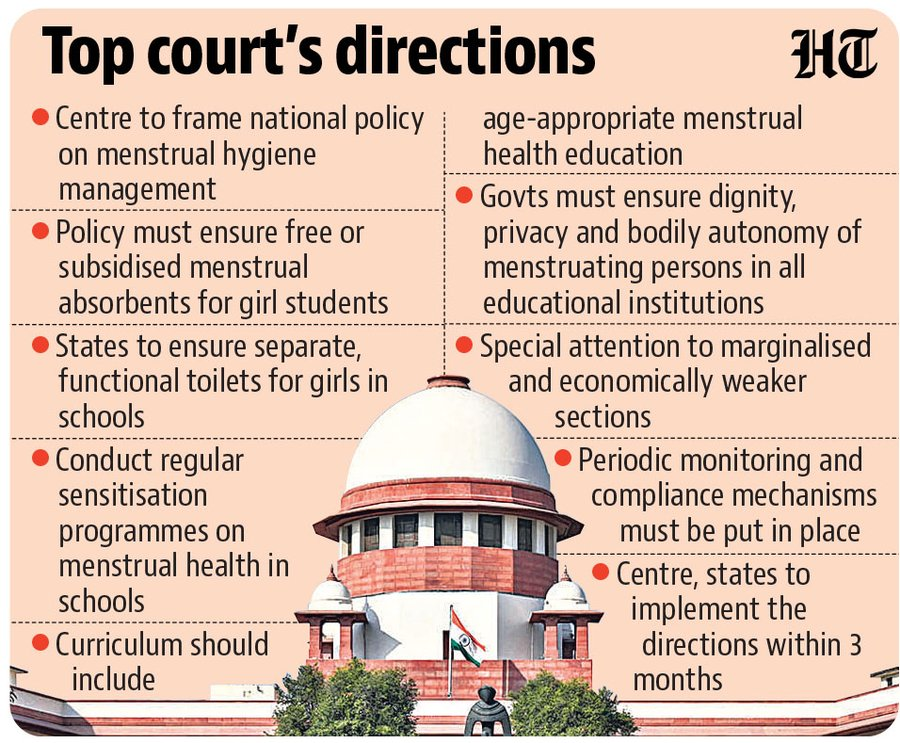
Directions Issued by SC
- Accountability & Feedback: District Education Officers (DEO) must conduct periodic inspections and, crucially, obtain "anonymous feedback" via surveys from the students themselves to assess the ground reality.
- SC also asked the National Commission for Protection of Child Rights (NCPCR), or, State CPCR to oversee implementation of its orders stating that its directions and the Union’s Menstrual Hygiene Policy for School-going Girls (Classes 6th–12th) shall operate as mandatory pan-India standards, in addition to existing state policies and schemes.
- Provision of Products: Every school (government and private) must provide free oxo-biodegradable sanitary napkins via vending machines.
- Menstrual Hygiene Management (MHM) Corners: Schools must establish dedicated corners stocked with essentials like spare innerwear, uniforms, and disposable bags to handle "menstruation-related exigencies."
- Sanitation Infrastructure: Functional, gender-segregated toilets with water connectivity and soap must be available at all times.
- Waste Management: Safe and environmentally compliant disposal mechanisms must be integrated as per Solid Waste Management (SWM) Rules, 2026.
- Male Sensitization: The Court mandated that the NCERT and SCERTs incorporate gender-responsive curricula. It noted that boys must be educated about the biological reality of menstruation to prevent harassment.
- All teachers, regardless of gender, are to be trained to support menstruating students.
Did you Know?
- Menstruation is a normal and natural biological process in which the uterine lining sheds and is discharged as blood and tissue through the vagina pregnancy does not occur in women and girls of reproductive age.
- Menstruation is regulated by hormonal changes and usually occurs once a month from puberty (menarche) to menopause, with most women menstruating for a few days each month over nearly seven years in total during their lifetime.
- Menstruation is a key indicator of reproductive health and is not an illness or impurity, but a healthy physiological function of the female body.
- Poor menstrual hygiene can lead to reproductive and urinary tract infections, especially where clean water and sanitation are unavailable.
- Polycystic Ovarian Disease (PCOD) is a hormonal disorder that can disrupt menstruation, causing irregular, delayed, or absent periods.
- Even with PCOD, menstruation remains a normal physiological process, not a disease or impurity.
What is the Significance of MHH as a Fundamental Right?
- Establishment of "Biological Citizenship": The ruling creates a new category of rights where the State is held responsible for the "biological tax" women pay.
- If a woman is disadvantaged by a natural process (menstruation), the State must intervene to neutralize that disadvantage.
- This moves from Negative Liberty (the State won't stop you from going to school) to Positive Liberty (the State must provide the pads and toilets so you can go to school).
- Redefining the "Free" in RTE: NFHS-5 reveals that only 77.3% of women aged 15–24 use hygienic menstrual methods, while nearly one-fourth remain deprived of basic menstrual support.
- This deprivation directly translates into educational exclusion, with around 23% of girls experiencing dropout or chronic absenteeism after puberty.
- Recognising this linkage, the Supreme Court identified the lack of access to sanitary products, water, toilets, and safe disposal as “menstrual poverty” that undermines bodily autonomy and denies girls equal enjoyment of the RTE.
- By mandating free sanitary pads, the Court redefines “free education” as a condition that is materially enabling, not merely nominal, thereby making the RTE substantively enforceable.
- Socio-Legal Engineering: By mandating sensitization and training, the Court is using law as a tool for social change. It recognizes that the "hostile environment" created by un-sensitized boys and male teachers is a primary cause of dropouts.
Government Measures to Improve Menstrual Hygiene
- Scheme for Promotion of Menstrual Hygiene: Targets adolescent girls aged ten to nineteen years. It emphasises awareness, access to sanitary napkins, and environmentally safe disposal.
- Menstrual Hygiene Policy for School-Going Girls: Ensures low-cost products, gender-segregated toilets, and disposal facilities. Integrates menstrual hygiene education into school curriculum.
- PMBJP (Pradhan Mantri Bharatiya Janaushadhi Pariyojna): Over 16,000 Janaushadhi Kendras provide Oxo-biodegradable 'Suvidha' napkins at just Rs. 1 per pad.
- Cumulative sales crossed 96 crore pads by November 2025.
- ASHA Network: Frontline workers distribute subsidized packs (Rs. 6 for 6 napkins) and conduct monthly community meetings to break societal taboos.
- Women & Child Development Initiatives: Menstrual health awareness is a key component of Mission Shakti (Beti Bachao Beti Padhao), Rashtriya Kishor Swasthya Karyakram (RKSK), and Scheme for Adolescent Girls (SAG).
- Infrastructure & Education:
- Samagra Shiksha (Ministry of Education): Provides funds for the installation of sanitary pad vending machines and incinerators in schools.
- Swachh Bharat Mission: Provides National Guidelines on MHM for rural areas, focusing on behavior change and sanitation.
- UGC Advisory: Mandates Higher Educational Institutions (HEIs) to ensure sanitary facilities at conspicuous locations.
What are the Key Challenges in Implementing the MHH Guidelines?
- Last-mile infrastructure deficit: Toilets exist on paper, but lack of running water, soap, disposal facilities, and ensuring regular stocking of Vending machine maintenance in rural and remote schools remains uncertain.
- Absence of dedicated cleaning staff and recurring O&M budgets leads to rapid deterioration of facilities.
- Procurement and Supply Constraints: Scaling up affordable, quality oxo-biodegradable sanitary pads within tight timelines poses serious logistical challenges for states.
- Without earmarked funding, MHM expenditure may strain state education budgets and crowd out schemes like midday meals or teacher recruitment.
- Unsafe Waste Disposal Risks: Inadequate technical capacity for operating incinerators and absence of standardised menstrual waste protocols threaten environmental compliance.
- Feedback Authenticity Concerns: Power hierarchies and fear among students may prevent honest reporting through surveys and grievance mechanisms.
- Despite WHO guidelines and the Ministry of Education’s 2021 directive on sensitisation, schools often continue to reinforce gender hierarchies, with menstruation treated as dirty, leading to embarrassment, stigma, and exclusion of girls.
What Measures Can Strengthen MHH?
- Inclusivity: The policy must be inclusive of trans-men and non-binary individuals who also menstruate.
- Sashaktikaran (Empowerment): State governments should leverage Self-Help Groups (SHGs) for the local production of biodegradable napkins.
- Assured Water Supply: Integrating school toilets with the Jal Jeevan Mission to ensure 24/7 running water, which is non-negotiable for menstrual hygiene.
- Privacy-First Design: Installing "privacy screens" and internal latches in toilets, along with mirrors and hooks, to allow girls to change products and wash without fear of exposure.
- Direct Benefit Transfer (DBT) Alternative: In areas where the supply chain is broken, the government could explore "Pad Credits" or DBT to the girl’s (or mother’s) account specifically for the purchase of hygienic products.
- Disposal as a Service: Engaging local "Safai Mitras" (sanitation workers) through the Swachh Bharat Mission (Grameen) to collect and process menstrual waste, ensuring it doesn't end up in general landfills.
- Standardized Procurement: States should establish a Centralized Procurement Cell to ensure that all napkins distributed meet the ASTM D-6954 or IS 17518 standards (focused on evaluating the degradation of plastics in the environment) for biodegradability, preventing the distribution of low-quality, plastic-heavy alternatives.
Conclusion
The Supreme Court’s ruling gives constitutional force to a simple but powerful truth “A period should end a sentence, not a girl’s education.” By recognising menstrual health as central to dignity, equality, and education, the judgment opens the door for structural reform, sustained state responsibility, and real gender justice.
|
Drishti Mains Question: “The recognition of menstrual health as a fundamental right marks a shift from welfare to entitlement.” Examine this statement in light of Article 21 |
Frequently Asked Questions (FAQs)
1. What did the Supreme Court rule on menstrual health in 2026?
It held menstrual health and hygiene to be an integral part of the right to life, dignity, bodily autonomy, and reproductive health under Article 21.
2. How does the judgment link menstrual health with the Right to Education?
The Court ruled that period poverty is a financial barrier under the RTE Act and that lack of pads or toilets amounts to a constitutional failure.
3. What key directions were issued to schools?
Schools must provide free oxo-biodegradable sanitary pads, functional gender-segregated toilets, MHM corners, safe waste disposal, and trained staff.
4. Why is the concept of “substantive equality” important in this ruling?
It recognises that treating everyone the same ignores biological disadvantages and that the State must actively correct such structural exclusions.
5. What are the main implementation challenges of the MHH guidelines?
Last-mile infrastructure gaps, water scarcity, procurement of quality pads, waste disposal capacity, and ensuring genuine student feedback.
UPSC Civil Services Examination, Previous Year Questions (PYQs)
Mains
Q. What are the continued challenges for women in India against time and space?(2019)
Electronics Components Manufacturing Scheme
Why in News?
The Union Budget 2026–27 has significantly bolstered India’s ambition to become a global technology leader by increasing the outlay for the Electronics Components Manufacturing Scheme (ECMS) to Rs 40,000 crore, aligned with the goal of building a USD 500-billion domestic electronics manufacturing ecosystem by 2030–31.
What are the Key Facts About Electronics Components Manufacturing Scheme?
- ECMS: Launched in April 2025 by the Ministry of Electronics and Information Technology (MeitY), it aims to build a self-sustaining electronics component ecosystem by attracting domestic and global investment across the value chain by integrating its domestic electronic industry with the Global Value Chains (GVCs).
- Incentive Structure: The ECMS provides turnover-linked, capex-linked, or hybrid fiscal incentives, with a portion of both turnover and capex incentives linked to employment generation.
- Incentives will be given on a first-come, first-served basis to firms ready for early production.
- Tenure: ECMS has a six-year tenure with a one-year gestation period for the Turnover Linked Incentive, while the Capex Incentive is available for a five-year period.
- Target Segments: It focuses on sub-assemblies such as camera modules and display units, bare components including multi-layer PCBs, capacitors, and resistors, and capital equipment used in electronics factories, together accounting for nearly 90% of the Bill of Materials (BoM) for mobile phones.
- Surplus Investment Interest: As of December 2025, the ECMS attracted Rs 1.15 lakh crore in investment commitments, which is double the initial target of Rs 59,350 crore.
- Projected Economic Outcomes: ECMS is expected to generate Rs 10.34 lakh crore over six years and create 1.41 lakh direct jobs and several lakh indirect opportunities.
- Positions electronics as India’s potential second-largest export item, following a six-fold production increase in the last decade.
- Synergy with ISM 2.0: The ECMS acts as a horizontal enabler, working alongside the India Semiconductor Mission (ISM) 2.0 to build a comprehensive ecosystem covering materials, equipment, and advanced packaging.
Electronics as an Export Powerhouse of India
- Electronics Growth: According to the Economic Survey 2025–26, electronics is now India’s third-largest and fastest-growing export category, up from seventh place in 2021–22.
- In the first half of FY26, electronics exports touched USD 22.2 billion, putting the sector on track to become India’s second-largest export category.
- Electronics production has witnessed a six-fold increase, rising from Rs 1.9 lakh crore in 2014–15 to Rs 11.3 lakh crore in 2024–25.
- India is currently the world's second-largest mobile phone manufacturer, with production skyrocketing 28-fold over the last decade.
- Employment Generation: The electronics sector has created 25 lakh jobs in the past 11 years.
Supporting Policy Framework
- Production-Linked Incentive (PLI) Scheme: It covers 14 sectors and nearly 70% of the USD 4 billion FDI in electronics since 2020 is attributed to PLI beneficiaries.
- The sector has also benefited from allowing 100% foreign direct investment in electronics manufacturing, subject to applicable laws and regulations.
- Modified Electronics Manufacturing Clusters (EMC 2.0) Scheme: Focuses on creating world-class infrastructure through Modified Electronics Manufacturing Clusters.
- Scheme for Promotion of Manufacturing of Electronic Components and Semiconductors (SPECS): Provides a 25% financial incentive on capital expenditure for high-value electronic components.
- National Policy on Electronics (NPE) 2019: The overarching National Policy on Electronics aiming to position India as a global hub for Electronics System Design and Manufacturing (ESDM).
- Fiscal Incentives: The Union Budget 2026-27, announced Basic Customs Duty (BCD) exemptions for microwave oven inputs and Social Welfare Surcharge exemptions for electronic toy parts.
Frequently Asked Questions (FAQs)
1. What is the Electronics Components Manufacturing Scheme (ECMS)?
ECMS is a MeitY scheme launched in April 2025 to build a self-sustaining electronics components ecosystem through turnover- and capex-linked incentives.
2. What is the tenure and incentive structure of ECMS?
It has a six-year tenure with a one-year gestation for turnover-linked incentives and five years for capex incentives, partly linked to employment generation.
3. Which segments are targeted under ECMS?
Sub-assemblies, bare components, and capital equipment that together form nearly 90% of the mobile phone Bill of Materials.
4. Why is ECMS important for exports and jobs?
It is expected to generate over ₹10 lakh crore in output, create 1.41 lakh direct jobs, and help electronics emerge as India’s second-largest export category.
5. How does ECMS complement other electronics policies?
It works alongside PLI, ISM 2.0, EMC 2.0, SPECS, and NPE 2019 to strengthen the entire electronics and semiconductor value chain.
UPSC Civil Services Examination, Previous Year Question (PYQ)
Prelims:
Q. ‘R2 Code of Practices’ constitutes a tool available for promoting the adoption of (2020)
(a) environmentally responsible practices in electronics recycling industry
(b) ecological management of Wetlands of International Importance under the Ramsar Convention
(c) sustainable practices in the cultivation of agricultural crops in degraded lands
(d) ‘Environmental Impact Assessment’ in the exploitation of natural resources
Ans: (a)
Code of Wages, 2019
Why in News?
The Supreme Court (SC) urged States to evolve "suitable mechanisms" and take a "final call" on bringing domestic workers under the legal protection and benefits of the Minimum Wages Act, 1948 and the Code of Wages, 2019.
What is Code of Wages, 2019?
- About: The Code on Wages, 2019 is a landmark labour reform aimed at ensuring fair wages, social justice, ease of compliance, and employment generation, by consolidating multiple wage-related laws into a single, uniform legal framework across India.
- It promotes Single Registration, Single License, and Single Return. It reduces rules from 163 to 58, forms from 20 to 6, and registers from 24 to 2.
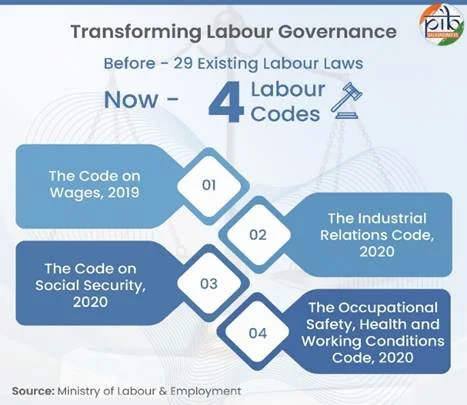
- Origin: Enacted based on recommendations of the 2nd National Commission on Labour (2002) to consolidate 29 laws into four functional codes, namely, the Code on Wages, 2019, the Industrial Relations Code, 2020, the Code on Social Security, 2020 and the Occupational Safety, Health and Working Conditions Code, 2020.
- It subsumes four existing laws namely the Payment of Wages Act, 1936; the Minimum Wages Act, 1948; the Payment of Bonus Act, 1965; and the Equal Remuneration Act, 1976.
- Objective: Aims to balance worker protection with ease of compliance for employers, driving economic growth through decent employment.
- Key Pro-Worker Reforms & Provisions:
- Universalisation of Minimum Wages (Section 5): Extends statutory right to minimum wages to all employees in both organised and unorganised sectors, moving from ~30% coverage to 100%.
- Introduction of National Floor Wage (Section 9): Empowers the Central Government to set a baseline floor wage based on minimum living standards; states cannot fix minimum wages below this floor.
- Fixing of Minimum Wages: Rates are to be fixed by the appropriate Government based on skill, geographical area, and arduousness of work, and revised ordinarily every 5 years.
- Timely Wage Payments (Section 17): Applies to all employees without any wage ceiling. Strict timelines are set (e.g., monthly wages within 7 days of the next month; termination wages within 2 working days).
- Stipulated Working Hours (Section 13): Limits work to 48 hours a week and a maximum of 12 hours a day (including rest intervals).
- Section 14 mandates overtime wages payment at twice the normal wage rate.
- Proof of Payment (Section 50): Mandates issuance of wage slips to all workers, including in the unorganised sector.
- Pro-Employment and Compliance Reforms:
- Decriminalization & Compounding of Offences (Section 56): Replaces criminal penalties (imprisonment) with civil penalties (fines) for first-time offences punishable by fine only.
- It introduces a compounding provision where such offences can be settled by paying 50% of the maximum fine.
- Inspector-cum-Facilitator (Section 51): Replaces the "Inspector Raj" with a transparent, web-based random inspection system and a facilitative role.
- Protection of Employer's Assets (Section 64): Safeguards employer's deposits/dues with government from court attachment, except for liabilities towards employees.
- Decriminalization & Compounding of Offences (Section 56): Replaces criminal penalties (imprisonment) with civil penalties (fines) for first-time offences punishable by fine only.
- Gender Inclusivity and Social Justice:
- Prohibition of Gender Discrimination (Section 3): Mandates no discrimination in recruitment, wages, or conditions based on gender (including transgender) for the same or similar work.
- Women's Representation in Advisory Boards (Section 42): Ensures at least one-third of Central and State Advisory Board members are women. These boards advise on minimum wage fixation and increasing employment opportunities for women.
Frequently Asked Questions (FAQs)
1. What is the Code of Wages, 2019?
It is a consolidated labour law that merges four wage-related Acts to ensure universal minimum wages, fair pay, and ease of compliance across India.
2. Which laws are subsumed under the Code of Wages, 2019?
The Payment of Wages Act, 1936; Minimum Wages Act, 1948; Payment of Bonus Act, 1965; and Equal Remuneration Act, 1976.
3. What is the National Floor Wage under the Code of Wages?
Under Section 9, the Central Government fixes a baseline wage linked to minimum living standards, below which states cannot set minimum wages.
UPSC Civil Services Examination, Previous Year Questions (PYQs)
Q. In India, which one of the following compiles information on industrial disputes, closures, retrenchments and lay-offs in factories employing workers? (2022)
(a) Central Statistics Office
(b) Department for Promotion of Industry and Internal Trade
(c) Labour Bureau
(d) National Technical Manpower Information System
Ans: (c)
Concerns Over Great Nicobar Island Project
Why in News?
With parts of the ₹92,000 crore Great Nicobar Island mega-infrastructure project nearing approval, the Nicobar Tribal Council has alleged pressure from the district administration to surrender ancestral tribal land.
- The Council disputes the administration’s claim that forest rights were settled under the Forest Rights Act, 2006 asserting that FRA processes were never initiated.
What is the Great Nicobar Island Project?
- About: Launched in 2021, GNIP is a mega infrastructure initiative to be implemented on Great Nicobar Island (GNI), located at the southern end of the Andaman and Nicobar Islands.
- The project requires diversion of forest land in Galathea Bay, Pemmaya Bay, and Nanjappa Bay, areas traditionally inhabited by the Nicobarese community before the 2004 tsunami.
- Features: Spearheaded by NITI Aayog, it includes a transshipment terminal at Galathea Bay, a greenfield airport, a greenfield township, and a tourism project with a gas-powered plant.
- It is being executed by the Andaman and Nicobar Islands Integrated Development Corporation (ANIIDCO) and is strategically located near the Malacca Strait, a key maritime route linking the Indian Ocean to the Pacific Ocean.
- Strategic Importance: Nicobar’s strategic location near the Malacca, Sunda, and Lombok Straits enables India to monitor crucial sea routes vital for global trade and energy supply, aligning with the Act East Policy (2014) and the QUAD’s Indo-Pacific strategy.
- The planned greenfield airport will enhance defense deployment, boosting India’s capacity to track Chinese naval movements and reinforce regional security.
- Economic Significance: The International Container Transshipment Terminal (ICTT) aims to reduce India’s dependence on foreign ports like Singapore and Colombo.
- It forms a key part of the Maritime India Vision 2030 and Amrit Kaal Vision 2047, aligning with India’s long-term economic strategy.
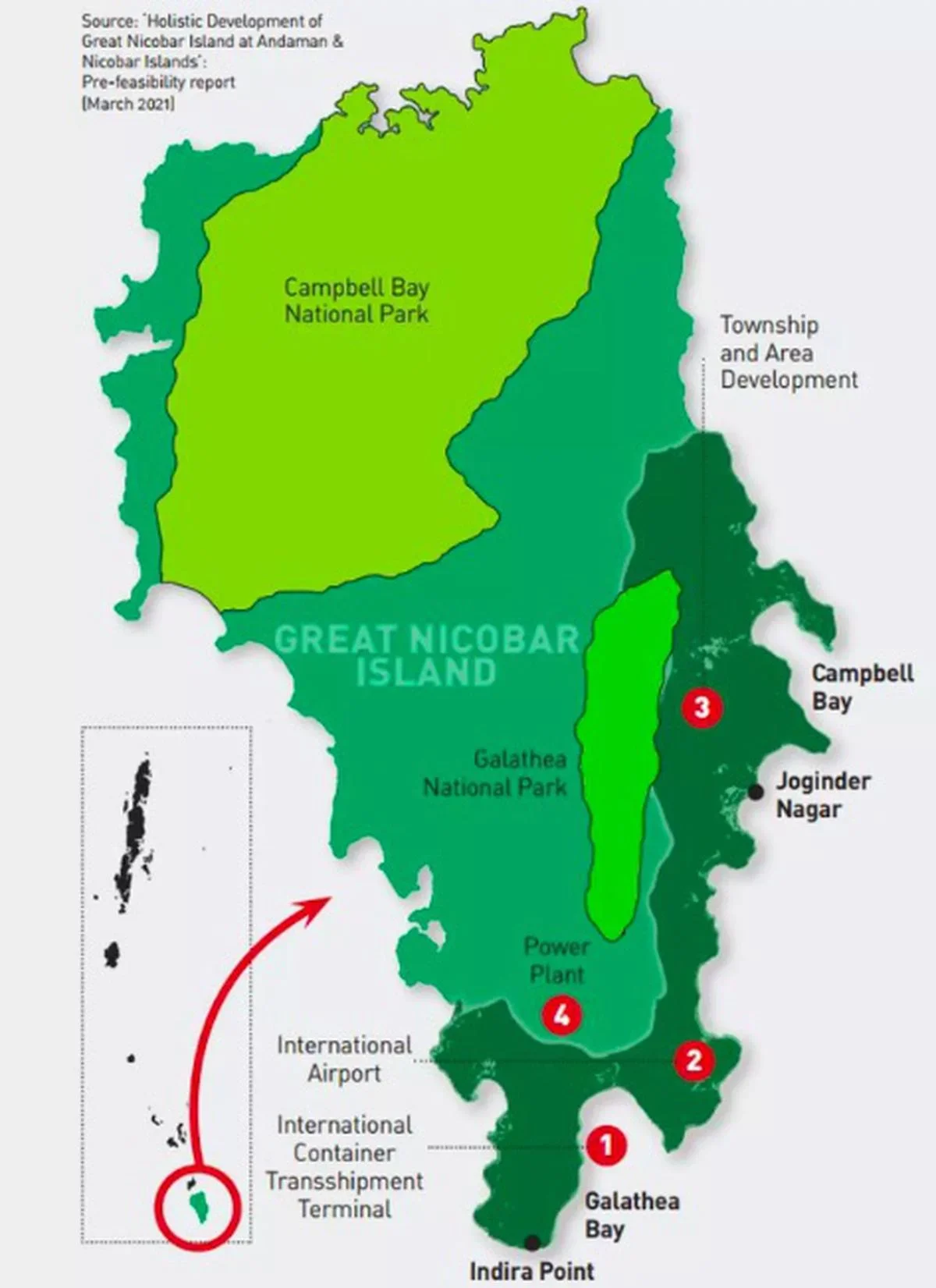
Great Nicobar Island
- About: Great Nicobar is the southernmost and largest island of the Nicobar group in the southeastern Bay of Bengal, and is mostly covered in tropical rainforest.
- Indira Point, situated on Great Nicobar Island, is the southernmost point of India.
- Geographical Division: The Andaman and Nicobar Islands comprise 836 islands, divided into Andaman (north) and Nicobar (south), separated by the 150-km-wide 10° Channel.
- Ecological Importance: Great Nicobar island is home to two national parks— Campbell Bay National Park and Galathea National Park and a biosphere reserve, the Great Nicobar Biosphere Reserve.
- Tribes: It is inhabited by small populations of indigenous tribes, including the Shompen, Onge, Andamanese, and Nicobarese.
Frequently Asked Questions (FAQs)
1. Where is Great Nicobar Island located?
Great Nicobar Island is located in the southernmost part of the Andaman and Nicobar Islands in the Bay of Bengal.
2. Why is Great Nicobar Island ecologically important?
It hosts tropical rainforests, endemic species, two national parks, and the Great Nicobar Biosphere Reserve.
3. Which tribes live on Great Nicobar Island?
Indigenous tribes include the Nicobarese and Shompen communities.
4. Why is Great Nicobar Island strategically significant for India?
Its proximity to major sea lanes near the Malacca Strait enhances India’s maritime security and Indo-Pacific presence.
UPSC Civil Services Examination, Previous Year Question (PYQ)
Prelims
Q. Consider the following statements: (2018)
- The Barren Island volcano is an active volcano located in the Indian territory.
- Barren Island lies about 140 km east of Great Nicobar.
- The last time the Barren Island volcano erupted was in 1991 and it has remained inactive since then.
Which of the statements given above is/are correct?
(a) 1 only
(b) 2 and 3
(c) 3 only
(d) 1 and 3
Ans: (a)
Q. Which one of the following pairs of islands is separated from each other by the ‘Ten Degree Channel’? (2014)
(a) Andaman and Nicobar
(b) Nicobar and Sumatra
(c) Maldives and Lakshadweep
(d) Sumatra and Java
Ans: (a)
Manipur Assembly Constitutional Deadlock
The Manipur Congress president has approached the Manipur High Court, alleging unconstitutional actions by the Governor prior to the imposition of President’s Rule in February 2025, and seeking dissolution of the Manipur Legislative Assembly under Article 174 of the Constitution.
- Background of the Issue: Manipur has a 60-member Legislative Assembly. The last sitting of the Assembly was held on 12th August 2024.
- Under Article 174(1) of the Constitution, no more than six months can lapse between two Assembly sittings. Hence, the Assembly had to be convened on or before 11 February 2025.
- On 9th February 2025, following the resignation of the Chief Minister, the Governor cancelled the session by declaring the summoning order null and void.
- Consequently, the Assembly failed to convene within the constitutionally mandated six-month period under Article 174(1).
- Constitutional Debate: The petitioner argues that cancelling the Assembly sitting bypassed Article 174(1) and denied a mandatory floor test, violating constitutional morality and renders the 12th Manipur Legislative Assembly constitutionally untenable, warranting its dissolution.
- The sequence of events is alleged to have facilitated the imposition of President’s Rule, raising serious concerns over the misuse of constitutional machinery and gubernatorial discretion.
- Judicial Response: The Manipur High Court observed that the matter involves interpretation of Article 174, a substantial constitutional question. The case was referred to the Chief Justice for listing before a Division Bench.
- Article 174: It deals with the sessions, prorogation, and dissolution of the State Legislature. It mandates that the Governor must summon the Legislative Assembly at least once every six months, ensuring that no more than six months elapse between two sittings.
- The Article also empowers the Governor to prorogue the House or dissolve the Legislative Assembly.
| Read more: President’s Rule in Manipur |
Conservationists Raise Concerns Over ‘Turtle Trails’
The Union Budget 2026–27 proposal to develop ‘turtle trails’ along key turtle nesting sites in Odisha, Karnataka and Kerala, has triggered concerns among conservationists.
- Turtle trails are designated coastal pathways and viewing infrastructure intended to promote regulated ecotourism around turtle nesting sites.
- Conservationists argue that introducing turtle trails threatens the darkness and tranquility essential for mass nesting and that policy efforts should prioritise robust conservation enforcement, including habitat protection and effective regulation of fishing activities, over tourism-driven initiatives.
Olive Ridley Turtle
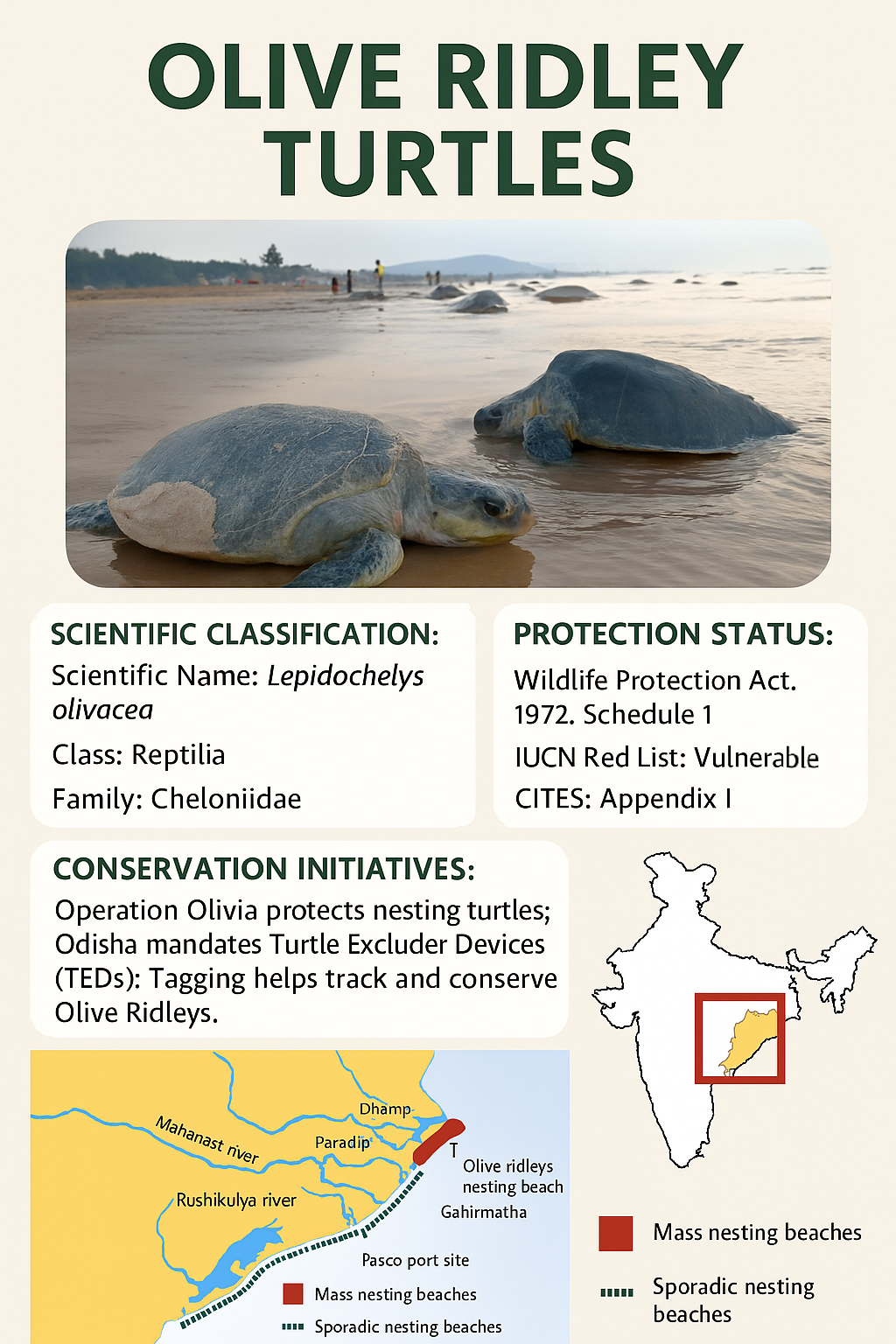
- Olive Ridley (Lepidochelys olivacea): It belongs to the class Reptilia and family Cheloniidae, is the smallest sea turtle species, recognized by its olive or grayish-green color and heart-shaped carapace.
- Behaviour (Arribada): Olive Ridleys are omnivores and exhibit arribada, a mass nesting event where thousands of females nest together.
- Olive Ridley turtles inhabit warm waters of the Pacific, Atlantic, and Indian Oceans and undertake long-distance migrations of up to 9,000 km between feeding and breeding grounds, nesting 1–3 times between December and March and laying about 100 eggs per clutch.
- Nesting Sites: Gahirmatha and Rushikulya in Odisha are among the world’s largest nesting sites for Olive Ridley turtles.
- Gahirmatha is a strict no-go zone due to proximity to the Integrated Test Range, while Rushikulya has faced disturbances in the past, leading to visitor restrictions.
- Other important nesting sites in India include the Devi River mouth in Odisha and the Andaman Islands.
- Threats: Poaching of meat, shell and eggs, and accidental entanglement in trawl and gill nets during breeding season. India mandates Turtle Excluder Devices (TEDs) in trawl nets to reduce mortality.
- Protection: Listed as Vulnerable (IUCN), under CITES Appendix I, and Schedule I of the Wildlife (Protection) Act, 1972.
| Read more: Olive Ridley Turtle - Drishti IAS |
Indian Computer Emergency Response Team (CERT-In)
- Recently, CERT-In’s 2025 performance has highlighted its pivotal role in securing India’s rapidly expanding digital ecosystem amid rising cyber threats.
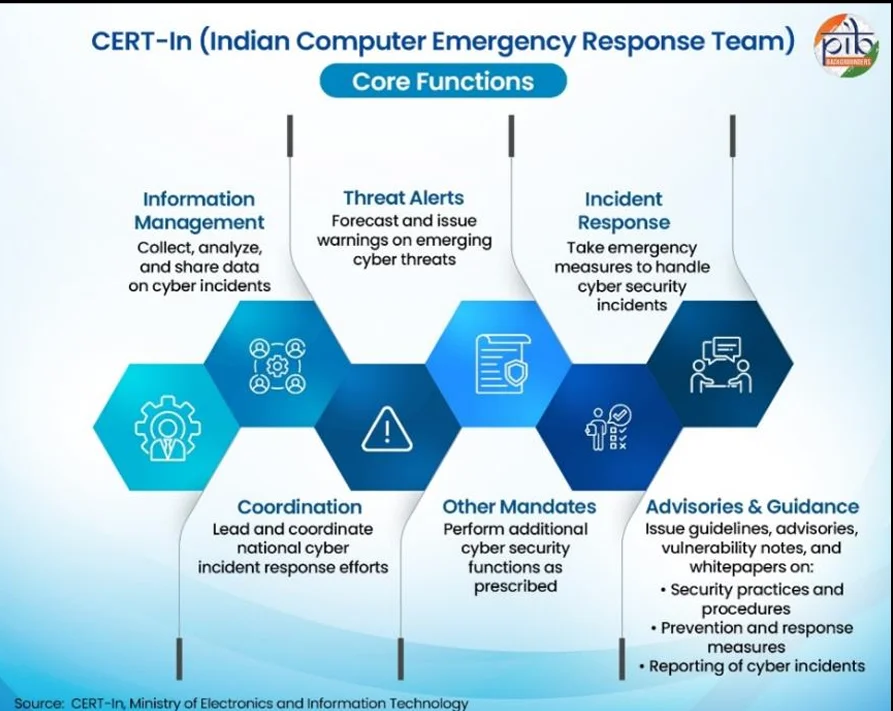
- About: The Indian Computer Emergency Response Team (CERT-In) is India’s national agency for cyber incident response, functioning under the Ministry of Electronics and Information Technology and mandated by the Information Technology Act, 2000.
- Functions: CERT-In is responsible for preventing, monitoring, and responding to cyber incidents such as phishing, ransomware, online fraud, AI-enabled scams, and attacks on critical digital infrastructure.
- It also strengthens sectoral resilience through CSIRT-Fin for the BFSI sector and CSIRT-Power for the power sector, along with a network of State and sectoral CSIRTs.
- Institutional Frameworks: By anchoring institutional frameworks such as the Cyber Swachhta Kendra, National Cyber Coordination Centre, and Cyber Crisis Management Plan, CERT-In has strengthened national cyber resilience and gained global recognition for its cybersecurity leadership
- Significance: Recognised by the WEF, University of Oxford and France’s ANSSI, CERT-In underpins national security, economic stability and trust in India’s digital ecosystem, aligning with Digital India and cybersecurity vision.
| Read more: Centre Exempts CERT-In from Ambit of RTI Act |