
Mitigating Microplastics Crisis
For Prelims: Microplastic, Polymer, Nanoplastics, Persistent Organic Pollutants (POPs), DDT, Heavy Metals, Plankton, Antimicrobial Resistance (AMR), International Maritime Organization (IMO), World Economic Forum, Gram Panchayat, National Ambient Air Quality Standards (NAAQS), Bureau of Indian Standards (BIS).
For Mains: Key facts regarding microplastics and key challenges associated with them, Initiatives to tackle microplastics and further steps needed.
Why in News?
A recent study highlighted that while microplastic abundance in Chennai’s beach sediments is lower than global averages, the high prevalence of nylon fibres poses a disproportionately severe ecological risk.
- Researchers emphasize that polymer type, shape, and aging characteristics are more critical in determining ecological damage than simple numerical abundance.
Summary
- Microplastics pose a severe threat through biomagnification and the creation of AMR hotspots in the Plastisphere.
- While India has introduced QR-based tracking and EPR 2.0, success depends on curbing upstream sources like synthetic textiles and tire wear.
- Holistic management requires integrating microplastic standards into national air and water quality indices.
What are Microplastics?
- About: Microplastics are tiny plastic particles, generally defined as being less than 5 millimeters (5 mm) in size—about the size of a pencil eraser or smaller.
- Some definitions extend the lower limit down to 1 nanometer, distinguishing even smaller nanoplastics (typically under 1 micrometer) that behave differently due to their colloidal properties.
- Types of Microplastics: Microplastics are categorized into two main types based on their origin:
- Primary microplastics: These are intentionally manufactured at small sizes for specific uses. E.g.,
- Microbeads: Used as exfoliants in cosmetics (face scrubs, toothpaste).
- Nurdles: Plastic pellets used as raw material for manufacturing larger plastic goods.
- Secondary microplastics: These result from the breakdown of larger plastic items through environmental processes such as photodegradation (from sunlight), mechanical abrasion, or biological degradation by microorganisms.
- E.g., degraded plastic bags, bottles, packaging, fishing gear, synthetic textiles, car tires, and road markings.
- Primary microplastics: These are intentionally manufactured at small sizes for specific uses. E.g.,
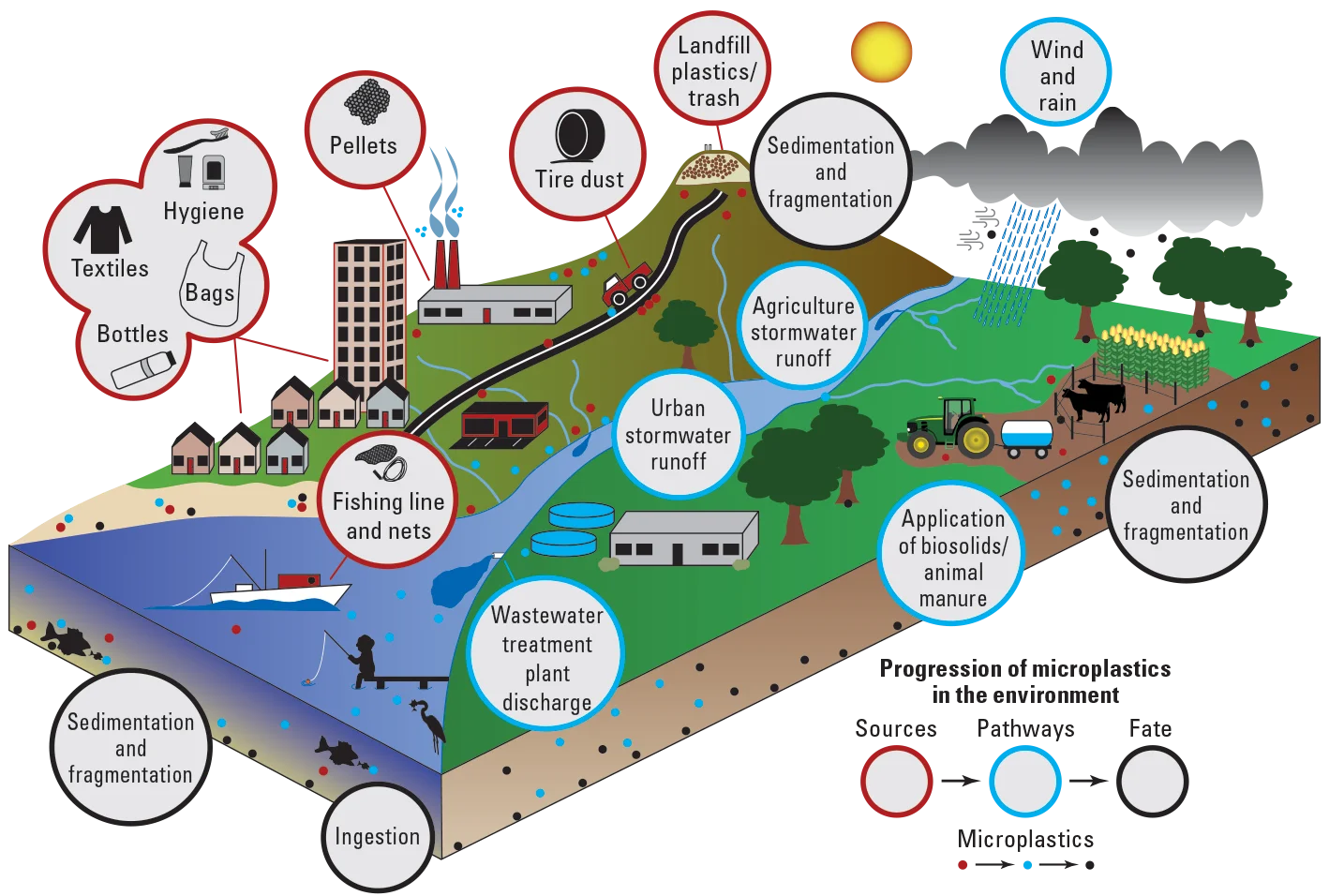
Initiatives to Tackle Microplastics
Global
- UN Global Plastics Treaty: Still in negotiation phase, the primary goal is to formulate a legally binding international instrument that addresses the entire life cycle of plastic.
- Strategy and Action Plan on Marine Litter 2026 (Draft): The International Maritime Organization (IMO) recommended a new mandatory code for the transport of plastic pellets (nurdles) to prevent massive microplastic spills during maritime shipping.
- EU Microplastic Restrictions: The European Union has implemented a phased ban on intentionally added microplastics in products like cosmetics, detergents, and artificial turf.
- Global Plastic Action Partnership (GPAP): Led by the World Economic Forum, GPAP focuses on creating a circular plastics economy, where plastic is reused, recycled, and managed more sustainably.
India
- Plastic Waste Management (Amendment) Rules, 2024: For the first time, Indian law formally defined microplastics as any solid plastic particle (1 to 1,000 microns).
- Manufacturers of compostable and biodegradable plastics must prove their products leave zero microplastics behind to receive CPCB certification.
- Plastic Waste Management (Amendment) Rules, 2025: All plastic packaging must now carry QR codes or barcodes for real-time tracking of waste through a centralized online portal.
- Extended Producer Responsibility (EPR) 2.0: Under EPR 2.0, producers now have mandatory targets for Recycled Content. For example, Category I (Rigid Plastics) must include 40% recycled content in the 2026–27 fiscal year.
- Companies that fail to meet these targets must pay Environmental Compensation based on the "Polluter Pays" principle.
- National Plastic Pollution Reduction Campaign (NPPRC): Launched in late 2025, this campaign specifically targets rural areas (Gram Panchayats) to prevent agricultural plastic from breaking down into soil microplastics.
What are the Key Challenges Associated with Microplastics?
- Ecological and Biological Challenges: Marine and terrestrial organisms often mistake microplastics for food. This leads to physical injury (blockage of digestive tracts) and pseudo-satiety (sensation of being full).
- Biomagnification: Biomagnification is the process where toxin concentrations increase at each higher level of a food chain. Microplastics worsen this by absorbing pollutants from seawater; as apex predators eat contaminated prey, they ingest concentrated doses of plastic and chemicals, ultimately posing significant health risks to humans and ecosystems.
- Human Health Risks: Microplastics often contain additives like BPA (Bisphenol A) and Phthalates, which are known "hormone mimics." These can interfere with reproductive health, metabolism, and fetal development.
- Nanoplastics are capable of crossing the blood-brain barrier and the placental barrier, potentially causing chronic inflammation and oxidative stress at a cellular level.
- Chemical and Toxicological Challenges: Microplastics are chemically "sticky" (hydrophobic). They absorb Persistent Organic Pollutants (POPs) like DDT, and heavy metals from the surrounding water, and deliver them directly into the bodies of organisms.
- Socio-Economic Vulnerabilities: It is estimated that plastic pollution causes USD 75 billion annually in environmental damage. Microplastic contamination in commercial fisheries and salt pans can lead to trade bans and loss of consumer trust, impacting the blue economy.
- Unlike large plastic bottles, microplastics cannot be vacuumed out of the ocean without killing the plankton that forms the base of the entire food chain.
- Trojan Horse for Superbugs: The "Plastisphere" (the biofilm on plastic) provides a stable, crowded platform where bacteria can exchange Antibiotic Resistance Genes (ARGs) much faster than in open water Hence, Microplastics in wastewater create a perfect storm for Antimicrobial Resistance (AMR).
What Measures are Needed to Curb the Menace of Microplastics?
- Product & Manufacturing Bans: Prohibit the use of plastic microspheres in face scrubs, toothpastes, and shower gels, replacing them with natural exfoliants like apricot kernels or sea salt.
- Mandate strict "Zero Pellet Loss" protocols (like Operation Clean Sweep) in plastic manufacturing plants to prevent raw pre-production pellets from washing into drains.
- Consumer Tech Mandates: Implement "Euro 7" style standards for tire manufacturers to reduce the wear-and-tear rate of synthetic rubber. Provide tax breaks for clothing brands that use a minimum of 80% natural fibers (cotton, wool, hemp) to reduce the shedding of non-biodegradable synthetic microfibers.
- Infrastructure & Waste Management: Mandate the use of Tertiary Treatment (such as Membrane Bioreactors or Sand Filtration) in urban plants, which can remove up to 99% of microplastics compared to primary treatment.
- Ensure that "biodegradable" plastics do not simply break down into "invisible" microplastics; they must be certified to completely mineralize in natural soil and water conditions.
- Inclusion in Air & Water Quality Indices: Add "Microplastic Concentration" as a standard parameter in the National Ambient Air Quality Standards (NAAQS) and the Bureau of Indian Standards (BIS) for drinking water.
- Incentivize "Green Chemistry": Provide government grants to startups developing bio-based polymers (from seaweed or starch) that mimic the properties of plastic but are truly biodegradable.
- Hold fast-fashion brands financially accountable for the end-of-life environmental impact of synthetic garments, similar to the existing rules for plastic packaging.
Conclusion
The global microplastic crisis has evolved from a marine litter issue into a complex biogeochemical and public health emergency. While numerical abundance in sediments varies, the persistence of specific polymers like nylon and the emergence of the "Plastisphere" necessitate a shift from volume-based monitoring to risk-based regulatory frameworks and at-source technological interventions.
|
Drishti Mains Question: Discuss the ecological and health implications of microplastics in the food chain. Evaluate the challenges in implementing a global regulatory framework to mitigate this 'silent' environmental crisis. |
Frequently Asked Questions (FAQs)
1. What is the official definition of microplastics under Indian law?
The Plastic Waste Management (Amendment) Rules, 2024, formally define microplastics as any solid plastic particle ranging from 1 to 1,000 microns.
2. What is the "Plastisphere" and why is it significant?
The Plastisphere refers to the biofilm that forms on microplastic surfaces. It is significant because it provides a platform for bacteria to exchange Antibiotic Resistance Genes (ARGs) , linking microplastic pollution to AMR.
3. Why are nanoplastics considered more hazardous than microplastics to human health?
Due to their minute size, nanoplastics can cross biological barriers (blood-brain and placental), causing cellular-level oxidative stress and chronic inflammation.
UPSC Civil Services Examination, Previous Year Question (PYQ)
Prelims
Q. Why is there a great concern about the ‘microbeads’ that are released into the environment? (2019)
(a) They are considered harmful to marine ecosystems.
(b) They are considered to cause skin cancer in children.
(c) They are small enough to be absorbed by crop plants in irrigated fields.
(d) They are often found to be used as food adulterants.
Ans: (a)
Mains
Q. What are the impediments in disposing the huge quantities of discarded solid waste which are continuously being generated? How do we remove safely the toxic wastes that have been accumulating in our habitable environment? (2018)
FATF Highlights India’s Actions Against Offshore VASPs
Why in News?
The March 2026 FATF report on ‘Understanding and Mitigating the Risks of Off-shore Virtual Asset Service Providers’ underscores India’s robust regulatory and enforcement actions against Offshore Virtual Asset Service Providers (oVASPs) to mitigate money laundering and terror financing risks.
What are the Key FATF Highlights on India’s Crackdown on oVASPs?
- Virtual Asset Lab: India is establishing a dedicated facility to perform automated web surveillance, open-source intelligence, and analytics to detect unregistered and high-risk crypto platforms.
- Regulatory Perimeter & FIU Mandates: The Financial Intelligence Unit-India (FIU-IND) has made it mandatory for Principal Officers (POs) of VASPs to be physically based in India, ensuring legal accountability for Prevention of Money Laundering Act, 2002 (PMLA, 2002) compliance.
- Action Against "Scam Compounds": Indian agencies (NIA, CBI, and ED) are probing cybercrime hubs along the Myanmar-Thailand border, Cambodia, and Laos, where trafficked citizens were forced into crypto-related scams.
- Blocking Non-Compliant Entities: Leveraging the Sahyog Portal (launched by the Union Home Ministry to enhance collaboration between government agencies and social media intermediaries), authorities have directed the takedown of 85 URLs belonging to unregistered and non-compliant offshore platforms.
- Inter-Agency Coordination: A Virtual Assets Contact Sub-Group, established under the Department of Revenue in 2023, facilitates intelligence sharing between law enforcement and regulators to identify emerging typologies of crypto-crimes.
- Addressing Regulatory Arbitrage: The report notes that while the 2022 virtual assets tax regime caused a shift in trading volume to offshore entities, India is countering this by requiring oVASPs serving domestic users to register locally regardless of their physical presence.
- Red Flag Indicators: The FIU has formed a Working Group including banks and payment gateways to develop strategies for identifying suspicious deposit patterns from offshore wallets.
What are Offshore Virtual Asset Service Providers (oVASPs)?
- About: oVASPs are entities that provide services related to virtual digital assets (such as cryptocurrencies, stablecoins, or Non-Fungible Tokens) but are headquartered or operated from a jurisdiction outside the country where their users are located.
- Core Functions: These platforms typically perform the following roles for their users:
- Exchange: Facilitating the trade between virtual assets (e.g., Bitcoin to Ethereum) or between fiat currency and virtual assets (e.g., INR to USDT).
- Transfer: Moving virtual assets from one address or account to another.
- Safekeeping/Administration: Providing digital wallet services to store and manage private keys.
- Financial Services: Participating in or providing financial services related to an issuer’s offer or sale of a virtual asset.
- Associated Challenges: The primary reason these entities are highlighted by regulators like the Financial Action Task Force (FATF) and India's Financial Intelligence Unit (FIU) is due to "Regulatory Arbitrage." This occurs when:
- Jurisdictional Gaps: Platforms operate from countries with lenient Anti-Money Laundering (AML) or Counter-Terrorism Financing (CFT) laws.
- Lack of Accountability: Since they lack a physical office in the user's country, they may bypass local tax laws (like India's 2022 Virtual Assets Tax Regime) and reporting requirements.
- Anonymity: They often offer higher levels of anonymity, which can be exploited by "scam compounds" or for moving illicit proceeds across borders.
- Modus Operandi: Illicit proceeds are converted into virtual assets via oVASPs and later routed through compliant Indian VASPs into domestic financial systems. E.g. a Caribbean-based online gambling platform exploited anti-money laundering (AML) blind spots to move funds across borders and was subsequently blocked in India.
- Regulatory Requirements in India: Under the PMLA, 2002 and recent FIU mandates, even if a VASP is "offshore," it must comply with the following if it serves Indian users:
- Mandatory Registration: They must register as a reporting entity with the FIU-IND.
- Principal Officer (PO): They are required to appoint a Principal Officer based in India to serve as a liaison for legal and transaction monitoring.
- KYC Compliance: They must perform "Know Your Customer" checks and report Suspicious Transaction Reports (STRs) to authorities.
Virtual Asset
- About: A Virtual Asset (VA) is a digital representation of value that can be digitally traded, transferred, or used for payment or investment purposes. They are distinct digital assets that rely on cryptography and distributed ledger technology (blockchain).
- Virtual assets do not include digital representations of "fiat" currencies (like a digital version of the Indian Rupee (e-Rupee) or US Dollar held in a bank app).
- Common Examples:
- Cryptocurrencies: Digital currencies used as a medium of exchange (e.g., Bitcoin, Ethereum).
- Stablecoins: Virtual assets pegged to the value of another asset, like the US Dollar or Gold, to reduce price volatility (e.g., USDT, USDC).
- Non-Fungible Tokens (NFTs): Unique digital assets representing ownership of a specific item, such as digital art or music.
- Governance Tokens: Assets that give holders the right to vote on the future of a specific blockchain project or protocol.
- VDA in India: In India, the government uses the term Virtual Digital Asset (VDA) under the Finance Act, 2022.
- Taxation: India imposes a 30% tax on income from the transfer of any VDA.
- TDS: A 1% Tax Deducted at Source (TDS) is applicable on payments made for the transfer of VDAs to track the trail of transactions.
- PMLA Coverage: As of 2023, VDA transactions are covered under the PMLA, 2002. This means crypto exchanges must follow "Know Your Customer" (KYC) norms and report suspicious activities to the FIU-IND.
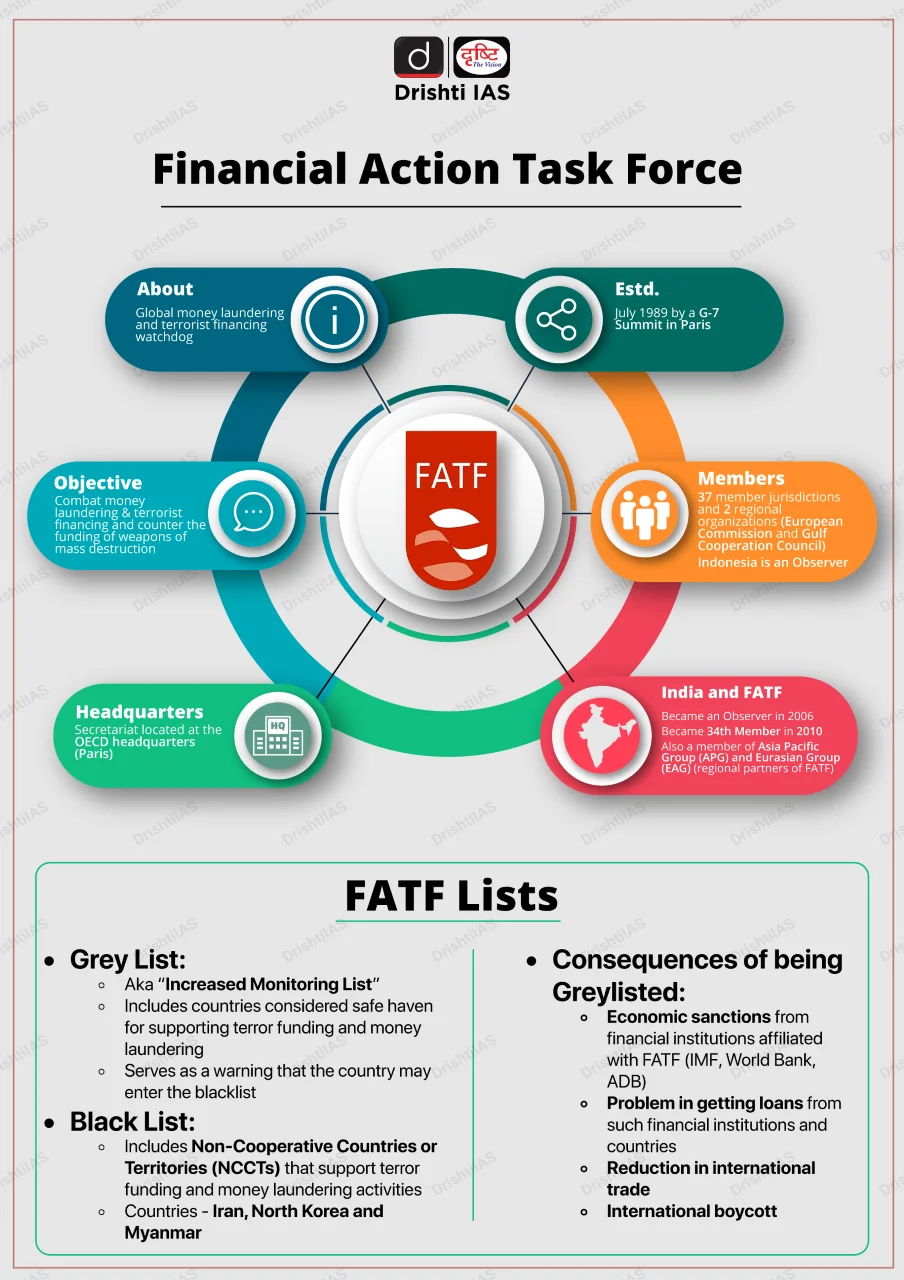
Frequently Asked Questions (FAQs)
1. What is the 'Virtual Asset Lab' mentioned in the FATF 2026 report?
It is a specialized Indian facility using AI, open-source intelligence, and automated surveillance to detect unregistered and high-risk offshore virtual asset platforms.
2. What is the residency requirement for Principal Officers (POs) of VASPs in India?
The FIU mandates that POs must be based in India to ensure direct legal accountability for transaction monitoring and PMLA compliance.
3. How does the 'Sahyog Portal' assist in regulating digital content?
Launched by the MHA, it streamlines the process of sending takedown notices to intermediaries for unlawful content; it has already been used to block 85 non-compliant oVASP URLs.
4. What distinguishes a Virtual Asset from a Central Bank Digital Currency (CBDC)?
Virtual Assets are private, decentralized digital representations of value (e.g., Bitcoin), whereas CBDCs like the e-Rupee are sovereign legal tender issued by the RBI.
UPSC Civil Services Examination, Previous Year Question (PYQ)
Q. With reference to “Blockchain Technology”, consider the following statements: (2020)
- It is a public ledger that everyone can inspect, but which no single user controls.
- The structure and design of blockchain is such that all the data in it are about cryptocurrency only.
- Applications that depend on basic features of blockchain can be developed without anybody’s permission.
Which of the statements given above is/are correct?
(a) 1 only
(b) 1 and 2 only
(c) 2 only
(d) 1 and 3 only
Ans: (d)
Q. Consider the following pairs: (2018)
Terms sometimes seen in news Context/Topic
- Belle II experiment — Artificial Intelligence
- Blockchain technology — Digital/ Cryptocurrency
- CRISPR – Cas9 — Particle Physics
Which of the pairs given above is/are correctly matched?
(a) 1 and 3 only
(b) 2 only
(c) 2 and 3 only
(d) 1, 2 and 3
Ans: (b)
1st Inter-State Initiative for Great Indian Bustard (GIB)
A Great Indian Bustard (GIB) chick was hatched in Gujarat’s Kutch after a decade through the “jumpstart” approach, a conservation method involving transferring a fertile, incubated egg from a captive breeding programme to the nest of a wild female, marking a significant milestone.
- This first-of-its-kind inter-State initiative, coordinated by the Ministry of Environment, Forest and Climate Change(MoEFCC) along with the Forest Departments of Rajasthan and Gujarat and the Wildlife Institute of India under Project Great Indian Bustard (launched in 2016), aimed to revive the critically endangered species.
Great Indian Bustard (GIB)
- GIB, Rajasthan’s state bird, is India’s most critically endangered bird. It is one of the heaviest flying birds in the world, and mainly found in Rajasthan’s Thar Desert, with small populations in Gujarat, Maharashtra, Karnataka, and Andhra Pradesh.
- GIB is one among four bustard species found in India, alongside the Lesser Florican, Bengal Florican, and Macqueen's Bustard.
- GIB is omnivorous and vulnerable to power line collisions due to a lack of frontal vision.
- Ecological Importance: GIB acts as an indicator species; it reflects the health of grassland ecosystems. Their decline signals degradation of native grasslands.
- Protection Status: IUCN Red List (Critically Endangered), CITES (Appendix I), Convention on Migratory Species (CMS) (Appendix I), and Wildlife (Protection) Act, 1972 (Schedule I).
- Threats: Habitat loss from agriculture, mining, and infrastructure, along with collisions with power lines (the leading cause of adult mortality), threaten the GIB.
- Conservation Efforts: It is covered under the Integrated Development of Wildlife Habitats of the MoEFCC for focused conservation.
- Project GIB, launched in 2016, aims to create breeding enclosures and reduce human pressure on habitats, ensuring long-term conservation.
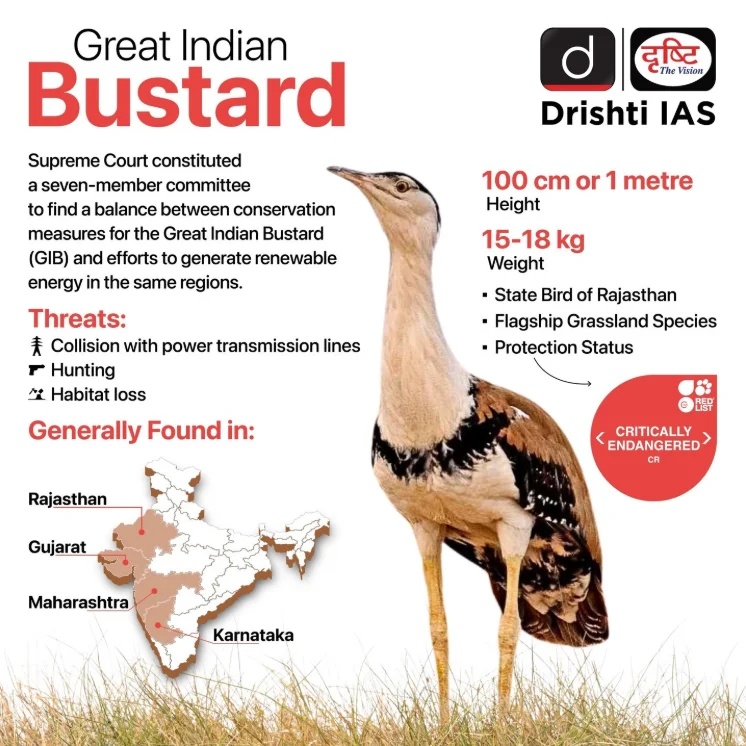
| Read more: Great Indian Bustard (GIB) |
Avalanche at Zojila Pass
A devastating snow avalanche near the Zojila Pass resulted in several fatalities and injuries, sparking a debate over the safety of the crucial link between the Kashmir Valley and Ladakh.
- An avalanche is a rapid, gravity-driven slide of snow, ice, and debris down a mountain slope. Triggered by structural instability, heavy snowfall, or temperature rises, they occur primarily on slopes of 30°–45°.
Zojila Pass
- About: Zojila Pass is a high-altitude mountain pass in the Union Territory of Ladakh. It is situated on National Highway 1 (NH-1) at an elevation of approximately 11,575 feet.
- Due to heavy snowfall and the constant threat of avalanches, the pass traditionally remains closed for nearly 6 months every year (from late autumn to spring). This cuts off Ladakh from the rest of the country by road, leaving air travel as the only option.
- However, it has remained open during the 2025-26 winter season, marking a historic milestone achieved through advanced snow-clearance equipment and superior operational planning.
- Geographical and Strategic Significance: Zojila Pass connects Srinagar in Jammu & Kashmir to Leh in Ladakh, serving as a crucial route between the two regions.
- Located in the Great Himalayan Range, it forms a natural divide between the lush Kashmir Valley and the arid landscapes of Dras and Kargil.
- It is one of the two key land routes connecting Ladakh with the rest of India, along with the Srinagar-Leh road (434 km) and the Manali-Leh road (475 km via Sarchu).
- Historical Significance: Zojila Pass was a major theatre during the Indo-Pakistani War of 1948. Under Operation Bison (1948), the Indian Army deployed tanks (Stuart light tanks) at this altitude for the first time in history to recapture the pass from Pakistani raiders.
- Zojila Tunnel: To overcome the seasonal isolation of Ladakh, the Government of India is currently constructing the Zojila Tunnel. Once completed, it will be India’s longest road tunnel, and is expected to be Asia’s longest bi-directional tunnel, boasting a length of 14.15 km. It will reduce the travel time across the pass from 3.5 hours to just 15 minutes.
- The tunnel is crucial for the swift movement of troops and supplies to the Line of Actual Control (LAC) and the Line of Control (LoC).
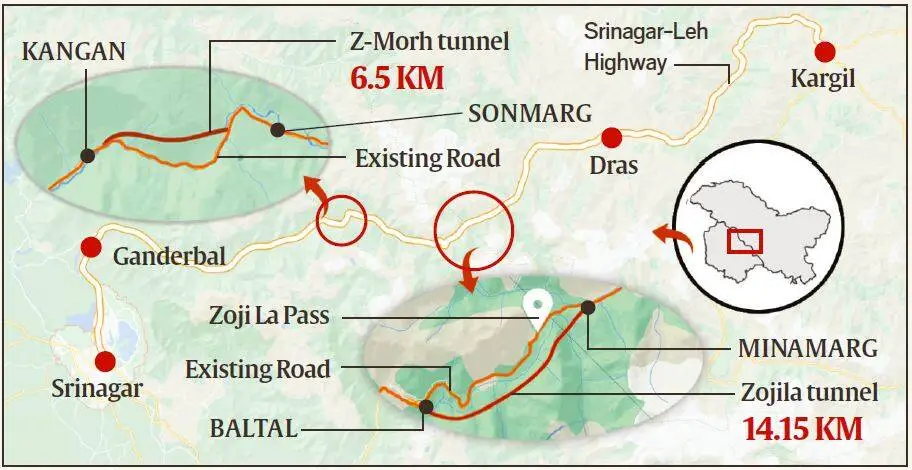
| Read More: Rising Avalanche Risks |
Olive Ridley Turtle Conservation on Hope Island
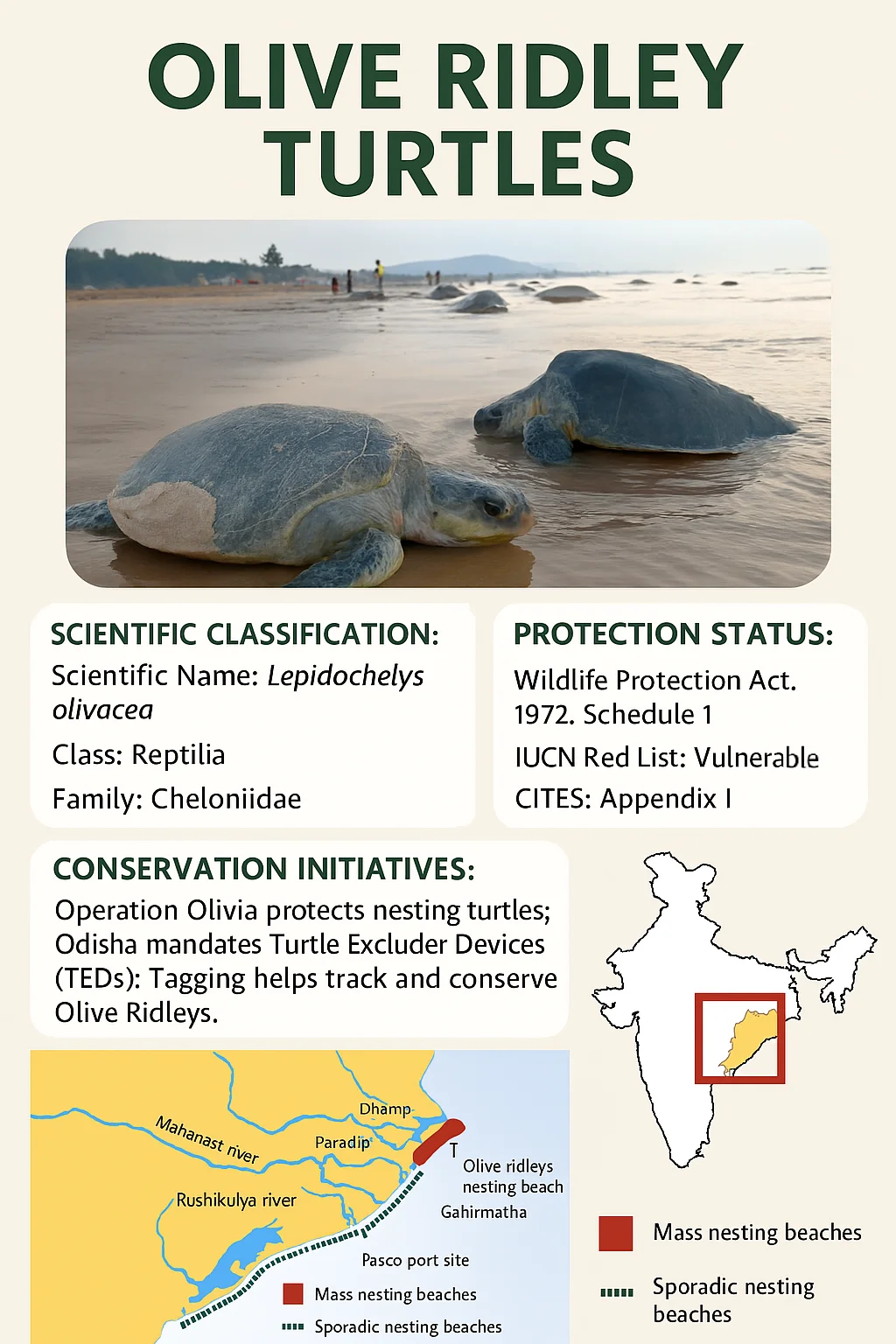
Nearly 20,000 Olive Ridley turtles eggs have been conserved on Hope Island in Kakinada Bay by the Wildlife Management Authority and Coringa Wildlife Sanctuary.
- Hope Island is a safe nesting ground for Olive Ridley turtles in Andhra Pradesh, where eggs are protected using the in-situ conservation method.
Olive Ridley Turtles
- About: Olive ridley turtles are the world's smallest sea turtle and have a heart-shaped, olive or grayish-green carapace.
- They are found in tropical regions of the Pacific, Indian, and Atlantic Oceans; inhabit both open ocean and coastal waters.
- Diet and Behavior: ORTs are omnivorous, feeding on jellyfish, snails, crabs, and algae. They undertake long-distance migrations from the Pacific to the Indian Ocean, reaching Indian coasts between November and December and remaining until April–May.
- The species is known for its synchronised mass nesting (arribada) on narrow sandy beaches near estuaries and bays, where each female lays about 100–140 eggs at a time.
- Key Indian sites are Gahirmatha (largest mass nesting), Rushikulya, and the Devi River mouth in Odisha, Visakhapatnam & Kakinada (Andhra Pradesh) and Andaman and Nicobar Islands.
- Legal Protections: All the 5 species of sea turtles occurring in India, including the ORTs, are legally protected under Schedule I of the Wildlife Protection Act, 1972 and Appendix I of the CITES Convention. ORTs are listed as Vulnerable on the IUCN Red List.
- Conservation Measures: Operation Olivia by the Indian Coast Guard enforces fishing bans. Turtle Excluder Devices (TEDs) are mandated in Odisha. Tagging programs help track migration.
- Major Threats: Despite an international trade ban, olive ridley turtles face severe threats from illegal poaching and egg trade, with the most significant mortality caused by accidental bycatch in trawl and gill nets during the nesting season.
| Read more: Olive Ridley Turtles |
Government Revises PM e-DRIVE Scheme
Recently, the government has revised the PM Electric Drive Revolution in Innovative Vehicle Enhancement (PM e-DRIVE) scheme, introducing new timelines and caps for EV incentives.
PM E-DRIVE Scheme
- About: The PM E-DRIVE is a flagship scheme with a ₹10,900 crore outlay (October 2024–March 2026), with revised incentive deadlines extending to 31st July 2026 for electric two-wheelers and 31st March 2028 for electric three-wheelers.
- PM E-DRIVE Scheme builds on earlier programs like Faster Adoption and Manufacturing of Hybrid and Electric Vehicles in India (FAME-I) (2015), FAME-II (2019) to accelerate adoption of electric two- and three-wheelers.
- Objective: The primary objective of this initiative is to accelerate the adoption of electric vehicles (EVs) across various categories, build robust EV charging infrastructure, and develop a strong domestic EV manufacturing ecosystem aligned with the vision of Aatmanirbhar Bharat.
- Key Components:
- Target beneficiaries: Commercial and private electric two-wheelers and three-wheelers with advanced batteries, e-ambulances, e-trucks with scrapping certificates, and electric buses for public transport.
- Demand incentives: The scheme offers demand incentives capped at 15% of the ex-factory price (or a fixed limit), with eligibility restricted to vehicles priced below ₹1.5 lakh (e-2W) and ₹2.5 lakh (e-3W).
- The L5 category of electric three-wheelers has already been closed after achieving its target in December 2025.
- The scheme caps support at 24,79,120 electric two-wheelers and 39,034 electric three-wheelers.
- Charging Infrastructure Development: The scheme aims to set up 72,300 public fast chargers in key cities and select highways to boost EV adoption.
- Bharat Heavy Electricals Ltd (BHEL), a public sector unit under the MHI, will develop a digital “Super App” for EV users to book slots, make payments, and check charger availability.
- Testing Agencies Upgradation: The scheme allocates Rs 780 crore to upgrade testing agencies under MHI with advanced technologies to support green mobility.
- Eligibility: Only EVs with advanced batteries qualify for incentives. Government-purchased EVs are excluded to prevent internal fund transfers.
- Vehicles must be registered under Central Motor Vehicles Rules (CMVR), 1989.
- e-2Ws and e-3Ws must be manufactured and registered within scheme validity (Oct 2024 – Mar 2026).
| Read More: PM E-DRIVE Scheme |
Kakori Train Action
Uttar Pradesh Chief Minister ordered strict punitive action after statues of Kakori Train Action (1925) heroes Ram Prasad Bismil, Ashfaqulla Khan, and Roshan Singh were razed during a road beautification project.
Kakori Train Action 1925
- About: The Kakori Train Action (1925) was a landmark revolutionary act carried out by members of the Hindustan Republican Association (HRA) aimed at funding India's freedom struggle.
- It challenged British colonial authority, marking a significant transition toward organized armed resistance within the national movement.
- Genesis of Resistance: Young nationalists, disillusioned after the Non-Cooperation Movement 1922 withdrawal and Jallianwala Bagh massacre 1919, sought revolutionary paths. They founded the HRA in 1924 in Kanpur to pursue India's independence through armed struggle.
- Execution of Mission: Leaders, including Ram Prasad Bismil, Ashfaqulla Khan, Chandrashekhar Azad, and Rajendra Lahiri, intercepted the 8-Down train travelling from Shahjahanpur to Lucknow near Kakori station to fund their struggle by looting the state treasury.
- Other prominent revolutionaries who participated in the Kakori Train Action were Sachindranath Bakshi, Mukundi Lal, Banwari Lal, and Manmathnath Gupta.
- Judicial Crackdown: The subsequent Kakori Conspiracy Case (1925) led to an 18-month trial; consequently, Ram Prasad Bismil, Ashfaqulla Khan, Rajendra Lahiri, and Thakur Roshan Singh were hanged in December 1927. Chandrashekhar Azad managed to escape police arrest.
- Ideological Legacy: The event is a landmark of Hindu-Muslim unity (exemplified by Bismil and Khan) and paved the way for the reorganisation of the group into the Hindustan Socialist Republican Association (HSRA) under Bhagat Singh.
| Read More: 100 Years of the Kakori Train Action |
Earth Hour 2026
India participated in Earth Hour 2026 (28th March 2026, 8:30–9:30 pm), with major landmarks such as India Gate, Qutub Minar, Red Fort, etc. switching off lights in solidarity.
- About: Earth Hour is a global initiative organised by the World Wildlife Fund (WWF) that calls on individuals, governments, and institutions to switch off non-essential lights for one hour to raise awareness about climate change and environmental protection.
- Earth Hour 2026 marks 20 years of the campaign, highlighting its growth from a simple act into a powerful global call for sustainability and climate action.
- Theme: This year's theme, “Give An Hour For Earth”, encourages everyone to go beyond the switch off by dedicating 60 minutes to nature: reconnecting with it, restoring it, learning about it, or inspiring others to care for it.
- Origin: It began in Sydney, Australia, in 2007 as a symbolic “lights off” movement and has since evolved into one of the largest global grassroots environmental campaigns.
- The movement now engages millions of people across more than 190 countries and territories, promoting not just symbolic action but broader planet-positive activities.
- Participation in India: In India, the initiative has expanded significantly since 2009 under WWF-India, with participation from 58 cities, widespread institutional support, and increasing digital engagement.
- Beyond the switch-off, the campaign in India promotes activities such as clean-up drives, nature walks, cyclothons, citizen science initiatives, and educational events, encouraging long-term environmental action.
| Read more: Earth Hour |
Government Cuts SAED
The Union government has restructured fuel taxation by reducing the Special Additional Excise Duty (SAED) on petrol and diesel while simultaneously increasing export duties on diesel and Aviation Turbine Fuel (ATF) to manage the fiscal health of Oil Marketing Companies (OMCs).
- The cut is designed to reduce the "under-recoveries" (losses) absorbed by public sector OMCs (IOCL, BPCL, and HPCL) who are selling fuel below the international cost of supply.
- Rising prices are driven by the West Asian conflict that pushed Brent crude futures above USD 111 per barrel.
Excise Duty
- About: Excise duty is an indirect tax levied on the manufacture or production of goods within a country. Unlike GST (which is charged at every stage of the supply chain), excise duty is specifically triggered by the act of making the product.
- Working: While the manufacturer is legally obligated to pay the excise duty upon production, the tax is typically passed on to the consumer through a higher retail price. This process effectively shifts the economic burden of the tax from the producer to the final buyer.
- Products Covered under Excise Duty: Excise duty is primarily levied on "non-GST" goods. These are often high-revenue or "sin" goods (items the government wants to discourage):
- Petroleum Products: Petrol, diesel, crude oil, natural gas, and Aviation Turbine Fuel (ATF).
- Alcoholic Liquors: Specifically for human consumption (state excise).
- Tobacco Products: Cigarettes and tobacco still attract Central Excise in addition to GST.
- Special Cases: Biogas blended CNG (exempted in the Union Budget 2026-27 to promote green energy).
- Excise Duty vs. Customs Duty vs. GST:
|
Feature |
Excise Duty |
Customs Duty |
GST |
|
Trigger |
Manufacturing in India |
Importing into India |
Supply of goods/services |
|
Scope |
Limited (Petrol, Alcohol, Tobacco) |
International Trade |
Almost all goods and services |
|
Authority |
Central/State Government |
Central Government |
Central & State (Dual) |
| Read More: Issue of Petrol and Diesel Pricing in India |