
Integration of Artificial Intelligence in Education
For Prelims: Artificial Intelligence, National Education Policy (NEP) 2020, Large Language Models, Bhashini
For Mains: Role of Artificial Intelligence in Education Reform, NEP 2020 and Technology-Driven Learning Ecosystem
Why in News?
Experts have emphasized that for educational institutions to truly harness the potential of Artificial Intelligence (AI), they must move beyond mere technical literacy and integrate the "Three A’s" of AI—Adoption, Absorption, and Application into their curriculum.
- This approach aligns with the National Education Policy (NEP) 2020, which envisions a technology-driven educational ecosystem to prepare students for a future where AI is ubiquitous.
Summary
- The “Three A’s” framework—Adoption, Absorption, and Application— provides a structured roadmap for integrating Artificial Intelligence into education, aligning with NEP 2020’s vision of a technology-driven learning ecosystem that promotes critical thinking, ethical awareness, and real-world problem-solving over rote learning.
- Effective AI integration requires addressing challenges such as infrastructure gaps, data sovereignty, cognitive dependency, teacher capacity, and exam reforms, through measures like a Sovereign AI Cloud, AI Citizenship courses, process-based evaluation, and teacher training reforms.
What is the Three A's Framework for AI in Education?
- The "Three A's" framework provides a structured approach for educational institutions to transition from traditional rote learning to AI-ready pedagogy.
Adoption (The Foundation)
- Definition: The initial phase of accepting and introducing AI tools into the educational ecosystem. It involves familiarizing students and faculty with AI interfaces (like Large Language Models (LLMs)) and digital tools.
- Objective: To ensure that the "fear of the unknown" is replaced by digital literacy and accessibility.
- Skills Obtained:
- AI Literacy & Tool Fluency: The ability to navigate various AI interfaces (e.g., LLMs like Gemini/ChatGPT, image generators) comfortably.
- Basic Prompt Engineering: Learning how to structure queries effectively to get the desired output from an AI model.
- Digital Adaptability: The psychological agility to embrace new digital tools rather than resisting them (overcoming "technophobia").
- Resource Optimization: Identifying which tasks can be automated (e.g., summarizing texts, drafting emails) to save time.
Absorption (The Conceptualisation)
- Definition: Deepening the understanding of how AI works, rather than just using it as a black box. Comprehending the underlying logic, limitations, and ethical implications of AI. It involves understanding why an AI gives a specific output.
- Objective: To foster critical thinking so students can distinguish between AI-generated hallucinations and factual data, ensuring they remain the "masters" of the technology.
- Skills Obtained:
- Critical Thinking & Fact-Checking: The ability to audit AI outputs, and verify facts against primary sources.
- Algorithmic Awareness: Understanding the basic logic of how AI thinks (probability vs. certainty) and its limitations.
- Ethical Reasoning: The capacity to identify bias (gender, racial, cultural) in AI responses and understand data privacy concerns.
- Cognitive Offloading: Knowing when to use AI for support vs. when to rely on human intellect to avoid dependency.
Application (The Execution)
- Definition: The practical use of AI to solve real-world problems and innovate.
- Objective: To create "value creators" and innovators rather than just passive consumers of technology.
- Skills Obtained:
- Complex Problem Solving: The ability to apply AI tools to specific real-world domains (e.g., using AI to predict weather patterns in Geography)
- Design Thinking & Innovation: Using AI as a co-pilot to brainstorm, prototype, and create new solutions or products.
- Data Analytics & Interpretation: Using AI to process large datasets (e.g., census data) and deriving actionable insights from them.
What is the Significance of Integrating AI in Curriculum?
- Shift from Rote Learning to Competency: The Three A’s push the curriculum away from memorization (which AI can do better) toward critical thinking, problem-solving, and emotional intelligence.
- Personalised Learning: AI allows for "Democratisation of Personalised Tuition." Tools can adapt to a student's learning pace, offering remedial help or advanced challenges as needed (Adaptive Learning).
- Future-Ready Workforce: With the World Economic Forum Future of Jobs Report 2025 predicting that 39% of workers' core skills will change by 2030, fluency in "Applying" AI will be a non-negotiable employability metric.
- Bridging the Language Divide: AI-powered translation tools (like Bhashini) can help students absorb complex technical concepts in their mother tongue, breaking the "English-only" barrier in higher education.
What are the Key Challenges of Integrating AI in Curriculum?
- Infrastructure Deficit: Unlike Japan’s "GIGA School" program (Global and Innovation Gateway for All), which ensures a "One Student, One Device" policy with high-processing tablets, Indian government schools often rely on shared, low-power devices.
- Most affordable devices in rural India lack the NPU (Neural Processing Unit) power required to run "Small Language Models" (SLMs) locally.
- Cognitive Atrophy: Just as widespread GPS usage eroded human spatial navigation skills, there is a fear of "Cognitive Offloading."
- If students use AI to generate the process (e.g., writing code or structuring an essay) rather than just the product, they may fail to develop the necessary neural pathways for critical thinking and logic.
- Evaluation Crisis: The current examination system tests "memory" and "output," which AI excels at.
- There is a lag in shifting to "process-based assessment" (vivas, in-class problem solving) which effectively filters out AI dependency.
- Data Sovereignty & Privacy: In the absence of a sovereign "Indian Education Cloud," students currently use free tiers of global LLMs.
- This means sensitive learning data and intellectual property of Indian students are processed on foreign servers, raising concerns about National Data Sovereignty.
- Bias in Training Data: Most Global LLMs are trained on Western datasets (WEIRD - Western, Educated, Industrialized, Rich, Democratic).
- This can lead to "Cultural Hallucinations," where AI provides contextually irrelevant or culturally biased answers to Indian societal problems.
- The "Black Box" Teacher Dilemma: There is a capability mismatch where students often possess higher "Adoption" skills (using AI tools) than their teachers.
- Teachers may not be able to teach the limitations or logic of AI if they themselves view it as a magical "Black Box."
- This leads to a scenario where educators cannot effectively audit or grade AI-assisted assignments.
What Measures can Strengthen AI Integration in Education?
- National Educational Technology Forum (NETF): As envisioned in NEP 2020, the NETF must prioritize creating a "Sovereign AI Cloud" for education.
- This would allow rural schools to access powerful AI models via low-end devices without needing expensive hardware, bridging the Compute Divide.
- Mandatory "AI Citizenship" Course: A core module on Data Privacy, Algorithmic Bias, and Intellectual Property Rights must be introduced from Class 8 onwards. Students should not just be coders but conscientious guardians of technology.
- Continuous Comprehensive Evaluation (CCE): Adopt a formative assessment model that tracks the learning journey (how a student arrived at an answer, their query history, and their critical thinking process) rather than just the final answer.
- This directly mirrors modern recruitment standards in a corporate environment that demands transparent, replicable, and critical problem-solving skills.
- Teacher Training 2.0: Launch a nationwide "Train the Trainer" mission (similar to NISHTHA) specifically focused on AI pedagogy, ensuring teachers are comfortable co-teaching with AI assistants.
Conclusion
The integration of the "Three A's" is not merely a technological upgrade but a civilizational imperative. By moving from passive Adoption to critical Absorption and innovative Application, India can transition its demographic dividend from being "consumers of global tech" to "creators of global solutions," ensuring that in the age of Artificial Intelligence, human intelligence remains the master.
|
Drishti Mains Question: Examine how National Education Policy (NEP) 2020 envisions a technology-driven educational ecosystem. What structural reforms are necessary for effective AI integration? |
Frequently Asked Questions (FAQs)
1. What is the Three A’s framework for AI in education?
It is a structured model comprising Adoption (AI literacy), Absorption (critical and ethical understanding), and Application (real-world problem solving) to transition from rote learning to AI-ready pedagogy.
2. How does NEP 2020 support AI integration in education?
NEP 2020 envisions a technology-driven ecosystem and proposes bodies like the National Educational Technology Forum (NETF) to guide digital and AI-based reforms.
3. What is the concern regarding Data Sovereignty in AI-enabled education?
Use of global LLMs processes student data on foreign servers, raising concerns about National Data Sovereignty, privacy, and intellectual property security.
4. Why is process-based assessment important in the AI era?
Since AI excels at output generation, evaluation must shift toward formative, process-based methods like vivas and in-class problem solving to assess critical thinking.
5. What is the risk of Cognitive Offloading in AI-based learning?
Excessive reliance on AI for generating processes (e.g., essays, coding logic) may weaken neural pathways for reasoning, critical thinking, and independent analysis.
UPSC Civil Services Examination, Previous Year Question (PYQ)
Mains
Q. National Education Policy 2020 is in conformity with the Sustainable Development Goal-4 (2030). It intends to restructure and reorient the education system in India. Critically examine the statement. (2020)
India’s Aviation Sector
For Prelims: Directorate General of Civil Aviation, UDAN Scheme, Aviation Turbine Fuel
For Mains: Structural challenges in India aviation sector, Regulatory capacity and safety oversight, Infrastructure and skill bottlenecks
Why in News?
India's civil aviation sector has witnessed repeated operational disruptions and safety concerns in 2025, alongside declining profitability of major airlines. With new regional players entering the market, questions have arisen about systemic vulnerabilities in the sector.
Summary
- India's aviation sector is large but structurally overstretched, with demand growth outpacing institutional capacity.
- A duopoly controlling nearly 90 percent of the market increases systemic risk and limits resilience.
- Pilot shortages, regulatory gaps and fuel volatility are core structural constraints.
- Without coordinated reform, rapid expansion may convert growth into recurring operational crises.
What is the Status of India’s Aviation Sector?
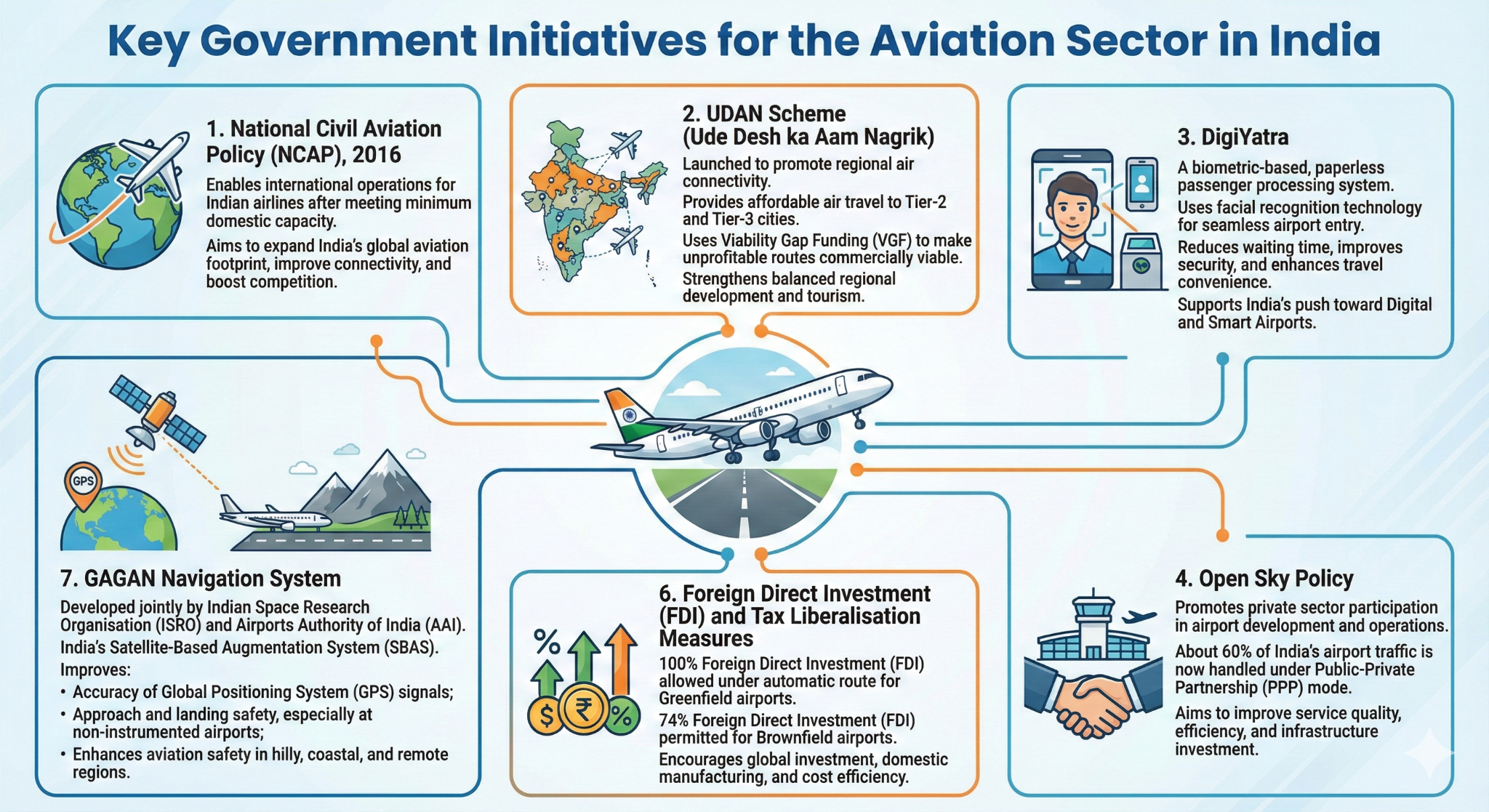
- Global Ranking: India is the 3rd-largest domestic aviation market after the US and China. It accounts for about 4.2% of global air traffic. The Indian fleet accounts for around 2.4% of the total global fleet. Fleet size has grown rapidly due to airline expansion and new aircraft orders.
- Passenger Traffic Growth: By 2030, domestic passenger demand is expected to reach around 715 million. By 2040, the passenger traffic is expected to grow six-fold to around 1.1 billion.
- Airport Infrastructure Expansion: The number of operational airports increased from 74 in 2014 to 163 in 2025. By 2047, India aims to expand to 350–400 airports, with a strong emphasis on greenfield projects and PPP-based development.
- Economic Contribution: As of 2025, aviation supports over 7.7 million jobs and contributes 1.5% of India’s GDP.
- Indian Civil Aviation Regulation:
- Air Corporations Act, 1953: Nationalised nine airline companies. Government-owned airlines dominated the sector till the mid-1990s.
- Open Sky Policy (1990–94): Allowed private air taxi operators. Ended the monopoly of Indian Airlines (IA) and Air India (AI).
- The Bharatiya Vayuyan Adhiniyam, 2024: Replaces the colonial-era Aircraft Act, 1934 and aligns India’s aviation laws with ICAO standards and the Chicago Convention.
- It promotes Make in India and Atmanirbhar Bharat in aviation manufacturing, introduces simplified licensing and regulatory processes, provides a structured appeals mechanism, and modernises India’s overall aviation governance framework.
What are the Key Challenges in India’s Aviation Sector?
- Training and Skill Bottlenecks: Simulator shortages, limited trainer availability, high training costs, and type-rating constraints have made pilot supply relatively inelastic. Around 236 temporary foreign pilot approvals were issued in 2025, indicating reliance on expensive stopgap solutions.
- High Market Concentration and Systemic Risk: IndiGo (63–65%) and the Air India group (27–28%) together control nearly 90% of domestic passenger traffic. IndiGo operates as the sole carrier on about 60% of routes, meaning disruptions result in outright loss of connectivity rather than passenger redistribution.
- Low Shock Absorption Capacity: Globally, airlines maintain 20–25% spare crew capacity to absorb operational shocks, whereas Indian carriers operate at near-total utilisation, allowing minor disruptions to cascade into network-wide failures.
- Weak Regulatory Capacity: Nearly half of the Directorate General of Civil Aviation’s sanctioned technical posts remain vacant. Disruptions have often been managed through schedule exemptions rather than strict enforcement, reflecting ad hoc crisis management.
- High Operating Costs and Fuel Volatility: Airlines face financial pressure due to volatile Aviation Turbine Fuel (ATF) prices linked to global crude oil markets and the U.S. dollar, increasing cost instability.
- Recurring Airline Failures: The sector has witnessed multiple airline collapses including Kingfisher Airlines (2012), Jet Airways (2019), Go First (2023), and others, highlighting persistent financial and structural vulnerabilities.
- Aviation Safety Risks: Rising traffic, repeated operational disruptions, and 19 safety violation notices issued by the Directorate General of Civil Aviation (DGCA) in 2025 indicate growing concerns over safety compliance and systemic resilience.
New Regional Airlines and Connectivity Initiatives
- Entry of New Regional Carriers: In December 2025, the Ministry of Civil Aviation granted No Objection Certificates to Shankh Air, Al Hind Air and FlyExpress to expand regional air connectivity and reduce market concentration.
- Focus on Tier 2 and Tier 3 Cities: These airlines aim to operate from emerging hubs such as Noida International Airport, Kochi and Telangana, targeting underserved regional routes and improving last-mile air access.
- Strengthening Regional Connectivity through UDAN: Under the UDAN scheme, 625 routes and 85 airports have been operationalised by 2025, including over 100 routes in the Northeast, promoting inclusive air travel.
What Measures can Strengthen India’s Aviation Sector?
- Shift from Crisis Management to Structural Reform: Replace ad hoc schedule exemptions with long-term institutional strengthening to ensure system resilience as passenger demand rises sharply toward 715 million by 2030.
- Strengthen Regulatory Oversight Capacity: Fill vacant technical posts in the Directorate General of Civil Aviation and adopt rule-based, risk-based supervision mechanisms to improve safety compliance and enforcement credibility.
- Expand Pilot Training Ecosystem: Increase simulator capacity, expand domestic training institutions, streamline licensing processes, and address type-rating bottlenecks to meet projected pilot demand and reduce dependence on temporary foreign approvals.
- Institutionalise Reserve Capacity Norms: Establish minimum spare crew thresholds closer to global standards (20–25%) to prevent cascading disruptions during peak travel seasons and operational shocks.
- Support Viable Regional Carriers: Move beyond merely granting NOCs by ensuring effective implementation of UDAN subsidies, preferential slot allocation at congested airports, and coordinated development of Tier-2 and Tier-3 airport infrastructure to reduce overdependence on dominant carriers.
- Rationalise Fuel Policy: Consider tax rationalisation on Aviation Turbine Fuel (ATF) and explore fuel hedging mechanisms to reduce exposure to global price volatility and dollar-linked fluctuations.
Conclusion
India's aviation sector has achieved impressive scale but remains structurally fragile. Pilot shortages, regulatory gaps, high market concentration, and cost volatility threaten long-term sustainability. Structural reform, rather than reactive crisis management, is essential to ensure safe, competitive, and resilient aviation growth.
|
Drishti Mains Question Examine the challenges facing India’s aviation sector and suggest measures to ensure sustainable and resilient growth. |
Frequently Asked Questions (FAQs)
1. What is the role of DGCA in India?
DGCA is India’s apex civil aviation regulator under the Ministry of Civil Aviation, responsible for air safety, licensing, airworthiness, flight regulation, and ICAO coordination.
2. What is India’s current global position in civil aviation?
India is the 3rd-largest domestic aviation market after the USA and China and supports over 7.7 million jobs.
3. Why is India’s aviation sector structurally vulnerable?
Rapid growth, pilot shortages, weak regulatory capacity, and high market concentration make it prone to systemic disruptions.
4. How does UDAN strengthen the aviation sector?
UDAN boosts regional connectivity by expanding access to underserved routes and airports.
UPSC Civil Services Examination, Previous Year Questions (PYQs)
Mains
Q. Examine the development of Airports in India through joint ventures under Public–Private Partnership (PPP) model. What are the challenges faced by the authorities in this regard? (2017)
New MHA Protocol on Vande Mataram and Jana Gana Mana
Why in News?
The Ministry of Home Affairs (MHA) has issued a fresh set of instructions to States and government bodies mandating that the National Song, Vande Mataram, must be played or sung before the National Anthem, Jana Gana Mana, when both are part of an event.
What is the New Protocol Regarding the National Song and Anthem?
- Sequence of Play: When both the National Song and the National Anthem are played at the same event, Vande Mataram (National Song) must be played/sung first, followed by Jana Gana Mana (National Anthem).
- This establishes a clear order of precedence for official ceremonies.
- Mandatory Respect: The audience must stand to attention whenever the official version of the National Song (approximately 3.10 minutes long) is sung or played.
- If the National Song is played as part of a newsreel, documentary, or film, the audience is not expected to stand. Standing during a screening would interrupt the exhibition and create disorder/confusion rather than adding dignity.
- Occasions for Playing: The National Song is now mandated for specific high-level official functions:
- Presidential/Gubernatorial Events: On the arrival and departure of the President or Governor/Lieutenant Governor at formal State functions.
- Broadcasts: Immediately before and after the President addresses the nation on All India Radio or TV.
- Flag Ceremonies: When the National Flag is brought on parade.
- Cultural Events: On the unfurling of the National Flag at cultural or ceremonial functions (other than parades).
- Musical & Band Protocol: When played by a band, the National Song must be preceded by a roll of drums to alert the audience.
- Instructions for Schools: The guidelines state that the day's work in all schools may begin with community singing of the National Song.
- School authorities are directed to make adequate provisions to popularize the singing of the National Song and Anthem to foster respect for national symbols.
- The new protocol connects with constitutional values under Article 51A(a) (Fundamental Duty to respect national symbols).
What are the Key Facts About Vande Mataram?
- Origin & Composition: Vande Mataram (also pronounced Bande Mataram), composed by Bankim Chandra Chatterjee, was first published in Bangadarshan in 1875 and later included in Anandamath (1882).
- It is set to music by Rabindranath Tagore, and it emerged as a powerful symbol of India’s cultural and political identity, embodying unity, sacrifice, and devotion.
- National Status: On 24th January 1950, Dr Rajendra Prasad, the first President of India, announced that while Jana Gana Mana would be the National Anthem, Vande Mataram, for its key role in the freedom movement, would be honoured equally as the National Song.
- India’s Constitution does not explicitly mention a national song. However, Article 51A(a) asks citizens to respect the Constitution, National Flag and National Anthem.
- Role in Freedom Movement:
- Adoption by Congress: In 1896, Gurudev Rabindranath Tagore sang Vande Mataram at the Kolkata session of the Indian National Congress.
- At the Varanasi session of the Indian National Congress (1905), the song 'Vande Mataram' was adopted for all-India occasions.
- Mass Mobilisation & Press: Bande Mataram Sampradaya (1905) formed in North Calcutta to promote devotion to the motherland.
- English daily Bande Mataram launched in 1906 under Bipin Chandra Pal, later joined by Sri Aurobindo. It propagated ideas of Swadeshi, unity, and resistance.
- Anti-Partition & Student Movements: Vande Mataram was first used as a political slogan on 7th August 1905 during student processions at Calcutta Town Hall, becoming the rallying cry of the Swadeshi and anti-partition movement.
- Its mass appeal prompted Lord Curzon to order arrests for singing it.
- Influence on Indian Revolutionaries Abroad:
- In 1907, Madam Bhikaji Cama raised the tricolour flag for the first-time outside India in Stuttgart, Germany. The words Vande Mataram were written on the flag.
- In August 1909, when Madan Lal Dhignra was hanged in England, his last words before he went to the gallows were “Bande Mataram.”
- In October 1912, Gopal Krishna Gokhale was welcomed in Cape Town with a grand procession chanting “Vande Mataram.”
- Adoption by Congress: In 1896, Gurudev Rabindranath Tagore sang Vande Mataram at the Kolkata session of the Indian National Congress.
What are the Key Facts About Jana Gana Mana (National Anthem)?
- Origin & Composition: Written and composed by Nobel Laureate Rabindranath Tagore in 1911.
- It is the first stanza of the parent poem "Bharoto Bhagyo Bidhata", which consists of 5 stanzas in total.
- Jana Gana Mana is originally written in Bengali (specifically Sadhu Bhasha, a Sanskritized dialect).
- First Rendition: It was first sung publicly on 27th December 1911, at the Calcutta Session of the Indian National Congress.
- Official Adoption: It was adopted as the National Anthem by the Constituent Assembly of India on 24thJanuary 1950.
- Translation: Rabindranath Tagore translated the song into English while at Madanapalle (Andhra Pradesh). The translation is titled "The Morning Song of India".
- A Hindustani version titled Subh Sukh Chain was prepared under Subhas Chandra Bose for the Indian National Army.
- No "Sindh" Modification: In 2005, a petition to replace the word "Sindh" (now in Pakistan) with "Kashmir" was rejected by the Supreme Court.
- The court ruled that "Sindh" in the anthem refers to the culture/community and not just the geographical region.
Note: Rabindranath Tagore is the only person to have written the national anthems for two countries: India (Jana Gana Mana) and Bangladesh (Amar Sonar Bangla).
Frequently Asked Questions (FAQs)
1. What is the new protocol issued by the MHA regarding national symbols?
Vande Mataram must be played or sung before Jana Gana Mana when both are part of an official event.
2. Is Vande Mataram mentioned in the Constitution as the National Song?
No. The Constitution does not explicitly mention a National Song, but Article 51A(a) mandates respect for national symbols.
3. When was Jana Gana Mana adopted as the National Anthem?
It was adopted by the Constituent Assembly on 24 January 1950.
4. Who composed Vande Mataram and what was its role in the freedom movement?
Composed by Bankim Chandra Chatterjee, it became a rallying cry during the Swadeshi and anti-partition movements.
5. What did the Supreme Court rule regarding the word “Sindh” in the National Anthem?
In 2005, it rejected a plea to replace “Sindh,” stating it refers to cultural heritage, not territorial geography.
UPSC Civil Services Examination, Previous Year Question (PYQ)
Prelims:
Q. Who among the following is associated with ‘Songs from Prison’, a translation of ancient Indian religious lyrics in English? (2021)
(a) Bal Gangadhar Tilak
(b) Jawaharlal Nehru
(c) Mohandas Karamchand Gandhi
(d) Sarojini Naidu
Ans: (c)
Q. What is the number of spokes in the Dharmachakra in the National Flag of India? (2008)
(a) 16
(b) 18
(c) 22
(d) 24
Ans: (d)
Information Technology Amendment Rules, 2026
The Ministry of Electronics and Information Technology (MeitY) has notified the Information Technology (Intermediary Guidelines and Digital Media Ethics Code) Amendment Rules, 2026, amending the 2021 Rules under the IT Act, 2000.
- Effective from the 20th February 2026, the new framework tightens norms for synthetic media and content removal.
- Drastic Reduction in Takedown Timelines: Social media platforms must now remove content deemed illegal by a court or "appropriate government" within 3 hours (reduced from the earlier 24-36 hour window).
- Sensitive content, specifically non-consensual nudity and deepfakes, must be taken down within 2 hours of reporting.
- Definition of "Synthetic" Content: The rules define synthetic content as audio-visual information created or altered algorithmically that appears "indistinguishable from a natural person or real-world event."
- A specific exemption is provided for minor touch-ups automatically performed by smartphone cameras, ensuring everyday photo enhancements are not penalized.
- Mandatory Disclosure and Labeling: The rules mandate that AI-generated imagery be labelled “prominently.”
- Platforms must seek disclosures from users if their content is AI-generated.
- If a user fails to disclose, the platform is obligated to either proactively label the content "prominently" or take it down (specifically in cases of non-consensual deepfakes).
- Loss of Safe Harbour: Failure to comply with these rules puts the intermediary’s Safe Harbour protection at risk (immunity from legal liability for third-party content under Section 79 of the IT Act).
- Intermediaries that knowingly permit, promote, or fail to act on violative synthetic content will be deemed to have failed "due diligence."
- Administrative Flexibility for States: States can designate multiple authorised officers for issuing takedown orders.
| Read more: Information Technology(IT) Amendment Rules, 2025 |
Arctic Sentry Mission
NATO announced the launch of a mission, called "Arctic Sentry," to bolster its presence in the Arctic.
- About: “Arctic Sentry” is a multi-domain mission to strengthen collective defence, coordination and stability in the strategically sensitive Arctic region.
- Objective: The new mission will leverage NATO’s collective strength to protect its territory and ensure that the Arctic and the High North, a term referring to the Arctic Circle and its adjoining northernmost regions, remain secure.
- Feature: It aims to enhance surveillance and security in the region, modelled on existing NATO initiatives such as Baltic Sentry and Eastern Sentry.
- Military Exercises & Preparedness: The mission includes major exercises such as Exercise Cold Response and the UK-led Lion Protector, aimed at training allied forces for Arctic operations and strengthening the defence of critical infrastructure, and counter-sabotage threats across Norway, Iceland and the Danish Straits.
Arctic Region
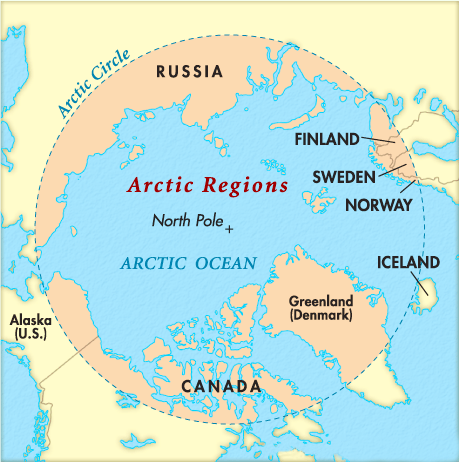
- The Arctic lies north of the Arctic Circle (66°34′ N), centred on the North Pole, and includes the Arctic Ocean and parts of eight countries, Canada, Denmark (Greenland), Finland, Iceland, Norway, Russia, Sweden and the USA, forming the Arctic Council.
- It possesses significant reserves of minerals and rare earth elements and is increasingly geopolitically significant owing to emerging sea routes, resource potential, and its strategic closeness to major powers.
| Read more: India and the Dynamism of Arctic Region |
Tamil Brahmi Inscriptions Discovered in Egypt
Recent findings of nearly 30 inscriptions in Tamil Brahmi, Prakrit and Sanskrit at tombs in the Valley of the Kings in Egypt highlight trade links between ancient Tamilagam, other parts of India and the Roman Empire.
- Location: The inscriptions were found in the Valley of the Kings on the west bank of the River Nile within the Theban Necropolis in Egypt, and were left by individuals from the north-western, western and southern regions of the Indian subcontinent, with those from the latter forming the majority.
- Nature of Inscriptions: Visitors carved brief graffiti, mainly personal names, on walls and corridors of tombs. These appear alongside a larger body of Greek graffiti, indicating that Indian visitors followed an existing local practice of marking their presence.
- Key Findings: The Tamil Brahmi name “Cikai Koṟraṉ” appears eight times across five tombs, sometimes inscribed high on interior walls. The element “Cikai” may be linked to the Sanskrit śikhā (tuft or crown), while “Koṟṟaṉ” derives from the Tamil root koṟṟam (victory, slaying), associated with the Chera warrior goddess Koṟṟavai and the term koṟṟavaṉ (king). Other inscriptions include “Kopāṉ varata kantan” (Kopāṉ came and saw), as well as names like Cātaṉ and Kiraṉ.
- Link with Berenike and Sangam Literature: The element koṟṟaṉ also appears in Koṟṟapumāṉ found at Berenike, a Red Sea port city known for Indo-Roman trade. The name occurs in the Sangam corpus and in inscriptions from Pugalur, the ancient Chera capital, dated to the 2nd–3rd centuries CE.

| Read more: Sangam Age |
Death Anniversary of Pt Deendayal Upadhyaya
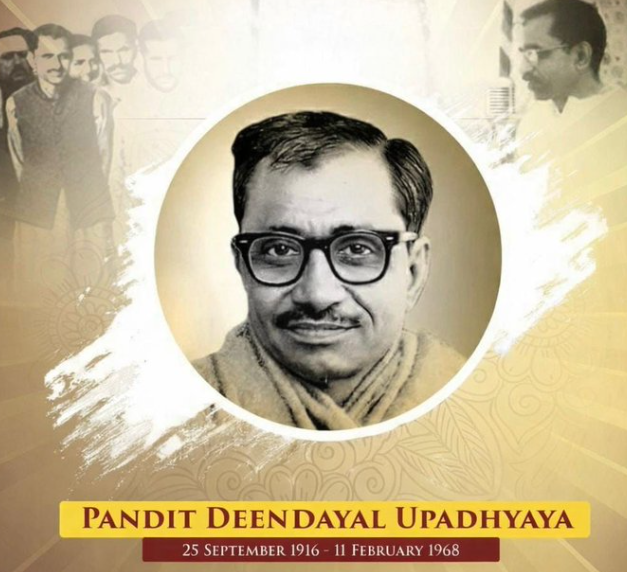
The Vice-President of India paid tribute to Pandit Deendayal Upadhyaya on his death anniversary, observed on 11th February 1968.
- About: Born on 25th September 1916, he was an Indian politician, philosopher, and ideologue of the RSS and Bharatiya Jana Sangh (BJS) (the predecessor of the Bharatiya Janata Party).
- Contributions: He focused on Antyodaya, i.e., uplifting the last person and addressing the needs of the most disadvantaged.
- His philosophy of “Integral Humanism” emphasized welfare, social justice, economic equality, and self-reliance.
- Recognition: Since 25th September 2014, his birth anniversary has been observed as Antyodaya Diwas to honor his contributions to the nation.
- In 2015, the National Rural Livelihood Mission (NRLM) was renamed Deendayal Antyodaya Yojana-NRLM.
- In 2018, Mughalsarai Junction in Uttar Pradesh was renamed after him.
| Read More: Sangathan se Samriddhi: DAY-NRLM |
Regulation of Books by Armed Forces Personnel
Amid controversy over the unpublished book Four Stars of Destiny by former Army Chief General M.M. Naravane (retd.), the Ministry of Defence (MoD) is drafting a new regulatory framework for serving and retired armed forces personnel wishing to publish books.
- Current Legal Vacuum for Retirees: Unlike serving personnel, there is currently no single consolidated law specifically governing book-writing by retired Army officers.
- While they are no longer subject to the Army Act, 1950 or Army Rules,1954 regarding publications, the regulatory landscape remains a "legal grey area" dependent on individual judgment.
- Applicability of Official Secrets Act (OSA): The Official Secrets Act, 1923 continues to apply to personnel for life, even after retirement.
- Disclosing classified information, operational details, or material prejudicial to national security remains a criminal offence punishable by law.
- Regulations for Serving Personnel: There is a laid-down process within the respective defence services to grant permission for publishing content related to national interest, and legal provisions exist to address any incorrect or unlawful disclosures.
- Prior written permission is mandatory before undertaking any literary or remunerative activity.
- Content is routed through the chain of command (up to Army headquarters or MoD) for vetting to ensure no operational details, intelligence inputs, or internal procedures are compromised.
- Comparison with Civil Servants: The government had previously amended the Central Civil Services (Pension) Rules in 2021.
- This amendment specifically prohibits retired officials from intelligence or security-related organizations (like RAW, IB) from publishing sensitive information without prior clearance from the competent authority.
- MOD Proposed Guidelines: The new framework aims to standardize the clearance process for manuscripts, incorporating provisions from existing service rules and the OSA to close the current regulatory gaps for veterans.
| Read more: Removing Fear: On Literary Freedom |