
Tantya Mama and Bhil Tribe | 30 Jan 2026
Tantya Mama has been in the news after the Madhya Pradesh government announced plans to install a new metal statue of the revered tribal figure.
Tatya Mama
- About: He was a prominent tribal freedom fighter from the Bhil community, which constitutes about 40% of Madhya Pradesh's 1.53 crore tribal population (Tribals form 21% of MP's population, the highest in India).
- Period of Resistance: Actively resisted British colonial rule between 1878 and 1889, in the backdrop of post-1857 Revolt, revenue oppression and exploitation of tribal communities.
- Popular Image: Revered as the Indian Robin Hood for his actions of targeting wealthy landowners and British-aligned authorities, then redistributing resources to support the poor and oppressed tribal populations. He is affectionately called “Mama” (maternal uncle).
Bhil Tribe
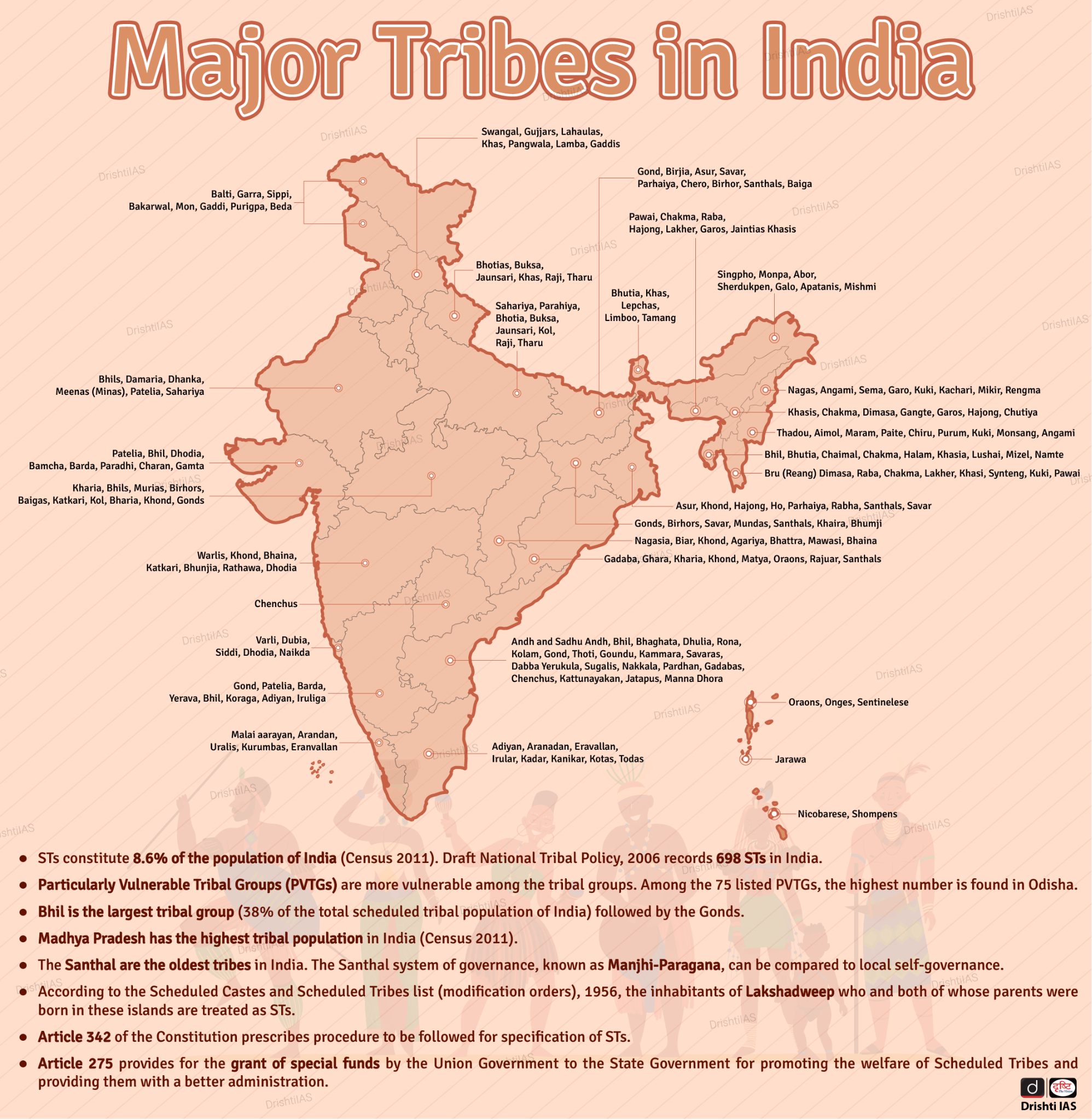
- About: The Bhil are the largest tribal group in India (4.61 million, 37.7% of total ST population per 2011 Census), predominantly inhabiting across Gujarat, MP, Rajasthan, Maharashtra, Chhattisgarh, and Andhra Pradesh.
- Religious Practices: Predominantly Hindu with animistic elements; worship serpent gods, and nature deities. Some groups follow Islam (e.g., Nirdhi, Tadvi Bhils, Maharashtra).
- History of Colonial Resistance & Exploitation: Declared “Criminal Tribes” under the Criminal Tribes Act, 1871. Key revolts include:
- Bhagat Movement (1883) led by Govind Guru, culminating in the Mangarh massacre (1913,Adivasi Jallianwala).
- Eki Andolan (1920) led by Motilal Tejawat.
- Rich Cultural Heritage: Renowned for distinct art forms like Pithora paintings (MP) and Bhil art (dotted style), and festivals like Bhagoria (MP) and Gol Gadhedo (Gujarat).
| Read More: Janjatiya Gaurav Diwas to Commemorate Tribal Legacy |