
India-EU FTA
For Prelims: European Union, Free Trade Agreement (FTA), TRIPS, G20, G7, Operation Atalanta, Indo-Pacific Oceans Initiative (IPOI), International Solar Alliance, Quality Control Orders (QCOs), Non-tariff Barriers, Schengen Area.
For Mains: Key highlights of the India–EU FTA and India-EU relations, Opportunities and challenges associated with India–EU FTA and way forward.
Why in News?
India and the European Union (EU) have concluded negotiations for a comprehensive Free Trade Agreement (FTA), marking a transformative step in their economic relations. The EU is India's 22nd FTA partner.
- The concluded India–EU FTA will now undergo language finalisation and legal scrubbing, followed by translation and ratification by all 27 EU Member States and the European Parliament before it enters into force.
Summary
- India-EU concluded negotiations for a FTA that offers unprecedented market access and boosts for labour-intensive sectors & services.
- Its success is challenged by EU's stringent regulations (CBAM, EUDR) acting as non-tariff barriers.
- Sustainability requires managing asymmetries, securing equitable carve-outs, and deepening strategic cooperation.
What are the Key Highlights of the India–EU FTA?
European Union Commitments
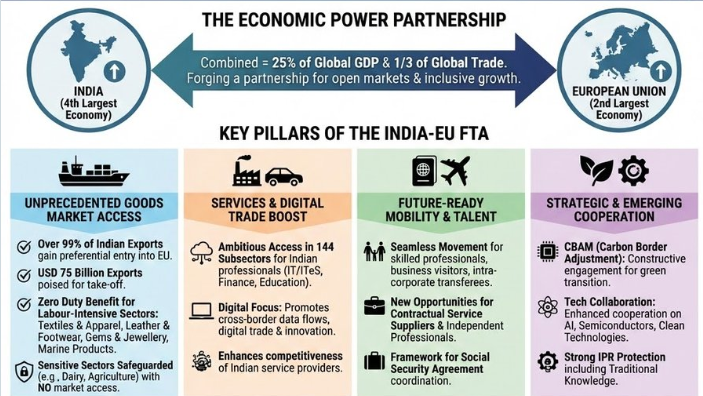
- Comprehensive Market Access: The European Union committed to open 97% of its tariff lines, covering 99.5% of India’s exports by value, offering India one of the deepest preferential market access arrangements it has ever received.
- Labour-Intensive Sector Advantage: Key employment-generating sectors such as textiles, apparel, leather, footwear, marine products, gems and jewellery, toys, and sports goods, currently facing EU duties of 4–26%, will enter the EU market at zero duty, covering exports worth about USD 33 billion.
- Services Market Liberalisation: The EU made binding commitments across 144 services subsectors, including IT/ITeS, digital services, professional services, education, and business services, ensuring regulatory certainty and non-discriminatory treatment for Indian service providers.
- Farm Exports: The FTA provides India preferential access to the EU market for key agricultural and processed food exports, improving their competitiveness. This is expected to boost farmer incomes, promote value-added agri-exports, and strengthen rural and women-led livelihoods.
- Professional Mobility Framework: The FTA establishes a clear framework for temporary movement of professionals such as intra-corporate transferees, contractual service suppliers, and independent professionals along with provisions for dependents, students, and future social security arrangements.
- Regulatory and Standards Cooperation: Enhanced cooperation on Sanitary and Phytosanitary (SPS) and Technical Barriers to Trade (TBT) was agreed upon to reduce non-tariff barriers, enable conformity assessment recognition, and improve market predictability.
India’s Commitments
- Calibrated Tariff Liberalisation: India committed market access on 92.1% of its tariff lines, covering 97.5% of EU exports. Critical sectors including dairy, cereals, poultry, soymeal, and select agricultural products remain protected, while automobiles, wines, and spirits are subject to gradual liberalisation to shield MSMEs and farmers.
- Services Sector Opening: India opened 102 services subsectors, including telecom, financial, maritime, environmental, professional, and business services, providing EU firms a stable and predictable operating environment.
- MSME-Friendly Rules of Origin: Product-specific rules of origin aligned with global value chains were adopted, allowing self-certification through Statements of Origin and special flexibilities for MSME-dominated sectors such as shrimps, prawns, and downstream aluminium products.
- Balanced IPR and Digital Trade Framework: India reaffirmed TRIPS-compliant intellectual property protection while safeguarding public interest, protecting the generic pharmaceutical industry, recognising the Traditional Knowledge Digital Library, and balancing cross-border digital trade with data localisation and digital sovereignty.
What is the Significance of the India–EU FTA?
- Geoeconomic Diversification: The FTA advances the China-plus-one strategy by positioning India as a trusted manufacturing and services alternative for the EU. In a global order where trade and technology are increasingly weaponised through sanctions and export controls, the agreement creates a rules-based “zone of trust” between two democratic blocs, especially for sensitive sectors such as semiconductors, AI, defence manufacturing, and green technologies.
- Increased Indian competitiveness: To access the EU market, Indian manufacturing will undergo a quality overhaul (Sanitary and Phytosanitary measures, technical standards). This "standards upgrade" (Brussels Effect) will make Indian goods globally competitive, not just in Europe but in US and Japanese markets as well.
- Strategic Leverage: The FTA connects India, the world's fourth-largest economy, with the EU, the second-largest, together representing 25% of global GDP and one-third of global trade. This creates a massive economic bloc, offering India strategic weight and deep integration with a leading technology superpower.
- Green and Digital Modernization Engine: The FTA focuses on digital trade rules and green transition, aiming to boost India's digital economy through secure data flows and AI-driven green industrial development.
India-EU Relations
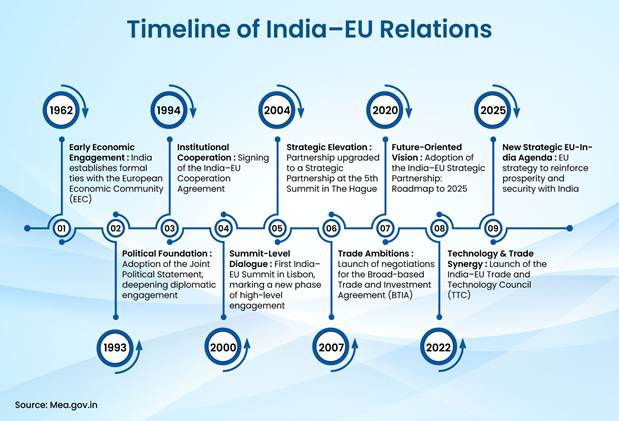
- Historical Foundation: Bilateral relations date to 1962. The relationship was institutionalized by a 1993 Joint Political Statement and a 1994 Cooperation Agreement, upgraded to a ‘Strategic Partnership’ in 2004.
- Institutional Architecture: The bilateral relationship is guided by the ‘India–EU Strategic Partnership: A Roadmap to 2025’. The multi-tiered institutional architecture is presided over by their annual Summits, which began with the inaugural one in Lisbon in June 2000.
- High-Level Engagements: Characterized by frequent leaders' meetings on sidelines of G20, and G7 summits. Both established the India–EU Trade and Technology Council (TTC) in 2022 as a key strategic mechanism.
- Economic & Trade Relations: The EU is India's largest goods trading partner (USD 135 billion in FY 2023–24). Bilateral trade in services was at a record USD 53 billion in 2023. EU investments in India exceed USD 117 billion.
- Strategic & Security Cooperation: India and the EU have strengthened naval cooperation through joint exercises like Maritime Partnership Exercise with EUNAVFOR Atalanta (Operation Atalanta). The EU joined the Indo-Pacific Oceans Initiative (IPOI) in 2023 and is an Indian Ocean Rim Association (IORA) dialogue partner.
- Climate & Connectivity Initiatives: India – EU Clean Energy and Climate Partnership (CECP) established in 2016 focuses on clean energy and climate-friendly technologies. The EU is a partner to the International Solar Alliance and a member of Coalition for Disaster Resilient Infrastructure (CDRI).
- Both sides launched an India–EU Connectivity Partnership in 2021 and are co-partners in the India-Middle East-Europe Economic Corridor (IMEC).
- Multifaceted Sectoral Cooperation: Extensive collaboration in Science & Technology (India is an associate member of CERN), Space (ISRO launched ESA's Proba-3 Mission in 2024), Digital transition, Water (India–EU Water Partnership), and Migration (Common Agenda on Migration and Mobility).
European Union
- About: A supranational political and economic union created post-World War II to promote peace and economic cooperation, notably between France and Germany.
- Historical Evolution: Originated from the 1951 European Coal and Steel Community (ECSC). Key treaties include:
- 1951: Establishment of the European Coal and Steel Community (ECSC).
- 1957: Treaties of Rome created the European Economic Community (EEC) and the European Atomic Energy Community (Euratom).
- 1992: The Maastricht Treaty formally established the European Union.
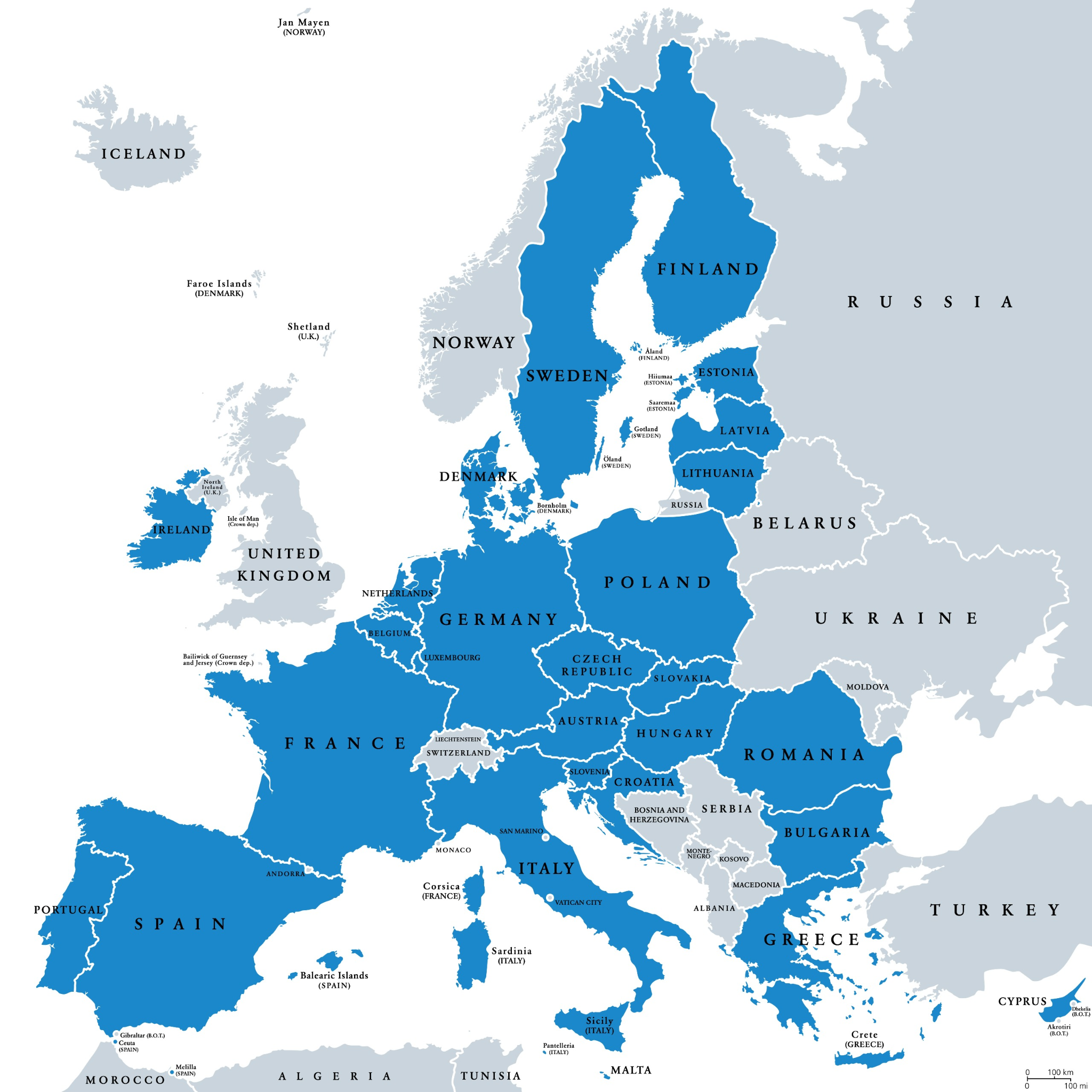
- 2020: The United Kingdom withdrew (Brexit), reducing membership from 28 to 27.
- Aims: Key aims include establishing a single internal market with the Four Freedoms (goods, services, capital, people) and promoting sustainable development.
- Key Features: Operates a Single Market and a Customs Union. The Schengen Area enables border-free travel. Four non-EU countries (Iceland, Norway, Switzerland, and Liechtenstein) are also part of Schengen.
- 20 member states use the euro (Eurozone), with Bulgaria set to join in 2026.
What Concerns are Associated with the India–EU FTA?
- EU's Regulatory Onslaught as Non-Tariff Barriers (NTBs): The EU’s inclusion of environmental and labor standards in trade agreements raises concerns about green protectionism, where such norms may function not as neutral regulations but as de-facto non-trade barriers.
- Carbon Border Adjustment Mechanism (CBAM): This carbon tax directly impacts key Indian exports like steel, aluminium, and chemicals. From 2026, Indian steel exports could face a 20–35% tax equivalent, potentially wiping out gains from tariff elimination.
- EU Deforestation Regulation (EUDR): The EUDR bans imports of commodities like coffee, rubber, and wood produced on land deforested after 2020. Small Indian farmers must geotag plots and prove traceability, a compliance burden unaffordable for most smallholders.
- Corporate Sustainability Due Diligence (CSDDD): Effective from 2027, this directive forces companies to audit their value chains for human rights and environmental risks. Indian manufacturers are concerned about sharing sensitive supplier data, viewing it as a business risk.
- Industrial Accelerator Act: This proposed act may introduce local content norms (minimum domestic value addition). This would put pressure on imports, including from India.
- Asymmetry in Market Access and Tariff Concessions:
- Pre-existing Low EU Tariffs: Over 75% of India's exports to the EU already attract less than 1% tariff without the FTA. Therefore, the significant market access gains for Indian goods are limited.
- High Indian Tariffs: India's average tariffs (10–12%) on EU goods are much higher than the EU's (3–4%) on Indian goods. India will have to offer deep tariff cuts on a broad range of European goods, while the relative gain in EU market access is smaller.
- Competition from Zero-Duty Countries: Competitors like Bangladesh, Vietnam, and Ethiopia already have zero-duty access to the EU via other schemes, putting Indian exports at a potential disadvantage even with the FTA.
- Lack of Parity and Carve-outs: The EU has granted exemptions and carve-outs to the US from some environmental regulations. Indian experts argue that giving large polluters a carve-out while pushing developing countries like India to comply risks dampening any tariff advantage. India has likely pushed for parity on such exemptions.
- EU's Concerns Regarding Indian Local Laws: The EU views India's Quality Control Orders (QCOs)—mandatory standards requiring facility audits—as major non-tariff barriers. The EU stridently opposes these, arguing they obstruct market access.
What Measures are Required to Strengthen India-EU Economic Relations?
- Proactively Address the Core Asymmetries: To counterbalance trade asymmetry, India must aggressively leverage its access to 144 services subsectors and professional mobility, while attracting EU manufacturing investment to ascend the value chain.
- Mechanisms for Dialogue & Dispute Prevention: Establish the proposed ‘Rapid Response Forum’ to promptly tackle new non-tariff barriers such as EU regulations and QCOs through senior-level intervention, preventing disputes from escalating.
- Equitable Carve-outs and Transition Periods: To protect competitive sectors like steel and aluminium, India must secure exemptions from regulations like CBAM similar to those granted to the US Simultaneously, it should negotiate extended transition periods for rules such as EUDR and CSDDD to ease adaptation.
- Build Strategic Partnership Beyond Trade: Integrating the trade agreement with the IMEC corridor will build resilient supply chains and cut logistical costs. Simultaneously, strengthening Indo-Pacific collaboration through the IPOI and TTC creates shared geopolitical stakes that sustain the long-term partnership.
Conclusion
The India-EU FTA is a strategic milestone with significant potential, but its sustainability hinges on effectively managing regulatory asymmetries, ensuring fair carve-outs, and leveraging services and mobility gains to create a balanced, mutually beneficial partnership that transcends mere tariff liberalization.
|
Drishti Mains Question: Evaluate the opportunities and challenges presented by the India-EU FTA for India's Micro, Small, and Medium Enterprises (MSMEs). |
Frequently Asked Questions (FAQs)
1. What level of tariff liberalisation has India secured under the FTA?
97% of EU tariff lines covering 99.5% of trade value offer preferential access to Indian exports.
2. What are the major regulatory concerns for India under the FTA?
EU measures like CBAM, EUDR, CSDDD, and other non-tariff barriers (NTBs) may offset tariff gains for Indian exporters.
3. What is the primary purpose of the proposed 'Rapid Response Forum' in the FTA?
The 'Rapid Response Forum' is proposed to swiftly address emerging non-tariff barriers and trade disputes through high-level intervention.
UPSC Civil Services Examination Previous Year Questions (PYQs)
Prelims
Q. Consider the following statements: (2023)
The ‘Stability and Growth Pact’ of the European Union is a treaty that
- limits the levels of the budgetary deficit of the countries of the European Union
- makes the countries of the European Union to share their infrastructure facilitie
- enables the countries of the European Union to share their technologie
How many of the above statements are correct
(a) Only one
(b) Only two
(c) All three
(d) None
Ans: (a)
Q. The term ‘Digital Single Market Strategy’ seen in the news refers to (2017)
(a) ASEAN
(b) BRICS
(c) EU
(d) G20
Ans:(c)
Q. ‘European Stability Mechanism’, sometimes seen in the news is an (2016)
(a) agency created by EU to deal with the impact of millions of refugees arriving from Middle East
(b) agency of EU that provides financial assistance to eurozone countries
(c) agency of EU to deal with all the bilateral and multilateral agreements on trade
(d) agency of EU to deal with the conflicts arising among the member countries
Ans: (b)
Mains
Q. The expansion and strengthening of NATO and a stronger US-Europe strategic partnership works well for India.' What is your opinion about this statement? Give reasons and examples to support your answer. (2023)
State of Finance for Nature 2026
For Prelims: United Nations Environment Programme, Nature-based Solutions, National Mission on Sustainable Agriculture (NMSA), National Water Mission, National Afforestation Programme (NAP)
For Mains: Nature-based Solutions as a climate and biodiversity strategy, Financing gaps in global environmental governance, Role of subsidies in environmental degradation, India’s fiscal federalism and biodiversity conservation
Why in News?
The United Nations Environment Programme (UNEP) released its flagship report titled "State of Finance for Nature 2026," which highlights a stark imbalance in global financial flows, revealing that for every USD 1 invested in protecting nature, nearly USD 30 is spent on activities that destroy it.
Summary
- The State of Finance for Nature 2026 reveals a severe financing imbalance, with USD 30 spent on nature-destructive activities for every USD 1 invested in conservation, driven by environmentally harmful subsidies and private-sector dominance in nature-negative finance.
- For India, scaling Nature-based Solutions through reforms like the Nature Transition X-Curve, green taxonomy, subsidy rationalisation, and private-capital mobilisation is critical to protect biodiversity while sustaining long-term economic growth.
What are the Key Highlights of the State of Finance for Nature 2026?
- Nature-Negative Finance: Global financial flows to activities harming nature (e.g., fossil fuel extraction, unsustainable agriculture, deforestation) reached USD 7.3 trillion in 2023. This is approximately 7% of global GDP.
- The private sector accounts for USD 4.9 trillion of nature-negative flows, concentrated in sectors like energy, utilities, and basic materials.
- Governments provide about USD 2.4 trillion annually in Environmentally Harmful Subsidies (EHS), dominated by fossil fuel support, followed by unsustainable agriculture and water subsidies.
- These subsidies distort market prices, making environmental destruction cheaper than conservation.
- Nature-Positive Finance: Investments in Nature-based Solutions (NbS) stood at only USD 220 billion.
- This creates a massive disparity, with harmful investments outpacing protective spending by a 30:1 ratio, resulting in a stark and unsustainable imbalance.
- However, spending on biodiversity and landscape protection is rising, increasing by 11% between 2022 and 2023, while international public finance for nature-based solutions in 2023 was 22% higher than in 2022 and 55% above 2015 levels.
- The Finance Gap for NbS: The NbS finance is overwhelmingly driven by public funds (90% of total NbS finance comes from governments).
- Private investment in NbS is negligible, accounting for just 10% of the total.
- To meet the Rio Convention targets, NbS investment must increase 2.5 times to reach USD 571 billion annually by 2030.
- The Rio Conventions from the 1992 Earth Summit target climate stability, biodiversity conservation, and land restoration.
- The UN Framework Convention on Climate Change (UNFCCC) aims to limit warming to below 2°C, preferably 1.5°C.
- The Convention on Biological Diversity (CBD) seeks to conserve 30% of land, waters, and seas and restore 30% of degraded ecosystems by 2030.
- The UN Convention to Combat Desertification (UNCCD) targets restoring 1.5 billion hectares of degraded land by 2030.
What are Nature-based Solutions (NbS)?
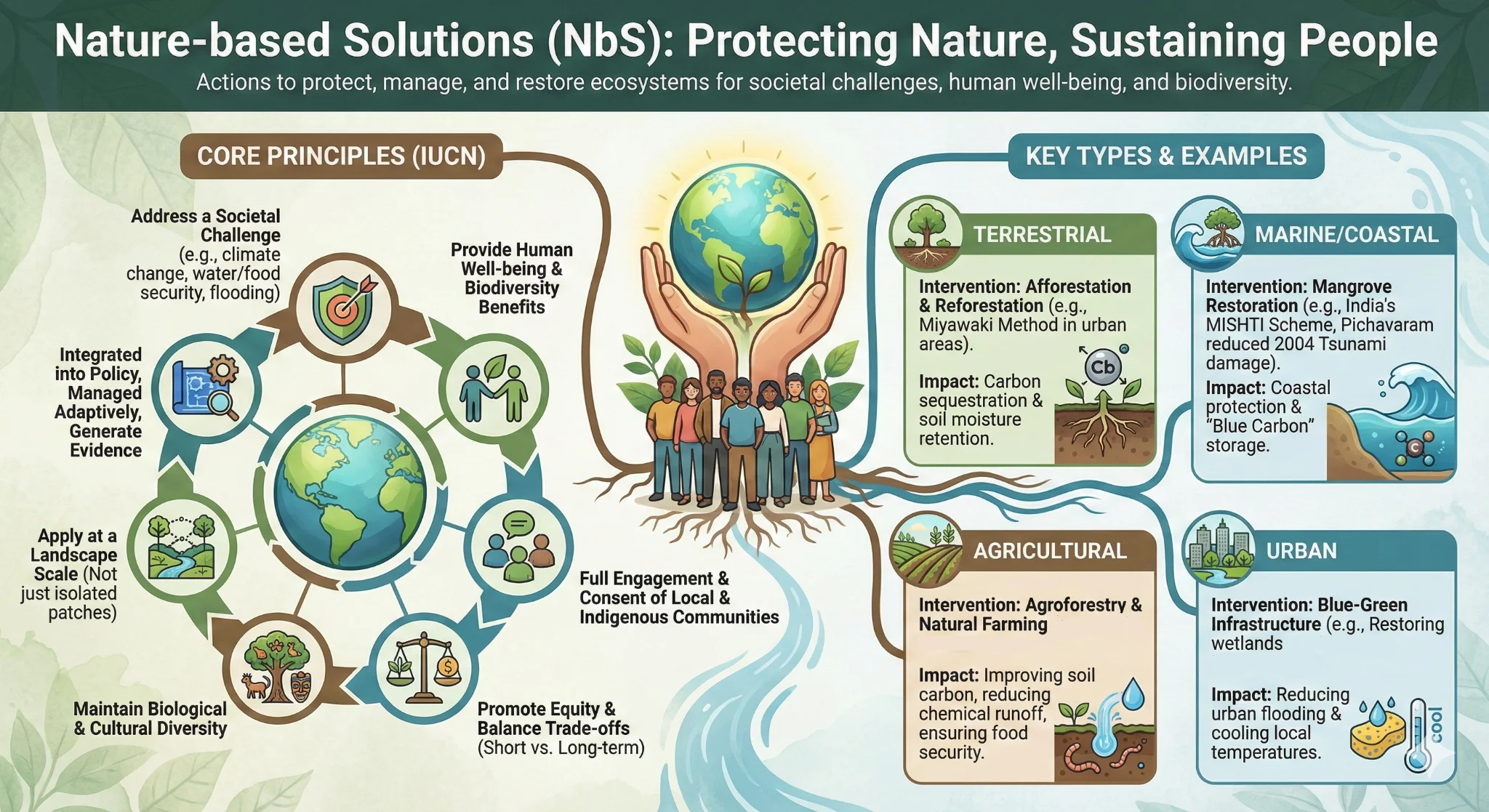
- Definition: NbS refers to actions to protect, sustainably manage, and restore natural or modified ecosystems that address societal challenges (like climate change, food security, and disaster risk) effectively and adaptively, simultaneously providing human well-being and biodiversity benefits.
- Examples:
- Mangrove Restoration: Protects coastlines from storms (Disaster Management) + Sequesters Carbon (Climate Change).
- Agroforestry: Increases crop yield (Food Security) + Maintains Soil Health (Biodiversity).
- Green Urban Spaces: Reduces heat island effect (Urban Planning).
What are the Challenges in Scaling NbS Finance?
- High Due Diligence Costs: The lack of standardized data and the unique biological complexity of each site require bespoke, expensive assessments. This raises the transaction cost significantly compared to standardized grey infrastructure projects, deterring mainstream capital.
- NbS is a nascent asset class with limited historical performance data. Without a proven track record of risk-adjusted returns, credit rating agencies cannot accurately price the risk, forcing investors to demand higher premiums.
- Liquidity Constraints: Investments in nature are inherently illiquid and long-term (10–20 years). There is no active secondary market where investors can easily exit or trade their stakes, creating a "lock-in" risk that repels private equity seeking shorter horizons (3–5 years).
- Currency & Sovereign Risk: The majority of high-impact NbS potential lies in the Global South (tropical belts), while the capital sits in the Global North.
- This exposes investors to significant foreign exchange volatility and sovereign risk, often requiring expensive hedging instruments that erode returns.
- Lack of Data: Unlike carbon, "nature" is hard to measure. Investors lack standardized metrics to assess the return on investment (ROI) for biodiversity projects.
What are the Implications of Low NbS Finance for India?
- Subsidy Paradox: India faces a critical fiscal-ecological contradiction where "nature-negative" subsidies (for chemical fertilizers, free electricity for pumping groundwater) vastly outstrip "nature-positive" allocations (e.g., budget for MoEFCC or organic farming), effectively paying to degrade the very soil and aquifers the economy depends on.
- Public Finance Over-reliance: Unlike the Global North, where private capital is entering conservation, India's NbS are almost entirely state-funded through schemes like Compensatory Afforestation Fund Management and Planning Authority (CAMPA).
- This places an unsustainable burden on the exchequer while the private sector's contribution (CSR/Impact Investing) remains negligible.
- GDP Exposure Risk: With over 50% of India's workforce engaged in agriculture and allied sectors, the economy has an exceptionally high "nature-dependency ratio."
- The collapse of ecosystem services (pollination, water tables) could trigger systemic financial instability faster in India than in industrialized nations.
- Green Taxonomy Void: India is still in the process of developing a formalised "Green Taxonomy" (a classification system defining what counts as 'green').
- This regulatory gap allows financial institutions to lend to projects that claim to be sustainable but are actually "nature-negative" (Greenwashing), hindering the flow of genuine global capital into Indian NbS projects.
- Fiscal Federalism Paradox: While India’s international commitments (Paris Agreement, Kunming-Montreal Framework) are made by the Center, the actual implementation of NbS (land, water,) is primarily a State Subject.
- This creates a misalignment where the Center pushes for conservation, but revenue-starved States prioritize extractive industries (mining, real estate) for immediate funds.
India’s Initiatives for Promoting NbS
- National Mission for a Green India (GIM),
- National Mission on Sustainable Agriculture (NMSA),
- National Water Mission.
- National Afforestation Programme (NAP),
- Atal Mission for Rejuvenation and Urban Transformation (AMRUT) 2.0, Mangrove Initiative for Shoreline Habitats and Tangible Incomes (MISHTI).
- Mission Amrit Sarovar.
What Measures can Effectively Increase Nature-based Solutions (NbS)?
- Nature Transition X-Curve: UNEP proposes a Nature Transition X-Curve, a dual strategy of rapidly phasing out nature-negative flows such as harmful subsidies while scaling nature-positive markets, by redirecting capital from destructive activities to regenerative ones to decouple growth from environmental degradation
- Pricing Externalities: Implement mechanisms to internalize environmental costs, such as Carbon Taxes or "Nature-Liability" levies, making destruction expensive and conservation profitable.
- Mandatory Disclosures: Governments should make nature-related financial disclosures mandatory (aligned with TNFD - Taskforce on Nature-related Financial Disclosures).
- Companies must report their "nature dependency" and "nature impact" to shareholders.
- Innovative Instruments: Scale up financial products like "Green Bonds", "Sustainability-Linked Loans", and "Biodiversity Credits" to attract mainstream investors.
- Public institutions (like the World Bank or National Development Banks) should provide "First-Loss Guarantees" or concessional capital to de-risk private investments in NbS projects.
- Standardized Metrics: Move beyond focusing only on CO2 and adopt standardized metrics for biodiversity (e.g., Mean Species Abundance) to prevent greenwashing.
- Integrated Policy: Ministries of Finance, Agriculture, and Energy must align their policies with the Kunming-Montreal Global Biodiversity Framework (GBF) targets, ensuring that one ministry is not funding what another is trying to save.
Conclusion
The State of Finance for Nature 2026 warns that current economic systems are funding environmental destruction. For India, implementing the Nature Transition X-Curve through is essential to shift from a nature-subsidising economy to a nature-positive growth model, safeguarding biodiversity and the USD 5-trillion economic goal.
|
Drishti Mains Question: Examine the significance of Nature-based Solutions in addressing climate change and biodiversity loss in developing countries. |
Frequently Asked Questions (FAQs)
1. What does the State of Finance for Nature 2026 report reveal?
It shows that global finance overwhelmingly supports nature-destructive activities, with a 30:1 imbalance between harmful and protective investments.
2. What are Nature-based Solutions (NbS)?
NbS are actions that protect, restore, or manage ecosystems to address societal challenges while delivering biodiversity and human well-being benefits.
3. Why is private investment in NbS limited?
High due diligence costs, lack of standard metrics, long gestation periods, and absence of secondary markets deter private capital.
4. Why is low NbS finance risky for India?
India’s economy is highly dependent on natural systems; ecosystem collapse could threaten agriculture, livelihoods, and macroeconomic stability.
UPSC Civil Services Examination Previous Year Question (PYQ)
Prelims
1. With reference to the role of UN-Habitat in the United Nations programme working towards a better urban future, which of the statements is/are correct? (2017)
- UN-Habitat has been mandated by the United Nations General Assembly to promote socially and environmentally sustainable towns and cities to provide adequate shelter for all.
- Its partners are either governments or local urban authorities only.
- UN-Habitat contributes to the overall objective of the United Nations system to reduce poverty and to promote access to safe drinking water and basic sanitation.
Select the correct answer using the code given below:
(a) 1, 2 and 3
(b) 1 and 3 only
(c) 2 and 3 only
(d) 1 only
Ans: (b)
Mains
Q. The frequency of urban floods due to high intensity rainfall is increasing over the years. Discussing the reasons for urban floods, highlight the mechanisms for preparedness to reduce the risk during such events.(2016)
Q. Do government schemes for up-lifting vulnerable and backward communities by protecting required social resources for them, lead to their exclusion in establishing businesses in urban economies? (2014)
National Voters’ Day (NVD) 2026
Why in News?
The President of India presided over the National Voters’ Day (NVD) celebrations, observed on 25th January, to celebrate democracy and encourage citizen participation in the electoral process.
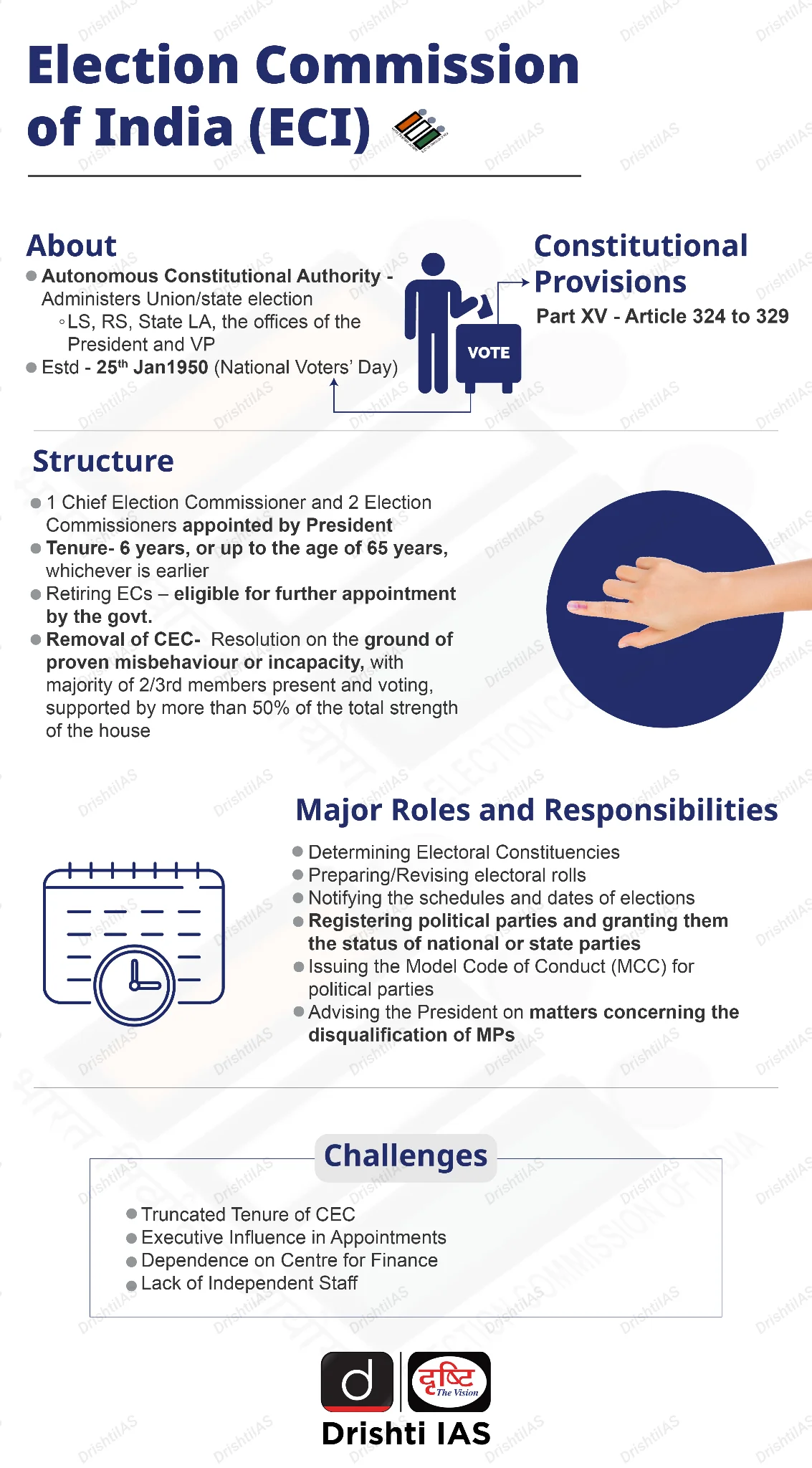
- NVD marks the foundation of the Election Commission of India (ECI), which was established on 25th January 1950 under Article 324 of the Indian Constitution.
What are the Key Highlights of National Voters’ Day (NVD) 2026?
- Theme: The theme for NVD 2026 is "My India, My Vote" with the tagline "Citizen at the Heart of Indian Democracy".
- This symbolizes the ECI's efforts to design citizen-centric electoral processes where the convenience of the voter is paramount.
- Significance: It underscores the importance of voter participation in a democracy. It promotes voter enrolment and awareness, with special focus on new and young voters, through nationwide celebrations and outreach activities led by the ECI.
- Initiatives Launched:
- Best Election District Awards in 2026: The President presented the Best Electoral Practices Awards, recognising states like Bihar, Kerala, Tamil Nadu, Odisha, Gujarat, Meghalaya, Mizoram, UP, Jharkhand, and Delhi for excellence in technology use, election management, voter awareness, Model Code of Conduct enforcement, and training.
- Publications: On NVD 2026, the publications “2025: A Year of Initiatives and Innovations” and “Chunav Ka Parv, Bihar Ka Garv” were released, showcasing the ECI’s leadership in electoral management.
What are the Major Electoral Reforms Introduced by the ECI?
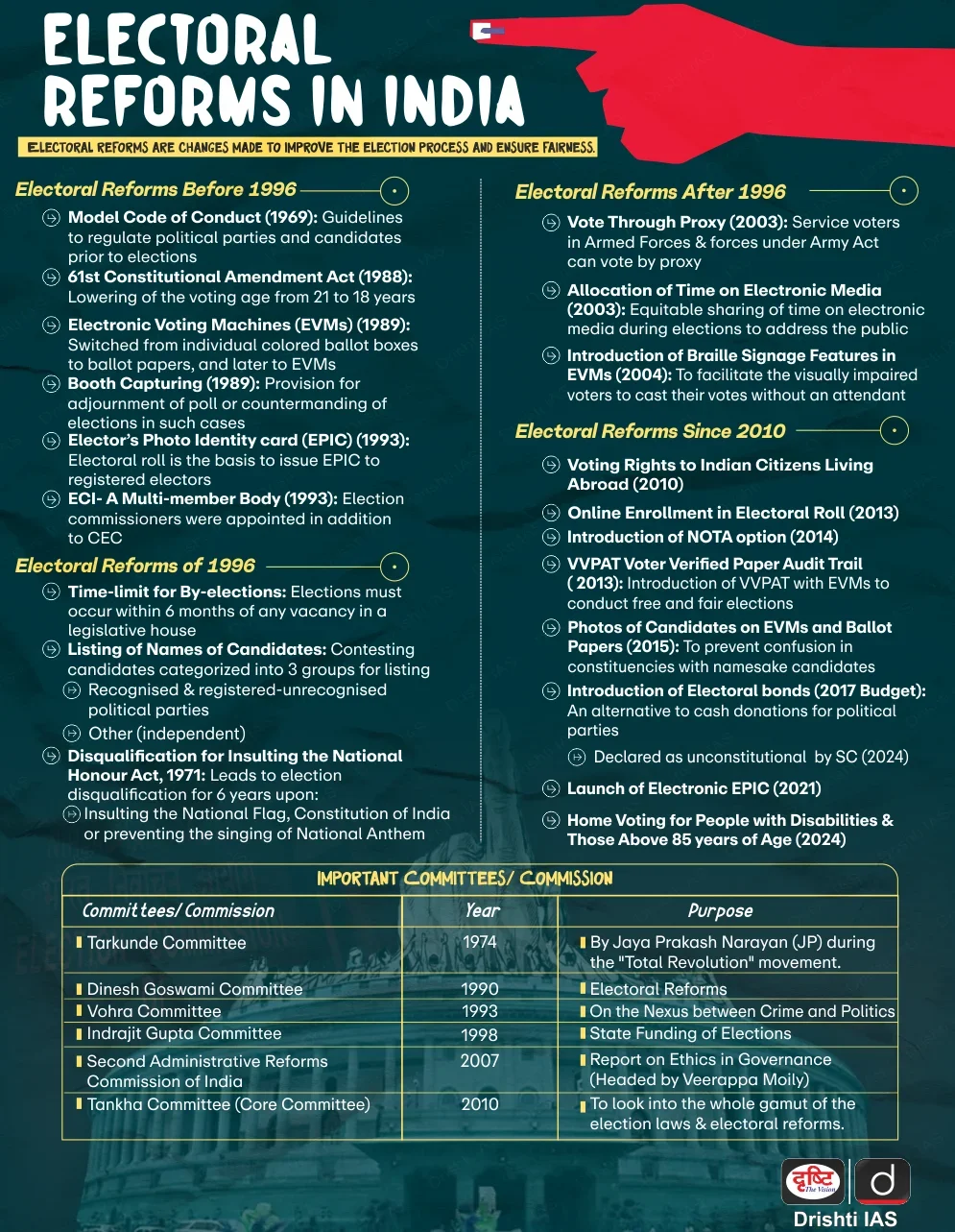
- Photo Identity Cards for Voters (1993): The ECI introduced the Electors Photo Identity Card (EPIC) scheme to prevent impersonation and fraudulent voting. While initially a physical card, the initiative evolved to include Photo Electoral Rolls (PERs) in 2004.
- In 2021, the e-EPIC was launched, allowing voters to download a secure, non-editable digital version of their ID, making it easier to carry and access on mobile devices.
- Electronic Voting Machines (EVMs) (1998): First used experimentally in 1982 (Kerala), EVMs were formally introduced on a larger scale in 1998 for State Assembly elections in Madhya Pradesh, Rajasthan, and Delhi.
- They eliminated "invalid votes" (a common issue with paper ballots), reduced the time required for counting from days to hours, and are eco-friendly by saving paper.
- Systematic Voters' Education and Electoral Participation (SVEEP) (2009): This is the ECI’s flagship program for voter education. It aims to bridge the "participation gap" by addressing urban apathy and youth disengagement.
- The program uses targeted interventions (like street plays, social media, and campus ambassadors) to ensure "No Voter to be Left Behind".
- Voter Verifiable Paper Audit Trail (VVPAT) (2013): Following a Supreme Court directive in 2013 (Subramanian Swamy vs. ECI), the VVPAT was introduced to add a layer of verification to EVMs.
- VVPATs allow voters to verify their vote through a printed slip visible through a glass window for seven seconds.
- National Electoral Roll Purification and Authentication Programme (NERPAP) (2015): This programme allowed electoral officers to conduct door-to-door verification drives.
- It focused on linking EPIC data with Aadhaar to identify and remove duplicate or multiple entries across different constituencies to create an error-free and authenticated electoral roll.
- ERO-NET (2018): A digital form-processing system for election officials available in 14 languages and 11 scripts. It helps voters track the status of their applications and allows for real-time processing of forms to prevent dual registration.
- Accessible Elections for Persons with Disabilities (2018): The ECI declared 2018 as the "Year of Accessible Elections".
- ECI provided Braille-enabled EPICs for visually impaired voters, establishing auxiliary polling stations to reduce travel distance, and offering free transport to polling stations for Persons with Disabilities (PwDs).
- cVIGIL App (2018): This mobile app empowers citizens to act as "election observers".
- Citizens can take a photo or video of Model Code of Conduct (MCC) violations (like hate speech or bribe distribution). The app uses geo-tagging to pinpoint the location.
- The ECI mandates that authorities must investigate and respond to cVIGIL complaints within 100 minutes.
- Special Intensive Revision (SIR) (2025): A comprehensive electoral roll revision ordered by the ECI to ensure no eligible citizen is excluded and no ineligible person is included.
- SIR covered over 51 crore electors across 12 States/UTs, targeting the removal of deceased voters and duplicate entries.
- ECINET (2026): A user-friendly digital interface launched by the ECI for electors, election officials, political parties, and civil society. More than 40 existing mobile and web applications of the ECI will be integrated by this platform into a single "one-stop" interface.
- International Cooperation: India strengthened international electoral cooperation through bilateral engagements and by hosting the India International Conference on Democracy and Election Management (IICDEM) 2026 in New Delhi, which led to the adoption of the Delhi Declaration 2026.
- The Declaration outlines five pillars - clean electoral rolls, free and fair elections, research and publications, use of technology (including sharing India’s ECINET platform), and training and capacity building through IIIDEM - to advance global electoral integrity and democratic innovation.
Frequently Asked Questions (FAQs)
1. What is National Voters’ Day and why is it observed?
National Voters’ Day is observed on 25thJanuary to mark the foundation of the Election Commission of India and to promote voter awareness, enrolment, and participation in elections.
2. What was the theme of National Voters’ Day 2026?
The theme was“My India, My Vote” with the tagline “Citizen at the Heart of Indian Democracy”, highlighting voter-centric electoral reforms.
3. What is ECINET and why is it important?
ECINET is a unified digital platform integrating over 40 ECI applications into a single interface, improving accessibility, transparency, and efficiency for all electoral stakeholders.
4. How does cVIGIL strengthen electoral integrity?
The cVIGIL app enables citizens to report Model Code of Conduct violations in real time, with a mandatory response time of 100 minutes, enhancing enforcement and accountability.
5. What is the significance of the Delhi Declaration 2026?
Adopted at IICDEM 2026, the Declaration outlines five pillars—clean electoral rolls, free and fair elections, research, technology use, and capacity building—to strengthen global democratic processes.
UPSC Civil Services Examination Previous Year Questions (PYQ)
Prelims:
Q.1 Consider the following statements: (2017)
- The Election Commission of India is a five-member body.
- The Union Ministry of Home Affairs decides the election schedule for the conduct of both general elections and bye-elections.
- Election Commission resolves the disputes relating to splits/mergers of recognised political parties.
Which of the statements given above is/are correct?
(a) 1 and 2 only
(b) 2 only
(c) 2 and 3 only
(d) 3 only
Ans: (d)
Mains:
Q.1 To enhance the quality of democracy in India the Election Commission of India has proposed electoral reforms in 2016. What are the suggested reforms and how far are they significant to make democracy successful? (2017)
Arbitration Council of India
Why in News?
The Supreme Court has asked the Union government to respond to a petition seeking the establishment of the Arbitration Council of India (ACI) and the formulation of uniform guidelines for the regulation, conduct, and accreditation of arbitral institutions and arbitrators.
- The Arbitration and Conciliation (Amendment) Act, 2019 envisaged the ACI as the central regulator for institutional arbitration, however, the Council has still not been constituted nearly six years later.
What is the Arbitration Council of India?
- About: It is a statutory body under Part IA (Sections 43A–43M) of the Arbitration and Conciliation Act, 1996, introduced by the Arbitration and Conciliation (Amendment) Act, 2019. It is based on the recommendations of Justice B.N. Srikrishna Committee (2017).
- Composition and Appointment:
- Chairperson: To be appointed by the Union Government in consultation with the Chief Justice of India. Eligible persons include a former Supreme Court Judge, a former High Court Chief Justice/Judge, or an eminent arbitration practitioner.
- Other Members: Includes eminent arbitration practitioners, academicians, and ex officio government representatives.
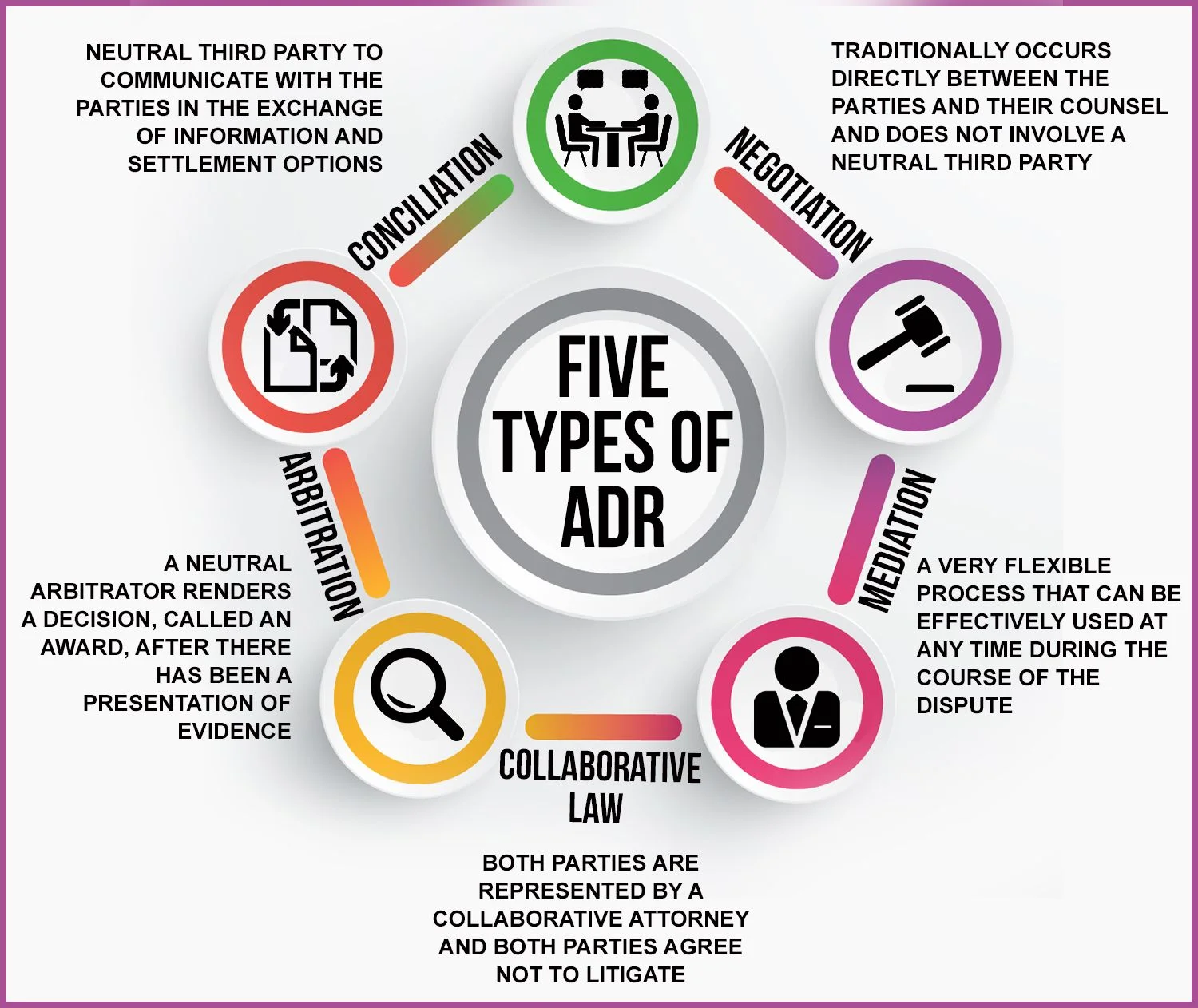
- Mandate & Functions: Acts as the central regulatory body to grade arbitral institutions, accredit arbitrators, maintain an arbitral awards depository, promote Alternative Dispute Resolution (ADR) mechanisms (e.g., mediation, conciliation), and frame policies for uniform professional standards.
- Key Concerns:
- Lack of Independence: Concerns remain over the impartiality and competence of India’s arbitral institutions due to their domination by government appointees. This is particularly problematic when the state itself is the biggest litigant.
- Regulatory Challenges: The power to accredit unlimited arbitral institutions may dilute quality and increase administrative burden. E.g., unlike India, Singapore and Hong Kong rely on a single central arbitral institution rather than a government regulator overseeing multiple institutions.
- Exclusionary Policy: Barring foreign legal professionals from accreditation reduces India's attractiveness as a global arbitration seat.
- Draft Arbitration and Conciliation (Amendment) Bill, 2024: It introduces a revised definition of an “arbitral institution” as a body or organisation that conducts arbitration under its own procedural rules or as agreed by the parties. This departs from the 2019 amendments, which required formal designation by the Supreme Court or High Courts.
- Arbitral institutions would gain authority to extend deadlines for arbitral awards, reduce arbitrator fees in case of tribunal-caused delays, and appoint substitute arbitrators.
- The court's power to grant interim relief is curtailed during arbitral proceedings, transferring it to emergency arbitrators.
- Currently, arbitration must start within 90 days of a court granting pre-arbitral relief. The Bill proposes this period begin from the date the interim relief application is filed, to avoid delays from prolonged court proceedings.
- A new Section 9-A would allow parties to seek interim measures from an emergency arbitrator after arbitration has commenced but before the tribunal is formed.
Note: Arbitration Council of India (ACI) is distinct from the Indian Council of Arbitration (ICA), which is a non-governmental arbitral institution established in 1965.
Arbitration
- About: A private, voluntary, and binding dispute resolution mechanism where an impartial arbitrator acts as a third party. It is a form of Alternative Dispute Resolution (ADR) outside traditional court litigation.
- Legal Framework: Governed by the Arbitration and Conciliation Act, 1996, which is based on the UNCITRAL Model Law (1985) and the UNCITRAL Conciliation Rules (1980).
- Scope: Commonly used for commercial, civil, and international disputes as an alternative to traditional court litigation.
- Recent Developments: Dr TK Viswanathan Committee (2024) has recommended reforms to strengthen institutional arbitration, reduce court intervention, and create a more cost-effective and time-bound framework.
Frequently Asked Questions (FAQs)
1. What is the Arbitration Council of India (ACI)?
It is a proposed statutory regulatory body under the Arbitration and Conciliation Act, 1996 (introduced via 2019 Amendment) to grade arbitral institutions and accredit arbitrators for promoting institutional arbitration.
2. What was the basis for proposing the ACI?
It was proposed based on the recommendations of the High-Level Committee chaired by Justice B.N. Srikrishna in 2017 to reform and strengthen India’s arbitration ecosystem.
3. What key reform is proposed in the Draft Arbitration Bill, 2024?
It proposes to limit judicial intervention by allowing courts to grant interim relief mainly before or after arbitration, and introduces the role of an emergency arbitrator.
UPSC Civil Services Examination, Previous Year Questions (PYQs)
Q1. With reference to Lok Adalats, which of the following statements is correct? (2010)
(a) Lok Adalats have the jurisdiction to settle the matters at pre-litigative stage and not those matters pending before any court
(b) Lok Adalats can deal with matters which are civil and not criminal in nature
(c) Every Lok Adalat consists of either serving or retired judicial officers only and not any other person
(d) None of the statements given above is correct
Ans: (d)
Q2. With reference to Lok Adalats, consider the following statements: (2009)
- An award made by a Lok Adalat is deemed to be a decree of a civil court and no appeal lies against thereto before any court.
- Matrimonial/Family disputes are not covered under Lok Adalat.
Which of the statements given above is/are correct?
(a) 1 only
(b) 2 only
(c) Both 1 and 2
(d) Neither 1 nor 2
Ans: (a)
UK Defends Chagos Deal
The United Kingdom (UK) defended an agreement to transfer the Chagos archipelago to Mauritius while leasing back a strategic military base (Diego Garcia), after facing criticism from the US President over its handling of the deal.
Chagos Archipelago
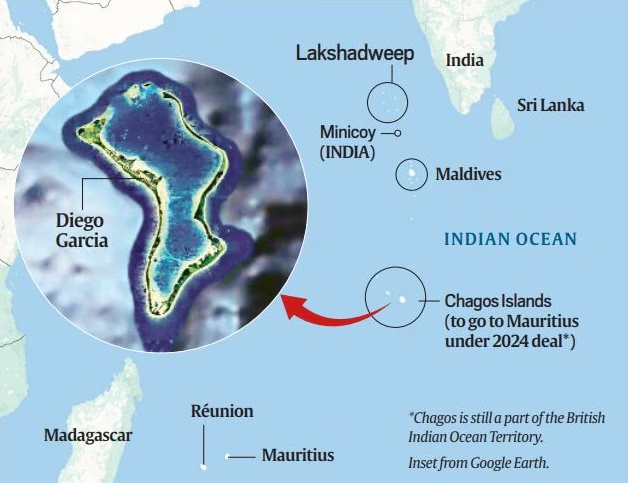
- About: It is a group of 58 islands in the Indian Ocean, located about 500 km south of the Maldives. Diego Garcia is the largest island and a coral atoll, lying at 7° south of the equator.
- Colonial History: France colonised Mauritius and the Chagos Islands in 1715, and under the 1814 Treaty of Paris, France ceded both to Britain.
- In 1965, Britain detached Chagos from Mauritius to form the British Indian Ocean Territory (BIOT), giving Mauritius a £3 million grant for the detachment.
- Significance of Diego Garcia: Under the 1966 agreement, Britain allowed the US to use BIOT for military purposes, and Diego Garcia (a joint UK–US military base) became fully operational in 1986. It played a crucial role in the Gulf War, Iraq and Afghanistan wars, and post-9/11 operations, underscoring its Indo-Pacific strategic value.
- International Legal Developments: The International Court of Justice (ICJ) in 2019 issued an advisory opinion stating the UK's detachment of Chagos was unlawful. Following this, in 2024, the UK agreed to transfer sovereignty to Mauritius while securing a 99-year lease to retain control of the Diego Garcia base.
| Read More: Chagos Archipelago and Diego Garcia Island |
Early 8th Century Telugu Inscription
A rare early 8th-century CE Telugu inscription has been discovered at Pitikayagulla, Andhra Pradesh, offering crucial insights into the early evolution of the Telugu language and epigraphy.
- Written in early Telugu script and language, the inscription is vital for tracing the transition of Telugu from Prakrit influence to an independent administrative and literary language.
- The inscription contains the text “Svastisri Nandelu Vari, Chensinavanthu Prani, Milli Achari” and “Padasina Nava Katta”, which epigraphists interpret as recording the construction of a new embankment (nava katta).
- It attributes the work to Pranimilli Achari, a sculptor or craftsman. It is believed to belong to the Renadu region under royal administration, though the ruling king is not named in the record.
- Telugu: It is one of the most widely spoken languages of the Dravidian family, with over 130 million speakers across Andhra Pradesh, Telangana, other parts of India, and abroad.
- Linguistically, it is believed that Proto-Dravidian split into sub-families around 5000 years ago, with Telugu emerging as an independent language by about the 10th century BCE.
- While Telugu shares strong cultural links with Tamil and Kannada, it is genetically closer to the Central Dravidian languages.
- The earliest known Telugu inscriptions, dating to about 575 CE, are attributed to the Renati Cholas and were discovered at Kalamalla and Erragudipadu of Andhra Pradesh, marking an important milestone in the evolution of the Telugu language.
- The recorded history of Telugu begins around 200 BCE, with its antiquity traced through place names and personal names found in Prakrit and Sanskrit inscriptions.
- Telugu is included in the Eighth Schedule of the Indian Constitution and was accorded the status of a Classical Language by the Government of India in 2008.
- Linguistically, it is believed that Proto-Dravidian split into sub-families around 5000 years ago, with Telugu emerging as an independent language by about the 10th century BCE.
| Read more: Linguistic Culture of Indus Valley |
Long Range Anti-Ship Hypersonic Missile(LR-AShM)
At the 77th Republic Day Parade, the Defence Research and Development Organisation (DRDO) showcased the Long Range Anti-Ship Hypersonic Missile (LR-AShM) for the first time, marking a major milestone in India’s missile capabilities.
LR-AShM
- About: LR-AShM is a hypersonic glide missile that follows a quasi-ballistic trajectory, combining ballistic launch with low-altitude, manoeuvrable flight.
- Speed and Flight Profile: It reaches Mach 10 initially and maintains an average Mach 5, performing multiple atmospheric “skips” that enhance range and unpredictability.
- Range and Targets: The missile can engage both static and moving targets and has a range of about 1,500 km, with future variants planned up to 3,500 km.
- Stealth and Survivability: Flying at low altitude with extreme speed and manoeuvrability, the missile is difficult for enemy ground-based and ship-based radars to detect or intercept.
- Propulsion System: The missile uses a two-stage solid rocket motor—Stage-1 separates after burnout, while Stage-2 boosts the missile before it enters an unpowered hypersonic glide phase.
- Aerodynamic Efficiency: High aerodynamic efficiency allows the missile to minimise drag while maintaining lift and control, enabling greater speed, range, and accuracy with optimal energy use.
- Purpose and Strategic Role: It is designed for the Indian Navy’s coastal defence needs and serves as a potent sea-denial weapon capable of neutralising all classes of warships, particularly in the strategically important Indian Ocean Region (IOR).
- Future Development and Induction: Variants of the LR-AShM for the Army, Air Force, and ship-launched naval use are under development, following a successful test in November 2024, with warhead and sensor integration underway and induction into service expected within the next 2–3 years.
| Read more: Hypersonic Technology |
SAMPANN–UMANG Integration
The SAMPANN (System for Accounting and Management of Pension) pension management system has been integrated with the UMANG(Unified Mobile Application for New-age Governance) platform to provide digital access to key pension services for telecom pensioners.
- UMANG operates as a single unified platform under the Digital India initiative, offering Central, State, and Local government services via Android, iOS, and web.
SAMPANN
- About: SAMPANN is a flagship digital pension platform developed and operated by the Office of the Controller General of Communication Accounts, dedicated to pension administration and financial management.
- Launched nationally in December 2018, SAMPANN represents a shift from system-centric to pensioner-centric governance by eliminating the need for physical visits.
- Key Feature: The platform digitises the entire pension lifecycle, including case processing, e-Pension Payment Order (PPO) issuance, payment disbursal, accounting, grievance redressal, and reporting.
- Objective of Integration: The initiative aims to enhance ease of access, transparency, and seamless delivery of pension-related information through a unified digital platform.
- This integration ensures round-the-clock availability of essential pension information, reducing dependency on physical offices.
- Core Services Enabled: Pensioners can now retrieve their Pension Payment Order (PPO) number and check Life Certificate (LC) validity status through the UMANG mobile app or web portal.
- DigiLocker Linkage: The integration is supported by DigiLocker connectivity, strengthening secure digital access to pension records and official documents.
| Read more: UMANG App |
Indian Navy's First Training Squadron Visits Thailand
Indian Navy’s First Training Squadron (1TS) (INS Tir, INS Shardul, INS Sujata, and ICGS Sarathi) docked at Phuket Deep Sea Port, marking a training deployment to Southeast Asia and underscoring the growing maritime partnership between India and Thailand aimed at regional security and stability.
- Significance: The visit gained added importance as 2026 marked the ASEAN–India Year of Maritime Cooperation, reinforcing India’s Act East and maritime diplomacy, and coincided with India assuming the Chair of the Indian Ocean Naval Symposium (IONS) from Thailand in February 2026.
- Key Exercises & Engagements: The training deployment includes professional exchanges and a Passage Exercise (PASSEX).
- This builds on established bilateral initiatives like Ex Ayutthaya and the Indo–Thai Coordinated Patrol (CORPAT), as well as the trilateral maritime exercise SITMEX (India–Thailand–Singapore).
- Policy Alignment: The deployment aligns with India’s MAHASAGAR (Mutual and Holistic Advancement for Security and Growth Across Regions) vision.
- It reaffirms India’s role as a responsible maritime partner committed to security, stability, and cooperation in the Indian Ocean Region (IOR).
| Read more: India-Thailand Relations |