
Agri-Photovoltaics
For Prelims: PM-KUSUM scheme, Agri-Photovoltaics, Net-Zero Emissions, Farmers Producer Organisation, Krishi Vigyan Kendras
For Mains: Energy Security vs Food Security Debate (Food vs Fuel dilemma), Role of Renewable Energy in Sustainable Agriculture, PM-KUSUM Scheme and Decentralised Solarisation
Why in News?
The Union Budget 2026–27 nearly doubled the allocation for the PM-KUSUM scheme to Rs 5,000 crore, highlighting a renewed push for farmer-centric solarisation. In this context, Agri-Photovoltaics (AgriPV) is gaining attention as a solution to balance energy expansion and food security in India.
Summary
- Agri-Photovoltaics (AgriPV) resolves the “food vs fuel” conflict by enabling simultaneous solar energy generation and crop cultivation, supporting India’s 300 GW solar target and rural income growth.
- However, its large-scale adoption requires policy clarity, financial support, and region-specific design, as challenges like high costs, regulatory gaps, and yield risks remain significant.
What is Agri-Photovoltaics (AgriPV)?
- About: Agri-photovoltaics (AgriPV), or Agrivoltaics, is the simultaneous and dual use of a single parcel of land for both solar photovoltaic power generation and agricultural crop cultivation.
- Mechanism: Instead of clearing agricultural land to build traditional solar parks, solar panels are integrated into the farming environment.
- They are either elevated above the crops or spaced strategically between them.
- It creates a mutually beneficial microclimate. The solar panels provide partial shade, protecting crops from extreme heat and reducing water loss.
- In return, the natural process of plant transpiration (releasing moisture) cools the solar panels from below, which can actually increase their photovoltaic efficiency.
- Types of AgriPV Systems: The design of an AgriPV system depends heavily on the local climate, the type of crop, and irrigation practices:
- Elevated Systems: Panels are mounted on tall structures to allow crops to grow directly underneath and to permit heavy farm machinery (like tractors) to operate freely.
- Row-Based Systems: Panels are positioned in rows with wide spaces between them.
- Sun-loving crops are planted in the gaps, while shade-tolerant crops can be planted directly under the panels.
- Vertical Systems: Panels are mounted upright (like fences) and use bifacial technology to capture sunlight from both sides.
- Greenhouse-Integrated Systems: Solar panels are incorporated directly into the roofs or walls of controlled-environment greenhouses.
- Crops Suitable for AgriPV: Crop selection is crucial in AgriPV systems as shade-tolerant crops grow well under panels, while sunlight-demanding crops perform better between panel rows.
- Suitable crops vary by region, such as tomato, onion, turmeric, tulsi in Madhya Pradesh and ragi, jowar, grapes, banana, brinjal in Karnataka and Maharashtra, requiring region-specific planning based on climate and irrigation.
- Benefits of AgriPV:
- Income Diversification: Farmers gain a reliable, secondary revenue stream. They save money by replacing diesel pumps with solar power and can sell surplus electricity back to the grid (DISCOMs).
- Water Conservation: The shade from the panels significantly reduces evapotranspiration (water lost from soil and plants).
- This allows the soil to retain moisture longer, vastly improving water-use efficiency, especially in arid regions like Rajasthan and Gujarat.
- Weather Shielding: Panels act as a physical barrier, protecting delicate crops from extreme heatwaves, heavy downpours, and hail.
- Strengthening Rural Value Chains: The decentralized power generated can be used to run local ancillary services, such as cold storage units, chaff cutters, and micro-food processing plants.
- Business Models: AgriPV can operate through multiple models, including farmer ownership (self-use and selling surplus power) and cooperative/Farmers Producer Organisation -based aggregation for larger, finance-friendly projects.
- It also includes private leasing or revenue-sharing with developers and public sector-led development to support rural energy needs.
- Current Status in India: As of 2026, there are around 50 pilot AgriPV installations across the country (such as those by ICAR-CAZRI in Jodhpur), evaluating different crop-panel combinations. Large-scale commercial replication has yet to begin.
- Government consultations suggest integrating AgriPV into a proposed 'National Agri-photovoltaics Mission' under PM-KUSUM 2.0, potentially as a dedicated 10-GW component.
- Importance for India:
- The "Food vs. Fuel" Dilemma: India has ambitious energy targets, achieving 300 GW of installed solar capacity by 2030 and Net-Zero emissions by 2070.
- Utility-scale solar projects require vast tracts of land. With over 50% of India's land dedicated to agriculture, AgriPV prevents the dangerous trade-off between clean energy generation and national food security.
- Agrarian Economy: With a massive rural population dependent on farming, AgriPV provides a pathway to modernize agriculture, making farms self-sufficient in energy while contributing to the national grid.
- Alignment with National Missions: It directly complements the PM-KUSUM scheme, which aims to solarize Indian agriculture, decarbonize the farm sector, and double farmers' incomes.
- The "Food vs. Fuel" Dilemma: India has ambitious energy targets, achieving 300 GW of installed solar capacity by 2030 and Net-Zero emissions by 2070.
What are the Barriers to Adoption of Agri-Photovoltaics (AgriPV)?
- High Capital Costs: The specialized mounting systems and elevated structural steel required for AgriPV make initial investments significantly higher than conventional ground-mounted solar farms.
- Yield Risks: Poorly designed systems with incorrect panel-crop combinations can lead to reduced agricultural yields.
- Regulatory Bottlenecks: There is a lack of clear regulatory frameworks regarding land classification, grid connectivity, and tariffs for dual-use lands.
- Ownership Uncertainties: Disputes may arise between farmers and developers over long-term land rights and revenue-sharing agreements.
- Data Scarcity: With only around 50 pilot installations currently active nationwide, there is a lack of large-scale, empirical data across India's diverse agro-climatic zones.
- Maintenance Issues: Cleaning the solar panels requires water. If not managed properly, the runoff (which might contain dust or cleaning agents) could affect soil health or over-water the crops below.
What Measures can Drive Large-Scale Adoption of Agri-Photovoltaics (AgriPV)?
- Targeted R&D and Mapping: Institutions like the Indian Council of Agricultural Research (ICAR) and the National Institute of Solar Energy (NISE) must collaborate to identify the best crop-panel combinations suited for India's diverse agro-climatic zones.
- Financial Innovation: The government needs to introduce specific subsidies, viability gap funding (VGF), and soft loans tailored for AgriPV projects to offset the high structural costs.
- Standardized Policy Framework: A dedicated national policy on Agrivoltaics is required to define technical standards (panel height, spacing) and grid-connectivity norms specifically for dual-use agricultural lands.
- Capacity Building: Krishi Vigyan Kendras (KVKs) should be utilized to train farmers on managing dual-purpose lands, including modern drip irrigation and modified farming techniques suited for shaded environments.
- State-Level Facilitation: State governments must step in to identify suitable AgriPV clusters, streamline approval processes, and establish clear design benchmarks.
Conclusion
AgriPV offers a sustainable pathway to align India’s energy transition with agricultural productivity. With proper policy support and innovation, it can transform farms into energy-agriculture hubs, boosting farmer incomes while addressing climate and land challenges.
|
Drishti Mains Question: “Agri-Photovoltaics offers a solution to the ‘food vs fuel’ dilemma in India.” Critically examine. |
Frequently Asked Questions (FAQs)
1. What is Agri-Photovoltaics (AgriPV)?
It is the dual use of land for solar power generation and agriculture simultaneously, enhancing land efficiency.
2. Which scheme supports solarisation of agriculture in India?
PM-KUSUM scheme, aimed at decentralised solar power, farmer income enhancement, and decarbonisation.
3. What is the key benefit of AgriPV for farmers?
Provides income diversification through electricity sales along with continued farming.
4. What are major challenges in AgriPV adoption?
High capital cost, regulatory gaps, yield uncertainty, and lack of data.
UPSC Civil Services Examination Previous Year Question (PYQ)
Prelims
Q. With reference to solar power production in India, consider the following statements: (2018)
- India is the third largest in the world in the manufacture of silicon wafers used in photovoltaic units.
- The solar power tariffs are determined by the Solar Energy Corporation of India.
Which of the statements given above is/are correct?
(a) 1 only
(b) 2 only
(c) Both 1 and 2
(d) Neither 1 nor 2
Ans: (d)
Mains
Q. India has immense potential of solar energy though there are regional variations in its developments. Elaborate (2020)
Foreign Contribution (Regulation) Amendment Bill, 2026
Why in News?
The Union government is set to introduce the Foreign Contribution (Regulation) Amendment Bill, 2026, to bridge legal gaps in the management of assets created through foreign funds and to streamline the accountability of NGO functionaries.
What are the Key Facts Regarding the Proposed Foreign Contribution (Regulation) Amendment Bill, 2026?
- Designated Authority for Assets: A key proposed change allows the government to appoint a "designated authority" to take over, manage, or dispose of assets created out of foreign funds by non-governmental organisations (NGOs) whose FCRA registration has been suspended, cancelled, or not renewed, addressing a previously existing legal gap.
- These could then be transferred or sold, with proceeds directed to the Consolidated Fund of India.
- Expanded Definition of "Key Functionary": The definition now includes directors, partners, trustees, karta of Hindu Undivided Family (HUF), office-bearers of societies/trusts/trade unions, and any person with control over management, making them personally liable for offences unless they prove lack of knowledge or due diligence.
- Prior Approval for Investigations: The Bill mandates that any law enforcement agency or State government must seek prior approval of the Central government before initiating investigation into FCRA-related complaints.
- Timelines & Automatic Cessation: Proposes fixed timelines for receipt and utilisation of foreign funds under prior permission, automatic cessation of registration upon expiry or non-renewal, and clearer rules on asset handling during suspension.
- Reduced Imprisonment: The Bill proposes reducing the maximum imprisonment for FCRA offences from 5 years to 1 year, alongside rationalised penalties.
What is the Foreign Contribution Regulation Act, 2010?
- About: It is a central legislation enacted by the Government of India to regulate the acceptance, utilisation, and accounting of foreign contributions and foreign hospitality received by individuals, associations, and NGOs.
- The Act was originally enacted in 2010, came into force in 2011, and was amended in 2016, 2018, and 2020. It is administered by the Ministry of Home Affairs (MHA).
- Approximately 16,000 associations are registered under FCRA, receiving around Rs 22,000 crore annually.
- Objectives: To ensure that foreign funds are not used for activities detrimental to the national interest, sovereignty, or public order of India.
- To prevent misuse of foreign funds for anti-national, political, or religious conversion activities.
- Key Provisions and Features:
- Registration: No person or organisation can accept a foreign contribution without prior registration or specific prior permission from the Central Government.
- Eligibility for Registration: An organisation must:
- Be registered under the Societies Registration Act, 1860 or the Indian Trusts Act, 1882 or section 25 of the Companies Act, 1956.
- Have a proven track record of at least 3 years of relevant activities.
- Meet minimum expenditure thresholds (currently raised to Rs 15 lakh over the last 3 years).
- Designated FCRA Account: All foreign contributions must be received only in a single designated bank account opened with the State Bank of India, New Delhi (main branch).
- Utilisation Restrictions: Foreign funds cannot be transferred (sub-granted) to any other person or organisation unless they also hold valid FCRA registration.
- Registration Validity: Granted for 5 years and must be renewed before expiry (preferably at least 6 months in advance).
- Prohibited Activities: Applicants must not represent fictitious entities, and they should have no history of communal tension, disharmony, or seditious activities. Additionally, the FCRA prohibits foreign funding for candidates for election, journalists, media persons, judges, government servants, politicians, and political organizations.
Frequently Asked Questions (FAQs)
1. Who is the 'Designated Authority' proposed in the 2026 Bill?
It is an official appointed by the Centre to manage or dispose of assets created from foreign funds by NGOs whose licenses are cancelled or suspended.
2. What is the 'Automatic Cessation' clause in the new amendment?
It mandates that an FCRA registration certificate will immediately lose its legal validity upon its expiry date if a renewal application is not successfully processed..
3. What is the current limit for administrative expenses under FCRA?
NGOs are restricted to spending a maximum of 20% of the foreign contribution received in a financial year on administrative costs.
UPSC Civil Services Examination, Previous Year Question:
Mains
Q. Can Civil Society and Non-Governmental Organisations present an alternative model of public service delivery to benefit the common citizen? Discuss the challenges of this alternative model. (2021)
Govt Launches 3 Initiatives for Orange Economy
Why in News?
The Ministry of Information & Broadcasting has launched 3 transformative initiatives—the National AI Skilling Initiative, MyWAVES, and Advanced EPG (Electronic Program Guide) with in-built satellite tuners—to strengthen India’s Orange economy and democratize access to digital technology.
- These steps reflect a strategic move to build a future-ready workforce and position India as a global hub for digital content and innovation.
What are the 3 Transformative Initiatives Taken to Promote the Orange Economy?
- National AI Skilling Initiative: A public-private partnership between the Ministry of Information & Broadcasting, Google, and YouTube aimed at training 15,000 professionals in the AVGC (Animation, Visual Effects, Gaming, and Comics) sector. It is being implemented through the Indian Institute of Creative Technologies (IICT), Mumbai.
- Phase I (March–June 2026): Focuses on foundational AI learning at scale via Google Career Certificates and Google Cloud Generative AI learning paths, covering essentials like prompting and AI leadership.
- Phase II (July–December 2026): Shifts to advanced, hands-on project-based specialization utilizing high-end tools such as Gemini 3, Nano Banana, Veo, and Vertex AI to master digital storytelling.
- MyWAVES Platform: A new feature on the WAVES OTT platform that transitions users from passive viewers to active creators, supporting User-Generated Content (UGC) in multiple Indian languages.
- It is designed to align with the Create in India Challenge(CIC), providing a structured ecosystem for local storytellers to showcase regional diversity.
- CIC hosts dozens of competitions across various themes, such as the Anime Challenge, AI Film Making, Comics Creator Championship, Truth Tell Hackathon (to combat misinformation), and XR Creator Hackathon to empower India's creator economy.
- It is designed to align with the Create in India Challenge(CIC), providing a structured ecosystem for local storytellers to showcase regional diversity.
- Advanced EPG with In-built Satellite Tuners in TVs: It allows for DD Free Dish access without a set-top box, significantly improving reach in remote areas and reducing hardware costs.
What is the Orange Economy?
- About: The Orange Economy, also known as the Creative Economy, refers to a production model where value is derived primarily from intellectual property, creativity, and cultural capital rather than physical manufacturing or natural resources.
- Key Sectors: It includes AVGC-XR (Animation, Visual Effects, Gaming, Comics, and Extended Reality), film, music, fashion, design, advertising, performing arts, and cultural tourism.
- Economic Impact:
- Global: Accounts for approximately 3% of global GDP and 30 million jobs.
- India: India's entertainment and media revenue is projected to climb from USD 35.3 billion in 2025 to USD 47.2 billion by 2029.
- Budget 2026-27 Focus: The government recently announced the establishment of AVGC Content Creator Labs in 15,000 schools and 500 colleges to prepare a workforce of 2 million professionals by 2030.
Frequently Asked Questions (FAQs)
1. What is the Orange Economy?
The Orange Economy is a production model where value is derived from intellectual property, creativity, and cultural capital.
2. What are the three transformative initiatives for the Orange Economy?
The three initiatives are: (1) National AI Skilling Initiative, (2) MyWAVES Platform, and (3) Advanced EPG with in-built satellite tuners in TVs.
3. What is the target of the National AI Skilling Initiative?
It aims to train 15,000 youths free of cost. Phase I covers foundational AI learning, while Phase II focuses on advanced, project-based specialization.
UPSC Civil Services Examination, Previous Year Question (PYQ)
Q. Consider the following: (2022)
- Aarogya Setu
- CoWIN
- DigiLocker
- DIKSHA
Which of the above are built on top of open-source digital platforms?
(a) 1 and 2 only
(b) 2, 3 and 4 only
(c) 1, 3 and 4 only
(d) 1, 2, 3 and 4
Ans: (d)
Litani River and City of Tyre
The Israel–Hezbollah escalation has intensified focus on Southern Lebanon, with Israel seeking a security zone up to the Litani River, while heavy bombardment threatens Tyre, a UNESCO heritage city.
Litani River
- The Litani River is the longest river entirely within Lebanon and a key water resource in southern Lebanon.
- It originates in the Beqaa Valley, flows south parallel to the Syrian border and drains into the Mediterranean Sea near Tyre.
- Strategic Significance:
- Buffer Zone: The river runs parallel to the Blue Line (the UN-recognized border separating Lebanon and Israel).
- Israel views the area south of the Litani as a critical security buffer against Hezbollah rocket fire and cross-border incursions.
- UNSC Resolution 1701: Following the 2006 Lebanon War, the United Nations Security Council passed Resolution 1701.
- It mandated that the area between the Blue Line and the Litani River be completely free of any armed personnel, assets, and weapons other than those of the Government of Lebanon and the UNIFIL (United Nations Interim Force in Lebanon).
- Buffer Zone: The river runs parallel to the Blue Line (the UN-recognized border separating Lebanon and Israel).
City of Tyre
- Tyre (known as Sour in Arabic), located on the southern coast of Lebanon, south of the Litani River’s mouth, was a major Phoenician (1500–300 BCE) maritime power and a key centre of Mediterranean trade and navigation.
- It was renowned for Tyrian purple dye ( extracted from Murex sea snails) and played a crucial role in ancient trade networks and cultural exchanges.
- The city was transformed from an island to a peninsula by Alexander the Great (332 BCE) and later developed under Greek and Roman rule, leaving behind significant remains like hippodromes, baths, and colonnaded roads.
- Recognizing its monumental historical value, Tyre was designated a UNESCO World Heritage site in 1984.
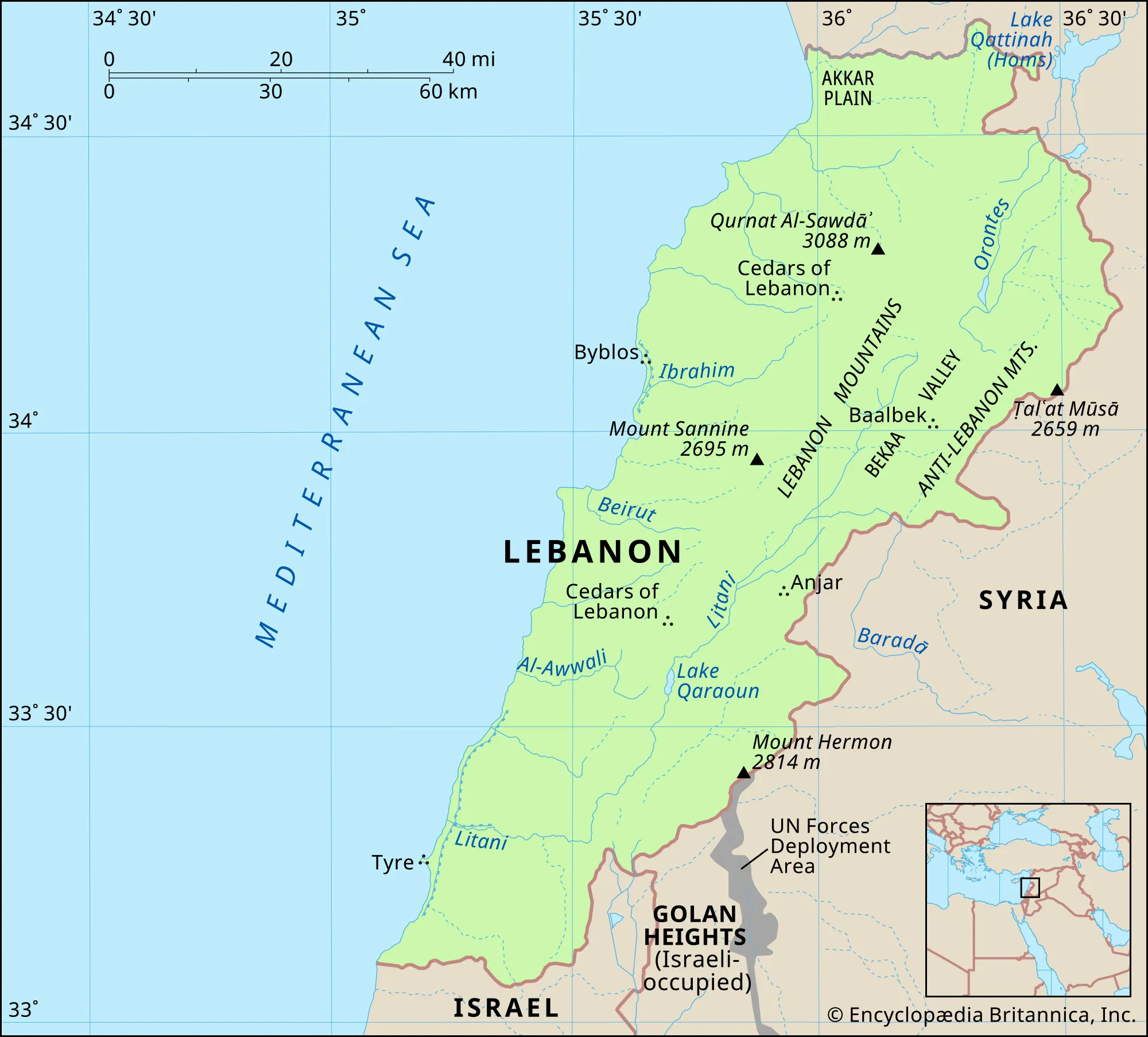
| Read more: Israel-Hezbollah Conflict and War Theory |
SC Flagged Bias Against Women in the Armed Forces
The Supreme Court of India flagged systemic gender bias in promotions and medical fitness evaluations of women officers, while upholding their right to Permanent Commission (PC) and pensionary benefits across the Armed Forces.
- Key Highlights of Supreme Court Judgment:
- Systemic Bias: Annual Confidential Reports (ACRs) of Short Service Commission Women Officers (SSCWOs) were casually graded, often given “average” scores due to assumptions of no long-term career.
- Women faced historical low grading, while male officers received higher informal advantages.
- Limited Career Growth: Women were denied training and career-enhancing opportunities, leading to a weaker service profile.
- Constitutional Mandate: Inclusion of women for PC is a constitutional obligation, ensuring equality and dignity.
- Denying equal opportunity based on gender violates Article 14 (Right to Equality), Article 15 (Prohibition of Discrimination), and Article 16 (Equality of Opportunity in Public Employment) of the Indian Constitution.
- Systemic Bias: Annual Confidential Reports (ACRs) of Short Service Commission Women Officers (SSCWOs) were casually graded, often given “average” scores due to assumptions of no long-term career.
Women in the Armed Forces
- Early Military Roles: Women first joined through the Military Nursing Service (1888) and later as doctors in the Indian Army Medical Corps (1958) with regular commissions.
- Non-Medical Entry: In 1992, the Women Special Entry Scheme (WSES) opened non-combat roles in branches like the Education, Law, Logistics and Engineers for Short Service Commission (SSC).
- Army Act, 1950 restricted women’s roles, allowing them only in notified branches such as Army Postal Service, Judge Advocate General’s (JAG) department, Army Education Corps (AEC), Ordnance Corps, and Service Corps, and Service Corps.
- Short Service Commission (SSC): In 2005, the SSC system was introduced, offering a 14-year tenure to women officers and marking a more formalized career structure.
- Permanent Commission Milestone: Women were first granted Permanent Commission in 2008 in limited branches like JAG and AEC.
- The Supreme Court of India, in the 2020 Babita Puniya judgment, mandated Permanent Commission in all arms where SSC exists, enabling women to hold command roles.
- Opening of the NDA (2021): The Supreme Court passed an interim order allowing women to take the National Defence Academy (NDA) examination, tearing down another major gender barrier in military training and entry.
- Current Status: Women serve as fighter pilots in the Indian Air Force command warships in the Navy, and hold PC in various Army branches. However, core combat arms (like Infantry and Armored Corps) largely remain closed to them.
| Read more: Women in Indian Armed Forces |
Government Restores Full RoDTEP Benefits
The Ministry of Commerce and Industry has fully restored the Remission of Duties and Taxes on Exported Products (RoDTEP) scheme benefits to buffer exporters against soaring logistics costs and geopolitical risks in West Asia.
- Earlier, RoDTEP rates were halved, a move exporters sharply criticised amid global trade volatility. However, agriculture and food processing exports were exempted from the reduction.
RoDTEP Scheme
- About: Launched in 2021, it is a flagship export promotion scheme launched by the Ministry of Commerce and Industry. It replaced the earlier Merchandise Exports from India Scheme (MEIS).
- Objective: It aims to reimburse embedded central, state, and local duties, taxes, and levies that are incurred during the manufacture and distribution of exported goods but are not refunded under any other existing mechanism (such as GST input tax credit or duty drawback).
- This enhances the cost competitiveness of Indian goods in international markets, creating a level playing field for exporters.
- WTO Compliant: MEIS was challenged at the World Trade Organization (WTO) for being a direct subsidy. However, RoDTEP operates as a duty remission scheme rather than an incentive scheme, making it fully WTO-compliant.
- Remission is issued as transferable electronic duty credit scrips (e-scrips) that can be used to pay basic customs duty on imports.
- The rebate typically ranges from 0.5% to 4.3% of the Freight On Board (FOB) value of the exported goods, depending on the product sector.
- Scope: Covers embedded taxes such as mandi tax, VAT on fuel, coal cess, central excise duty on fuel, electricity duty, and other local levies not refunded elsewhere.
- Eligibility: Applies to most exported goods (covering over 8,500 tariff lines). Certain categories (e.g., goods restricted under export policy) are excluded.
|
Read More: RoDTEP Scheme |
Govt Notifies Electricity (Amendment) Rules, 2026
The government notified the Electricity (Amendment) Rules, 2026, amending Rule 3 of the Electricity Rules, 2005, related to Captive Generating Plants (CGPs).
- CGPs are power plants set up by industries or entities to generate electricity primarily for their own consumption, instead of relying fully on the public power grid.
- Objective: The amendments aim to clarify captive generation provisions while preserving statutory ownership and consumption safeguards, removing ambiguities, improving ease of doing business, and aligning captive power with India’s energy transition and industrial growth objectives.
- Policy Importance: Captive power generation, supported under the Electricity Act, 2003 and recognised in the National Electricity Policy, 2005, has been crucial for providing industries with reliable and cost-effective electricity.
- It has enabled industries to overcome power supply constraints and manage fluctuations in electricity costs, thereby supporting industrial growth.
- With industries shifting toward non-fossil fuel energy, a clear and predictable regulatory framework for captive power is essential to boost competitiveness and sustain long-term economic growth.
- Key Reforms:
- Clearly Defined Ownership: The definition of ownership has been clarified to include subsidiaries, holding companies and other subsidiaries of the holding company of the entity that establishes the captive generating plant.
- Nodal Agencies for Captive Status Verification: With effect from 1st April 2026, States/UTs will designate a nodal agency, while National Load Despatch Centre (NLDC) will handle inter-state verification.
- Verification Reform: Captive status will now be verified annually for the entire financial year to ensure clarity and uniform implementation.
| Read more: India’s Energy Evolution |