
Demographic Winter and India’s Narrowing Demographic Dividend
For Prelims: Demographic winter, Total Fertility Rate, Care economy, Silver Economy
For Mains: Demographic transition and its economic implications, Demographic dividend vs demographic burden
Why in News?
China’s population declined for the fourth consecutive year in 2025, falling by 3.39 million to 1.405 billion, with births hitting a historic low of 7.92 million, signalling a deepening demographic winter.
- This highlights important lessons for India, which despite being the most populous country, is witnessing a faster-than-expected decline in its Total Fertility Rate (TFR).
Summary
- China’s demographic winter highlights the risks of sustained low fertility and ageing, offering timely lessons for India, where TFR has fallen below replacement and the demographic dividend window is narrowing rapidly.
- India can still convert its youth advantage into economic power through job creation, future-ready skilling, women’s workforce inclusion, migration portability, and preparation for an ageing population.
What is Demographic Winter?
- Demographic Winter: The Demographic Winter describes a severe, long-term population decline due to persistently low birth rates (below replacement level of ~2.1 children per woman) and subsequent population aging, leading to a shrinking workforce, increased elder dependency, and strained social systems.
- Reasons for China’s Demographic Winter:
- Legacy of the One-Child Policy (1980–2015): The policy drastically reduced the number of women of childbearing age.
- Even though China moved to a "Two-Child" (2016) and "Three-Child" (2021) policy, the social habit of small families has become entrenched.
- High Cost of Living: The "Three Mountains" (Education, Healthcare, and Housing) make raising children in Chinese cities prohibitively expensive.
- Changing Social Mindset: Young Chinese (Generation Z) are increasingly opting for "Tang Ping" (lying flat) rejecting societal pressures to marry and have children in favor of a low-stress life.
- Marriage registrations have plummeted, directly impacting birth rates since out-of-wedlock births remain culturally and legally difficult in China.
- Legacy of the One-Child Policy (1980–2015): The policy drastically reduced the number of women of childbearing age.
Implications of Demographic Winter
- Inverted Population Pyramid: Fewer births combined with ageing population, shrinking workforce, and rising dependency ratio, deepening the demographic winter.
- Fewer workers supporting a growing elderly population increases pressure on pensions, healthcare, and social security systems.
- Government spending on healthcare and old-age support rises while tax revenues stagnate or decline.
- Economic Slowdown: Lower consumption, reduced innovation, and weaker productivity growth can trap the economy in long-term stagnation.
- National Security Concerns: A smaller youth population can affect military recruitment and long-term strategic capacity.
- Social Strain: Ageing societies face increased loneliness, intergenerational inequality, and challenges in sustaining community and family support systems.
Total Fertility Rate and Replacement Level
- Total Fertility Rate (TFR): TFR represents the average number of children a woman is expected to have over her reproductive lifespan (15–49 years), based on prevailing age-specific fertility rates.
- Replacement Level: A TFR of 2.1 is considered the replacement level, where each generation replaces itself without significant population growth or decline.
What is India’s Demographic Scenario?
- TFR Below Replacement Level: According to the Sample Registration System Statistical Report 2023, India’s TFR has declined to 1.9 at the national level, with rural India touching the replacement rate of 2.1 for the first time, while urban TFR stands much lower at 1.5.
- According to the NFHS-5 (2019-21), India’s TFR has dropped to 2.0 children per woman, which is below the replacement level of 2.1.
- This means a generation is not producing enough children to replace itself, eventually leading to population stabilization and decline (expected around 2060-2070).
- North-South Divide:
- Southern India (Kerala, Tamil Nadu): These states have TFRs comparable to developed nations (1.6 - 1.7), largely due to early and effective population control measures, and are now facing an ageing population similar to China.
- Northern India (Bihar, UP): These states still have high TFRs (above 2.4), providing the bulk of India's young workforce.
- Migration from North to South will become critical for filling labor gaps.
- Closing Window of Demographic Dividend: India has a "youth bulge" with a median age of 28.4 years (compared to China’s around 40).
- However, this window is short. The working-age population is projected to peak by 2041, while the elderly (60+) will rise sharply from 149 million (10.5%) today to 347 million (20.8%) by 2050.
- Without rapid skill development and job creation, India’s demographic dividend risks turning into a demographic disaster.
Population Policy and Measures in India
India was the first country to launch a National Family Planning Programme in 1952. Since then, its approach has evolved from clinic-based targets to a voluntary, rights-based model focused on reproductive health, women’s empowerment, and informed choice rather than coercion.
- Policy Framework:
- National Population Policy, 2000: Provides the framework for population stabilisation by meeting unmet contraceptive needs, reducing fertility, achieving replacement-level TFR (2.1) (attained nationally by 2020–21), and targeting a stable population by 2045.
- National Health Policy 2017: Reinforces population goals through improved reproductive, maternal, newborn, child, and adolescent health services.
- Key Measures:
- Mission Parivar Vikas: Targets high-fertility districts to improve access to family planning services.
- Compensation Scheme for Sterilization Acceptors: Provides compensation for loss of wages to the beneficiaries for sterilization.
- Doorstep Delivery: ASHAs supply contraceptives at home.
- Awareness Campaigns: World Population Day/Fortnight and Vasectomy Fortnight.
- Family Planning Logistics Management Information System (FP-LMIS): Ensures last-mile availability of family planning commodities across all the levels of health facilities.
What are the Challenges Facing India’s Demographic Double-Edged Sword?
- Jobless Growth Paradox: India’s biggest demographic risk lies in the disconnect between GDP growth and employment elasticity (the number of jobs created per unit of growth).
- Despite being the fastest-growing major economy, job creation has lagged. As per PLFS 2024–25, overall unemployment is stable at around 4.9%, but youth unemployment (15–29 years) remains high at 10–15%.
- A large pool of educated yet unemployed youth can fuel social unrest, populism, and demands for expanded reservations, undermining stability.
- Degree–Skill Mismatch: India produces millions of graduates annually, but many lack industry-ready skills.
- The India Skills Report 2025 shows employability at around 55%, meaning nearly 45% of graduates still lack the specific skills required by the modern economy (Artificial Intelligence (AI), Data Analytics, Advanced Manufacturing).
- The curriculum in many universities is outdated, leading to a scenario where industries face a talent crunch while graduates face a job crunch.
- 4th Industrial Revolution Threat: India is entering its demographic peak exactly when AI and Automation are disrupting low-end jobs.
- The traditional development ladder (from agriculture to low-end manufacturing to services) is breaking as AI and robotics replace cheap labour.
- India cannot rely on "cheap labor" like China did in the 1990s because the Lewis Turning Point (where surplus rural labor runs out) is being accelerated by AI.
- If India’s youth are trained only for low-skill BPO or assembly jobs, they risk becoming obsolete before employment.
- The “Two Indias” Problem: The North-South TFR divergence will intensify inter-state migration, but the absence of portable social security and uniform labour protections risks exclusion, regional tensions, and sons-of-the-soil politics.
- Low Female Labour Force Participation: India’s demographic dividend is incomplete without women.
- Although female labour force participation (FLFP) has improved from 23.3% to 41.7% (2017- 2024), it remains far below China (~60%) and Vietnam (~70%).
- The burden of the care economy, safety concerns, and lack of flexible white-collar jobs push many women out of the workforce, reinforcing the U-shaped labour participation trap and limiting growth potential.
- Unprepared “Silver Economy”: India’s elderly population is expanding rapidly, with the 60+ group projected to double to ~230 million by 2036, sharply raising the old-age dependency ratio.
- The support ratio has fallen from 14:1 (1997) to 10:1 (2023) and is expected to drop to 4.6:1 by 2050 and 1.9:1 by 2100, approaching levels seen in aging economies like Japan.
- With seniors’ consumption set to rise from 8% to 15% by 2050, weak pensions, limited healthcare, and the erosion of joint families could impose severe fiscal and social stress if wealth is not generated during the current demographic window.
What Steps Must India Adopt to Convert its ‘Demographic Potential’ into ‘Economic Power’?
- Skilling for Industry 4.0: Establish Sector Skill Councils that dictate academic curriculum based on real-time industry needs (e.g., Drone Technology, Green Hydrogen, AI), ensuring graduates are "day-one ready."
- Promote a culture of continuous upskilling through digital platforms (like SWAYAM) to help the workforce adapt to the rapid obsolescence of skills in the AI era.
- "Make in India" for the World: While IT is a strength, it cannot absorb millions of rural youth. The focus must shift to Labor-Intensive Manufacturing (Textiles, Leather, Footwear, Food Processing) similar to the Vietnam/Bangladesh model.
- The Production Linked Incentive (PLI) schemes should be tweaked to offer higher incentives for industries that create more jobs, rather than just capital-intensive output.
- Women-Led Development: Invest heavily in the "Care Economy" (Creches, Anganwadis, Geriatric care). This creates millions of jobs for women and frees up skilled women to join the formal workforce.
- Scale up self-help groups (SHGs) to turn rural women into micro-entrepreneurs.
- Bridging the North-South Divide: Develop a National Migration Policy to ensure social security portability. Accelerating the "One Nation, One Ration Card" and portable health benefits (Ayushman Bharat) to ensure migrants from the North are not excluded in the South.
- Preparing for the "Silver Economy": Create policy frameworks to re-employ retired but capable seniors in mentorship or consultancy roles, utilizing their experience ("Second Innings").
- Global Skill Corridors: Aggressively sign Migration and Mobility Partnership Agreements (MMPAs) with aging nations (Japan, Germany, Russia) to officially export trained Indian caregivers and nurses, turning India into the "HR Capital of the World."
Conclusion
The next 25 years the "Amrit Kaal" is India's "Make or Break" moment. Time will determine whether India emulates the growth story of East Asian Tigers or falls into the "Middle-Income Trap." The key lies not in the number of people, but in the quality of human capital. As the saying goes, "Demography provides the opportunity, but policy delivers the dividend."
|
Drishti Mains Question: “Demography is destiny, but it is not a guarantee.”How can India avoid the ‘middle-income trap’ and convert its ‘youth bulge’ into a sustained geopolitical advantage? |
Frequently Asked Questions (FAQs)
1. What is meant by ‘Demographic Winter’?
Demographic winter refers to long-term population decline caused by persistently low fertility rates below replacement level, leading to ageing, labour shortages, and rising dependency ratios.
2. Why is China experiencing a demographic winter?
China’s demographic winter is driven by the legacy of the one-child policy, high cost of living, declining marriages, and changing social attitudes likeTang Ping.
3. What is India’s current Total Fertility Rate (TFR)?
India’s national TFR has declined to 1.9 (SRS 2023), below replacement level, with rural India touching 2.1 and urban India at 1.5.
4. Why is India’s demographic dividend considered a double-edged sword?
While India has a large youth population, jobless growth, skill mismatch, AI-led disruption, and low female workforce participation risk turning the dividend into a demographic burden.
5. What key steps are needed to convert India’s demographic potential into economic power?
India must focus on Industry 4.0–aligned skilling, labour-intensive manufacturing, women-led development, migration portability, silver economy planning, and global skill corridors.
UPSC Civil Services Examination, Previous Year Questions (PYQs)
Q1. ‘’Empowering women is the key to control the population growth.’’ Discuss. (2019)
Q2. Critically examine the effect of globalization on the aged population in India. (2013)
Q3. Discuss the main objectives of Population Education and point out the measures to achieve them in India in detail. (2021)
Q4. What is the concept of a ‘demographic winter’? Is the world moving towards such a situation? Elaborate. (2024)
UGC New Rules Against Caste Discrimination
Why in News?
The University Grants Commission (UGC) has notified the University Grants Commission (Promotion of Equity in Higher Education Institutions) Regulations, 2026, aimed at tackling caste-based discrimination in higher education institutions (HEIs).
- These regulations replace the similarly named UGC (Promotion of Equity in Higher Educational Institutions) Regulations from 2012.
Note: The UGC Equity Regulations, 2026 were introduced to address the shortcomings of the 2012 advisory framework, which lacked enforcement powers, penalties for non-compliance, focused mainly on Scheduled Castes (SCs), Scheduled Tribes (STs), without explicitly covering Other Backward Classes (OBCs), and offered little clarity on complaint registration, timelines, and redressal procedures.
- Data submitted by the UGC to a Parliamentary Committee and the Supreme Court revealed a 118.4% rise in reported caste-based discrimination cases over five years, increasing from 173 cases (2019–20) to 378 cases (2023–24), underscoring the need for stricter, enforceable regulations.
What are the Key Provisions of the UGC (Promotion of Equity in Higher Education Institutions) Regulations, 2026?
- Broad Coverage of Caste-Based Discrimination: The regulations define caste-based discrimination as any unfair or biased treatment against Scheduled Castes (SCs), Scheduled Tribes (STs), and Other Backward Classes (OBCs), thereby explicitly extending legal protection to OBCs and correcting a major omission in the earlier draft framework.
- Expanded Definition of Discrimination: Discrimination is defined as any unfair, biased, or differential treatment, whether explicit or implicit, on grounds such as caste, religion, race, gender, place of birth, or disability, including acts that impair equality in education or violate human dignity.
- Mandatory Equal Opportunity Centres (EOCs): Every higher education institution is required to establish an Equal Opportunity Centre (EOC) to promote equity, social inclusion, and equal access, and to address complaints related to discrimination on campus.
- Each institution must form an Equity Committee under the EOC, chaired by the head of the institution, with mandatory representation from SCs, STs, OBCs, persons with disabilities, and women, ensuring inclusive decision-making.
- The Equity Committee is required to meet within 24 hours of receiving a complaint and submit its report within 15 days, after which the head of the institution must initiate action within 7 days.
- The framework also mandates mobile Equity Squads, a 24×7 helpline, and Equity Ambassadors to ensure continuous monitoring and promotion of equity on campuses.
- Reporting and Compliance Framework: EOCs must submit bi-annual reports, while institutions are required to file an annual report on equity-related measures to the UGC, strengthening institutional accountability.
- The regulations place a clear duty on institutions to eradicate discrimination and promote equity, with the head of the institution made directly responsible for effective implementation and compliance.
- National-level Monitoring Mechanism: UGC will establish a national monitoring committee comprising representatives from statutory bodies and civil society to oversee implementation, review complaints, and suggest preventive measures, meeting at least twice a year.
- Penalties for Non-compliance: Institutions violating the regulations may face debarment from UGC schemes, prohibition on offering degree, distance, or online programmes, or even removal from UGC recognition, making the rules enforceable rather than advisory.
Significance
- They strengthen the legal and institutional framework against caste-based discrimination in higher education, addressing a serious concern highlighted by a 2019 IIT Delhi study, which found that 75% of students from historically disadvantaged castes faced discrimination on campus.
- Inclusion of OBCs marks a more comprehensive approach to social justice.
- Strict penalties signal a shift from advisory guidelines to enforceable regulation.
Concerns
- Lack of Safeguards Against False Complaints: The 2025 draft UGC equity regulations had a provision for penalties or disciplinary action in cases of false or malicious complaints of discrimination, but this safeguard was removed in the final 2026 regulations, raising concerns about misuse and lack of procedural balance.
- Critics argue that the framework could unfairly target upper-caste students and portray them as presumptive offenders in discrimination complaints.
- Due Process and Natural Justice Issues: Quick timelines for inquiry and action may compromise fair hearing, evidence evaluation, and procedural safeguards for all parties involved.
- Administrative and Compliance Burden: Smaller colleges may lack adequate faculty and resources to operationalise EOCs, Equity Committees, squads, and round-the-clock helplines.
University Grants Commission
- India's first effort to establish a national education system began with the 1944 Sargeant Report, which recommended creating a University Grants Committee.
- Formed in 1945, the committee initially supervised Aligarh, Banaras, and Delhi universities. By 1947, its scope expanded to include all existing universities.
- In 1948, the University Education Commission, led by Dr. S. Radhakrishnan, recommended its restructuring based on the UK model.
- In 1952, the Union Government designated the University Grants Commission (UGC) to oversee grants for Central Universities and higher education institutions.
- Formally inaugurated by Maulana Abul Kalam Azad in 1953 , it became a statutory body in 1956.
- UGC is headquartered in New Delhi, it consists of a Chairman, Vice-Chairman, and ten other members appointed by the Central Government.
- Its key functions include allocating grants to universities, advising on higher education reforms, and promoting quality and standards in higher education.
How Does Caste-Based Discrimination Impact Access to Education in India?
- Threat to Constitutional Values: Caste discrimination undermines the principles of equality, dignity, and fraternity enshrined in the Constitution.
- It weakens public faith in affirmative action policies and democratic institutions, and contradicts India’s commitment to inclusive and equitable development.
- Restricts Entry into Quality Institutions: Caste-based discrimination leads to poor schooling outcomes and entrenched prejudice, which together reduce the representation of SC/ST/OBC students in elite schools and colleges.
- Limited access to education traps communities in low-income occupations, weakening education’s role as a social equaliser.
- Psychological Exclusion Stigma attached to “reserved category” identity leads to anxiety, low self-esteem, and reduced academic performance.
- The Sukhadeo Thorat Committee (2007) highlighted how segregation in hostels, dining halls, and sports isolates marginalized students, creating "ghettos" within elite campuses.
- Failure of Grievance Redressal: SC/ST Cells in many universities are often dysfunctional or lack "legal teeth." They frequently prioritize protecting the institution's reputation over delivering justice to the victim.
- The Sukhadeo Thorat Committee (2007) noted that while SC/ST Cells exist on paper, they often lack autonomy.
- Higher Dropout Rates: Caste discrimination combined with financial, social, and psychological pressures results in disproportionately higher dropouts among marginalised groups.
India's Initiatives to Address Caste Discrimination in Education
- Constitutional & Legislative Safety Valve:
- Article 15: Enables the State to make "special provisions" (reservations) for SC/STs in admission to educational institutions, including private ones (added by 93rd Amendment).
- Article 46: Directive Principle mandating the State to protect SC/STs from "social injustice and all forms of exploitation" (the bedrock for anti-discrimination laws).
- SC/ST (Prevention of Atrocities) Act, 1989: Criminalizes acts like preventing entry into educational institutions or insulting a member of SC/ST in public view.
- Financial & Academic Access Initiatives:
- SHRESHTA: Provides residential education to meritorious SC students in reputed private schools, helping break the ghettoisation of government schooling and improving access to elite education.
- National Fellowship for SC/ST: Supports SC/ST M.Phil and Ph.D. scholars financially, reducing dependence on faculty grants and improving academic autonomy.
- Top Class Education Scheme: Fully funds SC/ST students in premier institutes like IITs and IIMs, removing financial barriers to elite higher education.
- PM-AJAY: Focuses on building hostels for SC students, ensuring safety, reducing social isolation, and improving retention in higher education.
What Measures are Required to Dismantle Institutional Casteism in Education?
- Social Audits: The National Commission for Scheduled Castes (NCSC) should conduct annual social audits of "Zero Discrimination" compliance in Central Universities.
- Curriculum of Inclusion: Decolonize the curriculum to include Dalit History and Literature across disciplines. Seeing their history represented intellectually validates the presence of marginalized students in elite spaces.
- Mentorship Circles: Institutionalizing mentorship programs (like the Sathi initiative in some IITs) to bridge the cultural capital gap for freshers.
- Faculty Sensitization: Mandatory "Unlearning Caste" workshops for faculty and staff. Professors must be trained to identify "micro-aggressions" (e.g., asking ranks publicly, segregating lab groups) that contribute to a hostile environment.
- Special Recruitment Drives (SRD): The massive vacancy in SC/ST faculty positions (often 30-40% in IITs) must be filled on a war footing. A diverse faculty body is the strongest deterrent against discrimination.
Conclusion
Education is not only the birthright of every human being but also the weapon of social change. If higher education institutions continue to be exclusionary spaces, they fail their primary purpose of nation-building. To ensure true access, India must move from "Right to Education" to "Right to Equal Education," strictly penalizing discriminatory practices within campuses.
|
Drishti Mains Question: Discuss the significance of the UGC (Promotion of Equity in Higher Education Institutions) Regulations, 2026 in addressing caste-based discrimination in India’s higher education system. |
Frequently Asked Questions (FAQs)
1. What are the UGC (Promotion of Equity in Higher Education Institutions) Regulations, 2026?
They are legally enforceable regulations aimed at preventing caste-based discrimination and promoting equity and inclusion in higher education institutions.
2. Who is covered under caste-based discrimination in the 2026 regulations?
The regulations explicitly cover Scheduled Castes (SCs), Scheduled Tribes (STs), and Other Backward Classes (OBCs).
3. What institutional mechanisms are mandated under the new rules?
All HEIs must establish Equal Opportunity Centres (EOCs) and Equity Committees with representation from marginalised groups.
4. How will compliance with the regulations be monitored?
Through bi-annual and annual reporting, and oversight by a national-level monitoring committee set up by the UGC.
5. What penalties can institutions face for violating the regulations?
Penalties include debarment from UGC schemes, prohibition on academic programmes, and loss of UGC recognition.
UPSC Civil Services Examination, Previous Year Question (PYQ)
Prelims
Q. Which of the following provisions of the Constitution does India have a bearing on Education? (2012)
- Directive Principles of State Policy
- Rural and Urban Local Bodies
- Fifth Schedule
- Sixth Schedule
- Seventh Schedule
Select the correct answer using the codes given below:
(a) 1 and 2 only
(b) 3, 4 and 5 only
(c) 1, 2 and 5 only
(d) 1, 2, 3, 4 and 5
Ans- (d)
Mains
Q1. How have digital initiatives in India contributed to the functioning of the education system in the country? Elaborate on your answer. (2020)
Q2. “Caste system is assuming new identities and associational forms. Hence caste system cannot be eradicated in India.” Comment. (2018)
Central Bank Digital Currency
Why in News?
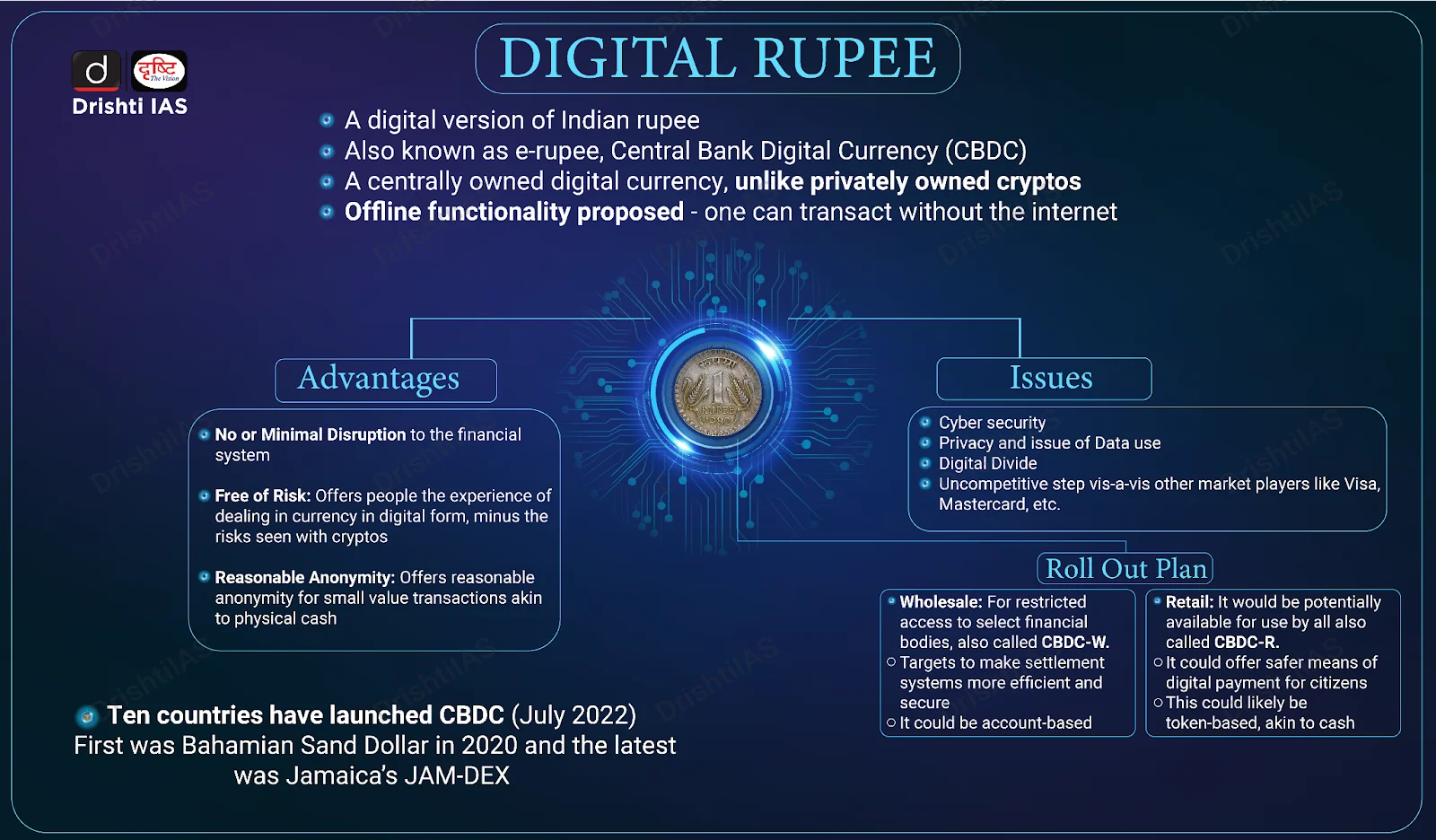
The Reserve Bank of India (RBI) has recommended placing a proposal to link BRICS countries' central bank digital currencies (CBDCs) on the agenda for the 2026 BRICS summit (host-India).
- The RBI’s proposal builds on a 2025 declaration at a BRICS summit in Rio de Janeiro, which pushed for interoperability between members’ payment systems to make cross-border transactions more efficient.
What is Central Bank Digital Currency?
- About: A CBDC is a digital form of a country's fiat currency, issued and backed directly by its central bank. It represents a liability of the central bank, similar to physical cash (banknotes and coins) or reserves held by commercial banks at the central bank.
- Unlike cryptocurrencies such as Bitcoin, which are decentralized and typically volatile, a CBDC is centralized, stable in value (pegged to the national currency), and functions as legal tender.
- Functioning: CBDCs use cryptography for security, integrity, and authentication.
- Techniques include encryption for data protection and digital signatures to authorize transactions.
- Privacy-enhancing methods like zero-knowledge proofs balance anonymity with regulation.
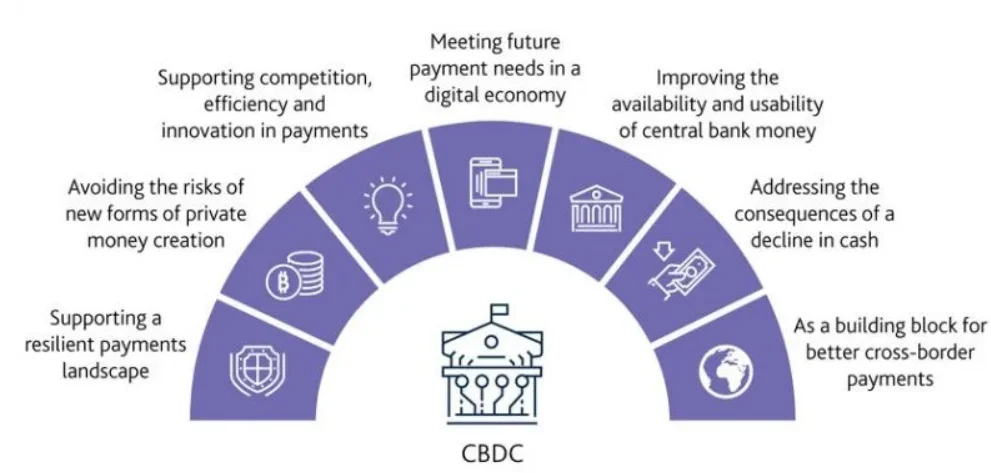
- Objective: It aims to modernize payment systems amid the rise of private digital currencies (e.g., stablecoins) and declining cash, focusing on efficient and inclusive financial systems.
- Benefits:
- Key Characteristics:
- Issuer and Backing: Issued exclusively by the central bank, ensuring full faith and credit of the government. It is not issued by private entities or commercial banks.
- Digital Nature: Exists solely in electronic form, recorded on centralized ledgers, distributed ledger technology, or hybrid systems. It enables seamless digital payments without relying on intermediaries for core settlement.
- Purpose and Availability: Designed as a complement to (not a replacement for) physical cash and existing bank deposits. It serves as a means of payment, unit of account, and store of value.
- Types: A retail CBDC (rCBDC) is for the general public’s daily payments like transfers and purchases. A wholesale CBDC (wCBDC) is limited to banks and institutions for interbank settlements and large transactions.
- Distinction from Existing Digital Money: While most money today is already digital (e.g., bank account balances or mobile payments), those are liabilities of commercial banks. A CBDC is a direct claim on the central bank, offering the highest level of safety and liquidity comparable to cash.
- Global Context: The Bahamas became the first country to launch a nationwide CBDC named Sand Dollar in 2020, followed by Nigeria’s eNaira, also launched in 2020. Over 90% of the world’s central banks are exploring CBDCs, and around 60% are already conducting tests or proofs of concept.
- While no BRICS member has fully launched a digital currency, all five are running pilot projects.
- The main national CBDCs are Brazil’s Drex (advanced pilot), Russia’s Digital Ruble (ongoing pilot with limited commercial use), India’s e-Rupee (7 million retail users), and China’s e-CNY (most widespread pilot), while South Africa remains in the research stage.
Digital Currency
- Digital Currency: Digital currency is a form of currency that exists only in electronic form, also referred to as digital money, electronic money, or cybercash, with transactions conducted via computers or internet-connected wallets.
- It is possible to make payments in a digital currency without using the US dollar or SWIFT. A digital currency can also be programmed with conditions, such as a time-frame for spending.
- Key Features: It can be centralized, like fiat currency issued by a central bank, or decentralized, such as cryptocurrencies like Bitcoin and Ethereum, which use cryptography to secure transactions.
- Types of Digital Currency: Broadly, digital currencies are categorized into three types:
- Cryptocurrencies (e.g., Bitcoin)
- Virtual currencies (e.g., gaming tokens)
- Central Bank Digital Currencies (CBDCs).
- CBDCs vs. Fiat Currency: Unlike physical currencies, digital currencies have no tangible form, with CBDCs existing purely digitally, serving as a supplement or replacement to traditional fiat currency.
Frequently Asked Questions (FAQs)
1. What is a Central Bank Digital Currency (CBDC)?
A CBDC is a digital form of a country’s fiat currency, issued and backed by the central bank, functioning as legal tender and a secure claim on the central bank.
2. How does a CBDC differ from cryptocurrencies like Bitcoin?
CBDCs are centralized, stable, and government-backed, whereas cryptocurrencies are decentralized, volatile, and not legal tender.
3. Which BRICS countries are piloting CBDCs?
Brazil (Drex), Russia (Digital Ruble), India (e-Rupee), China (e-CNY) are piloting CBDCs, while South Africa remains in the research stage.
UPSC Civil Services Examination, Previous Year Questions (PYQs)
Q. With reference to Central Bank digital currencies, consider the following statements : (2023)
- It is possible to make payments in a digital currency without using US dollar or SWIFT system.
- A digital currency can be distributed with condition programmed into it such as a time-frame for spending it.
Which of the statements given above is/are correct?
(a) 1 only
(b) 2 only
(c) Both 1 and 2
(d) Neither 1 nor 2
Ans: (c)
Statehood Day of Manipur, Meghalaya and Tripura
Why in News?
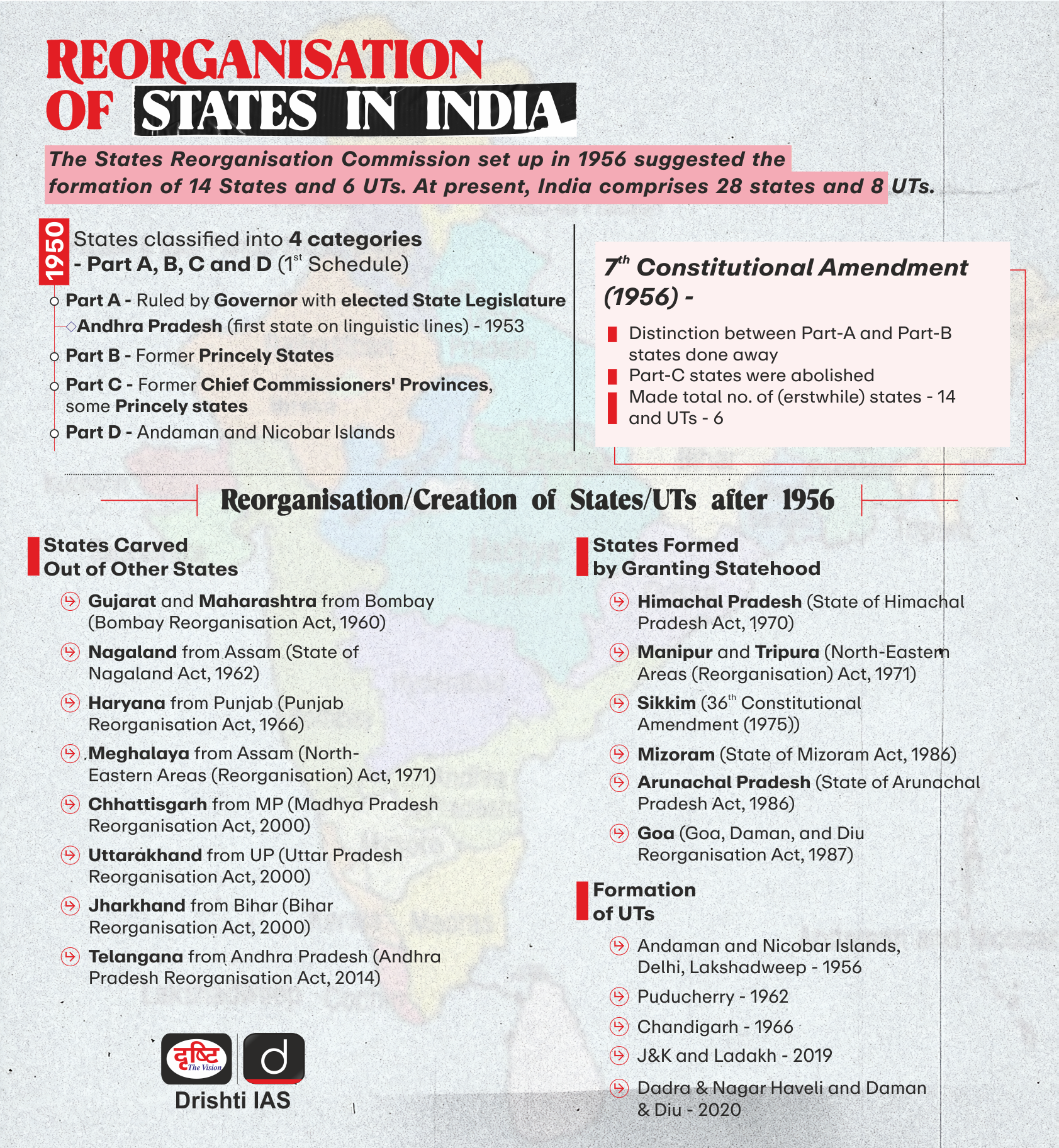
Manipur, Tripura, and Meghalaya celebrated their Statehood Day on 21st January. On this day in 1972, all three became full-fledged states under the North-Eastern Areas (Reorganisation) Act, 1971.
What is the Historical Background & Reorganization of Manipur, Meghalaya, and Tripura?
- Manipur: Before Independence, Manipur was an independent princely state that acceded to India in 1947 through the Instrument of Accession, retaining internal autonomy.
- It conducted India’s first election based on universal adult franchise in 1948, becoming a constitutional monarchy.
- In 1949, the Maharaja signed the Merger Agreement without consulting the elected Assembly, which was subsequently dissolved.
- Manipur was administered as a Part-C State (1949–56), became a Union Territory in 1956, and finally attained full statehood in 1972 under the North-Eastern Areas (Reorganisation) Act, 1971, with special safeguards for hill areas under Article 371C.
- Tripura: Tripura was a princely state ruled by the Manikya dynasty and merged with the Indian Union in 1949 under the regency of Queen Kanchan Prabha Devi.
- Initially administered as a Part-C State, it became a Union Territory in 1956.
- In recognition of regional aspirations and administrative needs, Tripura was granted full statehood in 1972 through the North-Eastern Areas (Reorganisation) Act, 1971, while ensuring tribal self-governance through the Tripura Tribal Areas Autonomous District Council under the Sixth Schedule.
- Meghalaya: Meghalaya’s statehood emerged from demands for autonomy by the Khasi, Jaintia, and Garo Hills to protect their distinct cultural and linguistic identity, particularly in response to Assam’s language policy.
- It was first created as an Autonomous State within Assam under the 22nd Constitutional Amendment Act, 1969.
- Subsequently, the North-Eastern Areas (Reorganisation) Act, 1971, granted Meghalaya full statehood in 1972, making it the 21st state of India, with the entire state governed under the Sixth Schedule through autonomous district councils.
Significance of the North-Eastern Areas (Reorganisation) Act, 1971.
- Fulfilment of Sub-Nationalism: The Act addressed long-standing demands for autonomy from the hill tribes (Khasis, Garos, Jaintias, Mizos) who felt culturally and linguistically distinct from the Assamese-dominated plains.
- By upgrading Union Territories to States, it provided local populations with their own Legislative Assemblies, allowing them to draft policies suited to their unique tribal customs and needs.
- Strategic & Security Imperatives: The Act was implemented shortly after the creation of Bangladesh (1971 War). India needed to consolidate the internal stability of the Northeast to secure the "Chicken’s Neck" corridor and the international borders.
- By converting the North-East Frontier Agency (NEFA) into the Union Territory of Arunachal Pradesh, the Act formally integrated this strategically sensitive region (bordering China) into the Indian political mainstream, removing it from the vague status of a "frontier agency.
- This served as a transitional step before Arunachal Pradesh attained full statehood in 1987 through the 55th Constitutional Amendment.
- By converting the North-East Frontier Agency (NEFA) into the Union Territory of Arunachal Pradesh, the Act formally integrated this strategically sensitive region (bordering China) into the Indian political mainstream, removing it from the vague status of a "frontier agency.
- North Eastern Council (NEC): It is a statutory body established under the North Eastern Council Act, 1971.
- NEC serves as the nodal agency for economic and social development of the North-Eastern Region, comprising Arunachal Pradesh, Assam, Manipur, Meghalaya, Mizoram, Nagaland, Sikkim, and Tripura.
- It functions under the administrative control of the Ministry of Development of the North-Eastern Region (MDoNER) and includes the Governors and Chief Ministers of these states along with three members nominated by the President.
Frequently Asked Questions (FAQs)
1. When did Manipur, Meghalaya, and Tripura attain statehood?
They became full-fledged states on 21 January 1972 under the North-Eastern Areas (Reorganisation) Act, 1971.
2. Which Act reorganised the North-East and granted statehood to these states?
The North-Eastern Areas (Reorganisation) Act, 1971, reorganised the region and granted statehood to Manipur, Meghalaya, and Tripura.
3. What special constitutional provision applies to Manipur?
Article 371C provides special safeguards for the Hill Areas of Manipur.
4. How is tribal autonomy ensured in Tripura and Meghalaya?
Through Autonomous District Councils under the Sixth Schedule of the Constitution.
5. Why was the North-Eastern Areas (Reorganisation) Act strategically important?
It strengthened internal stability of the North-East post-1971 war, secured international borders, and integrated sensitive frontier regions into India’s political framework.
UPSC Civil Services Examination, Previous Year Question (PYQ)
Prelims
Q. The North Eastern Council (NEC) was established by the North Eastern Council Act, 1971. Subsequent to the amendment of NEC Act in 2002, the Council comprises which of the following members? (2024)
- Governor of the Constituent State
- Chief Minister of the Constituent State
- Three Members to be nominated by the President of India
- The Home Minister of India
Select the correct answer using the code given below:
a) 1, 2 and 3 only
b) 3 and 4 only
c) 2 and 4 only
d) 1, 2, 3 and 4
Ans: A
Rash Behari Bose
Recently, the Union Home Minister paid tribute to Rash Behari Bose on his death anniversary.
Rash Behari Bose
- About: Rash Behari Bose, born on 25th May 1886 in Bardhaman, Bengal, was a revolutionary nationalist who gave the freedom struggle a global dimension.
- Revolutionary Activities: He gained prominence during the Alipore Bomb Case (1908) and took part in the bomb plot to assassinate Viceroy Charles Hardinge in 1912.
- In 1913, Rash Behari Bose met Jatin Mukherjee (Bagha Jatin) under whose mentorship, Bose became more determined to fight for India's freedom.
- He became a key figure in the Ghadar Movement, an international political movement founded by Indian expatriates to overthrow British rule.
- In Japan in 1924, Rash Behari Bose met Subhas Chandra Bose, facilitated by Veer Savarkar.
- Escape to Japan: Fleeing British intelligence, he left India in 1915, eventually taking refuge in Japan.
- In 1942, he founded the Indian Independence League (IIL) in Japan, with the goal of organizing and mobilizing Indians for the struggle against British rule.
- Azad Hind Fauj: In 1942, Rash Behari Bose formed Azad Hind Fauj to fight for India’s freedom.
- He handed over the leadership of the INA to Subhas Chandra Bose, recognizing his potential to lead the independence struggle.
- Legacy: Rash Behari Bose’s life epitomises the spirit of revolutionary sacrifice and strategic perseverance in India’s freedom movement, linking early militant resistance with sustained organisational efforts until his death in Tokyo (21st January 1945).
| Read more: 76th Anniversary of Azad Hind Government - Drishti IAS |
Zehanpora Stupa
Recent archaeological excavations in Zehanpora, Baramulla (North Kashmir), have uncovered a massive, over 2,000-year-old Buddhist stupa dating back to the Kushan-era (1st century CE to the 3rd century CE).
- Archaeological Significance: It is Kashmir's largest known Buddhist site, featuring a 10-acre excavation with a wooden superstructure and undisturbed mounds that offer unique historical insights.
- Link with International Archives: A historic photograph of the site, showing three Buddha stupas, was found in a French museum archive. Possibly captured by British travellers, it indicates the site’s early recognition in colonial-era travel records during the 19th or early 20th century.
- Buddhism in Kashmir: The introduction of Buddhism to Kashmir is traced back to King Ashoka's reign during the Mauryan period. However, Kalhana’s Rajatarangini references King Surendra (first Buddhist king of the region) building monasteries in Kashmir, while other historical records note the region hosted the Buddhist dialogue between the Indo-Greek ruler Menander and the monk Nagasena.
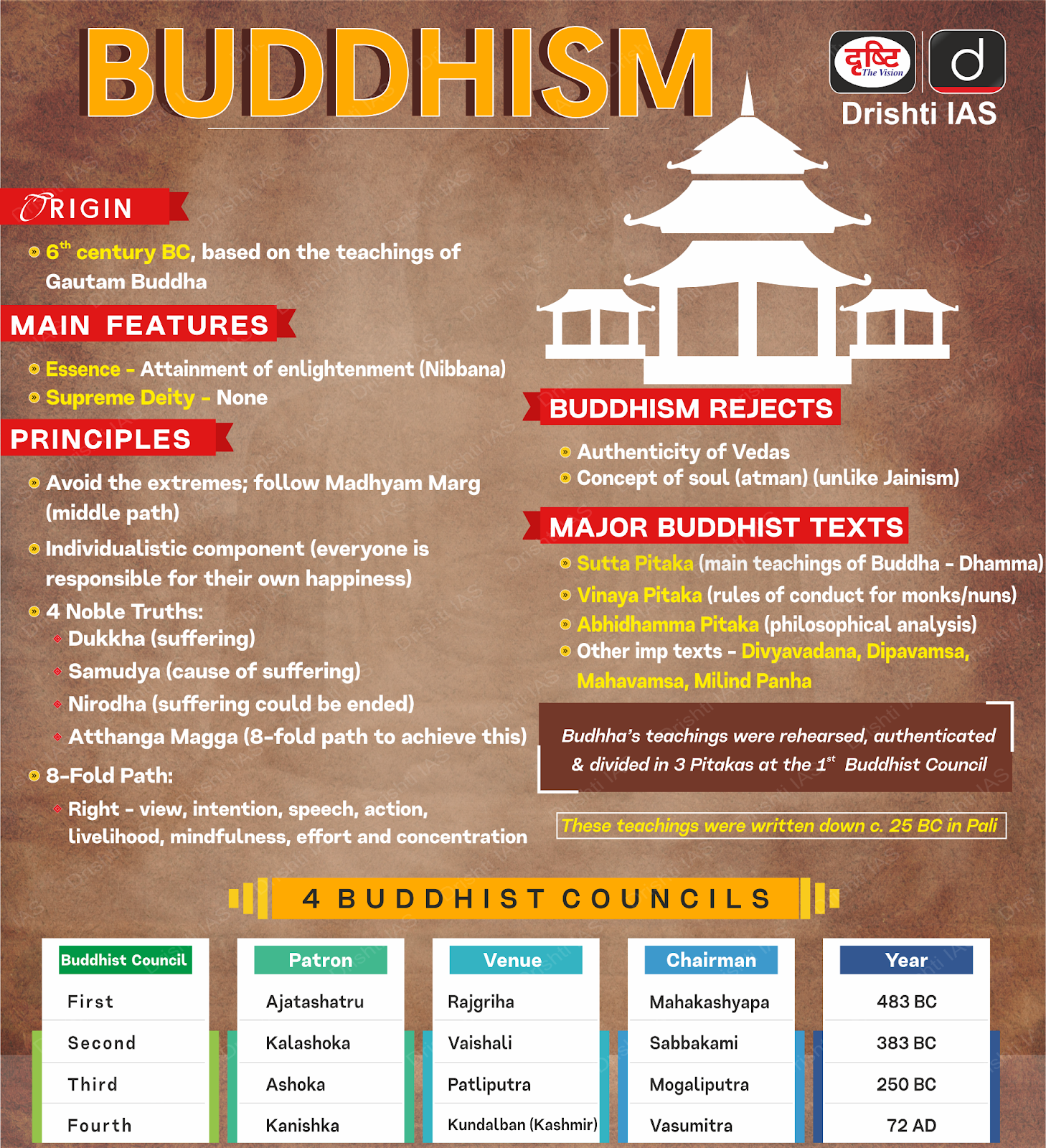
- Later, patronage from Kushan kings like Kanishka supported the rise of Buddhist practices, and Kashmir is considered the region where the Mahayana sect (4th Buddhist Council in Kashmir, around 72 AD) established its roots.
- As per Mahavamsa (Buddhist literary work of Sri Lanka), Ashoka invited Buddhist scholars of Kashmir for the 3rd Buddhist council he convened at Pataliputra around 250 BCE.
- Buddhist Legacy in Kashmir: Numerous archaeological sites across Kashmir reflect strong Buddhist affiliations:
- North Kashmir: Kanispora, Ushkur, Zehanpora, Parihaspora
- Central Kashmir: Harwan Buddhist complex (Srinagar)
- South Kashmir: Semthan, Hutmur, Hoinar, Kutbal.
| Read More: Buddhism in India |
GI-Tagged Kaladi to Be Upscaled Under ODOP
Recently, the Union Minister of State (Independent Charge) for Science & Technology directed that Kaladi, a GI-tagged dairy product of Udhampur, Jammu & Kashmir (J&K), be scientifically upscaled under the One District One Product (ODOP) initiative while preserving its traditional taste and nutritional value.
Kaladi
- About: Kaladi is a traditional dairy product of Udhampur (J&K), often called the “mozzarella of Jammu” due to its milky flavour and stretchable texture. It is made from raw full-fat milk using whey water as a natural coagulant.
- GI Tag: The GI tag has enhanced Kaladi’s economic value and local livelihoods, particularly boosting employment opportunities for rural youth.
- Key Constraint: The product’s short shelf life, especially without refrigeration, limits its market reach. The government aims to improve this through scientific validation, while ensuring the preservation of Kaladi’s taste, texture, and nutritional identity, with opportunities for recipe diversification.
- Scientific Support: The CSIR-Central Food Technology Research Institute (CSIR-CFTRI), Mysuru, and the CSIR-Indian Institute of Integrative Medicine (CSIR-IIIM), Jammu, will collaborate on nutrient profiling, characterisation, value addition, and shelf-life enhancement to facilitate the scaling up of Kaladi.
- Market & Export Expansion: The initiative aims to bring Kaladi to national and international markets, improving farmer incomes and showcasing Dogra cuisine globally.
| Read more: GI Tags for Over 17 Products |
INS Sagardhwani Flags Off for Sagar Maitri V
Recently, the Indian Navy flagged off INS Sagardhwani from the Southern Naval Command, Kochi, for the fifth edition of the Sagar Maitri (SM-5) mission.
Sagar Maitri Initiative
- About: Sagar Maitri (SM) is a joint programme of the Indian Navy and DRDO, aligned with India’s vision of MAHASAGAR – Mutual and Holistic Advancement for Security and Growth Across Regions.
- Its scientific component, MAITRI (Marine & Allied Interdisciplinary Training and Research Initiative), focuses on long-term joint research and capacity building with partner countries.
- Objectives: The initiative aims at the collection of oceanographic and acoustic data along designated observational tracks and at strengthening scientific cooperation among Indian Ocean Rim (IOR) countries.
- It is central to DRDO’s efforts to enhance Underwater Domain Awareness (UDA) for maritime security.
- SM-5 Mission: Under the SM-5 mission, INS Sagardhwani will retrace the historic routes of INS Kistna, which participated in the 1962–65 International Indian Ocean Expedition, thereby reviving collaborative ocean research.
- INS Sagardhwani: A marine acoustic research vessel designed by Naval Physical and Oceanographic Laboratory(NPOL), Kochi and built by Garden Reach Shipbuilders & Engineers(GRSE), Kolkata.
- Since its commissioning in July 1994, it has been India’s primary platform for long-term oceanographic observation and maritime research.

| Read more: SAGAR MAITRI - Drishti IAS |
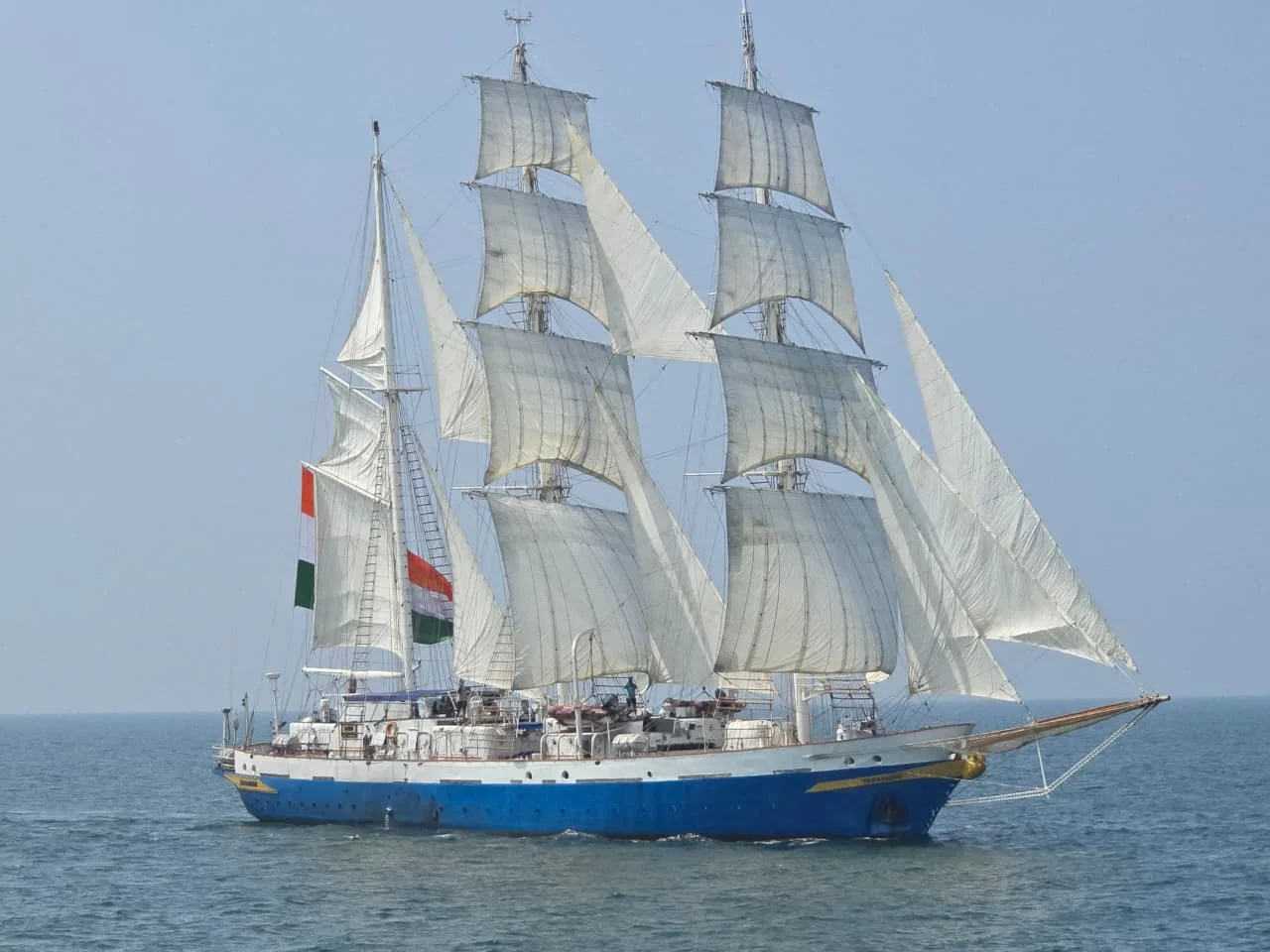
Lokayan 26
- The Indian Navy’s sail training ship INS Sudarshini began the Lokayan 26 expedition on 20th January 2026, reflecting India’s maritime heritage and the spirit of Vasudhaiva Kutumbakam.
- About: Lokayan 26 is a 10-month transoceanic voyage covering over 22,000 nautical miles with visits to 18 foreign ports across 13 countries.
- The voyage includes maritime partnership activities with host nations, strengthening cooperation and advancing the MAHASAGAR – Mutual and Holistic Advancement for Security and Growth Across Regions vision.
- Engagements: INS Sudarshini will participate in the renowned tall-ship events Escale à Sète in France and SAIL 250 in New York, USA, showcasing India’s maritime heritage and seafaring traditions.
- Training & Capacity Building: More than 200 Indian Navy and Coast Guard trainees will undergo intensive sail training, gaining experience in long-range navigation, traditional seamanship and interaction with trainees from other navies.
- About INS Sudarshini: INS Sudarshini, the second sail training ship of the Indian Navy after INS Tarangini, has already sailed over 1,40,000 nautical miles, serving as a symbol of India’s maritime professionalism and goodwill.
| Read more: MAHASAGAR Initiative |