
New Deportation Policy for Illegal Migrants
For Prelims: Foreigners’ Tribunals, Bureau of Immigration , Assam Accord, National Register of Citizens, Free Movement Regime
For Mains: Illegal migration and border management, Human rights concerns in detention and deportation
Why in News?
The Union Ministry of Home Affairs (MHA) has formulated a new comprehensive deportation policy to expedite the identification and deportation of illegal migrants, particularly from Bangladesh and Myanmar.
Summary
- The new deportation policy focuses on faster identification and removal of illegal migrants through institutional mechanisms, but faces challenges like identification issues, diplomatic constraints, and human rights concerns.
- The Immigration and Foreigners Act, 2025 consolidates India’s immigration laws, strengthens monitoring of foreigners, and introduces stricter penalties and enforcement mechanisms, including statutory backing to the Bureau of Immigration.
What are the Key Highlights of the New Deportation Policy?
- District-Level Special Task Force: States must set up a special task force in each district to detect, identify, and deport undocumented migrants.
- They are required to submit a monthly status report on foreigners missing or overstaying their visas.
- Timelines for Verification: An upper limit of 90 days has been fixed to verify the antecedents of suspected Bangladeshi or Myanmarese nationals, particularly if they claim residency in another State.
- Operationalising Holding Centres/Camps: States are mandated to set up holding centres equipped with a 10-feet-high boundary ringed with barbed wires and strict access control to restrict the movement of undocumented migrants awaiting deportation.
- These centres must not be run from jails. Private buildings can be hired if government land is unavailable.
- Basic amenities like separate enclosures for men and women, open spaces, LPG connections, medical dispensaries, and ambulances must be ensured.
- Crucially, members of the same family should not be separated and must be housed together.
- Application to Foreigners' Tribunals: The guidelines for holding centres also apply to those declared foreigners by Foreigners’ Tribunals (FTs), which are unique to Assam.
- Document Cancellation & Blacklisting: Documents obtained illegally by migrants (such as Aadhaar, PAN cards, and driving licenses) must be uploaded to a designated portal for cancellation.
- Deported individuals will be "blacklisted" by the Bureau of Immigration to prevent future entry.
- Foreigners Identification Portal (FIP): A dedicated portal has been launched to capture the biometric (fingerprints and facial photographs) and demographic details of intercepted illegal foreigners.
- Border Interception Protocol: Migrants intercepted at land or maritime borders will be immediately sent back after biometric capture.
- Inadvertent crossers, if found innocent after interrogation, may be handed over to the border guarding forces of the respective countries rather than being detained.
What is the Need for the New Deportation Policy?
- Historical Context of Illegal Migration into India:Illegal migration into India has evolved over time, beginning with large-scale movements during Partition (1947) from East Pakistan (now Bangladesh), followed by a major influx during the 1971 Bangladesh Liberation War.
- Concerns over demographic changes led to the Assam Movement and the Assam Accord (1985), which fixed 24th March 1971 as the cut-off date for identifying illegal migrants.
- Since the 1990s, porous borders with Bangladesh and Myanmar, along with economic disparities, environmental stress, and political instability, have sustained migration, while open borders with Nepal complicate monitoring.
- In recent years, the issue has become linked with security, identity politics, and resource pressures, prompting stricter measures such as border fencing, National Register of Citizens (NRC) debates, and deportation drives.
Need
- Internal Security Imperatives: The push for stricter deportation comes in the backdrop of recent national security events, including the Pahalgam terror attack (April 2025) and subsequent military operations (Operation Sindoor, May 2025), which heightened the focus on domestic security protocols.
- Geopolitical Instability in the Neighbourhood: The regime change in Bangladesh in August 2024 led to an MHA directive to actively track individuals who may have entered India illegally and were living on forged documents.
- Resource Strain & Demographic Anxieties: Unregulated illegal migration strains local resources, alters the demographic profile of border states, and can trigger socio-economic conflicts (as historically seen during the Assam Agitation).
What is the Legal Framework Dealing with Foreigners in India?
- Immigration and Foreigners Act, 2025: Consolidates India’s immigration framework by replacing four older laws (the Passport (Entry into India) Act, 1920; the Registration of Foreigners Act, 1939; the Foreigners Act, 1946; and the Immigration (Carriers’ Liability) Act, 2000) and introduces stricter regulatory and enforcement measures.
- The Act mandates compulsory reporting of foreign nationals by hotels, educational institutions, and healthcare facilities, while also requiring airlines and shipping companies to share advance passenger and crew data.
- Additionally, it empowers the central government to regulate or shut down premises frequented by foreigners on security grounds and provides statutory backing to the Bureau of Immigration to identify, detain, and deport illegal migrants.
- Border-specific agreements: Movement rules vary significantly depending on the neighboring country. India shares a free-border agreement with Nepal and maintains a Free Movement Regime (FMR) with Myanmar, which traditionally allowed people to move within 10 km on either side of the border.
- Constitutional Delegation of Power: Under Article 258(1) of the Constitution, the Central Government has delegated the power to identify and deport illegally staying foreign nationals to State Governments and UT administrations.
- Refugee status limitations: Following the 2021 military coup in Myanmar, thousands of Chin refugees crossed into Mizoram. However, the MHA clarified that state governments cannot grant "refugee" status, as India is not a signatory to the UN Refugee Convention of 1951 or its 1967 Protocol.
- Foreigners (Tribunals) Order, 1964: Empowers District Magistrates in all States and UTs to set up tribunals to legally determine whether a person staying in India is a foreigner.
Deportation and Pushback
- Deportation: It is a formal legal process, involving the lawful detention and arrest of a foreigner suspected of illegal entry or living in India without valid documentation.
- The individual's case must be presented before a court. Deportation only occurs after all legal avenues are exhausted (including conviction) and the person's identity is officially confirmed by their home country.
- Delegation of Powers: The Citizenship and foreign affairs fall under the Union List, the Ministry of Home Affairs (MHA) delegates the power to deport foreigners to State governments, as the Central Government lacks a dedicated federal police force for this specific task.
- Pushbacks: A pushback is an informal procedure without stated rules. It occurs when border security forces intercept a foreigner at the international border and use their discretion to simply push the individual back across the border rather than arresting them to face the Indian legal system.
- India’s pushback policy raises serious concerns over due process, legality, and humanitarian obligations, as it is reportedly carried out without bilateral consultation . It also violates principles like non-refoulement.
What are the Associated Challenges with New Deportation Policy?
- Identification Conundrum: Millions of Indians, especially those born before the mid-1980s or living in marginalized conditions, lack standard birth certificates.
- This ambiguity can lead to genuine citizens facing harassment or detention during identification drives.
- Diplomatic Hurdles in Deportation: Deportation is a two-way street; it requires the "parent country" (e.g., Bangladesh or Myanmar) to officially accept the individuals as their citizens.
- If the origin country denies nationality, the individuals risk becoming stateless, languishing in holding centres indefinitely.
- Human Rights Concerns: Despite the policy mandating basic amenities, holding centres have historically faced allegations of poor living conditions.
- Prolonged detention of individuals, including children and women, raises ethical and human rights concerns.
- Despite India’s strong global record and its election to the UN Human Rights Council (2026–28) for its seventh term, such measures risk undermining its international image and credibility.
- Burden on State Machinery: District police and local administrations, already stretched with law-and-order duties, lack the capacity and training for nationality verification within a strict 90-day timeline.
- This risks delays, increases case pendency, opens avenues for corruption, and disproportionately affects women and other vulnerable groups.
What Measures can Further Strengthen Deportation Policy?
- Robust & Humane Verification: The government must ensure that the verification process is highly transparent and relies on multiple data points to prevent the harassment of legitimate Indian citizens.
- Proactive Diplomatic Engagement: India needs to actively engage diplomatically with neighbouring countries to establish a streamlined Standard Operating Procedure (SOP) for the smooth and timely acceptance of deported nationals.
- Adherence to International Standards: While national security is paramount, the treatment of illegal migrants in holding centres must strictly adhere to international human rights standards, ensuring psychological and medical care for vulnerable groups.
- Strengthening Border Infrastructure: The ultimate solution lies in preventing illegal infiltration at the source. Implementing the Comprehensive Integrated Border Management System (CIBMS) and smart fencing across porous terrains will drastically reduce unauthorized entry.
- Strengthening Documentation & Verification: Documentation process should be made stricter, with robust verification mechanisms for identity documents like Aadhaar and voter ID, including enhanced police checks and strengthened Local Intelligence Units (LIU), supported by greater public awareness to curb misuse.
Conclusion
The MHA’s deportation policy strengthens border security and streamlines action against illegal migration. Its success will depend on fair implementation, transparency, and cooperation with neighbouring countries, while ensuring that human rights and genuine citizens are protected.
|
Drishti Mains Question: “Stricter immigration laws strengthen national security but may undermine human rights.” Critically examine in the context of India’s Immigration and Foreigners Act, 2025. |
Frequently Asked Questions (FAQs)
1. What is the Immigration and Foreigners Act, 2025?
It is a consolidated legal framework replacing four older laws, aimed at regulating entry, stay, and deportation of foreigners in India with stricter enforcement provisions.
2. What is the role of the Bureau of Immigration under the Act?
It is given statutory backing to identify, detain, blacklist, and deport illegal migrants.
3. What is the difference between deportation and pushback?
Deportation is a formal legal process after due procedure, while pushback is an informal border action without legal proceedings.
4. What are holding centres under the deportation policy?
They are designated facilities to detain illegal migrants with basic amenities until deportation is completed.
5. What are the key challenges in deportation of illegal migrants?
Identification issues, lack of cooperation from origin countries, human rights concerns, and administrative burden on states.
UPSC Civil Services Examination, Previous Year Question
Prelims
Q. Consider the following pairs: (2016)
|
S. No. |
Community sometimes mentioned in the news |
In the affairs of |
|
1 |
Kurd |
Bangladesh |
|
2 |
Madhesi |
Nepal |
|
3 |
Rohingya |
Myanmar |
Which of the pairs given above is/are correctly matched?
(a) 1 and 2
(b) 2 only
(c) 2 and 3
(d) 3 only
Ans: (c)
Mains
Q. “Refugees should not be turned back to the country where they would face persecution or human right violation”. Examine the statement with reference to the ethical dimension being violated by the nation claiming to be democratic with open society. (2021)
Q. Rehabilitation of human settlements is one of the important environmental impacts which always attracts controversy while planning major projects. Discuss the measures suggested for mitigation of this impact while proposing major developmental projects. (2016)
Q. Discuss the changes in the trends of labour migration within and outside India in the last four decades. (2015)
Vice President of India's Visit to Sri Lanka
Why in News?
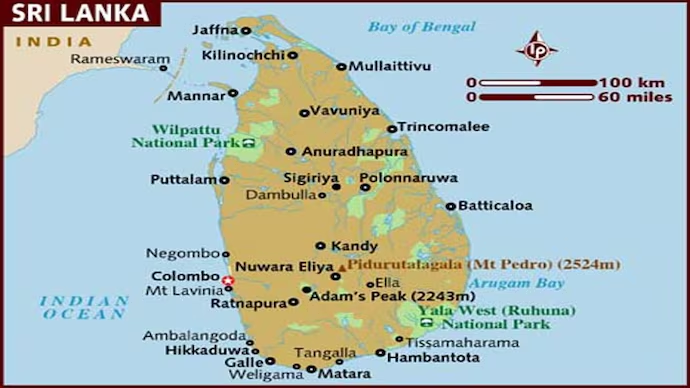
The Vice President of India, Shri C.P. Radhakrishnan, embarked on a two-day visit to Sri Lanka, marking the first-ever visit by an Indian Vice President to the island nation.
- India announced the extension of Overseas Citizen of India (OCI) eligibility, along with discussions on key bilateral issues such as energy cooperation, trade, and fishermen's concerns.
What are the Key Highlights of the Vice President of India's Visit to Sri Lanka?
- Expansion of OCI Card Eligibility: India has extended the OCI scheme to the fifth and sixth generations of the Indian diaspora in Sri Lanka.
- Previously limited to the fourth generation, this move will specifically benefit the Indian Origin Tamil (Malaiyaha Tamil) community.
- To ease administrative hurdles, the application process will be simplified. OCI cards will now be issued based on documents and certificates provided directly by the Sri Lankan government.
- Developmental Assistance & Housing: Discussions highlighted the handover of the final tranche of houses under Phase III of the Indian Housing Project, which is part of India’s commitment announced in 2010 to construct 50,000 houses in Sri Lanka.
- Trincomalee Energy Hub: Both nations stressed the urgency of developing the 'energy hub' in the Trincomalee district, which includes a proposed fuel pipeline linking South India and Sri Lanka alongside the development of World War II-era oil tank farms.
- The push follows an April 2025 tripartite Memorandum of Understanding (MoU) signed between India, Sri Lanka, and the UAE to develop Trincomalee.
- Fishermen Dispute: The leaders agreed to address the contentious fishermen issue through a humanitarian approach, balancing the livelihoods of fishing communities across the Palk Strait.
- Cyclone Ditwah Relief: Sri Lanka expressed deep gratitude for India’s prompt assistance, particularly the USD 450 million rehabilitation and relief package provided after Cyclone Ditwah, and praised India’s emergence as a reliable “first responder” during regional crises.
What is the Overseas Citizen of India (OCI) Scheme?
- Background: India based on the recommendations of the High-Level Committee on the Indian Diaspora, launched the Overseas Citizenship of India (OCI) Scheme in December 2005 through an amendment to the Citizenship Act, 1955, and it was formally inaugurated at the Pravasi Bharatiya Divas convention in 2006.
- The scheme grants long-term residency and travel privileges to Persons of Indian Origin (PIO) holding foreign citizenship.
- Subsequently, the PIO scheme was merged with OCI in 2015 to streamline diaspora engagement.
- Eligibility: The Government of India may register a person as an Overseas Citizen of India (OCI) if they are a foreign citizen who was an Indian citizen on or after 26th January 1950, or belonged to a territory that became part of India after 15th August 1947, or was eligible for Indian citizenship at that time.
- Eligibility also extends to their children, grandchildren, and great-grandchildren, as well as minor children with at least one Indian parent, and spouses of Indian citizens or OCI holders (subject to a minimum two-year registered marriage).
- Crucial Exception: A person, who or either of whose parents or grandparents or great grandparents is or has been a citizen of Pakistan or Bangladesh, is strictly ineligible for OCI registration.
- Key Benefits: OCI cardholders receive a multiple-entry, multi-purpose, lifelong visa to visit India.
- They are legally exempt from registering with the Foreign Regional Registration Officer (FRRO) regardless of their length of stay.
- Parity with NRIs: They enjoy parity with Non-Resident Indians (NRIs) in economic, financial, and educational fields.
- However, they cannot acquire agricultural land, farmhouses, or plantation properties.
- Limitations of OCI:
- No Dual Citizenship: OCI must not be misconstrued as dual citizenship; it does not confer any political rights.
- Public Employment: They are denied equality of opportunity in matters of public employment (Article 16).
- Electoral Politics: OCIs cannot register as voters under the Representation of the People Act, 1950, and are ineligible to contest elections for the Parliament or State Legislatures.
- Constitutional Offices: They are ineligible for election as President or Vice-President, and cannot be appointed as a Judge of the Supreme Court or High Court.
- OCI Cancellation: An OCI registration can be cancelled if it was obtained through fraud, false representation, or concealment of facts, or if the individual shows disaffection towards the Constitution of India.
- It may also be revoked in cases of unlawful communication or trade with an enemy during war, or if the person is convicted and sentenced to two or more years of imprisonment within five years of registration.
- Additionally, cancellation can occur in the interest of India’s sovereignty, integrity, security, or friendly relations with foreign countries.
Frequently Asked Questions (FAQs)
1. What is the OCI Scheme?
It is a scheme providing lifelong visa and residency benefits to Persons of Indian Origin under the Citizenship Act, 1955.
2. Is OCI equivalent to dual citizenship?
No, OCI does not grant political rights or full citizenship, only limited economic and travel privileges.
3. Who is not eligible for OCI?
Individuals with links to Pakistan or Bangladesh are ineligible for OCI registration.
4. What are the key benefits of OCI?
Lifelong visa, no FRRO registration, and parity with NRIs in economic and educational fields.
5. On what grounds can OCI be cancelled?
It can be revoked for fraud, anti-national activities, criminal conviction, or threats to national security.
UPSC Civil Services Examination, Previous Year Question (PYQ)
Prelims
Q. With reference to India, consider the following statements: (2021)
- There is only one citizenship and one domicile.
- A citizen by birth only can become the Head of State.
- A foreigner once granted citizenship cannot be deprived of it under any circumstances.
Which of the statements given above is/are correct?
(a) 1 only
(b) 2 only
(c) 1 and 3
(d) 2 and 3
Ans: (a)
Startup India’s Record Growth in FY 2025–26
Recently, the government reported that over 55,200 startups were recognized in FY 2025–26, the highest ever in a single year since the launch of the Startup India initiative, reflecting strong growth in innovation, funding and employment.
- Total recognized startups have crossed 2.23 lakh, generating over 23.36 lakh direct jobs.
- Startup recognition grew by 51.6%, while employment increased by 36.1% in FY 2025–26.
Startup India Initiative
- About: Launched on 16th January 2016, the Startup India Initiative aims to support entrepreneurs, strengthen the startup ecosystem, and shift India from a job-seeking to a job-creating economy.
- A startup is a small, new, or young company founded by entrepreneurs to introduce a new product or service, disrupt an existing market, or even create a new one.
- The Startup India Initiative is implemented by a dedicated Startup India team under the Department for Promotion of Industry and Internal Trade (DPIIT).
- Key Objectives: To nurture innovation, promote entrepreneurship by easing regulations and supporting founders, enable access to investment, and drive sustainable economic growth with large-scale job creation.
- Major Schemes & Support Pillars:
- Fund of Funds for Startups (FFS): A flagship initiative of DPIIT under the Startup India Action Plan, managed by Small Industries Development Bank of India (SIDBI), with a Rs 10,000 crore corpus to support SEBI-registered AIFs that invest in startups.
- Credit Guarantee Scheme for Startups (CGSS): Enables collateral-free loans to startups through eligible financial institutions and is operationalised by National Credit Guarantee Trustee Company (NCGTC).
- Startup India Seed Fund Scheme (SISFS): A Rs 945 crore corpus providing financial assistance for early-stage requirements like proof of concept, prototyping, and market entry.
- Startup India Hub: A single-window digital platform that connects startups with investors, mentors, incubators, academic institutions, corporates, and government bodies, enabling collaboration across India’s entrepreneurial ecosystem.
- States’ Startup Ranking Framework (SRF): Assesses States and Union Territories on startup-friendly policies and implementation, promoting competitive federalism by classifying them as Best Performers, Top Performers, Leaders, Aspiring Leaders, and Emerging Startup Ecosystems.
- Mentorship & Networking: Initiatives like the Mentorship, Advisory, Assistance, Resilience, and Growth (MAARG) Portal and the Startup India Investor Connect Portal bridge the gap between founders, mentors, and investors.
| Read more: Decade of the Startup India Initiative |
Harnessing Gene Drives for Malaria Control
A research shows that genetically modified mosquitoes using gene drives can suppress malaria transmission in real-world conditions, offering a potential breakthrough in global malaria control.
- Malaria Challenge: Despite interventions like bed nets and medicines, malaria continues to cause over 5 lakh deaths annually worldwide, compounded by growing drug and insecticide resistance.
- Malaria is a vector-borne infectious disease caused by the Plasmodium parasite and transmitted to humans through the bite of infected female Anopheles mosquitoes.
- The parasite enters the bloodstream through a mosquito bite, travels to the liver to mature, and then infects red blood cells, continuing the transmission cycle.
- Gene Drives: A gene drive is a genetic technology that bypasses traditional inheritance rules using the CRISPR-Cas9 gene-editing tool. Scientists have designed a system where a modified gene copies itself onto the partner chromosome, ensuring it is passed to over 90% of offspring.
- This allows the trait to spread rapidly across generations.
- Two Primary Genetic Strategies:
- Population Suppression: This approach disrupts essential genes (such as the doublesex gene) necessary for female mosquito development or fertility, eventually causing the local mosquito population to shrink or collapse.
- Population Modification (Replacement): This strategy keeps mosquitoes alive but engineers them to produce molecules (like antimicrobial peptides) in their midgut. This prevents the malaria parasite from developing and transmitting to humans.
- 'Transmission Zero' Breakthrough: Studies in Tanzania showed genetically modified mosquitoes can block malaria parasites from real human infections, not just lab conditions.
- Challenges and the Way Forward: Gene drives are not a standalone solution and must be integrated with existing health systems (vaccines, nets, surveillance).
- Because of potential ecological risks, no gene-drive mosquitoes have been released into the wild yet.
- Future deployment requires rigorous ecological risk assessments, robust regulatory review, and deep community engagement.
| Read more: Innovative Strategies in Malaria Prevention |
Aoleang Festival
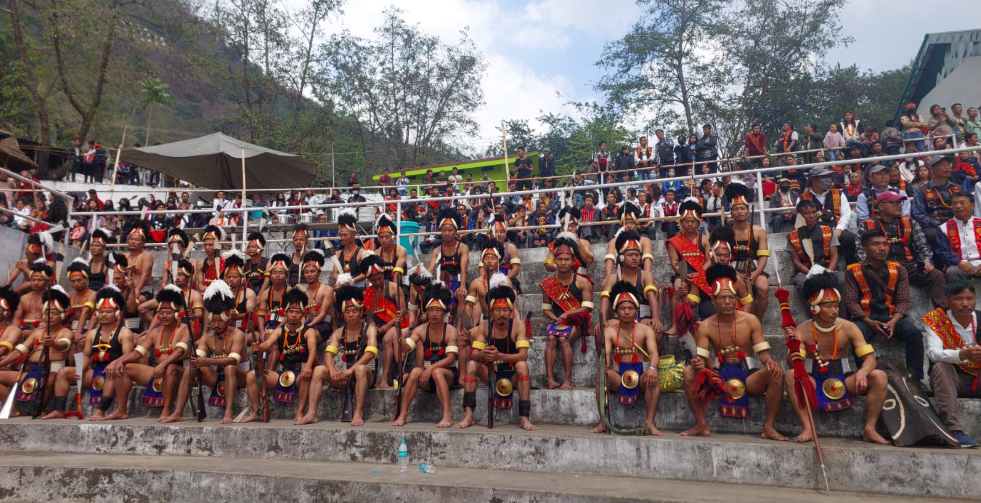
Recently, the Konyak community celebrated the Aoleang festival in Kohima (Nagaland), showcasing vibrant tribal culture and traditions.
- About: Aoleang (Aoleang Monyu) is the premier festival of the Konyak tribe, celebrated annually in the first week of April (1st–6th).
- It marks the end of the old year and the beginning of the New Year with the onset of spring, after the completion of sowing activities.
- It is celebrated across Nagaland, especially in Mon district (home of the Konyak tribe), with cultural events also held at the Kisama Heritage Village in Kohima.
- Agrarian & Ritual Significance: It is a pre-harvest festival where the community seeks blessings from the Almighty for good health and a bountiful harvest. Rituals include offerings and symbolic practices in jhum fields, reflecting the tribe’s deep connection with agriculture and nature.
- Celebration Pattern: The festival spans six days, each with distinct cultural significance. The initial days involve hunting, the collection of food items and preparations. The main celebrations include feasts, folk songs, dances and community gatherings and later days involve ritual feasts and remembrance of ancestors. The final day is marked by cleaning of houses and village, symbolizing closure and renewal.
- Cultural Elements & Community Role: The festival features traditional attire, ornaments, log drum performances, dances and communal feasting. It acts as a vital institution for preserving cultural heritage, reinforcing social bonds and transmitting traditions to younger generations.
| Read more: Hornbill Festival - Drishti IAS |
Bharat Maritime Insurance Pool
The Union Cabinet has approved the creation of the ‘Bharat Maritime Insurance Pool (BMI Pool)’, a domestic insurance pool with a sovereign guarantee of Rs 12,980 crore to ensure continuous and affordable maritime insurance coverage amid global uncertainties.
- Objective: To reduce dependence on foreign insurers such as the International Group of Protection and Indemnity Clubs, ensure continuity of maritime trade, and enhance sanctions resilience and sovereign control during geopolitical instability.
- Comprehensive Risk Coverage: The pool covers major maritime risks, including Hull and Machinery, Cargo, War risk, and Protection and Indemnity (P&I), which includes third-party liabilities such as oil pollution, wreck removal, cargo damage and crew injury.
- Vessel Applicability: Coverage is provided for Indian flagged or controlled vessels, as well as any vessel carrying cargo from international origins to Indian ports (and vice-versa), including transits through volatile maritime corridors.
- Operational Capacity: Policies will be issued by insurers who are members of the pool, leveraging a combined underwriting capacity of around Rs. 950 crore.
- Governance and Ecosystem: A newly constituted Governing Body will oversee the pool.
- This initiative aims to develop specialized marine underwriting, claims management, and legal expertise locally, directly aligning with the vision of self-reliance (Atmanirbhar Bharat).
- Significance: Strengthens economic security and ensures continuity of maritime trade by reducing dependence on foreign insurers in a sector handling over 70% of India’s trade by volume and 95% by value, while aligning with global best practices followed by countries like the United Kingdom, Japan and South Korea.
| Read more: Regulatory Push to Curb Insurance Mis-selling |
Indigenous 1000-kg Aerial Bomb for IAF
Recently, the Ministry of Defence initiated the indigenous design and development of a 1,000-kg aerial bomb (similar to Mk-84) for the Indian Air Force (IAF), which currently relies on imported Mk-84 class general-purpose bombs.
- Objective: The project aims to boost Aatmanirbhar Bharat in defence and reduce dependence on foreign Original Equipment Manufacturers (OEMs).
- Implementation Framework: The project is being executed under Defence Acquisition Procedure (DAP) 2020 through the Make-II (industry-funded) route, followed by procurement under the Buy (Indian–Indian–Indigenously Designed, Developed and Manufactured) category, ensuring a clear development-to-procurement linkage.
- Indigenisation & Participation: The project mandates at least 50% indigenous content and is open to Indian private industry, with provisions for technology transfer, joint ventures and foreign collaboration under defined conditions.
- Technical Features & Compatibility: The bomb will be a high-calibre, natural fragmentation munition with high blast effect and significant peak over-pressure capability, designed to be compatible with both Russian and Western-origin aircraft used by the IAF.
- Timeline: The project is estimated to be completed in ~2.5 years from Expression of interest to contract finalisation, including trials and evaluation.
| Read more: Defence Acquisition Procedure 2020 |