
Prototype Fast Breeder Reactor
For Prelims: Prototype Fast Breeder Reactor, Nuclear fission, Pressurised Heavy Water Reactors, Small Modular Reactors
For Mains: India’s Three-Stage Nuclear Programme, Role of Fast Breeder Reactors (FBRs) in energy security
Why in News?
India marked a defining milestone in its clean energy journey as the indigenously designed Prototype Fast Breeder Reactor (PFBR) at Kalpakkam, Tamil Nadu, successfully attained its first criticality (the initiation of a sustained nuclear chain reaction).
- With this achievement, India has officially entered the vital second stage of its three-stage nuclear power programme, a vision originally conceived by Dr. Homi J. Bhabha.
Summary
- India’s PFBR milestone advances its three-stage nuclear programme, improving energy security and enabling future thorium utilisation.
- However, challenges like high costs, technological delays, and supply chain dependence must be addressed to scale nuclear capacity effectively.
What is the Prototype Fast Breeder Reactor (PFBR)?
- About: The PFBR is a 500 MWe (Megawatt electrical) advanced nuclear reactor. It was technologically developed by the Indira Gandhi Centre for Atomic Research (IGCAR) and built by Bharatiya Nabhikiya Vidyut Nigam Limited (BHAVINI).
- Understanding Criticality: Criticality is the point at which a sustained and controlled nuclear fission chain reaction begins.
- Neutrons produced by fission equal those lost, resulting in a stable power output, marking the transition from the construction phase to the operational power-generation phase.
- Global Standing: Once fully commercialized, India will become only the second country in the world (after Russia) to successfully operate a commercial fast breeder reactor, as countries like Japan, France, and the US shut down their programs due to technical complexities.
- Fast Breeder Reactor (FBR): A FBR is a highly efficient nuclear reactor that uses fast neutrons to generate more fissile material (fuel) than it consumes.
- Fuel Used: Unlike conventional thermal reactors that use natural uranium, the PFBR uses Uranium-Plutonium Mixed Oxide (MOX) fuel. This fissile material is recovered by reprocessing spent fuel from Stage 1 Pressurised Heavy Water Reactors (PHWRs).
- The "Breeding" Mechanism: The reactor core is surrounded by a "blanket" of depleted Uranium-238. When fast neutrons hit this fertile U-238 blanket, it transmutes into fissile Plutonium-239, allowing the reactor to produce more fuel than it burns.
- Bridge to Thorium: The PFBR is specifically designed to eventually incorporate Thorium-232 into its blanket. Through transmutation, this will breed Uranium-233, the fuel required to power Stage 3.
- Closed Fuel Cycle: The spent fuel generated by the PFBR is reprocessed and recycled back into the reactor, dramatically reducing nuclear waste.
What is India's Three-Stage Nuclear Power Programme?
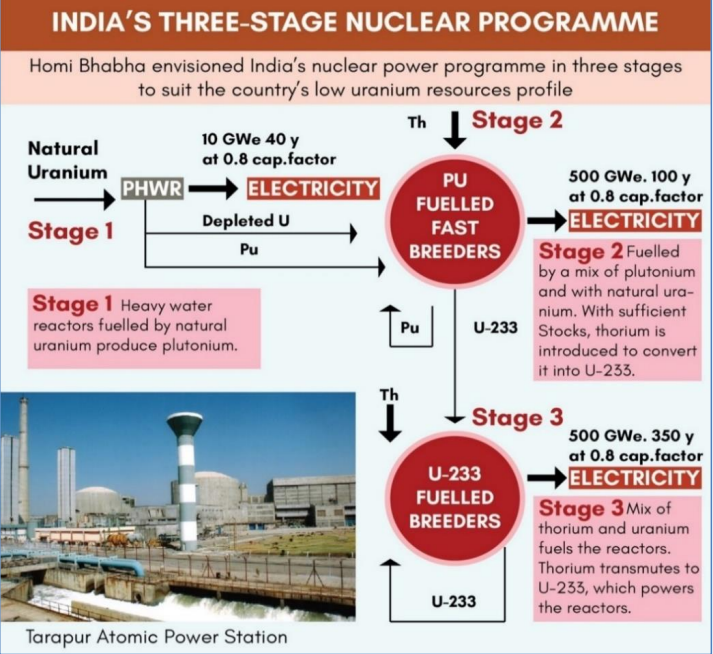
- About: India's Three-Stage Nuclear Power Programme, formulated by Homi Bhabha in the 1950s, is a long-term strategy designed to secure energy independence by leveraging the country’s limited uranium and vast thorium reserves.
- It aims to close the nuclear fuel cycle through three sequential stages: Pressurised Heavy Water Reactors (PHWRs), Fast Breeder Reactors (FBRs), and Thorium-Based Reactors.
- Three-Stages:
- Stage 1 (Pressurised Heavy Water Reactors - PHWRs): Uses natural uranium to generate power. The spent fuel produces plutonium as a by-product.
- Stage 2 (Fast Breeder Reactors - FBRs): Uses the plutonium from Stage 1 mixed with uranium.
- It breeds more plutonium and, crucially, will be used to irradiate Thorium-232 to breed Uranium-233.
- Stage 3 (Thorium-Based Reactors): Will run on the Uranium-233 bred in Stage 2 alongside India's abundant Thorium reserves to generate electricity on a massive scale.
- Current Landscape of Nuclear Power in India:
- Installed Capacity: India currently has a nuclear capacity of 8.78 GW. In the 2024–25 period, these plants generated 56,681 Million Units of electricity.
- Energy Mix Contribution: Nuclear power provides a stable baseload, consistently accounting for around 3.1% of India's total electricity generation in 2024–25.
- Planned Expansion: India's capacity is projected to nearly triple to 22.38 GW by 2031–32. This will be achieved through indigenous 700 MW reactors and 1,000 MW units developed via international cooperation.
- Global Collaboration: Reflecting strong international confidence, India holds Civil Nuclear Cooperation Inter-Governmental Agreements (IGAs) with 18 countries.
Why Does India Need Fast Breeder Reactors?
- Overcoming Uranium Shortages: India possesses only 1-2% of global uranium reserves.
- Current PHWRs extract only about 1% of the energy from uranium. FBRs maximize efficiency, extracting up to 60 times more energy from the same fuel.
- Unlocking Thorium Potential: India holds over 25% of the world's Thorium reserves (found in monazite sands in coastal states like Kerala, Tamil Nadu, and Odisha).
- However, thorium is not naturally fissile. FBRs act as the essential bridge to convert thorium into usable Uranium-233.
- Scaling Up Nuclear Capacity: India aims to triple its nuclear capacity from the current ~8.78 GW to 22.38 GW by 2031–32.
- FBRs are vital for scaling baseload generation to meet rapid industrial and economic demand.
- Achieving Net-Zero by 2070: Nuclear energy is a reliable, low-carbon power source. Shifting away from coal and fossil fuel dependency relies heavily on the success of these advanced reactors.
- Minimizing Nuclear Waste: Through reprocessing and recycling spent fuel, FBRs significantly reduce the volume and radiotoxicity of nuclear waste, easing long-term geological disposal concerns.
What are the Challenges in Accelerating Fast Breeder Reactors (FBRs) in India?
- Coolant Hazards: FBRs utilize liquid sodium as a coolant for high-efficiency heat transfer. However, liquid sodium reacts violently when exposed to air or water, demanding flawless engineering, strict leak detection, and an impeccable safety culture.
- Technological Delays: Building an FBR is highly complex. The Kalpakkam PFBR was originally scheduled for completion in 2010 but faced over a decade of delays due to stringent safety testing and indigenous supply chain bottlenecks.
- To meet the 2047 target of 100 GW, India needs to significantly reduce this doubling time.
- High Capital Costs: FBRs are significantly more expensive to build than PHWRs due to the complexity of handling liquid sodium and the need for redundant safety systems.
- Plutonium Economy: Since FBRs produce and use plutonium, they are subject to intense international scrutiny. Safeguarding large quantities of plutonium from diversion is a significant diplomatic and security challenge.
- Supply Chain Fragility: India’s nuclear programme depends heavily on a few global partners, especially Russia, for LWR technology and enriched fuel, creating strategic vulnerability.
- Geopolitical disruptions like conflicts, sanctions, or shipping delays can interrupt the supply of critical components not yet produced domestically. For example, delays in Kudankulam Units 3 and 4 (2025) due to the Russia–Ukraine conflict highlight the risks of external dependence.
India's Long-Term Nuclear Vision
- Ambitious 2047 Target: The Nuclear Energy Mission, outlined in the Union Budget 2025–26, aims to achieve a massive 100 GW of nuclear power capacity by 2047.
- Focus on SMRs: Demonstrating a serious commitment to new technologies, Rs 20,000 crore has been allocated for Small Modular Reactors (SMRs). The goal is to have at least five indigenously designed SMRs operational by 2033.
- Next-Gen Reactor Designs: The Bhabha Atomic Research Centre (BARC) is spearheading the development of advanced reactors, including the BSMR-200 (200 MWe), SMR-55 (55 MWe), and a High-Temperature Gas-Cooled Reactor (up to 5 MWth) built for hydrogen generation.
- The SHANTI Act, 2025: The newly enacted 'Sustainable Harnessing and Advancement of Nuclear Energy for Transforming India Act' modernizes the legal framework. Crucially, it opens avenues for limited private sector participation and investment under strict regulatory oversight.
What Measures can Scale Up India’s Nuclear Capacity?
- Green Taxonomy: Officially classifying nuclear energy as a "green" or "sustainable" investment under India’s green taxonomy will allow nuclear projects to access cheaper international climate finance and green bonds.
- Plug-and-Play Nuclear Park Model: The government should adopt a Nuclear Park model where sites are pre-cleared for environmental and seismic approvals before being offered to developers.
- Creating Special Nuclear Zones (SNZs) with ready infrastructure, like logistics and water access, will reduce pre-construction delays. This minimizes uncertainty and accelerates project execution.
- Nuclear-Hydrogen & Industrial Integration: Nuclear plants should evolve into multi-product hubs by co-generating electricity, hydrogen, and industrial steam.
- Using surplus baseload power for hydrogen production can improve plant utilization and create additional revenue streams. This aligns nuclear energy with clean fuel goals and enhances project viability.
- Nuclear Purchase Obligations (NPOs): Introducing Nuclear Purchase Obligations, similar to Renewable Purchase Obligations, can ensure assured demand for nuclear power.
- Mandating DISCOMs and industries to procure a share of nuclear energy at fixed tariffs will provide revenue stability. This policy support will make nuclear energy financially viable despite competition from cheaper renewables.
Conclusion
India’s successful PFBR milestone marks a crucial step toward energy security and its three-stage nuclear vision. However, technological, financial, and supply chain challenges must be addressed to scale nuclear capacity effectively. With the right policy support and innovation, nuclear energy can become a reliable pillar of India’s clean energy transition.
|
Drishti Mains Question: “Fast Breeder Reactors are central to India’s long-term energy security but face multiple constraints.” Critically examine. |
Frequently Asked Questions (FAQs).
1. What is a Fast Breeder Reactor (FBR)?
A reactor that uses fast neutrons to produce more fissile material (plutonium) than it consumes, improving fuel efficiency.
2. What is the significance of PFBR in India?
It marks entry into Stage II of the nuclear programme and enables plutonium production for thorium utilisation.
3. Why is thorium important for India?
India has ~25% of global thorium reserves, which can ensure long-term energy security once technologically harnessed.
4. What are the key challenges in FBR deployment?
High capital cost, sodium coolant risks, technological delays, and supply chain dependence.
5. What is the SHANTI Act, 2025?
A law that modernizes nuclear regulation and allows limited private participation under strict oversight.
UPSC Civil Services Examination, Previous Year Question (PYQ)
Prelims
Q. In India, why are some nuclear reactors kept under “IAEA safeguards” while others are not? (2020)
(a) Some use uranium and others use thorium
(b) Some use imported uranium and others use domestic supplies
(c) Some are operated by foreign enterprises and others are operated by domestic enterprises
(d) Some are State-owned and others are privately owned
Ans: (b)
Q. Consider the following statements: (2017)
- The Nuclear Security Summits are periodically held under the aegis of the United Nations.
- The International Panel on Fissile Materials is an organ of the International Atomic Energy Agency.
Which of the statements given above is/are correct?
(a) 1 only
(b) 2 only
(c) Both 1 and 2
(d) Neither 1 nor 2
Ans: (d)
Mains
Q. With growing energy needs should India keep on expanding its nuclear energy programme? Discuss the facts and fears associated with nuclear energy.(2018)
Q. Give an account of the growth and development of nuclear science and technology in India. What is the advantage of the fast breeder reactor programme in India?(2017)
Trends in India’s Female Credit Market
Why in News?
The joint report by NITI Aayog, TransUnion CIBIL, and MicroSave Consulting (MSC), titled "From Borrowers to Builders: Women and India's evolving credit market," highlights women are transitioning from basic financial access to becoming key drivers of the entrepreneurial economy.
What are the Key Highlights of the Report?
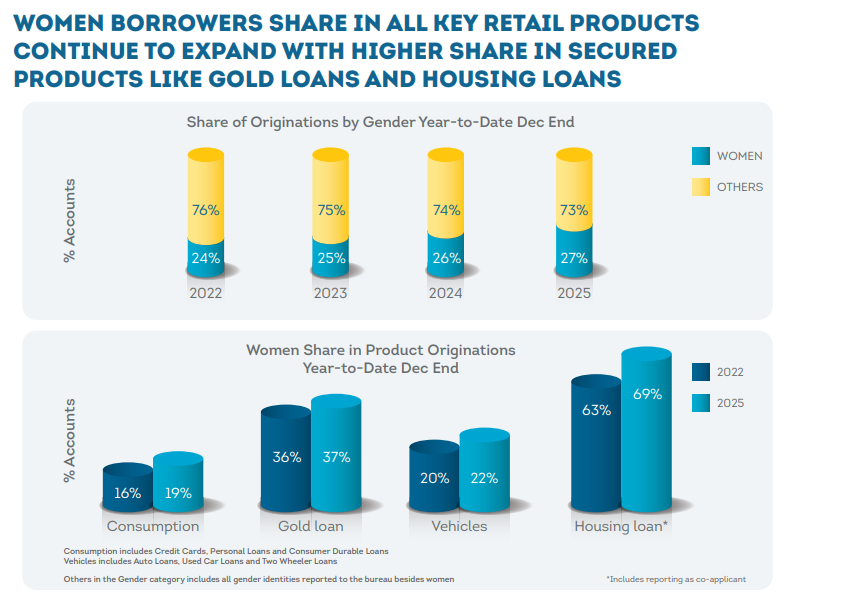
- Significant Portfolio Growth: Women borrowers now hold a credit portfolio of Rs 76 lakh crore, accounting for 26% of total system credit—a nearly 5-fold increase since 2017.
- Rapid Expansion in Business Lending: While retail loans still dominate, the business-purpose loan segment for women has surged 7.5x since 2017, now making up 25% of their total credit value.
- Improved Credit Penetration: The percentage of credit-active women has doubled, rising from 19% in 2017 to 36% in 2025, representing approximately 16 crore active women borrowers.
- The Impact of Digitization: Digital infrastructure (DPI) like UPI and Aadhaar e-KYC has dramatically reduced friction; for example, same-day approvals for consumption loans rose from 34% in 2022 to 45% in 2025.
- Shift Toward Sophistication: Women entrepreneurs are increasingly graduating from entry-level microfinance to more complex products like cash credit and overdraft facilities, signalling increased enterprise maturity.
- Regional Growth Trends: While South and West India anchor the highest volumes, North Indian states like Bihar and Uttar Pradesh are emerging as high-growth markets, recording business loan Compound Annual Growth Rate (CAGRs) of 59% and 42%, respectively.
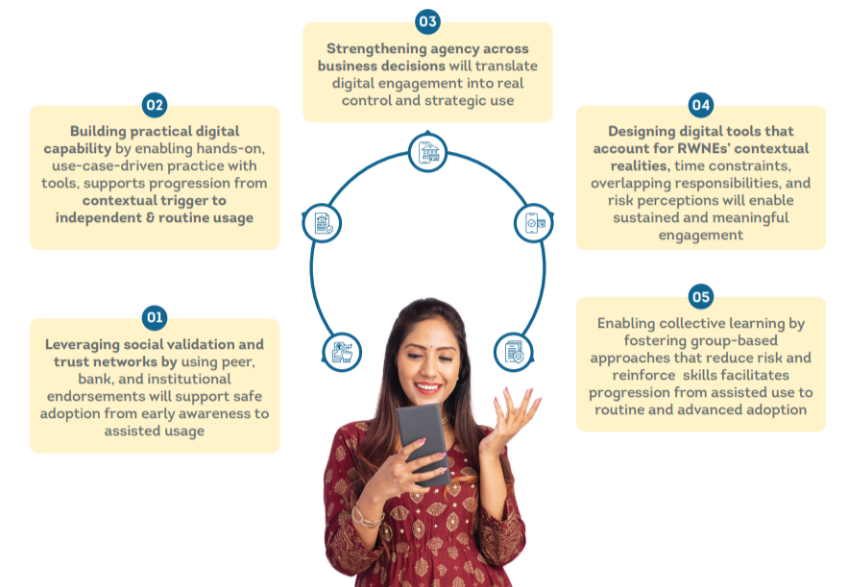
- Rural Women Nano-Entrepreneurs (RWNEs): The report emphasizes that digital adoption is widespread (60–70% use digital payments), but independent and strategic usage is often limited by "time poverty" and shared device constraints.
- Superior Credit Behavior: Data indicates women borrowers are more reliable, defaulting 30% less than (0.7x default rates) the general market average as of 2024.
What Key Challenges does the Report Identify Regarding Women's Access to Credit?
- Time Poverty and Shared Resources: Behavioral constraints such as time poverty (due to unpaid care and household responsibilities) and the use of shared mobile devices limit women’s ability to engage consistently and independently with digital financial tools.
- Limited Financial Autonomy: Many Rural Women Nano-Entrepreneurs (RWNEs) manage daily operations but lack full decision-making power over strategic areas like credit, procurement, and investment. This limits how effectively digital participation translates into actual financial control.
- High Turnaround Time (TAT) for Secured Loans: While consumption loans see fast approvals, housing loans remain concentrated in longer TAT buckets (31–90 days) due to logistical hurdles like property valuation and collateral checks that are not yet fully digitized.
- Microfinance Sector Challenges: The microfinance segment has recently faced a "contraction in credit supply" due to borrower over-indebtedness and rising Non-Performing Assets (NPAs), leading lenders to become more cautious.
- Decline in New-to-Credit (NTC) Borrowers: Since 2023, the share of NTC women in microfinance originations has declined as lenders focus more on existing borrowers to maintain portfolio quality, which potentially stalls the expansion of financial inclusion.
- Low Complexity Product Adoption: Despite growth in basic business loans, access to more complex commercial products like cash credit and overdraft facilities remains low, used by only ~4.3% of women-owned business entities.
What Recommendations does the Report Offer to Enhance Access to Credit for Women?
- Strengthening Financial Visibility: Lenders and policymakers should leverage the growing digital footprint of women entrepreneurs (e.g., UPI transactions, verifiable cash-flow histories) to enable flow-based underwriting. This reduces information asymmetry and allows for more accurate risk assessment for first-time borrowers.
- Targeted Credit Education and Literacy: Expanding initiatives like Project Seher (credit education programme) is recommended to improve credit awareness, help women understand their credit scores, and empower them to build healthy, long-term credit journeys.
- Product Innovation: The report suggests designing "gender-intelligent" credit products specifically tailored to the needs of women, such as flexible repayment schedules that align with business cash-flow cycles.
- Leveraging Collectives for Trust: Since women are more likely to adopt digital tools when endorsed by peers, using women’s collectives (SHGs) to introduce new financial technologies can reduce perceived risk and drive sustained adoption.
- Reducing TAT Through Digitization: Continued focus on digitizing the entire loan lifecycle—from onboarding and KYC to servicing—is critical to reducing friction and improving speed-to-credit for women, especially in rural areas.
- Data-Driven Policy Adaptation: Policymakers should use the granular data provided by credit bureaus to identify structural gaps and adapt market responses, particularly in under-penetrated regions like North India.
Conclusion
India’s credit landscape is witnessing a structural shift, with women emerging as high-quality, responsible borrowers. By addressing behavioral barriers like time poverty and leveraging Digital Public Infrastructure (DPI) for flow-based underwriting, India can transition from mere financial inclusion to robust, sustainable women-led development.
|
Drishti Mains Question: Despite increased credit penetration, Rural Women Nano-Entrepreneurs (RWNEs) face unique structural and behavioral constraints. Elaborate. |
Frequently Asked Questions (FAQs)
1. What is the total credit portfolio of women borrowers in India as of 2025?
Women borrowers hold a credit portfolio of ₹76 lakh crore, accounting for 26% of total system credit, a 4.8x increase since 2017.
2. How does the report define the "Time Poverty" barrier for women?
It refers to the disproportionate burden of unpaid care and domestic work, which limits the time women can dedicate to managing business finances or digital tools.
3. What is 'Project Seher' in the context of financial inclusion?
It is a targeted credit education program designed to improve financial literacy, helping women understand credit scores and long-term financial planning.
UPSC Civil Services Examination, Previous Year Questions (PYQs)
Prelims
Q. Microfinance is the provision of financial services to people of low-income groups. This includes both the consumers and the self-employed. The service/ services rendered under microfinance is/are (2011)
- Credit facilities
- Savings facilities
- Insurance facilities
- Fund Transfer facilities
Select the correct answer using the codes given below the lists:
(a) 1 only
(b) 1 and 4 only
(c) 2 and 3 only
(d) 1, 2, 3 and 4
Ans: (d)
Mains
Q1. “Empowering women is the key to control population growth”. Discuss. (2019)
Q2. Discuss the positive and negative effects of globalization on women in India? (2015)
Q3. Male membership needs to be encouraged in order to make women’s organizations free from gender bias. Comment. (2013)
Subansiri Lower Hydroelectric Project
Assam and Meghalaya have declined to procure additional power from the unallocated central pool of the Subansiri Lower Hydroelectric Project (SLHEP), citing concerns over inflated power purchase costs and the availability of cheaper alternative energy sources.
- Due to prolonged construction delays (suspended between 2011–2019), the estimated tariff has surged from under Rs 2 per unit to over Rs 7.70 per unit, significantly higher than the average national hydel tariff of Rs 3.15 per unit.
Subansiri Lower Hydroelectric Project
- About: SLHEP is a run-of-the-river initiative approved in 2003. Located on the Subansiri River at the border of Assam and Arunachal Pradesh, it is envisioned as India’s largest hydel project with a total capacity of 2000 MW.
- Currently, only three of the eight 250 MW units have commenced commercial operations.
- Infrastructure Scale & Significance: It features a 116-metre-high concrete gravity dam, the largest in North-East India. It is vital for water management, flood control, and energy security in Northeast India.
Subansiri River
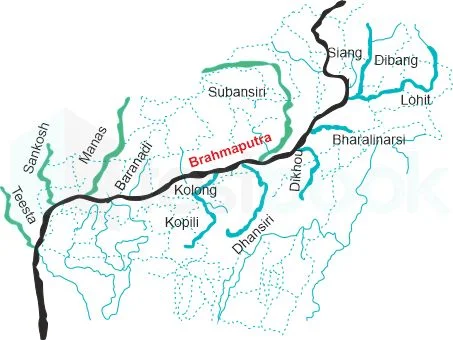
- About: The Subansiri River, often called the "Gold River" (derived from the local word Subarnashiri), is a major transboundary river flowing through Tibet and India. It is the largest tributary of the Brahmaputra.
- Historically, the river was famous for gold dust found in its bed, which gave the river its name.
- Course and Geography: It rises in the Tibet Autonomous Region of China and enters India through the Miri Hills in Arunachal Pradesh.
- It flows through Arunachal Pradesh and Assam before joining the Brahmaputra River at Jamurighat (Assam).
- Strategic and Ecological Significance: Due to its steep descent from the Himalayas, it has immense potential for hydroelectricity.
- The river basin is part of the Indo-Burma biodiversity hotspot. It supports a variety of aquatic life, including the endangered Ganges River Dolphin and numerous hill-stream fish species.
| Read More: Subansiri Dam Project |
FIU-IND and I4C MoU on Financial Crimes
The Financial Intelligence Unit-India (FIU-IND) and the Indian Cyber Crime Coordination Centre (I4C) have signed a Memorandum of Understanding (MoU) to establish a coordinated framework for intelligence sharing, aimed at securing India’s digital payment ecosystem and combating cyber-enabled financial crimes.
- Objective: The partnership adopts a "Whole of Government" approach to enhance fraud detection protocols, prevent financial crimes, and facilitate asset recovery.
- Operational Synergy: The MoU enables the development of red flag indicators and guidelines for financial institutions to proactively identify suspect financial transactions.
- Strategic Impact: The collaboration aims to mitigate the misuse of telecom and banking resources, ensuring robust guardrails for India's rapidly transforming digital economy.
FIU-IND
- FIU-IND is the central national agency responsible for receiving, processing, analysing, and disseminating information relating to suspect financial transactions and coordinating efforts against money laundering and financing of terrorism.
I4C
- It is an attached office of the Ministry of Home Affairs (MHA) that provides a comprehensive ecosystem for Law Enforcement Agencies (LEAs) to tackle cybercrime.
- I4C has developed various platforms such as National Cybercrime Reporting Portal (NCRP), Cyber-Police, Suspect Registry, etc., which are secure platforms for real-time intelligence sharing and coordination among various stakeholders, including LEAs, Banks and Financial Institutions.
- These platforms help combat cybercrimes, including online financial crimes, by enabling proactive action against the misuse of telecom, banking and other related resources.
| Read More: Rising Cyber Frauds in India |
Quantum Cloning
Researchers have experimentally demonstrated a method to create perfect copies of quantum states by exploiting a loophole in the fundamental no-cloning theorem, opening transformative possibilities for quantum computing and cloud storage infrastructure.
- No-Cloning Theorem: It is a foundational rule in quantum physics that prohibits the perfect duplication of unknown quantum states — it has been central to quantum cryptography and quantum computing since their inception.
- Unlike classical computing (where copying files is trivial), quantum computers cannot duplicate data freely, making the no-cloning theorem a major barrier to building robust quantum systems.
- Quantum information is destroyed upon measurement, making conventional copying impossible. This theorem has been the cornerstone of quantum cryptography and quantum computing since their inception.
- Loophole: Researchers established that perfect quantum copies can be created, provided each clone is individually encrypted using quantum noise, rendering it inaccessible without a corresponding decryption key.
- Without the key, the copy appears as meaningless random data to anyone, including an attacker.
- This encryption is performed using special 'noise qubits' that store the locking pattern and serve as the decryption key.
- The original quantum information is spread across multiple qubits, each looking like random noise individually, ensuring the data remains naturally secure.
- One-Time Use Rule: Once the decryption key is used to recover one perfect copy, the key is permanently destroyed.
- All remaining copies become irreversibly unreadable. This means only one perfect recovery is ever possible, which is consistent with the spirit of the no-cloning theorem, just interpreted differently.
- Strategic Applications: This breakthrough has profound implications for the development of redundant quantum cloud storage and reliable quantum memories, allowing clients to recover perfect data as long as at least one server survives.
| Read more: Quantum Technology |
Diabetes and Obesity
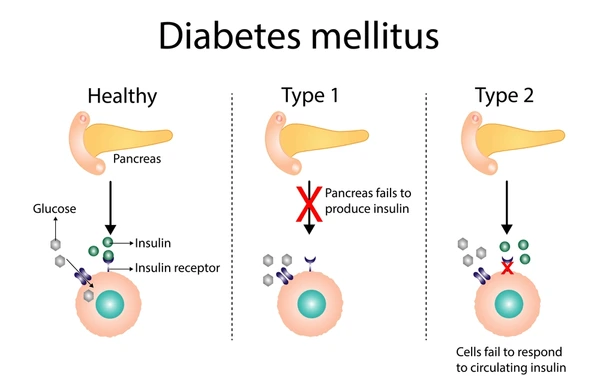
Diabetes and obesity have emerged as critical non-communicable diseases (NCDs), driven by a breakdown in the hormonal balance between insulin (which lowers blood sugar) and glucagon (which raises it), leading to chronic systemic complications.
- Disease Mechanism: People with excess body weight, a family history of diabetes and excess sugar in the diet are at high risk of developing type 2 diabetes.
- Type 2 Diabetes involves insulin resistance or inadequate production, while Type 1 Diabetes is characterised by a complete deficiency in insulin production, requiring lifelong external administration.
- GLP-1 Breakthrough: GLP-1 drugs (Glucagon-Like Peptide-1 receptor agonists) are medications that mimic a natural hormone to regulate blood sugar levels and appetite, and are used in the treatment of type 2 diabetes and obesity.
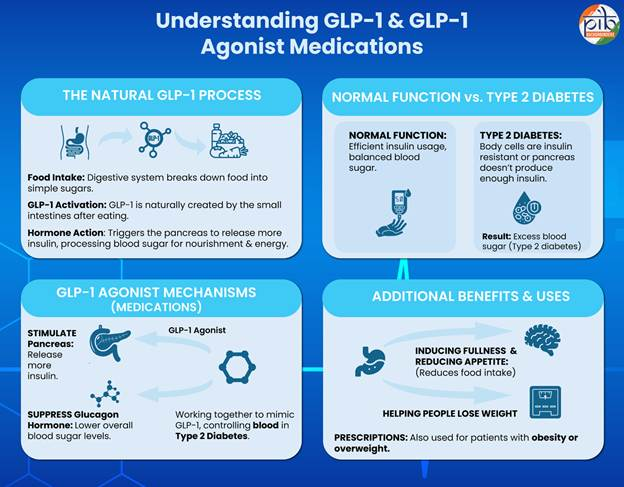
- Key Medications: Significant drugs in this category include Semaglutide (injectable and oral), Liraglutide, Tirzepatide, and Dulaglutide, often administered via pre-filled pens.
- Regulatory Framework in India: The Drug Controller General of India (DCGI) has restricted prescriptions to endocrinologists, cardiologists, and internal medicine specialists to prevent unsupervised misuse.
- In March 2026, the DCGI issued advisories against misleading advertisements and conducted nationwide audits of online pharmacies and wellness clinics to curb unauthorized sales.
- Preventive Strategy: Management emphasizes 150 minutes of moderate exercise per week, dietary control (reducing saturated fats/sugars), and avoiding tobacco.
| Read More: Diabetes in India |