
Sponges Mitigate Heavy Metal Pollution | 25 Dec 2025
A recent study by Indian scientists has identified freshwater sponges in the Sundarban delta as natural tools for detecting and mitigating heavy metal pollution, highlighting their dual potential as bioindicators and agents of bioremediation.
Summary
- Freshwater sponges in the Sundarbans show exceptional ability to bioaccumulate heavy metals, making them reliable bioindicators.
- Their dual role in pollution detection and bioremediation offers a sustainable, ecosystem-based approach to managing toxic metal contamination.
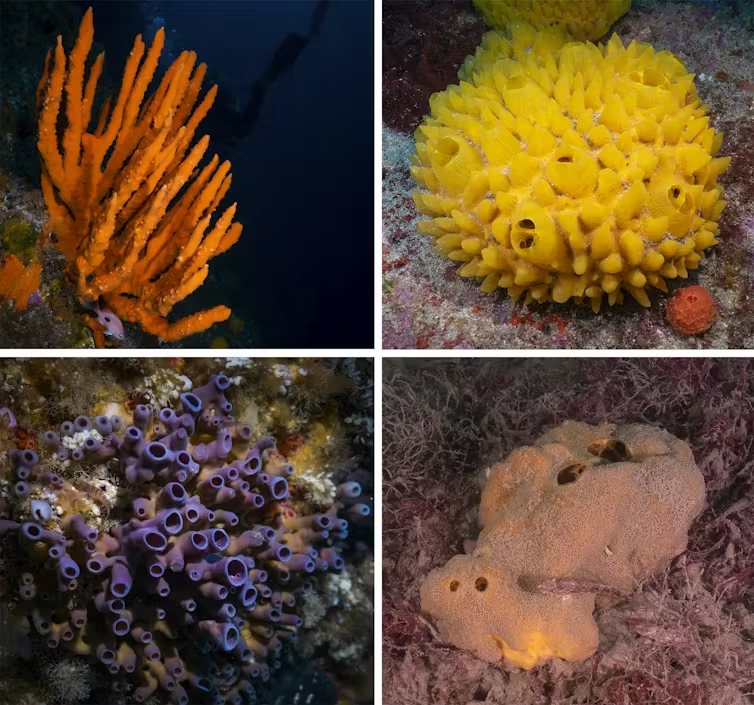
What are Sponges?
- About: Sponges are simple, aquatic animals belonging to the phylum Porifera. They are among the oldest and most primitive multicellular organisms on Earth, with a fossil record dating back over 600 million years.
- Key Characteristics of Sponges:
- No True Tissues or Organs: They lack complex body systems like nerves, muscles, or digestive tracts.
- Filter-Feeding Mechanism: They draw in water through numerous pores (ostia) on their body surface. Specialized cells called choanocytes (collar cells) trap and ingest bacteria, plankton, and organic particles from the water, which is then expelled through larger openings called oscula.
- Skeleton: They possess a simple skeleton made of mineral spicules (e.g., silica, calcium carbonate) and/or a fibrous protein called spongin.
- Habitat: Mostly marine, but some species live in freshwater (like those studied in the Sundarbans).
- Symbiotic Relationships: They host diverse microbial communities (bacteria, archaea) that play crucial roles in nutrition, chemical defense, and, as recent research shows, bioremediation.
- Role in Mitigating Heavy Metal Pollution: Sponges show strong bioaccumulation of toxic metals such as arsenic, lead, and cadmium, concentrating them far more than the surrounding water. They remove these heavy metals through adsorption where metal ions attach to the sponge's surface or are trapped in its porous structure.
What are Heavy Metals?
- About: Heavy metals are a group of elements that have high atomic weights and densities, typically greater than 5 g/cm³. Common examples of heavy metals are Lead (Pb), Arsenic (As), Cadmium (Cd) etc.
- Characteristics:
- Toxicity: They are harmful even in small amounts and can accumulate in living organisms, leading to poisoning or other health issues.
- Persistence: Many heavy metals do not break down easily and can persist in the environment for a long time.
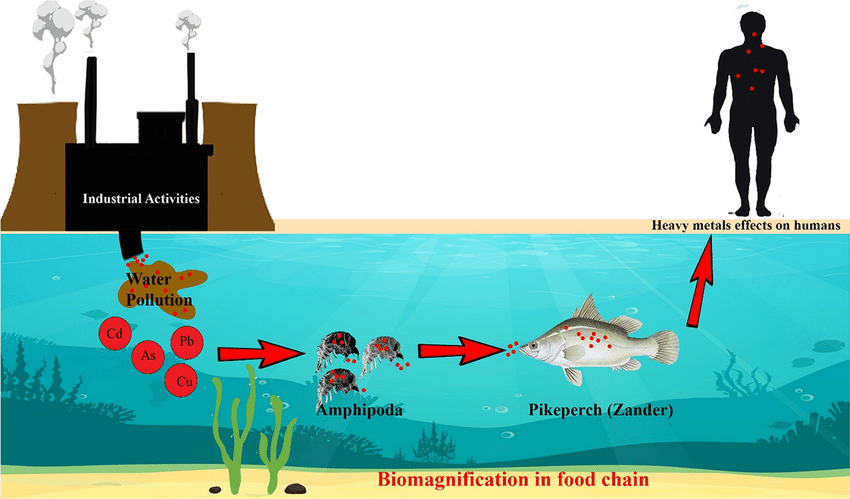
- Bioaccumulation: Heavy metals can accumulate in the food chain, as plants and animals absorb them, and higher organisms can accumulate the metals in their tissues.
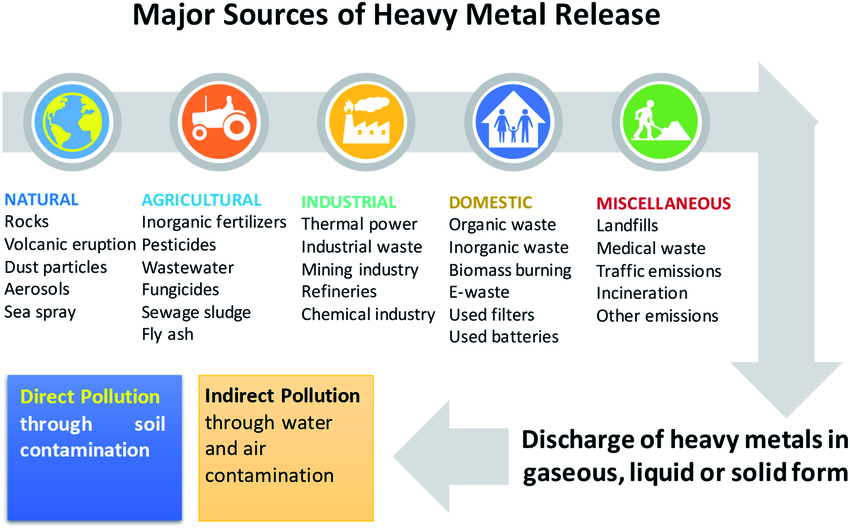
- Major Sources:
- Regional Heavy Metal Contamination in India:
|
State/Region |
Key Contaminants |
Affected Areas |
Reported Health Effects |
|
West Bengal & Bihar |
Arsenic, Cadmium |
Nadia District, Kolkata |
Arsenicosis (skin lesions), chronic lung disease, peripheral neuropathy, respiratory deficits. |
|
Punjab |
Selenium, Uranium, Barium |
Hoshiarpur, Nawansahar, Malwa, Ludhiana |
Hair loss, nail changes, "garlicky" breath, organ dysfunction (liver/kidney), DNA damage, increased breast cancer risk. |
|
Uttar Pradesh |
Hexavalent Chromium (Cr VI), Arsenic, Lead |
Kanpur, Balai |
Gastrointestinal distress, skin abnormalities, eye complaints. |
|
Madhya Pradesh |
Mercury, Industrial Pollutants |
Singrauli, Ratlam, Malanjkhand |
Tremors, abdominal pain, respiratory issues, gum problems. |
|
Odisha |
Iron, Industrial Heavy Metals |
Keonjhar, Talcher, Ganjam |
Acute respiratory infections, water-borne diseases. |
|
Delhi & NCR |
Lead, Aluminium |
Yamuna River Basin |
High blood lead levels (mothers/children), weakness, anxiety, high blood pressure, neurotoxicity. |
|
Karnataka |
Silver, Cadmium |
Bengaluru |
Renal (kidney) dysfunction, heavy metal accumulation in hair. |
Bioaccumulation
- Bioaccumulation is the gradual buildup of persistent toxic substances, such as heavy metals, within a single organism when intake from the environment, water, air, or food exceeds its ability to metabolize or excrete them.
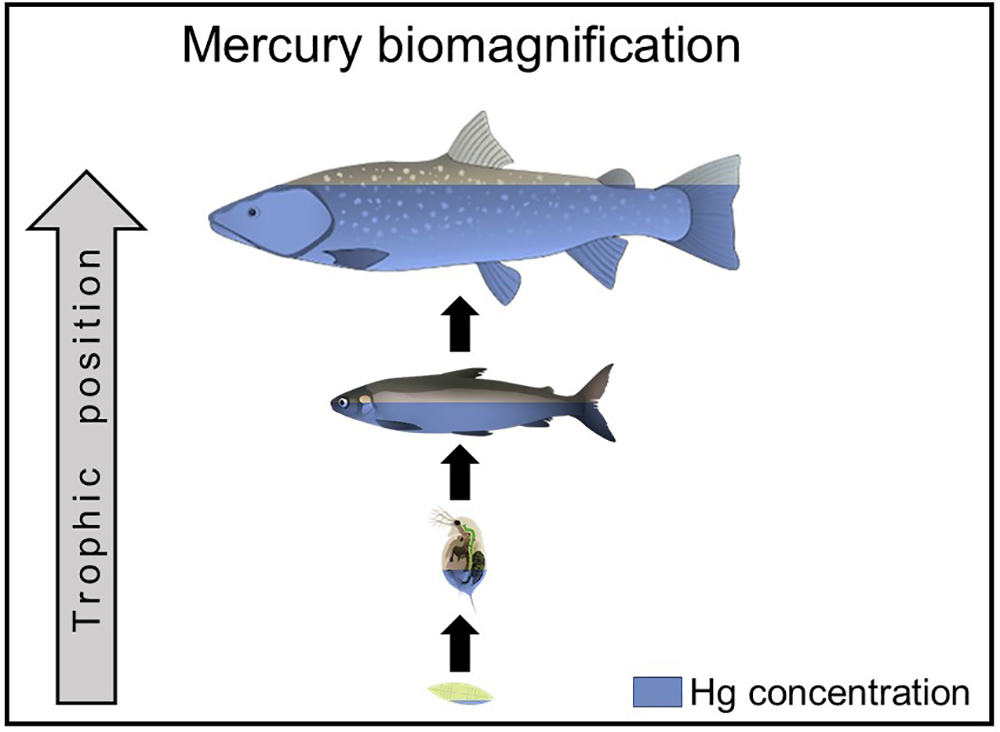
- Unlike biomagnification—which occurs across a food chain—bioaccumulation occurs at the individual level and drives biomagnification.
- A prime example is methylmercury in aquatic systems. Inorganic mercury from industrial pollution converts to methylmercury in aquatic environments, which bioaccumulates in fish and shellfish.
- Predatory fish (e.g., tuna, swordfish) exhibit high levels, posing risks to human consumers through neurological damage.
Frequently Asked Questions (FAQs)
1. What makes freshwater sponges effective bioindicators of heavy metal pollution?
Their filter-feeding habit and high bioaccumulation capacity allow detection of metals like arsenic, lead, and cadmium at low environmental concentrations.
2. How is bioaccumulation different from biomagnification?
Bioaccumulation occurs within a single organism, while biomagnification increases toxin concentration across trophic levels.
3. Name two classic diseases caused by heavy metal poisoning and their causative agents.
Minamata Disease caused by Mercury, and Itai-Itai Disease caused by Cadmium.
UPSC Civil Services Examination Previous Year Question (PYQ)
Q. In the context of solving pollution problems, what is/are the advantage/advantages of bioremediation techniques? (2017)
- It is a technique for cleaning up pollution by enhancing the same biodegradation process that occurs in nature.
- Any contaminant with heavy metals such as cadmium and lead can be readily and completely treated by bioremediation using microorganisms.
- Genetic engineering can be used to create microorganisms specifically designed for bioremediation.
Select the correct answer using the code given below:
(a) 1 only
(b) 2 and 3 only
(c) 1 and 3 only
(d) 1, 2 and 3
Ans: (c)