
Indian Miniature Painting | 14 Jan 2026
Why in News?
The Golden Temple has engaged artists from the Kangra region, the cradle of Pahari miniature painting, to restore a nearly 200-year-old painting of Guru Gobind Singh, using traditional techniques and natural pigments.
- Guru Gobind Singh (1666–1708), born as Gobind Rai in Patna Sahib (Bihar), was the 10th Guru of Sikhism and the only son of the 9th Guru, Guru Tegh Bahadur.
What is Miniature Painting?
- About: These are small, detailed paintings typically no larger than 25 square inches, with subjects painted at 1/6th of their actual size. The traditional tempera technique is used, involving pigments mixed with water and an emulsion (typically egg yolk).
- Common features include bulging eyes, pointed noses, and slim waists. Artists used brushes with a single bristle for fine details.
- School/Styles of Miniature Painting:
- Pala School of Art (750–1150 AD): Among the earliest examples from eastern India, patronized by Buddhist and Vajrayana School rulers. Characterized by sinuous lines and subdued tones on palm leaf or vellum paper.
- Apabhramsa School of Art: The Western Indian counterpart, from Gujarat and Mewar, Rajasthan. Initially focused on Jain themes, later included Vaishnava subjects and Gita Govinda.
- Known for fish-shaped bulging eyes, pointed nose, and double chin.
- Delhi Sultanate Period: Developed an Indo-Persian style, drawing from Iranian and Jain traditions. Centres included Mandu and Jaunpur. Preceded the major Mughal, Rajput and Deccan styles.
- Mughal Era Miniature Painting: Introduced a Persian-inspired style, shifting focus to secular themes like court scenes and hunting. A key contribution was the technique of foreshortening (look closer and smaller than they really are).
- Akbar: Founded Tasvir Khana. Blended Persian and Indian styles. Illustrated manuscripts like Tutinama and Hamzanama.
- Jahangir: Peak of naturalism, emphasis on flora and fauna portraits. Artist Ustad Mansoor was famous.
- Shah Jahan: Introduced European influence, pencil sketching, and extensive use of gold and silver.
- Rajput Schools: Includes Mewar, Kishangarh, Bundi, Amber-Jaipur, and Marwar. Themes from Ramayana, Mahabharata, Bhagavata Purana, and Ragamala (Garland of Ragas).
- Mewar: Dominated by painter Sahibdin. Known for Ragamala paintings.
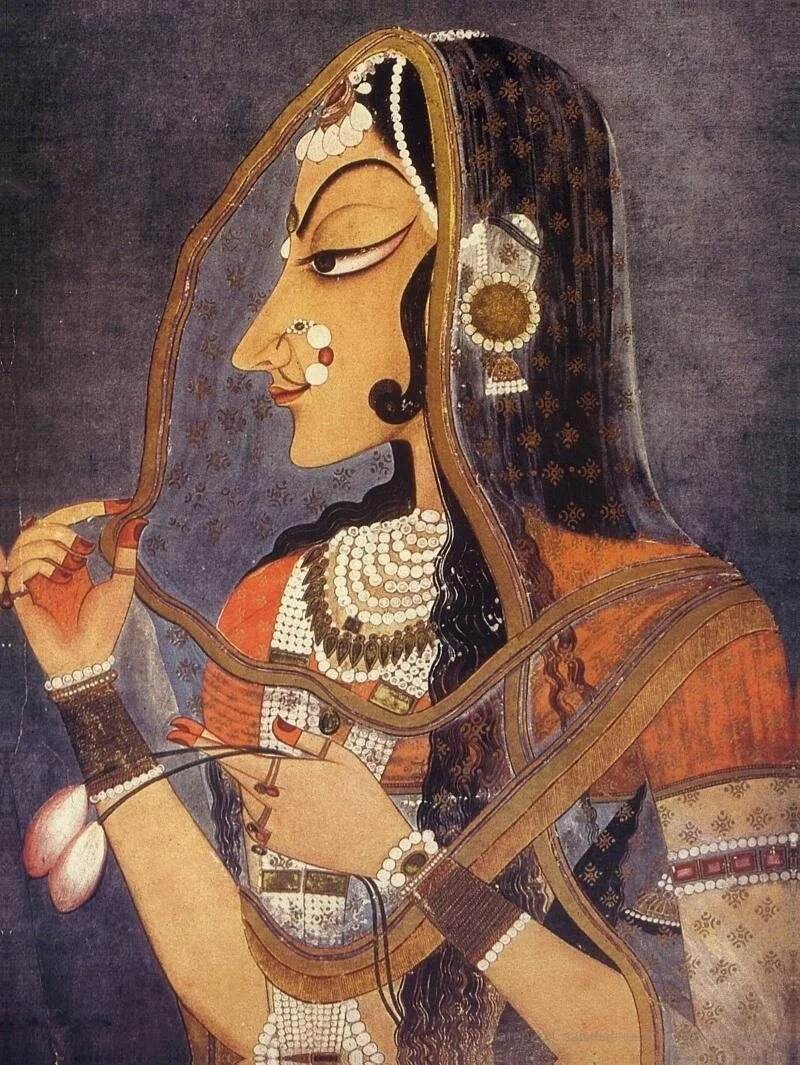
- Kishangarh: Associated with Raja Savant Singh and Bani Thani, painted by Nihal Chand.
- Pahari School: From the Himalayan states (Jammu, Basholi, Kangra).
- Basholi School: Characterized by bold lines and glowing primary colors like red and yellow, it depicts themes from the Rasamanjari and Ramayana.
- Guler–Kangra School: Known for its delicate naturalism and romantic Krishna themes, it illustrates subjects like the Gita Govinda, Bhagavata Purana, Nal-Damayanti, and Baramasa.
- Kullu-Mandi School: Folk style with bold drawing and dark colours.
- Colonial and Modern Developments:
- Company Paintings: Blend of Rajput, Mughal, Indian styles with European realism; commissioned by British officials.
- Bengal School of Art (early 20th century): Reactionary movement against colonial art, used simple colours.
- Materials & Themes: Early works on palm leaves, later on paper. Used natural pigments, including lapis lazuli. Served as illustrations for texts (epics, fables, religious texts) and depicted court life, portraiture, and romantic legends.
Frequently Asked Questions (FAQs)
1. What are miniature paintings in Indian art?
Miniature paintings are small-sized, highly detailed artworks using the tempera technique, often illustrating religious texts, court life, and romantic themes.
2. Why is the Kangra school significant?
The Guler–Kangra school represents refined naturalism and romantic Krishna-centric themes, marking the peak of Pahari painting.
3. Which school of Rajput painting is famous for the 'Bani Thani' portrait?
The Kishangarh School is famous for the 'Bani Thani', characterized by idealized figures with elongated, lotus-like eyes, a sharp chin, and a distinct side profile, often depicting Radha-Krishna themes.
UPSC Civil Services Examination Previous Year Question (PYQ)
Q. The well-known painting “Bani Thani” belongs to the (2018)
(a) Bundi school
(b) Jaipur school
(c) Kangra school
(d) Kishangarh school
Ans: (d)
Q. The painting of Bodhisattva Padmapani is one of the most famous and oft-illustrated paintings at (2017)
(a) Ajanta
(b) Badami
(c) Bagh
(d) Ellora
Ans: (a)
Q. Kalamkari painting refers to (2015)
(a) a hand-painted cotton textile in South India
(b) a handmade drawing on bamboo handicrafts in North-East India
(c) a block-painted woollen cloth in Western Himalayan region of India
(d) a hand-painted decorative silk cloth in NorthWestern India
Ans: (a)
Q. Consider the following historical places: (2013)
- Ajanta Caves
- Lepakshi Temple
- Sanchi Stupa
Which of the above places is/are also known for mural paintings?
(a) 1 only
(b) 1 and 2 only
(c) 1, 2 and 3
(d) None
Ans: (b)
Q. There are only two known examples of cave paintings of the Gupta period in ancient India. One of these is paintings of Ajanta caves. Where is the other surviving example of Gupta paintings? (2010)
(a) Bagh caves
(b) Ellora caves
(c) Lomas Rishi cave
(d) Nasik caves
Ans: (b)