
Shrinking Clusters of India’s Exports
For Prelims: Reserve Bank of India, Credit–Deposit (CD) ratios, Unified Logistics Interface Platform, Export Promotion Capital Goods
For Mains: Export-led growth and structural transformation in India, Regional imbalance and core–periphery pattern in Indian economy, Employment elasticity of exports and capital deepening.
Why in News?
The Reserve Bank of India Handbook of Statistics on Indian States 2024–25 shows that India’s export growth is increasingly concentrated in a few States, raising concerns that exports may now reflect existing regional advantages rather than driving broad-based development.
Summary
- Nearly 70% of India’s exports come from five States, indicating a core–periphery pattern where coastal regions integrate into global trade while large hinterland areas are left out.
- Capital-intensive export growth has weakened the export–employment link, with manufacturing jobs stuck at 11.6–12% despite rising export values.
What does the RBI Reveal About India’s Export Structure?
- Concentrated in Just a Few States: Nearly 70% of India’s exports now come from just five States: Maharashtra, Gujarat, Tamil Nadu, Karnataka, and Uttar Pradesh.
- Five years ago, this share was about 65%, showing a clear rise in concentration.
- Core-Periphery Pattern: The export engine is being powered by a shrinking cluster of states, leading to an increasingly lopsided export geography.
- Coastal belts in the south and west are integrating tightly into global supply chains, while the demographic heartlands of the north and east are effectively "decoupling" from India's trade engine.
- Rising Market Concentration: The Herfindahl-Hirschman Index (HHI) for India's exports is increasing, signaling a rise in market concentration and a top-heavy export structure.
- The lagging regions are not catching up, further deepening this divide.
India’s Export Landscape
- India’s exports hit a record USD 825.25 billion in 2024–25 and rose to USD 418.91 billion in April–September 2025, the highest-ever first-half performance, driven mainly by strong services exports and resilient non-petroleum merchandise exports.
- Key sectors such as electronics, engineering goods, pharmaceuticals, marine products and rice, along with robust demand from the USA, UAE, China, Spain and Hong Kong, sustained this momentum, as India targets US$ 2 trillion in total exports by 2030.
- Overall, India's global export share grew from 1.2% in 2005 to 2.4% in 2023.
What are the Challenges Arising from Concentration of Exports in a Few States?
- Breakdown of the Export–employment Link: Export expansion no longer translates into mass industrial employment.
- Annual Survey of Industries (ASI) 2022–23 data shows fixed capital investment growing by about 10.6%, while employment increased by only 7.4%, indicating capital deepening.
- With fixed capital per worker rising to Rs 23.6 lakh, factories are becoming more capital-intensive and less labour-absorbing, meaning exports increasingly generate value without creating proportional employment, weakening their traditional role in driving structural transformation.
- Manufacturing’s share in total employment has stagnated at 11.6 - 12% despite record exports, indicating that export growth is concentrated in capital-intensive hubs rather than creating jobs in labour-surplus hinterland States.
- Spatial Lock-in of High-growth Export Sectors: Under the PLI scheme, electronics exports grew by over 47% year-on-year, yet remain concentrated in specific districts such as Kancheepuram and Noida.
- The complexity and logistics precision required by these supply chains prevent their diffusion to less-developed regions, reinforcing export concentration.
- Financial Drain from Poorer States: RBI data on Credit–Deposit (CD) ratios reveals a stark divide. Export powerhouses like Tamil Nadu and Andhra Pradesh record CD ratios above 90%, indicating strong recycling of local savings into local industry.
- In contrast, Bihar and eastern Uttar Pradesh have CD ratios below 50%, showing that savings mobilised in poorer States are lent out to industrialised coastal regions, creating a perverse capital outflow.
- The failure of the hinterland to converge with growth centres reflects weak state capacity and shallow financial depth, reinforcing regional inequality.
- Weak State and Human Capital Deficits: Low-export States suffer from persistent deficits in skills, health, infrastructure, and institutional capacity.
- These constraints limit their ability to participate in high-complexity global value chains, making it difficult for them to upgrade their export baskets or attract global capital, and thereby perpetuating regional divergence.
- Vulnerability to Global Trade Slowdown: The global window for low-skill, labour-intensive industrialisation used by countries like Bangladesh and Vietnam to integrate into world trade is rapidly closing.
- Global capital is no longer chasing just low-cost labor (the hinterland's advantage). It now seeks "high economic complexity", with World Trade Organization (WTO) data indicating merchandise trade volume growth slowing to 0.5–3% and UN Trade and Development (UNCTAD) 2023 showing that the top 10 exporters control around 55% of world trade.
- In such a context, India’s reliance on a narrow set of export States increases vulnerability to region-specific shocks.
What Measures can Drive a Sustainable Transformation in India’s Export Sector?
- Strengthen Lagging State Capacity: Use PM Gati Shakti to close infrastructure gaps in low-export States through integrated planning of roads, railways, ports, and logistics.
- Expand Industrial Corridor Projects and ensure their spread beyond coastal States into the hinterland.
- Improve port-led development through Sagarmala and inland connectivity via Bharatmala. Reduce transaction costs using the National Logistics Policy and Unified Logistics Interface Platform (ULIP).
- Rebalance Export Policy for Employment: Under Export Promotion Mission (EPM), reorient Production Linked Incentive (PLI schemes to include explicit weightage for employment intensity, not just output or investment.
- Encourage labour-absorbing sectors such as textiles, food processing, footwear, and MSME manufacturing alongside high-tech sectors.
- Human Capital Aligned with Export Needs: Align Skill India Mission, PM Kaushal Vikas Yojana (PMKVY), and Samarth (for textiles) with export-oriented value chains.
- Improve Access to Finance in Low-export States: Address low Credit–Deposit ratios through MUDRA, and Stand-Up India to improve MSME credit flow.
- Use Development Finance Institutions (DFIs) and credit guarantees to crowd in private investment in lagging regions.
- Leverage Districts as Export Hubs (DEH) to identify district-specific export potential and reduce over-concentration. Link One District One Product (ODOP) with export facilitation, branding, and global market access.
- Align trade policy with regional convergence: Use Export Promotion Capital Goods (EPCG) and Remission of Duties and Taxes on Exported Products (RoDTEP) to incentivise firms locating in backward regions.
- Encourage states to develop region-specific export strategies aligned with local capabilities.
- Integrate export assessment with outcomes under Aspirational Districts Programme to track inclusive development.
Conclusion
India’s export growth now mirrors existing regional strengths rather than driving inclusive development. Rising concentration and capital-intensive exports have weakened job creation and regional convergence. Sustainable transformation requires employment-focused, regionally balanced export policies.
|
Drishti Mains Question: “India’s export growth increasingly reflects existing regional strengths rather than driving inclusive development.” Critically examine. |
Frequently Asked Questions (FAQs)
Q. What is the key export-related finding of the RBI Handbook of Statistics on Indian States 2024–25?
It shows that nearly 70% of India’s exports originate from five States, up from about 65% five years ago, indicating rising export concentration.
Q. Which States dominate India’s export basket?
Maharashtra, Gujarat, Tamil Nadu, Karnataka, and Uttar Pradesh together account for the majority of India’s exports.
Q. What does the rising Herfindahl–Hirschman Index (HHI) indicate in India’s export structure?
An increasing HHI reflects growing market concentration and a more top-heavy export geography, with lagging regions failing to catch up.
Q. Why is export growth not translating into employment generation?
According to ASI 2022–23, fixed capital grew by ~10.6% while employment rose by only ~7.4%, showing capital deepening and declining labour absorption.
UPSC Civil Services Examination, Previous Year Questions (PYQs)
Q1. Increase in absolute and per capita real GNP do not connote a higher level of economic development, if (2018)
(a) Industrial output fails to keep pace with agricultural output.
(b) Agricultural output fails to keep pace with industrial output.
(c) Poverty and unemployment increase.
(d) Imports grow faster than exports.
Ans: (c)
Q2. The SEZ Act, 2005 which came into effect in February 2006 has certain objectives. In this context, consider the following: (2010)
- Development of infrastructure facilities.
- Promotion of investment from foreign sources.
- Promotion of exports of services only.
Which of the above are the objectives of this Act?
(a) 1 and 2 only
(b) 3 only
(c) 2 and 3 only
(d) 1, 2 and 3
Ans: (a)
Q3. A “closed economy” is an economy in which (2011)
(a) the money supply is fully controlled
(b) deficit financing takes place
(c) only exports take place
(d) neither exports or imports take place
Ans: (d)
Dark Patterns
For Prelims: Dark Patterns, Consumer Protection Act, 2019, Central Consumer Protection Authority, e- Jagriti Portal
For Mains: Regulatory Framework for Dark Patterns in India, Ethical and Economical Implications of Dark Patterns
Why in News?
The Ministry of Consumer Affairs is proactively addressing complaints regarding innovative dark patterns on e-commerce and digital platforms.
Summary
- Dark patterns are deceptive design tricks in apps and websites that push people into choices they didn’t intend, like hidden fees or hard-to-cancel subscriptions.
- They undermine consent and trust, harm consumers financially, and are being regulated in India through the Consumer Protection Act and CCPA guidelines
What are Dark Patterns?
- Deceptive user‑interface designs that manipulate users into making decisions they might not otherwise make (e.g., hidden charges revealed late, tricky opt‑outs).
- Reflects emerging challenges in consumer protection in the digital economy and the need for regulatory safeguards against unfair practices.
- Common types of Dark Patterns
- False Urgency: Creating artificial time pressure like “Only 2 left!” or “Offer ends in 5 minutes” to force quick decisions.
- Basket Sneaking:Adding extra items or charges to the cart without clear user consent (e.g., insurance, convenience fee).
- Confirm Shaming: Guilt-tripping users into choices using language like “No, I don’t care about saving money”.
- Forced Action: Making users perform unwanted actions (sign-ups, app downloads) to continue using a service.
- Subscription Trap: Easy to subscribe but difficult to cancel; cancellation options are hidden or overly complex.
- Drip Pricing: Revealing additional costs only at the final stage of checkout.
- Bait and Switch: Advertising one option but delivering another after the user clicks.
- Nagging: Repeated pop-ups or prompts pressuring users to make a specific choice.
- Disguised Advertisements: Ads designed to look like genuine content or system notifications.
What is the Regulatory Framework for Dark Patterns in India
- Consumer Protection Act, 2019
- The primary law governing consumer rights in India, which replaced the 1986 Act to address modern consumer issues including e‑commerce disputes.
- Provides a legal basis for tackling unfair trade practices such as dark patterns and mandates time‑bound disposal of complaints.
- Central Consumer Protection Authority (CCPA)
- A statutory body under the Consumer Protection Act, 2019 empowered to investigate, enforce, and penalize unfair trade practices.
- Key regulatory authority in curbing deceptive practices like dark patterns and enforcing consumer rights.
- In November 2023, the CCPA issued the “Guidelines for Prevention and Regulation of Dark Patterns, 2023”.
- e‑Jagriti Platform
- A digital grievance redressal system launched in January 2025 allowing consumers to file complaints online, participate in virtual hearings, and track cases in real time.
- Represents the government’s push for digital justice and accessibility in consumer dispute resolution.
What are the Ethical and Economical Implications of Dark Patterns?
- Ethical Implications:
- Violation of consumer autonomy: Dark patterns manipulate user choices, undermining informed and free consent.
- Deception and lack of transparency: They rely on misleading design rather than honest information, breaching ethical business conduct.
- Erosion of trust: Repeated exposure reduces public trust in digital platforms and institutions.
- Exploitation of vulnerable users: Elderly, children, and first-time internet users are disproportionately affected.
- Economic Implications:
- Market distortion: Manipulative practices weaken fair competition by rewarding deceptive firms over ethical ones.
- Hidden financial costs to consumers: Users may incur unwanted subscriptions, fees, or purchases, reducing consumer welfare.
- Long-term business risk: Regulatory penalties and reputational damage increase compliance and legal costs for firms.
- Reduced efficiency of digital markets: When trust declines, user participation and digital adoption may slow down.
Way Forward
- Shift from 'Caveat Emptor' to 'Caveat Venditor' : The traditional "Buyer Beware" philosophy is insufficient in the digital age due to information asymmetry. India must move toward "Seller Beware," where the burden of proof lies with the platform to demonstrate that their UI design is transparent and non-manipulative.
- Implementation of 'Ethics by Design': Regulatory bodies like the CCPA should collaborate with the Ministry of Electronics and Information Technology (MeitY) to mandate "Ethical UI/UX" frameworks.
- Companies should be encouraged to undergo Digital Ethics Audits to ensure their algorithms do not exploit behavioral psychology.
- Strengthening Algorithmic Accountability: As dark patterns are increasingly automated via AI, the Digital India Bill should include provisions for algorithmic transparency.
- Regulators need the technical tools to inspect how "nudges" are personalized to exploit specific user vulnerabilities (e.g., targeting low-income groups with "Drip Pricing").
- Global Regulatory Convergence: India should align its domestic guidelines with international standards like the EU’s Digital Services Act (DSA) and the UK’s Online Safety Act.
- A "Global Code of Conduct" for e-commerce would prevent "Regulatory Arbitrage," where companies follow ethical standards in the West but use deceptive patterns in emerging markets like India.
- Empowering the "Digital Nagarik": While the e-Jagriti platform is a step toward "Digital Justice," it must be complemented by large-scale digital literacy campaigns.
- Consumers should be trained to identify "Confirm Shaming" or "Subscription Traps," turning them from passive users into active "Digital Citizens."
FAQs
1. What are dark patterns in simple terms?
Dark patterns are design tricks in apps or websites that push users toward choices they would not normally make, such as buying add-ons, sharing more data, or signing up for subscriptions by mistake.
2. Are dark patterns illegal in India?
Certain dark patterns can fall under unfair trade practices. The Consumer Protection Act 2019 and the CCPA guidelines of 2023 allow regulators to act against companies that mislead or manipulate users.
3. How are dark patterns different from normal marketing?
Normal marketing tries topersuade. Dark patterns try to manipulate. The key difference is transparency. If information is hidden, consent is unclear, or the design tries to trick you, it falls into dark pattern territory.
4. What are some real-life examples I might see online?
Examples include countdown timers that reset, pre-ticked boxes adding extra fees, tricky unsubscribe options, apps asking for unnecessary permissions, and ads disguised as real content.
ISRO’s Heaviest Launch: BlueBird Block-2
Why in News?
ISRO marked a major milestone by launching its heaviest satellite, BlueBird Block-2 (6,100 kg, by the US firm AST SpaceMobile), using the Launch Vehicle Mark-3 (LVM3) rocket, showcasing India’s strong heavy-lift launch capability.
Summary
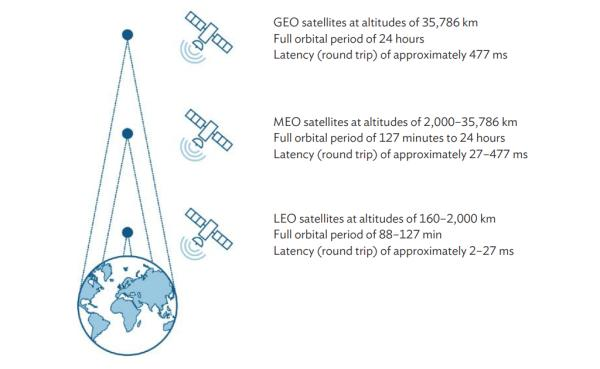
- BlueBird Block-2, weighing 6,100 kg, is the heaviest payload deployed by ISRO, injected into LEO (160 - 2,000 km) to provide direct-to-mobile 4G/5G connectivity.
- LVM-3 upgrades, including C32 cryogenic stage, semi-cryogenic engines, and bootstrap reignition, enhancing its payload capacity.
What is BlueBird Block-2?
- About: The BlueBird Block-2, is the heaviest payload ISRO has placed into orbit, surpassing the previous record of 5,700 kg (OneWeb satellites).
- The satellite was injected into a Low Earth Orbit (LEO) of approximately 520 km altitude.
- Objective: It will provide direct-to-mobile connectivity, enabling 4G and 5G connectivity directly to mobile phones without requiring specialized ground stations.
- Commercial Significance: This is ISRO's 3rd commercial mission using LVM-3, following two OneWeb satellite launches in 2022 and 2023.
Low Earth Orbit (LEO)
- Overview: LEO extends from about 160 - 2,000 km above Earth’s surface, where satellites complete an orbit roughly every 90–120 minutes.
- Satellites in LEO: It hosts satellites used for communications, Earth observation, scientific missions, and navigation.
- Orbit Types: While many LEO satellites follow circular orbits, some operate in elliptical orbits.
- Special Elliptical Orbits: Molniya and Tundra orbits provide longer dwell times over high-latitude regions and are used for communications and observation where geostationary coverage is limited.
What is the LVM3 Launch Vehicle?
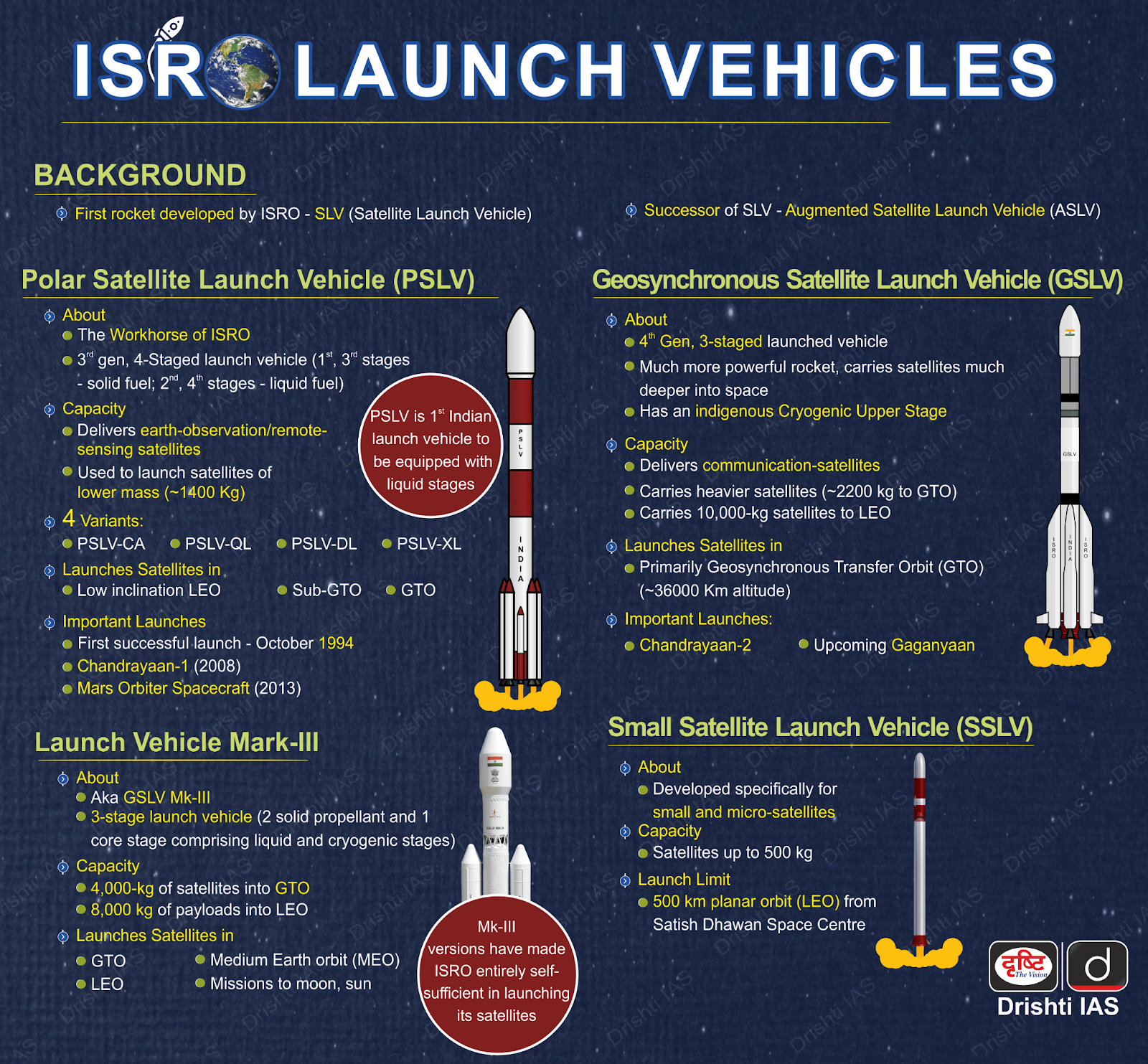
- About: The LVM3 is ISRO's largest and most powerful heavy-lift rocket, with three stages. This rocket can carry payloads of up to 4,000 kilograms to Geosynchronous Transfer Orbit and 8,000 kg in LEO.
- Previously called the Geosynchronous Satellite Launch Vehicle Mk III, it launched for the first time in December 2014.
- 3 Stages:
- First Stage: Uses two large S200 solid rocket boosters, which burn solid propellant HTPB (hydroxyl-terminated polybutadiene).
- Second Stage (Core): Uses liquid-fuelled stage, powered by two Vikas engines, burning UDMH (unsymmetrical dimethylhydrazine) and nitrogen tetroxide.
- Third Stage (Upper): Uses the C25 cryogenic stage,, equipped with the CE20 engine, burning liquid hydrogen and liquid oxygen.
- Engine Optimization for Higher Efficiency:
- Cryogenic Stage Upgrade: ISRO is developing the C32 cryogenic stage for higher thrust and fuel capacity.
- Semi-Cryogenic Engine Development: ISRO is developing semi-cryogenic engines using kerosene and liquid oxygen, which will raise LEO payload capacity from 8,000 kg to 10,000 kg.
- Bootstrap Reignition Technology: ISRO is developing bootstrap reignition capability for cryogenic engines, allowing the upper stage to restart without external gases like helium, reducing fuel weight and increasing payload capacity for multi-orbit missions.
- Role in Future Missions: A modified LVM-3 with added human-safety redundancies will support Gaganyaan missions and later carry modules for the Bharatiya Antariksh Station, India’s planned space station.
Frequently Asked Questions (FAQs)
1. What is BlueBird Block-2?
BlueBird Block-2 is a 6,100 kg commercial satellite by AST SpaceMobile, providing direct-to-mobile 4G/5G connectivity in LEO (160 km to 2,000 km).
2. What is the significance of LEO?
Low Earth Orbit (LEO) hosts communication, Earth observation, and navigation satellites, enabling low-latency global connectivity.
3. What are the stages of the LVM-3 rocket?
LVM-3 has three stages: S200 solid boosters, L110 liquid-fueled core, and C25 cryogenic upper stage, optimized for heavy-lift missions.
UPSC Civil Services Examination, Previous Year Question (PYQ)
Q. With reference to India’s satellite launch vehicles, consider the following statements: (2018)
- PSLVs launch satellites useful for Earth resources monitoring whereas GSLVs are designed mainly to launch communication satellites.
- Satellites launched by PSLV appear to remain permanently fixed in the same position in the sky, as viewed from a particular location on Earth.
- GSLV Mk III is a four-stage launch vehicle with the first and third stages using solid rocket motors, and the second and fourth stages using liquid rocket engines.
Which of the statements given above is/are correct?
(a) 1 only
(b) 2 and 3
(c) 1 and 2
(d) 3 only
Ans: (a)
Q. In which of the following activities are Indian Remote Sensing (IRS) satellites used? (2015)
- Assessment of crop productivity
- Locating groundwater resources
- Mineral exploration
- Telecommunications
- Traffic studies
Select the correct answer using the code given below:
(a) 1, 2 and 3 only
(b) 4 and 5 only
(c) 1 and 2 only
(d) 1, 2, 3, 4 and 5
Ans: (a)
Micrometeoroids and Orbital Debris
Why in News?
The Micrometeoroids and Orbital Debris (MMOD) threat has regained attention after space debris damaged China’s Shenzhou-20 capsule. With expanding human spaceflight including Gaganyaan, protecting astronauts from high-velocity debris is now critical.
What are Micrometeoroids and Orbital Debris (MMOD)?
- About: Micrometeoroids are naturally occurring tiny particles, ranging from a few micrometres to about 2 mm, mostly originating from asteroid collisions and comets.
- They travel at very high velocities (11–72 km/s), making even dust-sized particles carry enough kinetic energy at orbital speeds to cause critical or catastrophic damage to onboard systems.
- Whereas, orbital debris, also known as space junk, consists of human-made objects in Earth’s orbit that no longer serve any purpose, such as defunct satellites, rocket fragments, collision debris, and remnants of anti-satellite tests.
- They typically move at around 10 km/s, capable of causing severe damage on impact.
- Rising debris density raises the risk of a runaway collision cascade known as the Kessler Syndrome, which could make some orbits unusable.
- Distribution: Orbital debris is mainly concentrated in Low Earth Orbit (LEO) between 200 km and 2,000 km altitude. There are around 34,000 trackable debris objects larger than 10 cm and over 128 million pieces larger than 1 mm in LEO.
- Micrometeoroids are present throughout space but are slightly more concentrated near Earth due to gravitational pull. They cause billions of micro-impacts annually on spacecraft operating in Earth’s orbit.
- Global Mechanisms to Manage Space Debris:
- Outer Space Treaty 1967 (India is a Signatory): Article VI of the treaty makes states responsible for all national space activities, including private ones, but lacks enforcement mechanisms.
- Convention on International Liability for Damage Caused by Space Objects 1972 (India is a Signatory) : It imposes absolute liability for space object damage on Earth, requiring no proof of negligence, but enforcement is weak.
- Voluntary UN Guidelines on Deorbiting: The UN recommends deorbiting satellites within 25 years, but compliance rate is only around 30%.
- Inter-Agency Space Debris Coordination Committee (IADC): Brings together agencies such as NASA, European Space Agency, and ISRO to develop technical standards.
- These standards inform debris mitigation guidelines adopted by United Nations Committee on the Peaceful Uses of Outer Space (UNCOPUOS).
- The guidelines are non-binding, relying on voluntary compliance rather than enforcement.
- India’s Measures for Space Debris Mitigation: India has launched the Debris Free Space Missions (DFSM) initiative, aiming to achieve zero-debris space missions by 2030 for all Indian space actors, public and private.
- IS4OM (ISRO System for Safe and Sustainable Space Operations Management) has been set up to integrate all efforts related to spaceflight safety, Space Situational Assessment (SSA), and debris mitigation in an increasingly congested orbital environment.
- The Network for Space Object Tracking and Analysis (NETRA) strengthens space surveillance and tracking capabilities.
- The Indian Space Policy 2023 explicitly emphasises space debris mitigation and SSA capacity building.
Protection of Gaganyaan Crew from MMOD
- The Gaganyaan mission is a standalone human spaceflight without the option of docking with a space station in case of emergencies, making onboard safety critical.
- Since the mission duration is less than a week, the risk from large, catalogued space debris is very low, but protection is still required against small, high-velocity micrometeoroids and orbital debris.
- Accordingly, ISRO has adopted internationally accepted MMOD protection standards, including passive shielding such as Whipple shields, designed to meet stringent human-rating requirements. These shields are validated using advanced simulation tools and hypervelocity impact tests at DRDO’s Terminal Ballistics Research Laboratory, where projectiles are fired at speeds of up to 5 km/s.
- Physical (Whipple) Shielding : Satellites use Whipple shields consisting of an outer bumper layer and an inner rear wall separated by a standoff distance.
- The bumper shatters incoming debris, spreading its energy over a wider area before it reaches the rear wall.
- Fragmentation and dispersion reduce impact energy, allowing the rear wall to absorb the load without failure.
- Physical (Whipple) Shielding : Satellites use Whipple shields consisting of an outer bumper layer and an inner rear wall separated by a standoff distance.
Frequently Asked Questions (FAQs)
1.What are Micrometeoroids and Orbital Debris (MMOD)?
Micrometeoroids are natural high-velocity space particles, while orbital debris consists of defunct human-made objects like satellites and rocket fragments in Earth’s orbit.
2. Why is MMOD considered dangerous despite the small size of debris?
Due to extreme velocities (up to 72 km/s), even millimetre-sized particles can cause catastrophic damage to spacecraft systems.
3. What is the Kessler Syndrome?
It refers to a collision cascade where debris impacts generate more debris, potentially rendering certain orbits unusable.
4. What global mechanisms exist to manage space debris?
Frameworks include the Outer Space Treaty (1967), Liability Convention (1972), and technical guidelines by Inter-Agency Space Debris Coordination Committee, adopted by United Nations Committee on the Peaceful Uses of Outer Space, though they are largely non-binding.
Reservation for Agniveers in CAPFs
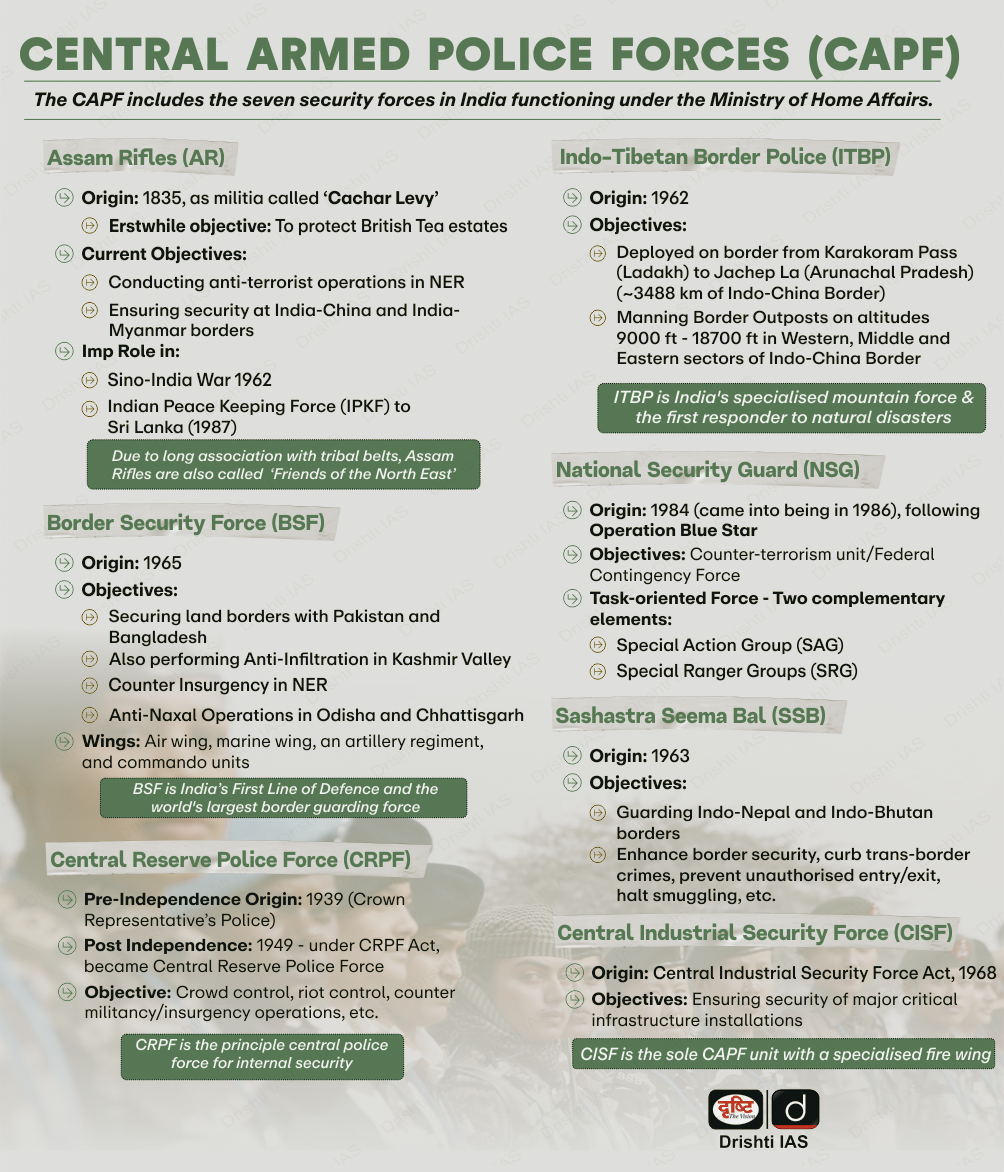
The Union Home Ministry has decided to increase reservation for ex-Agniveers in Group C posts of Central Armed Police Forces (CAPFs) from 10% to 50%, marking a major policy shift under the Agnipath scheme.
- Ex-Agniveers will be exempted from Physical Standard Test (PST) and Physical Efficiency Test (PET). However, they must appear for written examinations like other candidates.
Agnipath Scheme
- About: Launched in June 2022, is a short-term military recruitment programme. Recruits under this scheme are called Agniveers, and the objective is to maintain a young, agile, and technology-oriented force while optimising defence personnel expenditure.
- Eligibility conditions: Applicants must be Indian citizens and meet prescribed educational, physical, and medical standards of the respective service.
- The age limit was 17.5–23 years for the 2022 intake, and 17.5–21 years for subsequent intakes, reflecting the scheme’s focus on youth induction.
- Nature of Recruitment: Agniveers are enrolled for a fixed tenure of four years. They will be recruited as personnel below officer (PBOR) rank in the army, air force and navy for four years, including six months of training.
- Post-service Exit and Permanent Absorption: Up to 25% of each Agniveer batch may be absorbed into the regular cadre based on performance, without any right to selection, while the remaining personnel receive skill certification to support post-service employability.
- Pay structure and Seva Nidhi Benefits: Agniveers earn Rs 30,000–Rs 40,000 per month over four years, contribute 30% of pay to a Agniveer Corpus Fund matched by the government, and receive a tax-free Seva Nidhi package of about Rs 11.71 lakh on exit, with no pension or gratuity.
- Rs 48 lakh non-contributory life insurance cover is provided during service.
| Read more: Agnipath Scheme |
Kashiwazaki-Kariwa Nuclear Plant and Fukushima Disaster
Nearly 15 years after the Fukushima disaster, Japan plans to restart the Kashiwazaki-Kariwa nuclear plant but the move has triggered protests, with Fukushima survivors warning against renewed nuclear safety risks.
- To reduce dependence on imported fossil fuels (account for 60–70% of Japan’s electricity generation), Japan plans to double nuclear power’s share to 20% by 2040 to meet rising energy demand from AI data centres and its decarbonisation goals.
- Kashiwazaki-Kariwa Nuclear Plant: It is the world’s largest nuclear power plant by installed capacity, located near Tokyo.
- It is operated by Tokyo Electric Power Company (TEPCO), the same operator responsible for the Fukushima Daiichi plant.
- Fukushima Nuclear Disaster (2011): The 2011 earthquake and tsunami disabled the cooling systems at the nuclear plant, leading to core meltdowns in three reactors and large-scale radiation release, making it the worst nuclear accident since Chernobyl (1986), resulting in mass evacuations and long-term exclusion zones.
Note: As of 2025, India’s nuclear power capacity stands at about 8.18 GW, and the country has set a long-term target of 100 GW by 2047. To accelerate this expansion, the SHANTI Act, 2025 opens nuclear reactor development to private sector participation, marking a major policy shift aimed at mobilising investment, improving efficiency.
| Read more: India's Nuclear Energy Roadmap |