
PC&PNDT Act in the Digital Age
For Prelims: Pre-Conception and Pre-Natal Diagnostic Techniques (Prohibition of Sex Selection) Act, 1994, Sex Ratio, 2011 Census, Sample Registration System (SRS) 2023, National Family Health Survey (NFHS-5, 2019-2021), UN Population Fund,
For Mains: Key facts regarding the Pre-Conception and Pre-Natal Diagnostic Techniques (Prohibition of Sex Selection) Act, 1994 (PC&PNDT Act), Son meta preference and its reasons, Reasons for lax implementation of the PC&PNDT Act, 1994 and ways to strengthen strenthen the act for an equitable sex ratio.
Why in News?
The fight against sex-selective abortion in India has moved online, where influencers and self-styled doctors circumvent the Pre-Conception and Pre-Natal Diagnostic Techniques (Prohibition of Sex Selection) Act, 1994 (PC&PNDT Act) by promoting unscientific gender-prediction myths to vast audiences.
- The internalised bias for sons has renewed focus on gender bias, digital regulation, and reproductive rights.
Summary
- India’s skewed sex ratio stems from deep-rooted son preference, reinforced by cultural and economic norms despite legal prohibition.
- Enforcement of the PC&PNDT Act, 1994 is weakened by institutional gaps, low convictions, and the shift of illegal promotion to digital platforms.
- Effective change requires a holistic strategy i.e., tech-enabled monitoring, swift justice, online regulation, and societal campaigns to value the girl child.
What is Pre-Conception and Pre-Natal Diagnostic Techniques (Prohibition of Sex Selection) Act, 1994 (PC&PNDT Act)?
- About: It was enacted in 1994 to address the issue of female foeticide and the declining child sex ratio resulting from the misuse of diagnostic technologies for sex selection. (India’s sex ratio as per 1991 Population Census - 929 females per 1,000 males).
- The Act was significantly amended in 2003 to strengthen its provisions, explicitly include pre-conception techniques, and prohibit sex selection more comprehensively.
- Key Provisions:
- Prohibition of Sex Selection: Bans any procedure, technique, or test like ultrasound aimed at determining or selecting the sex of a foetus (Section 3A).
- Permitted Uses:
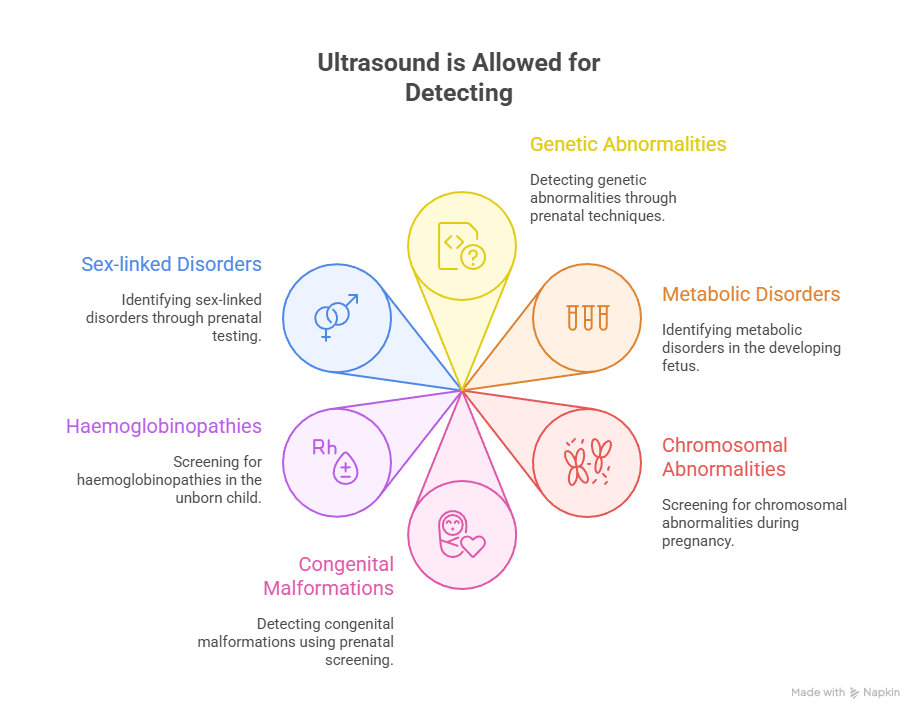
- Regulation of Facilities: Genetic counselling centres, laboratories, and clinics must register under the Act. Unregistered facilities are prohibited from conducting such procedures (Section 18).
- Advertisement Ban: Prohibits advertisements related to pre-conception or pre-natal sex determination (Section 22).
- Supervisory Bodies: Establishes the Central Supervisory Board, State Supervisory Boards, and Appropriate Authorities for implementation and monitoring.
- 2003 Amendment: Extended coverage to pre-conception sex selection techniques.
- Explicitly included ultrasound and imaging technologies within the regulatory ambit.
- Empowered supervisory boards and authorities with greater enforcement powers, including search and seizure.
- Offences and Penalties: Every offence under this Act shall be cognizable, non-bailable, and non-compoundable.
- Penalties include up to 3–5 years imprisonment and fines ranging from Rs 10,000 to Rs 100,000 or more, depending on the offence and whether it is a repeat violation.
Son Meta Preference and Skewed Sex Ratios
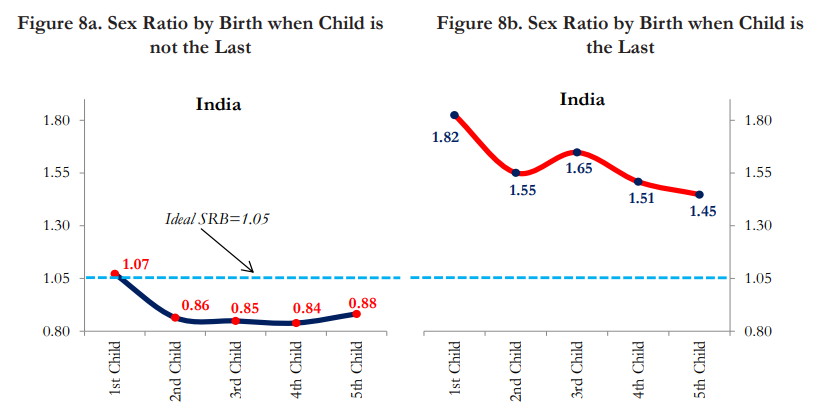
- Son Meta Preference: It refers to a subtle manifestation of son preference in which parents continue having children until they achieve their desired number of sons (typically at least one).
- This behaviour follows fertility-stopping rules, where families are more likely to cease childbearing once a son is born, resulting in a skewed sex ratio of the last child (higher proportion of males as the final birth).
- It led to 21 million "unwanted" girls who may face resource neglect.
- The Scale of Missing Women: Using Amartya Sen's methodology, the estimated stock of missing women in India reached nearly 63 million by 2014, with over 2 million women going missing annually due to sex-selective abortion, disease, and neglect.
- Missing females refers to the shortfall of women and girls in a population due to sex-selective practices, female foeticide, infanticide, or neglect, resulting in fewer females than expected. The term was popularized by economist Amartya Sen in 1990.
- Skewed Sex Ratios Defying Development: India's Sex Ratio at Birth (SRB) worsened from 1,060 to 1,108 males per 1,000 females between 1970 and 2014, moving opposite to global trends where higher income typically improves the ratio, indicating strong human intervention through sex-selective abortion.
Primary Reasons for Son Preference
- Economic Factors: Sons are seen as financial providers and caregivers in old age, especially where social security is weak.
- In patrilineal systems, they inherit property and increase household wealth, while daughters are often viewed as an economic burden due to dowry practices, despite being legally prohibited.
- Cultural and Social Factors: Patrilocality (daughters marrying into the husband’s family) fosters the view that “raising a daughter is like watering a neighbour's garden”, as they leave the natal home.
- Sons are expected to continue the family lineage, name, and social status.
- Religious Factors: In certain traditions, especially among Hindus, sons perform essential rituals like funeral rites and ancestor worship, believed to ensure spiritual merit and parental salvation
India’s Sex Ratio
- As per India's 2011 Census, the overall sex ratio was 943 females per 1,000 males, up from 933 in 2001.
- According to government Sample Registration System (SRS) 2023 data, India’s sex ratio at birth (females per 1,000 males) improved from 904 in 2019 to 917 in 2023.
- According to the National Family Health Survey (NFHS-5, 2019-2021), India has 1,020 women per 1,000 men.
- In 2020, the UN Population Fund reported that India accounted for 45.8 million of the world’s 142.6 million “missing females”.
What are the Reasons for Lax implementation of the PC&PNDT Act, 1994?
- Collusion and No-complainant Dynamics: Sex selection continues due to shared incentives—families demand it, and providers supply it—making reporting rare and enforcement difficult without proactive intelligence and strong enforcement systems.
- Inadequate Infrastructure: District/State Appropriate Authorities face staff shortages, limited budgets, and inadequate training, reducing inspections, follow-up, and case-building.
- Low Conviction Rates: Conviction rates remain abysmally low (e.g., only 617 convictions in 25 years, as per a Parliamentary Committee report), with many states registering few or no cases.
- Digital and Online Challenges: Conceived long ago, the Act is ill-equipped to tackle modern challenges, especially the indirect promotion of son preference via social media, where influencers, self-styled experts, and religious figures spread unscientific claims, rituals, and narratives to large online audiences.
- Deep-Rooted Societal Demand: Persistent son preference, driven by patriarchal norms, cultural expectations, and economic factors, sustains demand for sex selection and encourages illegal circumvention of the law.
- Professional Misconduct: Sex determination remains a highly lucrative illegal business, with practitioners using coded language, odd-hour scans, and portable machines to evade detection.
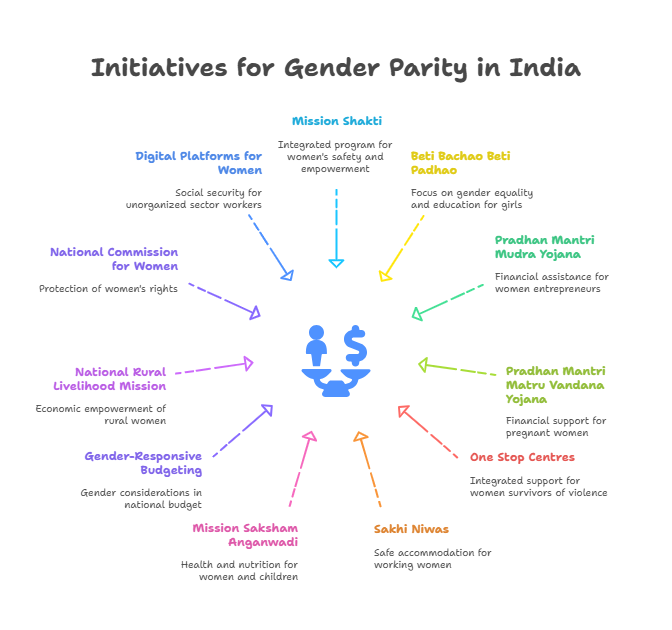
How can Implementation of the PC&PNDT Act, 1994 be Strengthened?
- Strengthen Institutional Framework: Appoint dedicated Appropriate Authorities (e.g., Civil Surgeons, Medical Superintendents) and Appellate Authorities at state and district levels, with clear roles to ensure timely registrations, inspections, and appeals.
- Leverage Technology: Mandate online submission of Form F (pre-test declarations) for real-time tracking and provide anonymous grievance redressal via helplines and dedicated websites to report illegal practices.
- Addressing the Online Ecosystem: Legally require technology platforms (Google, Meta, Amazon, etc.) to proactively remove sex-selection content, while supporting credible health influencers to counter myths and promote the value of girls online.
- Legal and Procedural Reforms: Establish fast-track courts for PC&PNDT cases to ensure swift convictions and deterrence, and expand the Act’s definition of advertisement to cover all indirect promotions and online sex-prediction services.
- Awareness and Behavioral Change: Official reviews note that enforcement alone cannot stop sex selection without addressing deep-rooted son preference.
- They emphasize the need for sustained awareness, community engagement, and regulation of indirect promotion, especially via advertisements and digital/social media, where enforcement strategies need urgent updating.
Conclusion
The PC&PNDT Act’s main challenge is deep-rooted son preference, now amplified by digital platforms. Effective implementation requires modernizing the law for the online era, ensuring swift legal deterrence, and fostering societal change to value the girl child, shifting from clinic-based policing to an ecosystem approach.
|
Drishti Mains Question Discuss the socio-economic and cultural factors that sustain the demand for sex-selective technologies in India. How can a multi-pronged strategy address these determinants effectively? |
Frequently Asked Questions (FAQs)
Q. What is the PC&PNDT Act, 1994?
It is a law enacted to prohibit sex selection and regulate pre-conception and pre-natal diagnostic techniques to prevent female foeticide in India.
Q. What does the term "missing females" refer to in demographic studies?
It refers to the significant shortfall in the number of women and girls in a population, primarily due to gender-biased practices like sex-selective abortion and postnatal discrimination, as highlighted by Amartya Sen.
Q. What are the key trends in India's sex ratio according to recent data?
As per the Sample Registration System (SRS) 2023, India's sex ratio at birth improved to 917 (from 904 in 2019). However, the National Family Health Survey-5 (2019-21) reports a healthier overall sex ratio of 1,020 women per 1,000 men.
UPSC Civil Services Examination, Previous Year Questions (PYQs)
Prelims
Q. To obtain full benefits of demographic dividend, what should India do? (2013)
(a) Promoting skill development
(b) Introducing more social security schemes
(c) Reducing infant mortality rate
(d) Privatization of higher education
Ans: (a)
Mains
Q. How do you explain the statistics that show that the sex ratio in Tribesin India is more favourable to women than the sex ratio among Scheduled Castes? (2015)
SHANTI Bill 2025
For Prelims: Lok Sabha, Nuclear Power Corporation of India, Atomic Energy Regulatory Board, Nuclear energy
For Mains: Energy security and nuclear power in India, Public–private partnership in strategic sectors
Why in News?
The Union Government has introduced the Sustainable Harnessing and Advancement of Nuclear Energy for Transforming India (SHANTI) Bill, 2025 in the Lok Sabha to overhaul India’s nuclear energy laws and enable private sector participation in building and operating nuclear power plants for the first time since Independence.
Summary
- The SHANTI Bill, 2025 overhauls India’s nuclear energy framework by replacing the Atomic Energy Act, 1962 and the CLND Act, 2010, allowing private and foreign participation in building and operating nuclear power plants while retaining state control over strategic activities.
- It introduces a revised liability and regulatory regime by granting statutory status to the AERB, capping operator liability based on plant capacity, removing supplier liability, and facilitating advanced technologies like Small Modular Reactors to support clean energy and net-zero goals.
What are the Key Provisions of SHANTI Bill 2025?
- Replacement of Existing Nuclear Laws: The SHANTI Bill repeals the Atomic Energy Act, 1962 and the Civil Liability for Nuclear Damage Act, 2010, creating a single, consolidated legal framework to govern India’s civil nuclear energy sector and simplify regulatory and liability procedures.
- Enabling Private and Joint Venture Participation: For the first time since Independence, the Bill permits private Indian companies, joint ventures, and foreign entities to build, own, operate, and decommission nuclear power plants, ending the monopoly of Nuclear Power Corporation of India Ltd (NPCIL) in plant operations.
- Retention of Strategic State Control: While allowing private participation, the Bill retains government control over sensitive areas such as nuclear fuel production, heavy water manufacturing, and radioactive waste management, safeguarding national security and non-proliferation commitments.
- Statutory Status to the Nuclear Regulator: The Bill grants statutory backing to the Atomic Energy Regulatory Board (AERB) and makes it accountable to Parliament, strengthening regulatory independence, transparency, and safety oversight.
- Revised Nuclear Liability Framework: The SHANTI Bill repeals the CLND Act, 2010 and removes supplier liability, ensuring that nuclear plant operators alone are responsible for compensation, thereby aligning India’s regime with international nuclear liability conventions.
- Operator liability is capped and linked to the installed capacity of nuclear plants rather than the extent of damage, with graded limits to reduce financial uncertainty and encourage investment.
- Creation of a Dedicated Atomic Disputes Tribunal: Proposes a dedicated atomic disputes tribunal to improve regulatory certainty and investor confidence.
- Facilitation of Advanced Nuclear Technologies: By enabling private participation and regulatory clarity, the Bill supports the deployment of Small Modular Reactors and indigenous reactor designs, contributing to India’s clean energy transition and long-term energy security.
Core Concern Surrounding the SHANTI Bill, 2025
- By removing supplier liability and capping operator penalties, the Bill is criticised for weakening accountability in case of nuclear accidents.
- Critics argue that limiting liability based on plant size rather than actual damage may undermine the “polluter pays” principle and compromise public safety.
- Also, private firms may benefit commercially while accident costs and long-term risks are ultimately borne by the State and citizens.
- Given India’s historical experience with industrial disasters, such as the Bhopal Gas Tragedy (1984), critics stress that weakening liability provisions may erode public confidence in nuclear governance.
- Critics argue that limiting liability based on plant size rather than actual damage may undermine the “polluter pays” principle and compromise public safety.
India’s Current Nuclear Energy Landscape
- As of 2025, India’s current power capacity stands at 8.18 GW, with an ambitious target of 100 GW by 2047.
- Currently, India operates more than 20 nuclear reactors, all managed by Nuclear Power Corporation of India Limited (NPCIL), with over a dozen new projects planned.
- The Nuclear Energy Mission was launched in the Union Budget 2025-26 which is focused on research and development (R&D) of Small Modular Reactors (SMRs).
- India aims to develop at least five indigenously designed and operational SMRs by 2033.
- Key new technology developments include Bharat Small Reactors (BSRs), Small Modular Reactors (SMRs), Molten Salt Reactors, and High-Temperature Gas-Cooled Reactors.
What is the Need for Reforms in Nuclear Governance in India?
- Ambitious Capacity Targets: India aims to expand nuclear capacity from 8.8 GW to 22 GW by 2032 and 100 GW by 2047, but NPCIL alone lacks the capital, manpower, and execution capacity to meet these goals.
- Large Financing Gap: Achieving 100 GW requires about Rs 15 lakh crore, while Budget 2025–26 provides only Rs 20,000 crore, making private investment essential to mobilise long-term capital.
- Project Delays: NPCIL projects like Kudankulam Units 3–6 face chronic delays; private players can improve project management and Engineering, Procurement, and Construction (EPC) efficiency.
- Technology and Innovation Needs: Private participation can accelerate adoption of SMRs, advanced reactors, and global best practices, improving safety and scalability.
- Weak Uranium Supply Chains: Limited domestic production and Government-to-Government (G2G) imports necessitate private involvement in uranium mining, processing, and imports for fuel security.
- Energy Security and Climate Goals: Enhanced focus on nuclear power supports grid stability and net-zero 2070, complementing renewables with low-carbon baseload power.
What Measures are Required to Strengthen Nuclear Governance in India?
- Regulatory Independence: AERB operational independence must be strengthened through transparent appointments, financial autonomy, and protection from executive interference.
- Rebalance Safety and Investment Incentives: Liability caps should be periodically reviewed and indexed to inflation and risk, ensuring investor confidence does not come at the cost of public safety and the “polluter pays” principle.
- Build Public Trust Through Transparency: Mandatory disclosure of safety audits, accident reporting protocols, and emergency preparedness plans is essential to address public concerns rooted in past industrial disasters.
- Centre–State Coordination in Emergency Response: Clear protocols are needed for coordination between the Centre, States, and local authorities during nuclear emergencies, especially as private operators enter the sector.
- Waste Management and Decommissioning Frameworks: Clear, enforceable norms for long-term waste disposal and plant decommissioning must be laid down before large-scale private expansion.
Conclusion
Reforms in nuclear governance are essential to unlock capital, technology, and execution capacity that the public sector alone cannot provide. Carefully regulated private participation, backed by strong safety oversight, is critical for India to achieve its long-term nuclear energy and climate ambitions.
|
Drishti Mains Question: Private participation in nuclear energy can accelerate India’s clean energy transition but also raises governance concerns. Discuss. |
Frequently Asked Questions (FAQs)
Q. What is the SHANTI Bill, 2025?
It is a comprehensive legislation replacing the Atomic Energy Act, 1962 and CLND Act, 2010 to allow private participation in nuclear power generation under a unified legal framework.
Q. How does the SHANTI Bill change nuclear liability provisions?
The Bill removes supplier liability and caps operator liability based on plant capacity, aligning India’s framework with international nuclear liability conventions.
Q. Why are reforms in nuclear governance necessary?
India’s ambitious targets of 22 GW by 2032 and 100 GW by 2047 require private capital, advanced technology, and faster project execution beyond NPCIL’s capacity.
UPSC Civil Services Examination, Previous Year Question (PYQ)
Prelims
Q. In India, why are some nuclear reactors kept under “IAEA safeguards” while others are not? (2020)
(a) Some use uranium and others use thorium
(b) Some use imported uranium and others use domestic supplies
(c) Some are operated by foreign enterprises and others are operated by domestic enterprises
(d) Some are State-owned and others are privately owned
Ans: (b)
Q. Consider the following statements: (2017)
- The Nuclear Security Summits are periodically held under the aegis of the United Nations.
- The International Panel on Fissile Materials is an organ of the International Atomic Energy Agency.
Which of the statements given above is/are correct?
(a) 1 only
(b) 2 only
(c) Both 1 and 2
(d) Neither 1 nor 2
Ans: (d)
Mains
Q. With growing energy needs should India keep on expanding its nuclear energy programme? Discuss the facts and fears associated with nuclear energy. (2018)
Q. Give an account of the growth and development of nuclear science and technology in India. What is the advantage of the fast breeder reactor programme in India? (2017)
India’s Strategic Turn to Free Trade Agreements
For Prelims: Free Trade Agreements, World Trade Organization, Economic Cooperation and Trade Agreement, Comprehensive Economic Partnership Agreement
For Mains: India’s evolving trade policy in a multipolar world, Role of FTAs in India’s foreign policy and geopolitics
Why in News?
India is currently accelerating its pursuit of Free Trade Agreements (FTAs) with a wide range of countries like New Zealand, Russia and Oman, even though past FTAs delivered modest trade gains.
- This shows a shift in focus, with FTAs now used more to secure strategic partnerships and geopolitical interests than to boost trade alone.
Summary
- India’s renewed push for FTAs reflects a move away from pure trade liberalisation towards using FTAs as tools for geopolitical alignment, supply-chain security, and strategic partnerships in a weakening multilateral order.
- Past FTAs delivered modest export gains while widening trade deficits and stressing domestic sectors, highlighting the need for better-balanced, services-focused agreements with strong safeguards.
What are the Reasons Behind India’s Renewed Emphasis on FTAs?
- Strategic Realignment in Global Geopolitics: The global shift from a unipolar to a multipolar order (e.g., US-China rivalry, weakening of the World Trade Organization (WTO)) has made bilateral and regional FTAs a tool of strategic engagement.
- India is leveraging FTAs to strengthen political alignments, especially in the Indo-Pacific, West Asia, and Africa.
- In a volatile world order, FTAs act as “political safety nets”, ensuring closer bilateral ties and strategic insurance (e.g., India-Australia Economic Cooperation and Trade Agreement (ECTA), India-UAE Comprehensive Economic Partnership Agreement (CEPA)).
- Decline of Multilateralism: The stagnation of WTO negotiations (Doha Round) and protectionist trends globally have reduced the effectiveness of multilateral trade forums.
- FTAs provide a platform to pursue WTO-plus commitments, especially in areas like services, digital trade, and investment.
- The India-EFTA TEPA exemplifies this shift binding commitment of USD 100 billion in FDI over 15 years.
- Diversification of Economic and Trade Partners: FTAs help reduce overdependence on a few markets (e.g., US, EU, China).
- They enable India to access new markets, diversify supply chains, and secure critical resources (e.g., energy, minerals).
- Also, FTAs are no longer just about market access, they are strategic tools to operationalize the "China Plus One" policy and secure upstream supply chains.
- Unlocking Untapped Potential in Services and Investment: India has a comparative advantage in services (IT, healthcare, education), but past FTAs underutilised this potential.
- New FTAs (e.g., UAE-India CEPA) focus more on services, fintech, and investment flows.
- Strengthening Domestic Capabilities and Value Chain: FTAs are aligned with initiatives like ‘Make in India’ and Production Linked Incentive schemes, aiming to integrate Indian manufacturing into global value chains. Strategic FTAs can help attract Foreign Direct Investment (FDI) and technology transfers.
- Correcting Past Imbalances: Learning from asymmetric gains in earlier FTAs (e.g., ASEAN), India now seeks better-balanced, services-focused agreements, ensuring domestic industry interests are protected.
- For example, India’s export share to ASEAN increased only marginally from 10.2% to 10.8%, while it declined from 2.1% to 1.9% with Japan, and from 1.9% to 1.4% with South Korea, based on five-year averages before and after the respective FTAs.
- This trend suggests that previous FTAs have mostly codified existing trade flows rather than generating significant new trade.
Free Trade Agreements
- About: A Free Trade Agreement (FTA) is an arrangement between two or more countries or regional blocs to reduce or eliminate trade barriers through mutual negotiations to promote trade.
- Key Coverage under FTAs: Customs duties (tariffs), Rules of Origin, Non-Tariff Measures (TBT), Sanitary and Phytosanitary (SPS) measures, and trade remedies.
- FTAs can cover trade in goods (such as agricultural or industrial products) or trade in services (such as banking, construction, trading etc).
- FTAs can also cover other areas such as intellectual property rights (IPRs), investment, government procurement and competition policy.
- Types of Trade Agreements:
- Bilateral: Between two countries to expand trade opportunities.
- Plurilateral: Among multiple countries, regionally or otherwise.
- Multilateral: Typically under the WTO framework, setting global trade rules.
- India and FTAs: According to the WTO, India has signed 20 regional or free trade agreements, in addition to the recent India–UK Comprehensive Economic and Trade Agreement (CETA) and the India-European Free Trade Association Trade and Economic Partnership Agreement (TEPA).
- India is currently negotiating FTAs with the US, EU, Canada, and the Southern African Customs Union.
What are the Concerns Accompany India’s Expanding Network of in Free Trade Agreements?
- Trade Deficits and Asymmetric Gains: Many of India’s earlier FTAs have not led to a strong export boost. Imports from partner countries often rose faster than exports, widening trade deficits.
- Example: Between FY 2009 and FY 2023, imports from ASEAN to India grew by 234.4% while exports from India rose only by 130.4% despite FTA.
- Indian exporters often fail to gain reciprocal market access.
- Example: Between FY 2009 and FY 2023, imports from ASEAN to India grew by 234.4% while exports from India rose only by 130.4% despite FTA.
- Non-Tariff Barriers (NTBs): Developed economies impose stringent standards (e.g., IPR, sanitary measures) that dilute tariff benefits. India–EU FTA has stalled over data localisation and IPR issues.
- Furthermore, India's FTA utilization rate remains low at just 25%, compared to 70–80% in developed countries.
- FTAs with the EU and the UK involve stringent environmental and labour compliance requirements, which India is cautious about adopting and risk India’s exclusion from emerging “green” trade regimes.
- Harm to Domestic Sectors: MSMEs, farmers, and labour-intensive sectors struggle to compete with cheaper imports. Tariff cuts can hurt sectors that are not yet globally competitive.
- FTAs often commit to zero-duty imports on finished goods while domestic tariffs on raw materials remain high (to protect upstream industries), creating a structural disadvantage for Indian manufacturers.
- This "Inverted Duty Structure" incentivizes trading (importing finished goods) over manufacturing, directly contradicting the Atmanirbhar Bharat (Make in India) vision.
- Example: Indian rubber farmers hurt by cheaper imports under the ASEAN FTA.
- Opening markets in dairy, plantation crops, or cereals raises concerns over farmer livelihoods.
- FTAs often commit to zero-duty imports on finished goods while domestic tariffs on raw materials remain high (to protect upstream industries), creating a structural disadvantage for Indian manufacturers.
- Risk of Import Surges via Third Countries: Goods from non-FTA countries may enter India through partner nations by exploiting rules of origin. This weakens domestic manufacturing and undermines the spirit of FTAs.
What Should be India’s Policy Approach to Enhance the Effectiveness of Its FTA Strategy?
- Strengthen Domestic Competitiveness: Invest in R&D, infrastructure, skill development, and MSME support to prepare industries for global competition.
- Focus on WTO-Plus Areas: Prioritise sectors like digital trade, green energy, and services, especially in future FTAs with developed economies.
- Incorporate Balanced Safeguards: Ensure strong Rules of Origin, safeguard duties, and anti-dumping provisions to prevent misuse by third countries.
- Institutional Reforms and Inter-Ministerial Coordination: Enhance cooperation between the MEA, Commerce Ministry, and NITI Aayog to align strategic and economic interests.
- Improve Dispute Resolution Frameworks: Include binding timelines and independent panels in FTAs for swift resolution of trade disputes.
- Monitor and Review Existing FTAs: Establish mechanisms for periodic impact assessment, public consultation, and course correction.
- Promote Inclusive and Sustainable Trade: Integrate labour and environmental safeguards without undermining domestic flexibility.
Conclusion
India’s renewed emphasis on FTAs is less about expanding trade volumes and more about navigating a fragmented global order. As multilateralism weakens and geopolitics dominates economics, FTAs have evolved into tools of strategic alignment, diplomatic insurance, and supply-chain security. In this emerging order, strategic logic—rather than pure economic efficiency—will increasingly drive India’s trade policy.
|
Drishti Mains Question: India’s recent surge in Free Trade Agreements reflects a strategic shift from market access to geopolitical alignment. Discuss. |
Frequently Asked Questions (FAQs)
1.Why is India signing more FTAs despite limited gains from earlier ones?
India now views FTAs as tools for strategic alignment, supply-chain resilience, and geopolitical partnerships in a multipolar world.
2. What major problem has India faced under past FTAs like ASEAN?
Imports grew faster than exports, widening trade deficits, with ASEAN imports rising from USD 8 bn (FY13) to USD 44 bn (FY23).
3. How do FTAs affect India’s domestic sectors?
MSMEs and farmers face pressure from cheaper imports, especially in sectors like rubber, dairy, and plantation crops.
4. What are WTO-plus issues in new FTAs?
They include services, digital trade, investment, IPR, labour, and environmental standards beyond WTO commitments.
5. What safeguards can improve India’s FTA outcomes?
Strong Rules of Origin, safeguard duties, periodic reviews, and better dispute-resolution mechanisms.
UPSC Civil Services Examination, Previous Year Questions (PYQs)
Prelims
Q. Consider the following countries: (2018)
- Australia
- Canada
- China
- India
- Japan
- USA
Which of the above are among the ‘free-trade partners’ of ASEAN?
(a) 1, 2, 4 and 5
(b) 3, 4, 5 and 6
(c) 1, 3, 4 and 5
(d) 2, 3, 4 and 6
Ans: (c)
Mains
Q. How would the recent phenomena of protectionism and currency manipulations in world trade affect macroeconomic stability of India? (2018)
Mercy Petition
Why in News?
The President of India has rejected the mercy petition of a convict found guilty of kidnapping, raping, and murdering a two-year-old girl in Maharashtra in 2012, reaffirming the constitutional process governing capital punishment.
Summary
- The President’s rejection brings focus on mercy petitions under Articles 72 and 161, the BNSS 2023 time-bound framework, limited judicial review, and the humanitarian rationale of clemency as a safeguard against miscarriage of justice while upholding Article 21.
What is Mercy Petition?
- About: A Mercy Petition is a constitutional remedy available to convicts, especially in death sentence cases, seeking pardon, commutation, remission, or suspension of sentence.
- Constitutional Basis: The power to grant pardon, commutation, remission, or suspension of sentences is vested in the President under Article 72 and the Governor under Article 161 of the Constitution.
- The President’s pardoning power is broader than the Governor’s power, as it extends to court-martial cases, while the Governor’s power is limited to offences under State laws and does not apply to military court sentences.
- Grounds for Filing: A mercy petition may be filed on grounds such as good conduct, mental health, age, medical condition, humanitarian factors, miscarriage of justice, or rehabilitation efforts.
- Legal Provisions: Section 472(1) of the Bharatiya Nagarik Suraksha Sanhita (BNSS), 2023 sets a time-bound process for mercy petitions.
- A convict must file within 30 days of dismissal of appeals by the Supreme Court or confirmation of a death sentence by the High Court, while in cases with multiple convicts, petitions must be filed within 60 days.
- Role of Governments: Under BNSS, 2023 upon receiving a mercy petition, the Central Government seeks comments from the State Government, examines the case records, and makes its recommendation to the President within 60 days.
- It may also obtain the trial judge’s opinion and certified records. In cases with multiple convicts, petitions are decided together.
- While no time limit is set for the President’s decision, the Centre must communicate the President’s order to the State Home Department and jail authorities within 48 hours.
- Finality and Non-Justiciability: Section 472(7) of the BNSS declares that the President’s decision on a mercy petition is final.
- Courts are barred from questioning or reviewing the grounds of pardon or commutation, reinforcing the exclusive executive nature of clemency powers.
- Judicial Pronouncements:
- Maru Ram v. Union of India (1981): The Supreme Court clarified that these powers are to be exercised on the aid and advice of the Council of Ministers, making clemency an executive function rather than a personal discretion.
- Kehar Singh v. Union of India (1988): The Supreme Court held that the President’s pardoning power is independent of the judiciary but subject to limited judicial review to ensure procedural fairness, not to examine the merits of the decision.
Philosophical Basis of Pardoning Powers in India
- Pardoning powers recognise that the judicial system is not infallible and provide a humane mechanism to correct possible miscarriages of justice.
- In 2012, 14 retired Supreme Court and High Court judges urged the President to commute 9 death sentences to life imprisonment, citing concerns over miscarriage of justice.
- It also aims to maintain public trust in the justice system while upholding the right to life under Article 21 of the Constitution.
|
Drishti Mains Question: Evaluate the significance of time-bound procedures for mercy petitions introduced under Bharatiya Nagarik Suraksha Sanhita (BNSS), 2023. |
Frequently Asked Questions (FAQs)
1. What is a mercy petition in India?
A mercy petition is a constitutional remedy seeking pardon, commutation, remission, or suspension of sentence under Articles 72 and 161.
2. How does BNSS, 2023 change the mercy petition process?
BNSS introduces time limits for filing mercy petitions and prescribes a structured role for the Central and State Governments.
3. Who has wider pardoning powers—the President or the Governor?
The President has wider powers, including in court-martial and death sentence cases, unlike the Governor.
4. Can courts review the President’s decision on mercy petitions?
Courts cannot examine the merits but may conduct limited judicial review to ensure procedural fairness.
UPSC Civil Services Examination, Previous Year Questions (PYQs)
Mains
Q. Instances of the President's delay in commuting death sentences has come under public debate as denial of justice. Should there be a time specified for the President to accept/reject such petitions? Analyse (2014)
ADB Development Financing to Support India
The Asian Development Bank (ADB) has signed 5 loan agreements with India to finance development projects focusing on skilling, renewable energy, healthcare, urban transport, and sustainable livelihoods.
- It includes a USD 650 million loan to support the Pradhan Mantri Surya Ghar: Muft Bijli Yojana to help 1 crore households adopt rooftop solar by 2027.
Asian Development Bank (ADB)
- About: ADB, founded in 1966, is a regional development bank with a mission to foster a prosperous, inclusive, resilient, and sustainable Asia and the Pacific, while also striving to eradicate extreme poverty in the region.
- The ADB also has an official observer status at the United Nations.
- Functions: ADB aids its member countries and partners by offering loans, technical assistance, grants, and equity investments to promote social and economic development.
- Also, ADB provides direct financial assistance to approved private sector projects, financial institutions, and private equity funds.
- Membership: ADB, headquartered in Manila, Philippines, consists of 69 members, of which 50 are from within Asia and the Pacific and 19 outside.
- As of December 2024, ADB’s 5 largest shareholders are Japan and the United States (each with 15.6% of total shares), the People’s Republic of China (6.4%), India (6.3%), and Australia (5.8%).
- ADB and India: India is a founding member of ADB and is its 4th-largest shareholder. The bank's support aligns with India’s goals of robust, climate-resilient, and inclusive growth.
| Read More: Asia Development Outlook Report 2024 |
Exercise Ekatha 2025
India’s Deputy Chief of the Naval Staff (DCNS) of the Indian Navy visited Maldives to attend the closing ceremony of 8th edition of Exercise Ekatha 2025.
Exercise Ekatha
- About: Established in 2017, it is an annual bilateral maritime military exercise conducted between the Indian Navy and the Maldives National Defence Force (MNDF).
- Key Objectives: It focuses on enhancing interoperability between the marine commandos of both nations, particularly in specialized areas such as diving operations, special forces tactics, and asymmetric warfare.
- Significance: It is in line with India’s vision of Mutual and Holistic Advancement for Security and Growth for all in the Region (MAHASAGAR), and the Neighbourhood First policy.
Maldives
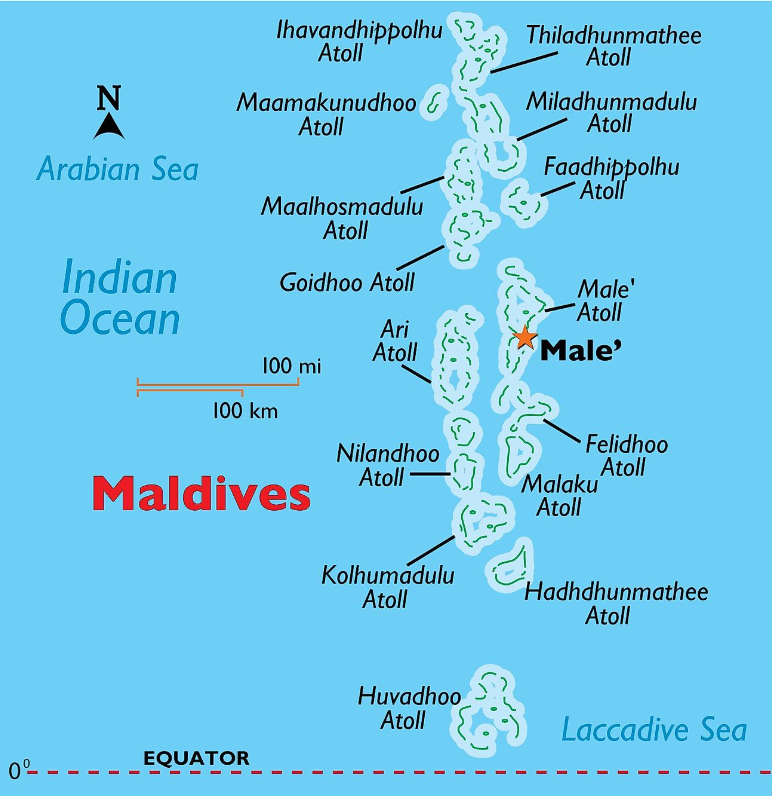
- About: The Maldives (Capital - Male) is an archipelagic nation in the Indian Ocean, comprising about 1,200 coral islands arranged in a double chain of 26 natural atolls.
- The Maldives has the world’s 7th-largest coral reef system and the 5th most diverse reef ecosystem.
- The Eight Degree Channel separates Minicoy Island of India (Lakshadweep) from the Maldives.
- Topography: It is the flattest country in the world, with terrain averaging around 1.5 metres above sea level.
- India-Maldives Military Exercises: Exercise EKUVERIN (India-Maldives), Exercise MILAN (multilateral naval exercise), Exercise DOSTI (India, Sri Lanka, and the Maldives).
| Read More: Strengthening India-Maldives Defence Cooperation |
DGLL Hosts 3rd IALA Council Meeting
The Directorate General of Lighthouses and Lightships (DGLL) successfully hosted the 3rd Council Meeting of the International Organization for Marine Aids to Navigation (IALA) in Mumbai, highlighting its growing role in shaping international maritime standards and navigation safety.
- Outcomes of 3rd IALA Council Meeting: India launched a Digital Ticketing Portal for Lighthouse Tourism to enhance digital access, transparency, and visitor convenience across 75 lighthouse tourism destinations nationwide.
- IALA: It was established in 1957 and transitioned from a Non-Governmental Organization to an Intergovernmental Organization in 2024.
- Guided by the motto “Successful voyages, Sustainable Planet”. It works to harmonise marine aids to navigation, enhance safety and efficiency of maritime transport, and protect the marine environment.
- IALA Governance & Structure: The IALA Council is its principal decision-making body. IALA has around 200 members and is headquartered in Saint-Germain-en-Laye, France.
- India’s Role in IALA: India has been a member of IALA since 1957. The DGLL represents India, has been a Council Member since 1982, and will host the IALA Conference in 2027.
- DGLL: The DGLL under the Ministry of Ports, Shipping & Waterways, responsible for the development, maintenance, and management of marine aids to navigation along India’s 11,098 km coastline, under the Marine Aids to Navigation Act, 2021.
- Headquartered in Noida and operating through nine regional directorates, DGLL also serves as the designated authority for training in aids to navigation and Vessel Traffic Services (VTS).
- As a signatory to the Safety of Life at Sea (SOLAS), 1974 Convention, India meets its navigation safety obligations through DGLL.
- DGLL manages a vast network of lighthouses, Racons, Navtex, buoys, and VTS, while also promoting lighthouse tourism and developing the world’s tallest Lighthouse Museum at Lothal, Gujarat.
| Read more: Marine Aids to Navigation Bill 2021 |