
23rd India–Russia Annual Summit
For Prelims: Free Trade Agreement, Eurasian Economic Union, International North–South Transport Corridor (INSTC), Chennai–Vladivostok maritime route, Northern Sea Route (NSR)
For Mains: India–Russia Strategic Partnership, India’s engagement in the Far East and Arctic,
Why in News?
Russian President Vladimir Putin visited India for the 23rd India–Russia Annual Summit, during which both nations signed agreements across defence, trade, economy, culture, healthcare, and education, reaffirming their long-standing India - Russia strategic partnership.
What are the Key Outcomes of 23rd India–Russia Annual Summit?
- Strengthening of the Strategic Partnership: India and Russia reaffirmed their Special and Privileged Strategic Partnership on the 25th anniversary of the India–Russia Strategic Partnership Declaration (2000), signing 16 agreements across defence, healthcare, trade, and culture.
- India and Russia agreed to fast-track the Free Trade Agreement (FTA) with the Eurasian Economic Union, adopted Programme 2030 to expand strategic economic cooperation, and set a target of USD 100 billion bilateral trade by 2030.
- Both sides agreed to deepen cooperation on payment systems, resolve pending investment issues, and reaffirmed energy as a key pillar of their partnership.
- Connectivity and Transport Initiatives: India and Russia agreed to deepen cooperation on major connectivity corridors, including the International North–South Transport Corridor (INSTC), the Chennai–Vladivostok maritime route, and the Northern Sea Route (NSR), along with training specialists for polar-water navigation.
- Both sides also noted ongoing collaboration between their railways to support technology exchange and strengthen transport links.
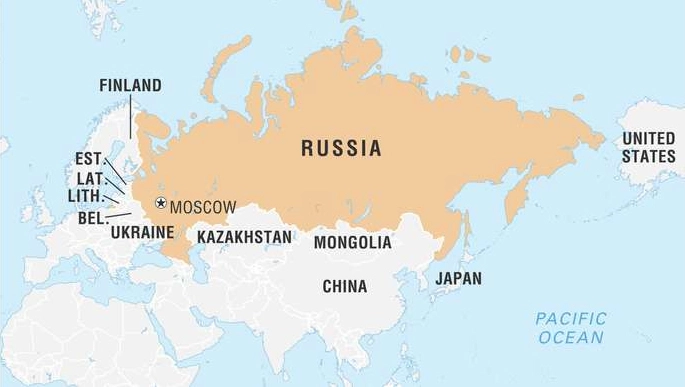
- Cooperation in the Russian Far East and Arctic: India and Russia agreed to deepen trade and investment engagement in the Far East and Arctic, guided by the 2024–2029 cooperation framework covering sectors like energy, mining, agriculture, and maritime transport.
- Both sides also highlighted growing collaboration on the NSR and affirmed regular Arctic consultations, with India ready to play a more active role as an Observer in the Arctic Council.
- Civil Nuclear and Space Cooperation: India and Russia agreed to deepen cooperation in nuclear energy, covering the full fuel cycle, support for the Kudankulam Nuclear Power Plant, and future high-technology applications, aligned with India’s goal of reaching 100 GW nuclear capacity by 2047.
- The two sides welcomed the strengthened ISRO–Roscosmos partnership in peaceful space cooperation, covering human spaceflight, satellite navigation and planetary exploration.
- Military Cooperation: Reaffirmed defence ties, with the partnership now shifting toward joint R&D, co-development, and co-production of advanced military systems.
- Both sides welcomed outcomes of India-Russia Inter-Governmental Commission on Military & Military Technical Cooperation (IRIGC-M&MTC) and agreed to boost Make-in-India manufacturing of spare parts and equipment for Russian-origin platforms, including for export to friendly countries.
- Multilateral Cooperation: Russia backed India’s demand for a permanent UNSC seat and assured full support for India’s BRICS Chairship in 2026.
- Russia adopted the Framework Agreement to join the International Big Cat Alliance (IBCA). India welcomed Russia's interest in joining the International Solar Alliance and the Coalition of Disaster Resilient Infrastructure (CDRI).
- Agreed to deepen cooperation on low-carbon technologies, climate finance, and implementation of Article 6 of the Paris Agreement.
- Counter-Terrorism Commitments: Both sides condemned recent attacks in Pahalgam (2025) and Crocus City Hall (2024), called for action against all UN-listed terror groups, and highlighted the need for a zero-tolerance approach rooted in international law.
- They supported finalizing the Comprehensive Convention on International Terrorism and emphasized strict implementation of UN resolutions.
What are the Key Areas of Cooperation Between India and Russia?
- Economic Cooperation: Bilateral trade reached USD 68.7 billion in FY 2024–25, driven largely by energy imports by India.
- Both countries aim for USD 100 billion in trade by 2030 and USD 50 billion in mutual investments by 2025.
- Indian exports are mainly pharmaceuticals, chemicals, iron & steel, and marine products
- India’s imports from Russia include crude oil and petroleum products, sunflower oil, fertilizers, coking coal, and precious stones/metals.
- Diplomatic cooperation: India and Russia maintain dense diplomatic engagement through mechanisms like the Annual Summit, Intergovernmental Commission on Trade, Economic, Scientific, Technological, and Cultural Cooperation (IRIGC-TEC), IRIGC-M&MTC and the 2+2 Dialogue, ensuring continuous high-level coordination.
- Defence Cooperation: It is the cornerstone of the partnership, guided by the 2021–2031 military-technical cooperation agreement.
- The relationship has evolved from a buyer–seller model to joint development and production of systems such as BrahMos, Su-30MKI, T-90 tanks and AK-203 rifles.
- Regular exercises like INDRA and Zapad-2025 reinforce interoperability, while major platforms like submarines, frigates and the S-400 system highlight continued trust.

- Science and Technology: India - Russia collaboration on Gaganyaan training reflects deep space partnership, while the Kudankulam Nuclear Power Plant remains India’s biggest civilian nuclear project with foreign support.
- The Science, Technology & Innovation roadmap signed in 2021 aims to boost innovation and commercialization between both countries.
- Education & Cultural: Education ties are strong, with nearly 20,000 Indian students studying in Russia, mainly in medical universities.
- Large-scale events like Bharat Utsav 2025 in Moscow and the Indian Film Festival held across multiple Russian cities reflect the growing cultural enthusiasm for India.
What are the Challenges in India–Russia Ties and Suggest Measures to Address Them?
|
Challenge |
Measures |
|
Slow arrival of S-400 units and Akula submarines due to the Ukraine war affects India’s readiness. |
Boost indigenous production via Make in India, Aatmanirbhar Bharat, and iDEX. Expand joint spares support under the IRIGC-M&MTC. |
|
In FY 2024-25, India imports over USD 63 billion from Russia but exports under USD 5 billion, making the trade structure unsustainable. |
Improve market access using the India–EAEU FTA negotiations. Promote pharma, IT and engineering exports through Trade Promotion Council of India missions. |
|
Moscow’s growing reliance on Beijing limits its ability to stay neutral in an India–China friction. |
Strengthen ties with Quad, Europe and Central Asia to offset reduced Russian strategic utility. |
|
Sanctions have blocked normal banking channels, leaving large dues unsettled. |
Develop alternate payment routes using Special Rupee Vostro Accounts, RBI’s INR settlement framework, and escrow systems via non-sanctioned banks. |
|
The recruitment of Indian nationals into the Russian army, often through fraudulent job offers, has resulted in casualties and widespread public anger in India. |
Strengthen migrant protections via the MADAD portal, eMigrate system, and bilateral mechanisms for monitored repatriation under Consular Dialogue Platforms with Russia. |
Conclusion
The India–Russia partnership remains steady, with trade rising and efforts to expand cooperation beyond defence. Both sides are exploring new export opportunities and deeper regional ties, especially with the Russian Far East. Connectivity projects like the INSTC and Chennai–Vladivostok corridor support Russia’s eastward pivot and India’s self-reliance goals.
|
Drishti Mains Question: India’s engagement with the Arctic and Russian Far East is an economic necessity. Critically discuss the opportunities and constraints. |
Frequently Asked Questions (FAQs)
Q. Which mechanism guides India–Russia economic cooperation?
The India–Russia Intergovernmental Commission on Trade, Economic, Scientific & Cultural Cooperation (IRIGC-TEC).
Q. Which major connectivity corridors were highlighted at the 23rd India–Russia Summit?
INSTC, Chennai–Vladivostok Maritime Corridor, and the Northern Sea Route.
Q. Which nuclear project represents India–Russia civil nuclear cooperation?
The Kudankulam Nuclear Power Plant in Tamil Nadu.
Q. Which defence platforms reflect India–Russia joint development or licensed production?
BrahMos missile, Su-30MKI aircraft, T-90 tanks, and AK-203 rifles.
Summary
- The 23rd India–Russia Summit strengthened their Special and Privileged Strategic Partnership through new agreements in defence, trade, energy, nuclear and space cooperation.
- Both sides set a USD 100 billion trade target by 2030 and pushed key connectivity projects like INSTC, the Chennai–Vladivostok corridor and the Northern Sea Route.
- Cooperation expanded in the Russian Far East, Arctic, digital payments, and civil nuclear projects such as Kudankulam.
- The discussions also addressed major challenges including defence delivery delays, trade imbalance, payment issues, and concerns over Indian nationals in the Russian military.
UPSC Civil Services Examination Previous Year Question (PYQ)
Prelims
Q. Recently, India signed a deal known as ‘Action Plan for Prioritization and Implementation of Cooperation Areas in the Nuclear Field’ with which of the following countries? (2019)
(a) Japan
(b) Russia
(c) The United Kingdom
(d) The United States of America
Ans: B
Mains
Q. What is the significance of Indo-US defence deals over Indo-Russian defence deals? Discuss with reference to stability in the Indo-Pacific region. (2020)
Depreciation of Indian Rupee
For Prelims: Depreciation of Indian Rupee, Foreign portfolio investors, Current account deficit, Devaluation, Special Vostro Rupee Accounts
For Mains: Causes and macroeconomic impact of currency depreciation in a developing economy, Effectiveness of rupee-based settlement mechanisms
Why in News?
The Indian rupee depreciated to a record low of 90.43 per US, driven by foreign fund outflows and India–US trade deal uncertainty, the rupee’s depreciation down 5% year-to-date has made it the worst-performing Asian currency in 2025.
What is Rupee Depreciation?
- About: Rupee depreciation refers to a fall in the value of the Indian Rupee (INR) relative to major foreign currencies, especially the USD.
Impact of Rupee Depreciation:
- Positive:
- Boosts Exports: Indian goods become cheaper abroad; helps sectors like IT, pharma, and textiles.
- Higher Remittance Value: NRIs get more rupees per dollar sent home, encouraging greater remittance inflows.
- Domestic Production Push: Costlier imports may encourage local manufacturing.
- Negative:
- Imported Inflation: Essential imports like crude oil, electronics, fertilisers become more expensive, pushing up inflation.
- Higher Debt Servicing Costs: Borrowers with foreign-currency loans must pay more rupees to service the same dollar debt.
- Widening Trade & Current Account Deficits: A costlier import bill expands deficits even if import volumes don’t rise.
- Risk of Capital Flight: Sustained depreciation weakens foreign investor confidence, triggering further outflows from equity and debt markets.
- Reduced Consumer Purchasing Power: Costlier imports weaken domestic demand.
Devaluation vs Depreciation of Currency
|
Devaluation |
Depreciation |
|
A deliberate downward adjustment in the value of a currency by the government/RBI. |
A market-driven fall in a currency’s value due to demand–supply forces. |
|
Devaluation happens only under a fixed or pegged exchange rate system. |
Depreciation usually happens under a floating or managed-floating exchange rate system (like India’s). |
|
Devaluation is done to boost exports, reduce trade deficit, or stimulate growth. |
Depreciation is caused by FPI outflows, high imports, inflation, widening CAD, global shocks, etc. |
What are the Factors Causing Rupee Depreciation?
- Sustained FPI Outflows: Foreign portfolio investors (FPIs) have pulled out over Rs 1.48 lakh crore since January 2025, shifting money to markets offering better returns.
- At the same time, global geopolitical risks have increased demand for the US dollar as a safe-haven asset.
- US–India Trade Deal Uncertainty: Delays in finalising the trade agreement have created doubts about future tariffs and export competitiveness, weakening confidence in India’s external sector and adding pressure on the rupee.
- Higher Dollar Demand from Importers: Rising imports especially gold, electronics, and machinery have led importers to buy more dollars, increasing demand for the greenback and contributing to rupee depreciation.
- India’s Trade Deficit: Merchandise exports dropped 11.8% in October 2025, while imports surged 16.6%.
- With exports weakening and imports rising sharply, the trade deficit has widened, adding pressure on the rupee.
- Higher Brent crude prices widen India’s import bill, worsening the trade deficit and weakening the rupee.
- High Gold Imports: Gold imports grew nearly 200% in October 2025. Domestic high gold prices further worsened the import bill, and although rising prices boosted the value of gold reserves, it wasn’t enough to offset overall losses.
- These elevated gold imports have widened the current account deficit and added to the rupee’s depreciation pressures.
How can the Indian Rupee be Strengthened?
- Expand Rupee-Based Trade Settlement: Scale up Special Vostro Rupee Accounts (SVRAs) with more countries to reduce dollar dependence.
- Promote Local Currency Settlement (LCS) agreements, especially with major trade partners in Asia, Africa, and the Gulf.
- Increase bilateral MoUs for INR-based invoicing and payment, lowering demand for USD in trade.
- Deepen Global Market for INR: Develop a global INR forex market so international banks can trade Rupee round the clock.
- Support inclusion of Indian G-secs in major global bond indices, attracting long-term passive foreign flows.
- Simplify KYC, documentation, and onboarding norms for FPIs and global custodians. Enable Indian banks to lend in INR to non-residents, expanding offshore Rupee usage. Promote Masala Bonds for raising INR funds globally.
- Strengthen External Sector Stability: Expand currency swap agreements to ensure liquidity support during volatility.
- Maintain strong forex reserves and calibrated RBI intervention to smooth disorderly movements.
- Promote export competitiveness through structural reforms rather than relying only on depreciation.
- Boost Global Acceptance of INR: Continue UPI international expansion, making Rupee-linked digital payments widely accessible.
- Position the Rupee for International Monetary Fund (IMF) Special Drawing Rights basket inclusion, enhancing its credibility as a reserve currency.
- Domestic Reforms to Support a Strong Rupee: Reduce trade deficit by diversifying export markets and boosting high-value manufacturing.
- Curb gold imports through policies like gold monetisation and digital gold options. Maintain stable inflation and prudent fiscal policy to attract steady capital flows.
Conclusion
The rupee’s fall stems from weak exports, high imports and sustained capital outflows. Strengthening it requires boosting export competitiveness and reducing import dependence. Stable macroeconomic policies and wider rupee-based trade will help restore confidence.
|
Drishti Mains Question: Analyse the main drivers of the recent rupee depreciation and evaluate its macroeconomic implications for India. |
Frequently Asked Questions (FAQs)
Q. What triggered the rupee’s fall to its record low value?
The fall was driven by heavy FPI outflows, uncertainty over the India–US trade deal, and strong global demand for the US dollar as a safe-haven asset.
Q. What mechanism is India using to reduce dependence on the US dollar in trade?
India is expanding Special Vostro Rupee Accounts (SVRAs) and Local Currency Settlement agreements to allow INR-based invoicing and payments.
Q. How can inclusion of Indian G-secs in global bond indices help the rupee?
It brings steady passive investment flows from global funds, improving foreign exchange liquidity and supporting rupee stability.
Q. What is the key difference between devaluation and depreciation relevant for India?
India experiences depreciation—a market-driven fall in rupee value—because it follows a floating/managed float exchange-rate system, not a fixed one.
Summary
- The rupee hit a record low of Rs 90.43/USD due to heavy FPI outflows, uncertainty over the India–US trade deal, and rising dollar demand amid global geopolitical risks.
- A widening trade deficit driven by falling exports, rising imports, high gold inflows, and expensive crude oil has added significant pressure on the rupee.
- Rupee depreciation brings mixed effects: it boosts exports and remittances but worsens imported inflation, debt servicing costs, and capital flight risks.
- Strengthening the rupee will require expanding INR-based trade settlement, improving capital flows, boosting export competitiveness, curbing gold imports, and maintaining strong macroeconomic stability.
UPSC Civil Services Examination Previous Year Question (PYQ)
Prelims
Q1. Which one of the following is not the most likely measure the Government/RBI takes to stop the slide of the Indian rupee? (2019)
(a) Curbing imports of non-essential goods and promoting exports
(b) Encouraging Indian borrowers to issue rupee-denominated Masala Bonds
(c) Easing conditions relating to external commercial borrowing
(d) Following an expansionary monetary policy
Ans: (d)
Q2. Consider the following statements:
- The effect of devaluation of a currency is that it necessarily improves the competitiveness of the domestic exports in the foreign markets
- increases the foreign value of domestic currency
- improves the trade balance
Which of the above statements is/are correct?
(a) 1 only
(b) 1 and 2
(c) 3 only
(d) 2 and 3
Ans: (a)
Mains
Q. How would the recent phenomena of protectionism and currency manipulations in world trade affect macroeconomic stability of India? (2018)
India’s Roadmap for Empowering Divyangjans
Why in News?
As the International Day of Persons with Disabilities (PwDs) (3rd December) reminds us of the need for an inclusive society, India is making strong progress toward inclusivity for PwDs, driven by major legal and policy reforms, government initiatives and landmark events like Purple Fest 2025.
- As per Census 2011, India has 2.68 crore PwDs, accounting for 2.21% of the population.
What are the Key Legal Framework and Government Initiatives for Disability Rights in India?
- Legal Framework:
- Rights of Persons with Disabilities Act, 2016: The cornerstone legislation, it recognizes 21 categories of disability, mandates reservation in education and employment, and legally obligates governments to ensure accessibility and full participation.
- Also, India ratified the UN Convention on the Rights of Persons with Disabilities (UNCRPD) in 2007, making a commitment to align its laws and policies with these principles
- National Trust Act, 1999: Focuses on welfare of individuals with Autism, Cerebral Palsy, Mental Retardation, and Multiple Disabilities.
- Rehabilitation Council of India (RCI) Act, 1992: Regulates and monitors rehabilitation training programmes. Maintains Central Rehabilitation Register of qualified professionals.
- Scheme for Implementation of RPwD Act, 2016 (SIPDA): Provides financial and technical support to implement RPwD Act projects. Promotes accessibility, awareness, inclusion, and skill development.
- Rights of Persons with Disabilities Act, 2016: The cornerstone legislation, it recognizes 21 categories of disability, mandates reservation in education and employment, and legally obligates governments to ensure accessibility and full participation.
- Government Initiatives
- Sugamya Bharat Abhiyan (Accessible India Campaign): It aims to achieve universal accessibility across 3 key domains- built infrastructure, transport systems and ICT-ensuring equal access and participation for all.
- Its revamped Sugamya Bharat App acts as a digital hub for information, grievance redressal, and accessibility mapping.
- Guided by the vision of Sabka Saath, Sabka Vikas, Sabka Vishwas, the campaign addresses long-standing barriers faced by PwDs.
- Assistance to Disabled Persons (ADIP) Scheme: Provides modern aids, appliances, and corrective surgeries (like cochlear implants) to support the physical and economic rehabilitation of PwDs.
- Unique ID for Persons with Disabilities (UDID): Creates a national database and issues a Unique Disability Identity Card to streamline the delivery of benefits and eliminate duplicate records.
- Deendayal Divyangjan Rehabilitation Scheme (DDRS): Offers financial assistance to voluntary organisations for the education, training, and rehabilitation of PwDs.
- PRASHAST App screens students for early disability identification.
- National Divyangjan Finance and Development Corporation (NDFDC): Promotes economic empowerment through concessional loans via schemes like Divyangjan Swavalamban Yojana for self-employment.
- PM-DAKSH-DEPwD Portal: A one-stop digital platform with two modules: 'Divyangjan Kaushal Vikas' for skill training and 'Divyangjan Rozgar Setu' for connecting PwDs with job opportunities from partnered companies.
- Divya Kala Mela: A national platform for Divyangjan entrepreneurs and artisans to showcase and sell their products, aligning with the "Vocal for Local" initiative and fostering economic empowerment.
- Artificial Limbs Manufacturing Corporation of India (ALIMCO): A not-for-profit CPSU that manufactures and distributes affordable assistive devices and is expanding reach through Pradhanmantri Divyasha Kendras.
- Promotion of Indian Sign Language (ISL): The Indian Sign Language Research and Training Centre (ISLRTC) is the nodal body, developing a vast digital repository of over 10,000 terms and academic videos.
- Sugamya Bharat Abhiyan (Accessible India Campaign): It aims to achieve universal accessibility across 3 key domains- built infrastructure, transport systems and ICT-ensuring equal access and participation for all.
What are the Challenges Confronting Persons with Disabilities (PwD) in India?
- Accessibility Challenges: Most public spaces lack ramps, railings, tactile paths, and accessible signage, and many digital platforms do not support screen readers, captions, or other accessibility features.
- A 2018 government report found that only 3% of buildings were fully accessible for PwDs.
- Inclusive Education Gap: The absence of trained teachers, accessible infrastructure, proper learning materials, and individualized support, along with attitudinal barriers, leads to high dropout rates among children with disabilities.
- As a result, only 19.3% of persons aged 15+ attain secondary-level education or higher.
- Employment and Economic Exclusion: The employment rate for PwDs remains extremely low, as private sector hesitation, misconceptions about productivity, and limited accommodations restrict hiring.
- Consequently, out of 1.3 crore employable PwDs, only 34 lakh are employed.
- High Healthcare Costs: High healthcare costs for assistive devices, therapies, and long-term care, combined with poor insurance coverage, make essential services inaccessible for many PwDs.
- This is worsened by a shortage of trained professionals and severe neglect of mental health services, especially for psychosocial disabilities.
What Further Steps are Necessary to Advance Inclusivity and Accessibility for PwDs in India?
- Bridge the Governance Deficit: Close the compliance gap by enforcing the RPwD Act, 2016 with strict deadlines.
- Empower regulatory bodies like the Chief Commissioner for Persons with Disabilities with greater authority to penalize violations and resolve grievances effectively.
- Universalize Accessibility: Enforce systematic retrofitting of all existing public assets under the Accessible India Campaign, with strict audits and deadlines aligned to UNCRPD obligations.
- Economic Empowerment through Skilling: Scale up and integrate the PM-DAKSH scheme under Skill India, focusing on market-aligned vocational training and enhancing placement outcomes via the Rozgar Setu portal.
- Promote Innovation in Accessible Technology: Invest in R&D for advanced AI-based solutions and accessible technologies to meet PwD needs in urban governance and digital literacy, supported through institutions like ALIMCO and dedicated start-up incubation.
Related Keywords for Mains
Socio-Economic Development:
- “Ability over Disability”: Focus on skills and potential, not limitations.
- “From Dependence to Dignity” – Economic empowerment and self-reliance.
- “Inclusion is the New Growth” – Inclusive policies as drivers of development.
Ethics & Integrity
- “Dignity is Non-Negotiable” – Moral duty to protect rights and respect PwDs.
- “Fairness Beyond Form” – Substantive equality, not just formal equality.
- “Service is the Strongest Law” – Public service prioritizing marginalized citizens.
Social Justice & Rights
- “Empowerment Without Exceptions” – Reaching the last person in society.
- “From Margins to Mainstream” – Integrating PwDs into all spheres of life.
- “Accessibility is the New Equality” – Physical, social, and digital inclusion.
Conclusion
India’s disability rights framework, anchored by the RPwD Act 2016 and the Accessible India Campaign, requires strict enforcement, expanded economic opportunities, and accessible technology innovation to fully integrate PwDs into the Viksit Bharat vision.
|
Drishti Mains Question: Q. How can a multi-pronged approach involving legal safeguards, technology, and public-private partnerships be harnessed to empower Persons with Disabilities effectively? |
Frequently Asked Questions (FAQs)
Q. What is the RPwD Act, 2016?
It is India’s key legislation recognizing 21 disabilities, mandating education and employment reservations, and ensuring accessibility and full participation for PwDs.
Q. What is the purpose of the Sugamya Bharat Abhiyan?
It aims to achieve universal accessibility across infrastructure, transport, and ICT, ensuring equal access and participation for all persons with disabilities.
Q. How does the UDID project benefit PwDs?
UDID creates a national database and issues a Unique Disability Identity Card, streamlining benefit delivery and preventing duplication of records.
Summary
- India has 2.68 crore persons with disabilities, supported by a robust legal framework including the RPwD Act, 2016.
- Key initiatives like Sugamya Bharat Abhiyan, PM-DAKSH, ADIP, UDID, and Divya Kala Mela ensure accessibility, skill development, and economic empowerment.
- Digital tools like the Sugamya Bharat App and PRASHAST facilitate real-time access and early intervention.
- Strengthening governance, universal accessibility, and assistive technology adoption remain critical for an inclusive and empowered society.
UPSC Civil Services Examination, Previous Year Question (PYQ)
Prelims
Q. India is home to lakhs of persons with disabilities. What are the benefits available to them under the law? (2011)
- Free schooling till the age of 18 years in government run schools.
- Preferential allotment of land for setting up business.
- Ramps in public buildings.
Which of the statements given above is/are correct?
(a) 1 only
(b) 2 and 3 only
(c) 1 and 3 only
(d) 1, 2 and 3
Ans: (d)
Mains
Q. Does the Rights of Persons with Disabilities Act, 2016 ensure effective mechanism for empowerment and inclusion of the intended beneficiaries in the society? Discuss. (2017)
Masala Bonds
Why in News?
The Enforcement Directorate (ED) has issued show-cause notices to the Kerala Chief Minister, and the former Finance Minister for allegedly violating Foreign Exchange Management Act (FEMA) and the directions of the Reserve Bank of India (RBI) over the issue of Masala Bonds.
What are Masala Bonds?
- About: Masala Bonds are the rupee-denominated bonds issued to overseas buyers for raising money by the Indian corporates. The price of the bond is denominated in Indian currency.
- The currency exchange risk is borne by the foreign investor, not the Indian issuer. This protects Indian borrowers from rupee depreciation volatility.
- Origin & Objective: The term was introduced by the International Finance Corporation (IFC) to reflect India's cultural identity (masala meaning spice blend).
- Its primary objective is to help Indian entities raise foreign capital without forex risk and to internationalize the Indian Rupee.
- Regulations: Governed by RBI guidelines under the External Commercial Borrowing (ECB) framework and Securities and Exchange Board of India (SEBI) norms.
- Listing: Typically listed on major international exchanges like the London Stock Exchange (LSE) or Singapore Exchange to attract global investors.
- The first Masala Bond was issued in November 2014 by the IFC on the London Stock Exchange.
- Maturity Norms: Under RBI guidelines, the minimum maturity is 3 years for bonds raising up to USD 50 million equivalent and 5 years for amounts above that threshold.
- Eligible Investors and Issuers: These bonds target qualified foreign investors (e.g., sovereign wealth funds, global pension funds, and insurers) who can take on rupee-denominated risk.
- Eligible Issuers: Indian corporations, NBFCs, and government-affiliated entities.
- Permitted & Restricted End-Uses of Funds:
- Permitted Uses: Refinancing existing rupee-denominated debt, Funding infrastructure, affordable housing, and integrated townships, and Meeting corporate working capital requirements.
- Restricted Uses: Real estate (except approved housing projects), Activities barred under FDI guidelines, Investment in domestic capital/equity markets, Land purchase or on-lending for prohibited activities.
Other Similar Types of Bonds
- Dim Sum Bonds (China): Renminbi (RMB)-denominated bonds issued outside mainland China (primarily in Hong Kong).
- Panda Bonds (RMB-denominated but issued within mainland China by foreign entities).
- Samurai Bond (Japan): Yen-denominated bonds issued in Japan by foreign entities.
- Yankee Bonds (United States): US Dollar-denominated bonds issued in the US by foreign governments or corporations.
- Kangaroo Bonds (Australia): Foreign bond issued in the Australian market by non-Australian firms and is denominated in Australian dollars (AUD).
Frequently Asked Questions (FAQs)
Q. What are Masala Bonds?
Masala Bonds are rupee-denominated offshore debt instruments where currency risk is borne by foreign investors, not Indian issuers.
Q. Why did IFC introduce the term Masala Bonds?
IFC coined the term in 2014 to reflect India’s cultural identity and promote rupee-denominated fundraising abroad.
Q. Why are Masala Bonds important for India?
They help Indian companies access foreign capital without exposing themselves to exchange-rate fluctuations, and they promote global demand for the Indian rupee, supporting India’s financial integration.
Summary
- The Enforcement Directorate (ED) has initiated action against Kerala's Chief Minister over alleged FEMA violations related to the state's issuance of Masala Bonds, bringing the instrument under legal and political scrutiny.
- Masala Bonds are offshore rupee-denominated debt tools that transfer currency risk to foreign investors, designed to attract foreign capital and internationalize the rupee.
- They are strictly regulated by the RBI's ECB framework.
- Eligible issuers (corporations/NBFCs), and permitted end-uses (infrastructure, refinancing debt).
UPSC Civil Services Examination, Previous Year Questions (PYQs)
Q. Indian Government Bond Yields are influenced by which of the following? (2021)
- Actions of the United States Federal Reserve
- Actions of the Reserve Bank of India
- Inflation and short-term interest rates
Select the correct answer using the code given below.
(a) 1 and 2 only
(b) 2 only
(c) 3 only
(d) 1, 2 and 3
Ans: (d)
Q. With reference to ‘IFC Masala Bonds’, sometimes seen in the news, which of the statements given below is/ are correct? (2016)
- The International Finance Corporation, which offers these bonds, is an arm of the World Bank.
- They are the rupee-denominated bonds and are a source of debt financing for the public and private sector.
Select the correct answer using the code given below:
(a) 1 only
(b) 2 only
(c) Both 1 and 2
(d) Neither 1 nor 2
Ans: (c)
Right to Disconnect Bill, 2025
A private member’s bill(PMB) titled the Right to Disconnect Bill 2025, was introduced in the Lok Sabha, it seeks to legally protect employees from after-hour work demands and reinforce healthy work–life boundaries.
- Key Provisions: The Bill proposes an Employees’ Welfare Authority to enforce the right to disconnect, conduct baseline studies, and negotiate terms on after-hour engagement for companies with over 10 workers.
- Employees refusing after-hours communication cannot face disciplinary action, and employers must pay overtime wages if work is assigned beyond fixed hours.
- The Bill calls for counselling services and the creation of digital detox centres to address mental-health impacts like telepressure, stress, and “info-obesity.”
- Global Parallel: Nations like France, Portugal, and Australia have already enacted similar rights, indicating international recognition of employee wellbeing.
- Private Member’s Bill: PMB is a proposed law introduced in the legislature by a Member of Parliament (MP) who is not a Minister.
- In the Indian parliamentary system, any MP, whether from the ruling party or the opposition, is considered a "Private Member" if they do not hold a ministerial portfolio.
- Private Members’ Bills, which are taken up on Fridays when Parliament is in session, seldom make it to passage.
- Since Independence, only 14 PMBs have been passed by both Houses and received Presidential assent. No PMB has passed both Houses since 1970.
| Read more: Reviving Private Members’ Bills |
Exercise Harimau Shakti 2025
The 5th edition of the India-Malaysia bilateral military Exercise Harimau Shakti 2025 commenced in Rajasthan to enhance interoperability in counter-terrorism and peacekeeping scenarios.
- Participants in 2025: Indian Dogra Regiment and Malaysia’s 25th Battalion Royal Malaysian Army.
Exercise Harimau Shakti
- About: Exercise Harimau Shakti is a bilateral military exercise between the Indian Army and the Malaysian Army. It focuses on jungle warfare and counter-insurgency operations.
- Started in 2012, it reinforces India’s Act East Policy and commitment to global peacekeeping frameworks.
- Objective & Mandate: Joint rehearsal of Sub-Conventional Operations under UN Chapter VII mandate, emphasizing counter-terrorist drills like cordon/search, heliborne operations, and casualty evacuation. Army Martial Arts Routine (AMAR), combat reflex shooting and Yoga is also part of the exercise curriculum.
- UN Chapter VII authorizes military/non-military actions (sanctions, blockades, troop deployment) for international peace enforcement.
Other Military Exercises Between India and Malaysia:
- Samudra Laksamana (bilateral maritime exercise), and Udara Shakti (bilateral air force exercise).

| Read More: Comprehensive Strategic Partnership between India and Malaysia |
India-US Tax Treaty Tussle
A proposed shift in the US interpretation of the India-US Double Taxation Avoidance Agreement (DTAA) threatens to remove critical tax benefits for returning Indian professionals, retirees, and remote workers.
- Current Benefit: RNOR status allows such individuals to be taxed only on income accruing or received in India; foreign income (e.g. US salary, dividends, interest, capital gains) remains untaxed in India during the RNOR period.
- Eligibility for RNOR: Must satisfy criteria such as spending 120–182 days in India, or being an NRI in 9 of 10 previous years, or spending ≤729 days in 7 preceding years.
- Impending Change: The US, citing a new OECD Commentary, may no longer recognize RNORs as Indian "tax residents" for the treaty, as India does not tax their global income during this status.
- Impacts: This would strip RNORs of treaty benefits, leading to a jump in US withholding tax rates (e.g., dividends taxed at 30% vs. 15-25%, interest at 30% vs. 15%).
- It jeopardizes existing cross-border investment structures and necessitates urgent financial re-evaluation for affected individuals, despite no change in India's domestic tax law.
- Legal Weight: While the OECD Commentary is not binding, its persuasive authority is strong, especially as both India and the US engage with the OECD framework, making the shift a credible threat.
| Read More: Advance Pricing Agreements and Double Taxation Avoidance Agreement |
Gaganyaan: ISRO’s Parachute Test Boosts Human-Rating Standards
Indian Space Research Organisation (ISRO) has successfully conducted the Integrated Main Parachute Airdrop Test (IMAT) — a crucial milestone in preparing India’s first human spaceflight mission, Gaganyaan, scheduled for Q1 2027. The test reinforces ISRO’s human-rating protocols and astronaut safety preparedness.
Integrated Main Parachute Airdrop Test ( IMAT)
- About:
- IMAT is a crucial test conducted by ISRO for the Gaganyaan human spaceflight mission.
- It involves dropping the full-scale parachute system from a high altitude to verify its performance during re-entry and landing.
- Success of IMAT brings India closer to launching its first human spaceflight.
- Features:
- Simulates extreme descent conditions, including delayed parachute opening.
- Checks structural strength, load-bearing, and stability under stress.
- Crucial part of human-rating certification to ensure astronaut safety·
Gaganyaan Mission
- About: India’s first human spaceflight program, aiming to send a crew of 3 astronauts to Low Earth Orbit (LEO) at 400 km for 3 days and return them safely to Earth.
- Includes unmanned test missions followed by the first manned mission expected to happen in early 2027.
- Significance: Gaganyaan success will place India among the elite group of nations (US, Russia, China) with human spaceflight capability.
- Key Technologies for Crew Safety:
- Human-Rated Launch Vehicle (HLVM3): It is a modified version of ISRO's LVM3 rocket. It includes solid, liquid, and cryogenic stages, re-configured to meet human rating requirements.
- The rocket is capable of launching the Orbital Module to a Low Earth Orbit (400 km) and features a Crew Escape System (CES) with high burn rate solid motors to ensure crew safety during emergencies at launch or ascent.
- CES ensures safe abort in case of emergencies during launch or ascent.
- Orbital Module (OM): Houses the Crew Module (CM) and Service Module (SM) with life support, avionics, and propulsion systems.
- The CM is a habitable space with an Earth-like environment, with a pressurized inner structure and unpressurized external structure.
- The SM supports the CM in orbit, providing thermal, propulsion, power systems, avionics, and deployment mechanisms, but remains unpressurized.
- Human-Rated Launch Vehicle (HLVM3): It is a modified version of ISRO's LVM3 rocket. It includes solid, liquid, and cryogenic stages, re-configured to meet human rating requirements.
| Read More: Mission Gaganyaan |