Salkhan Fossil Park Added to UNESCO Tentative List | Uttar Pradesh | 30 Jun 2025
Why in News?
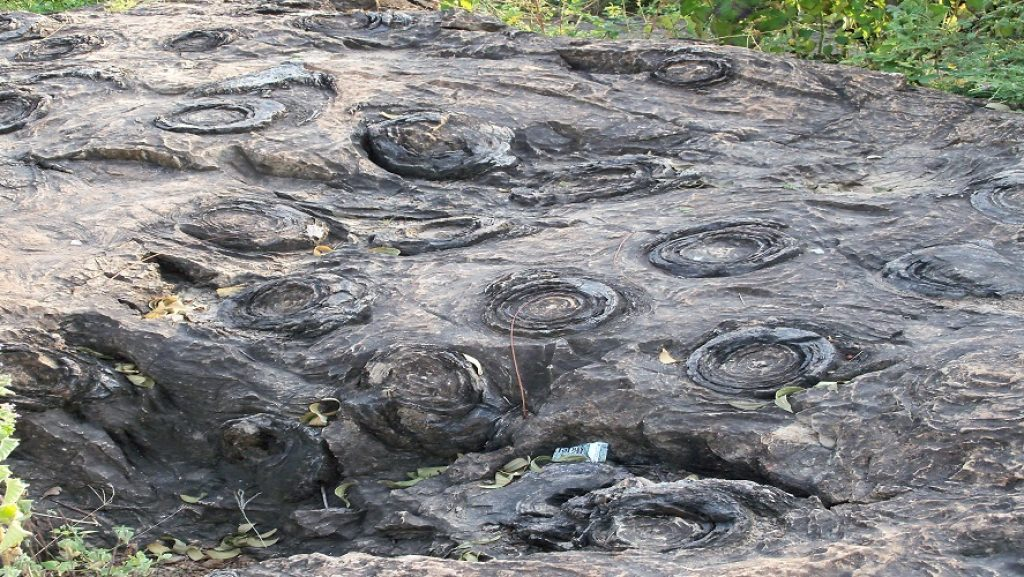
Uttar Pradesh’s Salkhan Fossil Park, also known as Sonbhadra Fossils Park, has been included in UNESCO’s Tentative List of World Heritage Sites.
Key Points
- About Salkhan Fossil Park:
- Located in Salkhan village in the Sonbhadra district of Uttar Pradesh, the park spans 25 hectares within the scenic Kaimur Range, adjacent to Kaimoor Wildlife Sanctuary.
- Though geological interest in the site dates back to the 1930s, it was officially declared a fossil park in 2002.
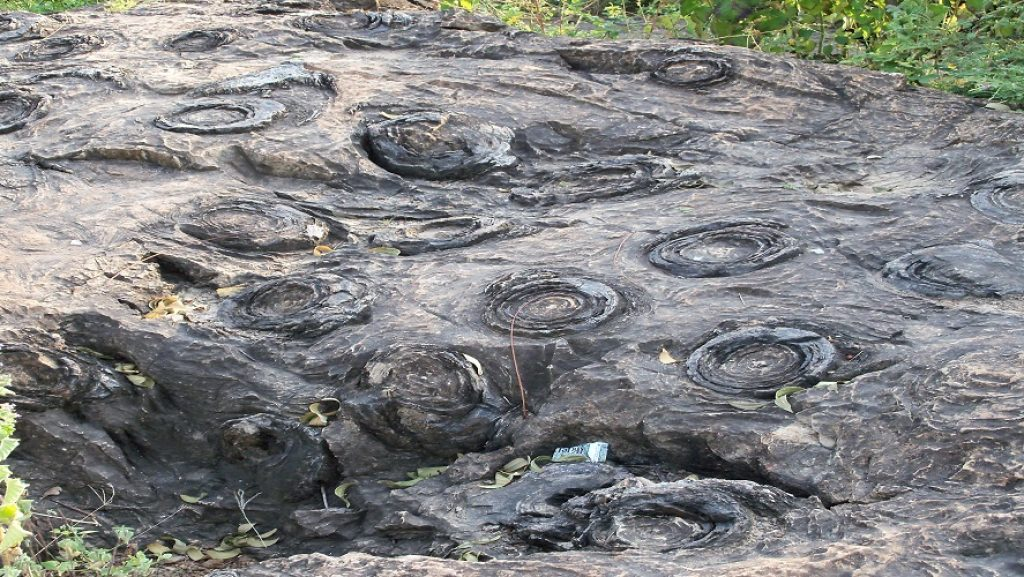
- Salkhan Fossil Park preserves stromatolites, rare layered sedimentary structures formed by ancient cyanobacteria (blue-green algae).
- Cyanobacteria, emerging around 3.5 billion years ago, were likely the first organisms to perform oxygenic photosynthesis, triggering the Great Oxidation Event (~2.4 billion years ago), which enriched Earth's atmosphere with oxygen, enabling complex life.
- These photosynthesizing microorganisms belong to the Mesoproterozoic Era (1.6–1.0 billion years ago), making the fossils up to 1.4 billion years old.
- Such formations are globally rare, placing Salkhan among the oldest fossil sites in the world, older than Shark Bay (Australia) and Yellowstone (USA).
- Challenging Scientific Assumptions:
- Discoveries at Salkhan have transformed scientific understanding of early life.
- Previously, scientists believed life began around 570 million years ago, but the ancient stromatolites here predate that timeline.
- The fossils provide vital clues into the Earth’s earliest biosphere and the evolution of oceanic ecosystems.
World Heritage Sites (WHS)
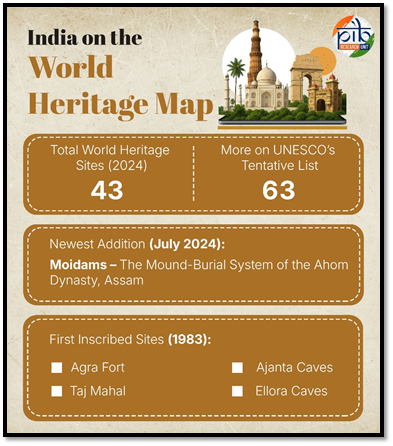
- WHS are locations recognized for their outstanding universal value to humanity and are inscribed on the World Heritage List for protection and preservation for future generations.
- These sites may be cultural, natural, or mixed in nature. WHS are safeguarded under the World Heritage Convention, 1972, an international agreement adopted by UNESCO member countries.
- The Convention outlines the responsibilities of State Parties in identifying, protecting, and preserving such sites.
- The list of WHS are maintained by the international 'World Heritage Programme', administered by the UNESCO World Heritage Committee.
- India ratified the Convention in 1977.
Defence Materials and Stores Research & Development Establishment (DMSRDE) | Uttar Pradesh | 30 Jun 2025
Why in News?
Raksha Rajya Mantri Shri Sanjay Seth visited the Defence Materials and Stores Research & Development Establishment (DMSRDE) in Kanpur, a key DRDO laboratory, and appreciated its contributions to indigenous defence technologies, especially in the context of Operation Sindoor.
Key Points
- Recognition for Indigenous Defence Innovations:
- DMSRDE received appreciation for its significant contributions to the development of advanced defence systems and indigenous products.
- Key achievements include:
- Bullet Proof Jacket (Level-6)-- Lightest bulletproof jacket in the country
- Naphthyl Fuel for the BrahMos missile
- High-Pressure Polymeric Membranes for Indian Coast Guard ships
- Silicon Carbide Fibres
- Activated Carbon Fabric-based Chemical, Biological, Radiological and Nuclear (CBRN) Suits
- A range of stealth materials enhancing battlefield survivability
- Leading in Technology Transfer and Industry Collaboration:
- DMSRDE carried out the highest number of technology transfers among all DRDO labs over the past two years.
- The lab has intensified its focus on collaboration with industry and academia, aligning with the national vision of achieving a developed India (Viksit Bharat) by 2047.
- Broader Contributions:
- About DRDO:
- DRDO was established in 1958 by merging the Technical Development Establishment (TDEs) of the Indian Army, the Directorate of Technical Development and Production (DTDP), and the Defence Science Organisation (DSO).
- Philosophy: The guiding principle of DRDO is "Balasya Mulam Vigyanam" (Strength lies in science), driving the nation in both peace and war.
- Mission: Achieve self-reliance in critical defence technologies and systems while equipping the Indian armed forces with state-of-the-art weapon systems and equipment, as per the requirements of the three Services.
BrahMos Missile
- An Indo-Russian joint venture, the BrahMos missile has a range of 290 km and is the world's fastest cruise missile with a top speed of Mach 2.8 (about three times the speed of sound).
- It is a two-stage (solid propellant engine in the first stage and liquid ramjet in the second) missile.
- It is a multiplatform missile which can be launched with great accuracy from land, air and sea having multi-capability capabilities and can operate during day and night despite bad weather.
- It operates on the "fire and forget" principle i.e., it does not require guidance after launch.
Operation Sindoor
- About: Operation Sindoor was a coordinated precision strike operation launched by the Indian Armed Forces on 7th May 2025, in retaliation for the Pahalgam terror attack.
- It was executed through the coordinated efforts of the Army, Navy, and Air Force, conducted from Indian territory.
- Unlike past operations with aggressive names meant to project strength, this operation’s name was chosen as a personal tribute to the victims, particularly the widows of the Pahalgam attack.
- Targets: Under 'Operation Sindoor,' the Indian Armed Forces targeted terror facilities linked to Jaish-e-Mohammed, Lashkar-e-Taiba, and Hizbul Mujahideen in Pakistan and PoJK.
- These strikes aimed to dismantle terrorist infrastructure used for planning attacks against India.