
Recalibrating India-Russia Relations | 05 Dec 2025
This editorial is based on “For India-Russia partnership, Moscow must do its fair share” which was published in The Indian Express on 05/12/2025. The article brings into picture the enduring significance of India-Russia ties, reaffirmed by Putin’s visit despite the geopolitical strain of the Ukraine conflict. It argues that the partnership must evolve pragmatically so India can balance relations with both Russia and the West while preserving this strategic bond.
For Prelims: India-Russia Relations, Ukraine conflict, RD-191M semi-cryogenic engine, Chennai-Vladivostok Maritime Corridor (CVMC) , Gaganyaan mission, India-Eurasian Economic Union (EAEU) Free Trade Agreement, Yuri Gagarin Cosmonaut Training Center.
For Mains: Key Areas of Cooperation Between India and Russia, Key Areas of Friction Between India and Russia.
Russian President Vladimir Putin's visit to India marks an important reaffirmation of a decades-old friendship that has weathered global upheavals. While the Ukraine conflict has complicated India's diplomatic balancing act, it has also demonstrated New Delhi's commitment to maintaining strategic autonomy and nurturing time-tested partnerships. Russia remains an indispensable partner for India, particularly in defense and energy cooperation, and both nations recognize the mutual value of their relationship. Moving forward, the challenge lies not in questioning the partnership's relevance but in adapting it to contemporary realities where India engages meaningfully with both Russia and the West. With goodwill and pragmatism on both sides, India and Russia can navigate current complexities while preserving the core strengths of their strategic partnership for mutual benefit.
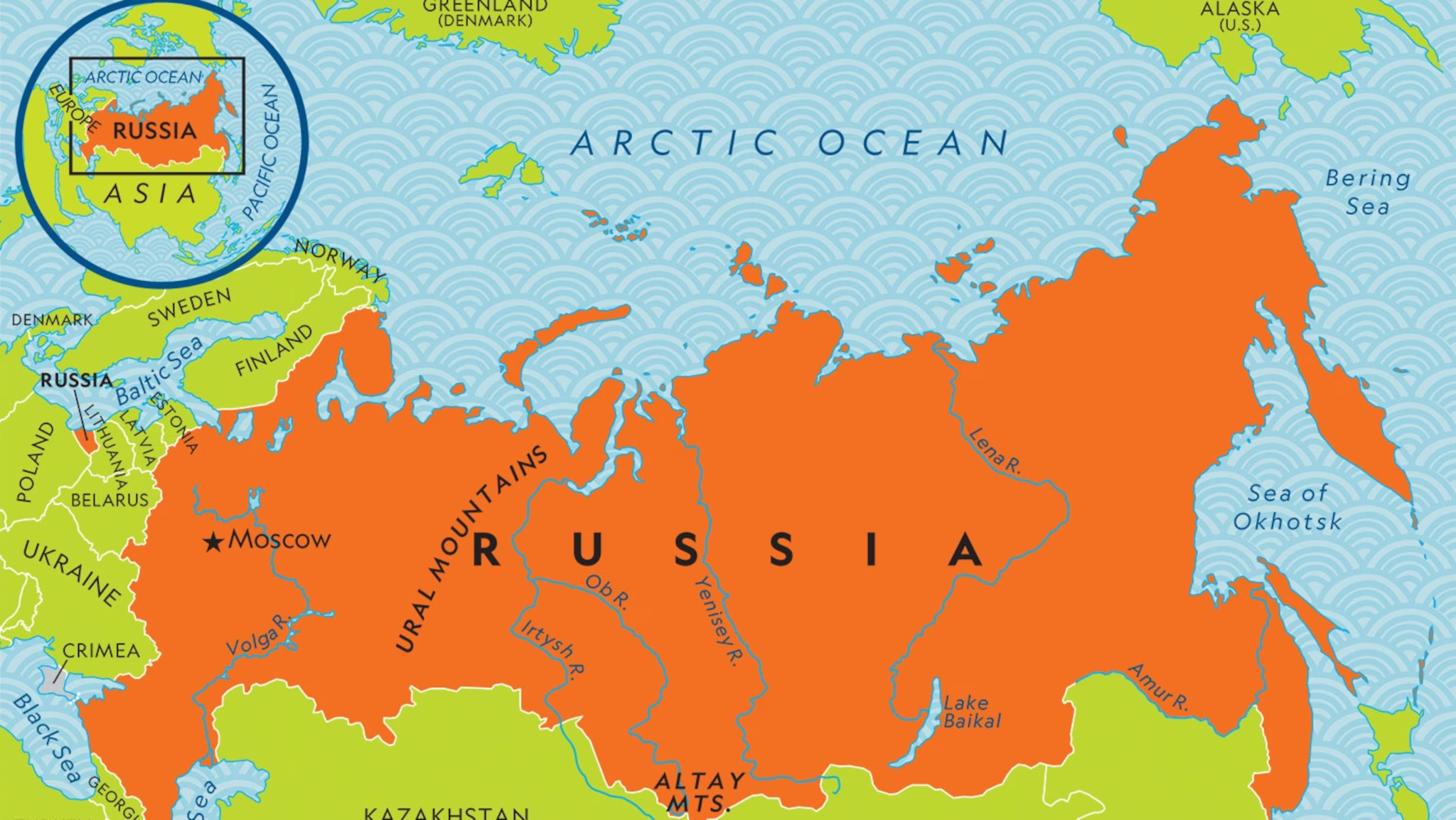
What are the Key Areas of Cooperation Between India and Russia?
- Defense-From 'Buyer-Seller' to Joint Production: The defense partnership has structurally shifted towards "Make in India" and technology transfer to ensure India's strategic autonomy and maintain combat readiness amidst global supply chain disruptions.
- This pivots from outright purchases to co-development, mitigating Western sanctions risk while ensuring long-term maintenance of India's Russian-origin arsenal.
- The 2025 deal for RD-191M semi-cryogenic engine technology transfer and the ongoing delivery of the remaining S-400 Triumf regiments (worth $5.43 billion) underscore this deep technical integration beyond mere sales.
- Energy Security-Strategic Hydrocarbon Alignment: India has aggressively leveraged discounted Russian crude oil to insulate its domestic economy from global inflation, effectively turning Russia into a premier energy guarantor despite geopolitical pressure.
- This cooperation is now expanding into long-term investments in the Russian Far East to secure equity oil and coking coal assets for India's steel industry.
- Russia remained India's top oil supplier in 2024-25, with bilateral trade hitting a record $68.7 billion (FY25).
- Connectivity-The Geoeconomic Maritime Corridors: Both nations are operationalizing new logistical routes like the Chennai-Vladivostok Maritime Corridor (CVMC) to bypass the volatile Suez Canal and reduce freight costs, creating a direct "energy bridge."
- This strategic diversification reduces transit time significantly, enhancing trade efficiency and integrating India into the Arctic and Pacific resource networks.
- The CVMC was declared operational in November 2024, reducing transit time from 40 to 24 days (40% faster) and cutting shipping distance to 5,600 nautical miles compared to the European route.
- Nuclear Energy-Clean Power & Technology Synergy: Civil nuclear cooperation remains the most tangible high-tech collaboration, serving as a pillar for India's net-zero goals through the construction of large-scale reactors without the restrictive conditions often imposed by Western partners.
- The partnership is stable and expanding, with Russia being the only country currently building nuclear plants in India.
- Recently, Russia's state-run nuclear corporation delivered the first consignment of nuclear fuel for initial loading of the third reactor at the Kudankulam nuclear power plant in Tamil Nadu.
- Space Sector- High-End Propulsion Technology: Collaboration has graduated to critical strategic areas such as human spaceflight and cryogenic propulsion, filling crucial technology gaps in India's ambitious Gaganyaan mission.
- This sector exemplifies "trust-based" cooperation, as Russia provides niche technologies like semi-cryogenic engines that are rarely shared by other space powers.
- Astronauts for India's groundbreaking human spaceflight initiative, Gaganyaan, underwent comprehensive training in Russia’s Yuri Gagarin Cosmonaut Training Center.
- Fertilizer Security-Agricultural Supply Chain Stability: Russia has emerged as the definitive supplier of soil nutrients for India, effectively insulating Indian agriculture from global fertilizer price shocks and ensuring food security for 1.4 billion people.
- This reliable supply chain is critical given the volatility in global gas prices, which directly impacts domestic fertilizer production costs.
- Russia supplied over 90% of India's mixed fertilizer imports in 2024-25, and high-level talks in August 2025 (IRIGC-TEC) focused on locking in long-term supplies of DAP and Urea to stabilize Indian subsidy bills.
- Trade Settlement & Financial Interoperability: To circumvent sanctions and sustain trade momentum, both nations are vigorously refining rupee-ruble payment mechanisms and exploring the India-Eurasian Economic Union (EAEU) Free Trade Agreement.
- The focus is now on fixing the trade imbalance by encouraging Russian reinvestment of accumulated rupees into Indian infrastructure and government securities.
- India and Russia boost rupee-rouble payments despite U.S. sanctions, aiming to reach a $100 billion trade target by 2030.
- Diplomatic Trust:Beyond transactional ties, the relationship is anchored in exceptional "leader-to-leader" trust that transcends standard diplomatic engagement, acting as a geopolitical stabilizer against Western coercion and reinforcing India's commitment to strategic autonomy in a multipolar order.
- This personalized diplomacy ensures that political will overrides bureaucratic inertia, keeping the partnership resilient despite external sanctions and ideological pressure.
- Exemplifying this unique rapport, the Indian PM broke strict diplomatic protocol to personally receive President Putin at the airport recently, a rare gesture signaling that Russia remains a top-tier priority despite global isolationist narratives.
What are the Key Areas of Friction Between India and Russia?
- Defense Supply Chain Disruptions- Capability Gaps: The ongoing Ukraine war has severely impacted Russia's ability to fulfill critical defense contracts, creating capability voids for the Indian Armed Forces and forcing New Delhi to look elsewhere.
- This unreliability risks India’s operational readiness against China, as Russia prioritizes its own frontline needs over export commitments, delaying vital air defense and naval platforms.
- The remaining two regiments of the S-400 system have been delayed to 2026, and the lease of the Akula-class nuclear submarine (worth $3 billion) is now pushed to 2028, years behind the original schedule.
- Trade Imbalance-The One-Way Economic Street: Bilateral trade has become unsustainably lopsided, effectively turning India into a net capital exporter to Russia without reciprocal market access for Indian pharmaceuticals or manufacturing.
- This structural deficit weakens the economic logic of the partnership, as Russia continues to import high-value goods from China while buying negligible amounts from India.
- Official data shows that India's exports to Russia in FY25 were only USD 4.88 billion, while imports were much higher at USD 63.84 billion.
- Strategic Divergence-The "Junior Partner" Syndrome: India views Russia's deepening dependence on China with alarm, fearing that Moscow is becoming a "junior partner" to Beijing, which could compromise Russian neutrality in a potential Sino-Indian conflict.
- This geopolitical realignment threatens to dilute Russia's utility as a strategic balancer for India in the Eurasian landmass.
- China-Russia trade hits record high at $244.8 billion in 2024, amid deepening political ties and Western sanctions, and Russia’s reliance on Chinese dual-use technology has made it increasingly beholden to Beijing’s strategic interests.
- Payment Crisis: The "Rupee Trap" Mechanism: The suspension of standard banking channels due to sanctions has led to a payment crisis where billions of dollars in payments are either stuck or difficult to settle.
- Russian exporters are reluctant to accumulate volatile Indian Rupees, leading to friction over exchange mechanisms and stalling future defense and energy contracts.
- A lopsided trade relationship with India is forcing Russia to accumulate up to $1 billion each month in rupee assets.
- Energy Economics- Erosion of Strategic Discounts: The economic windfall from discounted Russian oil is shrinking rapidly as discounts narrow and Western sanctions on tankers and insurance tighten, raising the diplomatic cost for India without the previous high economic reward.
- This reduces the incentive for India to brave Western pressure, as the price advantage over Middle Eastern crude diminishes.
- Over about three years, India saved 12.6 billion dollars from buying Russian oil, but notes that the discount shrank to its lowest level in 2024–25, when Russian crude was only about 2.3 dollars per barrel cheaper than other imports on average.
- Humanitarian Irritant- Indian Nationals in Russian Army: A major diplomatic irritant has emerged regarding the recruitment of Indian nationals into the Russian army, often under false pretexts, leading to casualties and public outrage in India.
- This issue has strained people-to-people ties and forced the Indian Ministry of External Affairs to issue stern demands for immediate discharges.
- As of Nov 2025, the MEA confirmed 44 Indians were still serving in the Russian military despite promises of release.
- Regional Friction-The Pakistan Factor: Despite India's concerns, Russia continues to engage militarily with Pakistan, signaling a willingness to sell arms and conduct drills to diversify its partners in South Asia.
- This "hedging" strategy by Moscow irritates New Delhi, which views any military strengthening of Pakistan as a direct security threat.
- In September 2025, Russia and Pakistan conducted the "Druzhba-2025" joint military exercise, despite India's tacit objections.
What Measures can India Adopt to Advance its Relations with Russia?
- Institutionalize a "Sovereign Value Chain" for Manufacturing: India should propose a "Sovereign Value Chain" initiative that moves beyond simple trade to deep industrial integration, specifically targeting sectors where Russia faces Western sanctions.
- By inviting Russian firms to set up exclusive manufacturing zones in India for critical components, like aerospace spares and precision engineering, India can utilize the "trapped" rupee reserves for domestic industrial growth while solving Russia's supply chain crisis.
- This creates a symbiotic "Make in India" loop that serves both Russian maintenance needs and global export markets.
- Operationalize a "Skilled Migration Corridor" to the Far East: To address Russia's severe demographic decline and labor shortage, India should negotiate a formal, state-backed "Skilled Migration Corridor" focused on the Russian Far East.
- This measure would involve harmonizing vocational standards and creating special visa regimes for Indian engineers, construction workers, and healthcare professionals to work in developing Siberian infrastructure.
- This not only eases Russia's domestic pressure but also strategically implants an Indian demographic footprint in a region increasingly dominated by Chinese influence.
- Establish a "Rupee-Ruble Reinvestment Treaty": India needs to structure a formal "Reinvestment Treaty" that mandates Russian surplus rupees be invested into specific, high-yield Indian infrastructure bonds and corporate debt.
- Instead of leaving funds idle in Vostro accounts, this mechanism would convert Russia's trade surplus into long-term equity stakes in Indian ports, refineries, and highways.
- This financial engineering transforms a short-term payment hurdle into a long-term economic anchor, ensuring Russia has a vested interest in the stability of the Indian economy.
- Co-Develop an "Arctic-Tropics" Maritime Grid: India must elevate the Chennai-Vladivostok Maritime Corridor from a mere trade route to a joint "Shipbuilding and Logistics Grid."
- This involves collaborative construction of ice-class merchant vessels in Indian shipyards using Russian cryogenic technology, specifically designed for the Northern Sea Route.
- By integrating India’s tropical maritime expertise with Russia’s polar navigation dominance, both nations can control a new, sanction-proof global logistics artery that bypasses traditional Western-controlled choke points.
- Create a "Critical Technology Exclusion Zone": Both nations should establish a joint research ecosystem specifically for "denied technologies" such as quantum computing, high-grade metallurgy, and civilian nuclear propulsion.
- By pooling resources in areas where both face potential or actual Western technology denial, they can create a "Critical Technology Exclusion Zone" that operates independently of global IP regimes.
- This measure secures "technological sovereignty," ensuring that strategic advancements in space and defense are immune to external geopolitical blackmail.
- Launch a "Third-Market" Defense Export Consortium: India should push to transform the defense relationship to a "Joint Export Consortium" targeting Africa and Southeast Asia.
- Using the BrahMos model, this measure would involve retrofitting and upgrading Soviet-era platforms in third countries using Indian software and Russian hardware.
- This strategy monetizes the partnership globally, allowing India to become a maintenance hub for Russian-origin equipment worldwide, thereby keeping the Russian defense industry viable while expanding India's diplomatic reach.
- Formulate an "Energy Equity" Acquisition Strategy: Instead of relying on spot market oil purchases, India should aggressively pursue an "Energy Equity" strategy by swapping trade surpluses for upstream stakes in Russia’s premier oil and gas fields.
- This measure involves acquiring equity in projects like Vostok Oil or Arctic LNG-2, effectively locking in energy security at the source rather than the market price.
- This shifts the relationship from transactional trade to strategic asset ownership, insulating India’s energy needs from future global price volatility and supply shocks.
Conclusion
India-Russia relations stand at a pivotal juncture where historical trust must be matched with strategic realism. As both nations confront shifting geopolitical and economic landscapes, the partnership must evolve through deeper technology, energy, and financial cooperation. As India’s EAM aptly stated, “India-Russia ties have long been a factor of stability in international relations, and their growth and evolution are not only in the mutual interest of the two countries but also in the interest of the world.”
|
Drishti Mains Question: “The resilience of India-Russia relations is being tested by shifting geopolitical alignments and Russia’s growing dependence on China.” Examine how emerging frictions and new opportunities are reshaping this strategic partnership. |
FAQs:
Q. Why is Putin’s visit to India in 2025 significant?
Putin’s visit marks a reaffirmation of India–Russia ties at a time when the Ukraine war, Western sanctions, and global geopolitical shifts have strained Russia’s global standing and complicated India’s balancing strategy between Russia and the West.
Q. What makes Russia an indispensable partner for India?
Russia remains crucial for India in strategic areas such as defence supply, nuclear energy, space technology, hydrocarbons, fertilizers, and connectivity projects like the Chennai–Vladivostok Maritime Corridor.
Q. What are the key friction points between India and Russia today?
Major irritants include defence delivery delays due to the Ukraine war, a severely lopsided trade imbalance, the rupee payment crisis, Russia’s growing dependence on China, and issues like Indian nationals recruited into the Russian army.
Q. How can India strengthen and modernize its relationship with Russia?
India can advance ties by building sovereign manufacturing value chains, creating a skilled migration corridor to the Russian Far East, operationalizing a rupee–ruble reinvestment treaty, co-developing Arctic–tropics logistics, and jointly pursuing denied technologies and defence exports.
Q. Is the India–Russia relationship losing relevance?
No. The relationship is evolving. While challenges exist, shared strategic interests, defence legacy systems, energy interdependence, and long-term geopolitical logic ensure that the partnership remains valuable—provided both nations adapt to new global realities.
UPSC Civil Services Examination Previous Year Question (PYQ)
Prelims
Q. Recently, India signed a deal known as ‘Action Plan for Prioritization and Implementation of Cooperation Areas in the Nuclear Field’ with which of the following countries? (2019)
(a) Japan
(b) Russia
(c) The United Kingdom
(d) The United States of America
Ans: B
Mains
Q. What is the significance of Indo-US defence deals over Indo-Russian defence deals? Discuss with reference to stability in the Indo-Pacific region. (2020)