
India–Israel Ties- From Tactical Engagement to Structural Partnership | 28 Feb 2026
This editorial is based on “An Israel visit- its strategic, economic, regional impact” which was published in The Hindu on 25/02/2026. This editorial examines the transformation of India-Israel ties into a "Special Strategic Partnership," analyzing its multidimensional impact across defense, agriculture, and regional connectivity. It further evaluates the friction points, such as the Iran factor and FTA hurdles, while proposing a roadmap for long-term bilateral resilience.
For Prelims:IMEC Corridor, I2U2 Grouping,UNRWA, Barak-8 Missile System, Non-Alignment Movement.
For Mains:Evolution of India-Israel relation , significance of this relationship for India, key frictions in India-Israel relation, measures needed.
In an increasingly volatile West Asian region marked by shifting alliances and persistent conflict, India–Israel relations have emerged as a pillar of strategic stability. What began as a cautious engagement has evolved into a deep, de-hyphenated partnership spanning defence, technology, agriculture and innovation. Shared security challenges and complementary capabilities have pushed ties from transactional arms trade to joint development and co-production. Today, the relationship reflects India’s pragmatic diplomacy, balancing regional sensitivities while pursuing strategic autonomy and national interest.
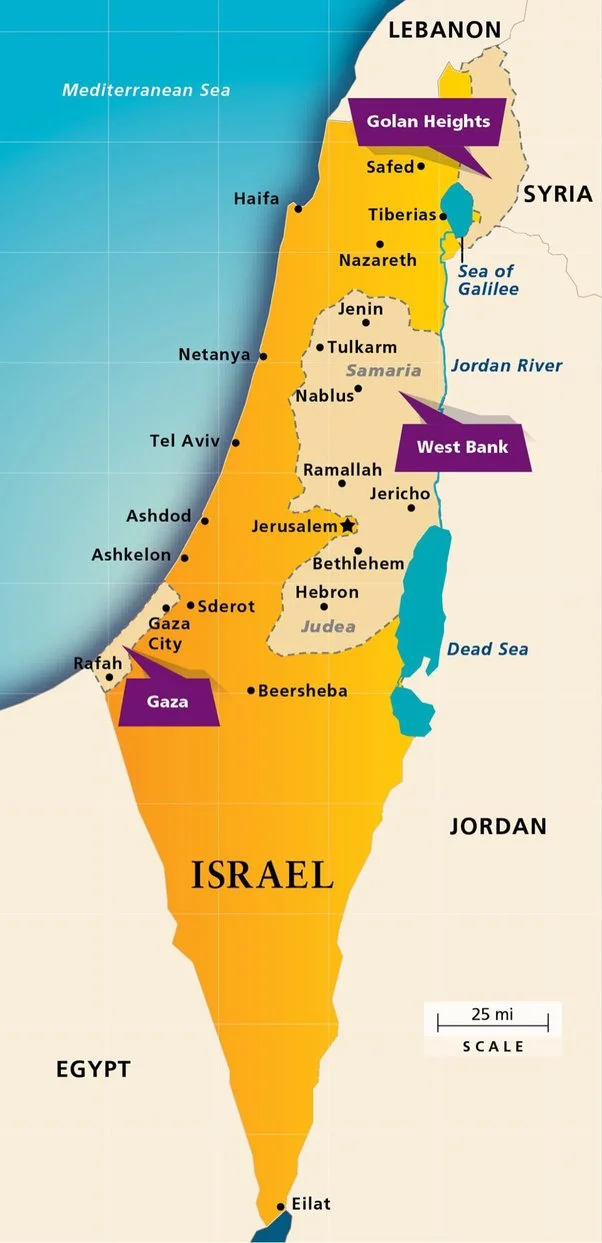
How India-Israel Relations Have Evolved Over the Time ?
- Phase I- Ideological Estrangement & Hesitation (1948–1992): During this period, India’s foreign policy was anchored in Non-Alignment (NAM) and solidarity with the Arab world.
- Key Developments:
- 1947–1950: India voted against the UN Partition Plan but recognized Israel in 1950.
- 1953: Israel opened a consulate in Mumbai, but full diplomatic ties remained frozen.
- Covert Pragmatism: Despite the lack of formal ties, Israel provided critical, discreet military assistance during the 1965, and 1971 War with Pakistan.
- Key Developments:
- Phase II: Prudent Rapprochement (1992–2014)
- The end of the Cold War and the 1991 Madrid Peace Process provided India the "geopolitical cover" to normalize ties.
- Key Drivers: Collapse of the Soviet Union (India’s primary arms supplier), economic liberalization, and the rise of cross-border terrorism.
- Key Developments:
- 1992: Full diplomatic relations established under PM Narasimha Rao.
- The Kargil Catalyst (1999): Israel provided emergency supplies of laser-guided munitions and UAVs when others hesitated, building deep institutional trust.
- Defense-Centric Growth: The relationship was often described as a "closet affair", robust in defense and intelligence but low-key in public diplomacy.
- Technological Seeds: Initiation of the Indo-Israel Agricultural Project (IIAP) and cooperation in space (e.g., RISAT-2 launch).
- Phase III: The Era of De-Hyphenation & Strategic Depth (2014–2023)
- The relationship "came out of the closet" and moved toward a public, ideological, and strategic embrace.
- Key Drivers: "De-hyphenation" (treating Israel and Palestine as independent bilateral tracks), shared concerns over radical extremism, and India’s Atmanirbhar Bharat (Self-Reliant India) mission.
- Key Developments:
- Strategic Upgrade: Ties were elevated to a Strategic Partnership in 2017.
- Technological Fusion: Creation of the I4F (Industrial R&D and Innovation Fund) to co-develop futuristic tech.
- I2U2 Grouping (2021): India joined Israel, the UAE, and the USA in a "West Asian Quad," focusing on food security and clean energy.
- Phase IV: The Special Strategic Partnership (2024–Present)
- As of early 2026, the relationship has entered a "Special" category, characterized by integration into regional security and high-tech supply chains.
- Key Developments:
- In June 2025, India abstained from the UN General Assembly resolution calling for an immediate, unconditional, and permanent ceasefire in Gaza, citing a lack of negotiation and an imbalanced text. This decision reflects India's nuanced approach, balancing its humanitarian aid to Gaza with strong economic and strategic ties to Israel.
- In February 2026, the relationship was upgraded to a "Special Strategic Partnership for Peace, Innovation, and Prosperity."
- Also, the Bilateral Investment Agreement was welcomed and formally advanced Free Trade Agreement negotiations.
- The two countries launched a new initiative on Critical and Emerging Technologies covering AI, semiconductors, quantum computing, biotechnology and cyber systems.
- India and Israel agreed to establish the India–Israel Academic Cooperation Forum to deepen institutional linkages. An MoU between Nalanda University and Hebrew University of Jerusalem will promote joint research and academic exchanges.
- Also, they decided to establish an India–Israel Cyber Centre of Excellence in India.
What is the Significance of Israel for India?
- Strategic Defense and National Security: Israel serves as a bedrock for India’s defense self-reliance by providing "no-strings-attached" technology and critical systems during crises, especially as India shifts toward indigenous manufacturing.
- By shifting from a restrictive buyer-seller dynamic to joint co-production, India secures critical asymmetric warfare capabilities.
- This targeted technology transfer in cutting-edge defensive and offensive weaponry directly neutralizes regional multi-front threats.
- For instance, India currently absorbs 34% of Israeli arms exports, with bilateral defense trade totaling $20.5 billion between 2020 and 2024.
- Further, according to a recent Forbes India report, Israel has agreed to arms deals worth $8.6 billion with India in 2026.
- By shifting from a restrictive buyer-seller dynamic to joint co-production, India secures critical asymmetric warfare capabilities.
- Economic Integration & Trade Resilience: The economic synergy between New Delhi and Jerusalem is rapidly diversifying beyond traditional diamonds into high-tech electronics and digital commerce.
- Total merchandise trade between the two countries stood at USD 3.62 billion in FY 2024-2025.
- Securing a comprehensive Free Trade Agreement (FTA) acts as a critical strategic gateway for Indian businesses into wider Mediterranean markets.
- This deepening geo-economic integration builds highly resilient supply chains, insulating both nations from global maritime and trade disruptions.
- Agriculture, Water & Climate Security: Israel’s pioneering mastery over arid-climate technologies is fundamentally vital for ensuring India’s long-term food and water security.
- By institutionalizing Israeli precision agriculture, micro-irrigation, and wastewater recycling, India drastically improves crop yields and resource efficiency.
- This grassroots-level agricultural diplomacy directly uplifts millions of Indian farmers while combating the severe, unpredictable impacts of global climate change.
- The Indo-Israel Centres of Excellence (CoE) are high-tech, intensive agricultural hubs established to facilitate the transfer of Israeli agri-technologies adapted to local conditions.
- By institutionalizing Israeli precision agriculture, micro-irrigation, and wastewater recycling, India drastically improves crop yields and resource efficiency.
- Labor Mobility & Geopolitical Convergence: The partnership has seamlessly evolved into a demographic bridge, aligning India's vast talent pool with Israel's labor-starved industrial sectors.
- This strategic workforce mobility generates a high-value remittance corridor while embedding Indian influence deeply within West Asian geo-economics.
- Furthermore, this human capital synergy directly anchors broader multilateral frameworks like the I2U2 grouping and the India-Middle East-Europe Economic Corridor (IMEC).
- Capitalizing on Israel's recent labor recalibration, which saw 61,000 new foreign worker permits issued in 2025, Indian talent is rapidly filling critical workforce gaps.
- In a landmark February 2026 agreement, Israel officially committed to inducting an additional 50,000 Indian workers over five years across construction, manufacturing, and caregiving.
- Critical Technologies & Cyber Defense: Israel’s global dominance in cybersecurity and artificial intelligence serves as a critical multiplier for India’s digital economy and national security architecture.
- The February 2026 bilateral framework launched a new initiative on Critical and Emerging Technologies covering AI, semiconductors, quantum computing, biotechnology and cyber systems.
- A dedicated MoU on Artificial Intelligence was also signed to institutionalize cooperation in frontier technologies.
- The February 2026 bilateral framework launched a new initiative on Critical and Emerging Technologies covering AI, semiconductors, quantum computing, biotechnology and cyber systems.
- Space Cooperation & Extraterrestrial Commercialization: The ISRO-Israel Space Agency (ISA) partnership perfectly complements Israel's miniaturized payload ingenuity with India’s highly reliable, cost-effective heavy-lift launch capabilities.
- This symbiotic space diplomacy enhances dual-use earth observation arrays, strengthening both climate-resilient agricultural monitoring and strategic military surveillance.
- Pooling resources for deep-space missions and satellite communications ensures both nations remain highly competitive in the rapidly commercializing global space economy.
- India has successfully launched multiple Israeli satellites over the years, including the strategic radar imaging RISAT series and the student-built DUKIFAT-3.
- Geostrategic Minilateralism (I2U2 & IMEC): India aggressively leverages its profound Israeli ties to anchor influential minilateral coalitions, providing a strategic counterweight to China’s expanding footprint in West Asia.
- Integrating Israel into the I2U2 framework and the India-Middle East-Europe Economic Corridor (IMEC) transforms fragmented bilateral ties into a unified regional architecture.
- At the first I2U2 summit, the UAE pledged $2 billion for food parks in India .
- Despite intense regional hostilities throughout 2024 and 2025, the February 2026 strategic dialogues decisively reaffirmed both nations' financial commitments to IMEC’s trans-regional rail-to-port infrastructure.
- Integrating Israel into the I2U2 framework and the India-Middle East-Europe Economic Corridor (IMEC) transforms fragmented bilateral ties into a unified regional architecture.
What are the Areas of Friction in the India-Israel Relationship?
- The Iran Paradox & Strategic Balancing: India’s deepening engagement with Iran, specifically via the Chabahar Port, remains a primary point of contention for an Israel that views Tehran as an existential threat.
- New Delhi views Iran as a critical gateway to Central Asia and a vital energy partner, a stance that directly clashes with Israel’s objective of total diplomatic and economic isolation of the Iranian regime.
- India's 10-year lease for the Chabahar Port (signed 2024) and continued discussions on the International North-South Transport Corridor (INSTC) signal long-term commitment to Iran.
- However, India also distanced itself from SCO’s statement that “strongly” condemned Israeli military strikes on Iran in June 2025, underscoring its effort to maintain a balanced diplomatic stance with both Israel and other regional partners.
- New Delhi views Iran as a critical gateway to Central Asia and a vital energy partner, a stance that directly clashes with Israel’s objective of total diplomatic and economic isolation of the Iranian regime.
- Divergence on the Palestinian Statehood Question: Despite its "de-hyphenation" policy, India maintains a principled, historical commitment to a sovereign, independent State of Palestine, which frequently irks right-wing Israeli administrations.
- While India has moved closer to Israel on counter-terrorism, it consistently votes in favor of a Two-State Solution at the United Nations, contrasting with the current Israeli government’s expansionist rhetoric in the West Bank.
- Also, the Government of India released US$2.5 million to the 'United Nations Relief and Works Agency for Palestine Refugees in the Near East' (UNRWA), as part of its annual contribution of US$5 million for the year 2024-25.
- At the October 2025 NAM Summit, India reiterated that a negotiated two-state solution is the "only viable path," a statement that stood in stark contrast to the Netanyahu government's contemporary posture.
- While India has moved closer to Israel on counter-terrorism, it consistently votes in favor of a Two-State Solution at the United Nations, contrasting with the current Israeli government’s expansionist rhetoric in the West Bank.
- Defense Dependency vs. Technology Sovereignty: India’s "Atmanirbhar Bharat" (Self-Reliant India) mission creates friction with Israel’s traditional "buyer-seller" model, as New Delhi now demands full Transfer of Technology (ToT) and intellectual property rights.
- Israel, protective of its niche technological edge, often hesitates to share core source codes or sensitive high-end algorithms, leading to prolonged procurement delays.
- While Israel is a major arms supplier to India, current joint ventures still face challenges regarding the "Indigenous Content" percentage.
- Israel, protective of its niche technological edge, often hesitates to share core source codes or sensitive high-end algorithms, leading to prolonged procurement delays.
- Economic Protectionism & FTA Hurdles: Despite decades of talk, the India-Israel Free Trade Agreement (FTA) remains unsigned due to persistent disagreements over market access for agricultural products and chemical patents.
- India’s protective stance on its domestic farming sectors clashes with Israel’s desire to export high-tech agricultural solutions without heavy tariffs.
- Conversely, India seeks greater mobility for its IT professionals, which faces periodic resistance from Israeli labor unions.
- Also, during 2024-25, India's exports to Israel fell 52% to $2.14 billion, down from $4.52 billion in 2023-24.
- India’s protective stance on its domestic farming sectors clashes with Israel’s desire to export high-tech agricultural solutions without heavy tariffs.
- Cybersecurity Ethics & The Pegasus Shadow: The recurring controversy surrounding Israeli-made spyware, specifically Pegasus, continues to create domestic political friction in India and complicates bilateral "Deep Tech" cooperation.
- While the Indian government values Israeli cyber-intelligence tools, the fallout from surveillance allegations creates a reputational risk that forces the relationship into a "low-transparency" zone.
- Investigations into the use of NSO Group’s tools in India have triggered multiple Supreme Court-led inquiries.
- While the Indian government values Israeli cyber-intelligence tools, the fallout from surveillance allegations creates a reputational risk that forces the relationship into a "low-transparency" zone.
- Regional Volatility & IMEC Viability: The viability of the India-Middle East-Europe Economic Corridor (IMEC) is heavily dependent on regional stability, which is frequently disrupted by the Israel-Palestine and Israel-Hezbollah conflicts.
- India’s massive investment in this corridor is "held hostage" by Israeli security decisions that can freeze construction or trade flows indefinitely.
- The IMEC project, intended to bring down logistics costs by up to 30%, reduce transportation time by 40%, faced a near-total logistical halt during the recent regional escalations.
- The China "Dual-Trade" Dilemma: India remains deeply wary of Israel’s substantial economic ties with China, particularly Beijing's management of the Haifa Bay Port and investments in Israeli tech startups.
- New Delhi views China as its primary strategic adversary and is concerned that Israeli innovations shared with India might also be accessible to Chinese entities via commercial channels.
- This creates a "security vetting" friction where India occasionally prefers Western or domestic alternatives over Israeli tech to avoid Chinese "backdoor" risks.
What Measures are Needed to Strengthen India-Israel Relations?
- Institutionalizing the "Co-Development" Defense Paradigm: Both nations must move beyond the "buyer-seller" model by operationalizing a dedicated Joint Defense Technology Fund to fuel the co-production of niche military systems under Atmanirbhar Bharat.
- This requires synchronizing the Israeli "battle-proven" algorithm culture with India’s industrial-scale manufacturing, specifically focusing on Directed Energy Weapons (DEWs), autonomous drone swarms, and AI-driven predictive maintenance.
- By establishing regional MRO (Maintenance, Repair, and Overhaul) hubs in India for Israeli equipment used globally, the partnership can create a permanent industrial footprint that ensures strategic autonomy for both.
- Operationalizing the "Digital Intelligence" & Semiconductor Corridor: To secure the digital backbone of both economies, India and Israel should launch a high-speed Cyber-Semiconductor Pathway that links the "Silicon Wadi" of Tel Aviv with India’s "Semicon City" (Dholera/Bengaluru).
- This involves joint R&D in "Security-by-Design" for chipsets and the co-development of sovereign Quantum Cryptography protocols to protect critical financial and energy infrastructure.
- Establishing a permanent India-Israel AI Ethics & Innovation Lab would allow both nations to set global standards for the responsible military and civilian use of artificial intelligence, bypassing dependency on Western or Chinese tech-stacks.
- Institutionalizing Structured "G-to-G" Labor & Talent Mobility: Following the 2026 mobility agreements, both nations must replace unregulated migration with a Structured Talent Mobility Framework that aligns India’s vast STEM workforce with Israel’s high-tech and industrial labor shortages.
- This involves the "mutual recognition of qualifications" and the establishment of pre-departure Centers of Excellence in Vocational Training within India, specifically tailored to Israeli industrial standards.
- Anchoring the "IMEC-I2U2" Connectivity Nexus: To insulate bilateral trade from regional volatility, New Delhi and Jerusalem must prioritize the physical and digital completion of the India-Middle East-Europe Economic Corridor (IMEC).
- This necessitates joint investments in "Smart Port" technology at major ports, integrating blockchain-based logistics to ensure seamless, real-time tracking of goods across the Mediterranean-Arabian sea link.
- By treating the I2U2 grouping as a commercial clearing-house, both nations can de-risk their economic interests, turning the corridor into a permanent, multi-modal alternative to the Belt and Road Initiative.
- Scaling "Precision Diplomacy" in Water & Agriculture: The partnership must shift from demonstration-based "Centers of Excellence" to large-scale, Tech-Integrated District Irrigation projects that bring Israeli desalination and "Water-Grid" management to India's most water-stressed regions.
- This involves the mass-deployment of Satellite-Based Precision Farming and AI-driven "Internet of Things" (IoT) sensors in Indian fields, supported by a joint Agri-Fintech Fund that offers micro-insurance to farmers adopting these high-tech tools.
- Such a transition would turn "Agriculture Diplomacy" into a "National Security" asset, ensuring food price stability and climate resilience for India’s massive agrarian population.
- Expanding "Minilateral" Space & Satellite Commercialization: India’s ISRO and the Israel Space Agency (ISA) should establish a Bilateral Space-Tech Incubation Center to co-manufacture miniaturized, low-earth orbit (LEO) satellites for global commercial export.
- By combining India’s cost-effective PSLV/SSLV launch capability with Israel’s miniaturization and Synthetic Aperture Radar (SAR) expertise, the duo can dominate the "New Space" market for the Global South.
- This measure would provide critical "eye-in-the-sky" data for climate monitoring, maritime domain awareness, and border surveillance, independent of major power satellite constellations.
- Strengthening "People-to-People" Track-II Diplomacy: The strategic relationship lacks a robust "civilizational" layer, which can be addressed by launching more "Targeted Youth Fellowship" and an integrated University Research Exchange program.
- By fostering deep academic and cultural ties through joint film co-production and "Startup Bridges," the partnership can build a domestic constituency in both nations that transcends shifting political administrations.
Conclusion:
The India-Israel partnership has transcended its traditional defense-heavy origins to become a sophisticated, multidimensional alliance essential for India’s technological and food security. While geopolitical divergences on Iran and Palestine persist, the "de-hyphenation" strategy ensures that bilateral pragmatic interests remain insulated from regional volatility. Moving forward, the successful integration of the IMEC corridor and high-tech co-production will be the true litmus test for this "Special Strategic Partnership."
|
Drishti Mains Question "While defense remains the bedrock of India-Israel ties, the future of the partnership lies in the nexus of food, water, and digital security." Discuss this statement in the context of recent bilateral developments. |
FAQs
1. What is meant by "de-hyphenation" in India's policy?
It is the diplomatic practice of treating relations with Israel and Palestine as independent, bilateral tracks without letting one influence the other.
2. What is the I2U2 grouping?
It is a minilateral forum comprising India, Israel, the UAE, and the USA, focusing on joint investments in water, energy, transportation, and space.
3. How does Israel contribute to India’s "Atmanirbhar Bharat"?
Through a shift from a buyer-seller model to joint venture co-production and deep technology transfer in defense and semiconductors.
4. What is the significance of the Haifa Port for India?
It serves as a strategic maritime node for the India-Middle East-Europe Economic Corridor (IMEC), connecting Indian goods to European markets.
5. What is the India-Israel Industrial R&D and Innovation Fund (I4F)?
A $40 million joint fund designed to promote and facilitate collaborative industrial R&D projects between Indian and Israeli companies.
UPSC Civil Services Examination, Previous Year Questions (PYQs)
Prelims
Q. The term “two-state solution” is sometimes mentioned in the news in the context of the affairs of (2018).
(a) China
(b) Israel
(c) Iraq
(d) Yemen
Ans: (b)
Mains
Q.“India’s relations with Israel have, of late, acquired a depth and diversity, which cannot be rolled back.” Discuss (2018)