
Six Sigma Standards for ECMS | 31 Mar 2026
Why in News?
The Union Minister of Electronics and Information Technology issued a stern ultimatum to the electronics component industry, stating that the government has demanded key reforms such as adoption of Six Sigma standards, warning that Electronics Component Manufacturing Scheme (ECMS) disbursements could be halted if companies fail to comply.
What are Six Sigma Standards?
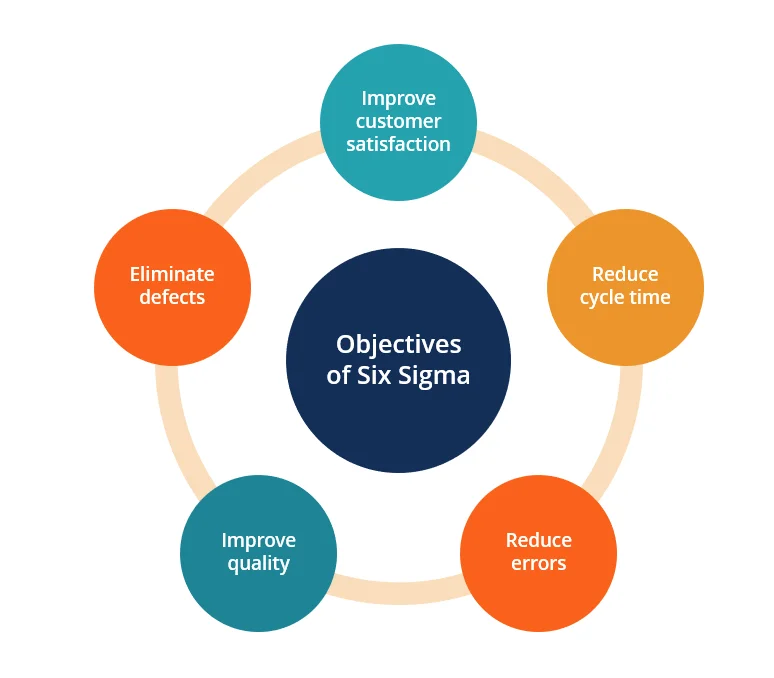
- About: Six Sigma is a set of management tools and techniques designed to improve business processes by greatly reducing the probability that an error or defect will occur.
- Target: It is a data-driven methodology that aims for near perfection, specifically limiting defects to a maximum of 3.4 defects per million opportunities (DPMO).
- Relevance: In the highly precise electronics manufacturing sector, Six Sigma certification is a universally accepted requirement by global brands when selecting vendors and partners.
- The government through Six Sigma wants to prevent the industry from merely riding the subsidy wave. Beneficiaries who do not invest in design will be "weeded out" to ensure national resources are spent on building strategic autonomy.
- Without achieving Six Sigma quality and possessing robust in-house engineering design, Indian manufacturers will struggle to secure long-term contracts from top-tier global tech brands.
What is the Electronics Component Manufacturing Scheme (ECMS)?
- ECMS: Launched by the Ministry of Electronics and Information Technology (MeitY), it aims to build a self-sustaining electronics component ecosystem by attracting domestic and global investment across the value chain by integrating its domestic electronic industry with the Global Value Chains (GVCs).
- The scheme was officially notified in 2025 with an initial outlay of Rs 22,919 crore.
- Recognizing the sector's rapid growth, the Union Budget 2026–27 significantly boosted the scheme's financial outlay to Rs 40,000 crore from its initial allocation.
- Incentive Structure: The ECMS provides turnover-linked, capex-linked, or hybrid fiscal incentives, with a portion of both turnover and capex incentives linked to employment generation.
- Incentives will be given on a first-come, first-served basis to firms ready for early production.
- Tenure: ECMS has a six-year tenure with a one-year gestation period for the Turnover Linked Incentive, while the Capex Incentive is available for a five-year period.
- Target Segments: It focuses on sub-assemblies such as camera modules and display units, bare components including multi-layer PCBs, capacitors, and resistors, and capital equipment used in electronics factories, together accounting for nearly 90% of the Bill of Materials (BoM) for mobile phones.
- Surplus Investment Interest: As of 2026, a total of 75 projects worth 61,000 crore rupees have been approved under the ECMS programme.
- ECMS is expected to generate Rs 10.34 lakh crore over six years and create 1.41 lakh direct jobs and several lakh indirect opportunities.
- ECMS aims to position electronics as India’s potential second-largest export item, following a six-fold production increase in the last decade.
- Synergy with Other Missions: ECMS works in tandem with the India Semiconductor Mission (ISM), the Production-Linked Incentive (PLI) schemes, and the Modified Electronics Manufacturing Clusters (EMC 2.0) to create a holistic "plug-and-play" technology ecosystem.
- The ECMS represents a critical pivot in India’s economic strategy—transitioning from "Assembly in India" to a true "Make and Design in India" model.
- By building a robust domestic supply chain for electronic components, India is laying the groundwork to achieve its ambitious target of a USD 500 billion electronics manufacturing ecosystem by 2030–31.
What Key Reforms Has the Government Demanded?
- Quality Upgrade: Adoption of Six Sigma standards to ensure global-level manufacturing quality.
- Design Capability: Development of in-house electronics design to move up the value chain.
- Domestic Supply Chain: Promotion of a “Swadeshi” ecosystem to reduce import dependence.
- Skill Development: Structured workforce training programmes for industry readiness.
- Accountability: Time-bound implementation plans, with risk of exclusion for non-compliance.
Frequently Asked Questions (FAQs)
- What is the Electronics Component Manufacturing Scheme (ECMS)?
It is a MeitY scheme providing turnover and capex-linked incentives to boost domestic electronics component manufacturing and integrate India into GVCs. - What is Six Sigma in manufacturing?
It is a data-driven quality control methodology aiming to reduce defects to 3.4 per million opportunities, ensuring near-perfect production standards. - Why is the government stressing design capabilities under ECMS?
To move from low-value assembly to high-value design and innovation, enhancing global competitiveness and strategic autonomy. - How does ECMS support employment generation?
Incentives are partly linked to job creation, with the scheme expected to generate over 1.4 lakh direct jobs. - How is ECMS linked with other initiatives?
It complements PLI, India Semiconductor Mission, and EMC 2.0 to build a comprehensive electronics manufacturing ecosystem.
UPSC Civil Services Examination, Previous Year Question (PYQ)
Prelims:
Q. ‘R2 Code of Practices’ constitutes a tool available for promoting the adoption of (2020)
(a) environmentally responsible practices in electronics recycling industry
(b) ecological management of Wetlands of International Importance under the Ramsar Convention
(c) sustainable practices in the cultivation of agricultural crops in degraded lands
(d) ‘Environmental Impact Assessment’ in the exploitation of natural resources
Ans: (a)