
Samrat Samprati | 03 Apr 2026
Why in News?
On the occasion of Mahavir Jayanti (31st March 2026), the Prime Minister inaugurated the Samrat Samprati Museum in Koba, Gandhinagar.
- The museum serves as a dedicated space to preserve Jain history and honour the legacy of Samrat Samprati, the grandson of Ashoka the Great, who played a role in the spread of Jainism analogous to Ashoka’s role in the global propagation of Buddhism.
Who was Samrat Samprati?
- About: He was the fifth emperor of the Mauryan Empire, reigning from approximately 224 to 215 BCE. He was the grandson of the legendary Emperor Ashoka and the son of Kunala.
- Following Ashoka’s death in 232 BCE, historical records suggest the Mauryan Empire was divided between his grandsons, Dasharatha and Samprati.
- Religious Affiliation: While the Mauryan dynasty saw diverse faiths, Chandragupta Maurya (Jainism), Ashoka (Buddhism), and Dasharatha (Ajivika), Samprati is the central figure for the Shvetambara Jain tradition.
- Often referred to as the "Jain Ashoka," Samprati is a pivotal figure in history for his role in the global propagation of Jainism.
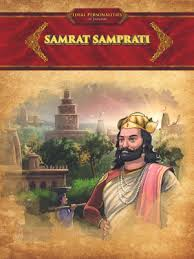
How did Samrat Samprati Contribute to the Spread of Jainism?
- Temple Construction and Iconography: Samprati established a robust "ritual culture" of temple worship that gave Jainism a physical and permanent presence across the subcontinent.
- Traditional Jain texts credit him with building 125,000 new temples (derasars) and renovating 36,000 older ones. Many ancient Jain temples in Western India that lack specific donor inscriptions are traditionally attributed to Samprati's reign.
- He is said to have commissioned and consecrated over 12.5 million idols of the Tirthankaras made of stone and metal.
- Missionary Expeditions: Samprati systematically sent missionaries to spread the principles of Ahimsa (non-violence) far beyond the Mauryan heartland.
- According to historical narratives, he first sent Mauryan soldiers disguised as Jain monks into "non-Aryan" (unconquered or tribal) territories. Accounts suggest he sent emissaries to Afghanistan, Nepal, Sri Lanka, Myanmar (Burma), and even parts of Central Asia, attempting to make Jainism an international faith.
- He successfully rooted Jainism in regions like Andhra, Tamil Nadu, Karnataka, Maharashtra, Saurashtra (Gujarat), and Rajputana (Rajasthan).
- State Patronage and Ethical Governance: By ruling from major hubs like Ujjain and Pataliputra, he ensured that Jain institutions received royal patronage and protection.
- Samprati aligned the state’s welfare programs with the Jain principle of compassion (Karuna).
- He established approximately 700 Sada-vratas (Charitable Houses) across the empire. These centers provided free food, shelter, and medical care to the poor, travellers, and the ascetic community.
- Monastic Logistics: He ensured that Jain monks, who travel strictly on foot and rely on alms, had safe routes and access to proper, ritually pure food during their long journeys across the empire.
Major Sects of Jainism
- Shvetambara Sect (“White-Clad”): This tradition is dominant in western and northern India, especially in Gujarat and Rajasthan.
- Their name means “white-clad,” reflecting the practice of monks and nuns wearing simple white clothes.
- They believe that wearing clothes does not hinder spiritual progress, as true liberation depends on inner detachment, not external appearance.
- Shvetambaras accept the Agamas as authentic teachings of Lord Mahavira. A key belief is that women can attain moksha in their present life, and they even regard Mallinath (19th Tirthankara) as a woman.
- This sect is further divided into Murtipujaka (idol worshippers), Sthanakavasi (non-idol worshippers), and Terapanthi (reformist, highly disciplined group).
- Digambara Sect (“Sky-Clad”): The Digambara sect is dominant in southern India, especially Karnataka, and parts of central India.
- The monks practice total renunciation by not wearing clothes, representing complete detachment from material possessions.
- Digambaras believe that the original Jain scriptures (Agamas) were lost and instead rely on texts written by great Acharyas (scholars/monks).
- Unlike Shvetambaras, they hold that women cannot attain moksha directly and must be reborn as men.
- Their key sub-sects include Bisapantha, Terapantha, and Taranapantha or Samaiyapantha.
Frequently Asked Questions (FAQs)
1. Who was Samrat Samprati?
He was a Mauryan emperor (224–215 BCE), grandson of Ashoka, known for promoting Jainism.
2. Why is Samprati called the “Jain Ashoka”?
Because he played a key role in spreading Jainism through state support, temples, and missions, similar to Ashoka’s role in Buddhism.
3. What were the key contributions of Samprati to Jainism?
He built thousands of temples, installed millions of idols, and sent missionaries across regions to propagate Jainism.
4. Which regions saw the spread of Jainism under Samprati?
Jainism expanded across Gujarat, Rajasthan, Karnataka, Tamil Nadu, and beyond India to regions like Afghanistan and Myanmar.
5. How did Samprati support welfare and governance?
He established charitable centres (Sada-vratas) providing food, shelter, and medical care, reflecting Jain principles of Ahimsa and compassion.
UPSC Civil Services Examination, Previous Year Question (PYQ)
Prelims:
Q. With reference to the religious practices in India, the “Sthanakvasi” sect belongs to (2018)
(a) Buddhism
(b) Jainism
(c) Vaishnavism
(d) Shaivism
Ans: (b)
Q. With reference to the religious history of India, consider the following statements: (2017)
- Sautrantika and Sammitiya were the sects of Jainism.
- Sarvastivadin held that the constituents of phenomena were not wholly momentary, but existed forever in a latent form.
Which of the statements given above is/are correct?
(a) 1 only
(b) 2 only
(c) Both 1 and 2
(d) Neither 1 nor 2
Ans: (b)
Q. With reference to the history of ancient India, which of the following was/were common to both Buddhism and Jainism? (2012)
- Avoidance of extremities of penance and enjoyment
- Indifference to the authority of the Vedas
- Denial of the efficacy of rituals
Select the correct answer using the codes given below:
(a) 1 only
(b) 2 and 3 only
(c) 1 and 3 only
(d) 1, 2 and 3
Ans: (b)
Q. Anekantavada is a core theory and philosophy of which one of the following? (2009)
(a) Buddhism
(b) Jainism
(c) Sikhism
(d) Vaishnavism
Ans: (b)