
Role of Bengal in Indian National Movement | 13 Dec 2025
Why in News?
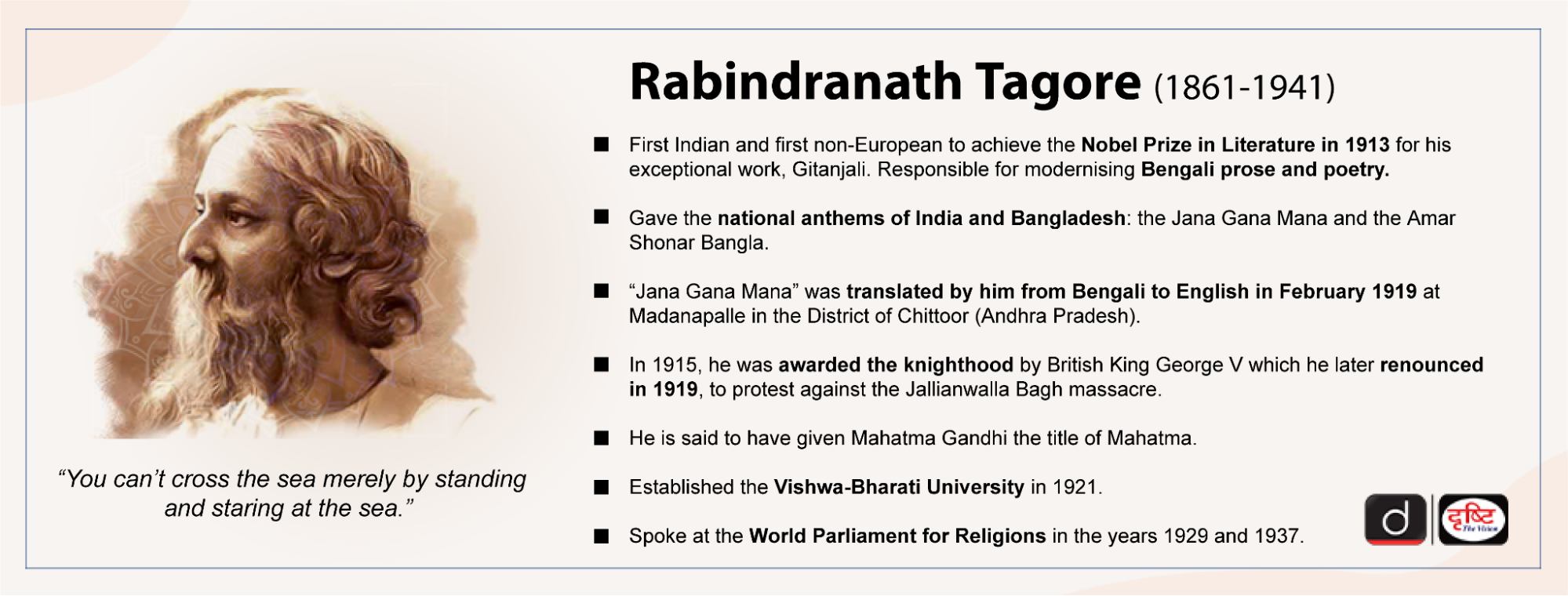
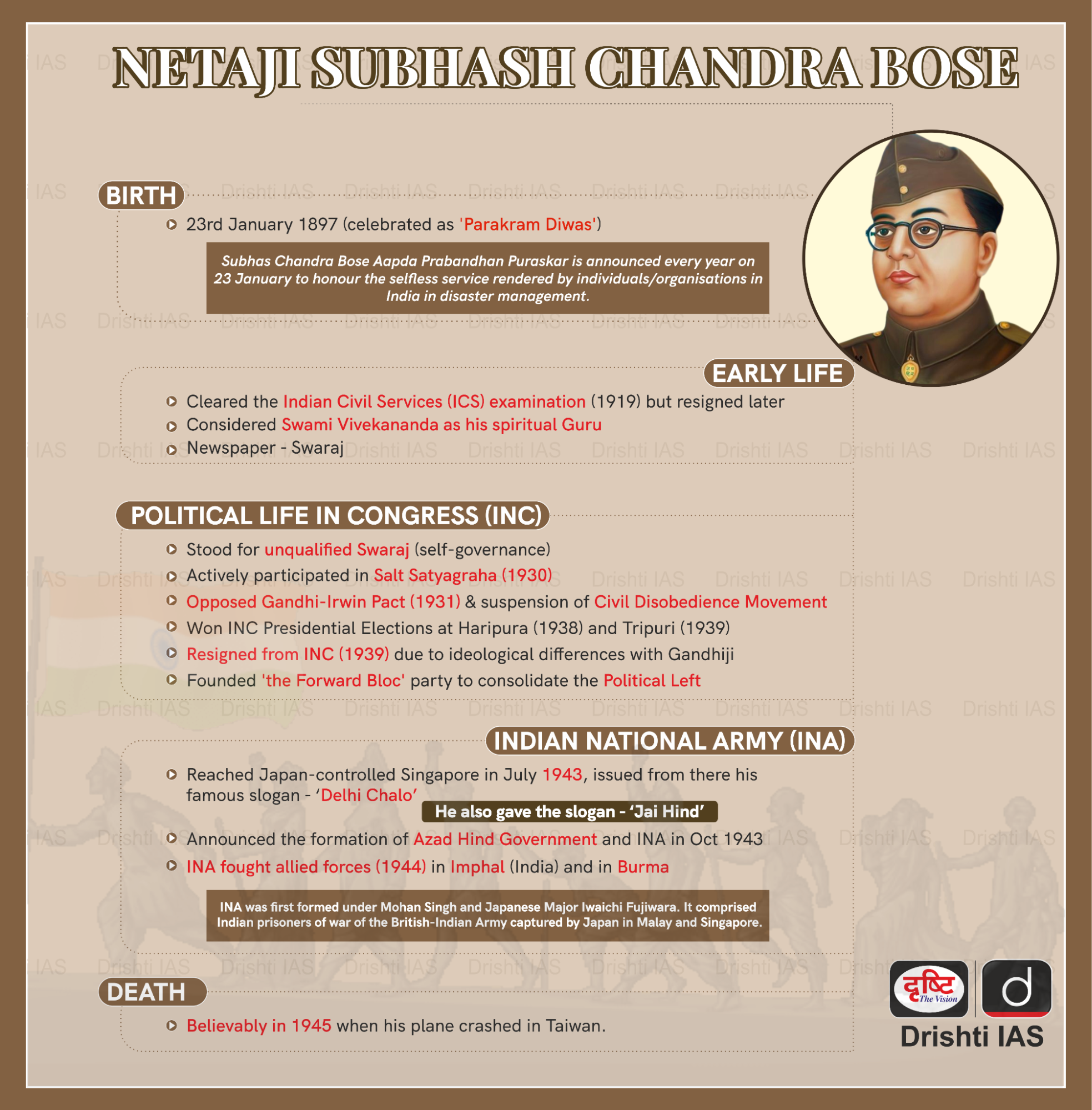
The West Bengal Chief Minister has criticised the Central government, alleging that it has undermined the contributions of national icons from Bengal, including Rabindranath Tagore, Netaji Subhas Chandra Bose, and Bankim Chandra Chattopadhyay.
- Her remarks have sparked debate over the politics of national symbols, regional identity, and historical legacy, especially over the national song Vande Mataram.
Summary
- Bengal served as the intellectual and revolutionary center of Indian nationalism, driving mass movements, radical thought, and armed resistance.
- Iconic figures like Tagore, Bose, and Bankim Chandra shaped the movement’s cultural and ideological foundations, though with complex legacies.
- Ongoing debates over symbols like Vande Mataram and these icons reflect tensions between regional identity, historical memory, and national narratives.
What is the Role of Bengal in Indian National Movement?
- Intellectual and Cultural Awakening: Raja Rammohan Roy's Brahmo Samaj ignited rationalism and social reforms, while Bankim Chandra Chattopadhyay's Vande Mataram served as the anthem of the Indian national movement.
- Swami Vivekananda then galvanized this sentiment, fusing national pride, self-respect, and service into a spiritual duty.
- Early Political Associations: Early political organizations like the British Indian Association (1851), and Indian Association (1876) emerged in Calcutta, paving the way for organized political movements that shaped India's struggle for independence.
- Early Congress sessions were dominated by Bengali leaders (Surendranath Banerjea, Ananda Mohan Bose, etc.).
- Swadeshi Movement & Extremism: The Partition of Bengal (1905) ignited the Swadeshi Movement, birthing modern revolutionary nationalism through boycott, swadeshi enterprise, national education, and extremist leaders like Bipin Chandra Pal and Aurobindo Ghosh.
- This era saw the rise of revolutionary groups like the Anushilan Samiti (1902) and Jugantar party (1906), marked by actions such as the Alipur Bomb Case (1908).
- Revolutionary Phase of Nationalism: Iconic actions included the Chittagong Armoury Raid (1930) by Master Da Surya Sen and pioneering martyrdom by women revolutionaries like Pritilata Waddedar (1932) and Bina Das (1932).
- Cultural & Literary Contribution: The fearless Bengali press (e.g., Amrita Bazar Patrika) and powerful theatre (e.g., Neel Darpan) exposed colonial exploitation, while Rabindranath Tagore (work Ghare Baire i.e., The Home and the World) and the rebel poet Kazi Nazrul Islam profoundly shaped nationalist thought through literature, music, and impassioned verse.
- Role in Gandhian Movements: Bengal actively participated in Non-Cooperation (1920–22) with leaders like Chittaranjan Das and Basanti Devi, in Civil Disobedience (1930–34) where thousands courted arrest, and in Quit India (1942), which spurred the parallel Tamralipta Jatiya Sarkar (1942–44).
Conclusion
Bengal's unparalleled contribution—intellectual, revolutionary, and cultural—fundamentally shaped India’s freedom struggle. Contemporary debates over its icons reflect the enduring politics of memory and regional identity within the national narrative.
|
Drishti Mains Question: Q. Examine the role of Bengal as the 'crucible of Indian nationalism,' highlighting its intellectual, revolutionary, and cultural contributions to the freedom struggle |
Frequently Asked Questions (FAQs)
1. Which early political associations emerged from Bengal?
The British Indian Association (1851), the Indian League (1875), and the Indian Association (1876) were key early political associations founded in Calcutta.
2. Why has 'Vande Mataram' been a historically contested symbol?
While a powerful anti-colonial anthem, its context in Bankim Chandra's novel Anandamath and overt Hindu imagery led to debates, resulting in only its first two stanzas being adopted as the National Song.
3. What was Netaji Subhas Chandra Bose's ideological divergence from the Congress mainstream?
Bose advocated for a more militant, socialist, and centrally-organized approach to independence, leading to the formation of the Forward Bloc and the Indian National Army (Azad Hind Fauj).
UPSC Civil Services Examination, Previous Year Question (PYQ)
Prelims
Q. Which among the following events happened earliest? (2018)
(a) Swami Dayanand established Arya Samaj.
(b) Dinabandhu Mitra wrote Neeldarpan.
(c) Bankim Chandra Chattopadhyay wrote Anandmath.
(d) Satyendranath Tagore became the first Indian to succeed in the Indian Civil Services Examination.
Ans: (b)
Q. Who among the following is associated with ‘Songs from Prison’, a translation of ancient Indian religious lyrics in English? (2021)
(a) Bal Gangadhar Tilak
(b) Jawaharlal Nehru
(c) Mohandas Karamchand Gandhi
(d) Sarojini Naidu
Ans: (c)
Mains
Q. Evaluate the policies of Lord Curzon and their long term implications on the national movement. (2020)
Q. Many voices had strengthened and enriched the nationalist movement during the Gandhian Phase. Elaborate. (2019)