
Rhino Dehorning as a Conservation Strategy | 25 Dec 2025
A recent study published in Science shows that rhino dehorning has led to a sharp decline in poaching in African reserves, offering crucial insights into evidence-based wildlife conservation amid a booming illegal wildlife trade.
- Rhino Horns: Rhino horns are made of keratin, not bone, and have no scientifically proven medicinal value, yet they are widely perceived as status symbols and used in traditional medicine in parts of Asia.
- This demand fuels a lucrative illegal market that generated USD 874 million–USD 1.13 billion between 2012 and 2022, with horn prices ranging from USD 3,382 to USD 22,257 per kilogram.
- Effectiveness of Rhino Dehorning: Dehorning rhinos led to a 78% reduction in poaching, using just 1.2% of the total anti-poaching budget. At the individual level, dehorned rhinos faced a 95% lower poaching risk.
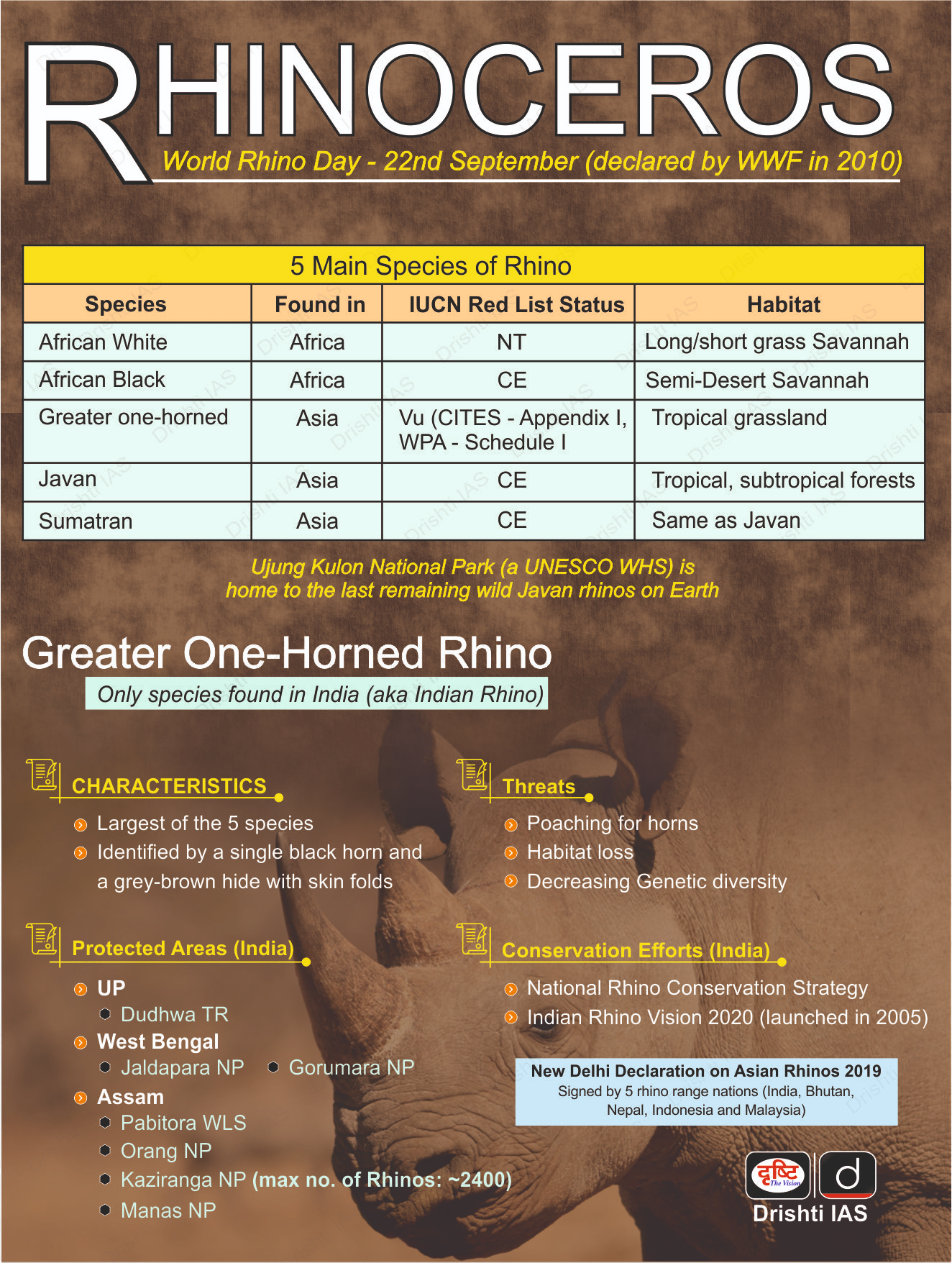
- India’s Model of Rhino Conservation: Kaziranga National Park in Assam, known as the “Rhino Capital of the World” for hosting the largest population of the one-horned rhinoceros, has lost only 1–2 rhinos in the last three years.
- This success stems from Indian Rhino Vision 2005, along with smart patrolling, community participation, and effective human–wildlife conflict mitigation, leading experts to argue that India does not require dehorning due to its strong conservation governance.
- Rhino DNA Index System (RhODIS): It is a DNA-based forensic database developed from rhino DNA (horns, dung) to track illegal trade, link seized horns to poached animals, and strengthen wildlife crime investigation and prosecution.
- RhODIS was originally developed in South Africa and later adapted and implemented in India.
| Read more: State of the Rhino 2023 |