
Prakash Purb of Guru Teg Bahadur | 08 Apr 2026
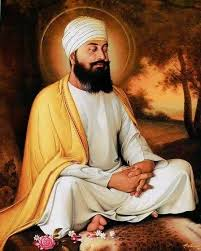
Union Home Minister and Minister of Cooperation has extended greetings on the Prakash Purb of the 9th Guru of Sikhism, 'Hind di Chadar' Guru Teg Bahadur Ji.
- Prakash Purab (also known as Prakash Utsav) translates to the "Festival of Light" and is the term used in Sikhism to celebrate the birth anniversary of a Sikh Guru.
- Early Life and Succession: Born as Tyag Mal on 1st April 1621, in Amritsar, he was the son of the 6th Sikh Guru, Guru Hargobind.
- He earned the title ‘Tegh Bahadur’ (best wielder of the sword) for his valour in the Battle of Kartarpur (1634) against Mughal forces, and he later succeeded the 8th Guru, Guru Harkrishan, to become the 9th Guru of the Sikhs.
- Core Philosophy: He perpetuated Guru Nanak’s doctrine of ‘Ik Onkar’ (unity of God) and advocated a life based on ‘nirbhau’ (fearlessness) and ‘nirvair’ (absence of enmity).
- His spiritual temperament was deeply influenced by his father's concept of Miri and Piri (temporal and spiritual authority).
- Travels and Establishments: He travelled extensively across Northern and Eastern India (including Assam and Dacca) to spread Sikhism.
- He founded Chak Nanaki in the Shivalik foothills, which later became famous as Anandpur Sahib.
- Literary Contributions: His spiritual compositions include hymns in 15 Raags, comprising 59 Shabads and 57 Shaloks, which were later formally incorporated into the Guru Granth Sahib by Guru Gobind Singh.
- Supreme Sacrifice: During the reign of Mughal Emperor Aurangzeb, who enforced strict policies of religious persecution and forced conversions, Guru Tegh Bahadur stepped forward to protect the religious freedom of Kashmiri Brahmins.
- In 1675, refusing to convert to Islam, he was publicly beheaded in Delhi, alongside his loyal followers Bhai Mati Das, Bhai Sati Das, and Bhai Dayal Das.
- Historical Legacy: His martyrdom sites in Delhi are marked by Gurudwara Sis Ganj (marking his execution and the rescue of his head by Bhai Jaita) and Gurudwara Rakab Ganj (where his body was cremated by Lakhi Shah).
- Often revered as "Hind di Chadar" (Shield of India), his sacrifice directly catalyzed his son, Guru Gobind Singh, to militarize the Sikh community by creating the Khalsa.
| Read more: Guru Tegh Bahadur Prakash Purab |