
Poland’s Exit from the Ottawa Convention | 21 Feb 2026
Poland has officially withdrawn from the 1997 Anti-Personnel Mine Ban Treaty (Ottawa Convention), reversing its earlier commitments after ratifying the treaty in 2012 and completing the destruction of its stockpiles in 2016.
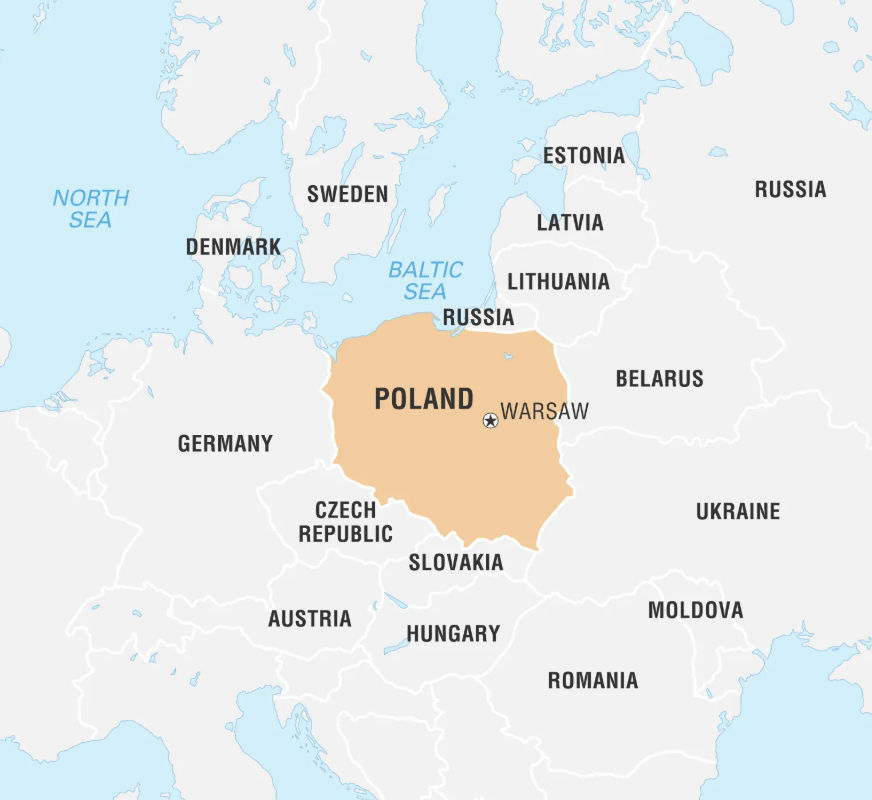
- Geopolitical Rationale: The move is driven by the need to secure the Eastern Shield, a fortification system on the borders with Russia (Kaliningrad) and Belarus, following the invasion of Ukraine.
- Ottawa Convention (1997): Emerged from the Canadian-led Ottawa Process after the First Review Conference of the 1980 Convention on Certain Conventional Weapons which failed to impose strict limits on anti-personnel mines.
- The Ottawa Convention bans the use, stockpiling, production, and transfer of anti-personnel mines due to their long-term civilian impact.
- Types of Landmines: Landmines are mainly anti-personnel and anti-vehicle (anti-tank); while anti-personnel mines are prohibited under the Ottawa Convention, anti-tank mines are not banned and are regulated under the Convention on Certain Conventional Weapons (CCW), 1980 – Amended Protocol II (1996).
- Domestic Production: Poland intends to achieve self-sufficiency by renewing domestic manufacturing of both anti-personnel and anti-tank land mines in cooperation with Polish producers.
- The Polish government stated that mines will remain in stockpiles and will only be deployed in the event of a "realistic threat of aggression" to minimize civilian risk.
- Regional Trend: Since Russia’s full-scale invasion of Ukraine, neighbouring countries have reassessed their commitment to the treaty.
- Poland joined Finland, Estonia, Latvia, Lithuania, and Ukraine in announcing its withdrawal.
- Global Context: India, Russia and the United States are among nearly three dozen nations that have never acceded to the Ottawa Treaty.
| Read more: Ottawa Landmine Convention |