
No-Fault Compensation Policy for Covid-19 Vaccine Adverse Effects | 13 Mar 2026
Why in News?
The Supreme Court (SC) has directed the Union Government to formulate a "no-fault" liability compensation policy for those who suffered serious adverse effects or deaths following the Covid-19 vaccination drive.
What is the Supreme Court's Observation on Covid-19 Vaccine Adverse Effects Compensation Claims?
- No-Fault Liability Principle: The SC invoked the principle of no-fault liability, ruling that victims or their families are entitled to financial relief without having to prove negligence or intentional wrongdoing by the manufacturers or the State.
- This principle, already existing in Indian law (e.g., motor vehicle accidents), is a standard feature of vaccine injury schemes in countries like Australia, the United Kingdom and Japan.
- Rejection of Individual Litigation: The SC rejected the Centre’s argument that families should approach civil or consumer courts for damages for negligence or malfeasance against vaccine manufacturers.
- The SC said forcing citizens into "a multiplicity of individual legal battles" would lead to inconsistent outcomes and unequal access to relief, thereby undermining the right to equality under Article 14 of the Constitution.
- State's Positive Obligation: Relying on Article 21 (Right to Life, including Health), the SC asserted that the Constitution envisions the State as an "active guardian of welfare and dignity," not a distant spectator.
- Since the mass vaccination programme was a State-led public health intervention, the State bears a positive obligation to support those who suffered grave outcomes, no matter how rare (e.g., just 0.001 per one lakh doses in India for certain blood clotting disorders).
- The petitioners argued that while the drive was officially "voluntary," it was effectively made mandatory through administrative restrictions on unvaccinated individuals.
- Compensation Must Follow Surveillance: While refusing to set up a separate medical board, it held that existing Adverse Events Following Immunisation (AEFI) committees are adequate, but stressed that the State’s responsibility “cannot end at surveillance alone, and must extend to providing fair compensation.”
- The SC clarified that the compensation policy does not amount to an admission of liability by the Union government.
- Previous Judicial Stand:
- Gaurav Kumar Bansal vs Union of India Case, 2021: The SC directed the National Disaster Management Authority (NDMA) to recommend guidelines for ex gratia assistance for Covid-19 deaths, leaving the amount to the authority.
- Following this, the NDMA issued guidelines, fixing Rs 50,000 per deceased, payable by states from the State Disaster Response Fund.
- To prevent unfair denial, a simplified procedure was established i.e., deaths within 30 days of a positive test were treated as Covid-19 deaths, and district-level grievance redressal committees were set up to resolve disputes over death certificates.
- Jacob Puliyel vs Union of India Case, 2022: The SC had upheld the legality of the vaccine approval process and the government’s Adverse Events Following Immunisation (AEFI) monitoring mechanisms while ruling that bodily integrity is protected under Article 21 and no individual can be forcefully vaccinated.
- Gaurav Kumar Bansal vs Union of India Case, 2021: The SC directed the National Disaster Management Authority (NDMA) to recommend guidelines for ex gratia assistance for Covid-19 deaths, leaving the amount to the authority.
Side Effects of Covid-19 Vaccine
- Common Side Effects: These side effects occur frequently, are generally mild to moderate, and typically resolve within 1–3 days. E.g., fatigue or tiredness, headache, fever, etc.
- Rare Serious Adverse Effects: These side effects occur infrequently but have been confirmed through rigorous monitoring systems.
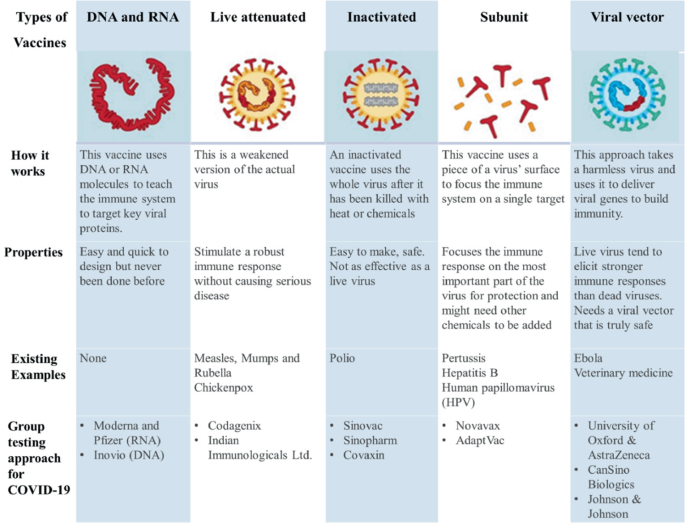
- Myocarditis and pericarditis: Inflammation of the heart muscle or its lining. Causally associated with mRNA vaccines (e.g., Pfizer-BioNTech, Moderna), most frequently observed in adolescent and young adult males after the 2nd dose.
- Thrombosis with thrombocytopenia syndrome (TTS): A rare clotting disorder with low platelets, primarily linked to certain viral vector vaccines (e.g., earlier formulations of AstraZeneca or Janssen).
Frequently Asked Questions (FAQs)
1. What is the "no-fault liability" principle ordered by the Supreme Court?
It means victims of COVID-19 vaccine injuries or their families are entitled to financial relief without having to prove negligence or intentional wrongdoing by the manufacturers or the State.
2. Which constitutional articles formed the basis of this Supreme Court judgment?
The judgment relied on Article 21 (Right to Life, including Health) and Article 14 (Right to Equality), holding that individual litigation would lead to inconsistent outcomes.
3. What are the two rare but serious adverse events associated with Covis-19 vaccines?
Myocarditis/pericarditis (heart inflammation), linked to mRNA vaccines in young males, and Thrombosis with Thrombocytopenia Syndrome (TTS), a rare clotting disorder linked to viral vector vaccines.
UPSC Civil Services Examination Previous Year Questions (PYQs)
Q. In the context of vaccines manufactured to prevent COVID-19 pandemic, consider the following statements: (2022)
- The Serum Institute of India produced COVID-19 vaccine named Covishield using mRNA platform.
- Sputnik V vaccine is manufactured using a vector-based platform.
- COVAXIN is an inactivated pathogen-based vaccine.
Which of the statements given above are correct?
(a) 1 and 2 only
(b) 2 and 3 only
(c) 1 and 3 only
(d) 1, 2 and 3
Ans: (b)
Q. With reference to recent developments regarding ‘Recombinant Vector Vaccines’, consider the following statements: (2021)
- Genetic engineering is applied in the development of these vaccines.
- Bacteria and viruses are used as vectors.
Which of the statements given above is/are correct?
(a) 1 only
(b) 2 only
(c) Both 1 and 2
(d) Neither 1 nor 2
Ans: (c)
Q. What is the importance of using Pneumococcal Conjugate Vaccines in India? (2020)
- These vaccines are effective against pneumonia as well as meningitis and sepsis.
- Dependence on antibiotics that are not effective against drug-resistant bacteria can be reduced.
- These vaccines have no side effects and cause no allergic reactions.
Select the correct answer using the code given below:
(a) 1 only
(b) 1 and 2 only
(c) 3 only
(d) 1, 2 and 3
Ans: (b)
Q. Which one of the following statements is not correct?(2019)
(a) Hepatitis B virus is transmitted much like HIV.
(b) Hepatitis B unlike Hepatitis C, does not have a vaccine.
(c) Globally, the number of people infected with Hepatitis B and C viruses arc several times more than those infected with HIV.
(d) Some of those infected with Hepatitis B and C viruses do not show the symptoms for many years.
Ans: (b)
Q. 'Mission Indradhanush' launched by the Government of India pertains to: (2016)
(a) Immunization of children and pregnant women
(b) Construction of smart cities across the country
(c) India's own search for Earth-like planets in outer space
(d) New Educational Policy
Ans: (a)