
Megalithic Laterite Rock-Cut Chamber Unearthed in Kerala | 07 Mar 2026
A significant Megalithic laterite rock-cut chamber has been discovered in Kasaragod district, Kerala, offering fresh insights into the prehistoric burial practices and material culture of the region.
- The chamber is part of a Megalithic culture burial complex that was constructed by interring pottery of varying shapes and sizes as part of ritual belief systems.
Megalithic Culture
- About: Megalithic Culture is a prehistoric cultural practice marked by the erection of massive stone structures called megaliths. Megaliths primarily served as burial sites located away from habitation areas.
- Time Period: Based on archaeological data, South Indian megalithic cultures spanned from 1000 BCE to 100 CE, with peak popularity between 600 BCE and 100 CE.
- The Megalithic period in South India was a full-fledged Iron Age culture, where iron technology was fully realized. Iron objects such as weapons and agricultural implements have been found across the region.
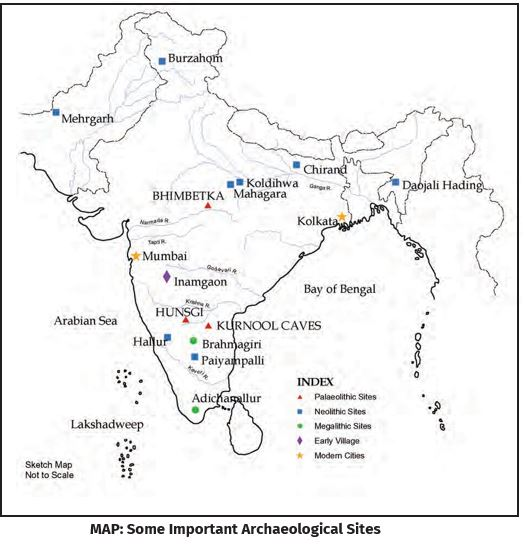
- Geographical Distribution: The main concentration of megalithic culture is in the Deccan, especially south of the Godavari River.
- Key sites include Brahmagiri and Chandravalli (Karnataka), Junapani, Khapa and Muhurjhari (Maharashtra), and Adichanallur (Tamil Nadu).
- It has also been found across the Punjab Plains, the Indo-Gangetic basin, Rajasthan, Gujarat, and Burzahom in Jammu and Kashmir.
- Subsistence and Culture: The megalithic people lived on a combination of agriculture, hunting, fishing, and animal husbandry. Rock paintings at these sites depict scenes of hunting, cattle raids, and group dancing, providing insight into their social and cultural life.
| Read More: Megalithic Footprints and Human Figure |