
Japan’s Deep-Sea Rare Earth Mining Initiative | 16 Jan 2026
Japan has embarked on the world’s first experimental attempt to extract rare earth elements from the deep-sea at a depth of about 6,000 metres, using its deep-sea scientific drilling vessel Chikyu.
- The initiative is driven by Japan’s effort to reduce heavy dependence on China, which accounts for nearly two-thirds of global rare-earth mining and over 90% of refined output.
- About Minami Torishima: The test mission is being conducted near Minami Torishima, a remote island located within Japan’s Exclusive Economic Zone (EEZ) in the Pacific Ocean.
- The area around Minami Torishima is estimated to contain over 16 million tonnes of rare-earth deposits, including reserves sufficient for 730 years of dysprosium and 780 years of yttrium, both critical for electric vehicles, electronics, wind turbines, and defence systems.
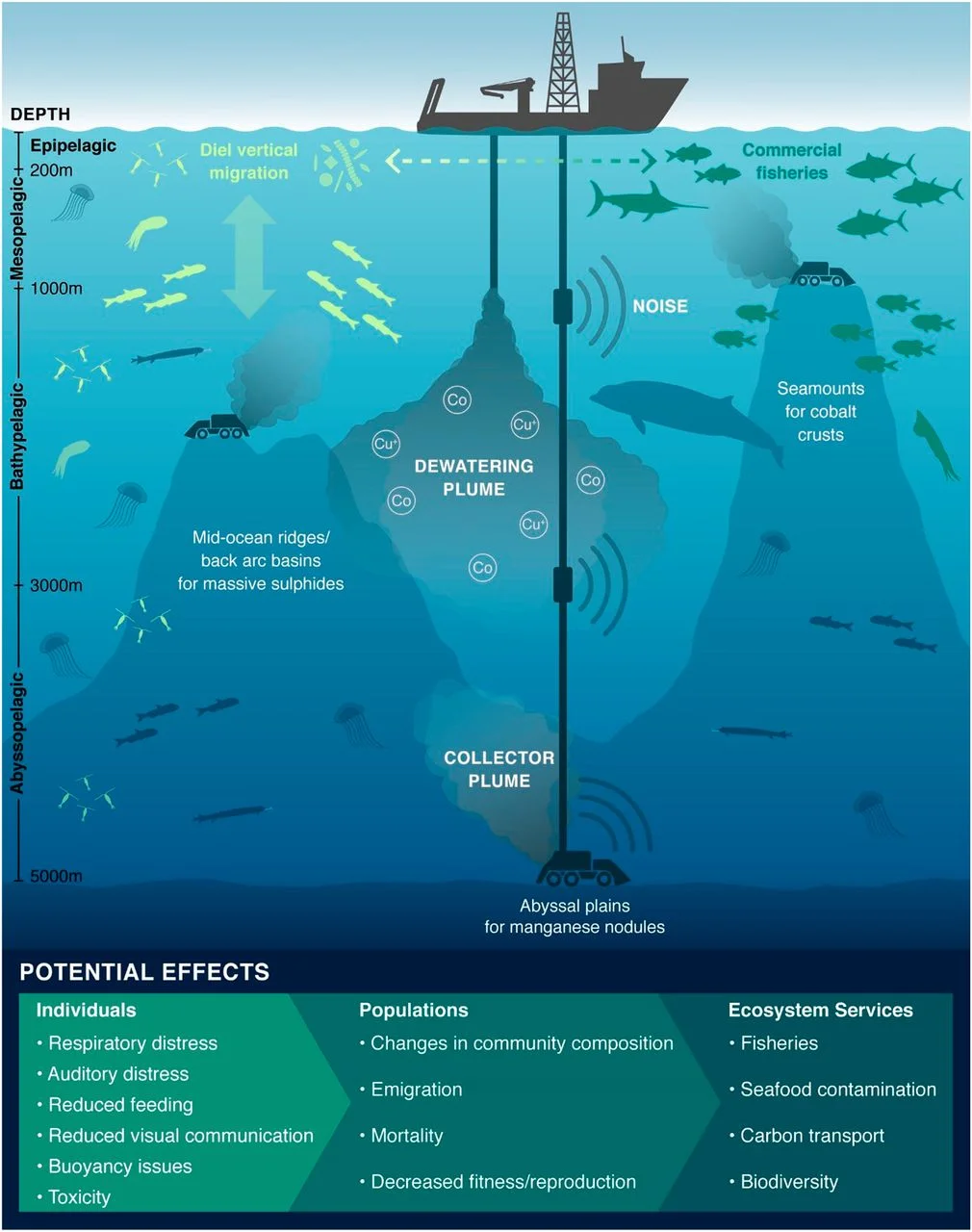
- Deep sea mining: It involves extracting mineral deposits, from ocean depths below 200 metres, an area that covers two-thirds of the world’s seafloor,for industrial use.
- It operates through three methods — collecting polymetallic nodules, mining seafloor sulphide deposits and stripping cobalt-rich crusts.
- Environmental groups warn that deep-sea mining threatens marine ecosystems and biodiversity, even as the International Seabed Authority (ISA) works on a global regulatory framework for mining in international waters.
- Rare Earth Elements (REEs): Rare earths are a group of 17 metals that are difficult to extract and refine but are essential for electric vehicle batteries, wind turbines, electronics, smartphones, computers and missile systems.
| Read more: Deep Sea Mining |