
Inhalable Microplastics | 19 Dec 2025
Why in News?
A first-of-its-kind comprehensive study published in Environment International has detected inhalable microplastics in the air of major Indian cities, revealing a hidden and dangerous dimension of urban air pollution that existing air quality frameworks largely overlook.
- The study monitored ambient air pollutant concentrations in five densely populated markets across Delhi, Mumbai, Kolkata, and Chennai.
Summary
- A study has found inhalable microplastics in the air of major Indian cities, exposing a hidden form of urban air pollution not captured by current AQI frameworks.
- These tiny airborne plastic particles stay suspended for long durations, carry toxic co-pollutants, and pose serious respiratory and long-term health risks.
What are Inhalable Microplastics?
- Inhalable Microplastics: They are tiny airborne plastic particles smaller than 10 micrometres (µm) that remain suspended in the air and can be inhaled deep into the lungs, unlike larger microplastics that settle quickly.
- They are now emerging as airborne contaminants, alongside Particulate Matter (PM2.5) and PM10, and commonly originate from synthetic clothing (polyester fibres), tyre and brake wear, plastic packaging, paints, cosmetics, and waste burning.
- Major Air Pollutants: Particulate Matter (PM₂.₅ and PM₁₀), Sulphur Dioxide (SO₂), Nitrogen Dioxide (NO₂), Carbon Monoxide (CO), Ozone (O₃), Lead (Pb), and Ammonia (NH₃).
Key Findings of the Study on Inhalable Microplastics
- Presence of a New Air Pollutant: The study reveals that inhalable microplastics are a significant yet overlooked urban air pollutant not adequately captured by existing Air Quality Index (AQI) frameworks, exposing a regulatory blind spot.
- Due to low gravitational settling velocity, inhalable microplastics remain suspended in air for long periods and carry toxic co-pollutants such as heavy metals (lead, cadmium) and endocrine-disrupting chemicals (phthalates) and thereby increase inhalation and health risks.
- Factors that Contribute to Rise in Inhalable Microplastics: The findings show that Delhi and Kolkata have much higher levels of inhalable microplastics than Mumbai and Chennai, largely because coastal weather helps disperse pollution in the latter cities, while higher population density and poor waste management worsen exposure in the former.
- High Daily Human Exposure: Urban residents inhale about 132 µg of microplastics daily, indicating chronic exposure at breathing height.
- Most particles were originating from tyre wear, plastic packaging, waste mismanagement, and urban activities.
- Health Risk Association: Due to their tiny size, inhalable microplastics can penetrate deep into the lungs and act as “Trojan horses”, carrying heavy metals (lead, cadmium) and endocrine-disrupting chemicals (phthalates) thereby increasing the risk of hormonal disorders, and cancer.
- The study found that inhalable microplastics can carry microbes, including Aspergillus fumigatus, containing antibiotic-resistance genes, raising concerns about drug-resistant respiratory infections.
Microplastics
- About: Microplastics are plastic particles smaller than 5 mm in diameter, while even smaller particles below 100 nanometres are termed nanoplastics.
- They are widespread in marine and freshwater environments and pose serious risks to oceans and aquatic life.
- Formation of microplastics occurs when larger plastic items fragment under the influence of solar UV radiation, wind, waves, currents, and mechanical abrasion, gradually breaking down into micro- and nanoplastic particles.
- Types of Microplastic:
- Primary Microplastics: These are deliberately produced at microscopic size for commercial use.
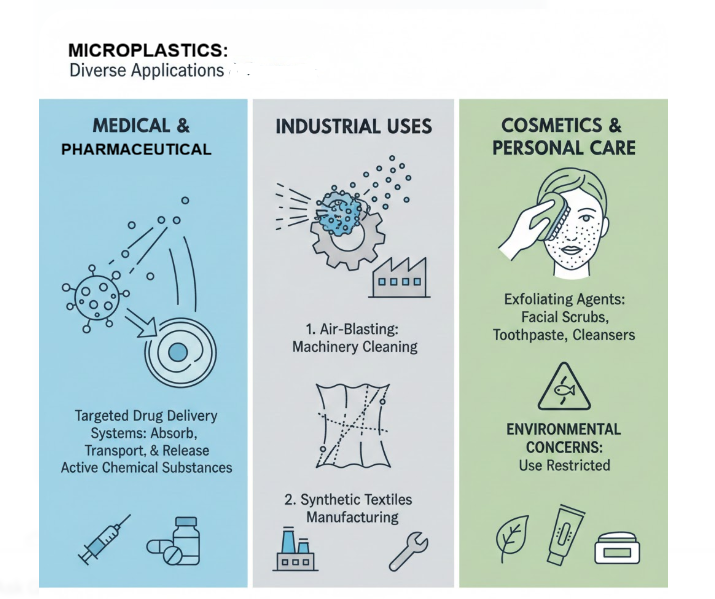
- These include microbeads used in cosmetics and toothpaste, plastic pellets used as industrial raw material, and synthetic fibres released from polyester or nylon textiles during washing.
- Secondary Microplastics: These form when larger plastic products such as bottles, bags, fishing nets, and packaging degrade over time due to sunlight, heat, mechanical abrasion, and ocean waves.
- Major sources of Microplastics: Include synthetic clothing, tyre wear from road transport, single-use plastics, personal care products, and ineffective plastic waste management systems.
- Primary Microplastics: These are deliberately produced at microscopic size for commercial use.
- Regulation in India:
Frequently Asked Questions (FAQs)
Q. What are inhalable microplastics?
Inhalable microplastics are airborne plastic particles smaller than 10 µm that remain suspended in air and can penetrate deep into human lungs.
Q. Why are inhalable microplastics a regulatory concern in India?
They are not explicitly monitored under existing AQI frameworks, creating a regulatory blind spot despite their health risks.
Q. What are the major sources of inhalable microplastics in cities?
Key sources include synthetic clothing fibres, tyre and brake wear, plastic packaging, paints, cosmetics, and waste burning.
Q. What health risks are associated with inhalable microplastics?
They can cause respiratory diseases, hormonal disruption, and cancer by carrying heavy metals, endocrine disruptors, and pathogens into the lungs.
UPSC Civil Services Exam, Previous Year Questions (PYQ)
Q. Why is there a great concern about the ‘microbeads’ that are released into the environment? (2019)
(a) They are considered harmful to marine ecosystems.
(b) They are considered to cause skin cancer in children.
(c) They are small enough to be absorbed by crop plants in irrigated fields.
(d) They are often found to be used as food adulterants.
Ans: (a)