
Arbitration Council of India | 28 Jan 2026
Why in News?
The Supreme Court has asked the Union government to respond to a petition seeking the establishment of the Arbitration Council of India (ACI) and the formulation of uniform guidelines for the regulation, conduct, and accreditation of arbitral institutions and arbitrators.
- The Arbitration and Conciliation (Amendment) Act, 2019 envisaged the ACI as the central regulator for institutional arbitration, however, the Council has still not been constituted nearly six years later.
What is the Arbitration Council of India?
- About: It is a statutory body under Part IA (Sections 43A–43M) of the Arbitration and Conciliation Act, 1996, introduced by the Arbitration and Conciliation (Amendment) Act, 2019. It is based on the recommendations of Justice B.N. Srikrishna Committee (2017).
- Composition and Appointment:
- Chairperson: To be appointed by the Union Government in consultation with the Chief Justice of India. Eligible persons include a former Supreme Court Judge, a former High Court Chief Justice/Judge, or an eminent arbitration practitioner.
- Other Members: Includes eminent arbitration practitioners, academicians, and ex officio government representatives.
- Mandate & Functions: Acts as the central regulatory body to grade arbitral institutions, accredit arbitrators, maintain an arbitral awards depository, promote Alternative Dispute Resolution (ADR) mechanisms (e.g., mediation, conciliation), and frame policies for uniform professional standards.
- Key Concerns:
- Lack of Independence: Concerns remain over the impartiality and competence of India’s arbitral institutions due to their domination by government appointees. This is particularly problematic when the state itself is the biggest litigant.
- Regulatory Challenges: The power to accredit unlimited arbitral institutions may dilute quality and increase administrative burden. E.g., unlike India, Singapore and Hong Kong rely on a single central arbitral institution rather than a government regulator overseeing multiple institutions.
- Exclusionary Policy: Barring foreign legal professionals from accreditation reduces India's attractiveness as a global arbitration seat.
- Draft Arbitration and Conciliation (Amendment) Bill, 2024: It introduces a revised definition of an “arbitral institution” as a body or organisation that conducts arbitration under its own procedural rules or as agreed by the parties. This departs from the 2019 amendments, which required formal designation by the Supreme Court or High Courts.
- Arbitral institutions would gain authority to extend deadlines for arbitral awards, reduce arbitrator fees in case of tribunal-caused delays, and appoint substitute arbitrators.
- The court's power to grant interim relief is curtailed during arbitral proceedings, transferring it to emergency arbitrators.
- Currently, arbitration must start within 90 days of a court granting pre-arbitral relief. The Bill proposes this period begin from the date the interim relief application is filed, to avoid delays from prolonged court proceedings.
- A new Section 9-A would allow parties to seek interim measures from an emergency arbitrator after arbitration has commenced but before the tribunal is formed.
Note: Arbitration Council of India (ACI) is distinct from the Indian Council of Arbitration (ICA), which is a non-governmental arbitral institution established in 1965.
Arbitration
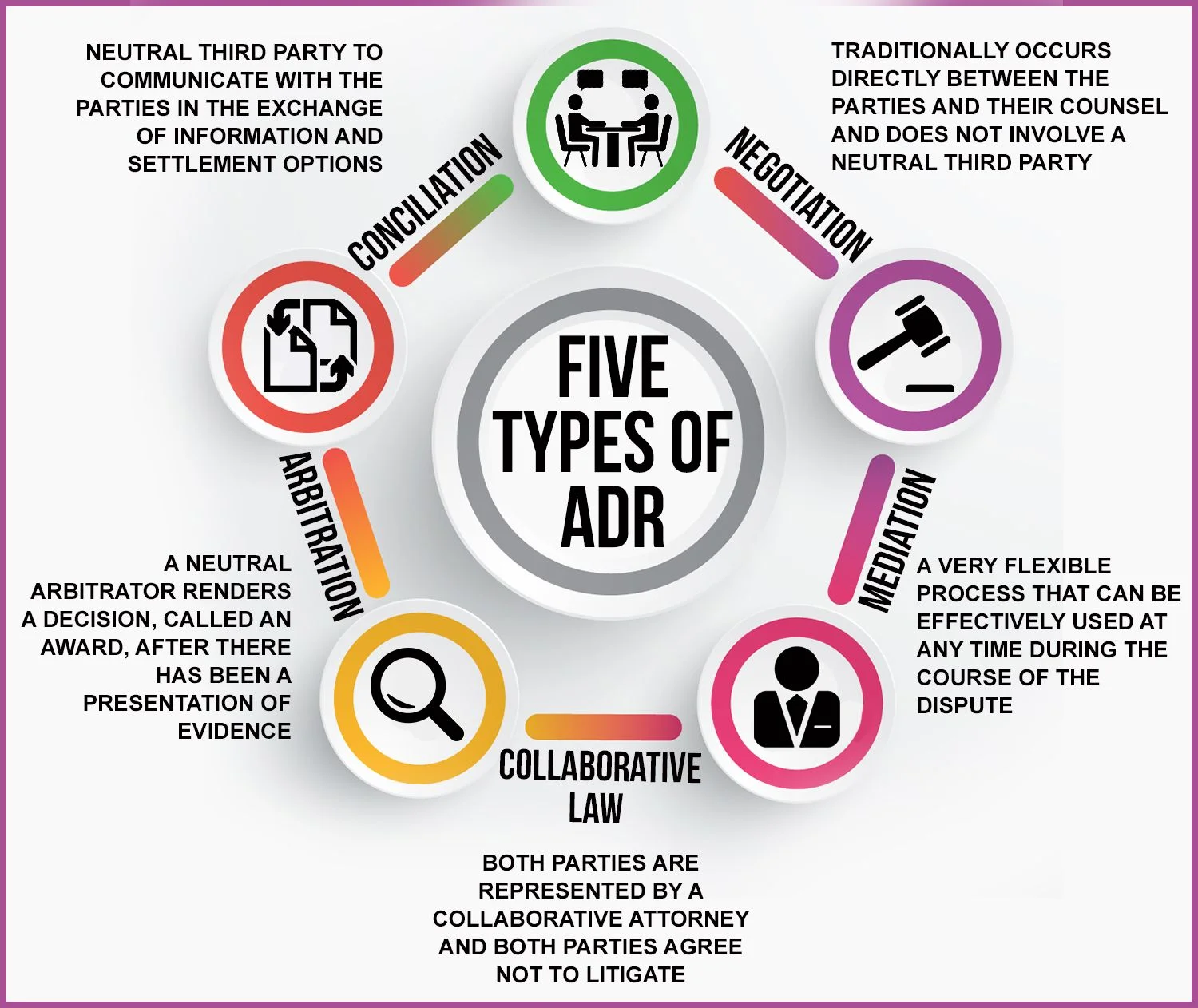
- About: A private, voluntary, and binding dispute resolution mechanism where an impartial arbitrator acts as a third party. It is a form of Alternative Dispute Resolution (ADR) outside traditional court litigation.
- Legal Framework: Governed by the Arbitration and Conciliation Act, 1996, which is based on the UNCITRAL Model Law (1985) and the UNCITRAL Conciliation Rules (1980).
- Scope: Commonly used for commercial, civil, and international disputes as an alternative to traditional court litigation.
- Recent Developments: Dr TK Viswanathan Committee (2024) has recommended reforms to strengthen institutional arbitration, reduce court intervention, and create a more cost-effective and time-bound framework.
Frequently Asked Questions (FAQs)
1. What is the Arbitration Council of India (ACI)?
It is a proposed statutory regulatory body under the Arbitration and Conciliation Act, 1996 (introduced via 2019 Amendment) to grade arbitral institutions and accredit arbitrators for promoting institutional arbitration.
2. What was the basis for proposing the ACI?
It was proposed based on the recommendations of the High-Level Committee chaired by Justice B.N. Srikrishna in 2017 to reform and strengthen India’s arbitration ecosystem.
3. What key reform is proposed in the Draft Arbitration Bill, 2024?
It proposes to limit judicial intervention by allowing courts to grant interim relief mainly before or after arbitration, and introduces the role of an emergency arbitrator.
UPSC Civil Services Examination, Previous Year Questions (PYQs)
Q1. With reference to Lok Adalats, which of the following statements is correct? (2010)
(a) Lok Adalats have the jurisdiction to settle the matters at pre-litigative stage and not those matters pending before any court
(b) Lok Adalats can deal with matters which are civil and not criminal in nature
(c) Every Lok Adalat consists of either serving or retired judicial officers only and not any other person
(d) None of the statements given above is correct
Ans: (d)
Q2. With reference to Lok Adalats, consider the following statements: (2009)
- An award made by a Lok Adalat is deemed to be a decree of a civil court and no appeal lies against thereto before any court.
- Matrimonial/Family disputes are not covered under Lok Adalat.
Which of the statements given above is/are correct?
(a) 1 only
(b) 2 only
(c) Both 1 and 2
(d) Neither 1 nor 2
Ans: (a)