
23rd India–Russia Annual Summit | 06 Dec 2025
For Prelims: Free Trade Agreement, Eurasian Economic Union, International North–South Transport Corridor (INSTC), Chennai–Vladivostok maritime route, Northern Sea Route (NSR)
For Mains: India–Russia Strategic Partnership, India’s engagement in the Far East and Arctic,
Why in News?
Russian President Vladimir Putin visited India for the 23rd India–Russia Annual Summit, during which both nations signed agreements across defence, trade, economy, culture, healthcare, and education, reaffirming their long-standing India - Russia strategic partnership.
What are the Key Outcomes of 23rd India–Russia Annual Summit?
- Strengthening of the Strategic Partnership: India and Russia reaffirmed their Special and Privileged Strategic Partnership on the 25th anniversary of the India–Russia Strategic Partnership Declaration (2000), signing 16 agreements across defence, healthcare, trade, and culture.
- India and Russia agreed to fast-track the Free Trade Agreement (FTA) with the Eurasian Economic Union, adopted Programme 2030 to expand strategic economic cooperation, and set a target of USD 100 billion bilateral trade by 2030.
- Both sides agreed to deepen cooperation on payment systems, resolve pending investment issues, and reaffirmed energy as a key pillar of their partnership.
- Connectivity and Transport Initiatives: India and Russia agreed to deepen cooperation on major connectivity corridors, including the International North–South Transport Corridor (INSTC), the Chennai–Vladivostok maritime route, and the Northern Sea Route (NSR), along with training specialists for polar-water navigation.
- Both sides also noted ongoing collaboration between their railways to support technology exchange and strengthen transport links.
- Cooperation in the Russian Far East and Arctic: India and Russia agreed to deepen trade and investment engagement in the Far East and Arctic, guided by the 2024–2029 cooperation framework covering sectors like energy, mining, agriculture, and maritime transport.
- Both sides also highlighted growing collaboration on the NSR and affirmed regular Arctic consultations, with India ready to play a more active role as an Observer in the Arctic Council.
- Civil Nuclear and Space Cooperation: India and Russia agreed to deepen cooperation in nuclear energy, covering the full fuel cycle, support for the Kudankulam Nuclear Power Plant, and future high-technology applications, aligned with India’s goal of reaching 100 GW nuclear capacity by 2047.
- The two sides welcomed the strengthened ISRO–Roscosmos partnership in peaceful space cooperation, covering human spaceflight, satellite navigation and planetary exploration.
- Military Cooperation: Reaffirmed defence ties, with the partnership now shifting toward joint R&D, co-development, and co-production of advanced military systems.
- Both sides welcomed outcomes of India-Russia Inter-Governmental Commission on Military & Military Technical Cooperation (IRIGC-M&MTC) and agreed to boost Make-in-India manufacturing of spare parts and equipment for Russian-origin platforms, including for export to friendly countries.
- Multilateral Cooperation: Russia backed India’s demand for a permanent UNSC seat and assured full support for India’s BRICS Chairship in 2026.
- Russia adopted the Framework Agreement to join the International Big Cat Alliance (IBCA). India welcomed Russia's interest in joining the International Solar Alliance and the Coalition of Disaster Resilient Infrastructure (CDRI).
- Agreed to deepen cooperation on low-carbon technologies, climate finance, and implementation of Article 6 of the Paris Agreement.
- Counter-Terrorism Commitments: Both sides condemned recent attacks in Pahalgam (2025) and Crocus City Hall (2024), called for action against all UN-listed terror groups, and highlighted the need for a zero-tolerance approach rooted in international law.
- They supported finalizing the Comprehensive Convention on International Terrorism and emphasized strict implementation of UN resolutions.
What are the Key Areas of Cooperation Between India and Russia?
- Economic Cooperation: Bilateral trade reached USD 68.7 billion in FY 2024–25, driven largely by energy imports by India.
- Both countries aim for USD 100 billion in trade by 2030 and USD 50 billion in mutual investments by 2025.
- Indian exports are mainly pharmaceuticals, chemicals, iron & steel, and marine products
- India’s imports from Russia include crude oil and petroleum products, sunflower oil, fertilizers, coking coal, and precious stones/metals.
- Diplomatic cooperation: India and Russia maintain dense diplomatic engagement through mechanisms like the Annual Summit, Intergovernmental Commission on Trade, Economic, Scientific, Technological, and Cultural Cooperation (IRIGC-TEC), IRIGC-M&MTC and the 2+2 Dialogue, ensuring continuous high-level coordination.
- Defence Cooperation: It is the cornerstone of the partnership, guided by the 2021–2031 military-technical cooperation agreement.
- The relationship has evolved from a buyer–seller model to joint development and production of systems such as BrahMos, Su-30MKI, T-90 tanks and AK-203 rifles.
- Regular exercises like INDRA and Zapad-2025 reinforce interoperability, while major platforms like submarines, frigates and the S-400 system highlight continued trust.

- Science and Technology: India - Russia collaboration on Gaganyaan training reflects deep space partnership, while the Kudankulam Nuclear Power Plant remains India’s biggest civilian nuclear project with foreign support.
- The Science, Technology & Innovation roadmap signed in 2021 aims to boost innovation and commercialization between both countries.
- Education & Cultural: Education ties are strong, with nearly 20,000 Indian students studying in Russia, mainly in medical universities.
- Large-scale events like Bharat Utsav 2025 in Moscow and the Indian Film Festival held across multiple Russian cities reflect the growing cultural enthusiasm for India.
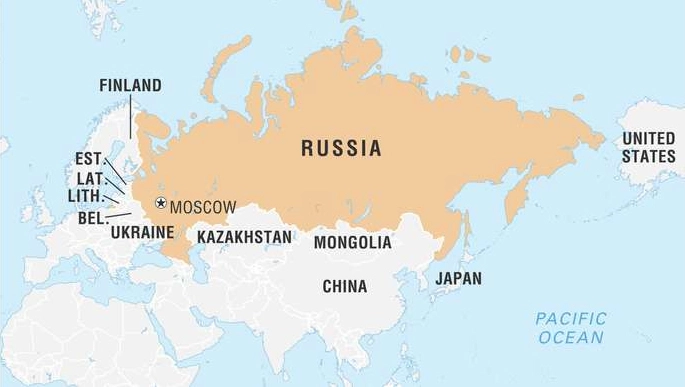
What are the Challenges in India–Russia Ties and Suggest Measures to Address Them?
|
Challenge |
Measures |
|
Slow arrival of S-400 units and Akula submarines due to the Ukraine war affects India’s readiness. |
Boost indigenous production via Make in India, Aatmanirbhar Bharat, and iDEX. Expand joint spares support under the IRIGC-M&MTC. |
|
In FY 2024-25, India imports over USD 63 billion from Russia but exports under USD 5 billion, making the trade structure unsustainable. |
Improve market access using the India–EAEU FTA negotiations. Promote pharma, IT and engineering exports through Trade Promotion Council of India missions. |
|
Moscow’s growing reliance on Beijing limits its ability to stay neutral in an India–China friction. |
Strengthen ties with Quad, Europe and Central Asia to offset reduced Russian strategic utility. |
|
Sanctions have blocked normal banking channels, leaving large dues unsettled. |
Develop alternate payment routes using Special Rupee Vostro Accounts, RBI’s INR settlement framework, and escrow systems via non-sanctioned banks. |
|
The recruitment of Indian nationals into the Russian army, often through fraudulent job offers, has resulted in casualties and widespread public anger in India. |
Strengthen migrant protections via the MADAD portal, eMigrate system, and bilateral mechanisms for monitored repatriation under Consular Dialogue Platforms with Russia. |
Conclusion
The India–Russia partnership remains steady, with trade rising and efforts to expand cooperation beyond defence. Both sides are exploring new export opportunities and deeper regional ties, especially with the Russian Far East. Connectivity projects like the INSTC and Chennai–Vladivostok corridor support Russia’s eastward pivot and India’s self-reliance goals.
|
Drishti Mains Question: India’s engagement with the Arctic and Russian Far East is an economic necessity. Critically discuss the opportunities and constraints. |
Frequently Asked Questions (FAQs)
Q. Which mechanism guides India–Russia economic cooperation?
The India–Russia Intergovernmental Commission on Trade, Economic, Scientific & Cultural Cooperation (IRIGC-TEC).
Q. Which major connectivity corridors were highlighted at the 23rd India–Russia Summit?
INSTC, Chennai–Vladivostok Maritime Corridor, and the Northern Sea Route.
Q. Which nuclear project represents India–Russia civil nuclear cooperation?
The Kudankulam Nuclear Power Plant in Tamil Nadu.
Q. Which defence platforms reflect India–Russia joint development or licensed production?
BrahMos missile, Su-30MKI aircraft, T-90 tanks, and AK-203 rifles.
Summary
- The 23rd India–Russia Summit strengthened their Special and Privileged Strategic Partnership through new agreements in defence, trade, energy, nuclear and space cooperation.
- Both sides set a USD 100 billion trade target by 2030 and pushed key connectivity projects like INSTC, the Chennai–Vladivostok corridor and the Northern Sea Route.
- Cooperation expanded in the Russian Far East, Arctic, digital payments, and civil nuclear projects such as Kudankulam.
- The discussions also addressed major challenges including defence delivery delays, trade imbalance, payment issues, and concerns over Indian nationals in the Russian military.
UPSC Civil Services Examination Previous Year Question (PYQ)
Prelims
Q. Recently, India signed a deal known as ‘Action Plan for Prioritization and Implementation of Cooperation Areas in the Nuclear Field’ with which of the following countries? (2019)
(a) Japan
(b) Russia
(c) The United Kingdom
(d) The United States of America
Ans: B
Mains
Q. What is the significance of Indo-US defence deals over Indo-Russian defence deals? Discuss with reference to stability in the Indo-Pacific region. (2020)