
1500-Year-Old Stepped Reservoir on Elephanta Island | 09 Apr 2026
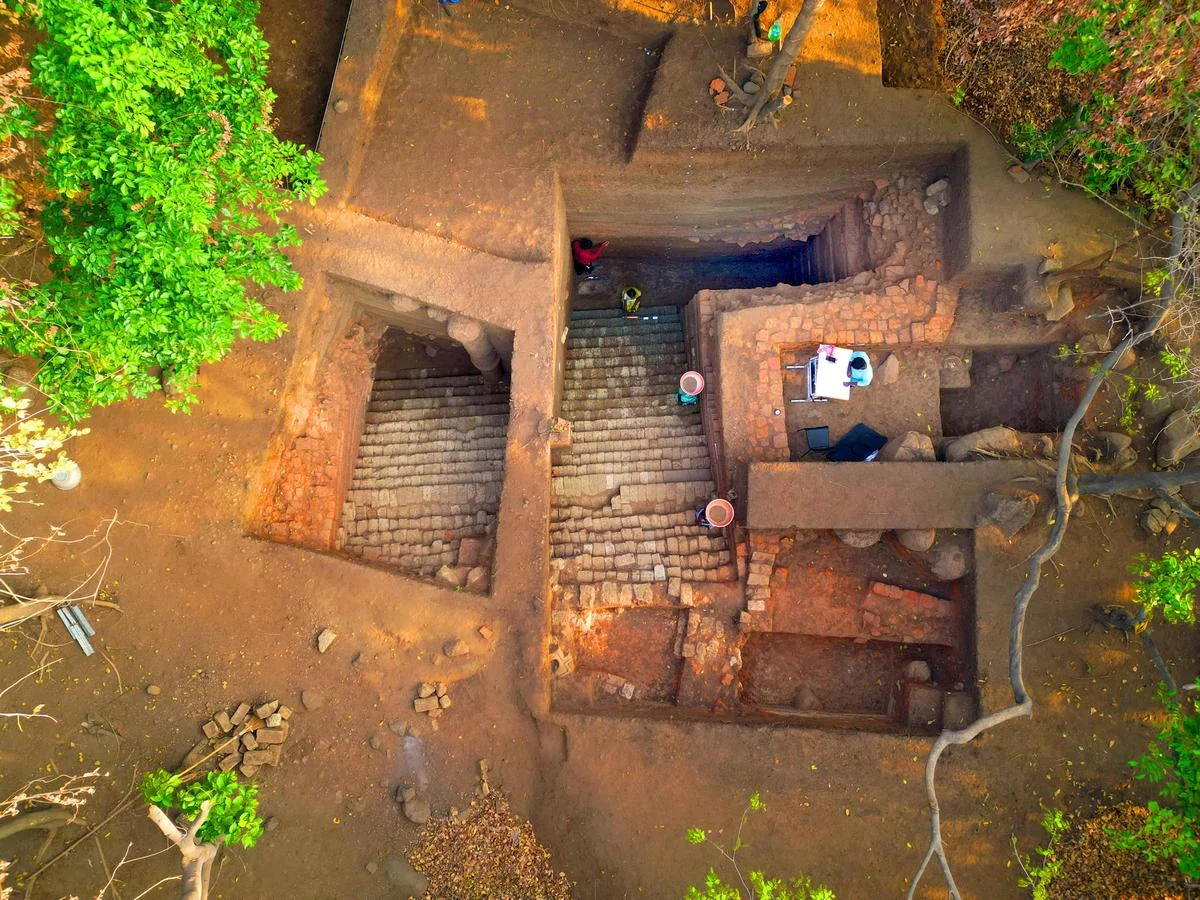
The Archaeological Survey of India (ASI) has unearthed a sophisticated 1,500-year-old stepped reservoir on Elephanta Island off the Mumbai coast, shedding new light on the region's advanced ancient water management systems and robust maritime trade links.
- Discovery of a Stepped Reservoir: The structure is T-shaped and features 20 precisely aligned stone steps made from blocks transported from the mainland, reflecting advanced engineering designed to efficiently store monsoon runoff on the island’s rocky terrain.
- Numismatic (Coin) Findings: Around 60 coins (copper, lead, silver) were found, including coins of Krishnaraja, confirming political and chronological context.
- Several copper coins belong to ruler Krishnaraja of the Kalachuri dynasty (6th century CE), identifiable by a seated bull motif on the obverse and a temple symbol with the legend Sri Krishnaraja on the reverse.
- Evidence of Global Maritime Trade: Discovery of ~3,000 amphorae sherds (Mediterranean origin) and torpedo jars (West Asia, including Mesopotamia) confirms the island's active long-distance maritime trade with Rome and West Asia during the Early Historic period and 2nd century CE.
- Industrial and Cultural Artefacts: Excavations revealed a brick structure (possibly a dyeing vat), indicating textile-related economic activity.
- Other significant recoveries include terracotta figurines, glass and stone bangles, carnelian and quartz beads, reflecting cultural and craft activities.
- Historical Geography: Historically, Elephanta Island functioned as a major trading hub comprising three distinct port localities: Morabandar, Rajbandar, and Shethbandar.
- Existing Heritage Context: These new discoveries add a rich layer to Elephanta Island, which is already globally renowned for the Elephanta Caves, featuring massive 5th-century CE rock-cut caves and sculptures dedicated to Lord Shiva.
| Read more: World Heritage Day 2025, World Heritage Sites in India |