
Corruption Perception Index 2025
For Prelims: Corruption Perception Index (CPI), Corruption, Political Financing, NGO, Rule of Law, Parliament, Regressive Tax, Parliamentary Scrutiny, Money Laundering.
For Mains: Key findings of the Corruption Perception Index (CPI) 2025, causes and consequences of corruption. Recommendations suggested in the CPI 2025 to curb corruption.
Why in News?
The Transparency International released the Corruption Perception Index (CPI) 2025 that evaluated 182 countries based on perceived public sector corruption, using a scale from zero (highly corrupt) to 100 (very clean).
- The report provides a comprehensive assessment of global corruption trends, their underlying drivers, societal impacts, and actionable recommendations.
Summary
- Global average CPI dropped to 42, with 122 countries scoring below 50, indicating widespread corruption.
- Democracies score higher (71 average) than authoritarian regimes (32), proving institutional strength controls corruption.
- Recommendations focus on independent judiciaries, political transparency, civic space protection, and international cooperation against illicit financial flows.
What are the Key Findings of the Corruption Perception Index (CPI) 2025?
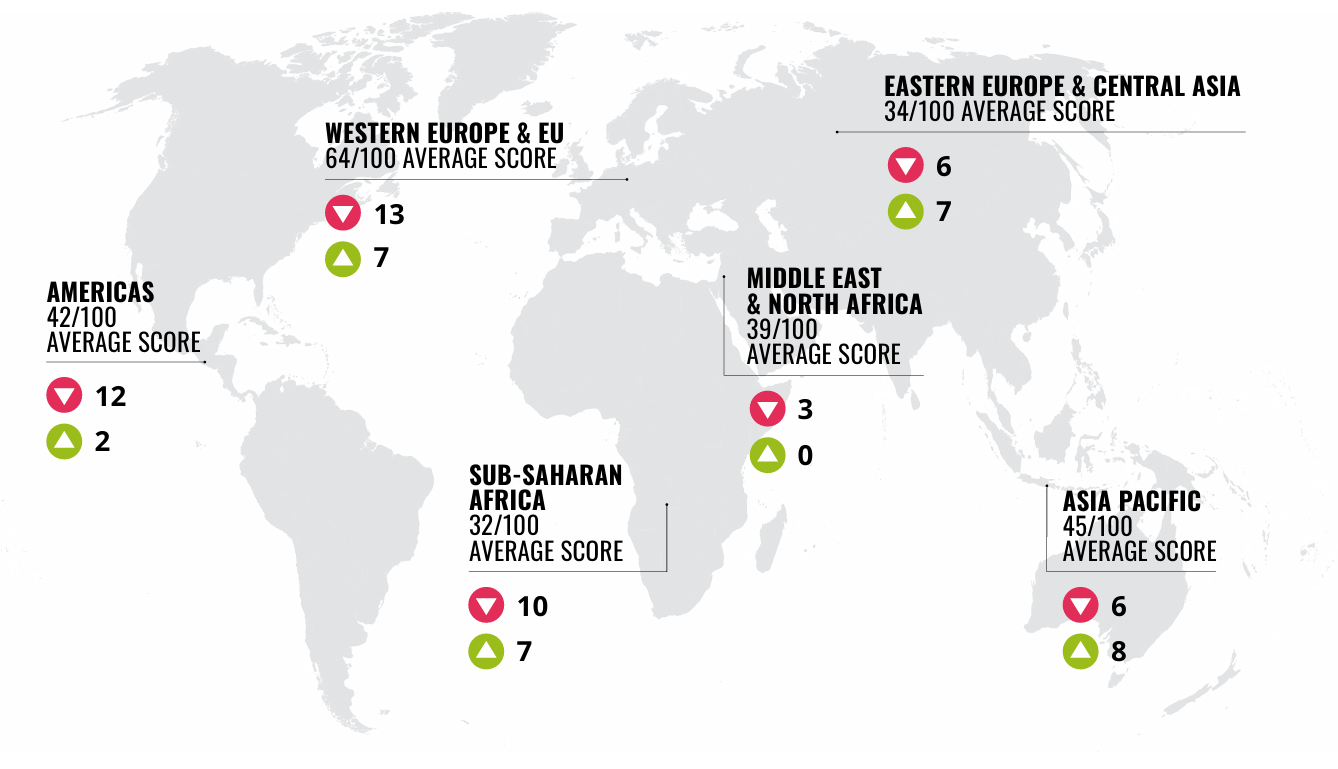
- Global Average Decline: For the first time in more than a decade, the global CPI average has dropped to just 42 out of 100. The vast majority of countries (122 out of 182) score below 50, indicating serious corruption problems worldwide.
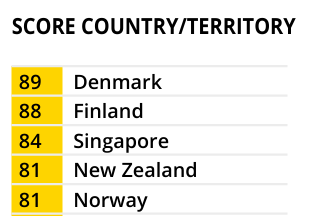
- Shrinking High Performers: The number of countries scoring above 80 has shrunk from 12 a decade ago to just 5 this year (Denmark, Finland, Singapore, New Zealand, Norway).
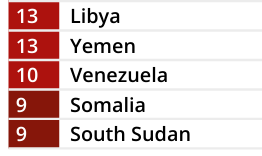
- Top and Bottom Performers: Denmark (Score - 89) ranks highest for the 8th consecutive time, while Somalia and South Sudan (9) are at the bottom. Venezuela (10) and other conflict-affected or repressive regimes populate the lowest tiers.
- India’s Position: In 2025, India ranked 91st on the Corruption Perceptions Index (CPI) with a score of 39/100, improving slightly from its 96th rank in 2024.
- India (score 39, rank 91) outperforms most South Asian neighbors but lags behind Bhutan (71, 18), and China (43, 76).
- India is tied with the Maldives (39, 91). Others rank lower: Sri Lanka (35, 107), Nepal (34, 109), Pakistan (28, 136), Bangladesh (24, 150), with Afghanistan and Myanmar (16, 169).
- Regional Averages: Full democracies average 71, flawed democracies average 47, and authoritarian regimes average just 32, demonstrating the strong correlation between democratic institutions and corruption control.
What are the Causes of Corruption Identified in the Report?
- Weak Justice and Rule of Law: Politicisation of judicial appointments, prosecutorial interference, under-resourcing, and lack of independence create impunity. When justice systems are captured, laws protect the powerful rather than the public.
- Undue Influence on Political Decision-Making: Opaque political financing, unregulated lobbying, conflicts of interest, and the influence of wealthy donors or cronies allow private interests to seize public authority. This leads to “grand corruption” and state capture, where institutions serve elite interests.
- Shrinking Civic Space and Media Freedom: Restrictive NGO laws, smear campaigns, surveillance, censorship, and violence against journalists (829 journalists killed globally since 2012, many while investigating corruption) silence watchdogs. Reduced transparency and accountability enable corruption to flourish.
- Failures in Public Financial Management: Lack of oversight in budgeting, procurement, and debt management, combined with patronage networks, diverts public funds and creates opportunities for bribery and favouritism.
What are the Consequences of Corruption?
- Erosion of Justice and Human Rights: Impunity undermines the rule of law, denies remedies to victims (especially marginalised communities), and increases barriers to accessing justice, creating a vicious cycle of further corruption.
- Democratic Decline and State Capture: Corruption weakens elections, parliaments, and oversight institutions, leading to policy capture, reduced public trust, and political polarisation. It enables authoritarian tendencies and makes democratic reversal difficult.
- Suppression of Civic Space and Media: Attacks on journalists and civil society reduce accountability, foster self-censorship, and allow corruption to remain hidden. This disproportionately affects investigative reporting on high-level graft.
- Deterioration of Public Services and Rising Inequality: Diverted funds result in poor-quality healthcare, education, infrastructure, and essential services. Unofficial payments act as a regressive tax on the poor, exclude vulnerable groups, and exacerbate poverty, fiscal crises, and social unrest (e.g., Gen-Z-led protests that toppled governments in Nepal and Madagascar in 2025).
- Broader Societal and Economic Impacts: Corruption contributes to economic instability, deters investment, worsens climate vulnerability (e.g., stolen adaptation funds), and fuels public discontent. In extreme cases, it leads to state fragility and conflict
Transparency International
- About: Transparency International (TI) is a premier global civil society organization dedicated to combating corruption by promoting transparency, accountability, and integrity across government, business, and civil society worldwide.
- It was founded in 1993 and headquartered in Berlin, Germany.
- Core Mission: The organization envisions a world free from corruption, which it defines as "the abuse of entrusted power for private gain." Its work spans government, business, civil society, and daily life.
- Flagship Publication: The organization is best known for its annual Corruption Perceptions Index (CPI). It also produces the Global Corruption Barometer.
What Recommendations are Suggested in the CPI 2025 to Curb Corruption?
- Independent, and Transparent Justice Institutions: Shield judicial appointments from political interference, adequately resource justice systems, and enable victims of corruption (including communities) to seek remedies through civil society representation.
- Tackle Undue Influence on Political Decision-Making: Regulate political financing with full transparency and caps on donations, disclose lobbying activities, and manage conflicts of interest to prevent policy capture and protect the public interest.
- Easy Access to Justice: Provide direct or representative legal pathways for individuals and communities affected by corruption, with tailored support for marginalised groups.
- Foster Civic Space and Anti-Corruption Reporting: Protect freedoms of expression, association, and information; safeguard journalists, whistleblowers, and NGOs; and remove barriers to domestic and international funding for civil society.
- Transparency and Oversight in Financial Management: Strengthen parliamentary scrutiny, independent audits, and regulatory oversight of public spending, borrowing, and procurement. Ensure inclusive participation in oversight mechanisms.
- Prevent, Detect, and Punish Corruption: Implement robust national and international enforcement, seize stolen assets, close cross-border money laundering channels, and foster multilateral cooperation to address transnational corruption.
Conclusion
The CPI 2025 reveals a troubling global corruption trend, with the average score dropping to 42 for the first time in a decade. Democratic backsliding, restricted civic space, and weak institutions drive this decline. Urgent implementation of transparent governance, independent judiciaries, and protected civil society is essential to reverse this trajectory.
|
Drishti Mains Question: What are the socio-economic consequences of corruption on public service delivery and inequality? |
Frequently Asked Questions (FAQs)
1. What is the Corruption Perceptions Index (CPI)?
The CPI is an annual index published by Transparency International that ranks countries by perceived levels of public sector corruption, using a scale of 0 (highly corrupt) to 100 (very clean).
2. What was India's rank and score in CPI 2025?
India ranked 91st with a score of 39 out of 100, showing slight improvement from its 96th rank in 2024.
3. Which countries topped and bottomed the CPI 2025?
Denmark (89) topped the index for the eighth consecutive year, while Somalia and South Sudan (9) were the lowest-ranked countries.
UPSC Civil Services Examination, Previous Year Questions (PYQs)
Prelims
Q1. With reference to the ‘Prohibition of Benami Property Transactions Act, 1988 (PBPT Act)’, consider the following statements: (2017)
- A property transaction is not treated as a benami transaction if the owner of the property is not aware of the transaction.
- Properties held benami are liable for confiscation by the Government.
- The Act provides for three authorities for investigations but does not provide for any appellate mechanism.
Which of the statements given above is/are correct?
(a) 1 only
(b) 2 only
(c) 1 and 3 only
(d) 2 and 3 only
Ans: (b)
Mains
Q. Discuss how emerging technologies and globalisation contribute to money laundering. Elaborate measures to tackle the problem of money laundering both at national and international levels. (2021)
Q. “Institutional quality is a crucial driver of economic performance”. In this context suggest reforms in the Civil Service for strengthening democracy. (2020)
Urban Challenge Fund
For Prelims: Urban Challenge Fund, Union Budget, Urban Local Bodies, AMRUT (Atal Mission for Rejuvenation and Urban Transformation) 2.0, Swachh Bharat Mission-Urban
For Mains: Role of cities in India’s economic growth and GDP contribution, Market-based financing and municipal finance reforms, Urban governance challenges and fiscal decentralisation
Why in News?
The Union Cabinet has approved the Urban Challenge Fund (UCF), marking a shift from grant-based funding to market-driven urban development.
- It gives effect to India's vision announced in the Union Budget 2025–26 to implement proposals relating to Cities as Growth Hubs, Creative Redevelopment of Cities, and Water and Sanitation.
Summary
- The Urban Challenge Fund (UCF) shifts India’s urban policy from grant-based funding to market-linked, reform-driven development, promoting growth hubs, redevelopment, and water sustainability while strengthening municipal finances and private investment.
- As cities generate 60–70% of GDP but face infrastructure gaps, climate risks, and governance challenges, UCF aims to enable sustainable, inclusive, and economically competitive urbanisation.
What are the Key Facts About the Urban Challenge Fund (UCF)?
- About: The Urban Challenge Fund (UCF) is a Centrally Sponsored Scheme of the Ministry of Housing and Urban Affairs (MoHUA) with a central assistance of Rs 1,00,000 crore for FY 2025–26 to 2030–31, with an extendable implementation period up to FY 2033–34.
- It aims to support bankable urban infrastructure projects through a challenge-based approach, catalysing nearly Rs 4 lakh crore in investment over five years.
- The scheme represents a paradigm shift from grant-based financing to market-linked, reform-driven, and outcome-oriented urban development, recognising that public finance alone cannot meet urban infrastructure needs.
- Funding Pattern and Financing Model:
- Central Assistance: The Union Government will cover 25% of the project cost.
- Market Leverage: A prerequisite for funding is that cities must raise a minimum of 50% of the project cost from market sources, including municipal bonds, bank loans, and Public-Private Partnerships (PPPs).
- Remaining Share: The final 25% can be contributed by States, Union Territories, Urban Local Bodies (ULBs), or additional market finance.
- This structure encourages private sector participation by enabling both financial and managerial partnerships in building and managing urban infrastructure.
- Three Strategic Verticals: Projects under the UCF must align with one of three core pillars:
- Cities as Growth Hubs: Focuses on transit-oriented development (TOD), greenfield townships, and economic corridors to enhance competitiveness.
- Creative Redevelopment: Revitalizing congested city cores (Central Business Districts), heritage sites, and brownfield regeneration (reusing abandoned industrial land).
- Water and Sanitation: Achieving service saturation in water supply and modernizing solid waste management, including legacy waste remediation.
- Credit Repayment Guarantee for Small Cities: A Rs 5,000 crore corpus has been created to provide a Credit Repayment Guarantee Scheme to facilitate market access for smaller cities.
- Eligibility: ULBs in Northeastern/Hilly states and towns with a population below 1 lakh.
- The Guarantee: It provides a central guarantee of up to Rs 7 crore or 70% of the loan amount (whichever is lower) for first-time loans, and up to Rs 7 crore or 50% for subsequent loans.
- This enables small ULBs to undertake projects worth Rs 20 crore initially and Rs 28 crore in subsequent phases, improving lender confidence and expanding access to market finance.
- Coverage: The Fund will cover all cities with a population of 10 lakh or more (as per 2025 estimates), all State and Union Territory capitals not included in this category, and major industrial cities with a population of 1 lakh or more.
- Projects must be bankable, transformative, and aligned with the three verticals, with clear outcomes and credible market financing plans.
- Projects already funded under AMRUT (Atal Mission for Rejuvenation and Urban Transformation) 2.0, Swachh Bharat Mission-Urban (SBM-U 2.0), or other Centrally Sponsored Schemes are not eligible, ensuring that UCF supports new and innovative initiatives.
- Reform-Linked Selection (Challenge Mode): Unlike previous schemes, where funds were allocated based on population, the UCF uses a Competitive Challenge Mode.
- Funding is released only if cities implement specific reforms in Urban Governance, Digital Systems, and Financial Transparency.
- Projects are evaluated on performance indicators (KPIs) like job creation, revenue mobilization, and climate resilience.
Why are Cities Central to India’s Economic Future?
- Productivity Powerhouses: Cities act as massive engines that compress economic activity into small, efficient geographical areas.
- While only 3% of the land is urban, cities contribute nearly 60% to 70% of India’s GDP.
- Just 15 cities (including Mumbai, Delhi, Bengaluru, Chennai, and Hyderabad) account for 30% of the national GDP. These hubs are expected to contribute an additional 1.5% to annual GDP growth leading up to 2047.
- Consumption and the Rising Middle Class: Cities are the epicenter of India’s status as the world’s third-largest consumer market.
- By 2030, India’s total consumer spending is expected to double to USD 3.1 trillion, with the urban middle class accounting for nearly 60% of this increase.
- Urban incomes are up to four times higher than rural incomes, driving demand for everything from electronics to premium services.
- Global Competitiveness & FDI: Nearly 90% of Foreign Direct Investment (FDI) in India is concentrated in major urban centers.
- Efficient urban infrastructure such as metro networks, high-speed internet, and stable power is essential for India’s ambition to reach a USD 5 trillion economy by 2026 and USD 40 trillion by 2047.
- Social and Economic Opportunity: Urbanization is a primary vehicle for poverty reduction and social mobility.
- Cities offer superior access to healthcare, specialized education, and digital infrastructure, linking economic growth with improved quality of life.
India's Initiatives for Promoting Urban Growth and Sustainability
What are the Challenges in Sustainable Development of Indian Cities?
- Infrastructure & Housing Deficit: Indian cities are growing faster than their ability to build. The urban population is projected to hit 600 million by 2031, creating an immense "scale" problem.
- India needs an annual investment of Rs 4.6 lakh crore for urban infrastructure, yet current funding hovers around Rs 1.3 lakh crore, leaving a massive 70% deficit.
- There is a shortage of 10 million affordable homes, a number expected to triple by 2030. This has led to 65 million people living in slums.
- Completion Lag: Under schemes like PMAY, while approvals are high (1.08 crore), completion rates often lag behind targets due to rising land costs and regulatory hurdles.
- Environmental & Resource Stress: Rapid urbanization has severely degraded the urban "commons"—air, water, and soil.
- In 2024, India was the 5th most polluted country globally. By 2026, the "Pollution Economy" has boomed, with households spending billions on private air and water purifiers as public systems fail to provide clean air.
- By 2030, water demand will be twice the available supply. Cities like Bengaluru and Delhi already face acute seasonal crises, losing 40-50% of piped water to outdated infrastructure and leakages.
- Cities generate over 150,000 tonnes of waste daily. Major landfills like Ghazipur (Delhi) are overflowing, yet only a small portion of waste is processed scientifically.
- Mobility & Climate Vulnerability: The physical "flow" of cities is choking, while the physical "form" is becoming unsafe.
- Congestion levels in cities like Mumbai and Bengaluru often exceed 50%, costing the economy USD 22 billion annually in lost productivity.
- City centers are now 3-4°C hotter than surrounding rural areas ( Urban Heat Island Effect), increasing mortality risks and straining the power grid for cooling.
- Urban Flooding: Encroachment of stormwater drains and "concrete-heavy" planning has made cities like Chennai and Mumbai highly vulnerable to extreme rainfall. 85% of Indian districts are now vulnerable to extreme climate events.
- Governance & Fiscal Weakness: While cities drive 2/3rds of the GDP, municipalities control less than 1% of national tax revenue.
- Less than 0.2% of India’s GDP is raised through property taxes, compared to 1.1% in OECD nations, due to poor GIS mapping and political hesitation to revise rates.
- Projects like the Mumbai Metro expansion face delays because of "multi-layered governance," where multiple agencies (State, Central, and Local) often work at cross-purposes.
What Measures can be Adopted for Sustainable Growth of Indian Cities?
- Transit-Oriented Development (TOD): Under UCF, promote high-density, mixed-use development along transit corridors to minimize commute times and reduce dependence on private vehicles.
- Non-Motorized Transport (NMT): Create dedicated "Last-Mile" connectivity through pedestrian-friendly walkways and cycling tracks to reduce the loss incurred due to traffic inefficiencies.
- Digital Infrastructure (Gati Shakti): Using the PM Gati Shakti geospatial platform for integrated planning of water, power, and transport networks to avoid frequent road digging and resource wastage.
- The "Sponge City" Concept: Implementing the "Sponge City" model (used in China and Singapore) to manage Urban Flooding by creating permeable surfaces, urban wetlands, and "rain gardens" to absorb stormwater.
- Urban Heat Island (UHI) Mitigation: Increasing "Green-Blue" infrastructure (parks and water bodies) and enforcing Cool Roof policies to lower city temperatures by 2-3°C.
- Circular Economy in Waste: Moving toward Zero-Waste Cities by mandating 100% waste segregation and using Waste-to-Energy plants for non-recyclable legacy waste (e.g., at the Ghazipur or Okhla sites).
- Water Neutrality: Mandating Decentralized Sewage Treatment Plants (STPs) in large residential complexes to treat and reuse 100% of "grey water" for horticulture and flushing.
Conclusion
The Urban Challenge Fund is a transformative step toward financially sustainable urbanisation in India. By enabling market access, strengthening urban governance, promoting private participation, and supporting smaller cities, it aims to build resilient, inclusive, and economically vibrant urban centres aligned with future development needs.
|
Drishti Mains Question: Discuss the significance of the Urban Challenge Fund in transforming urban infrastructure financing in India. |
Frequently Asked Questions (FAQs)
1. What is the Urban Challenge Fund (UCF)?
It is a Centrally Sponsored Scheme byMoHUA that promotes bankable urban projects through market-linked financing and reform-based selection.
2. What is the funding pattern under UCF?
The Centre provides25% assistance, at least 50% must come from market sources, and the remaining 25% from States/ULBs or additional finance.
3. Which cities are eligible under the UCF?
Cities withpopulation ≥10 lakh, all State/UT capitals, and major industrial cities with population ≥1 lakh.
4. How does UCF support smaller cities?
Through a₹5,000 crore Credit Repayment Guarantee Scheme, enabling small ULBs to access market loans with up to 70% government guarantee.
5. Why are cities crucial for India’s economic future?
Cities generate60–70% of GDP, attract most FDI, and drive productivity, consumption, and social mobility.
UPSC Civil Services Examination Previous Year’s Question (PYQs)
Mains
Q. The frequency of urban floods due to high intensity rainfall is increasing over the years. Discussing the reasons for urban floods, highlight the mechanisms for preparedness to reduce the risk during such events. (2016)
Q. Do government schemes for up-lifting vulnerable and backward communities by protecting required social resources for them, lead to their exclusion in establishing businesses in urban economies? (2014)
Judicial Oversight of Religious Practices in India
For Prelims: Essential Religious Practices (ERP) test, Articles 25 and 26, Rule of Law
For Mains: Role of judiciary in regulating religious practices in India, Essential Religious Practices test: evolution, significance, and criticism
Why in News?
Rulings of the Madras High Court in the Thiruparankundram Deepathoon dispute and the case concerning the Thenkalai sect’s right to recite hymns at the Kanchipuram Varadaraja Perumal Temple have brought renewed attention to the judiciary’s role in religious matters.
- These cases show the growing role of constitutional courts in religious disputes, using the Essential Religious Practices (ERP) test to assess contested customs.
Summary
- Recent Madras High Court rulings have renewed focus on the Essential Religious Practices (ERP) test, highlighting the judiciary’s growing role in balancing religious freedom (Articles 25–26) with constitutional morality and denominational rights.
- While the ERP doctrine helps protect core religious practices, it faces criticism for inconsistency, judicial overreach, and enforcement challenges, prompting calls for a principled, rights-based approach to religious disputes.
How have Religious Disputes Evolved in India?
- Civil Rights Era: Over 100 years ago, temple entry disputes were treated as civil rights issues.
- In Sankaralinga Nadan v. Raja Rajeswara Dorai (1908), the Privy Council in London decided whether the Nadar community had the right to enter the Kamudhi temple, reflecting broader struggles for access and co-worship within civil law.
- Legislative Oversight: In 1927, the Madras Presidency introduced the Hindu Religious Endowments Act, which began the process of auditing temple funds and setting up local committees, establishing the Presidency government’s supervisory role.
- Constitutional Transition: With the adoption of the Constitution in 1950, Articles 25 and 26 introduced the right to practice religion.
- However, these rights were made subject to public order, health, and morality, allowing the state to intervene when practices offended the public conscience.
How has Judicial Interpretation of Essential Religious Practices Evolved in India?
- Essential Religious Practice (ERP) Test: It is a legal doctrine used by the Indian judiciary to determine which religious practices are "essential" to a faith and, therefore, entitled to constitutional protection under Articles 25 and 26.
- If a practice is found to be "essentially integral" to the religion (like the reading of the Guru Granth Sahib in Sikhism), it is protected. The State cannot easily regulate or ban it.
- If a practice is social, economic, or commercial in nature, even if associated with religion, it is deemed "secular." The State has the power to regulate these for social reform.
- Evolution:
- Shirur Mutt Case (1954): The Supreme Court of India established that what is "essential" must be decided based on the tenets of the religion itself.
- Durgah Committee Case (1961): The SC ruled that superstitious beliefs or "unessential accretions" are not protected by the Constitution.
- The SC ruled that protection under Article 26 is confined only to such religious practices as are an essential and integral part of the religion.
- Ananda Marga Case (2004): The SC ruled that a practice is essential only if its absence fundamentally alters the religion.
- Shayara Bano Case (2017): The SC held that Triple Talaq is not an essential practice of Islam.
- It stated that a practice that is merely "permitted" but not "mandatory" cannot be an essential religious practice.
- Sabarimala Case (2018): The court ruled that even "essential" practices cannot be protected if they violate Constitutional Morality (equality, dignity, and liberty).
- Thiruparankundram Deepathoon Ruling (2026): The Madras High Court ruled that the State administration cannot ban a long-standing religious ritual simply to avoid potential communal tension.
- It ruled that "the administration must facilitate rituals rather than use security as an excuse to block them.
- Kanchipuram Varadaraja Perumal Temple (2026): The Court upheld the exclusive right of the Thenkalai sect to lead hymn recitations (Adhyapaka Mirasi).
- It ruled that an individual's right to worship (Article 25) cannot interfere with the denominational rights and established ritual offices of a sect protected under Article 26.
Constitutional Provisions Related to Freedom of Religion
- Article 25: It imparts freedom of conscience and free profession, practice and propagation of religion.
- Article 26: It gives freedom to manage religious affairs.
- Article 27: It sets freedom as to payment of taxes for promotion of any particular religion.
- Article 28: It gives freedom as to attendance at religious instruction or religious worship in certain educational institutions.
What are the Criticisms of Judicial Jurisprudence on Essential Religious Practices in India?
- Judicial Expertise Gap: Courts risk intruding into theological domains where they may lack specialized expertise, leading to religiously contested outcomes.
- ERP Inconsistency: The test often suffers from doctrinal uncertainty, with different benches arriving at divergent conclusions on what is "essential."
- Conflict of Autonomy: Balancing Article 26 (Denominational Autonomy) with Constitutional Morality often leads to accusations of "secular paternalism (the idea that the State knows what is better for a religious group than the group itself)."
- Implementation Hurdles: Landmark judgments (e.g., Sabarimala) often face massive local resistance, social boycotts, and institutional non-cooperation.
- The Executive often finds it difficult to enforce religious reforms without causing significant law-and-order issues, leading to a "dead letter" law where the court rules but the society refuses to follow.
- The Risk of Politicization: High-profile religious rulings are frequently politicized, where judicial outcomes are used by various actors to mobilize support or deepen social divisions.
- Constant involvement in religious disputes can occasionally put the judiciary's image of "secular neutrality" at risk.
What Reforms are Needed in the Judicial Approach to Religious Disputes?
- Principled Distance: The judiciary must adopt a "Principled Distance" approach (intervening only when religious practices violate the core of human dignity and equality).
- The 21st Law Commission (2018) emphasised “reform from within” rather than reform imposed from above, advocating changes to personal laws to remove discriminatory provisions, address gender bias, and ensure equality.
- Adopt clear, consistent ERP standards and focus on core principles rather than micromanaging rituals.
- Administrative Training: Members of temple management bodies and government departments should be trained in Constitutional Literacy to ensure that administrative decisions do not infringe upon sectarian autonomy protected under Article 26.
- Inter-sect Dialogue: Promoting regular communication between rival sects (like the Thenkalai and Vadakalai in Kanchipuram) to prevent the "polarization" that leads to decades of litigation.
- Promoting Constitutional Mindedness: Educational curricula should foster a citizenry that values both their Freedom of Conscience and the Rule of Law, understanding that faith and the Constitution are not in conflict but in a state of mutual respect.
Conclusion
The entry of the Constitution into the "sanctum" does not signify the replacement of faith, but its refinement. By ensuring that religious practices are tethered to the bedrock of the Constitution, the judiciary protects the spiritual essence of religion while purging elements that undermine human dignity.
|
Drishti Mains Question: Critically analyse the Essential Religious Practices test. Has it strengthened or weakened constitutional secularism in India? |
Frequently Asked Questions (FAQs)
1. What is the Essential Religious Practices (ERP) test?
It is a judicial doctrine used to determine whether a practice is integral to a religion and thus protected under Articles 25 and 26.
2. Which constitutional provisions govern religious freedom in India?
Articles 25 and 26 guarantee freedom of religion and denominational rights, subject to public order, health, morality, and other fundamental rights.
3. What was the significance of the Sabarimala judgment (2018)?
The Supreme Court held that even essential religious practices cannot override constitutional morality, especially equality and dignity.
4. What role do HRCE laws play in temple governance?
Hindu Religious and Charitable Endowments (HRCE) laws enable state oversight of temple administration, finances, and management.
UPSC Civil Services Examination, Previous Year Questions (PYQs)
Mains:
Q. How the Indian concept of secularism is different from the western model of secularism? Discuss. (2016)
Substantive Motion in Lok Sabha
Why in News?
A Member of Parliament (MP) has invoked a Substantive Motion in the Lok Sabha against the Leader of the Opposition (LoP), seeking disqualification from Parliament and a lifetime ban from contesting elections over alleged conduct against national interest.
What are the Key Facts About Motion?
- About: In parliamentary proceedings, a 'motion' is a formal proposal made by a member to elicit a decision from the House.
- Every question decided by the House must be proposed as a motion, which is then resolved in either the affirmative or the negative.
- Motions are the fundamental basis for all discussions and decisions in Parliament.
- Admissibility of Motions: The Speaker decides the admissibility of a motion. Under Rule 186 of the Rules of Procedure and Conduct of Business in Lok Sabha, a motion must satisfy specific criteria to be admitted, including:
- It must raise one definite issue.
- It must not contain arguments, ironical expressions, or defamatory statements.
- It must be restricted to a matter of recent occurrence.
- It must not relate to a matter currently under adjudication by a court (Sub-judice).
- It must be primarily the concern of the Government of India.
- Types of Motions: Motions are classified into three primary categories based on their independence and purpose:
Substantive Motions
- About: A Substantive Motion is a self-contained proposal that stands on its own and is drafted to express a clear decision of the House without referring to any other motion.
- It is used for discussing the conduct of persons in high authority or for making major decisions.
- Example: All resolutions are substantive motions because they are complete in themselves and express the decision of the House.
- It is used for:
- Impeachment of the President.
- Removal of a Judge of the Supreme Court or High Court.
- Election of the Speaker or Deputy Speaker.
- Motion of Thanks on the President’s Address.
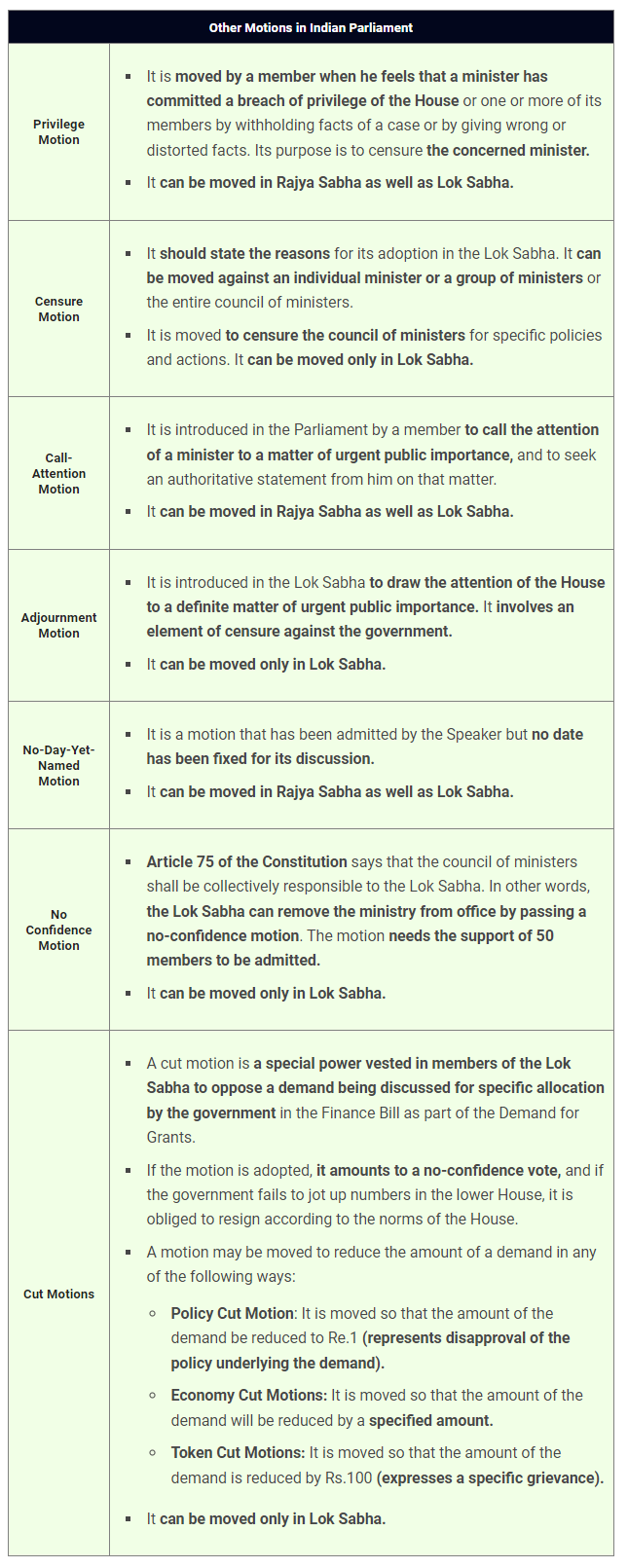
- Adjournment motion on a matter of public importance.
- Confidence or No-Confidence motion in the Council of Ministers.
- Resolution for removal of the Speaker or Deputy Speaker.
- Motion declaring a member’s seat vacant.
- Motions for discussion on matters of general public interest.
- It is used for:
Substitute Motions
- About: Substitute Motions are moved in substitution of an original motion (such as a motion to consider a policy or situation).
- While they can express an opinion, they depend on the original motion.
- Process: During a debate on a policy consideration, a member can move a substitute motion.
- At the end of the debate, only the substitute motion is put to the vote.
- Example: In 1991, during a discussion on the international situation, members moved substitute motions to express that the government's foreign policy was "unsatisfactory" due to specific failures (e.g., response to the Gulf War).
Subsidiary Motions
- About: It is a motion which depends upon or relates to another motion or follows upon some proceedings in the House.
- By itself it has no meaning and is not capable of stating the decision of the House without reference to the original motion or proceedings of the House.
- Types of Subsidiary Motions:
- Ancillary Motions: It is a motion recognised by the practice of the House as the regular method for conducting various kinds of legislative business.
- It facilitates the progress of proceedings, such as moving that a Bill be taken into consideration or that the Bill be passed.
- Superseding Motions: It is moved during debate to replace or delay the main question under consideration. These are often dilatory (intended to delay).
- Examples include recommitting a Bill to a Select or Joint Committee, recirculating it for public opinion, or adjourning its consideration to a later date.
- Amendments: It is a subsidiary motion that introduces a new stage of consideration before the final decision on the main question.
- It may seek to modify a Bill, resolution, motion, or even another amendment, either to make the proposal more acceptable or to present an alternative proposition to the House.
- Ancillary Motions: It is a motion recognised by the practice of the House as the regular method for conducting various kinds of legislative business.
Frequently Asked Questions (FAQs)
1. What is a motion in parliamentary procedure?
A motion is a formal proposal made by a member to obtain a decision of the House, forming the basis of all parliamentary discussions and resolutions.
2. What is Substantive Motion?
It is a self-contained proposal capable of expressing the decision of the House independently, used for major actions like confidence motions or removal resolutions.
3. Who decides the admissibility of motions in Lok Sabha?
TheSpeaker decides admissibility under Rule 186, ensuring motions meet procedural and constitutional criteria.
4. What is the difference between substitute and subsidiary motions?
Substitute motions replace the original motion, while subsidiary motions depend on another motion to modify, delay, or facilitate proceedings.
5. Why are motions important in a parliamentary democracy?
They enable debate, ensure accountability, and allow the House to formally express its will on public matters.
UPSC Civil Services Examination, Previous Year Questions (PYQs)
Prelims
Q. The Parliament of India exercises control over the functions of the Council of Ministers through (2017)
- Adjournment motion
- Question hour
- Supplementary questions
Select the correct answer using the code given below:
(a) 1 only
(b) 2 and 3 only
(c) 1 and 3 only
(d) 1, 2 and 3
Ans: (d)
Seva Teerth
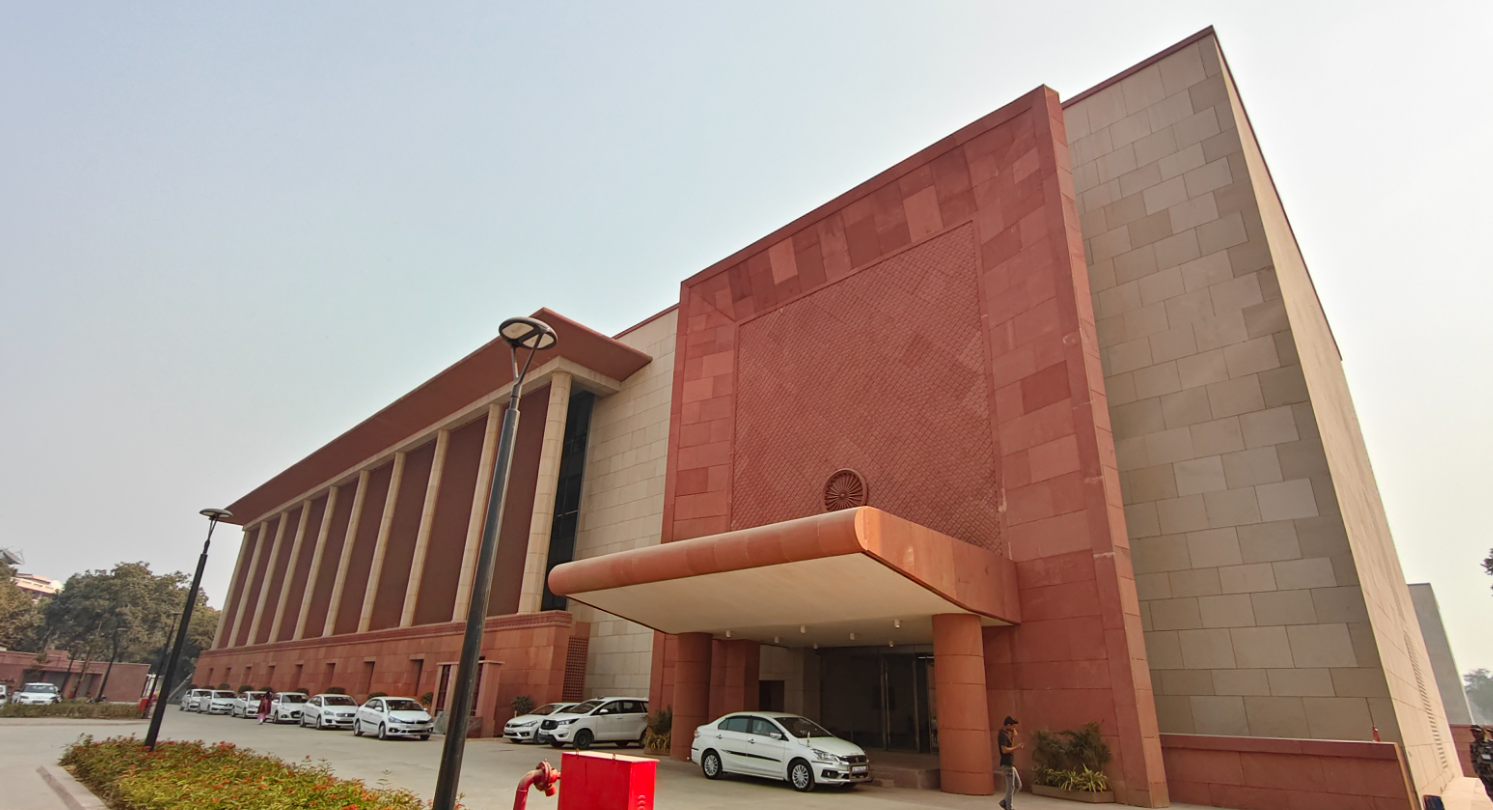
The Prime Minister inaugurated 'Seva Teerth', an integrated administrative complex that houses the Prime Minister's Office (PMO), National Security Council Secretariat (NSCS), and Cabinet Secretariat.
- Historical Significance: This shift, ending nearly 8 decades of the PMO functioning from South Block (now part of Yuge Yugeen Bharat National Museum), occurred on the 95th anniversary of New Delhi's formal inauguration (13th February, 1931) as India's modern capital.
- Philosophical Meaning: The name derives from Sanskrit: "Seva" means "service" or selfless dedication, while "Teerth (Tirtha)" signifies a "sacred place" or "crossing point" enabling liberation from obstacles.
- The complex bears the inscription "Nagrik Devo Bhava" (citizen is akin to God).
- Architectural Influences: Designed by Dr Bimal Patel, the entrance portal features stone screen-work from Chalukyan temples (11th-13th centuries), while floral stone motifs derive from square-based geometric temple patterns.
- Metal-clad domes inspired by Buddha stupas serve as contemporary accent elements.
- It forms a key component of the Central Vista redevelopment project and is clad in white and red sandstone. The facility features modern open workspaces, the high-tech 'India House' for international summits, and 4-star green building standards.
- First Official Acts: In its first decision at Seva Teerth, the PM launched the PM RAHAT Scheme to provide assured hospitalization and treatment for road accident victims, ensuring no life is lost due to lack of immediate medical care.
| Read More: Central Vista Redevelopment Project |
LHS 1903 System
Astronomers utilizing the European Space Agency’s Cheops Space Telescope have discovered a unique four-planet system orbiting the red dwarf LHS 1903, featuring a planetary arrangement that challenges current planet formation theories.
- System Overview: The system consists of four planets - two Super-Earths (rocky) and two mini-Neptunes (gaseous) orbiting a red dwarf star located 117 light-years from Earth.
- The Formation Paradox: Conventional models suggest rocky planets form near the star, while gas giants form farther away.
- However, the outermost (fourth) planet of LHS 1903 is rocky, despite being positioned beyond its gaseous siblings.
- Researchers suggest the planets formed one after another, depleting the available gas before the fourth planet formed, or that the fourth planet lost its atmosphere in a catastrophic event, leaving behind a rocky outer planet.
- Rocky planets: The rocky planets are classified as Super-Earths, possessing a composition similar to Earth but with a mass two to ten times greater.
- Sub-Neptunian Neighbors: The two middle planets are mini-Neptunes, which are larger than Earth but smaller than Neptune, characterized by thick gaseous envelopes.
- Habitability Potential: The fourth planet is of particular scientific interest due to its estimated surface temperature of 60°C, placing it within a range that could potentially support habitability.
- Star Characteristics: The host star, LHS 1903, is a red dwarf with only 50% of the Sun's mass and 5% of its luminosity, representing the most common type of star in the Milky Way.
| Read more: Giant Planet Orbiting Red Dwarf Star |
Nitric Oxide Against Drug-Resistant Pneumonia
A study has shown that high-dose inhaled nitric oxide (300 ppm) significantly reduced drug-resistant pneumonia, offering a possible new strategy against antimicrobial resistance.
- Drug-resistant pneumonia, particularly caused by Pseudomonas aeruginosa, is a serious complication in Intensive Care Units (ICUs), responsible for about one in five hospital pneumonias.
Drug-resistant Pneumonia
- About: It is an inflammatory condition of the lung alveoli caused by bacteria that exhibit resistance to one or more antibiotics typically used for treatment.
- Key Pathogens:
|
Pathogen |
Impact |
|
Streptococcus pneumoniae |
Leading cause of community-acquired bacterial pneumonia. |
|
Methicillin-resistant Staphylococcus aureus (MRSA) |
Frequently implicated in hospital-acquired or healthcare-associated pneumonia. |
|
Gram-negative bacteria (Pseudomonas aeruginosa, Klebsiella pneumoniae) |
Common in hospital-acquired pneumonia (HAP) and multidrug-resistant cases. |
- Clinical Implications: Delayed clinical response, prolonged hospitalization, and increased risk of severe outcomes including sepsis or death.
Nitric Oxide
- About: Nitric oxide (NO) is a colorless gas, classified as an oxide of nitrogen. It is a stable free radical with an unpaired electron, making it highly reactive with a short half-life (seconds to minutes). It diffuses readily across cell membranes.
- Endogenous Production: In mammals, NO is synthesized from the amino acid L-arginine by a family of enzymes called nitric oxide synthases (NOS).
- Key Physiological Functions:
|
System |
Functions |
|
Cardiovascular |
Vasodilator → increases blood flow, lowers blood pressure, inhibits platelet aggregation. |
|
Nervous |
Neurotransmitter/neuromodulator → regulates synaptic plasticity and memory formation. |
|
Immune |
Exerts antimicrobial and antitumor activity by disrupting pathogen metabolism. |
- Medical and Therapeutic Relevance: The discovery of NO as the endothelium-derived relaxing factor (EDRF) led to the 1998 Nobel Prize in Physiology.
| Read More: Pneumonia |
SC Affirms Spectrum as Public Resource
The Supreme Court of India has clarified that telecom spectrum is a public resource owned by the Union of India and cannot be treated as a corporate asset of Telecom Service Providers (TSPs) for sale or restructuring under the Insolvency and Bankruptcy Code (IBC), 2016.
- Limited Privilege: Spectrum (refers to the specific frequency bands used for communication via satellites) is granted as a limited, conditional, and revocable privilege to use, not as a proprietary interest.
- This right is subject to statutory requirements, license conditions, and overriding public interest.
- The Court clarified that licensing rights recorded as intangible assets in financial statements do not equate to ownership.
- Spectrum licensing merely represents control over future economic benefits, whereas the legal title vests exclusively with the Union of India.
- Exclusion from IBC: The judgment held that the IBC excludes assets over which a corporate debtor has no ownership rights.
- Since TSPs do not own the legal title to spectrum, it cannot be included in the pool of assets for insolvency resolution or liquidation.
- Supremacy of Telecom Laws: The Court noted that the statutory regime under IBC cannot restructure rights and liabilities of spectrum usage, which operate under the exclusive legal regime of the Telecommunications Act, of 2023 and Telecom Regulatory Authority of India Act, 1997.
- Public Trust Doctrine: Reaffirming that the State acts as a trustee for the people, the Court emphasized that spectrum management must subserve the common good and adhere to Article 14 (Fairness and Transparency).
- Significance: This ruling is a significant setback for financial creditors (like SBI) who sought to monetize spectrum rights to recover loans.
- The Department of Telecommunications (DoT) now has the path clear to reclaim airwaves from defaulting operators like Aircel and RCom.
| Read more: Allocation of Satellite Spectrum |
Chirality-Based Electronics
A new study published in Nature has demonstrated a device that can separate electrons based on their chirality (handedness) without using powerful magnetic fields, marking progress towards low-power devices.
- Chirality in electrons: Similar to how the left and right hands are mirror images, electrons in topological semimetals possess left- or right-handed chirality.
- Chirality represents a specific quantum state of electrons moving inside a crystal lattice.
- Semimetals, or Metalloids, are brittle solids with a metallic appearance but nonmetal chemical properties. They are neither good electrical nor thermal conductors, yet they make excellent semiconductors and form amphoteric oxides.
- Problem in detection: Chiral electrons are mixed with ordinary (non-chiral) electrons. Earlier detection methods required strong magnetic fields or chemical doping, making large-scale application impractical.
- Role of Band Structure (Quantum Geometry): In crystals, electrons behave like waves constrained by band structure.
- Unlike straight electron motion in copper wiring, palladium gallium (PdGa) crystal has a “twisted” band structure, causing electrons to drift sideways. The direction of drift depends on electron chirality.
- Device Mechanism: The team fabricated a three-armed device. By passing a current through it, the quantum geometry of PdGa acts as a valve, funnelling left-handed electrons into one arm and right-handed electrons into another, effectively demonstrating a chiral valve.
- Path to Applications: It could lead to low-power computing technologies and novel forms of magnetic memory devices.
| Read More: Quantum Technology |